
Ganesh Chaturthi 2026: Modak, Pandals & 10-Day Celebration
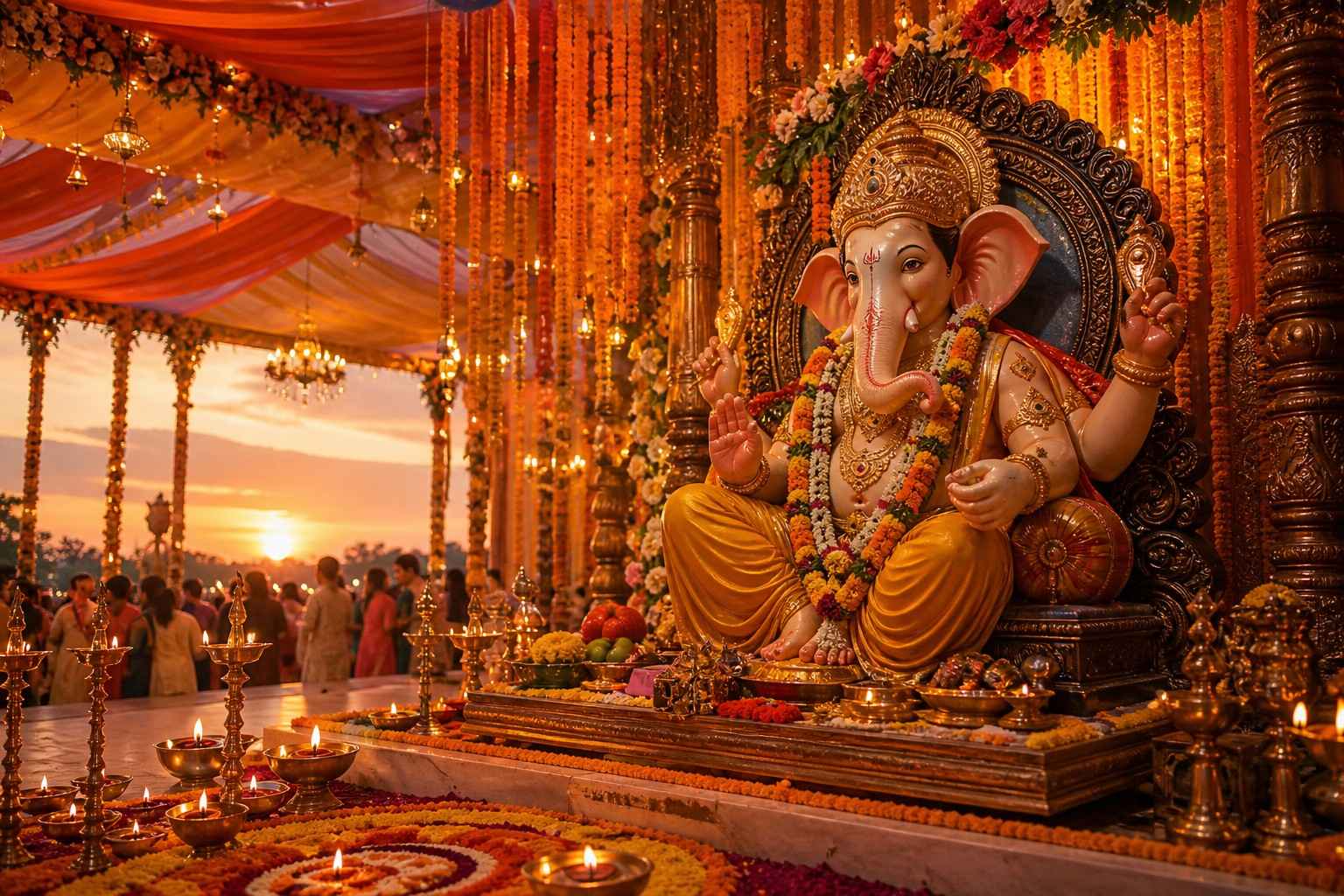
Ganesh Chaturthi falls on Monday, September 14, 2026. The Madhyahna Muhurat — the most auspicious window for idol installation and puja — runs from approximately 11:02 AM to 1:31 PM IST. The ten-day festival concludes with Ganesh Visarjan on September 24, 2026, which is Anant Chaturdashi.
If you’re planning ahead for ganpati decoration, booking a murti, or organising community celebrations, September 14 is the date to work backward from.
What Is Ganesh Chaturthi?
Ganesh Chaturthi — also called Vinayaka Chaturthi — marks the birth of Lord Ganesha, son of Shiva and Parvati. He is the god of wisdom, the remover of obstacles, and the deity Hindus invoke before starting anything: a business, a journey, a marriage, an exam.
The festival falls on Shukla Chaturthi of the Hindu month of Bhadrapada — the fourth day of the waxing moon — which usually lands between late August and mid-September.
Celebrations last anywhere from 1.5 days to 11 days depending on family tradition and region. The festival is a public holiday in Maharashtra, Goa, Karnataka, Andhra Pradesh, and Telangana. In the rest of India, it’s observed at home and in local mandals.
History: From Private Puja to Public Festival
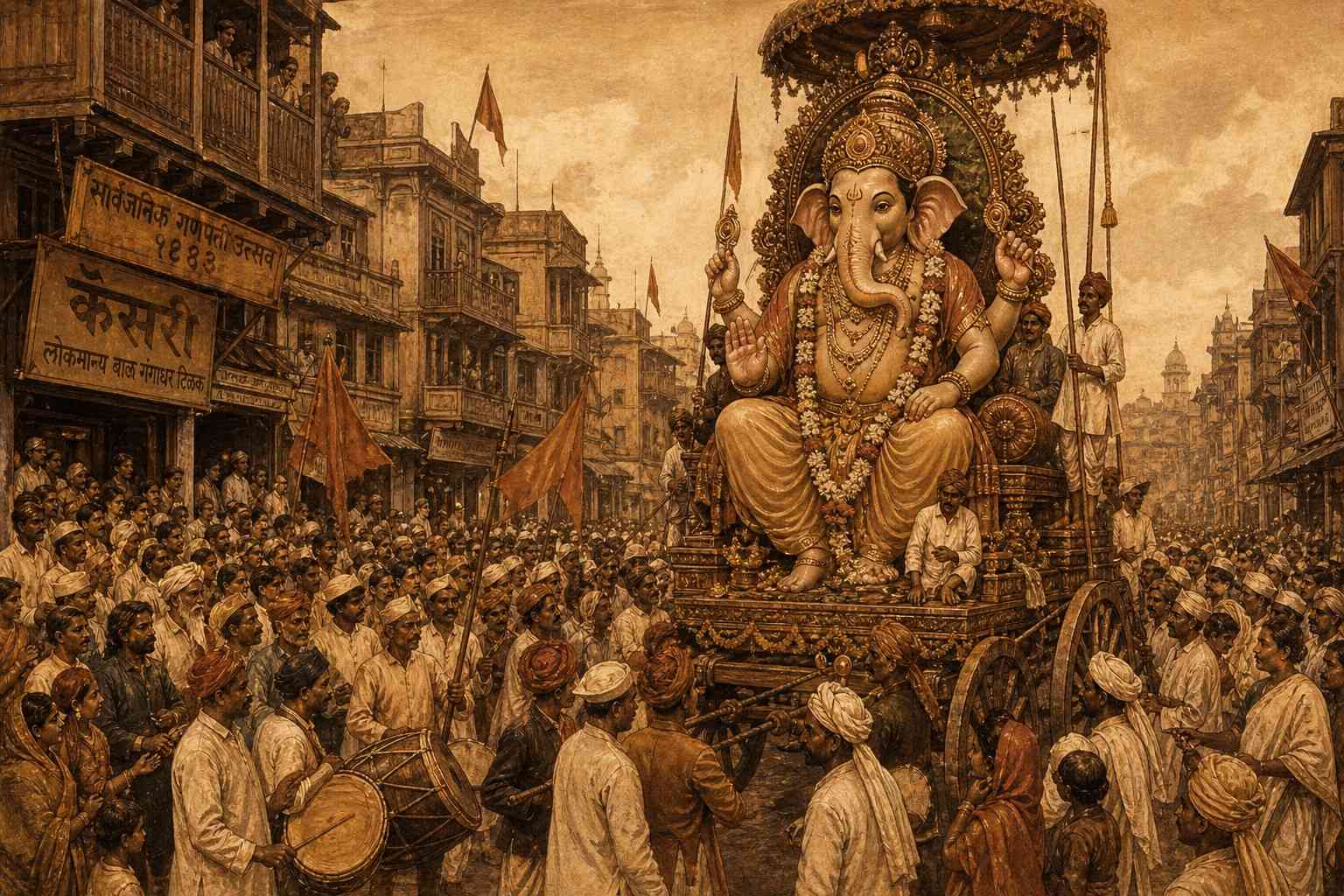 The story of how Ganesh Chaturthi became one of India’s largest public festivals is inseparable from the independence movement.
The mythological origin is straightforward: Hindu scriptures place Ganesha’s birth on the fourth day of Bhadrapada. Early records from the Maratha Empire period — around the 17th century during Chhatrapati Shivaji’s reign — show that the festival was observed publicly in Maharashtra. But these were localised celebrations.
The political turn came in 1893. Lokmanya Bal Gangadhar Tilak, the nationalist leader, recognised that the British colonial administration had banned large political gatherings. He reorganised Ganesh Chaturthi into a ten-day public festival — with community pandals, cultural programmes, and open participation across caste lines. The idea was to use a religious occasion to unite people who otherwise had few legal spaces to gather and organise.
It worked. The festival gave the independence movement a mass platform it didn’t have before. Tilak’s framing of it as a community event rather than a purely household ritual is directly why Mumbai’s Lalbaugcha Raja draws millions every year, and why pandals in Pune, Hyderabad, and Chennai have the scale they do.
The Story Behind Ganesha’s Elephant Head
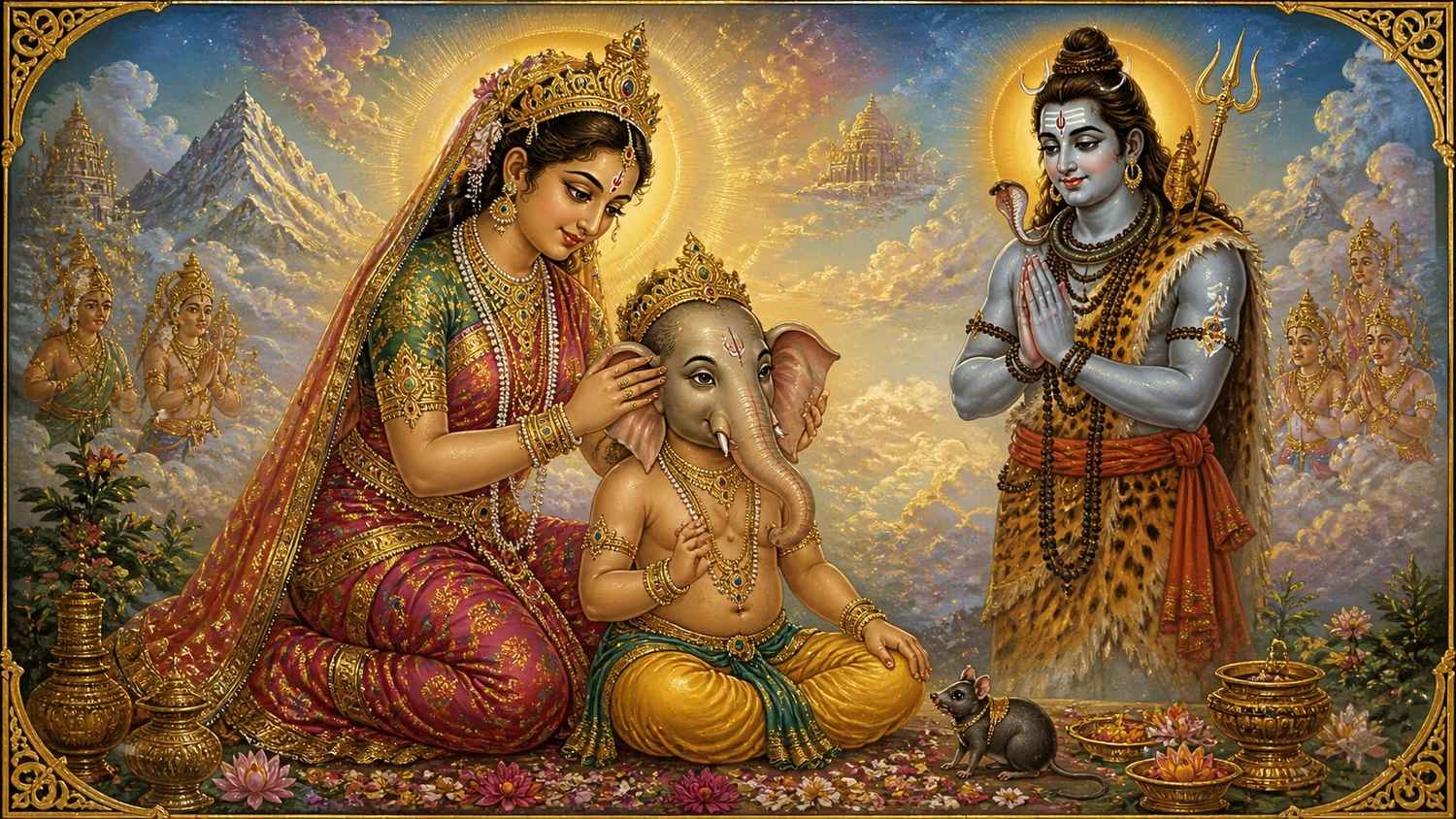 Most people know the outline. Here’s the version that stays close to the original texts.
Goddess Parvati fashioned a boy from turmeric paste and sandalwood to guard her chambers while she bathed — she wanted someone loyal to her, not already sworn to Shiva. When Shiva returned and the boy blocked his entry, Shiva, not recognising him, cut off his head. Parvati’s grief was absolute. To restore their son, Shiva sent his attendants north to bring back the head of the first living creature they found sleeping with its head pointed north. They returned with an elephant’s head. Shiva placed it on the boy and restored his life, declaring him Gajanana — the elephant-faced one — and granting him the status of being worshipped first before any deity in any ceremony.
There are regional variations to this story, particularly in South Indian and Shaiva traditions. But this version from the Shiva Purana is the most widely known.
Why Ganesha? The Significance Behind the Worship
People don’t just worship Ganesha out of habit. There’s a specific logic to it.
Vighnaharta — remover of obstacles. Before any undertaking, Hindus pray to Ganesha to clear the path. This is why you see his idol at the entrance of homes, at the start of wedding invitations, and at the beginning of any auspicious deed.
Buddhi and Siddhi — intellect and achievement. Ganesha is associated with both. Students pray to him before exams. Business owners worship him at shop openings. The logic is that wisdom and success are connected, and Ganesha presides over both.
Prathamapujya — the first to be worshipped. In any Hindu ritual, Ganesha is invoked before any other deity, including Shiva or Vishnu. This precedence is baked into the tradition so deeply that skipping it is considered inauspicious.
How Ganesh Chaturthi Is Celebrated
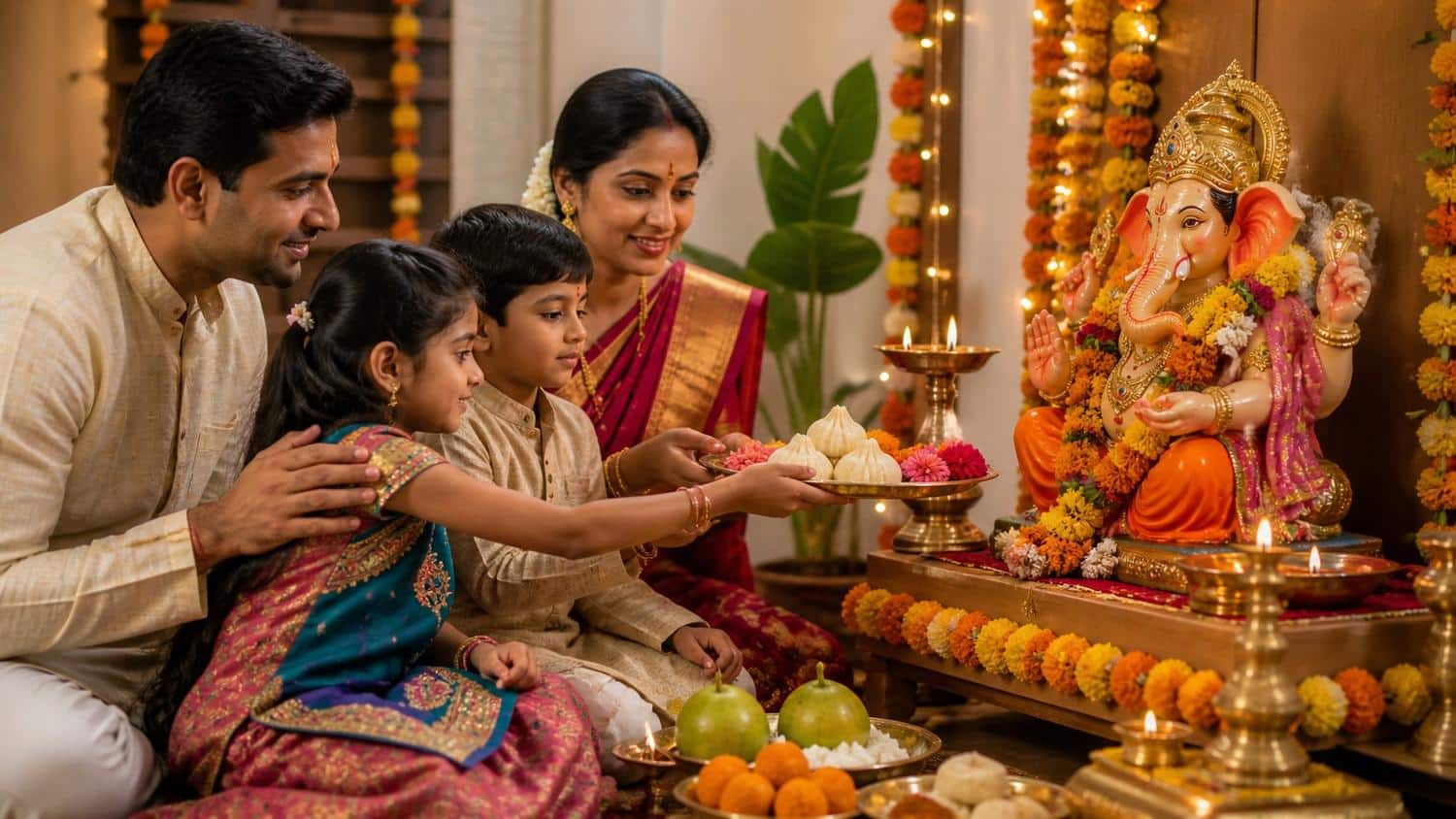
Day One: Bringing Bappa Home
Families bring a Ganpati murti — an idol of Ganesha — into the home or install it in a community pandal. The ritual is called Pranapratishtha: the invocation of Ganesha’s presence into the idol through mantras, making the statue not just a representation but a living presence.
The idol sits on a decorated platform (a chowki or mandap), surrounded by flowers, incense, and a diya. The main puja on day one follows the Shodashopachara format — 16 steps of worship that include bathing, clothing, anointing, offering food, and prayer.
Modak — sweet rice flour dumplings filled with jaggery and coconut — are Ganesha’s favourite offering. You’ll find them in every home that celebrates.
The Ten Days
Daily aarti is performed morning and evening. Devotees visit each other’s homes and local pandals. Cultural programmes, music, and sometimes large public events fill the evenings. Larger pandals in cities like Mumbai and Pune can see hundreds of thousands of visitors over ten days.
Visarjan: The Farewell
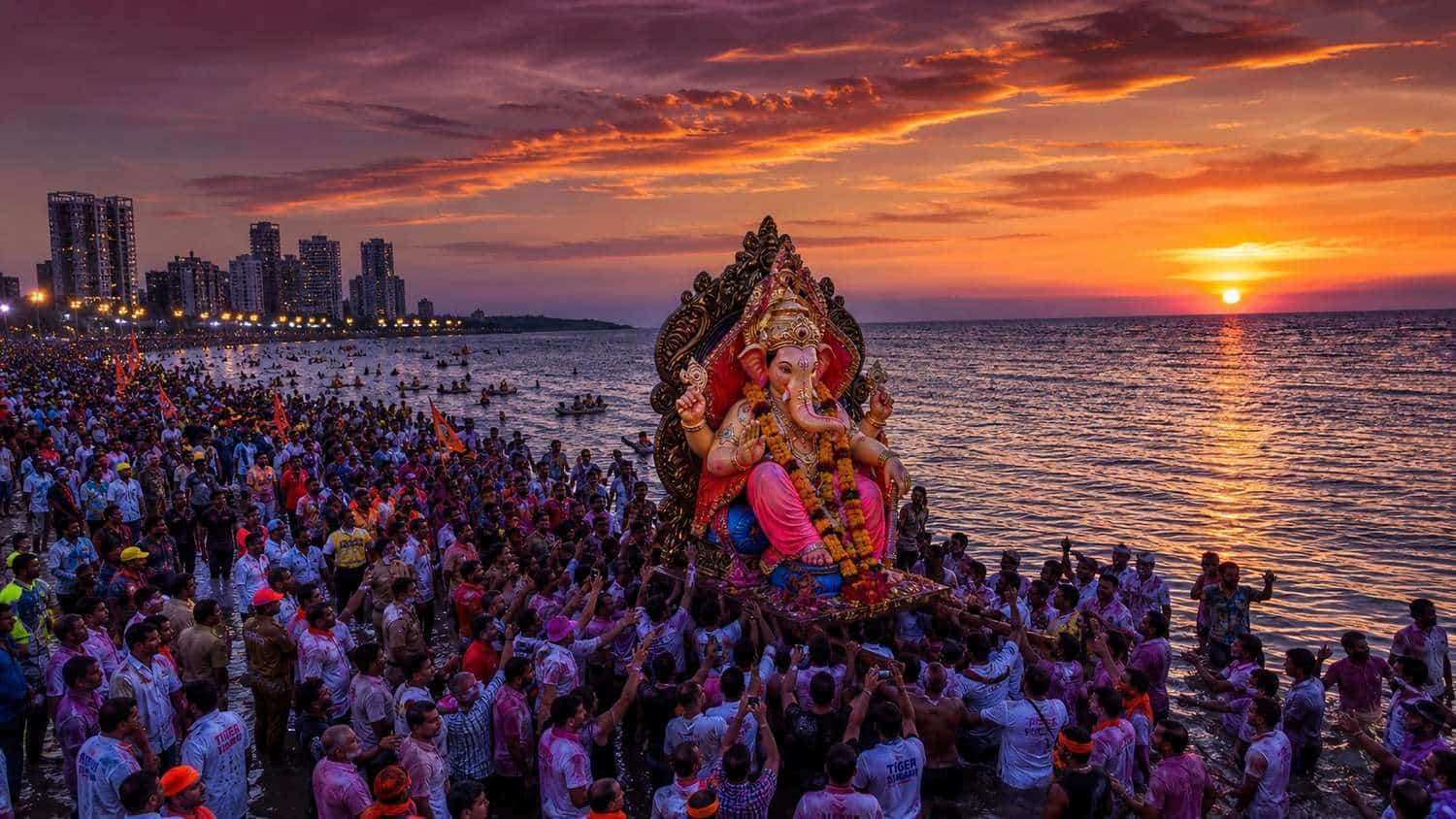
On the last day, the idol is carried in procession through the streets to the nearest water body — a river, a lake, the sea — and immersed. The chant “Ganpati Bappa Morya, Pudhchya Varshi Lavkar Ya” — “Lord Ganesha, come again soon next year” — fills the air.
The immersion is not just symbolic. Clay Ganesha idols dissolve back into the earth, closing the ritual cycle of arrival, presence, and departure.
Ganpati Decoration: What Works in 2026
Decoration is where most families spend the most time and money before the festival. Here’s what’s actually practical and what’s trending this year.
Choosing the Right Ganpati Murti for Ganesh Chaturthi
Before decoration, the idol itself matters.
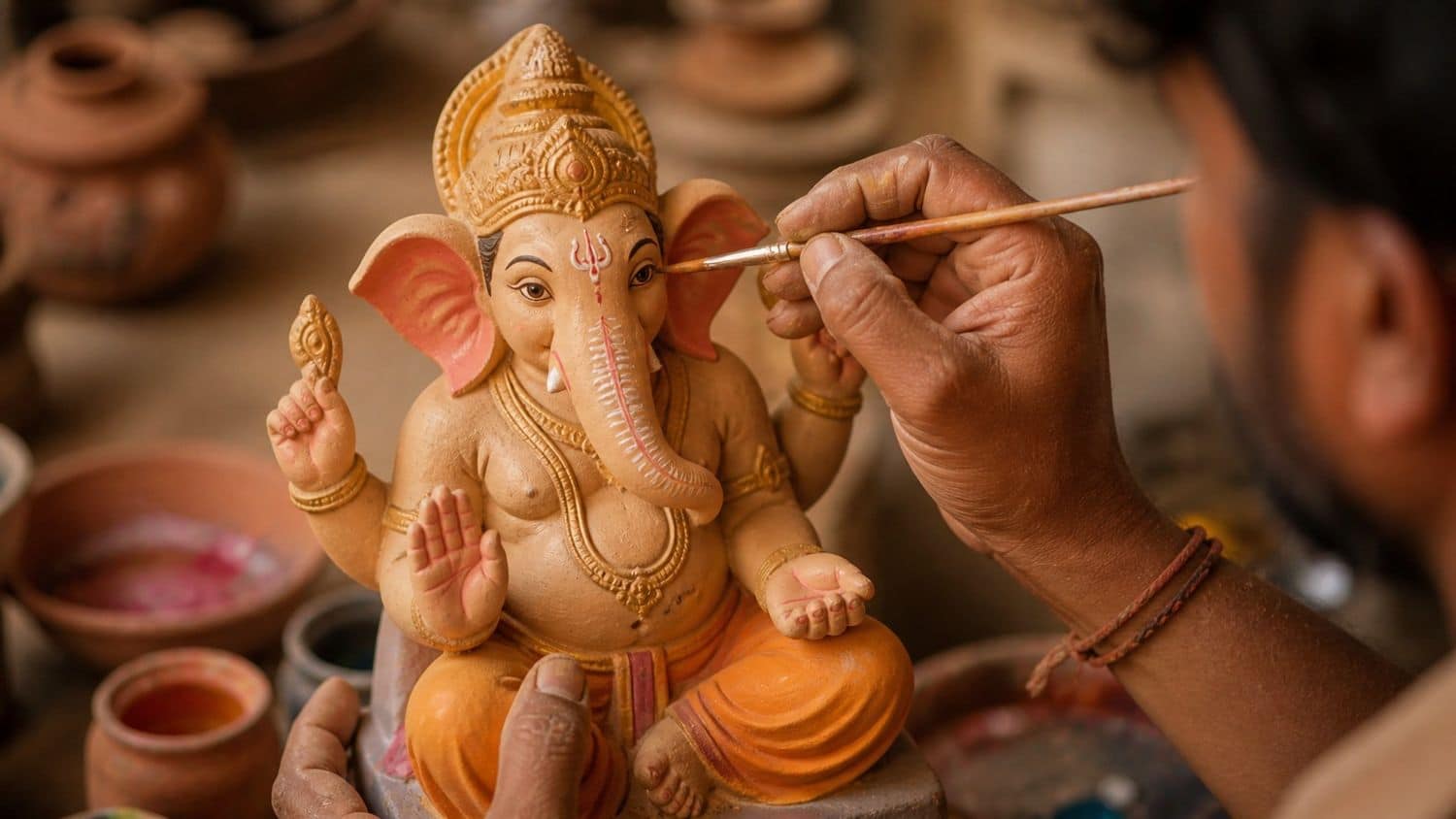
- Material: Eco-friendly clay or Shadu (natural clay) idols are the correct choice — they dissolve cleanly in water and don’t release chemical dyes into rivers. Plaster of Paris idols are legally discouraged in many states and environmentally damaging.
- Size: For home celebrations in apartments, 8 to 12 inches works well. Larger idols in open homes or community pandals can go bigger, but transportation and immersion logistics need to match the size.
- Posture: Sitting Ganesha (lalitasana) is the most common for home worship — associated with calm and peace. Reclining Ganesha represents comfort and abundance. Both are appropriate; standing Ganesha is rarer in home settings.
- Colour: A white Ganesha idol is associated with prosperity. Red with energy and strength. Yellow with purity and auspiciousness. These aren’t strict rules — choose what resonates.
Ganesh Chaturthi Decoration That Actually Looks Good
Most decoration fails because people overload the space. The idol needs to remain the focal point.
The backdrop matters most. A few ideas that hold up aesthetically:
- Fresh green leaf backdrop: Mango leaves or banana leaves hung in rows create a clean, traditional look that photographs well and costs almost nothing.
- Marigold curtain: Strings of marigold flowers hung densely behind the idol. This is the classic setup for a reason — the yellow-orange against the gold of the idol is hard to beat.
- Fabric drape with lights: Sheer silk or organza in white, pink, or gold, lit from behind with warm LED strips. Works particularly well in apartments because it uses vertical space and takes up no floor area.
- Paper fan backdrop: Colourful paper fans in different sizes, arranged in a semicircle. Budget-friendly, easy to make, and surprisingly photogenic.
Lighting is where most people underinvest. Warm white fairy lights, diyas (oil lamps), and a few focused spotlights on the idol transform the entire setup after dark. Avoid cool white or blue-toned LEDs — they flatten the warmth of the decor.
Rangoli at the entrance is traditional and sets the tone before anyone enters the room. Fresh flower petals are more aesthetically considered than powder rangoli if you’re going for a clean, modern look.
Aesthetic Ganpati Decoration: The Principles
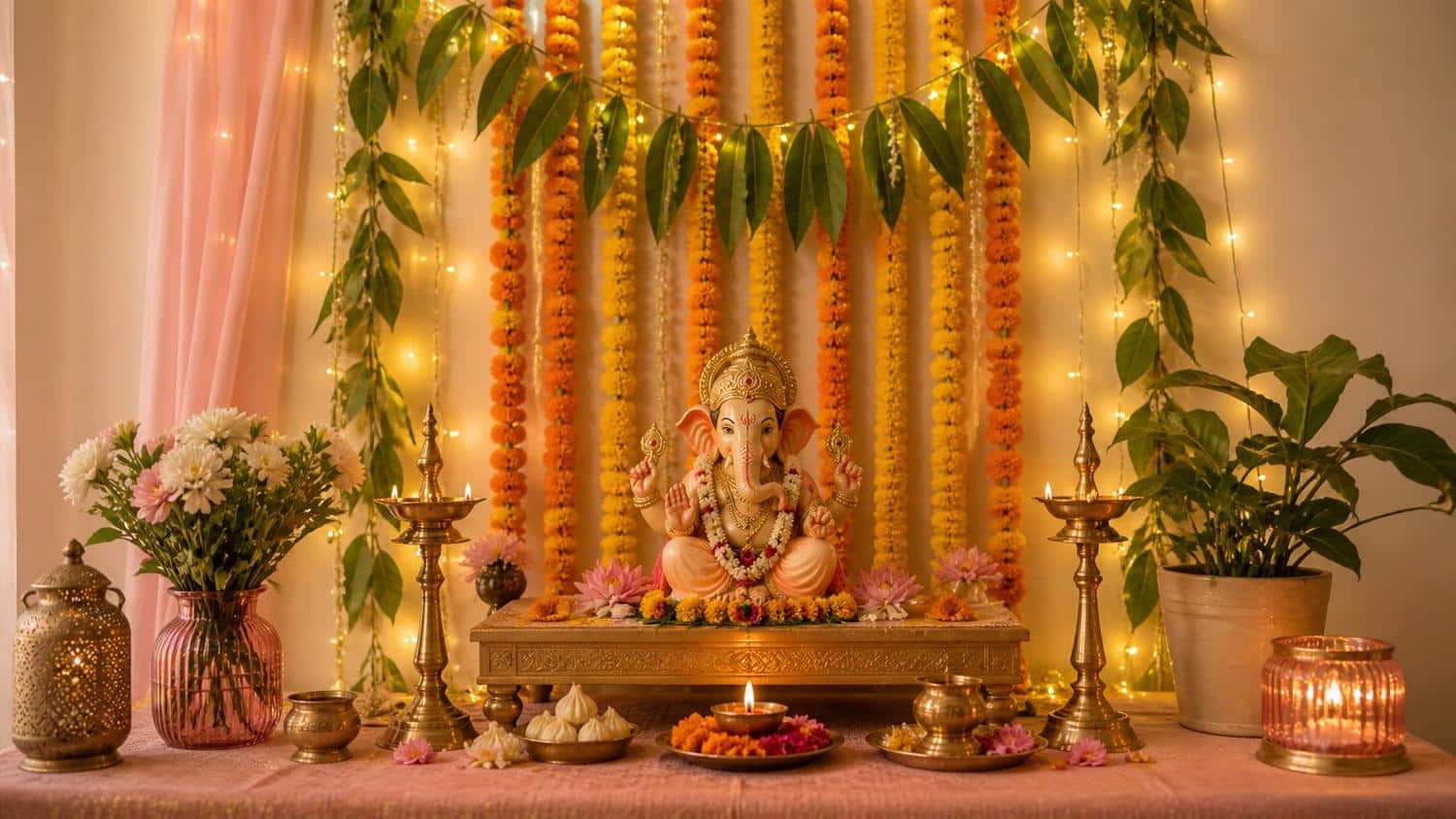 There’s a difference between decoration that looks festive and decoration that looks considered. The aesthetic Ganpati decoration setups you see shared widely on Instagram follow a few consistent rules:
- Limit the colour palette to two or three colours. Marigold yellow + white + gold works. Pink + green + terracotta works. Everything together does not.
- Natural materials (flowers, leaves, jute, clay diyas) always look more intentional than plastic or synthetic decor.
- The idol should have empty space around it — not be buried in decoration. Negative space is part of the design.
- Soft, warm lighting beats bright overhead lighting in every case.
Trending in 2026: Soft pastel palettes paired with brass accents. Think pale pink, off-white, and warm gold — with brass bells, copper diyas, and real marigolds. This is particularly popular in urban apartment setups where the space is smaller and the goal is elegance over spectacle.
For Apartments and Small Spaces
Vertical space is what most people in flats don’t use. Mount a lightweight backdrop on the wall, use a corner shelf or a compact chowki rather than a full table, and keep the floor clear. For idol size, stay under 12 inches. The decoration should scale to the space — a small setup done well looks far better than an oversized one that crowds the room.
Eco-Friendly Celebration: What Municipalities Now Expect
 This isn’t optional guidance anymore in most major cities. Municipal corporations in Mumbai, Pune, Hyderabad, and Bangalore have set up designated immersion ponds specifically designed for Ganesh Visarjan. These contain the dissolved clay and prevent contamination of natural water bodies.
Some families choose to dissolve the idol in a bucket at home and use the water for their garden — this is completely valid and retains the full spiritual significance of the ritual.
If you’re buying a Ganpati murti for Ganesh Chaturthi this year, the checklist is simple: natural clay, water-soluble natural paints, no thermocol decoration on the idol itself. The eco-friendly options have improved significantly in quality and availability over the last five years. You’re not sacrificing aesthetics by making this choice.
Key Dates and Timings: Ganesh Chaturthi 2026
| Event | Date |
|---|---|
| Ganesh Chaturthi | Monday, September 14, 2026 |
| Madhyahna Muhurat (Puja) | 11:02 AM – 1:31 PM IST |
| 1.5-Day Visarjan | September 15, 2026 |
| 3-Day Visarjan | September 17, 2026 |
| 5-Day Visarjan | September 19, 2026 |
| 7-Day Visarjan | September 21, 2026 |
| Anant Chaturdashi (10-Day Visarjan) | Thursday, September 24, 2026 |
Ganesh Chaturthi 2026 Date in Mumbai
Ganesh Chaturthi is a Hindu festival celebrating the birth of Lord Ganesha the elephant-headed god of beginnings, wisdom, and the remover of obstacles. It falls on the fourth day (Chaturthi) of the bright half of the Hindu month of Bhadrapada, which puts it in August or September. Ganesh Chaturthi 2026 falls on August 23rd.
When Is Ganesh Festival in Mumbai 2026
In Mumbai, Ganesh Chaturthi begins on August 23rd, 2026 and runs for ten days, ending with Anant Chaturdashi on September 1st the day of the grand Ganesh Visarjan, when idols are carried in procession to the sea and immersed in water. The ten days in between involve daily worship, cultural programs, and an atmosphere across the city that has to be experienced to be understood.
Ganesh Chaturthi Celebrations in Mumbai 2026
What Makes Mumbai’s Ganesh Festival Unique
Mumbai’s Ganesh Chaturthi is in a different category from how the festival is observed elsewhere. The city has thousands of public Ganesh mandals community organizations that install large Ganesha idols in pandals (temporary structures) in neighborhoods across the city. The Lalbaugcha Raja mandal in central Mumbai is the most famous its idol draws millions of visitors over ten days, with queues that can last 24 hours or more. Dagdusheth Halwai Ganapati in Pune is another major draw. The scale of decoration, the size of the idols, and the community investment in these public installations is what sets Mumbai apart.
Key Events and Processions to Know About
The Ganesh Visarjan on the final day is the most dramatic moment. Processions from thousands of mandals across Mumbai converge on the beaches — Girgaum Chowpatty being the main one for the immersion. The processions involve dancing, dhol drumming, and enormous crowds. The largest idols, some standing 20 feet or more, are transported on decorated trucks. The immersion happens throughout the night. The city generates significant volunteer effort around waste management and crowd control during Visarjan the sheer scale of the event requires it.
Frequently Asked Questions
When is Ganesh Chaturthi in 2026? September 14, 2026. The festival falls on Monday, Bhadrapada Shukla Chaturthi.
When is Ganesh Visarjan 2026? The final, 10-day Visarjan falls on September 24, 2026 (Anant Chaturdashi). Shorter-duration celebrations can do Visarjan on September 15 (1.5 days), 17 (3 days), 19 (5 days), or 21 (7 days).
Which Ganpati murti is best for home use? A small sitting Ganesha (lalitasana) made from natural Shadu clay, under 12 inches for apartments. White or yellow idols are traditionally auspicious.
How long can you keep the Ganesha idol at home? 1.5 days, 3 days, 5 days, 7 days, or 10 days — all are valid. The choice is based on family tradition and practical circumstances.
Is Ganesh Chaturthi a national holiday in India? Not across the whole country. It’s a public holiday in Maharashtra, Goa, Karnataka, Andhra Pradesh, and Telangana. Other states observe it regionally or privately.
What is the best time for puja on Ganesh Chaturthi 2026? The Madhyahna window — 11:02 AM to 1:31 PM IST — is considered most auspicious for idol installation and the main puja.
A Note on Celebration Without the Spectacle
There’s a version of Ganesh Chaturthi that costs under ₹2,000 total and is no less sincere than a ₹50,000 pandal setup. A 6-inch clay idol, a clean piece of cloth on a shelf, fresh marigolds, a few diyas, the Ganapati Atharvashirsha recited daily — that’s the whole thing. Tilak popularised the public festival, but the private form of this worship is what has survived for centuries in homes across India.
The scale you choose doesn’t determine the quality of the devotion.
Ganpati Bappa Morya.

Abhay Ramola researches world festivals across primary sources, local accounts, and on-ground reporting. He founded Dionfest to cover what gets missed when festivals become tourism content the history, the ritual, and the people behind it.



3 thoughts on “Ganesh Chaturthi 2026: Modak, Pandals & 10-Day Celebration”