
Kumbh Mela Guide: History, Locations & 2027–2030 Dates
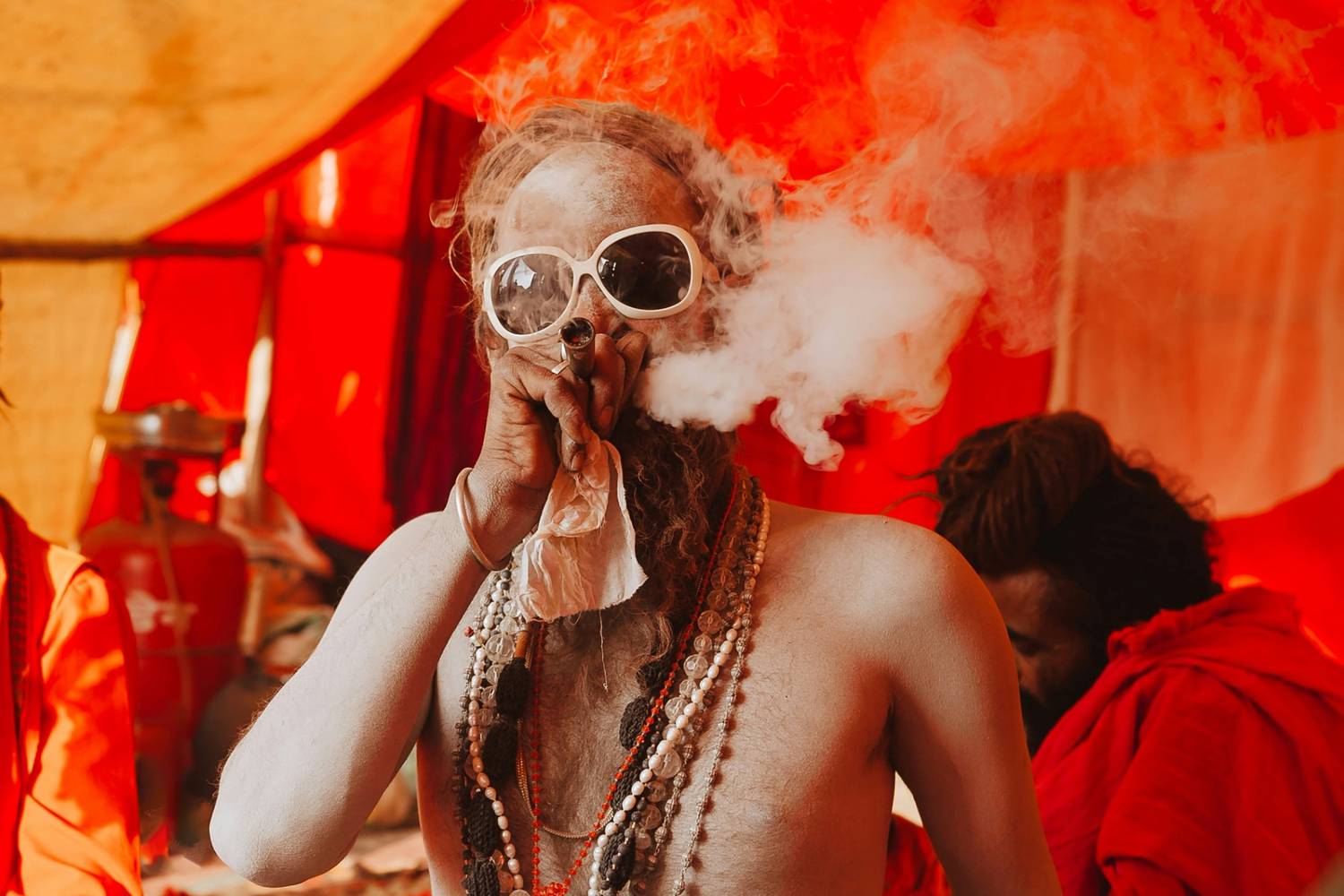
The Kumbh Mela is the largest peaceful gathering of people on earth. No stadium, no concert, no sporting event comes close. This is the full story what it is, where it happens, when the next ones are, and what you actually need to know before you go.
What is Kumbh Mela?
Kumbh Mela is the world’s largest religious gathering a Hindu pilgrimage and festival held at one of four river locations in India on a rotating schedule. At its peak, a single Kumbh Mela draws more people than any other event on Earth. The 2019 Prayagraj Kumbh Mela had an estimated 200 million visitors over its 49-day run.
In practice, it is a multi-week event where tens of millions of people come to bathe in a holy river, listen to religious discourses, visit saints, and take part in centuries-old rituals. The Maha Kumbh Mela held in Prayagraj in January–February 2025 drew over 660 million visitors over its 45-day run — a number almost impossible to process. To put it differently: if every visitor were a separate country, the Kumbh Mela crowd would be the third-largest nation on earth.
UNESCO added the Kumbh Mela to its list of Intangible Cultural Heritage of Humanity in 2017, recognising it as one of the most significant peaceful gatherings on the planet.
Kumbh Mela and Kumbh Fair Is There a Difference
Kumbh Fair and Kumbh Mela refer to the same event “mela” simply means fair or gathering in Hindi. The term “Kumbh Fair” is sometimes used in English-language writing to describe it, but within India, Kumbh Mela is the standard term. The word “Kumbh” comes from the Sanskrit for pitcher or pot a reference to the pot of amrita (nectar of immortality) at the center of the festival’s origin myth.
Where the Legend Comes From
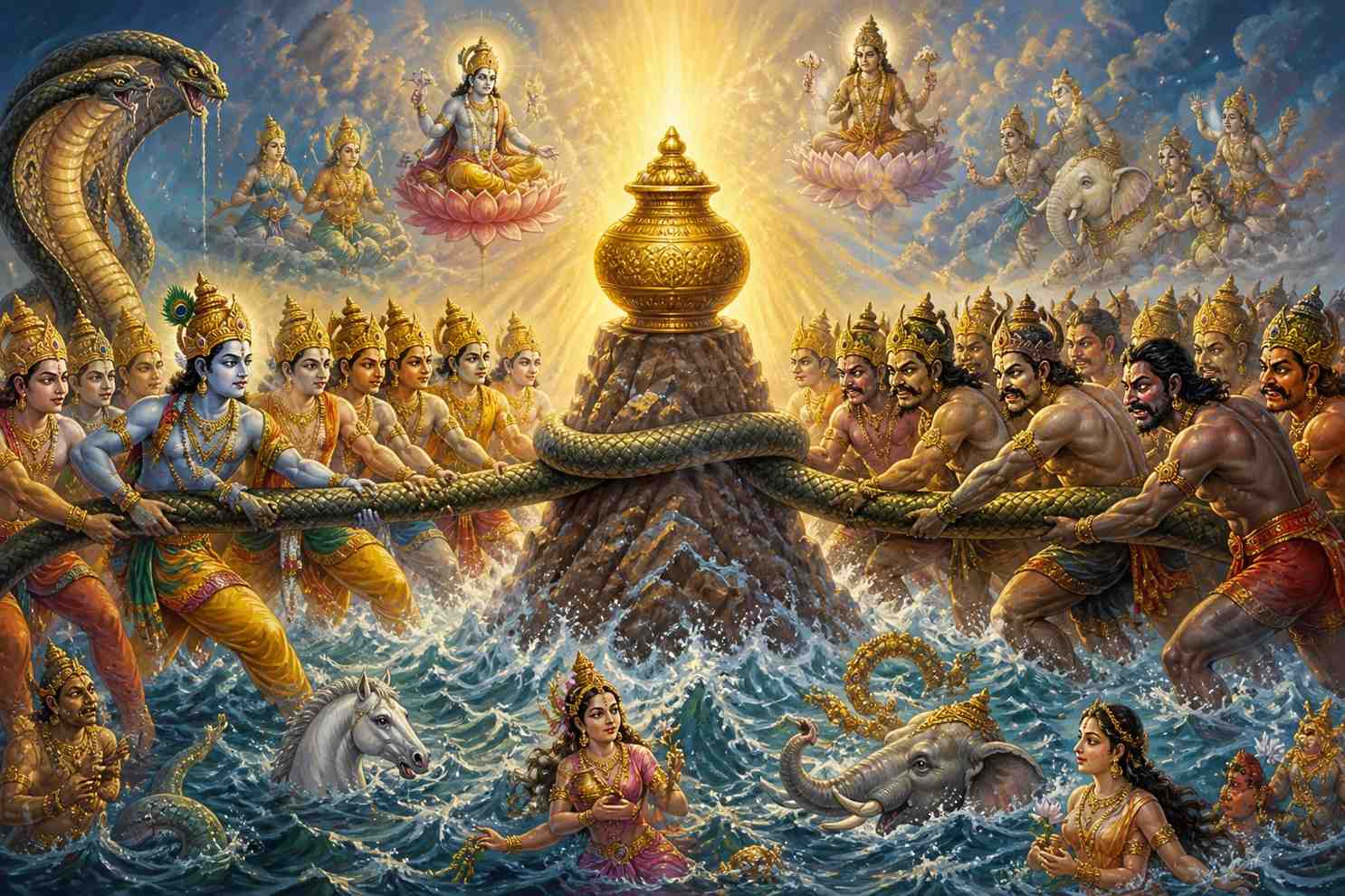
The mythological basis for the Kumbh Mela is the story of the Samudra Manthan — the churning of the cosmic ocean by gods (Devas) and demons (Asuras) to produce Amrit, the nectar of immortality. According to the story, once the nectar appeared, the gods and demons fought over it for twelve divine days, which equals twelve human years. During the struggle, drops of Amrit fell on four places on earth: Prayagraj, Haridwar, Ujjain, and Nashik. These four places are now the Kumbh Mela locations.
The connection to astrology is direct. The festival is held when specific planetary alignments recreate the celestial conditions of the original event — primarily the position of Jupiter (Brihaspati), the Sun, and the Moon in particular zodiac signs. This is why the exact dates shift each cycle and cannot be fixed to a single calendar date in advance.
The Four Types of Kumbh Mela
Most people assume there is only one Kumbh Mela every twelve years. That is not accurate. There are actually four distinct formats.
The Maha Kumbh Mela happens once every 144 years, only at Prayagraj, after 12 full Purna Kumbh cycles. The 2025 event was a Maha Kumbh. The Purna Kumbh Mela happens every 12 years across all four cities in rotation this is the standard full Kumbh. The Ardh Kumbh Mela happens every 6 years at Prayagraj and Haridwar “Ardh” means half. The Simhastha Kumbh happens every 12 years at Ujjain, when Jupiter enters Leo (Simha Rashi).
Because there are four cities and the events rotate and overlap, a Kumbh of some kind takes place somewhere in India roughly every three years. So the common statement “it only happens once in twelve years” is only true for a given location — not for the Kumbh Mela as a whole.
The Four Kumbh Mela Locations
Why Kumbh Mela Is Held Where It Is
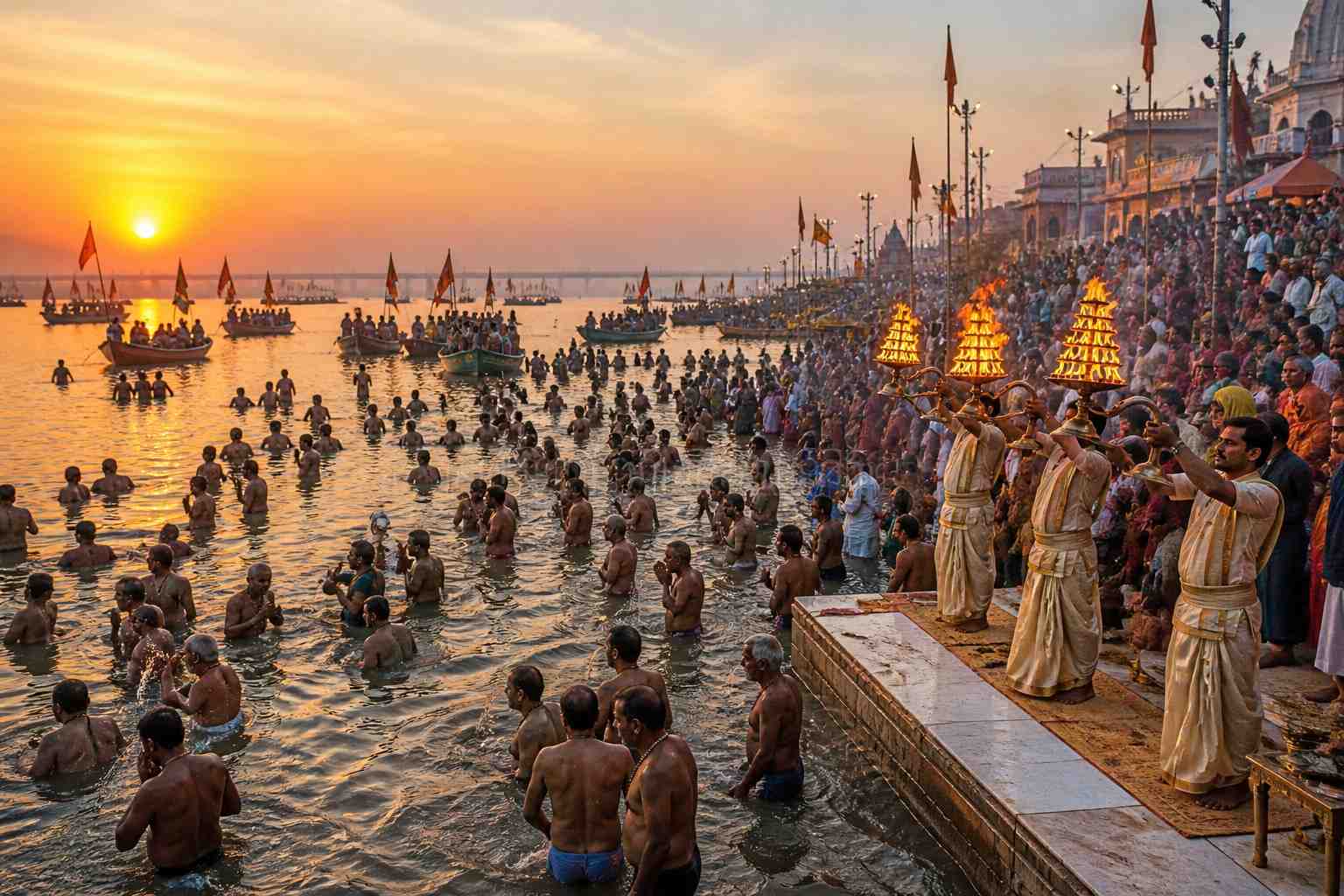
The four locations Prayagraj, Haridwar, Nashik, and Ujjain are each sacred river confluences in Hindu geography. Prayagraj (formerly Allahabad) is where the Ganges, Yamuna, and the mythical Saraswati rivers meet the Triveni Sangam. Haridwar is where the Ganges descends from the Himalayas to the plains. Nashik is on the Godavari River. Ujjain is on the Shipra River. According to the origin myth, drops of amrita fell at these four locations as the gods and demons fought over the nectar pitcher making them permanently sacred. Bathing in the river during Kumbh is believed to cleanse accumulated sins.
Prayagraj, Uttar Pradesh
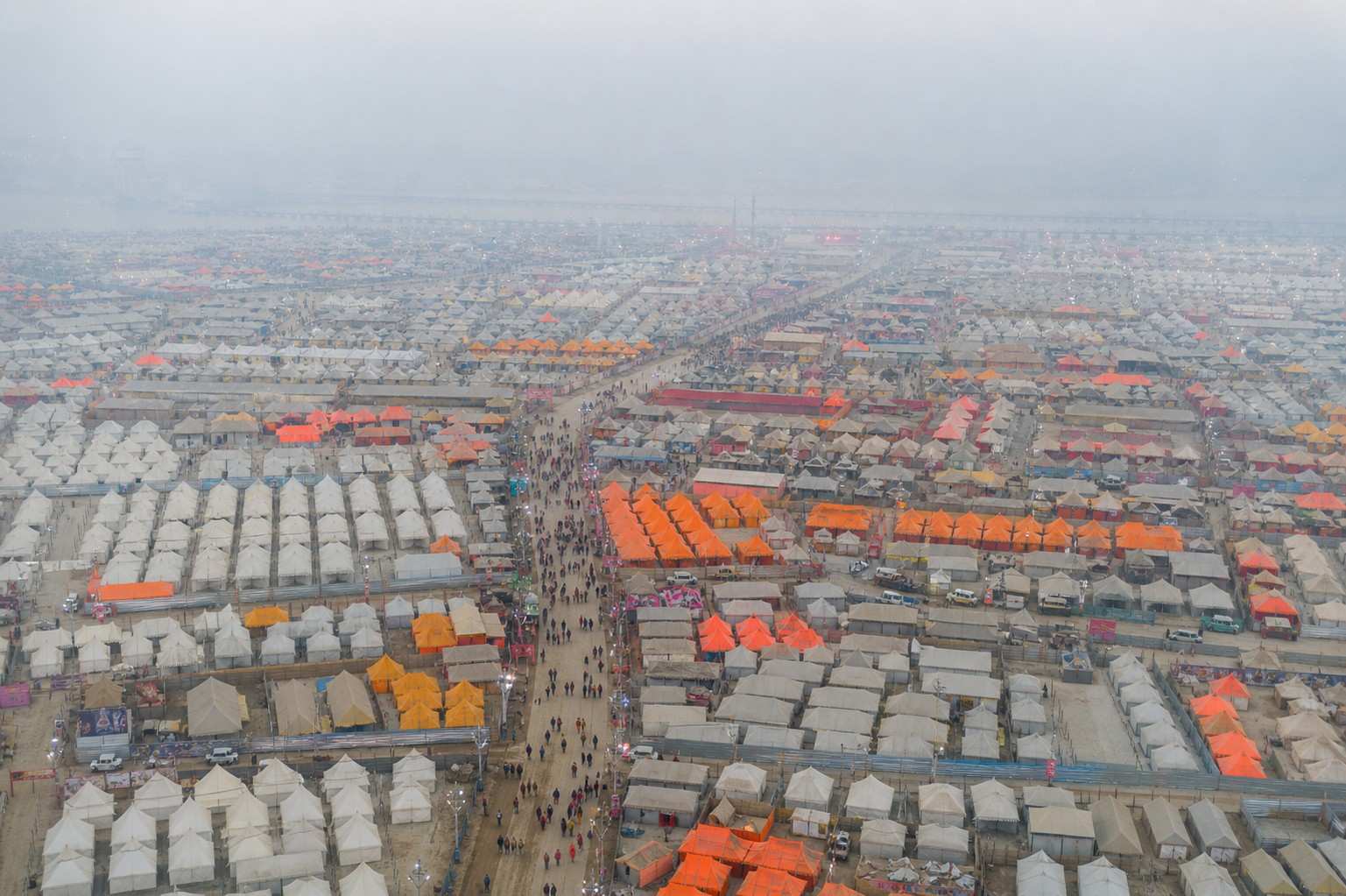
Prayagraj is where the Ganga, Yamuna, and the mythical Saraswati rivers meet — a confluence called the Triveni Sangam. Of the four Kumbh Mela places, Prayagraj is considered the most sacred by most pilgrims. It hosts both the Ardh Kumbh every six years and the Maha Kumbh every 144 years. The 2025 Maha Kumbh here covered 25 sectors across 12 km of ghats, with 150,000 tents and over 450 km of roads laid out to manage the flow of visitors.
Haridwar, Uttarakhand
Haridwar is where the Ganga descends from the Himalayas into the plains, making it one of the holiest entry points to the river in Hinduism. The main bathing site is Har Ki Pauri. The next Haridwar event is the Ardh Kumbh Mela in 2027, for which the Uttarakhand government has already allocated Rs 1,000 crore and is deploying electric buses for the first time within the mela grounds.
Nashik, Maharashtra
Nashik’s Kumbh Mela takes place on the banks of the Godavari — often called the “Ganga of the South.” The event here runs across two sacred sites: Ramkund in Nashik and Kushavarta Tirtha in Trimbakeshwar. This geographical split is unique among the four Kumbh locations. The Nashik Kumbh is comparatively compact at around 350 acres, against Prayagraj’s 10,000 acres.
Ujjain, Madhya Pradesh
The Kumbh Mela in Ujjain is held on the banks of the Shipra river and is tied to the Mahakaleshwar Jyotirlinga, one of the twelve most sacred Shiva temples in India. The next Ujjain Simhastha is expected in April–May 2028.
Upcoming Kumbh Mela Dates
The 2025 Maha Kumbh at Prayagraj has concluded. Here is what is coming next:
- Nashik (Godavari) — Simhastha Kumbh — Began October 31, 2026; major Amrit Snan dates: August 2, August 31, September 11–12, 2027.
- Haridwar (Ganga) — Ardh Kumbh — January 14 to April 20, 2027.
- Ujjain (Shipra) — Simhastha Kumbh — April–May 2028 (exact dates subject to astrological confirmation).
- Prayagraj (Triveni Sangam) — Ardh Kumbh — 2030 (dates to be announced).
Note: Kumbh Mela bathing dates are set by Hindu astrological calculations, not fixed calendar dates. Always cross-check against official government announcements before you travel.
What is a Shahi Snan?
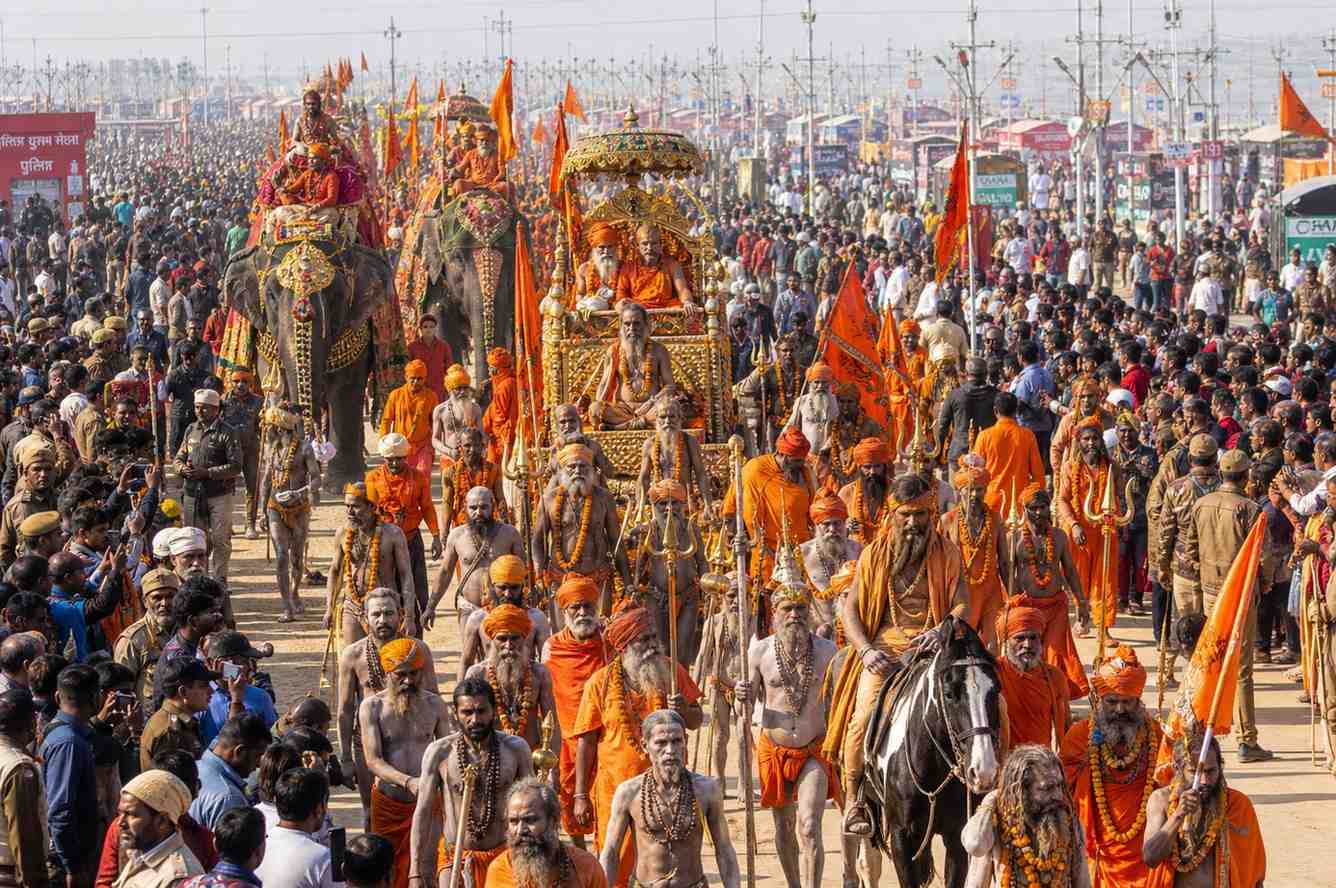
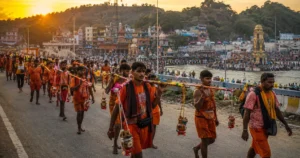
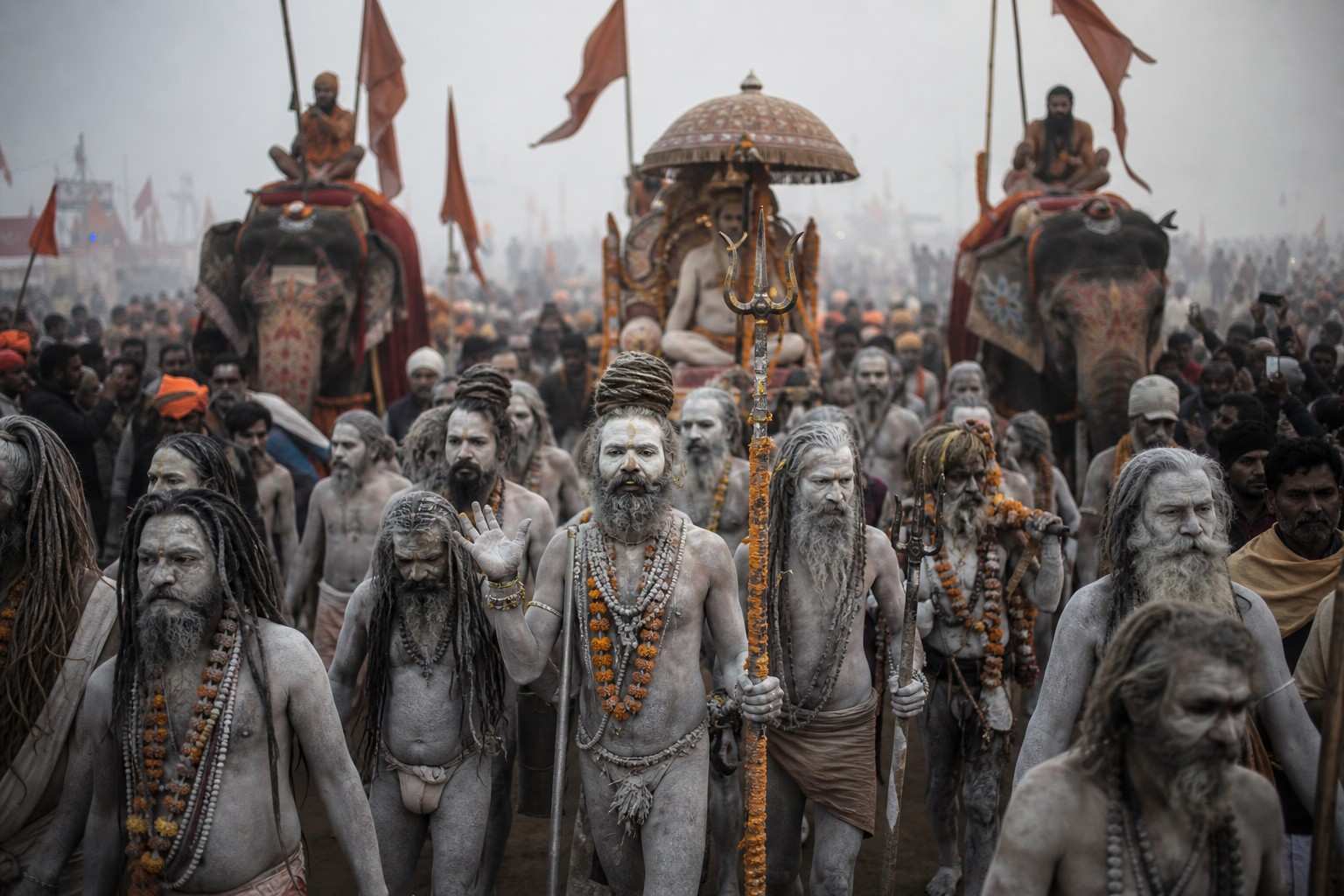 Within each Kumbh Mela, a handful of days carry far greater religious weight than others. These are the Shahi Snan days — now increasingly called Amrit Snan. On these dates, the 13 major Akharas (monastic orders) lead grand processions to the river, accompanied by elephants, chariots, drums, and thousands of sadhus. The Akharas bathe first; the river is then opened to all pilgrims.
At the 2025 Prayagraj Maha Kumbh, the most sacred bathing day was Mauni Amavasya on January 29. Estimates suggest around 73 lakh devotees had bathed by 6 AM alone on that single morning.
What Actually Happens at the Kumbh Fair
 A lot of first-time visitors come expecting a single event and find something closer to a temporary city.
The Akharas are the spiritual backbone of the event. There are 13 major ones — ancient monastic orders originally established as warrior sects to protect religious traditions. The Naga Sadhus, ash-covered ascetics who renounce clothing and material life entirely, lead the processions and are among the first to bathe on Shahi Snan days.
Many serious pilgrims practice Kalpvas — a month-long stay at the Kumbh grounds during the Hindu month of Magh, living in tents, bathing daily at the Sangam, eating one simple meal a day, and attending religious discourses. During the 2025 Maha Kumbh, roughly 5 to 6 million devotees were staying on-site on any average day.
Beyond the bathing rituals, the Kumbh grounds host continuous religious discussions, kirtan sessions, yoga camps, Sanskrit schools, and large-scale cultural performances. And the fair in the more literal sense — stalls, food, handicrafts, devotional items — runs alongside everything else.
What Happens at Kumbh Mela
The central ritual is bathing in the river on the main Shahi Snan dates the royal bathing days determined by astrological calculations. On these days, the various akharas (religious orders of sadhus and monks) take precedence in entering the water, in a specific sequence that has been maintained for centuries. Beyond the bathing, Kumbh Mela is a vast temporary city hundreds of thousands of tents, temporary hospitals, markets, and religious camps spread across the riverbanks. Sadhus of every kind including the ash-covered Naga sadhus who renounce clothing are visible in large numbers. Discourses, music, and religious programs run continuously. For most pilgrims, Kumbh Mela is both a deeply personal religious act and a social event on a scale that exists nowhere else.
How to Get There and What to Prepare
 Each of the four locations is reachable by air, rail, and road. Prayagraj has its own airport with direct flights from Delhi, Mumbai, Kolkata, and Bangalore. Haridwar is about 200 km from Delhi. Nashik is about 170 km from Mumbai. Ujjain is served by Indore airport, roughly 55 km away.
Indian Railways runs special trains during major Kumbh events. For the 2025 Maha Kumbh, 360 trains operated on the peak Mauni Amavasya day alone. Book well in advance — this is not optional.
For accommodation, options range from government camps and tent colonies to ashrams and hotels. During peak Shahi Snan dates, prices can triple and availability disappears months ahead. Booking three to six months early is a reasonable minimum.
A few practical things to keep in mind: crowds on peak days are genuinely intense, so arrive early and establish a meeting point before entering the main ghat area. Carry hand sanitiser and drink bottled water only. Medical camps are set up across the grounds — note their locations when you arrive. Photography is permitted in most areas, but ask before photographing sadhus. Modest dress is appropriate near ghats and within Akhara camps.
Common Questions
Is the Kumbh Mela only for Hindus? No. It is open to everyone, including non-Hindus and international visitors. At the 2025 Maha Kumbh, a delegation of 118 diplomats from 77 countries visited on February 1. There is no barrier to participation.
What is the difference between Kumbh Mela and Maha Kumbh Mela? The regular Purna Kumbh Mela occurs every 12 years at each of the four cities. The Maha Kumbh is held only at Prayagraj, only once every 144 years. The 2025 event was a Maha Kumbh — which is why it drew record attendance.
How are the dates decided? Dates are set by Hindu astrologers based on the positions of Jupiter, the Sun, and the Moon in specific zodiac signs, using the traditional Panchang (Hindu lunar calendar). The official confirmed schedule is released by the relevant state government.
Is it safe for solo women travellers? The Kumbh grounds have dedicated women’s help centres, police booths, and separate changing areas at the ghats. On peak Snan days, crowds are extremely dense. Solo women travellers are advised to stay in well-reviewed accommodation, avoid isolated areas after dark, and travel in groups on main bathing days.
What are the Naga Sadhus? Naga Sadhus are ascetic followers of Lord Shiva who renounce material life — including clothing — and live in Himalayan caves or forest retreats. At the Kumbh Mela, they lead the Akhara processions and are among the first to bathe on Shahi Snan days.
When is the next Kumbh Mela in Prayagraj? The Ardh Kumbh returns to Prayagraj in 2030. The next Purna Kumbh there will be in 2037. The next Maha Kumbh — a once-in-144-year event — will be in 2169.

Abhay Ramola researches world festivals across primary sources, local accounts, and on-ground reporting. He founded Dionfest to cover what gets missed when festivals become tourism content the history, the ritual, and the people behind it.
5 thoughts on “Kumbh Mela Guide: History, Locations & 2027–2030 Dates”