
Can Air Pollution Cause a Heart Attack? What Doctors Won’t Tell You Until It’s Too Late

Yes. Air pollution can cause a heart attack. Not someday, not theoretically right now, on high-smog days, millions of people face a measurably higher chance of a cardiac event.
Most people think of air pollution as a lung problem. Coughing, wheezing, asthma. But your heart takes the hit just as hard. In fact, the World Health Organization estimates that 19% of all cardiovascular deaths worldwide are linked to outdoor air pollution. That’s not a small footnote. That’s nearly 1 in 5 heart-related deaths.
This article breaks down exactly how air pollution damages your heart, what types of pollution are the worst offenders, who is most at risk, and what you can actually do to protect yourself.
How Air Pollution Reaches Your Heart
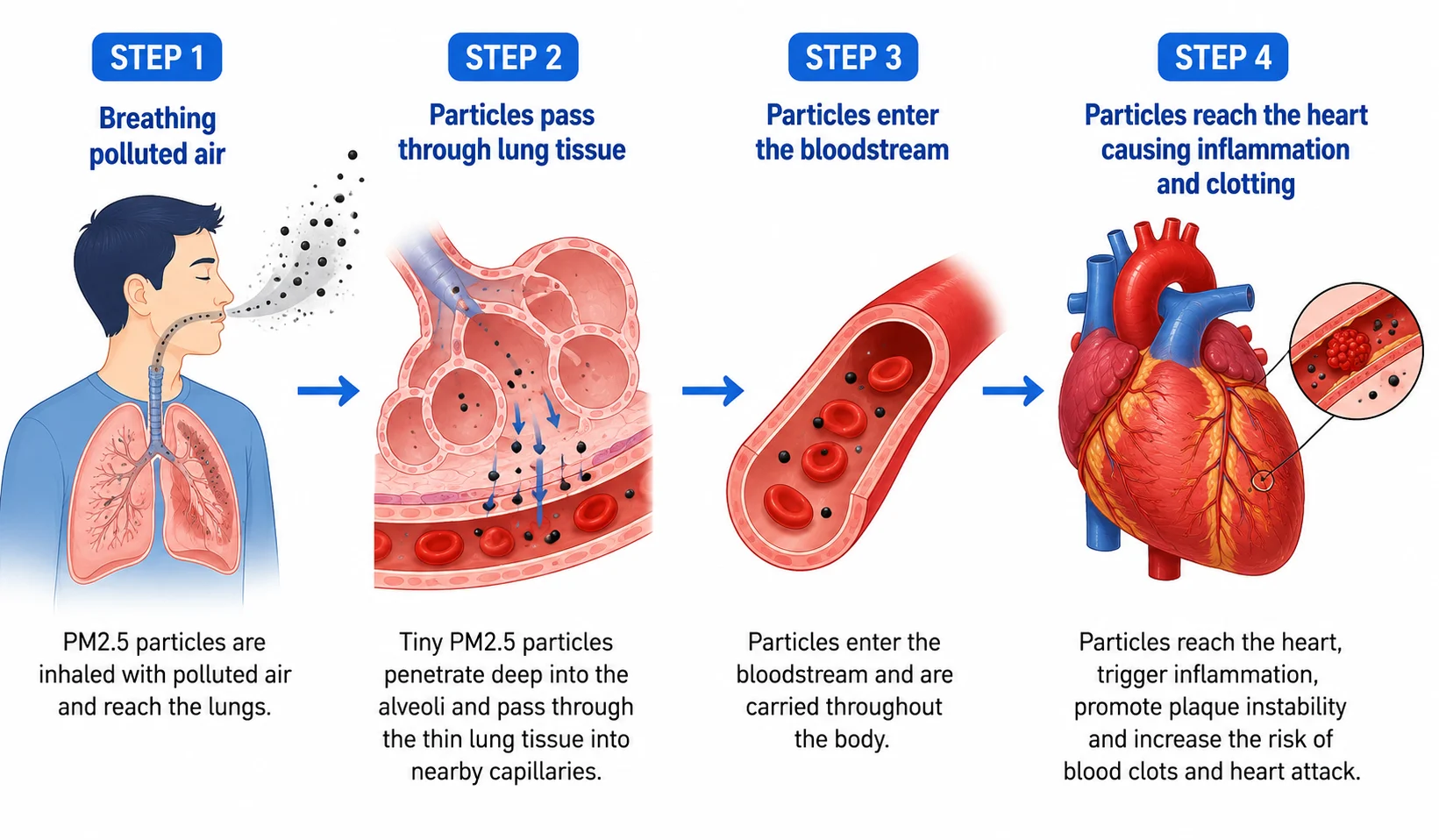 Air pollution doesn’t stay in your lungs. That’s the part most people miss.
When you breathe in polluted air, tiny particles some smaller than 1/30th the width of a human hair pass through your lung tissue and enter your bloodstream directly. Once they’re in your blood, they can:
- Trigger inflammation in artery walls, which makes plaques more likely to rupture and block blood flow to the heart.
- Increase blood clotting tendency, meaning your blood becomes “stickier” and more prone to forming clots inside coronary arteries.
- Cause your heart to beat irregularly, which raises the risk of sudden cardiac events.
- Raise blood pressure acutely, putting sudden strain on the heart muscle.
This isn’t a slow, 20-year process. Some of these effects kick in within hours of exposure to heavily polluted air.
The Pollution Types That Damage Your Heart Most
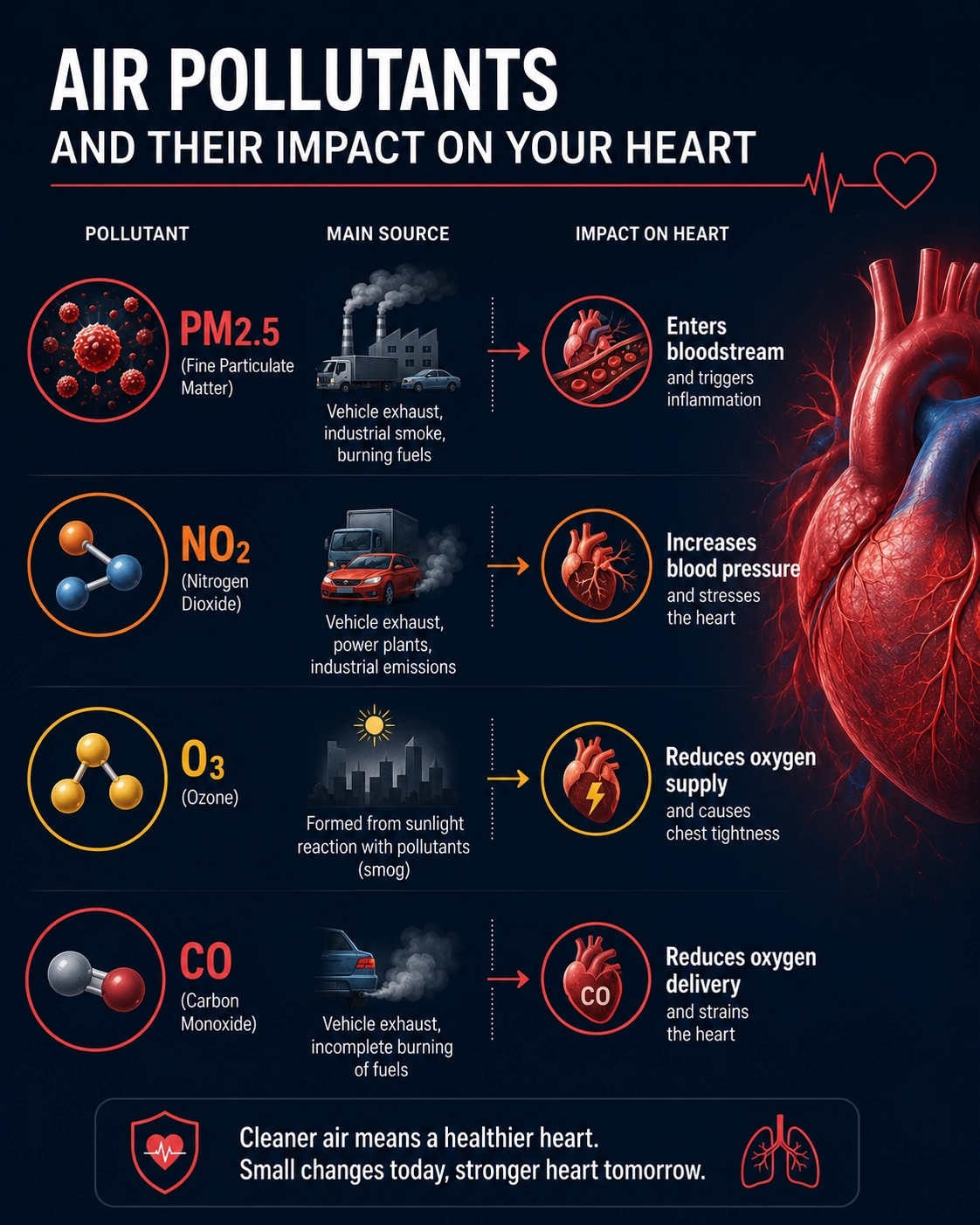 Not all air pollution is equal when it comes to heart risk. Here’s what matters most:
PM2.5 The Most Dangerous Particle
PM2.5 refers to fine particulate matter smaller than 2.5 micrometers. These come from vehicle exhaust, industrial smokestacks, wildfires, and burning coal or wood.
They are small enough to bypass your body’s natural defenses and go straight into your bloodstream. The American Heart Association identified PM2.5 as the single most harmful air pollutant for cardiovascular health back in 2010, and research since then has only strengthened that finding.
Nitrogen Dioxide (NO2)
NO2 comes mainly from diesel engines and gas stoves. It irritates blood vessels, promotes arterial stiffness, and worsens outcomes in people who already have heart disease.
Ozone (O3)
Ground-level ozone forms when sunlight reacts with vehicle and industrial emissions. It triggers oxidative stress essentially a kind of internal “rusting” of your arteries which speeds up plaque buildup.
Carbon Monoxide (CO)
CO from vehicle exhaust and burning fuel reduces the oxygen-carrying capacity of your blood. For someone already managing heart disease, even brief CO spikes can cause angina or worse.
What the Research Actually Shows
The evidence here is strong and consistent. This isn’t fringe science.
- A 2019 study in the European Heart Journal found that people living in areas with high PM2.5 concentrations had significantly more coronary artery calcification a direct marker of heart disease risk.
- The Harvard T.H. Chan School of Public Health found that for every 10 micrograms per cubic meter increase in PM2.5 exposure, the risk of dying from cardiovascular disease goes up by 12%.
- A 2020 study in the BMJ found that heart attack risk increased significantly within hours of heavy pollution exposure, particularly from traffic-related emissions.
- Research from China’s 2013 pollution crisis showed hospital admissions for acute coronary events spiked sharply on days when PM2.5 levels exceeded safe thresholds.
The science isn’t suggesting a weak association. It’s showing a direct, dose-dependent relationship more pollution equals more cardiac events.
Who Faces the Highest Risk
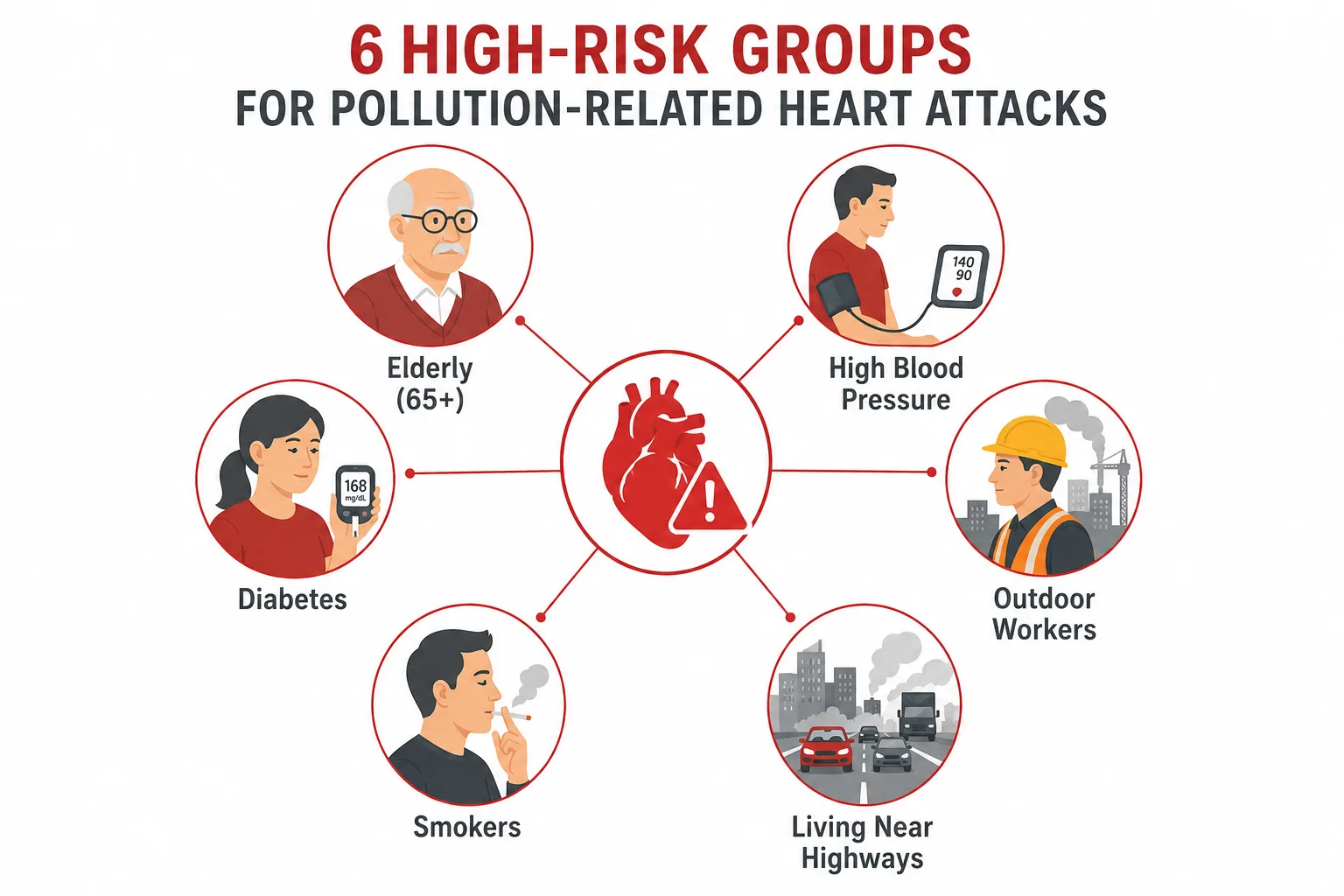 Air pollution affects everyone, but certain groups face a much steeper increase in heart attack risk:
- People over 65: Older arteries are less elastic and more vulnerable to inflammation and clotting.
- People with existing heart disease or high blood pressure: Their cardiovascular system has less reserve to handle the added stress.
- Diabetics: Diabetes already damages blood vessels; pollution accelerates that damage.
- People living near busy roads or industrial zones: Chronic, daily exposure compounds the damage over years.
- Outdoor workers: Construction workers, traffic police, delivery drivers, and street vendors get prolonged daily exposure without protection.
- Smokers: Smoking and air pollution have an additive effect together, they multiply cardiovascular risk well beyond what either does alone.
If you fall into more than one of these categories, your risk isn’t just higher it’s considerably higher.
Can a Single Day of Bad Air Trigger a Heart Attack?
Yes. This is the part that surprises most people.
A 2012 meta-analysis published in The Lancet pooled data from over 36 million people across multiple countries. It found that on days with elevated PM2.5 or NO2 levels, heart attack hospital admissions increased within 24 hours.
Researchers call this a “triggering effect.” The pollution doesn’t create heart disease from scratch in one day. But if you already have narrowed arteries or unstable plaques — even without knowing it a bad air day can be the trigger that pushes things over the edge.
Think of it like a loaded gun. Pollution doesn’t load it. But it can pull the trigger.
The Hidden Connection: How Air Pollution Damages Your Lungs First
There’s an important step in this chain that often gets overlooked.
Before pollution reaches your heart, it does serious damage to your lungs. Inflamed, stressed lung tissue becomes a gateway for particles entering the bloodstream. Lung inflammation also sends distress signals throughout the body that increase systemic inflammation, including in your coronary arteries.
Understanding how air pollution affects your respiratory system first is key to understanding the full picture of how it ultimately threatens your heart. This detailed breakdown of how air pollution damages your lungs explains the lung-level damage that precedes the cardiovascular effects described in this article.
The lung-heart connection is not separate biology. It’s one system. What harms one part harms the other.
How to Reduce Your Risk
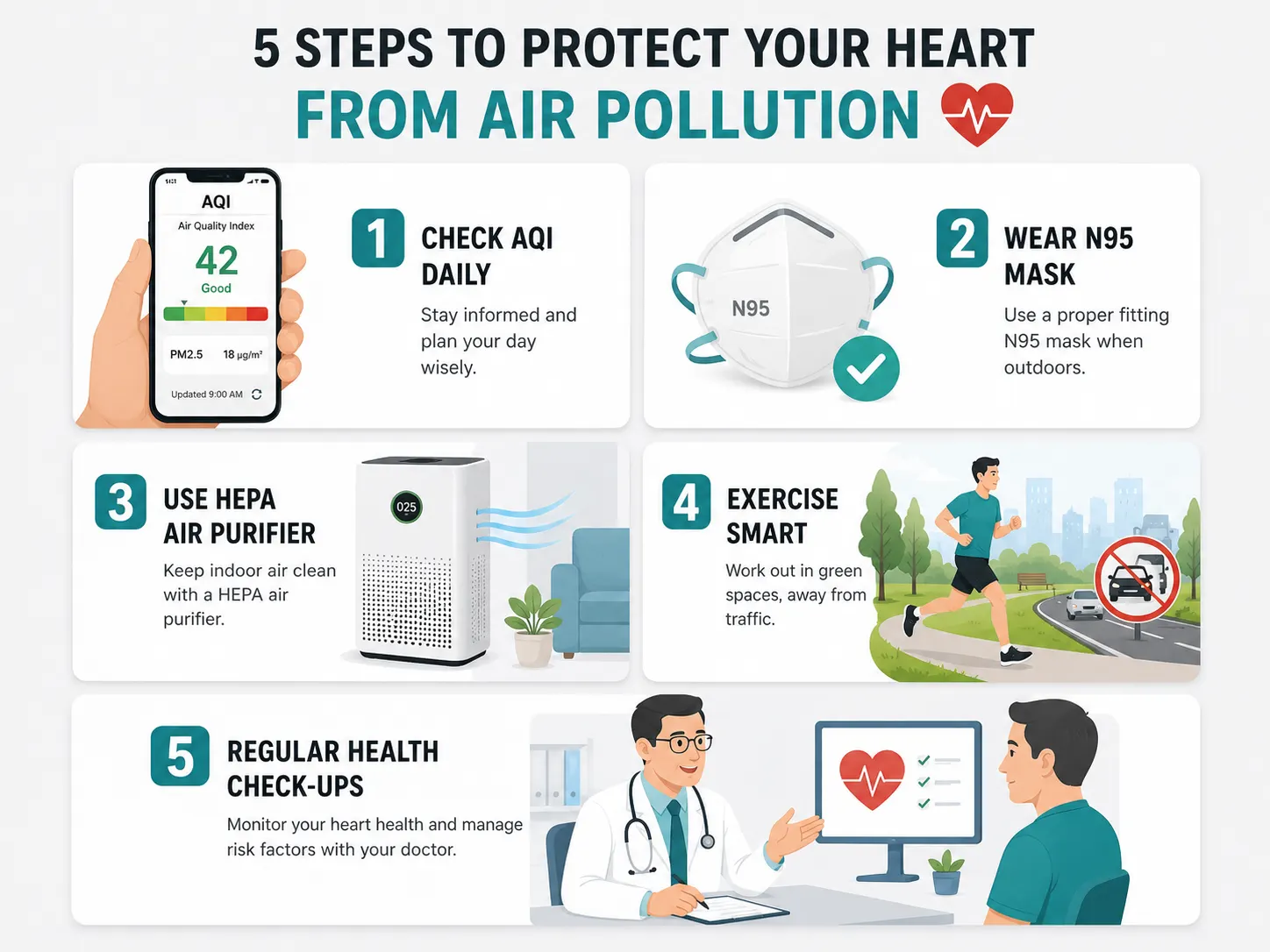 You can’t move cities or stop traffic. But you can take practical steps that meaningfully reduce your exposure and your cardiac risk.
Check Air Quality Before Going Out
The AQI (Air Quality Index) is publicly available in most countries via apps like IQAir, AirVisual, or government weather platforms. On days when AQI exceeds 100, limit outdoor activity especially intense exercise, which makes you breathe faster and pull in more pollutants.
Wear the Right Mask
Standard surgical masks filter large particles but do almost nothing against PM2.5. N95 or FFP2 masks, when worn correctly, filter at least 95% of fine particles. If you live in a polluted city, this is worth taking seriously.
Improve Indoor Air Quality
Indoor air can be two to five times more polluted than outdoor air, especially in homes using gas stoves or in buildings near traffic. Steps that actually help:
- Use a HEPA air purifier in rooms where you spend the most time, particularly the bedroom.
- Ventilate during low-pollution hours (typically early morning in cities, before traffic peaks).
- Replace gas cooking with induction where possible gas stoves are a significant indoor NO2 source.
Don’t Exercise Near Traffic
Studies show that people who exercise near busy roads experience significantly less cardiovascular benefit from the workout because pollution exposure offsets the gains. Run in parks, not along highways.
Manage Existing Risk Factors
If you already have high blood pressure, high cholesterol, or diabetes, controlling those conditions gives your heart more resilience against the added stress of air pollution. These aren’t separate problems they interact.
Advocate for Cleaner Air
Individual steps matter, but air quality is a policy problem. Supporting clean air legislation, stricter vehicle emissions standards, and urban tree cover are the only interventions that work at scale.
Can Air Pollution Cause a Heart Attack in Young, Healthy People?
Mostly, serious cardiac events from pollution happen to people with pre-existing risk. But “healthy” is not the same as “unaffected.”
Studies show that even young adults with no diagnosed heart disease show measurable changes in heart rate variability and blood pressure within hours of high pollution exposure. Long-term exposure years of living in a polluted city accelerates arterial aging even in people who exercise and don’t smoke.
The risk is lower for young, healthy people. It is not zero.
FAQ
Q: Does air pollution cause heart disease, or just trigger events in people who already have it? Both. Long-term exposure to PM2.5 and other pollutants actively builds atherosclerosis (plaque in arteries) over years. Short-term spikes on high-pollution days can then trigger acute events — heart attacks or arrhythmias — in people who have accumulated that damage. It’s a two-stage process: buildup and trigger.
Q: How much pollution is safe for heart health? According to the WHO’s 2021 guidelines, the safe annual mean for PM2.5 is 5 micrograms per cubic meter. Most major cities, including in Europe and North America, regularly exceed this. Most cities in South Asia and parts of Africa and the Middle East exceed it by 10 to 20 times.
Q: Does indoor air pollution also cause heart attacks? Yes. Indoor air pollution from cooking fires, gas stoves, tobacco smoke, and inadequate ventilation carries many of the same particles as outdoor pollution. In countries where solid fuels are burned for cooking, indoor air pollution is a leading cause of cardiovascular death particularly among women who do most of the cooking.
Q: Can an air purifier actually reduce heart attack risk? Research says yes, to a measurable degree. A randomized trial published in JAMA Internal Medicine found that HEPA air purifiers reduced cardiovascular inflammation markers in study participants within 48 hours of use. It’s not a cure, but it’s a real, documented benefit.
Q: If I already had a heart attack, should I be extra careful about air pollution? Absolutely. People who have had a prior cardiac event are among the most vulnerable to pollution-triggered recurrence. On high-AQI days, they should stay indoors, avoid physical exertion outside, and ensure their indoor air is filtered. Their cardiologist should be aware of this risk and factor local air quality into their management plan.
The Bottom Line
Can air pollution cause a heart attack? The answer is a clear yes and the mechanism is well-understood, the evidence is strong, and the risk is not confined to people living in obviously smoggy cities.
Fine particles enter your blood, inflame your arteries, destabilize plaques, raise your blood pressure, and make your blood clot more easily. On the worst air days, this happens fast enough to push vulnerable people into acute cardiac events.
You don’t have to be a smoker, sedentary, or overweight for this to matter. You just have to breathe.
Take air quality as seriously as diet and exercise. Check the AQI. Protect your indoor air. Know your risk factors. And if you have any existing heart condition, treat high-pollution days the way you’d treat extreme heat as a real medical threat that requires real precautions.

Abhay Ramola researches world festivals across primary sources, local accounts, and on-ground reporting. He founded Dionfest to cover what gets missed when festivals become tourism content the history, the ritual, and the people behind it.








1 thought on “Can Air Pollution Cause a Heart Attack? What Doctors Won’t Tell You Until It’s Too Late”