Kanwar Yatra 2026: The Pilgrimage Numbers Don’t Add Up
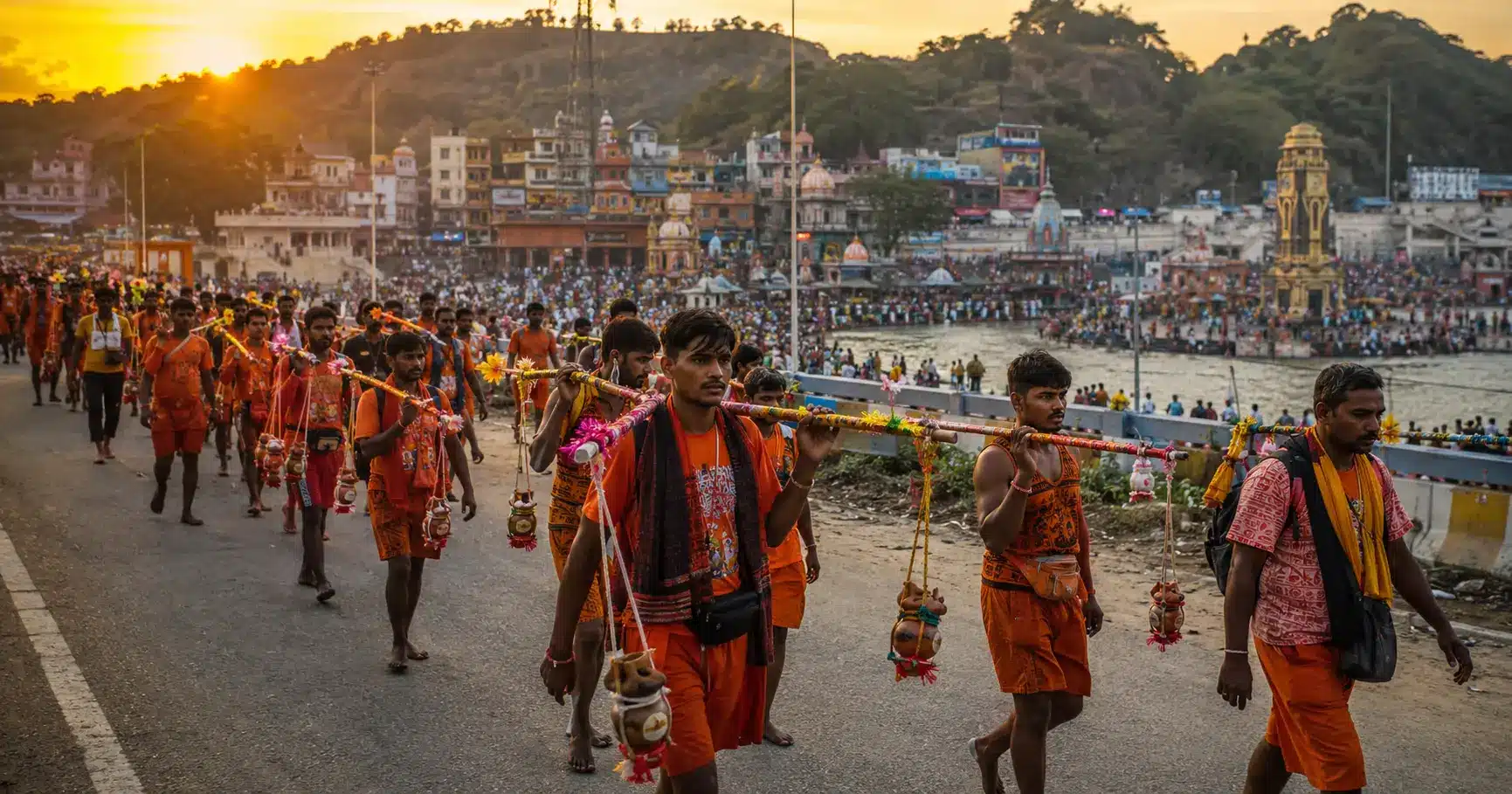
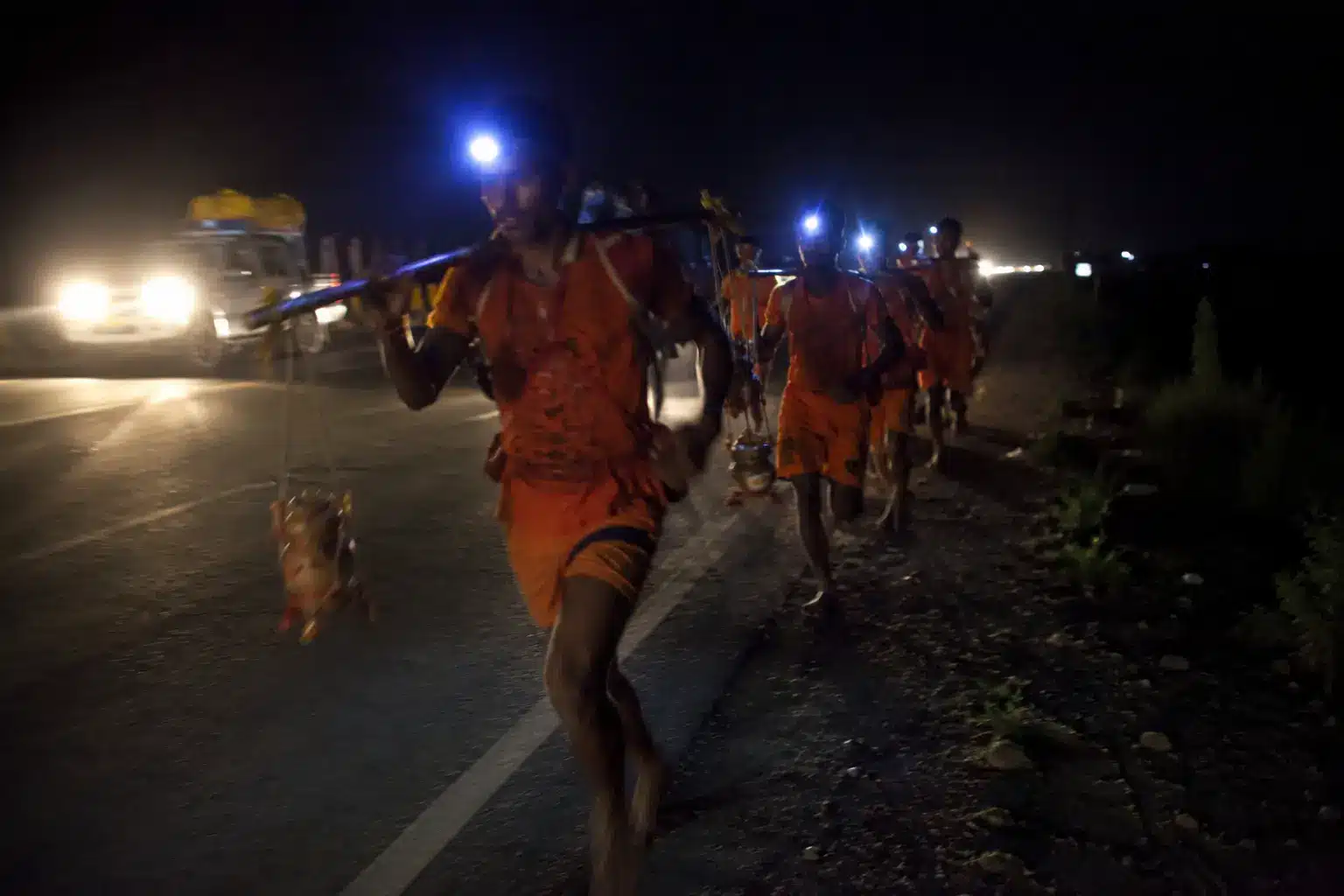
On the night of August 11, somewhere on a highway between Haridwar and a Shiva temple a few hundred kilometres away, a man who hasn’t slept in over a day will be running the last stretch barefoot. A bamboo pole rests on his shoulders. Two pots of river water hang from either end. He cannot set it down not to rest, not to drink, not for anything because letting it touch the ground undoes the entire point of the walk.
That’s the Kanwar Yatra in one image. The rest of it is just as physical, and far bigger than most people outside North India realize.
Quick answer: Kanwar Yatra is an annual Hindu pilgrimage in which devotees of Shiva, called Kanwariyas, walk often barefoot, sometimes for days carrying Ganga water from rivers in Uttarakhand or Bihar to Shiva temples across North India. It falls every year in the monsoon month of Shravan (Sawan), and in 2026 it runs from July 30 to August 11.
Key Facts: Kanwar Yatra 2026
- Also known as: Kanwar Mela, Kavad Yatra
- Dedicated to: Lord Shiva
- 2026 dates: July 30 – August 11 (main pilgrimage window)
- Jalabhishek night: August 11–12 (Sawan Shivratri)
- Sawan month closes: August 28 (Shravan Purnima)
- Main routes: Haridwar / Gangotri / Gaumukh (Uttarakhand) → Delhi-NCR, UP, Haryana, Punjab, Rajasthan; Sultanganj (Bihar) → Deoghar (Jharkhand), roughly 105 km
- States involved: Uttarakhand, Delhi, UP, Haryana, Punjab, Rajasthan, Bihar, Jharkhand, MP
- Scale: one of the largest annual religious gatherings anywhere — tens of millions of pilgrims, with estimates that vary by state and by what’s actually being counted
- Devotees called: Kanwariyas
What Is Kanwar Yatra? History and Origin
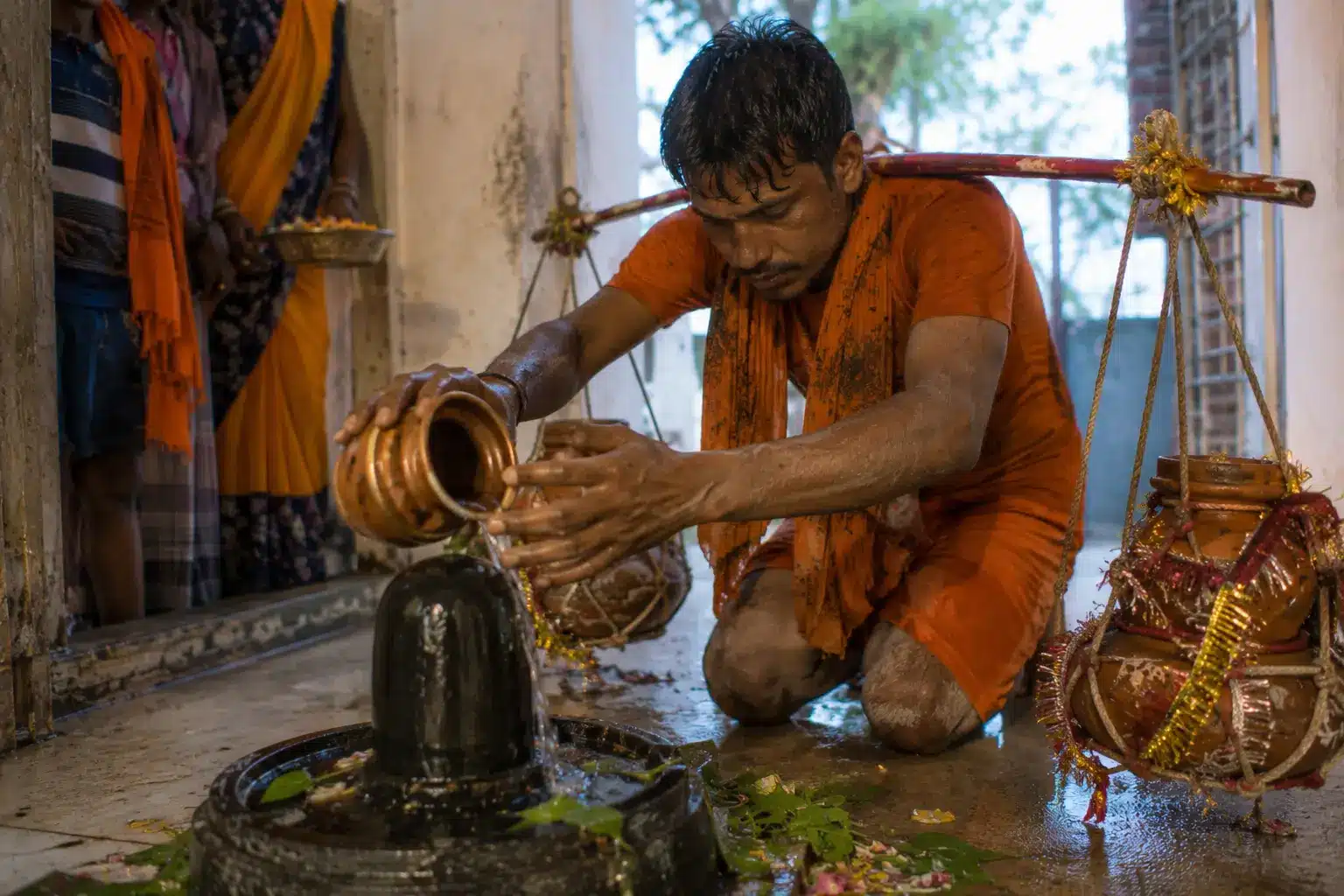
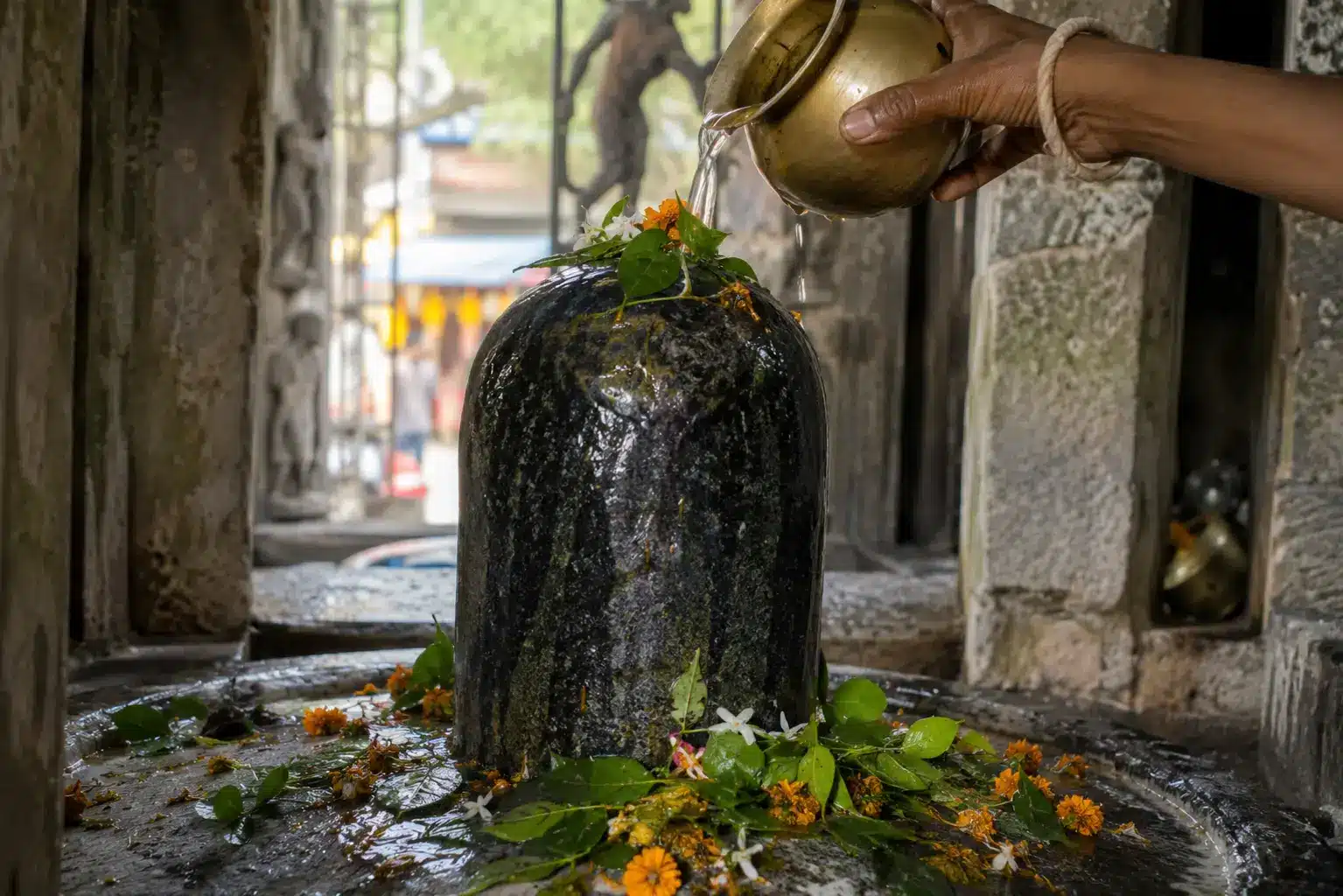 The mythology behind it is straightforward. During the Samudra Manthan the churning of the cosmic ocean Shiva drank a poison called Halahala to save the universe from it, and it turned his throat blue, which is why he’s also called Neelkanth. Devotees believe pouring Ganga water on a Shiva lingam cools that lingering effect. Some traditions credit Parshuram as the first person to make the offering; others trace it to anonymous ascetics performing it as an act of penance, with no particular start date attached.
The earliest documented version is more specific than the myth. Historian Devi Prasad Dubey, of Allahabad University, has traced written references to pilgrims carrying Ganga water from Sultanganj to the Vaidyanath shrine back to the 1700s. For most of its history this stayed small: a practice kept up by a handful of ascetics and older devotees, not a mass event.
That changed in the late 1980s. Better road connectivity, more disposable income among Marwari traders who funded local Kanwar Sanghs, and a general rise in organized religious participation across the Hindi belt turned a quiet ritual into what Wikipedia now describes as India’s largest annual religious gathering. The Haridwar leg alone is estimated at around 30 million devotees in both 2023 and 2024. Whether that number is precise is genuinely hard to say (more on that below), but the trajectory is real: this went from a fringe practice to a multi-state mobilization of road infrastructure, police, and medical camps inside about three decades.
Kanwar Yatra 2026 Dates, Timing, Location
Kanwar Yatra 2026 runs from Thursday, July 30 to Tuesday, August 11 the night of Sawan Shivratri, when most pilgrims complete their jalabhishek (the water offering) at a Shivling. The auspicious window for the offering itself falls between roughly 4:54 AM on August 11 and 1:52 AM on August 12, though exact muhurat timings shift slightly depending on which panchang you follow.
A few dates worth separating out, because sources online mix these up constantly:
- July 30: Sawan begins (north Indian Purnimanta calendar) and most Kanwariyas start their walk
- August 9–11: The Dak Kanwar period non-stop relay running, timed to land right before Shivratri
- August 11–12: Sawan Shivratri, the main jalabhishek night
- August 28: Shravan Purnima, when the full Sawan month formally ends (some pilgrims, especially Dandi Kanwariyas doing the slowest form, are still completing their journey around this date)
The two main starting points are Haridwar (and nearby Gangotri/Gaumukh) in Uttarakhand, feeding pilgrims into Delhi-NCR, Uttar Pradesh, Haryana, Punjab, and Rajasthan, and Sultanganj in Bihar, feeding the Sultanganj–Deoghar leg in Jharkhand. These two routes draw from almost entirely different states and have noticeably different characters, which is worth its own section below.
How Is It Celebrated? Rituals and the Five Types of Kanwar
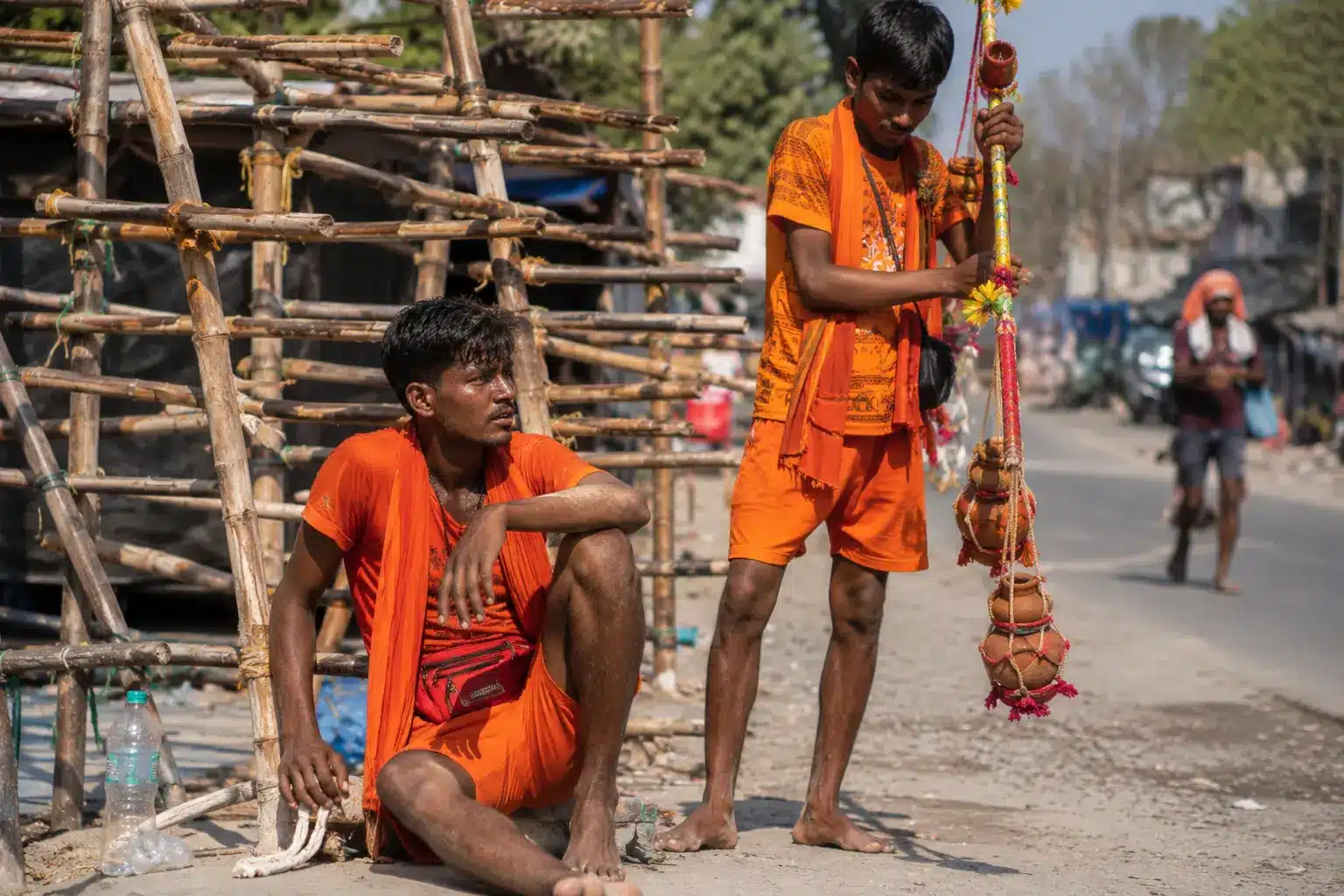 The basic ritual is the same everywhere: a Kanwariya bathes in the Ganga (at Haridwar’s Har Ki Pauri, or at Sultanganj’s Ajgaibinath temple), fills two pots with the water, hangs them from opposite ends of a bamboo pole, and carries that pole the kanwar to a Shiva temple, chanting “Bol Bam” or “Har Har Mahadev” along the way. The water can never touch the ground until it’s poured on the lingam. Along the route, the pole rests on wooden stands set up specifically for this purpose, never directly on the earth.
Within that basic structure, there are several distinct forms, ranked roughly by difficulty:
- Samanya (Simple) Kanwar — the standard version. Walk, rest when needed, keep the kanwar off the ground.
- Khadi Kanwar — the kanwar must stay upright at all times, including during rest. A second person holds it while the pilgrim sits.
- Dak Kanwar — a non-stop relay. No sitting, no sleeping, until the water reaches the temple. This is the form that peaks in the final 24–36 hours before Shivratri, when groups are essentially running.
- Dandi Kanwar — the most extreme version. The pilgrim performs full-body prostrations (dand-baithak) for every length of their own body covered, for the entire route. This can take a month.
- Jhanki Kanwar — a more decorative, often community-organized form built around elaborately set-up kanwars, more processional than ascetic.
Diet and conduct rules apply throughout: no meat, no alcohol, no intoxicants, and most pilgrims observe celibacy for the duration. Saffron clothing is near-universal. Partly tradition, partly practical: it’s said to discourage vanity, though at this point it also functions as crowd-identification on roads where a quarter-million people might be moving at once.
Haridwar vs. Sultanganj-Deoghar Two Very Different Yatras
 Most English-language coverage treats Kanwar Yatra as one event. It’s really two, and they don’t feel alike at all.
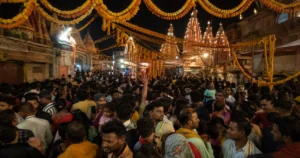
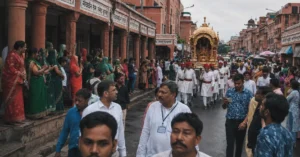
The Haridwar-to-Delhi/UP corridor is the loud one. DJ trucks blast remixed devotional tracks, highways get divided into Kanwariya-only lanes, and the Uttarakhand government deploys thousands of police plus drone surveillance just to manage traffic flow. This is the version that shows up in news footage saffron seas on the Delhi-Meerut Expressway, helicopter flower showers for arriving pilgrims, sound-limit notices sent to DJ operators.
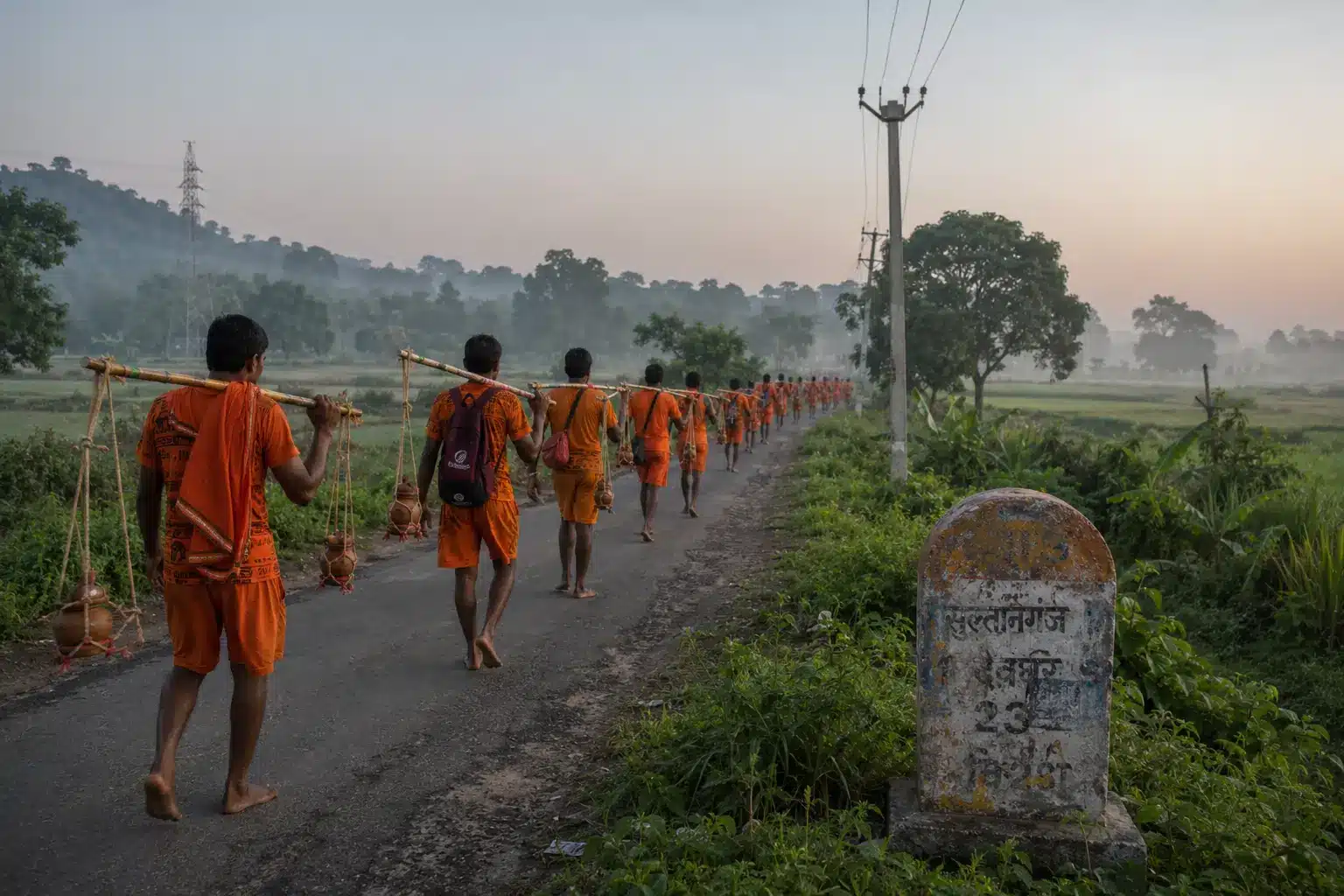
The Sultanganj-to-Deoghar route through Bihar and Jharkhand is quieter and older-feeling. One travel writer who walked it described the path between towns by their local nicknames Suiyya Pahad (“Needle Mountain”), Bhutbangla (“Haunted House”), Jalebiya Mod (“Twisty Turns”) names that have nothing to do with Shiva and everything to do with generations of pilgrims who walked the same 105 km and gave the terrain its own folklore. Pilgrims here travel in smaller groups, often with a single bamboo stick decorated with peacock feathers rather than the elaborate pot-and-pole rigs seen near Delhi, and the journey is generally described as more austere, more about endurance than spectacle.
If you’re writing or reading about Kanwar Yatra and only one version comes to mind, it’s almost certainly the Haridwar one — which means the Bihar-Jharkhand leg is the actual underserved angle here, not just the festival as a whole.
Practical Guide What to Carry, Eat, and Expect
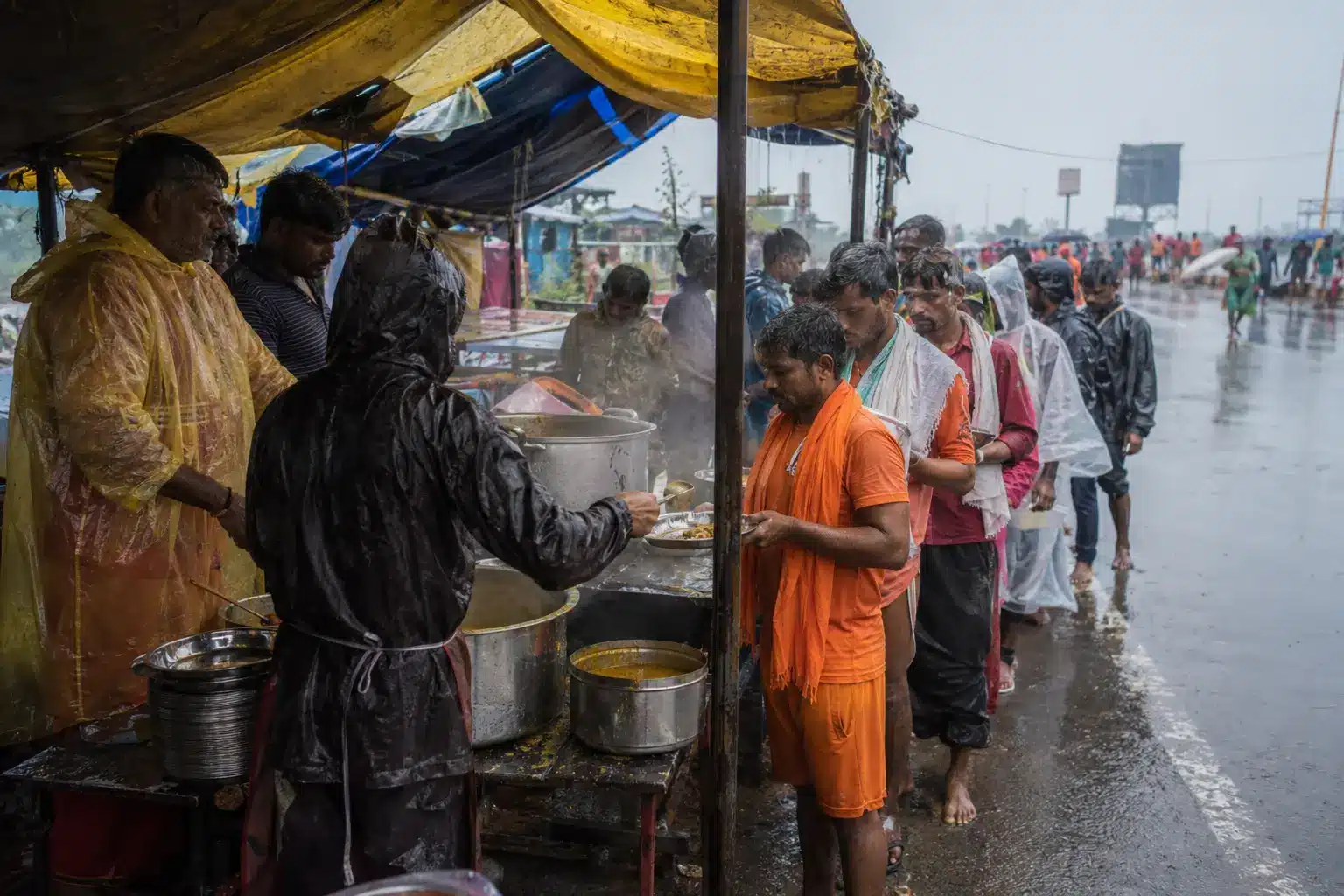 If you’re undertaking the yatra: Start training weeks ahead with long-distance walking — this is not something to attempt cold. If walking barefoot, toughen your feet gradually beforehand rather than starting on day one; blisters that form early tend to compound over a multi-day walk rather than heal. Carry blister treatment, antiseptic, ORS sachets, a torch for night walking, and a lightweight poncho — this falls in monsoon season, and rain is close to guaranteed somewhere along most routes. Food along the way is sattvic: no onion, garlic, meat, or alcohol, and most camps (sevashivirs) offer it free, run by religious organizations and local volunteers.
Keshav Kabra, who wrote about his first Kanwar Yatra on Medium under the title “Self Healing Souls”, walked the 108 km Sultanganj-to-Deoghar stretch as a first-timer and didn’t romanticize it. He describes blisters forming inside earlier blisters by the second day, and his group working out a fix on the move — rest every two hours, then a few squats before walking again so the leg muscles wouldn’t stiffen up, apologizing out loud to Shiva and to the kanwar itself each time they set it down on a stand. At one of the harder points, he leaned on a line that’s stuck with a lot of people doing difficult things on purpose: “pain is inevitable, but suffering is optional.” That kind of detail doesn’t show up in any official guide, but it’s the sort of thing that actually matters if you’re attempting the walk for the first time.
If you’re just trying to get around Delhi-NCR, UP, or Uttarakhand during this period: This is the part most guides skip entirely, and it affects far more people than the pilgrims themselves. Expect single-lane restrictions or full closures on routes like the Delhi-Meerut Expressway, NH-9, and several arterial roads through Ghaziabad, Noida, and Meerut, typically starting a week or more before the peak dates and easing only after Shivratri. If you live in or are traveling through these corridors in late July or early August 2026, check your specific route against local police traffic advisories closer to the date they’re published city by city and change year to year.
How Big Is It, Really? Scale and Security
Here’s where the numbers get genuinely confusing, and it’s worth being upfront about that instead of just repeating the biggest figure available. Wikipedia cites an estimated 30 million devotees for the Haridwar leg in 2023 and 2024. For 2025, Haridwar district officials projected as many as 7 crore (70 million) before the season started. But the actual running counts published by Uttarakhand Police during the 2025 yatra the closest thing to a real headcount showed cumulative totals of roughly 1.5 crore, then 2.5 crore, then crossing 3 crore at various points through the month.
The gap between a 7-crore pre-season projection and a 3-crore mid-season tally isn’t necessarily a contradiction. They’re probably measuring different things: one’s a season-long projection, the other a running count at a single checkpoint on a single day. Either way, it’s a good illustration of why “how many people” is a much softer number than headlines suggest. Treat any single figure you see, including the ones in this article, as a directional estimate rather than a census.
What’s not in dispute is the infrastructure required to manage it. For 2025, Haridwar was divided into 16 super zones, 38 zones, and 134 sectors, with nearly 3,000 police personnel plus 15 companies of PAC and 18 companies of central paramilitary forces, monitored by drones and a centralized control room. New for 2025: QR codes at border entry points so pilgrims could check traffic plans and the fair-area map before entering the city. Rules on the ground include a 10-foot height limit on kanwars, a ban on sticks, tridents, and other weapons, and volume limits on DJ trucks none of which are uniformly enforced, but all of which show up in official advisories every year.
Interesting Facts
- The Sultanganj-Deoghar route is sometimes called the world’s longest-running religious fair Shravani Mela continues there for the full 30 days of Shravan, not just on peak dates.
- Dak Kanwariyas (the non-stop relay runners) cover the same distance in roughly 24 hours that Samanya Kanwariyas take 3–5 days to walk.
- A smaller, far less publicized version of the yatra happens in Phalguna (around February-March), timed to Maha Shivratri most people have never heard of it because the Sawan version dwarfs it in scale.
- The route between Sultanganj and Deoghar passes through villages with names that long predate the modern pilgrimage’s popularity, suggesting the path itself is older than its current mass following.
- Women participate in significant numbers on both routes, despite the popular image of Kanwar Yatra being almost entirely male.
FAQ
When is Kanwar Yatra in 2026?
Kanwar Yatra 2026 runs from July 30 to August 11, with the main jalabhishek happening on the night of August 11 into August 12 — Sawan Shivratri. The broader Sawan month continues until August 28, and some slower forms of the pilgrimage finish closer to that date.
What is the history of Kanwar Yatra?
The ritual is tied to the Hindu myth of Shiva drinking poison during the Samudra Manthan, with Ganga water offered to cool its effects. Documented references to the practice go back to the 1700s, but it stayed a small, ascetic-led ritual until the late 1980s, when better roads and organized funding turned it into a mass annual pilgrimage.
How is Kanwar Yatra celebrated?
Pilgrims collect Ganga water at Haridwar or Sultanganj, carry it on a bamboo pole without letting it touch the ground, and walk often barefoot to a Shiva temple, chanting “Bol Bam” along the way. The water is poured on a Shivling as the final act, usually timed to Sawan Shivratri.
What are the different types of Kanwar?
There are five recognized forms: Samanya (standard walking), Khadi (kanwar must stay upright at all times), Dak (non-stop running relay), Dandi (full-body prostrations for the entire route, taking up to a month), and Jhanki (decorative, community-organized processions).
Is Kanwar Yatra only in Haridwar?
No. The Haridwar-to-Delhi/UP route is the most visible, but a separate, equally significant pilgrimage runs from Sultanganj in Bihar to Deoghar in Jharkhand, covering about 105 km. The two routes have different crowds, different intensity, and barely overlap in coverage.
Do women participate in Kanwar Yatra?
Yes, in meaningful numbers on both major routes, though the popular image of the yatra skews almost entirely male because Haridwar’s louder, DJ-heavy crowds dominate news coverage.
Is Kanwar Yatra a public holiday in India?
No, Kanwar Yatra itself isn’t a gazetted public holiday, though Sawan Shivratri (the culminating day) is a significant religious observance and some state governments adjust local traffic and administrative arrangements around it rather than declaring a holiday.
How long does Kanwar Yatra last?
The main pilgrimage window is about 12 days (July 30–August 11, 2026), but individual journey lengths vary by form: a Dak Kanwariya might run it in under 24 hours, while a Dandi Kanwariya doing full-body prostrations can take up to a month.
What should I wear during Kanwar Yatra?
Saffron clothing is traditional and near-universal among pilgrims. Practically, lightweight, breathable fabric and monsoon-ready gear (a poncho, a torch) matter more than the color — this falls during peak monsoon, and rain is likely somewhere on most routes.
I’m not a pilgrim will Kanwar Yatra affect my travel in Delhi, UP, or Uttarakhand?
Likely, yes, if you’re traveling through Delhi-NCR, Ghaziabad, Meerut, or Haridwar in late July or early August. Expect lane restrictions or full closures on major routes like the Delhi-Meerut Expressway and NH-9, starting roughly a week before peak dates. Check city-specific traffic advisories closer to the date, since exact diversions change year to year.
Conclusion
 Kanwar Yatra is easy to flatten into a single image saffron crowds, loud highways, a big round number for “how many people.” The reality is two pilgrimages with almost no overlap, a set of rules and forms most coverage never gets into, and a scale that even official sources can’t pin down precisely. For 2026, the dates are fixed: July 30 to August 11. Everything else about it is bigger, older, and more specific than most guides bother to mention.
Read Next:
- Maha Shivratri: 7 Powerful Rituals & The Great Night of Lord Shiva — the bigger, more widely observed Shivratri that the Phalguna Kanwar Yatra builds toward
- Van Mahotsav 2026 — India’s other major nationwide July observance, running July 1–7, a few weeks before Kanwar Yatra begins
- What Is Holi? — for contrast: India’s most boisterous, color-soaked festival, built on noise rather than discipline

Abhay Ramola researches world festivals across primary sources, local accounts, and on-ground reporting. He founded Dionfest to cover what gets missed when festivals become tourism content the history, the ritual, and the people behind it.