
Mardi Gras Festival: History & Traditions in New Orleans
What Is Mardi Gras
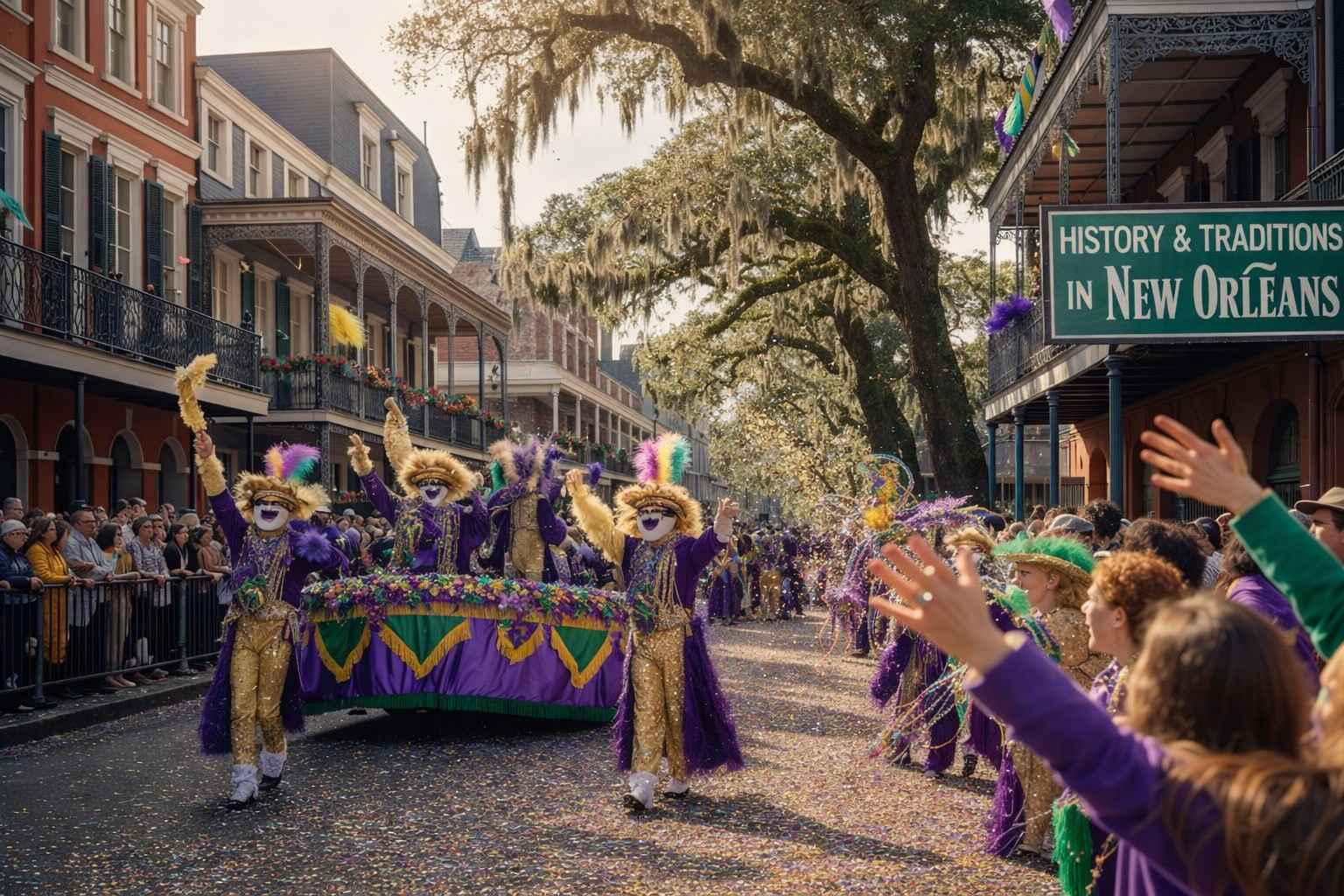
Mardi Gras is French for “Fat Tuesday” the last day before Lent begins in the Christian calendar. It’s a day of eating, drinking, and celebrating before the 40-day period of fasting and reflection. In New Orleans, that one day stretched into a weeks-long festival season that became one of the most recognized celebrations in the world.
Is Mardi Gras a Pagan Holiday
Not exactly but it has pre-Christian roots. Ancient Roman festivals like Lupercalia and Saturnalia involved feasting and excess before periods of restraint, and some historians connect these to early Carnival traditions. When Christianity spread through Europe, the Church absorbed some of these customs into the calendar. So Mardi Gras has pagan DNA, but it arrived in New Orleans as a Catholic French tradition, not a pagan one.
What Does Mardi Gras Actually Celebrate
Officially, it’s the last indulgence before Lent the Catholic season of fasting that starts on Ash Wednesday. But in practice, most people celebrating Mardi Gras in New Orleans today aren’t thinking about Lent. It’s become a cultural event: music, parades, food, community. The religious frame is still there for some, but the celebration has outgrown it.
My Wild Ride into Mardi Gras Magic
Man, let me tell you about my first Mardi Gras back in 2023 it was a total whirlwind that hooked me for life. I’d flown into New Orleans thinking it was just one big party on Fat Tuesday, but nope, the whole Carnival season had already kicked off weeks earlier. I showed up solo, wide-eyed and clueless, clutching a backpack full of snacks because I’d heard stories about endless crowds. Picture this: I’m wandering Bourbon Street, the air thick with jazz notes and that sweet, sticky scent of pralines mixing with spilled daiquiris. I spot a parade rolling by floats towering like colorful beasts, riders tossing beads like confetti. Eager to join the fun, I dove right into the thick of it, yelling for throws without a clue about etiquette. Big mistake. I accidentally elbowed a local family setting up their ladder for kids, and let’s just say, I got some side-eye. Apologizing profusely, I ended up chatting with them over shared king cake. That’s when the insight hit: Mardi Gras isn’t chaos; it’s community, a blend of history and heart where strangers become friends under strings of purple, green, and gold lights. By night’s end, I was dancing in the street, beads around my neck, feeling that pure joy of belonging. From that mishap-turned-magic, I’ve wandered back every year, chasing that vibe. Now, for your Mardi Gras 2026 blueprint—whether you’re hunting Mardi Gras dates or hidden gems in New Orleans—here’s everything to make it unforgettable. This year brings a sustainable twist with eco-friendly throws and Valentine-themed parades, blending old traditions with fresh energy.
Quick Vibes: Mardi Gras 2026 Snapshot
Ever wondered what makes Mardi Gras tick? This table’s like my adventure’s quick map—core essence unpacked with keyword-rich details to plan your trip.
| Aspect | Details |
|---|---|
| Core Essence | Mardi Gras – vibrant Carnival celebration of indulgence before Lent, with parades, music, and feasts highlighting New Orleans festival spirit. |
| Origins & Location | Rooted in French Catholic traditions from pagan fertility rites; New Orleans spotlight as the epicenter, though Mobile claims the first U.S. parade in 1703. |
| Dates 2026 | January 6 to February 17, peaking on Fat Tuesday – book early for Mardi Gras dates 2026 to snag spots amid the crowds. |
| Duration | 6 weeks of pure joy, with intense parades in the final two weeks leading to Mardi Gras New Orleans. |
| Top Highlights | 1. Elaborate floats and krewes; 2. King cake traditions; 3. Bead throws and doubloons; 4. Jazz-filled balls; 5. Sustainable trends like reusable throws in 2026. |
History of Mardi Gras in New Orleans
When Did Mardi Gras Start in New Orleans
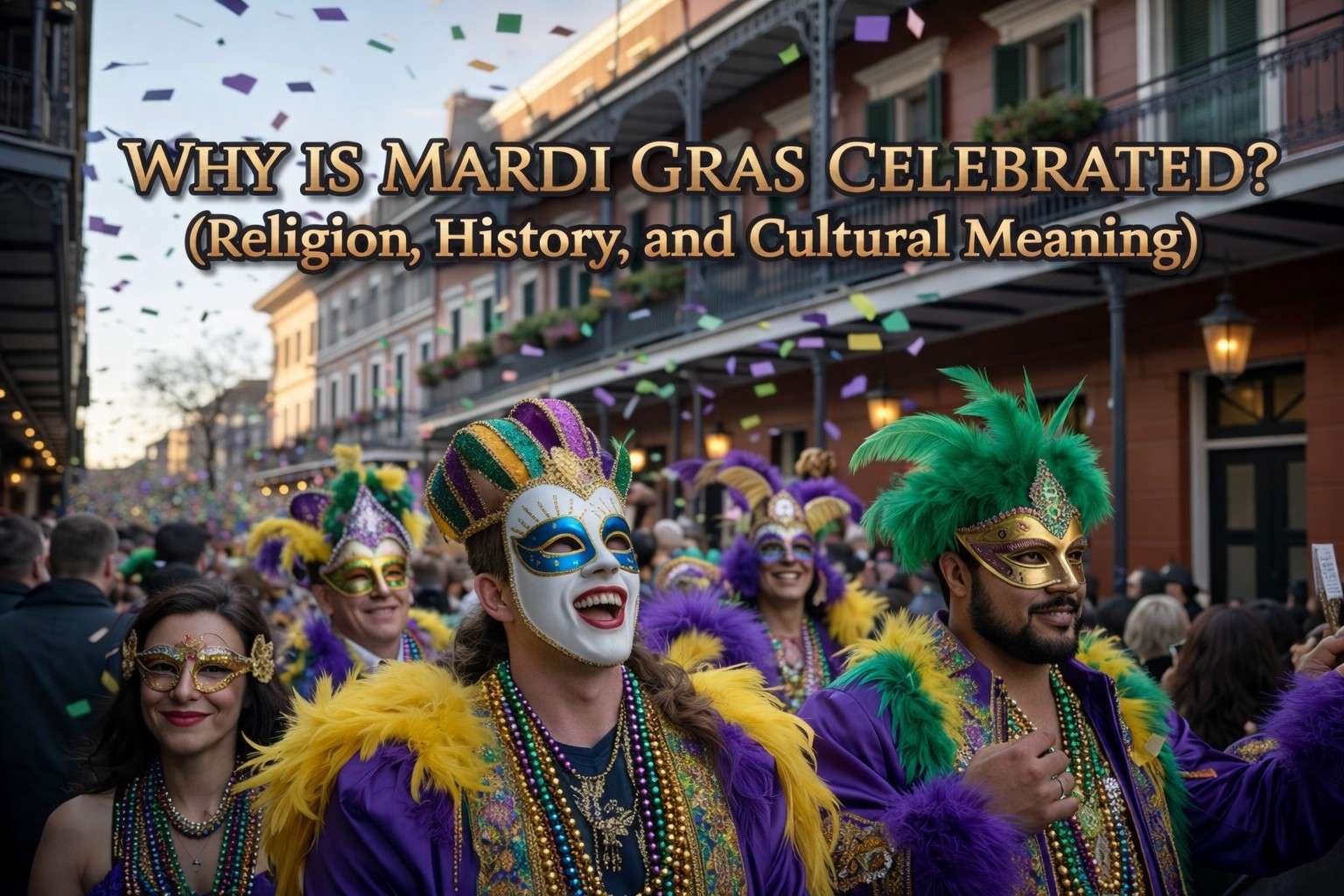
French explorers brought Mardi Gras to Louisiana in 1699. Pierre Le Moyne d’Iberville and his crew camped near the mouth of the Mississippi River on March 3rd of that year — which happened to be Fat Tuesday and held a small celebration. The city of New Orleans was founded in 1718, and organized Mardi Gras celebrations began there in the early 1700s. The first recorded parade was in 1837.
How New Orleans Made Mardi Gras Its Own
New Orleans added layers that didn’t exist in the French original. The krewe system private organizations that organize and fund parades — began in the 1800s. Rex, the King of Carnival, became a fixture. The tradition of throwing beads, doubloons, and other items from floats developed over decades. Jazz wove into the celebrations as New Orleans music culture grew. By the 20th century, New Orleans Mardi Gras was something entirely its own.
Mardi Gras Traditions and Rituals
Carnival Season vs Mardi Gras What’s the Difference
Carnival season begins on January 6th — the Feast of the Epiphany, also called Three Kings Day. Mardi Gras is the final day of Carnival season. So Mardi Gras is a single day; Carnival is the entire season leading up to it. In New Orleans, parades start weeks before Mardi Gras day, with the biggest krewes rolling in the final days. The season ends at midnight on Fat Tuesday, when Ash Wednesday begins.
New Orleans Carnival Customs Explained
King cake is the main food of the season — a ring-shaped cake decorated in purple, gold, and green (the Mardi Gras colors), with a tiny plastic baby hidden inside. Whoever gets the baby has to buy the next king cake. Parades roll through neighborhoods day and night in the weeks before Mardi Gras. Krewes throw beads, cups, toys, and doubloons to the crowds. The French Quarter gets chaotic on the final nights. The more family-friendly parades happen in the suburbs and earlier in the season.
Key Mardi Gras Traditions: Parades, Masks, Beads, and the King Cake
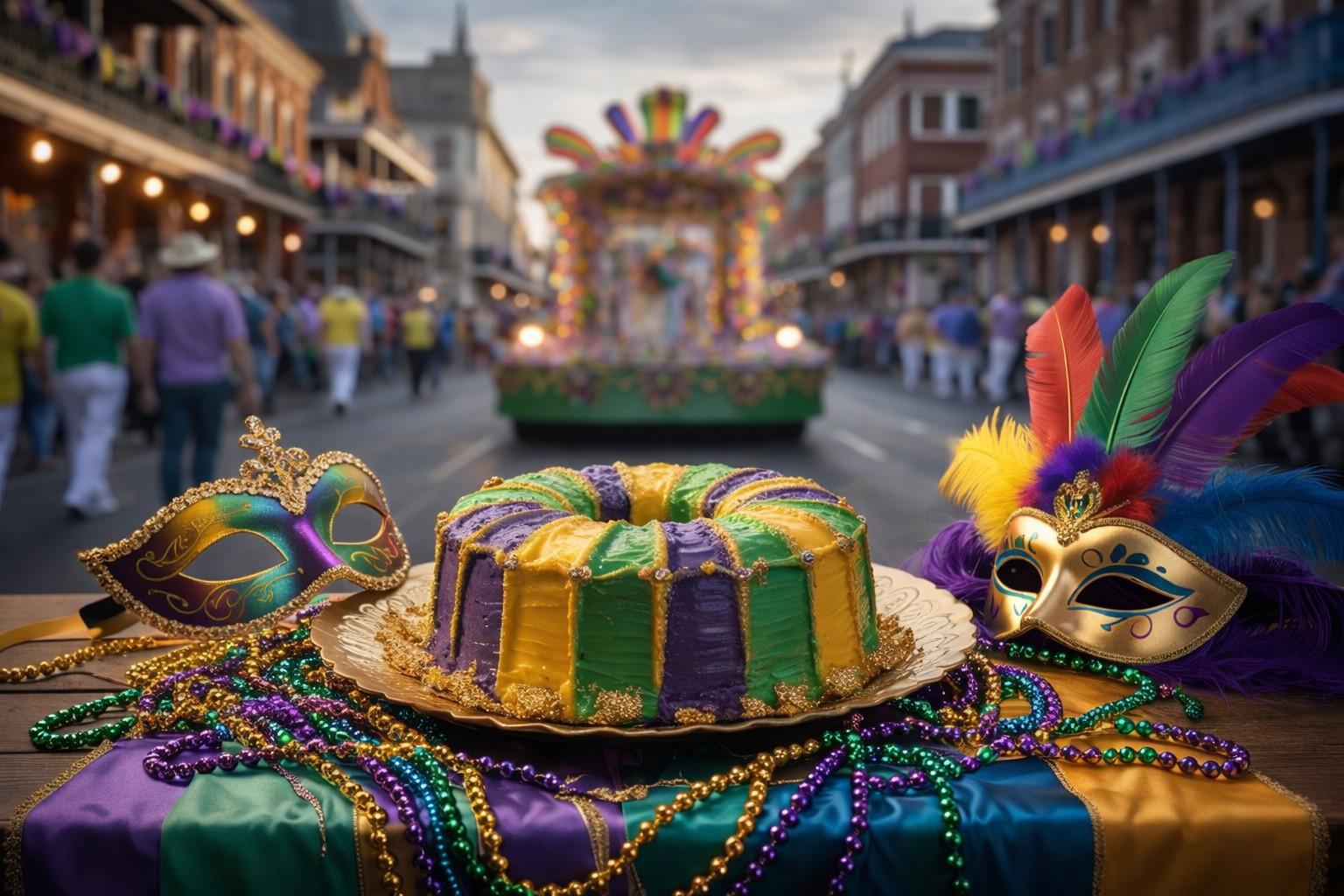 When people think about Mardi Gras, they usually picture vibrant parades, colorful beads flying through the air, masked revelers, and a sweet King Cake on the table. These elements are not random decorations they are the heart of Mardi Gras traditions and customs, shaped over centuries by religion, local culture, and community life. Each symbol carries meaning, turning the celebration into more than just a party.
What the colors mean: purple, green, and gold (justice, faith, power)
One of the most recognizable parts of Mardi Gras is its color scheme. The traditional colors purple, green, and gold were formally popularized in New Orleans in the late 19th century, and over time their symbolism became widely accepted. Purple represents justice, green stands for faith, and gold symbolizes power. Understanding Mardi Gras colors and their meaning helps explain why everything from parade floats to beads and costumes follows this palette. The colors reflect not just visual excitement, but deeper values tied to leadership, belief, and community pride during the festival.
King Cake: tradition and symbolism
No discussion of Mardi Gras traditions and customs is complete without the King Cake. This oval-shaped cake, often decorated in purple, green, and gold sugar, is deeply tied to both celebration and ritual. The king cake meaning connects to Epiphany and the story of the Three Kings, which is why the Carnival season traditionally begins on January 6. Inside the cake is a small figurine often a baby and whoever finds it is said to have good luck, along with the responsibility of hosting the next gathering or providing the next cake. The Mardi Gras king cake history reflects how religious symbolism blended with social fun, turning a simple dessert into a centerpiece of the entire season.
Masks, costumes, and the Courir de Mardi Gras (Cajun tradition)
Masks and costumes play an essential role in Mardi Gras because they allow people to step outside their everyday identities. Historically, masks offered freedom social barriers could be blurred, and everyone could participate equally in the celebration. This idea is especially clear in the rural Cajun tradition known as the Courir de Mardi Gras. In these countryside celebrations, costumed riders travel from house to house asking for ingredients to make a communal gumbo. Unlike the grand urban parades, the Courir highlights older, grassroots Mardi Gras traditions and customs, rooted in humor, storytelling, and shared labor rather than spectacle.
Together, parades, beads, masks, and food are not just festive details. They are living symbols that explain how Mardi Gras blends history, belief, and joy turning the season into a shared cultural experience that feels both ancient and alive.
Mardi Gras in New Orleans: Parades, Krewes, and Timeline of Events
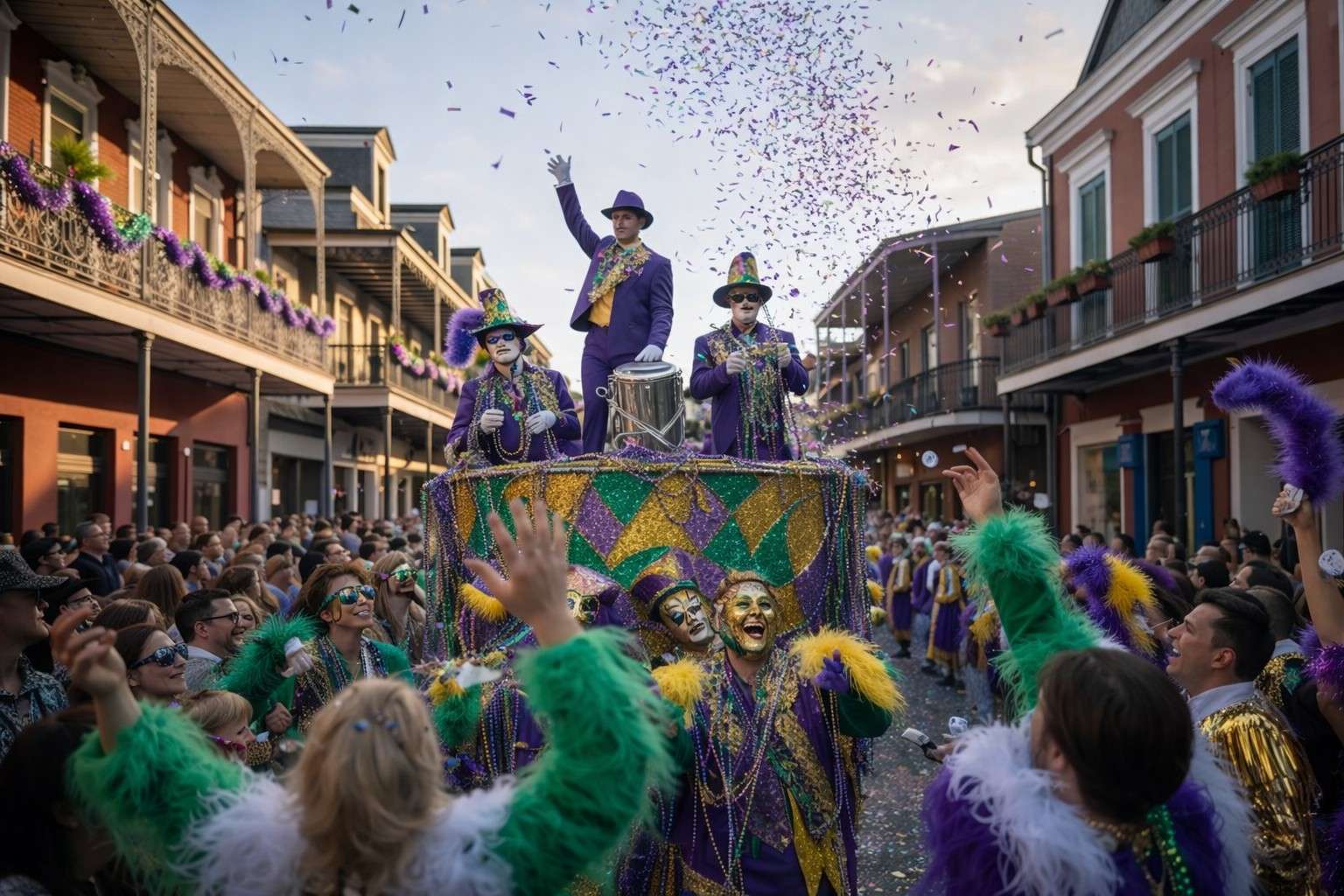 New Orleans is the place most people picture when they hear “mardi gras celebration in New Orleans” the city turns into a rolling, musical block party for weeks each Carnival season. Carnival officially begins on Twelfth Night (January 6) and builds through many weekend and weekday parades until Fat Tuesday, the climax. The city’s parade schedule is tightly organized: neighborhood and specialty krewes lead up to big weekend runs, and the largest, most public parades (including the Mardi Gras Day processions) draw huge crowds and elaborate floats. If you want to follow mardi gras parade New Orleans coverage, official schedules and maps are published each year so visitors can plan which route and krewe they want to see.
Top parades and what to expect (Zulu, Rex, Endymion, etc.)
Expect different moods depending on the krewe. On Mardi Gras Day itself, Rex and Zulu are the crown jewels: Rex is famed for its pageantry and civic history; Zulu is beloved for its lively, community-rooted throws (including the iconic coconut). Weekend “superkrewes” such as Endymion and Bacchus put on huge, tourist-focused spectacles with massive floats, celebrity monarchs, and extravagant throws; Endymion in particular is known for scale and spectacle. Other krewes (Muses, Proteus, Orpheus, etc.) each bring a theme, marching bands, and signature throws or traditions. In short: pick parades by vibe — historic and tradition-forward (Rex, Zulu), family- and neighborhood-focused (many smaller krewes), or big-throw, tourist-friendly spectacle (Endymion, Bacchus). Official parade pages list typical routes and start times so you can match a krewe’s character to your expectations.
Practical tips for visitors (safety, dates, parade routes)
If you’re traveling to see a mardi gras parade New Orleans, a few practical rules make the experience smoother and safer. First, check the official parade schedule and maps before you go and arrive early at a chosen viewing spot streets fill fast. City guidance asks people not to set up more than a few hours before a parade and to respect barriers and traffic closures. Keep valuables secure, stay in groups after dark, and wear comfortable closed-toe shoes; local medical and police resources advise common-sense crowd safety. In recent seasons, New Orleans has also increased visible security measures (barriers and road protections) along major routes, so expect checkpoints or route changes for public safety. Finally, follow real-time local updates: weather or safety concerns can alter start times or routes at short notice.
Where Is Mardi Gras Celebrated in America
Why New Orleans Is the Center of It All
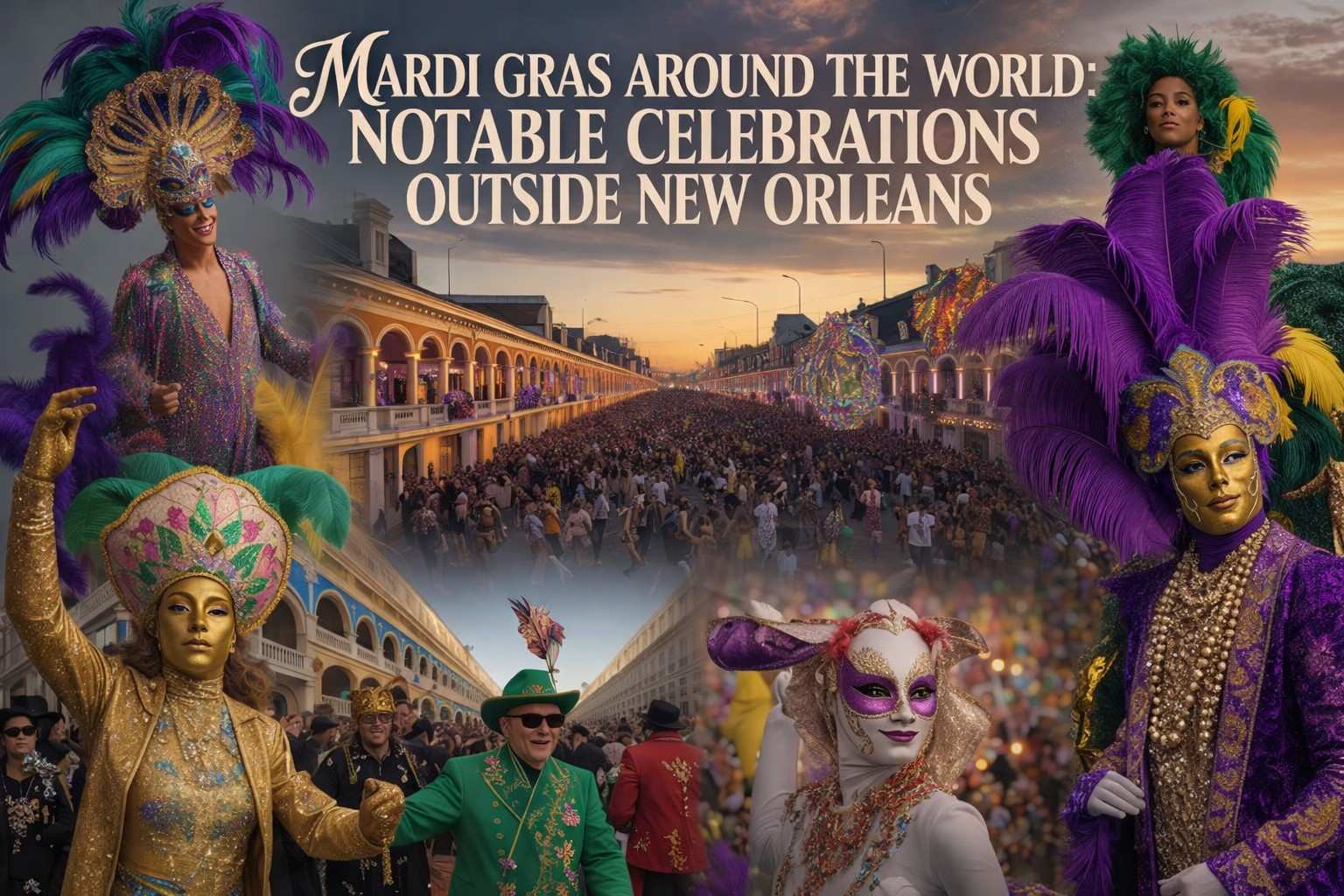
New Orleans has the longest continuous Mardi Gras tradition in the US, the most developed krewe system, and the deepest cultural identity tied to the celebration. Other American cities with notable Mardi Gras celebrations include Mobile, Alabama (which actually predates New Orleans in claiming the first US Mardi Gras), Galveston, Texas, and parts of Louisiana’s Cajun country like Lafayette. But none of them come close to New Orleans in scale or international recognition.
Comparisons & Clarifications
Mardi Gras vs Carnival What’s the Difference?
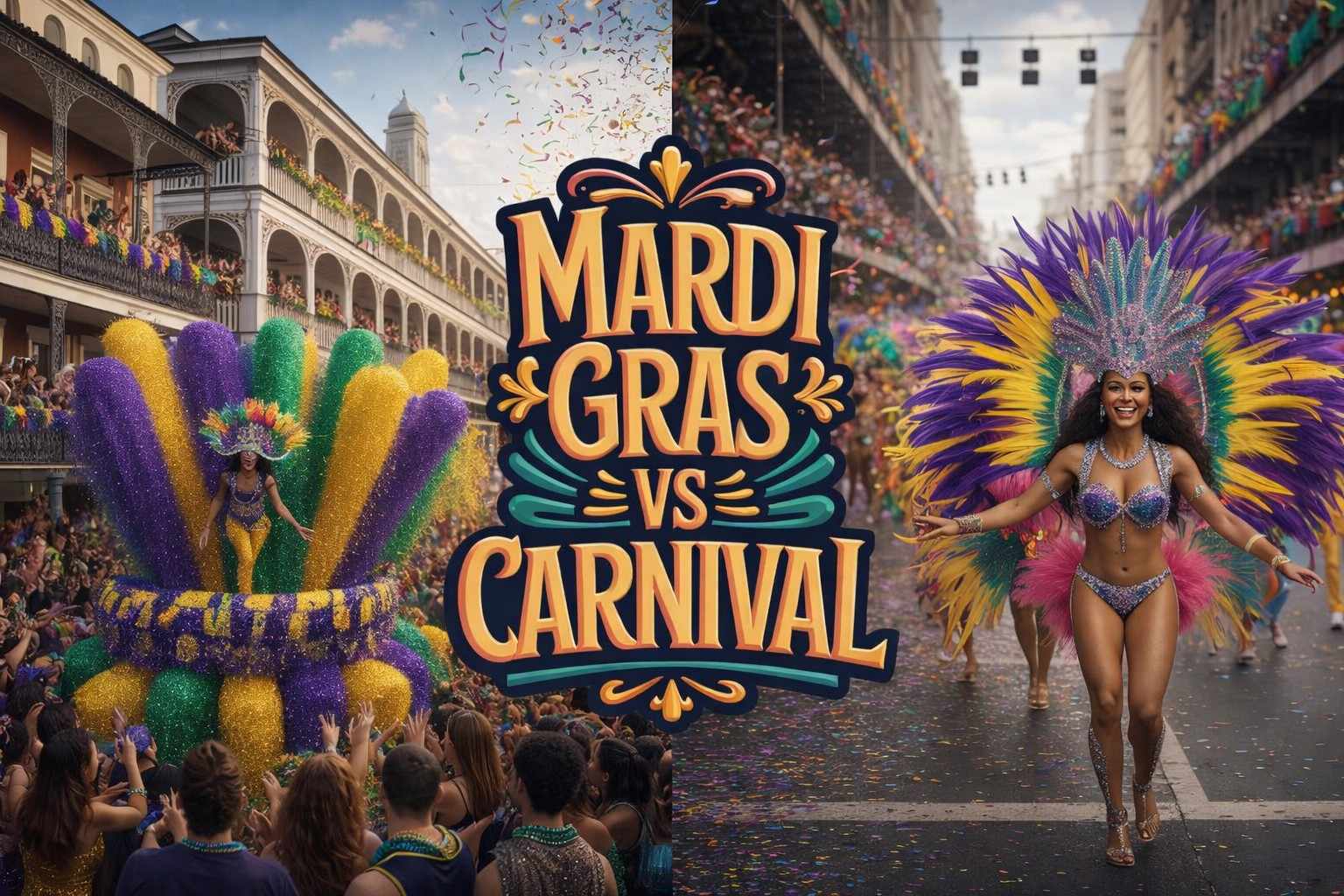
People often use the terms interchangeably, which is why mardi gras vs carnival difference is such a common question. The short answer is that Carnival is the entire season of celebration, while Mardi Gras is a specific day within that season. Understanding this distinction clears up most confusion especially around fat tuesday and mardi gras difference, which are closely connected but not separate events.
Carnival = season; Mardi Gras = the final day (Fat Tuesday)
Carnival is the long celebration period that begins on Epiphany (January 6) and continues for weeks. During Carnival, communities hold balls, smaller parades, neighborhood gatherings, and cultural events. Think of Carnival as the build-up a gradual rise in celebration, food, and social activity leading toward one final peak.
Mardi Gras, meaning “Fat Tuesday,” is the last day of Carnival. It falls immediately before Ash Wednesday and the start of Lent. This timing explains the emphasis on feasting and excess: it is the final opportunity to indulge before a season traditionally associated with fasting and reflection.
Fat Tuesday and Mardi Gras difference is mostly linguistic rather than practical. Fat Tuesday is simply the English translation of Mardi Gras. In everyday use, Mardi Gras often refers both to the single day and to the larger cultural festival around it, which is why the terms feel blurred.
In simple terms, Carnival is the journey, and Mardi Gras is the destination. Carnival stretches across weeks; Mardi Gras is the climactic finale — the loudest parades, the biggest crowds, and the most symbolic day of celebration before everything stops at midnight and Lent begins.
How to Experience Mardi Gras: Packing, Etiquette, and Top Tips for First-Time Attendees
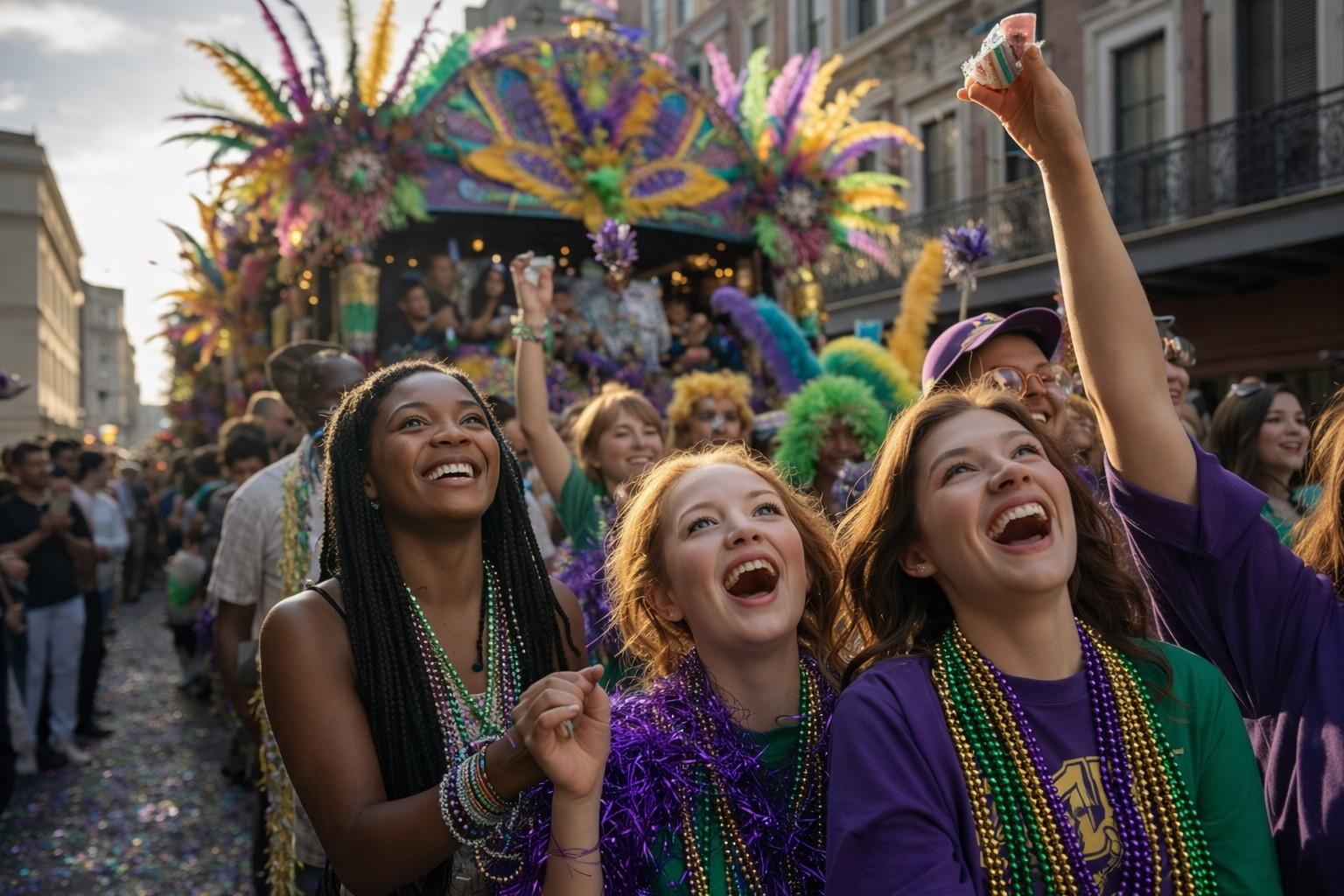 For first-timers, Mardi Gras can feel overwhelming loud, crowded, joyful, and unpredictable all at once. Knowing a few practical Mardi Gras celebration tips ahead of time makes a huge difference, especially if you want to enjoy the culture and not just survive the crowds. Understanding what happens on Mardi Gras Day — from early-morning parades to late-night street celebrations helps you plan smarter and enjoy the experience like a local.
Best neighborhoods and viewpoints
Where you watch Mardi Gras matters almost as much as which parade you choose. Along major parade routes, neighborhoods like Uptown and Mid-City are popular because they offer wider streets, more space to spread out, and a slightly calmer atmosphere than the French Quarter. Uptown is especially good for families and first-time visitors, while areas closer to downtown and the Quarter tend to be louder, more crowded, and more adult-focused as the day goes on.
If you want a classic parade-viewing experience, arrive early along St. Charles Avenue, where you’ll see floats pass slowly and throws are plentiful. For Mardi Gras Day itself, many locals follow the morning parades, then move toward the French Quarter in the afternoon to watch walking krewes and street musicians. One of the most useful Mardi Gras celebration tips is to pick one main area and enjoy it fully rather than trying to cross the city during peak hours.
What to bring, what to wear, and how to stay safe
Packing smart can make or break your day. Bring only essentials: a small crossbody bag or backpack, sunscreen, a refillable water bottle, and snacks. Comfortable shoes are non-negotiable you will walk far more than you expect. Layers are also key, since Mardi Gras weather can change quickly from cool mornings to warm afternoons.
When it comes to what to wear, costumes are welcome but not required. Many people dress in purple, green, and gold to blend in, while others go all out with masks or themed outfits. Avoid open-toe shoes and expensive jewelry, and keep your phone secure. As for safety, stick with friends, set a meeting point in case you get separated, and pay attention to crowd movement during parades. Knowing what happens on Mardi Gras Day long stretches of standing, sudden surges when floats approach, and packed sidewalks after parades end — helps you stay alert without feeling anxious.
Most importantly, pace yourself. Mardi Gras is a marathon, not a sprint. Eat real meals, drink water between cocktails, and take breaks when you need them. With the right preparation and mindset, Mardi Gras isn’t just a party it’s a once-in-a-lifetime cultural experience that rewards curiosity, patience, and a sense of humor.
Budget Breakdown: Planning Mardi Gras 2026 Without Breaking the Bank
Costs spike, but smart planning helps. Here’s a researched breakdown per person daily in USD.
| Category | Cost (Daily/Person, USD) | Pro Tip |
|---|---|---|
| Accommodation | $150-400 | Homestays for authentic vibes; book early via Airbnb to save on Mardi Gras New Orleans hotels. |
| Food | $20-50 | Street eats like po’boys from my story—cheaper than sit-downs. |
| Transport | $10-30 | Apps for budget rides; walk parades to cut costs. |
| Activities/Throws | $10-20 | Free parades; buy sustainable beads if needed. |
| Total | $190-500 | Save 25% with early deals—peak surge? Dodge it like I did by arriving pre-Valentine’s. |
Fluctuations: Weekends double prices; off-peak dips. Budget for surprises, like king cake shares.
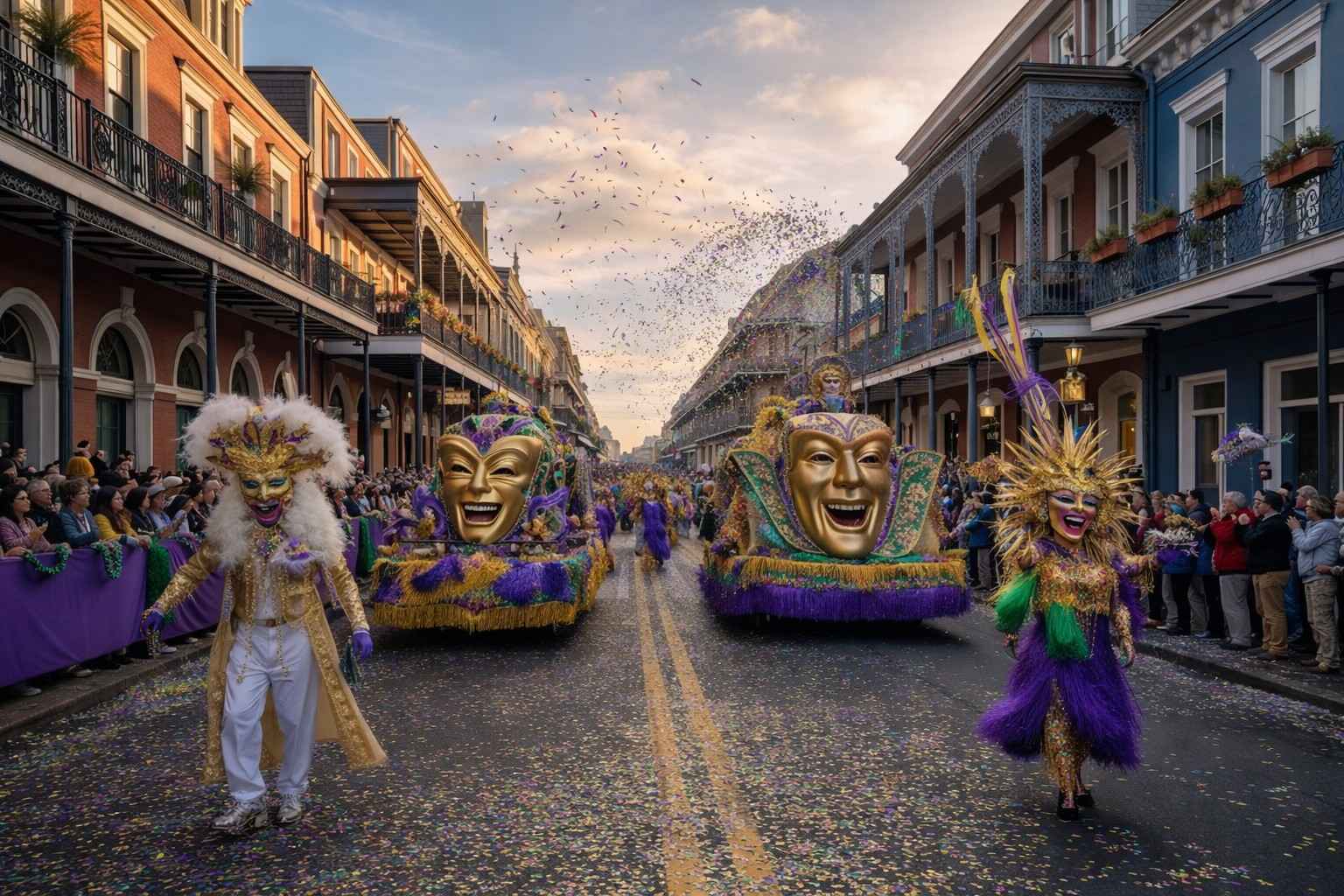
7 Surprising Secrets of Mardi Gras
- Colors chosen in 1872 by Rex krewe—purple justice, green faith, gold power.
- First U.S. Mardi Gras? Mobile, not New Orleans, in 1703.
- King cake baby symbolizes Jesus; finder hosts next.
- Throws total 25 million pounds yearly—2026 pushes eco versions.
- Parades canceled rarely—wars, pandemics, but 2026 roars back.
- Zulu coconuts: Hand-painted treasures, safer now.
- Lundi Gras: Kings meet on river, reviving 1874 tradition.
6 Rookie Mistakes to Avoid at Mardi Gras
- Thinking it’s one day: Carnival spans weeks—miss early parades.
- Flashing for beads: Outdated, illegal—avoid Mardi Gras errors 2026 by just asking nicely.
- Overpacking Bourbon: Venture Uptown for real vibes.
- Ignoring weather: Layers beat rain or chill.
- No cash: Vendors prefer it for quick eats.
- Solo without plan: Buddy up; use apps to navigate crowds.
All Your Mardi Gras Questions Answered: 2026 FAQ
When is Mardi Gras 2026? February 17, but starts January 6.
How to book Mardi Gras tickets affordably? No tickets—free! But hotels via Booking.com early.
Best time to visit Mardi Gras in New Orleans 2026? Final weekend for peak, mid for calm.
What are Mardi Gras rituals? Parades, balls, king cakes—join a krewe if local.
Mardi Gras for families? Yes! Uptown spots safe.
Sustainable Mardi Gras tips? Recycle throws, choose green krewes.
Hidden history of Mardi Gras origins? Pagan to Christian, French import.
As a solo traveler like me? Try walking krewes for easy mingles.
The Final Note: Why Mardi Gras Will Rewrite Your Story
Echoing my first chaotic night, Mardi Gras rewrites you—mishaps into memories, strangers into stories. In 2026, with fresh sustainable spins and Valentine flair, it’s your turn for that joy. When are you heading there? Drop a comment! Abhay ramola, Festival Wanderer from uttrakhand.

Abhay Ramola researches world festivals across primary sources, local accounts, and on-ground reporting. He founded Dionfest to cover what gets missed when festivals become tourism content the history, the ritual, and the people behind it.








3 thoughts on “Mardi Gras Festival: History & Traditions in New Orleans”