Why Do We Celebrate Republic Day in India on 26 January 1950?
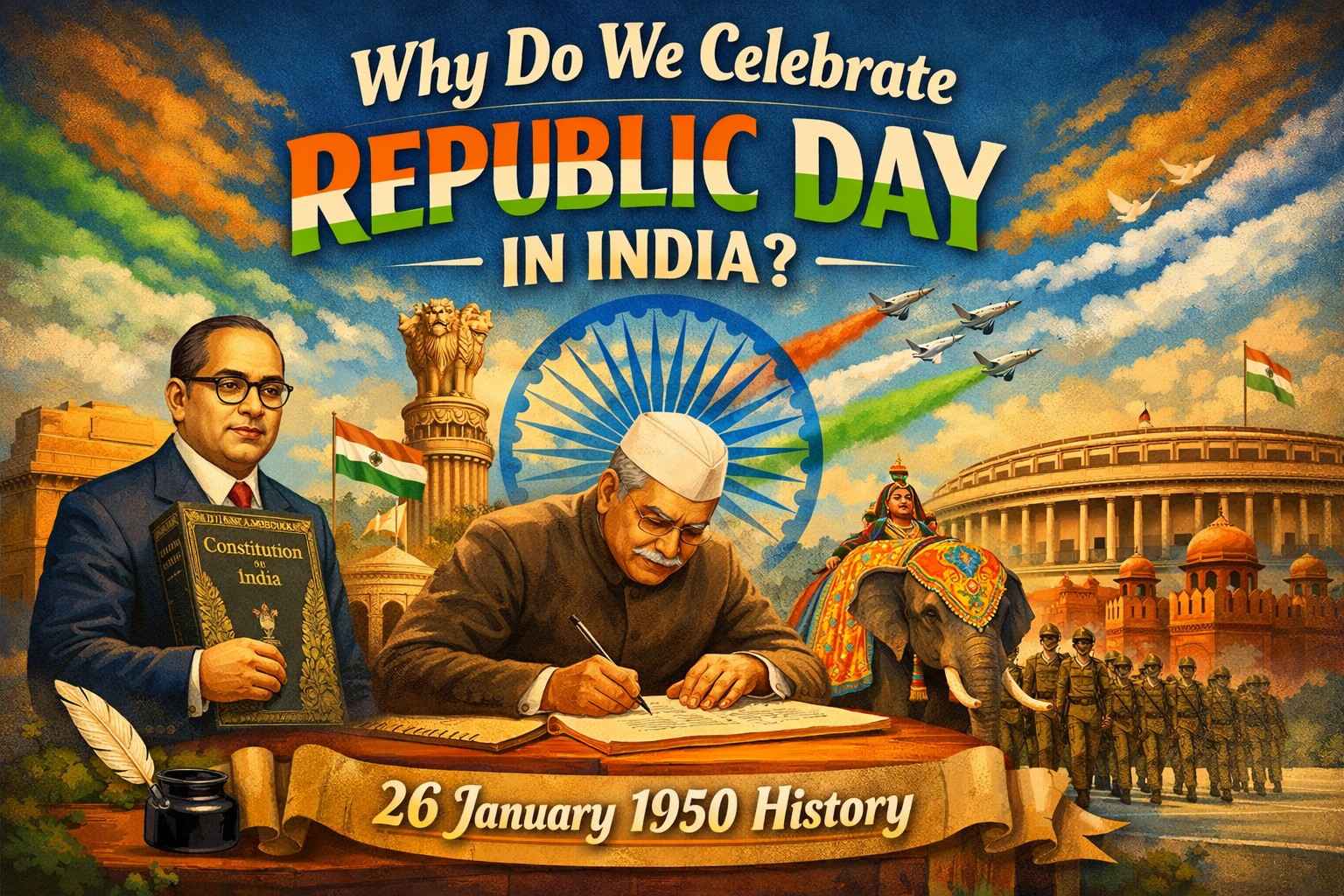
Republic Day is celebrated in India on 26 January 1950 to mark the historic day when the Constitution of India came into force, transforming the nation into a sovereign, democratic republic. This day symbolizes the end of British colonial rule and the beginning of self-governance based on laws made by the people of India, reflecting the country’s commitment to justice, liberty, equality, and fraternity.
What Is Republic Day in India?
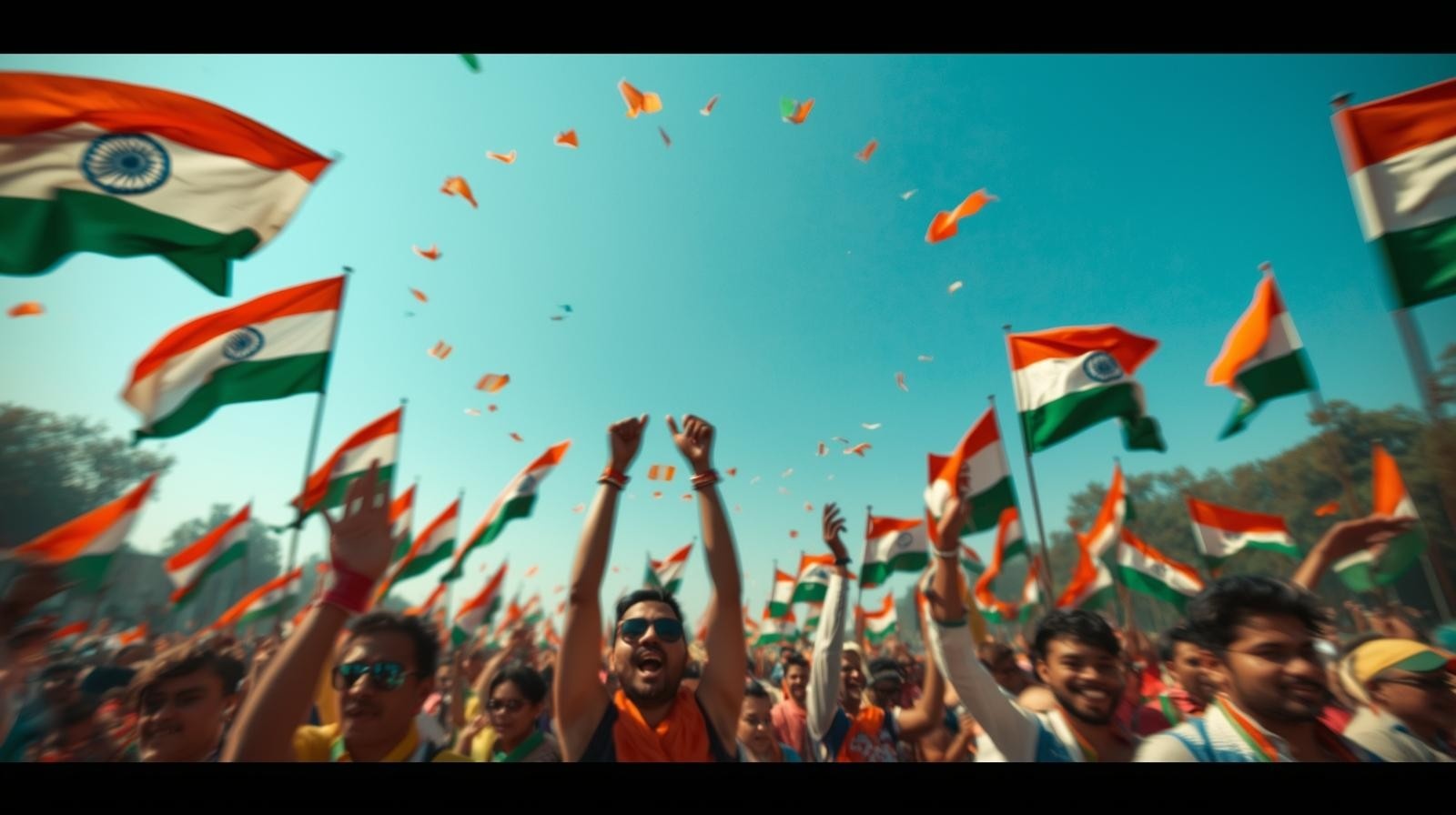 Republic Day is a national holiday in India observed every year on January 26th. It marks the day India’s Constitution came into force in 1950, replacing the Government of India Act as the country’s governing document. It is one of India’s three national holidays alongside Independence Day and Gandhi Jayanti.
What Republic Day Means for India
Independence Day (August 15, 1947) marks when India became free from British rule. Republic Day marks when India became a fully self-governing republic with its own constitution. The difference matters: independence meant the British left, but India still technically operated under colonial-era laws. Republic Day is when India fully took ownership of its own legal and political identity. That’s why January 26th is a bigger ceremonial occasion than August 15th in many ways.
When India Became a Republic 26 January 1950
India’s Constituent Assembly adopted the Constitution on November 26, 1949. But the date chosen for it to come into force was January 26, 1950 deliberately selected because January 26th was already historically significant. On that same date in 1930, the Indian National Congress had declared Purna Swaraj complete independence as its goal during the freedom struggle. The date connected the new republic to that earlier moment of resolve.
Why Republic Day Is Celebrated on 26 January
 Why we celebrate Republic Day in India is deeply rooted in the nation’s journey from British colonial rule to becoming a sovereign democratic republic. Republic Day is celebrated on 26 January every year to honour the day the Constitution of India came into force in 1950, replacing the colonial Government of India Act and officially marking India’s transition to a republic. This event gave India its own democratic framework, where supreme power lies not with a monarch or colonial ruler, but with the people of India through elected representatives. The celebrations — including the grand parade in New Delhi — highlight not just military strength and cultural unity but also reflect the pride and stewardship of the Indian Constitution and democratic values.
Republic Day Importance in Indian History
The Republic Day importance in Indian history lies in its commemoration of India’s Constitution coming into effect, making the nation a sovereign, democratic state on 26 January 1950. Though India gained independence on 15 August 1947, it did not have its own Constitution until 1950, and until then was governed by British-era laws. Republic Day signifies the historic moment when India adopted a Constitution drafted by the Constituent Assembly, thus replacing colonial laws with a people’s law that defines rights, duties, and the structure of governance. This day honours the vision of India’s freedom fighters and constitutional framers who fought for justice, liberty, equality, and fraternity values that continue to define the nation’s political and civil identity.
Significance of Republic Day in India
The significance of Republic Day in India is far more than ceremonial. It stands as a powerful reminder of the Constitution’s role in shaping the republic — a government “of the people, by the people, for the people.” Republic Day signifies India’s commitment to uphold democratic principles, protect citizens’ rights, and maintain unity in diversity. Each year on 26 January, people from all walks of life participate in patriotic events, flag-hoisting ceremonies, cultural programmes and parades that showcase India’s rich heritage and modern progress. The day also reinforces national pride and collective responsibility toward safeguarding the freedoms and values enshrined in the Constitution.
Why Is Republic Day Celebrated on 26 January?
 Why Republic Day is celebrated on 26 January is because that date marks the moment when India’s Constitution came into force in 1950, officially declaring India a sovereign democratic republic. Although the Constitution was adopted by the Constituent Assembly on 26 November 1949, it was chosen to be implemented on 26 January 1950 to honour the historic Purna Swaraj (Complete Independence) Declaration of 1930, which was first proclaimed on 26 January by the Indian National Congress as the symbol of India’s struggle for full freedom. Thus, this date carries dual significance: it not only commemorates the Constitution becoming law but also echoes the country’s long fight for self-rule and democratic ideals.
26 January 1950 Day: What Happened on This Day?
26 January 1950 Day: what happened on this day is one of the most important moments in Indian history. On 26 January 1950, the Constitution of India came into effect, replacing the British-era Government of India Act 1935, and India became a fully sovereign, democratic republic. On this historic day, Dr. Rajendra Prasad took oath as the first President of India, and India’s republic status was proclaimed with a 21-gun salute and the unfurling of the national flag in New Delhi. Since then, every year 26 January 1950 day is remembered as the birth of the Indian Republic — a day when the nation’s own laws and democratic framework came into operation.
Reason Behind Celebrating Republic Day on 26 January
The reason behind celebrating Republic Day on 26 January lies in the powerful symbolism of that specific date in India’s freedom story and constitutional history. Although the Indian Constitution was completed and adopted on 26 November 1949, leaders chose 26 January 1950 as the date to implement it because that day was already celebrated as Purna Swaraj Day — a declaration of complete self-rule first declared in 1930 by Indian freedom fighters. Thus, celebrating Republic Day on 26 January connects India’s democratic constitution with its struggle for freedom from British rule. It reminds every citizen of the commitment to justice, liberty, equality and fraternity that the new republic promised to uphold.
What Happened on 26 January 1950 in India?
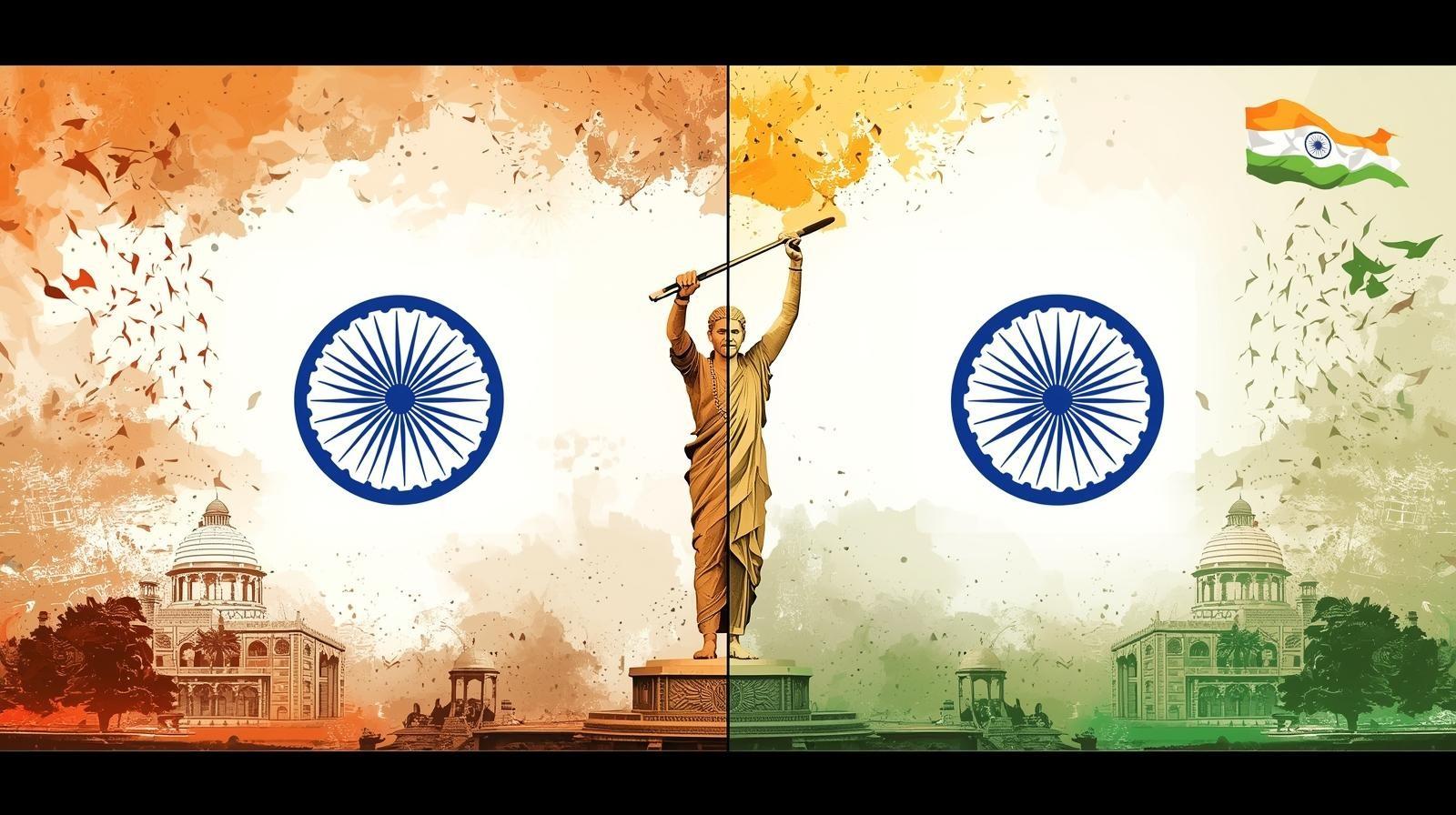
The Reason Behind the Date
The date wasn’t random. January 26, 1930 was the day the Indian National Congress, under Jawaharlal Nehru, first formally demanded complete independence from Britain not just dominion status. When the Constitution was ready in late 1949, the framers chose January 26th to honor that declaration. The republic was built on the promise made twenty years earlier.
What Changed When India Became a Republic
Before January 26, 1950, India was a dominion technically under the British Crown, with the King of England as head of state. After that date, India became a sovereign democratic republic. The President replaced the King as head of state. The Constitution guaranteed fundamental rights to every citizen. India was no longer governed by laws written for a colonial subject population it was governed by a document written by Indians, for Indians.
History of Republic Day in India
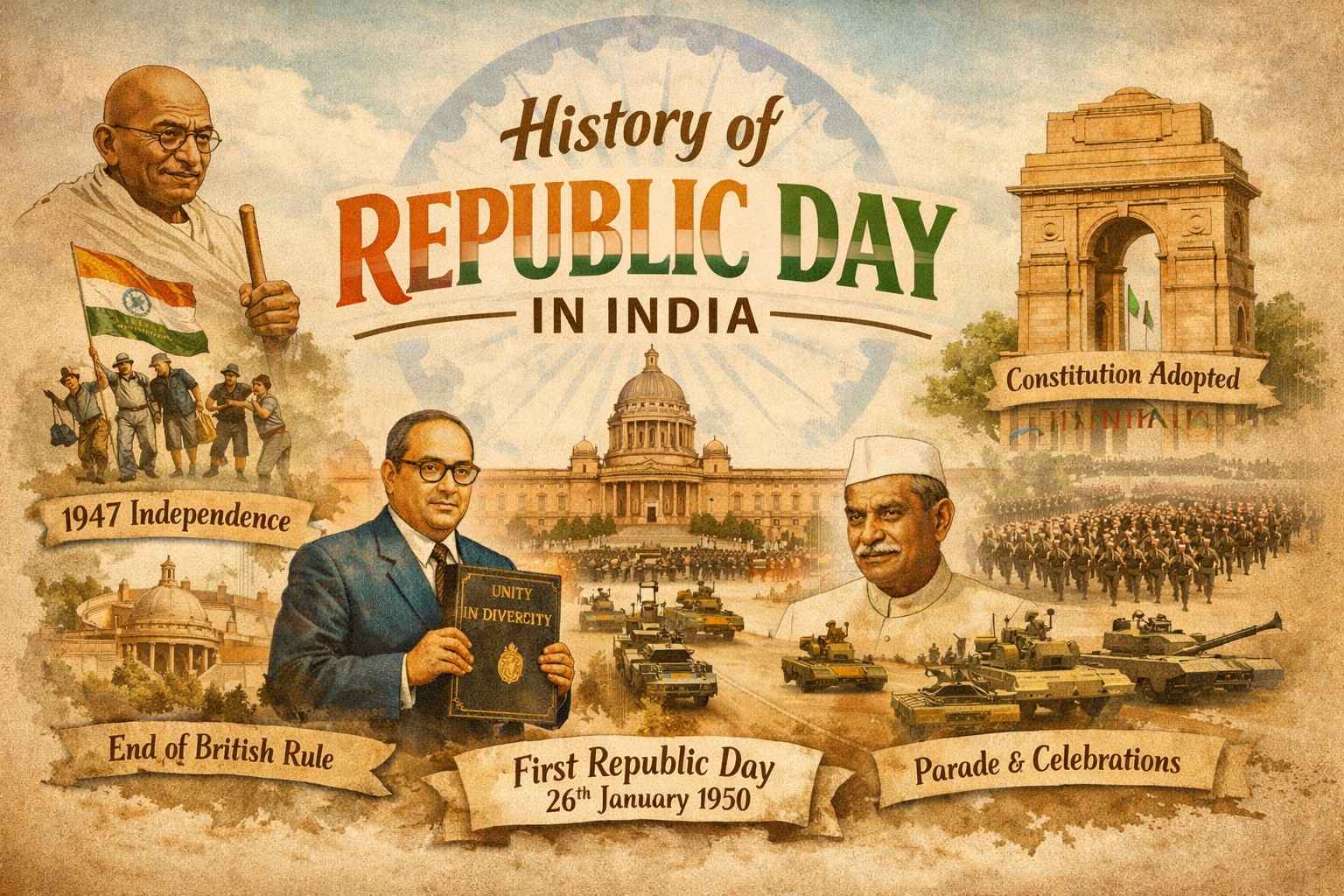
History of Republic Day in India begins with India’s struggle for self-rule and reaches its constitutional climax in 1950. The date 26 January was first commemorated as Purna Swaraj (Complete Independence) by the Indian National Congress in 1930, a symbolic pledge for full independence from British rule. After independence on 15 August 1947, India needed its own governing charter; the Constituent Assembly drafted and debated a constitution through 1948–49 and formally adopted it on 26 November 1949. The framers chose 26 January 1950 to bring the document into force so the new republic would link back to the Purna Swaraj tradition. Since that first implementation, Republic Day has been observed annually with official parades, flag-hoisting, and ceremonies that celebrate the Constitution, national unity, and India’s democratic institutions.
Republic Day History from 1947 to 1950
Republic Day history from 1947 to 1950 is the short, pivotal phase in which India moved from freedom to a functioning republic. After independence in August 1947 the country was still governed under the colonial Government of India Act (1935) while a Constituent Assembly — made up of elected representatives and headed by Dr. Rajendra Prasad — worked to create a new constitution. The Assembly completed the draft and adopted the Constitution on 26 November 1949; transitional provisions converted the Constituent Assembly into the provisional Parliament and set a future date for enforcement. The decision to bring the Constitution into force on 26 January 1950 (rather than immediately) provided time for final formalities (signing and preparing two authoritative copies in Hindi and English) and linked the republic’s birth to the earlier Purna Swaraj observance. On 26 January 1950, Dr. Rajendra Prasad was sworn in as India’s first President and India officially became a sovereign, democratic republic.
26 January Republic Day Historical Timeline
26 January Republic Day historical timeline (key milestones):
- 26 January 1930 — Indian National Congress declares Purna Swaraj (Complete Independence), later commemorated when choosing the republic date.
- 15 August 1947 — India attains independence from Britain; the Dominion of India is formed and the Governor-General remains head of state under existing law.
- 9 December 1946 – 26 November 1949 — Constituent Assembly debates and finalizes the Constitution; the Assembly adopts the Constitution on 26 November 1949.
- 24–26 January 1950 — Final formalities: two handwritten copies of the Constitution are signed (January 24), and the Constitution comes into force on 26 January 1950; Dr. Rajendra Prasad takes the oath as the first President; a 21-gun salute and flag-hoisting mark the birth of the Republic.
- Since 1950 — Annual Republic Day celebrations feature the central parade in New Delhi (showcasing the armed forces, tableaux from states, and cultural performances), presentation of national awards, and ceremonies across the country reaffirming constitutional values.
Importance of 26 January in Indian History
The importance of 26 January in Indian history lies in the day India completed its journey from colonial rule to a constitutional democracy. While independence was achieved on 15 August 1947, India did not become a full republic until 26 January 1950, when the Constitution of India came into force. This date symbolizes the moment when Indians began governing themselves under laws made by their own representatives, not by foreign rulers. The importance of 26 January in Indian history is also linked to the long freedom struggle, as the date reflects India’s resolve for complete self-rule and democratic governance.
Why 26 January Is Important for India
Why 26 January is important for India can be understood by its connection to both freedom and constitutional values. On this day, India adopted its own Constitution and officially became a sovereign, democratic republic, with an elected head of state. The date was deliberately chosen because 26 January 1930 was earlier celebrated as Purna Swaraj Day, when Indian leaders declared complete independence from British rule. Therefore, why 26 January is important for India is not only because of the Constitution, but also because it represents continuity between the freedom movement and modern Indian democracy.
26 January 1950 Significance Explained
26 January 1950 significance explained refers to the historic transition of India into a republic governed by constitutional law. On this day, the Constitution replaced the British-era Government of India Act, 1935, ensuring fundamental rights, equality before law, and democratic institutions for all citizens. The 26 January 1950 significance also lies in the fact that India’s highest authority shifted to the Constitution itself, making the people of India the ultimate source of power. This transformation laid the foundation for India’s political stability, unity, and democratic identity that continues today.
How Is Republic Day Celebrated in India?
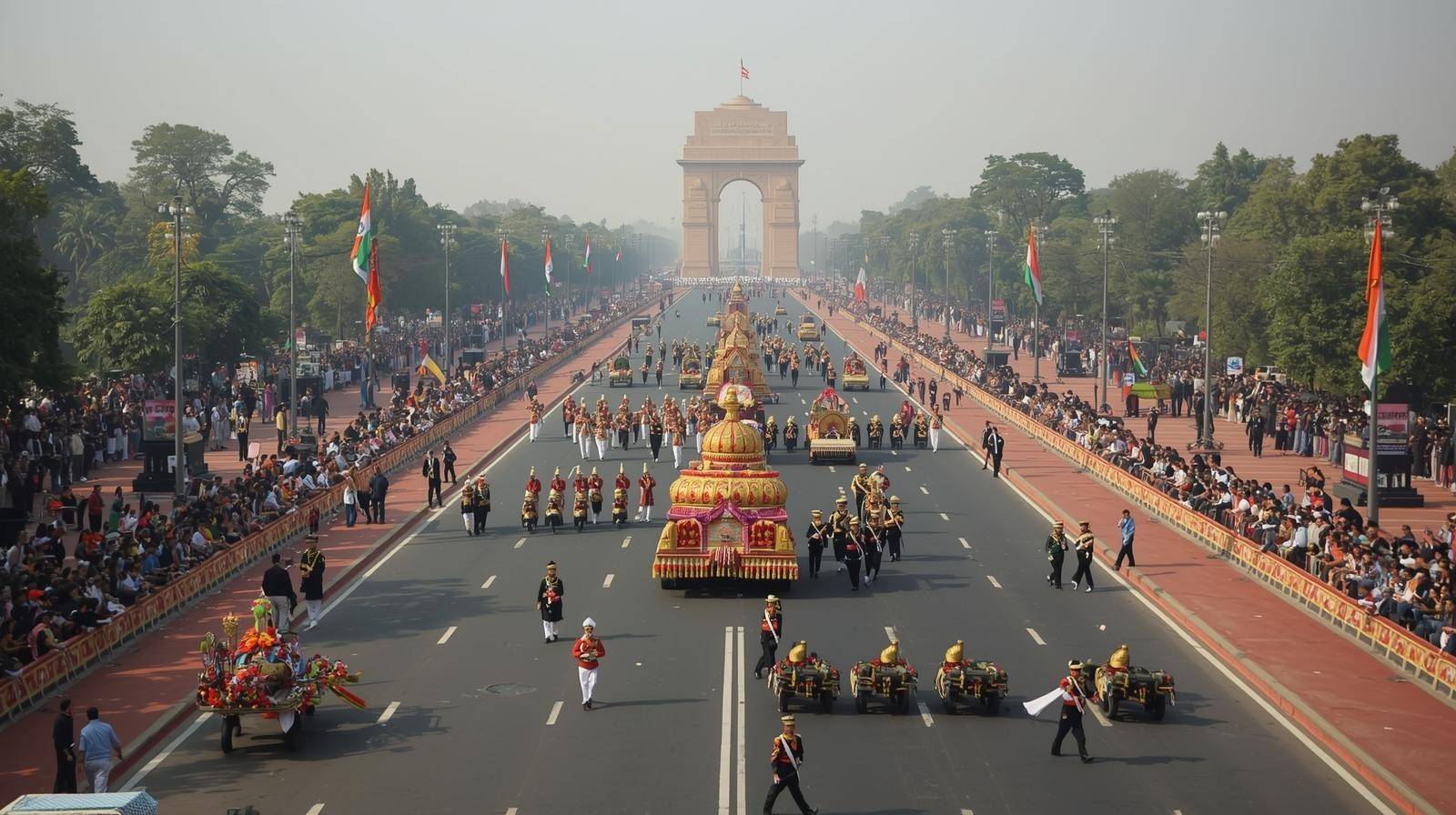
The Delhi Parade and What It Shows
The Republic Day Parade on Rajpath (now Kartavya Path) in New Delhi is the central event. It begins at the war memorial and moves toward India Gate. The parade includes military displays, tableaux from each state showing their culture, performances by schoolchildren, and a flypast by the Indian Air Force. The Chief Guest is usually a foreign head of state — an invitation that carries diplomatic significance. Beating Retreat, held three days later on January 29th, formally closes the Republic Day celebrations.
Republic Day Across States
Every state capital holds its own Republic Day parade. The Governor of each state presides over the state-level event. Schools hold flag-hoisting ceremonies, and students often perform cultural programs. Government buildings are lit up at night. In many cities, the day is quieter than the Delhi parade suggests — a flag hoisting, a speech, and then a holiday. But in homes and schools, it’s a day when the meaning of January 26th is taught to every new generation.
Republic Day Parade at Kartavya Path
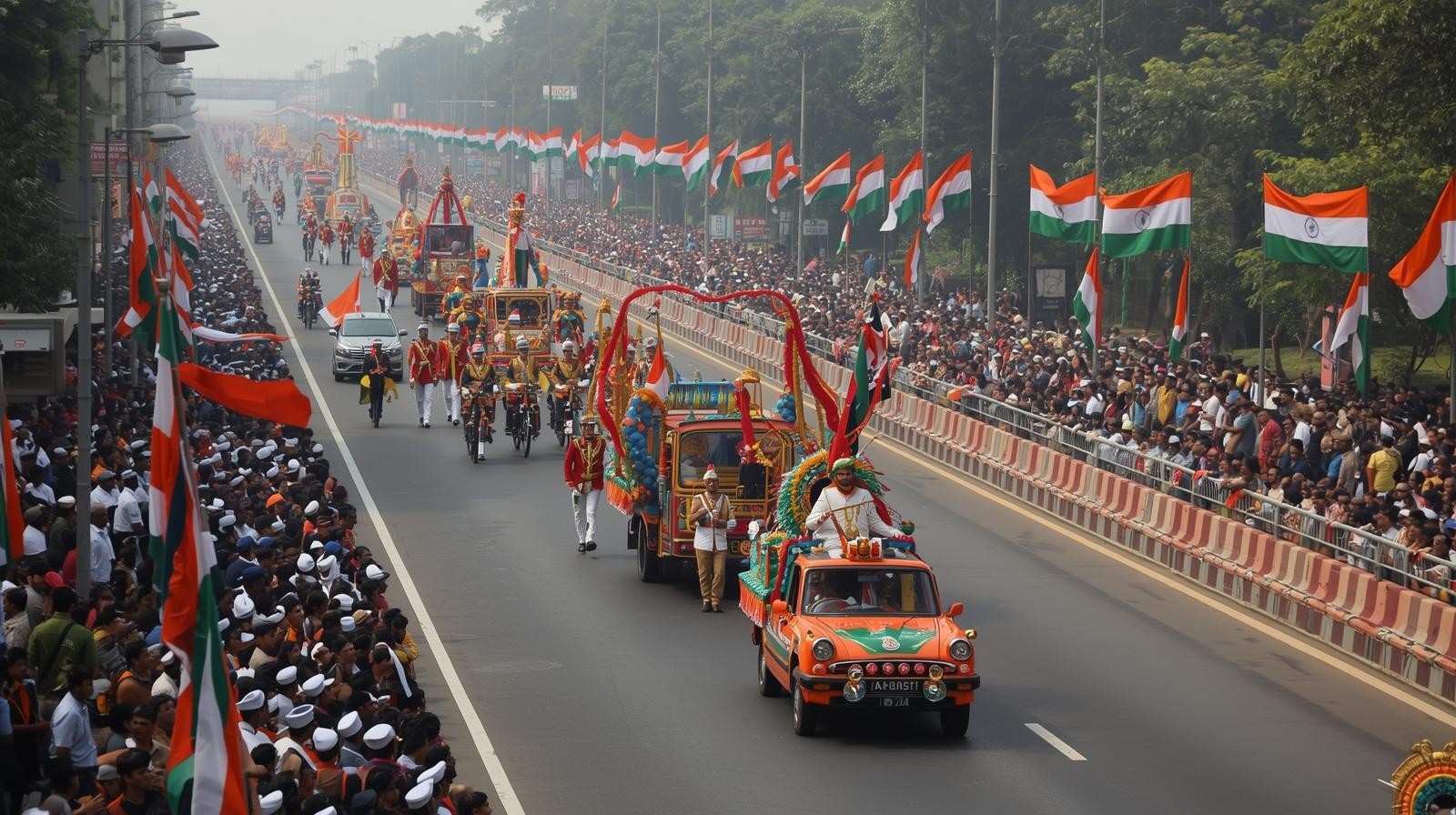
The Republic Day Parade at Kartavya Path is the most prominent national event held on 26 January in India. Formerly known as Rajpath, Kartavya Path serves as the ceremonial avenue where India showcases its military strength, cultural diversity, and constitutional pride. The parade begins with the President of India taking the salute, followed by marching contingents of the armed forces, paramilitary units, and colorful tableaux from different states. The Republic Day Parade at Kartavya Path symbolizes the journey of India as a republic and visually represents the values of unity, discipline, and democratic governance.
Beating Retreat Ceremony and Its Meaning
The Beating Retreat Ceremony and its meaning are closely associated with the conclusion of Republic Day celebrations. Held on 29 January, this ceremony marks the formal end of the Republic Day events. The Beating Retreat Ceremony originated as a military tradition signaling troops to withdraw to their camps at sunset. In India, its meaning goes beyond tradition — it reflects honor, remembrance, and respect for the armed forces. The ceremony features massed bands of the Indian Army, Navy, and Air Force performing patriotic tunes, creating a solemn and emotionally resonant atmosphere that reinforces national pride.
Role of Armed Forces in Republic Day Parade
The role of armed forces in Republic Day Parade is central and symbolic of India’s national security and sovereignty. The Indian Army, Navy, and Air Force lead the parade with disciplined marching, advanced weapon systems, and air displays, demonstrating operational readiness and defense capabilities. Beyond showcasing strength, the role of armed forces in Republic Day Parade represents sacrifice, unity, and service to the nation. Their presence reminds citizens that the freedoms guaranteed by the Constitution are safeguarded by the courage and commitment of India’s military personnel.
Gantantra Diwas Meaning in Hindi
 Gantantra Diwas meaning in Hindi is understood as “the day when India became a republic governed by its own Constitution.” In simple terms, Gantantra means a system of governance where the power lies with the people, and Diwas means day. Thus, Gantantra Diwas refers to 26 January 1950, when the Constitution of India came into force and the country adopted a democratic system with an elected head of state. The Gantantra Diwas meaning in Hindi emphasizes constitutional rule, people’s sovereignty, and equality before law rather than rule by a monarch or foreign authority.
Gantantra Diwas Kyu Manaya Jata Hai
Gantantra Diwas kyu manaya jata hai because on 26 January 1950, India officially became a sovereign, democratic republic. Although India gained independence in 1947, it was still governed by British-era laws until the Constitution was implemented. Gantantra Diwas is celebrated to honor the adoption of the Constitution, which guarantees fundamental rights, democratic governance, and justice for all citizens. The question Gantantra Diwas kyu manaya jata hai is answered by the idea that this day marks true self-rule through laws made by the people of India themselves.
Difference Between Independence Day and Republic Day
The difference between Independence Day and Republic Day lies in their historical and constitutional significance. Independence Day, celebrated on 15 August, marks India’s freedom from British rule in 1947. Republic Day, observed on 26 January, commemorates the day when the Constitution of India came into force in 1950. While Independence Day represents political freedom, the difference between Independence Day and Republic Day is that Republic Day signifies constitutional freedom — the moment India began governing itself under its own democratic laws with an elected President as the head of state.
Facts About Indian Republic Day
Facts about Indian Republic Day highlight the constitutional foundation of modern India. Republic Day is celebrated every year on 26 January to mark the day when the Constitution of India came into force in 1950. On this day, India officially became a sovereign, democratic republic with an elected President as the head of state. One important fact about Indian Republic Day is that the President of India unfurls the national flag and takes the salute at the grand parade, symbolizing that the Constitution is the supreme authority of the nation.
Interesting Facts About 26 January Republic Day
There are many interesting facts about 26 January Republic Day that make the day historically unique. One such fact is that 26 January was first celebrated as Purna Swaraj Day in 1930, long before India became a republic. Another interesting fact about 26 January Republic Day is that the Constitution took nearly 2 years, 11 months, and 18 days to complete and came into effect on this symbolic date. Additionally, the Republic Day parade showcases not only military strength but also India’s cultural diversity through state tableaux, making it one of the world’s most visually rich national celebrations.
Lesser Known Facts About Indian Constitution
Many people are unaware of the lesser known facts about the Indian Constitution, despite it being one of the most detailed constitutions in the world. The Indian Constitution is the longest written constitution, originally containing 395 Articles and 8 Schedules at the time of its adoption. One lesser known fact about the Indian Constitution is that it was handwritten in both English and Hindi and beautifully illustrated by artists from Shantiniketan. It also drew inspiration from multiple countries, including the UK, USA, and Ireland, while still being uniquely adapted to India’s social and cultural conditions.
Republic Day Speech and Essay Topics

Republic Day speech and essay topics are commonly used in schools and colleges to help students understand the importance of the Constitution and democratic values. These topics usually focus on themes such as the history of Republic Day, the significance of 26 January 1950, the Indian Constitution, and the role of citizens in a democracy. Republic Day speech and essay topics encourage students to express patriotism, reflect on India’s freedom struggle, and appreciate the responsibilities that come with living in a democratic republic.
Republic Day Short Speech in English
A Republic Day short speech in English is often delivered during school assemblies and public functions on 26 January. Such a speech generally explains why Republic Day is celebrated, highlights the adoption of the Constitution in 1950, and emphasizes values like unity, equality, and justice. A Republic Day short speech in English is usually simple, clear, and inspirational, helping students confidently speak about national pride, democratic principles, and their duties as responsible citizens of India.
Republic Day Essay 10 Lines for Students
A Republic Day essay 10 lines for students is designed to help young learners easily understand the meaning and importance of Republic Day. This type of essay usually includes key points such as the celebration of Republic Day on 26 January, the implementation of the Indian Constitution in 1950, and the significance of democracy in India. Writing a Republic Day essay 10 lines for students helps develop basic writing skills while instilling a sense of patriotism and respect for the nation’s constitutional values.
Happy Indian Republic Day
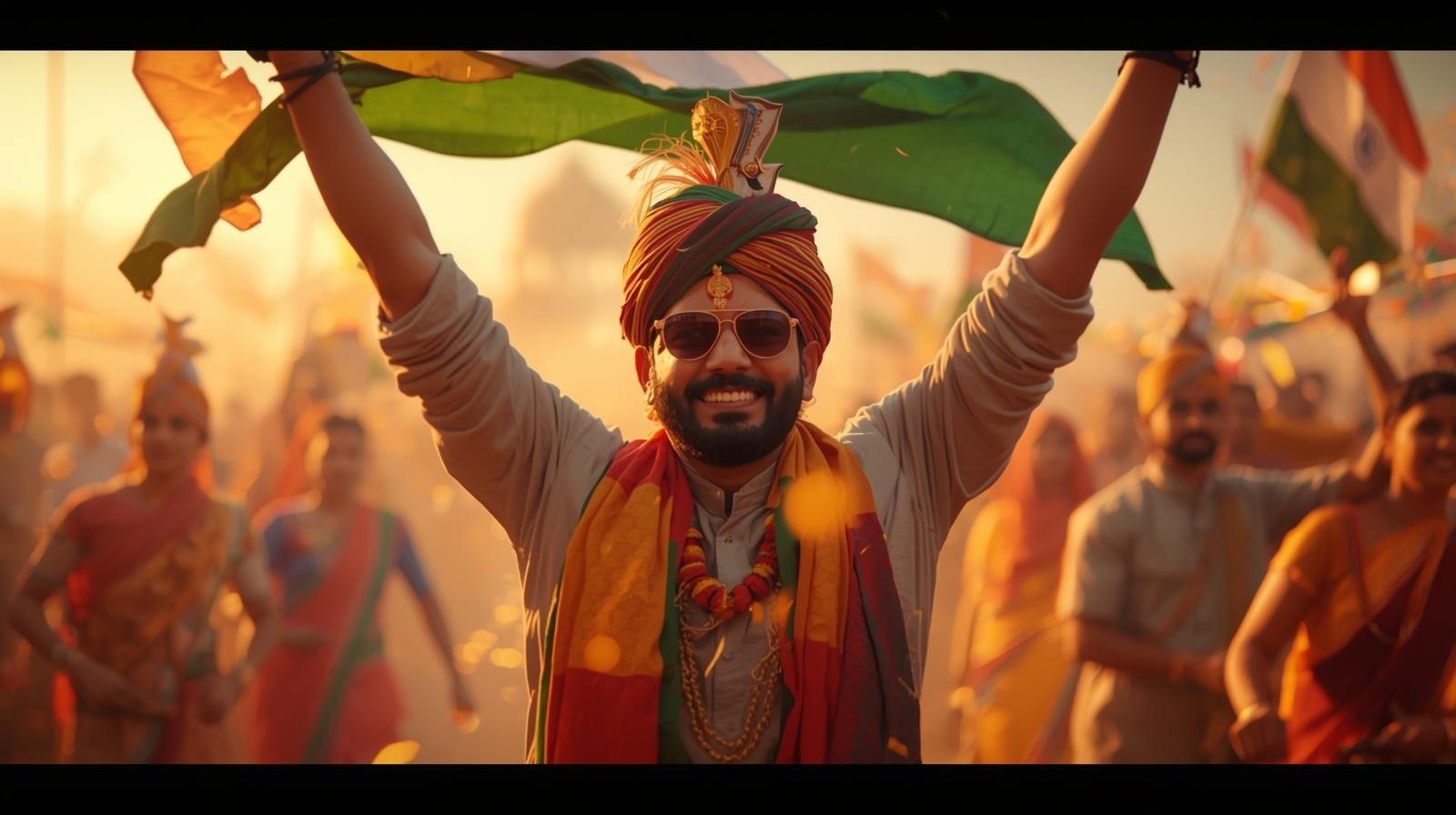
Happy Indian Republic Day is more than just a greeting; it is an expression of national pride and respect for India’s democratic values. Celebrated every year on 26 January, this day reminds citizens of the moment India became a sovereign republic governed by its own Constitution. Wishing Happy Indian Republic Day reflects gratitude toward the freedom fighters, constitutional makers, and armed forces who shaped and protect the nation. It is a day to celebrate unity in diversity and reaffirm our responsibility as citizens of India.
Happy Republic Day Wishes in English
Happy Republic Day wishes in English are widely shared in schools, offices, and digital platforms to express patriotism in a simple and inclusive way. These wishes often highlight themes of freedom, democracy, and constitutional values such as justice and equality. Sending Happy Republic Day wishes in English allows people to connect across regions and generations while spreading positive messages of national unity, pride, and hope for India’s future on 26 January.
26 January Republic Day Messages for Social Media
26 January Republic Day messages for social media play an important role in modern celebrations of Republic Day. People share patriotic quotes, tricolour-themed messages, and inspirational thoughts to mark the occasion online. These messages often emphasize constitutional values, respect for the nation, and pride in being Indian. Posting 26 January Republic Day messages for social media helps spread awareness, patriotism, and a sense of collective celebration, especially among younger generations in the digital age.
Republic Day vs Independence Day Key Difference
Both are national holidays, both involve flag hoisting, and both are about India’s political identity but they mark different things. Independence Day (August 15) is about freedom from colonial rule. Republic Day (January 26) is about self-governance through a constitution. The Prime Minister hoists the flag on Independence Day at the Red Fort in Delhi. The President presides over Republic Day at Kartavya Path. Independence Day is about what India escaped. Republic Day is about what India became.
FAQ Section
Why do we celebrate Republic Day in India?
We celebrate Republic Day in India to commemorate 26 January 1950, the day the Constitution of India came into force. This marked India’s transition from a British Dominion to a sovereign, democratic republic, where the people are governed by laws made by their own elected representatives.
Why is Republic Day celebrated on 26 January?
Republic Day is celebrated on 26 January because this date was chosen to implement the Indian Constitution in 1950. It was selected to honor 26 January 1930, when Indian leaders declared Purna Swaraj (complete independence), making the date symbolically important in India’s freedom struggle.
What happened on 26 January 1950?
On 26 January 1950, the Constitution of India came into effect, officially making India a sovereign democratic republic. Dr. Rajendra Prasad took oath as the first President of India, and the country began governing itself under constitutional law instead of British-era legislation.
What is the importance of Republic Day in India?
The importance of Republic Day in India lies in celebrating the supremacy of the Constitution and democratic governance. It represents equality before law, fundamental rights, and citizens’ duties. Republic Day reminds Indians that freedom is sustained through constitutional values, unity, and responsible citizenship.
What is the meaning of Gantantra Diwas?
The meaning of Gantantra Diwas is the day India became a republic governed by its own Constitution. “Gantantra” means rule by the people, and “Diwas” means day. Gantantra Diwas, celebrated on 26 January, symbolizes people’s sovereignty and democratic self-rule.
If you want to learn more about Indian festivals, you can explore here.dionfest

Abhay Ramola researches world festivals across primary sources, local accounts, and on-ground reporting. He founded Dionfest to cover what gets missed when festivals become tourism content the history, the ritual, and the people behind it.