
Diwali The Festival of Lights That Brings India to Life
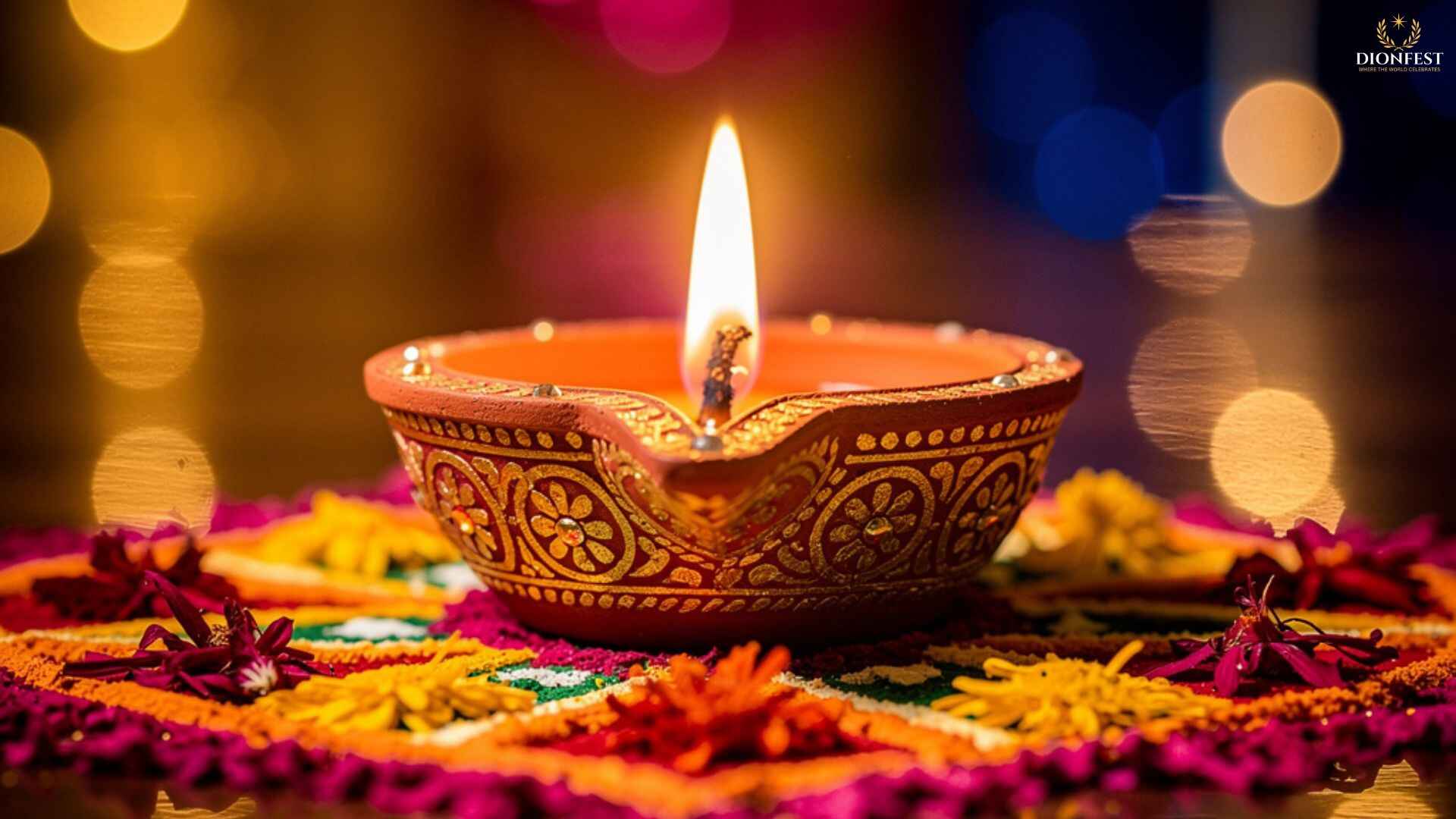
Every year, as autumn evenings grow cooler, cities and villages across India begin to glow with thousands of tiny lights. Homes sparkle with oil lamps, markets buzz with last-minute shopping, and the air carries the aroma of sweets and incense. Diwali isn’t just a festival—it’s an emotion, a time when families reunite, old worries are set aside, and hope takes center stage. For travelers and first-time visitors, experiencing how Diwali is celebrated in India can feel like stepping into a living tapestry of color, tradition, and warmth.
Quick Facts About Diwali
| Detail | Information |
|---|---|
| Festival name | Diwali (Deepavali) |
| Country/region | India and global Indian communities |
| Main religion/culture | Hindu, Jain, Sikh, and some Buddhist traditions |
| Celebration time | October or November (based on lunar calendar) |
| Duration | 5 main days (varies by region) |
| Main highlights | Oil lamps, fireworks, sweets, prayers, family gatherings |
What Is Diwali?
If you’ve ever searched what is the meaning of Diwali festival, the simplest answer is this: it’s the celebration of light over darkness and good over evil. The word “Diwali” comes from the Sanskrit term Deepavali, meaning “a row of lamps.”
Diwali festival meaning and traditions revolve around joy, renewal, and gratitude. It marks the start of a new financial year for many businesses, the time to clean and decorate homes, and a moment to reconnect with loved ones. While it has deep roots in Hindu culture, people of different faiths and communities across India celebrate it in their own ways.
Why Is Diwali Called the Festival of Lights
Diwali gets its name from the Sanskrit word “Deepavali” a row of lamps. The festival is defined by light: clay diyas filled with oil and lit with cotton wicks, placed in rows on windowsills, doorsteps, and rooftops. The light has a specific meaning it represents the victory of knowledge over ignorance, good over evil, and light over darkness. Every story associated with Diwali involves a return from darkness: Ram returning from exile, Lakshmi visiting homes that are lit and welcoming, the defeat of Narakasura. The lamps aren’t decoration they’re the point.
Diwali Festival of Lights Meaning
The five days of Diwali mark different events depending on which Hindu tradition you follow. For Vaishnavas, the central story is the return of Lord Ram to Ayodhya after 14 years of exile and his victory over Ravana the citizens lit lamps to welcome him back. For those following the Krishna tradition, it commemorates Krishna’s defeat of the demon Narakasura. For Lakshmi worshippers, it’s the night Lakshmi roams the earth and enters homes that are clean and illuminated. For Jains, Diwali marks the nirvana of Mahavira. For Sikhs, it coincides with Bandi Chhor Divas the release of Guru Hargobind from imprisonment. The common thread across all of these is light welcoming something sacred.
What Lights and Diyas Represent
The diya a small clay lamp is the oldest and most essential symbol of Diwali. Before electric lights and fireworks became part of the celebration, Diwali was entirely about diyas placed in every window and doorway of a home. The flame represents the individual soul (atman) and its connection to universal consciousness. Lighting a diya is not just aesthetic in the Hindu understanding, it’s an act with spiritual intention. The row of lamps (deepavali) creates a visible signal: this home is awake, welcoming, and participating in the celebration.
History or Origin of the Festival
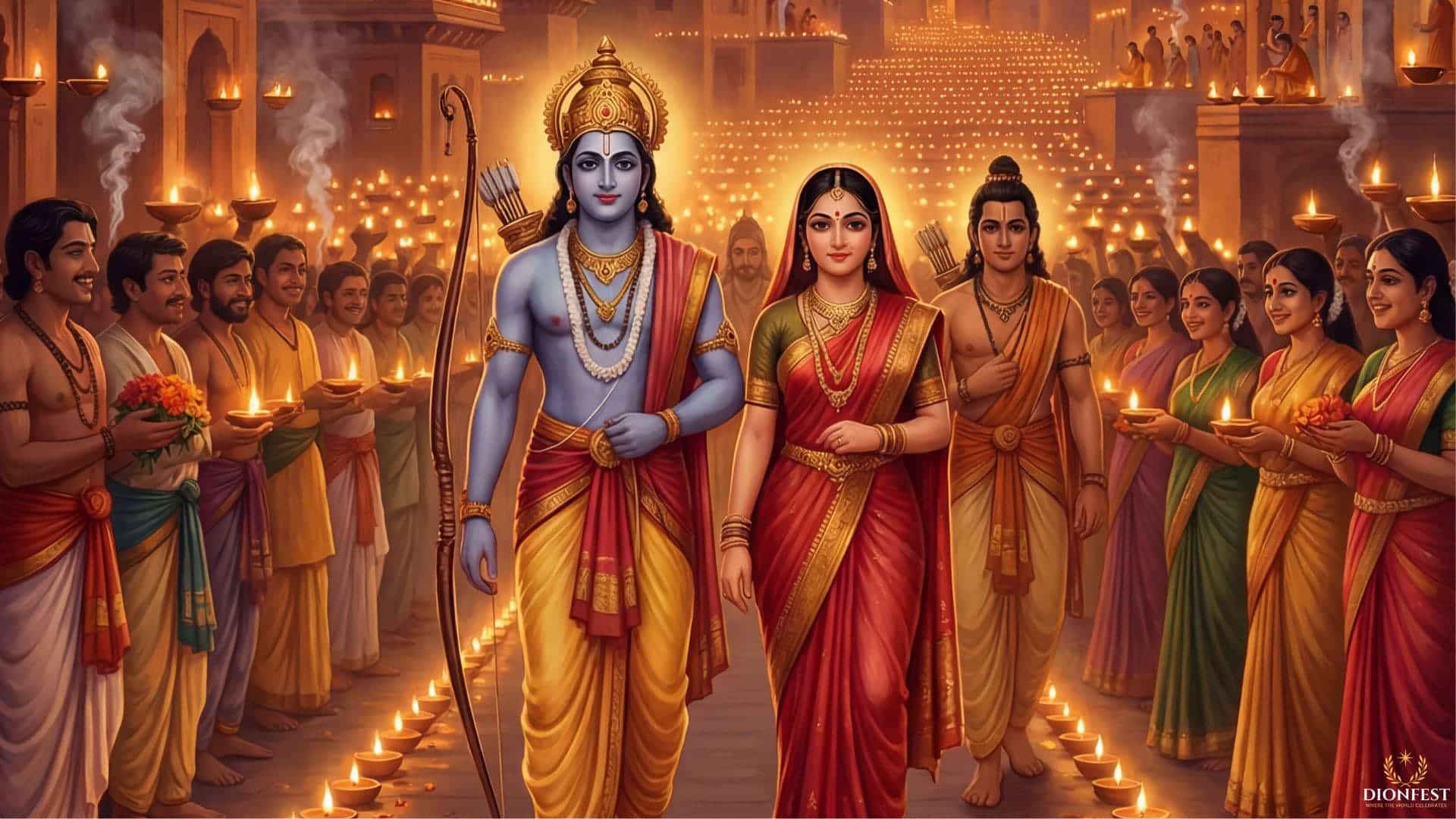 To understand why is Diwali celebrated in India, you need to look at the stories behind it. The most widely known legend comes from the Hindu epic Ramayana. According to tradition, Diwali marks the return of Lord Rama, his wife Sita, and brother Lakshmana to the kingdom of Ayodhya after 14 years of exile and a victory over the demon king Ravana. People welcomed them by lighting rows of lamps, symbolizing the triumph of good over evil.
However, Diwali has different meanings across religions:
- Hindus celebrate the victory of light and worship Goddess Lakshmi, the deity of wealth and prosperity.
- Jains observe it as the day Lord Mahavira attained nirvana.
- Sikhs mark the release of Guru Hargobind Ji from imprisonment, known as Bandi Chhor Divas.
These multiple origins show how Diwali has evolved into a shared cultural celebration rather than a single religious event.
Cultural and Spiritual Significance
Beyond the lights and festivities, Diwali carries a deeper message. It symbolizes:
The victory of knowledge over ignorance
The importance of generosity and kindness
New beginnings and fresh starts
Many people use this time to forgive past grievances, clear debts, and start new ventures. Homes are cleaned not just physically but symbolically, representing the removal of negativity. Lighting lamps is believed to invite positive energy and prosperity.
Diwali Indian Festival of Lights
How Diwali Is Celebrated in India
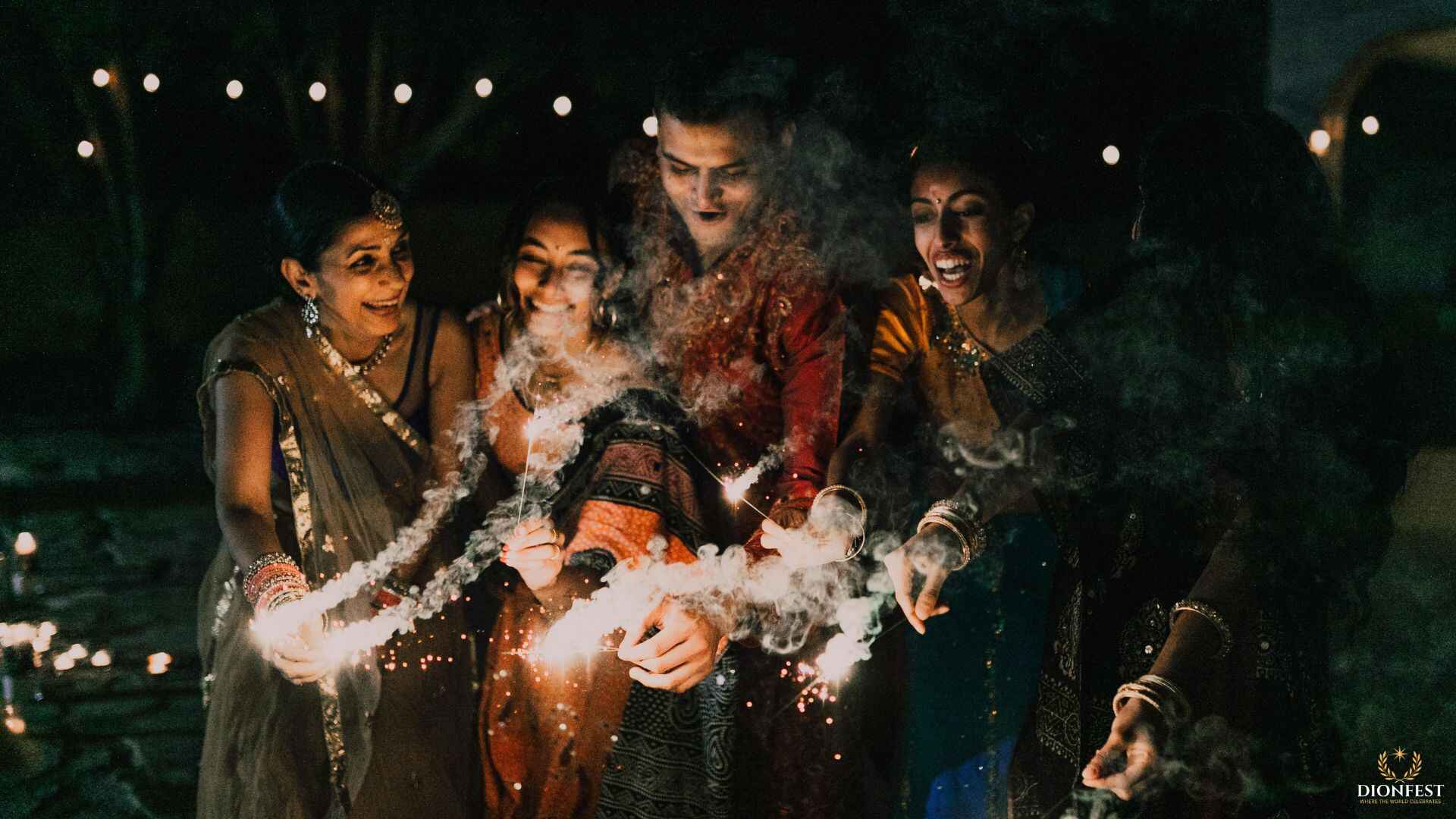
Diwali preparations begin weeks before the main night. Homes are cleaned thoroughly Lakshmi is said to visit only clean homes. New clothes are bought. Sweets are made and exchanged between families. On the main night (the third day, Lakshmi Puja), diyas are lit at dusk and placed everywhere. Rangoli patterns are drawn at entrances. Lakshmi puja is performed in homes and businesses. Fireworks follow though in many Indian cities, restrictions on fireworks have increased in recent years due to air quality concerns. The day after the main night, Govardhan Puja is observed, followed by Bhai Dooj a day celebrating the bond between siblings.
Light Festival Traditions Across Different Communities
Diwali is primarily a Hindu festival but is celebrated by Jains, Sikhs, and some Buddhists with their own distinct meanings. In the Indian diaspora, Diwali has become one of the most visible South Asian cultural events globally celebrated in the UK (Diwali on the Square in Leicester is one of the largest outside India), the US, Canada, Australia, and across Southeast Asia. The festival’s visual nature lights, colors, rangoli — has made it accessible and appealing beyond South Asian communities. Some Western cities now hold official Diwali celebrations. The core of the festival light as a symbol of something worth welcoming translates across contexts.
How the Festival Is Celebrated
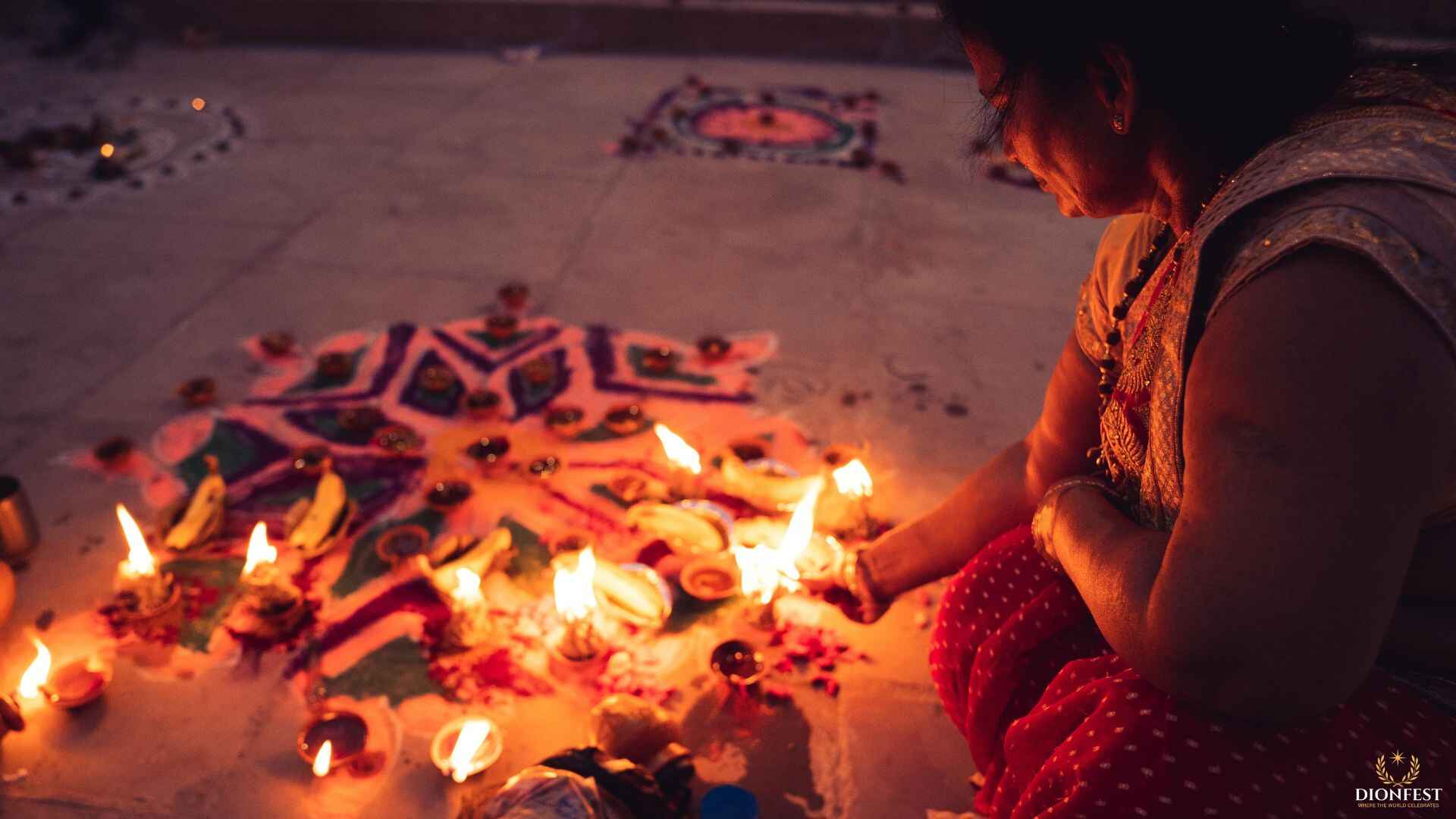 If you’re curious about how Diwali is celebrated in India, the celebrations unfold over several days, each with its own rituals and meaning. Here’s a look at traditional Diwali rituals step by step:
Day 1: Dhanteras
People buy gold, silver, or utensils as a symbol of prosperity. Homes are cleaned and decorated.
Day 2: Naraka Chaturdashi (Choti Diwali)
This day celebrates the victory of Lord Krishna over the demon Narakasura. People wake early, take oil baths, and light lamps.
Day 3: Lakshmi Puja (Main Diwali Night)
The most important day. Families dress in new clothes, perform prayers to Goddess Lakshmi and Lord Ganesha, exchange sweets, and light oil lamps across homes and streets.
Day 4: Govardhan Puja
Celebrates Lord Krishna’s lifting of the Govardhan Hill. Special food offerings are prepared.
Day 5: Bhai Dooj
A day honoring the bond between brothers and sisters, similar to Raksha Bandhan.
Food, Music, and Social Traditions
Families prepare sweets like laddoos, barfi, and jalebi.
Guests visit homes, exchange gifts, and share meals.
Fireworks light up the night sky in many regions.
In recent years, many households have adopted eco friendly Diwali celebration ideas, such as using clay lamps, avoiding loud firecrackers, and choosing natural decorations.
Diwali Traditions in Different Indian States
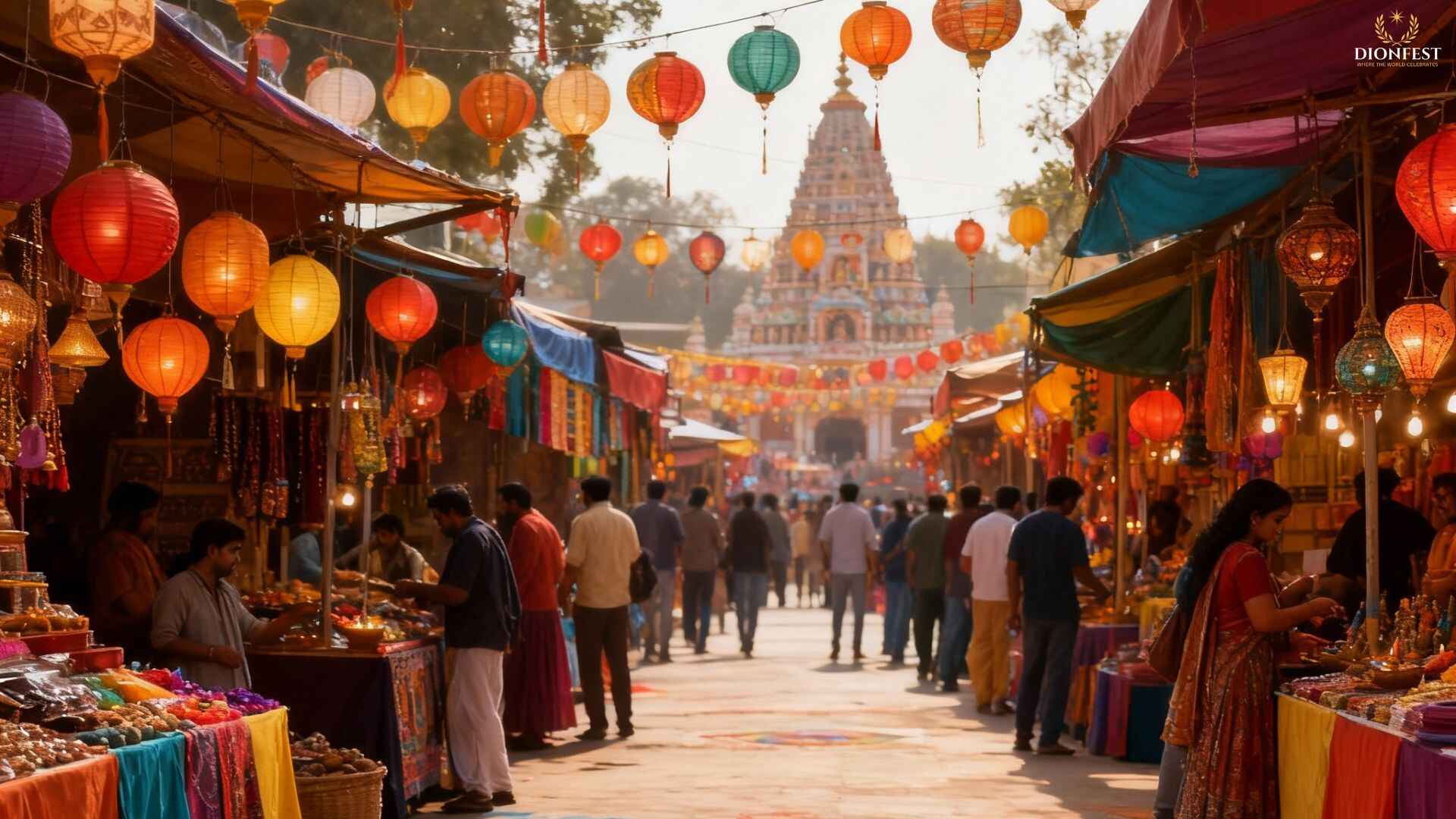 India’s diversity means Diwali looks different depending on where you go.
- North India: Focus on Lord Rama’s return to Ayodhya, with grand fireworks and Lakshmi puja.
- West Bengal: Celebrates Kali Puja, dedicated to Goddess Kali.
- Tamil Nadu: Marks the victory of Lord Krishna over Narakasura, with early morning rituals.
- Gujarat: Observes the start of the new business year, with elaborate decorations and prayers.
- Punjab: Sikhs celebrate Bandi Chhor Divas at the Golden Temple, which glows with lights.
Best Places to Experience Diwali
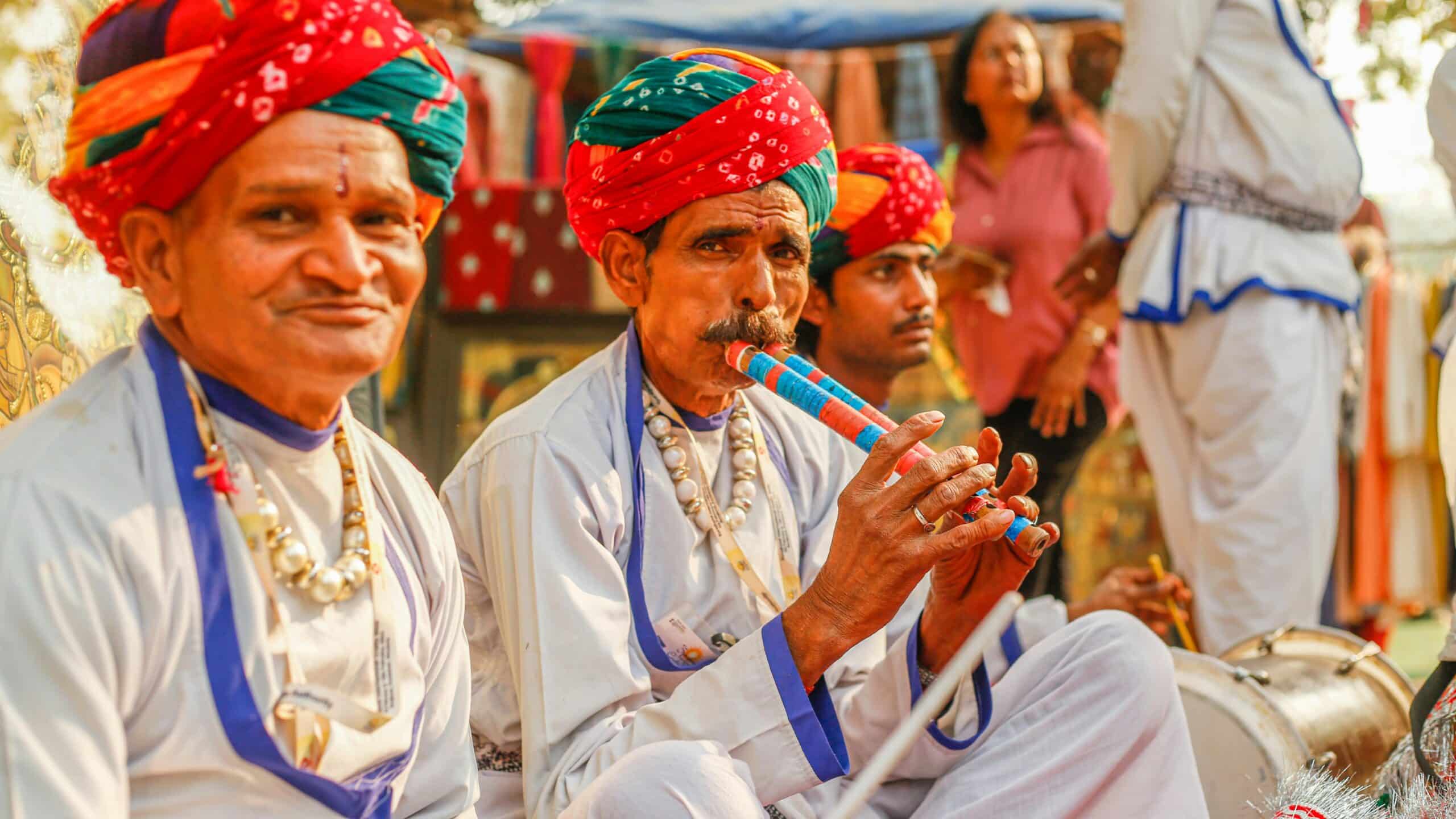 If you’re searching for the best places to celebrate Diwali in India, these destinations offer unforgettable experiences.
Varanasi
The ghats along the Ganges are illuminated with thousands of lamps. Evening ceremonies create a magical atmosphere.
Jaipur
Markets are decorated with lights, and the city feels like a giant festival ground.
Amritsar
The Golden Temple is beautifully lit, and the reflection in the sacred pool is breathtaking.
Delhi
The capital offers grand markets, fireworks, and festive street food.
Kolkata
Famous for its Kali Puja celebrations and artistic pandals.
Travel Tips for Visitors
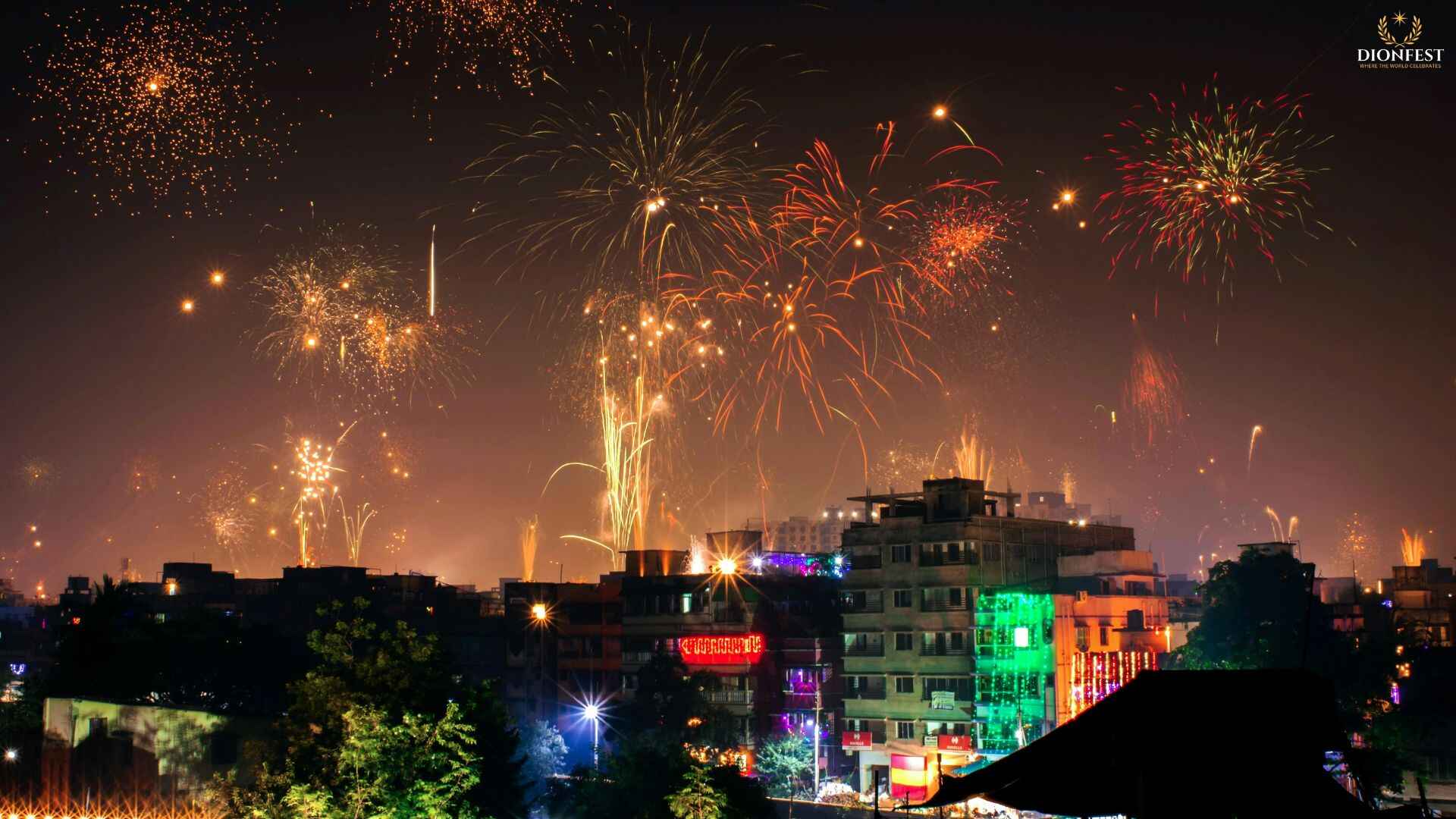 If you’re planning your trip, these Diwali travel tips for international visitors will help you enjoy the festival comfortably.
What to wear
Traditional outfits like kurtas or sarees are welcome.
Comfortable footwear is essential for crowded streets.
Safety tips
Be cautious around fireworks.
Carry earplugs if you’re sensitive to loud sounds.
Best time to go out
Evenings are the most festive, especially on the main Diwali night.
Cultural etiquette
- Remove shoes before entering homes or temples.
- Accept sweets or gifts with your right hand as a sign of respect.
Estimated Daily Budget (for Travelers)
| Expense | Budget Range (USD) |
|---|---|
| Stay per night | $20–$60 (budget to mid-range hotel) |
| Food per day | $10–$20 |
| Local transport | $5–$15 |
| Total daily budget | $35–$95 |
Costs vary depending on the city and accommodation type.
Interesting Facts About Diwali
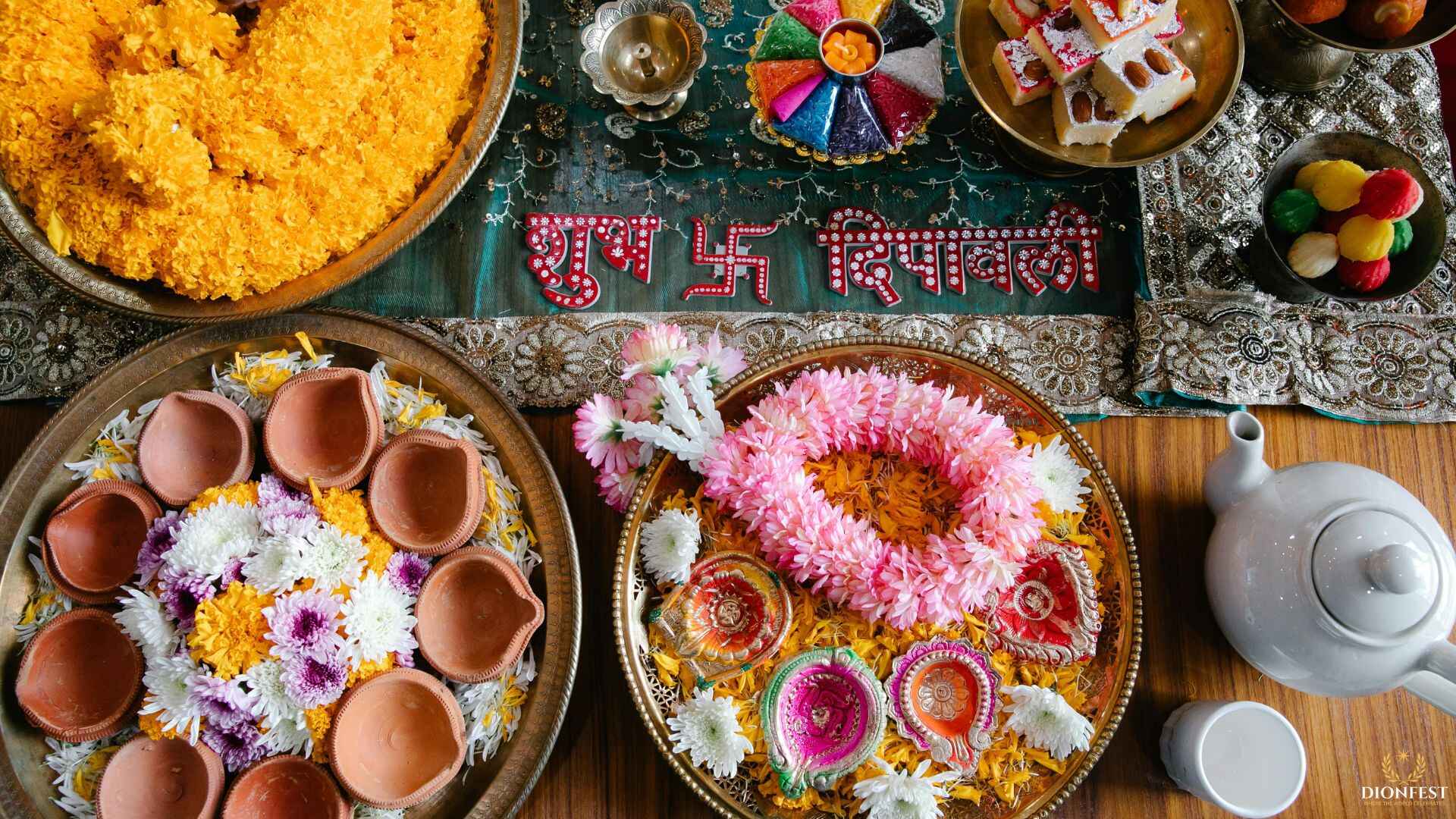
- Diwali is one of the most widely celebrated festivals in the world.
- The festival is a public holiday in several countries outside India.
- In some regions, Diwali marks the beginning of the new financial year.
- It’s one of the busiest shopping seasons in India.
- The festival lasts five days, but celebrations can extend longer.
- Some communities celebrate it as a harvest festival.
Common Mistakes to Avoid
- Wearing revealing clothes to religious ceremonies.
- Ignoring firecracker safety in crowded areas.
- Booking hotels too late—prices rise quickly.
- Expecting normal business hours; many shops close on the main day.
- Forgetting to try local sweets and festive foods.
FAQ Section
What is Diwali?
Diwali is the festival of lights celebrated across India and many parts of the world to symbolize the victory of good over evil.
Why is it celebrated?
It marks various events, including the return of Lord Rama to Ayodhya and the worship of Goddess Lakshmi for prosperity.
When is it celebrated?
Diwali usually falls between October and November, depending on the lunar calendar.
How long does it last?
The main festival spans five days, each with its own rituals and meaning.
Where is it most popular?
It is most widely celebrated across India, especially in cities like Varanasi, Jaipur, Delhi, and Amritsar.
Conclusion
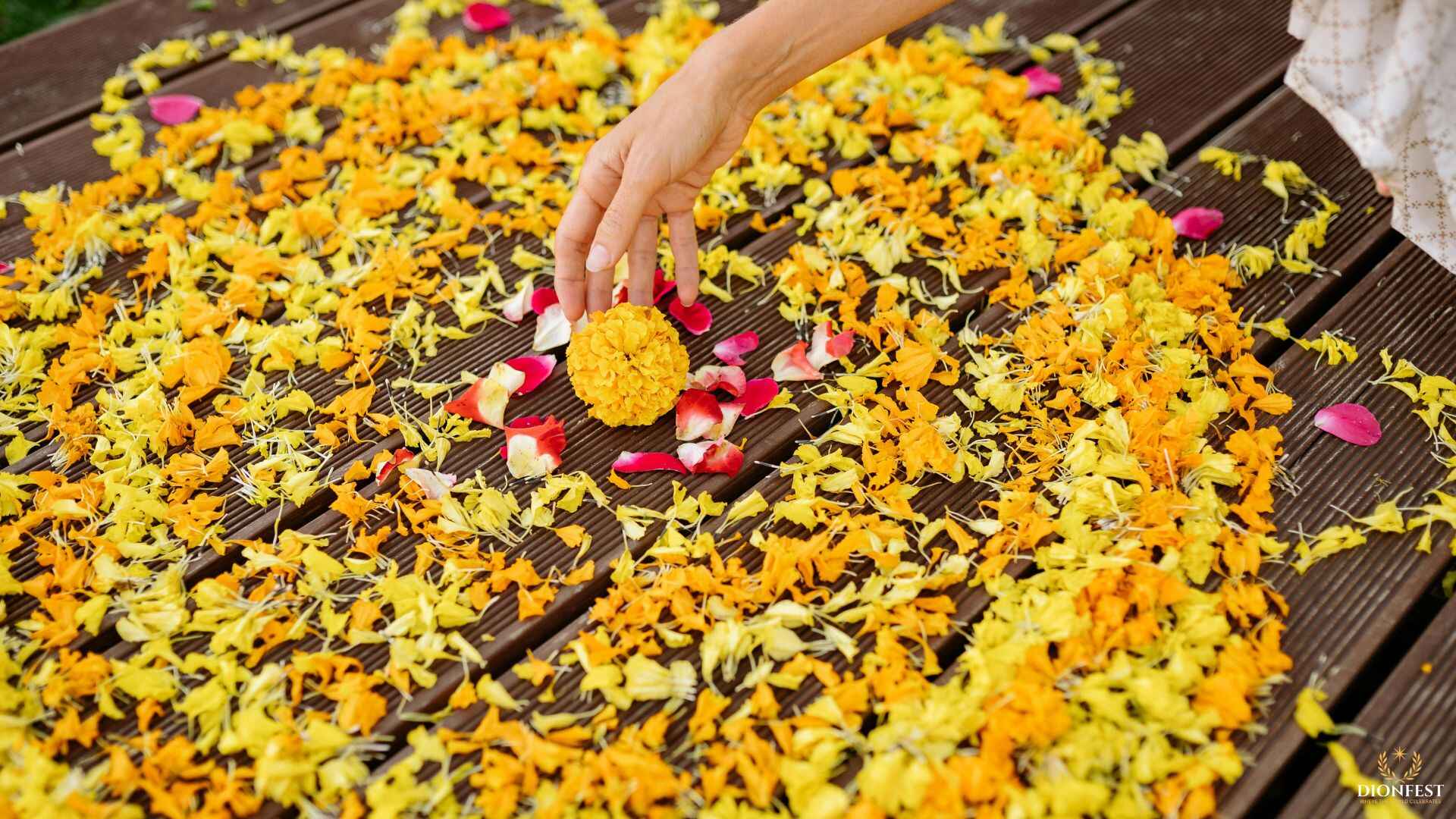 Diwali is more than a festival—it’s a feeling of warmth, hope, and togetherness that lights up the hearts of millions. Whether you’re watching lamps flicker along the Ganges, sharing sweets with a local family, or simply walking through a glowing street market, the spirit of Diwali is unforgettable. For travelers and festival lovers alike, experiencing how Diwali is celebrated in India offers a rare glimpse into a culture where light, love, and new beginnings are cherished above all.
Written by Abhay Ramola, founder of DionFest, a website dedicated to global festival guides and cultural celebrations.

Abhay Ramola researches world festivals across primary sources, local accounts, and on-ground reporting. He founded Dionfest to cover what gets missed when festivals become tourism content the history, the ritual, and the people behind it.
2 thoughts on “Diwali The Festival of Lights That Brings India to Life”