
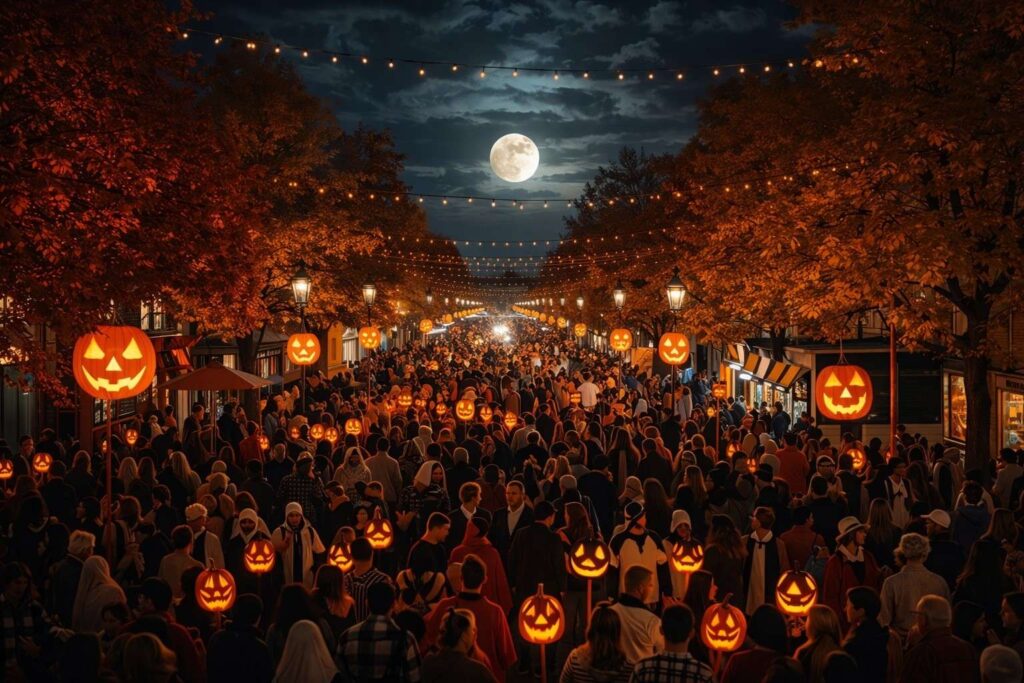
Who This Guide Is For
- Complete Newcomers: You’ve never attended a Halloween festival and don’t know where to start. This guide explains what each event actually feels like on the ground—costs, crowds, and whether it’s worth the trip.
- Halloween Veterans & Travel Planners: You’ve done Salem. You’ve done New Orleans. You want the operational details that most travel blogs skip: ticket tiers, optimal visit windows, crowd intelligence, and under-the-radar picks that don’t show up on every listicle.
Why Most Halloween Festival Guides Are Useless
Every article on this topic lists Salem, Sleepy Hollow, New Orleans, West Hollywood, and maybe Louisville—then calls it a day. The problem: none of them tell you why one is better for families versus solo adults, what things actually cost once you factor in travel and accommodation, or which events have degraded in quality as they’ve scaled. This guide fills those gaps.
The Big Four — What They Are, What They Actually Deliver, and What They Don’t Tell You
Salem, Massachusetts — The Brand vs. The Reality
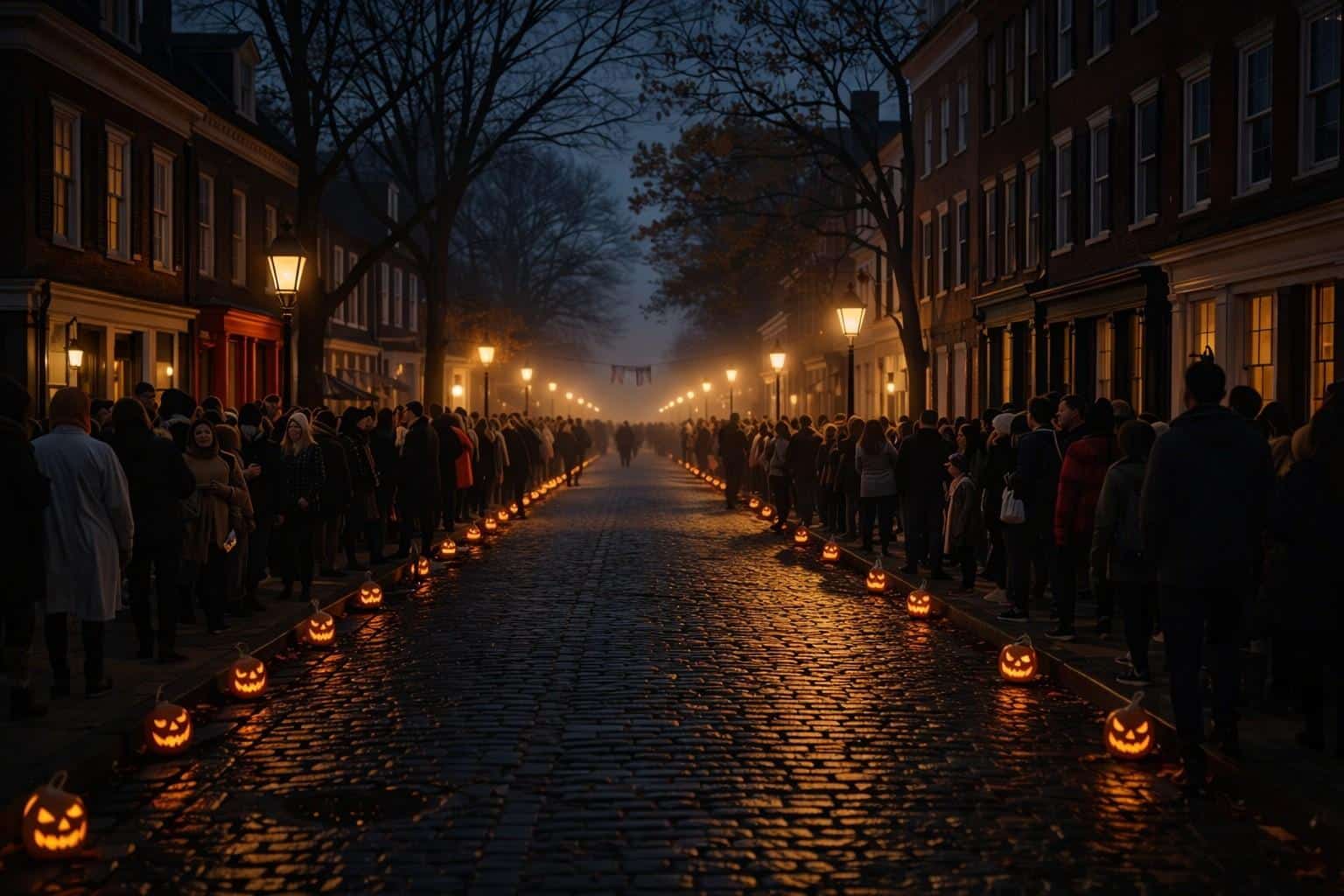
Salem is like the Halloween equivalent of Times Square—iconic, crowded, and genuinely impressive, but you’ll spend half your time fighting foot traffic.
Salem in October draws over 500,000 visitors for its month-long Haunted Happenings festival. The draw is obvious: the 1692 witch trials left a cultural scar that never fully healed, and modern Salem has built an entire economy around that legacy. You get ghost tours through the historic Burying Point Cemetery (est. 1637, the oldest in the US), the Festival of the Dead’s Psychic Fair, the Salem Witches’ Halloween Ball, haunted houses inside authentic 17th-century buildings, and a parade with giant puppets.
What they don’t tell you:
- The optimal window is mid-October, not Halloween weekend. By October 28–31, Salem is essentially immovable. Streets in the downtown core get so packed on Halloween night that many locals leave the city entirely. If you want to actually experience Salem rather than shuffle through it, target October 10–18.
- Cost reality check: Ghost tours run $20–35. The Salem Witches’ Ball goes $75–150 per person. Hotel rates in October run 3–5x the off-season rate. Budget $600–900 per person for a proper 2-night Salem October trip if you book late.
- The 1692 history is real; much of the “haunted” product is theater. The Witch Trials Memorial (opened 1992) and the Peabody Essex Museum’s Ropes Mansion are genuinely moving. The psychic expos and haunted cruises are tourist products. Distinguish between them.
| Event | Best For | Cost Range | Book How Far Ahead |
|---|---|---|---|
| Haunted Happenings | Families, history buffs | $0–50 | 2–3 months |
| Salem Witches’ Ball | Adults | $75–150 | 4–5 months |
| Festival of the Dead Psychic Fair | Curiosity seekers | $15–40 | 6–8 weeks |
| Ghost Tours (multiple operators) | All ages | $20–35 | 2–4 weeks (mid-Oct), 3+ months (Halloween weekend) |
New York City’s Village Halloween Parade — Scale That Earns Its Reputation
The Village Halloween Parade has run every October 31st since 1974. It moves up 6th Avenue through Greenwich Village and has grown into one of the largest participatory public art events in the US. Anyone in costume can join the march—you don’t register, you don’t pay, you walk in at the entry point on Canal Street and become part of it.
What competitors miss:
- The paper-mâché puppets are the actual differentiator. They’re built by a dedicated puppet workshop throughout the year, some reaching 30 feet tall. No other Halloween parade in America produces visual spectacle at this scale.
- Spectator vs. participant is a real choice. Watching from the sidewalk on 6th Avenue between Houston and 23rd Street means arriving by 6:00 PM for a decent spot. The parade starts at 7:00 PM. Joining the parade means arriving at Canal Street near 6th Ave in costume and walking north. The experience is radically different between the two.
- The surrounding neighborhood adds depth. The East Village and West Village light up with bar events, pop-ups, and unofficial street gatherings that extend the celebration until 2:00–3:00 AM. The parade is the anchor, not the whole evening.
Pro Tip: The parade’s most photographed moment is the giant skeleton puppets at the front of the march. Position yourself on 6th Ave around 15th Street, arrive before 6:30 PM, and you’ll get a clear sightline. Spectator spots north of 23rd Street tend to thin out significantly—that’s a good option if you missed the early crowd.
New Orleans — The Only City Where Halloween Is Structurally Year-Round
New Orleans approaches Halloween differently than every other city on this list because the infrastructure already exists. The city has a professional float-building industry (the same studios that make Mardi Gras floats build Krewe of Boo floats), open container laws that turn streets into extension of the event, and a ghost tour industry that operates 365 days a year rather than ramping up in October.
The Krewe of Boo parade runs the Saturday before Halloween in the French Quarter. The real Halloween night action concentrates on Frenchman Street in the Marigny neighborhood—not the French Quarter, which is a distinction most guides get wrong. Frenchman Street’s bar-dense two-block stretch becomes an outdoor costume party that bleeds into the French Quarter to the west and the Bywater to the east.
The information gap: New Orleans’ Halloween is self-organizing. There’s no single ticketed event that captures it. The experience comes from showing up with a costume, understanding the neighborhood geography, and letting the night unfold. This makes it hard to “plan” and is exactly why it’s underrated relative to Salem in terms of value.
Cost profile: Krewe of Boo is free to watch. Ghost tours run $20–60. Hotel Monteleone and Bourbon Orleans Hotel are the historically significant properties to target—both have documented paranormal reports and are walking distance to Frenchman Street. Book 4–6 months out for Halloween weekend.
West Hollywood Halloween Carnaval — 500,000 People on One Street
West Hollywood’s annual event on October 31st along Santa Monica Boulevard between North Doheny Drive and La Cienega Boulevard draws half a million people. It’s free, public, and runs 6:00 PM–11:00 PM. The crowd skews heavily toward elaborate, professionally-made costumes—West Hollywood’s entertainment industry connections mean you’ll see SFX makeup and costume work that genuinely rivals film production quality.
What to know operationally:
- Leave pets and young children home. This is explicitly an adult-oriented event.
- Parking is essentially nonexistent. Use Uber/Lyft or the West Hollywood shuttle.
- Bar entrances along the boulevard have massive queues by 7:30 PM. Arrive with a plan for where you’re going after the street event closes.
- The street party ends at 11:00 PM, but private venue events continue throughout WeHo until 2:00–3:00 AM.
The Underreported Destinations — Where the Real Halloween Nerds Go
Anoka, Minnesota — The Legitimate “Halloween Capital of the World” Claim
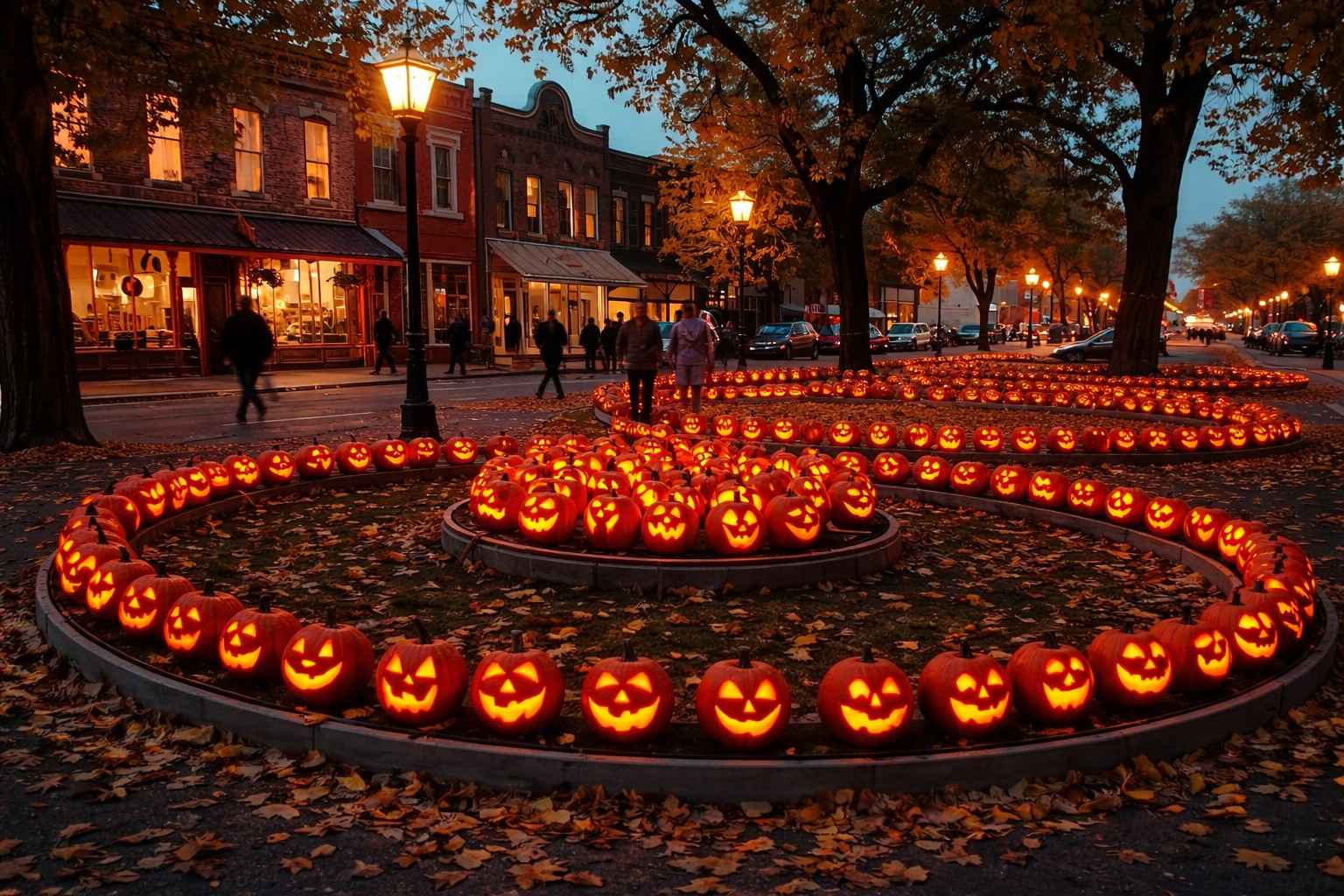
Anoka, a small city north of Minneapolis, holds a historically verifiable claim: it organized America’s first public Halloween celebration in 1920. The event was created deliberately—local leaders wanted to redirect teenagers from pranking into organized festivities. It worked, and the tradition has continued for over 100 years.
Today Anoka runs a full October schedule including multiple parades, a Grande Day Parade on the last Saturday of October, and various community events. It’s genuinely family-oriented, deeply local, and almost completely absent from mainstream travel media because it doesn’t have the brand cachet of Salem or the scale of New Orleans.
Why it belongs on serious Halloween travel lists: The historical authenticity is unmatched. This is the origin point of the American public Halloween celebration as a civic institution. For Halloween history enthusiasts, Anoka is a pilgrimage site.
Sleepy Hollow, New York — Literary Horror Done Right
The Great Jack O’Lantern Blaze at Van Cortlandt Manor in nearby Croton-on-Hudson is the event that defines Sleepy Hollow’s Halloween season. Over 7,000 hand-carved pumpkins arranged into elaborate displays—bridges, dinosaurs, solar systems—are lit simultaneously along a quarter-mile outdoor trail. It runs throughout October and typically sells out weeks in advance.
Beyond the Blaze, Horseman’s Hollow at Philipsburg Manor is a theatrical haunted experience with actors in period-appropriate costumes, and the Sleepy Hollow Cemetery (where Washington Irving is actually buried) offers nighttime tours in October.
Booking reality: The Jack O’Lantern Blaze sells out. Not metaphorically—specific date-and-time tickets are gone weeks before October. Buy in August if possible.
Irvington Halloween Festival, Indianapolis — The Midwest’s Most Underrated Event
The Irvington neighborhood of Indianapolis hosts what is claimed to be America’s second-oldest public Halloween celebration, dating to 1947. The final week of October brings a Halloween Ball, a séance event, a zombie bike ride, a vampire run, ghost tours, costume contests, and parades.
What distinguishes Irvington is the authentic community ownership of the event. It hasn’t been commercialized into a ticketed product managed by a promoter. It’s still run as a neighborhood celebration, which affects the feel entirely—more personal, more creative, less polished in ways that matter.
For families: Irvington is significantly more accessible and manageable than Salem for families with children. Crowds are large but not Salem-scale, and the event geography is walkable.
St. Helens, Oregon — The Halloweentown Town
The filming location for the 1998 Disney Channel movie Halloweentown leans fully into its pop culture identity throughout October. The Spirit of Halloweentown festival runs from October 1st through October 31st, with cast member appearances, a pumpkin lighting ceremony in the town square, and the Little Trick-or-Treaters costume parade on October 30th.
This is a legitimate pilgrimage destination for fans of the franchise. The town is small (population ~13,000), located about 30 miles northwest of Portland, and handles crowds well given its scale. The experience is distinct from every other entry on this list because the identity is entirely pop-culture-driven rather than history-driven.
The Comparison Framework — How to Actually Choose
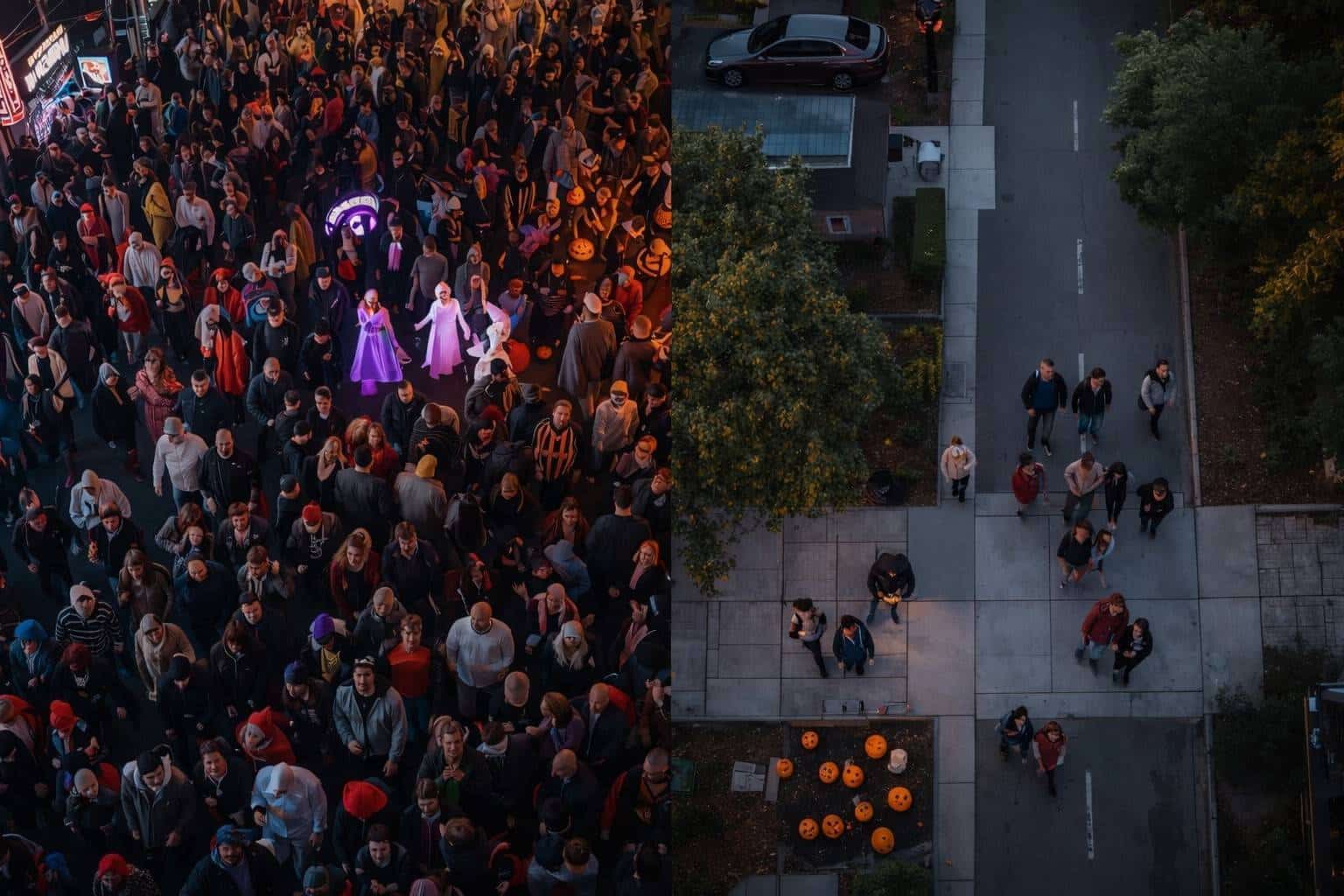
The question most guides never ask: What kind of Halloween experience are you actually looking for?
| Experience Type | Best Destination | Why |
|---|---|---|
| Deep history + atmosphere | Salem, MA | 300+ years of documented dark history; Burying Point Cemetery (1637) is genuinely atmospheric |
| Party + nightlife, adults | West Hollywood or New Orleans | Scale, costumes, open container laws (NOLA), free access |
| Literary/cinematic tourism | Sleepy Hollow, NY | Irving’s grave, the actual Headless Horseman bridge, authentic Hudson Valley fall foliage |
| Family-focused, manageable crowds | Irvington (Indianapolis) or Anoka, MN | Community-scale events, navigable geography |
| Pop culture fans | St. Helens, OR | Halloweentown filming location, cast appearances |
| Spectacle and public art | NYC Village Parade | 30-foot puppets, 50,000+ parade participants |
| Midwest underdog | Louisville, KY | Jack-O’-Lantern Spectacular (5,000 pumpkins), Thriller Parade downtown |
Operational Intelligence — The Planning Details Nobody Publishes
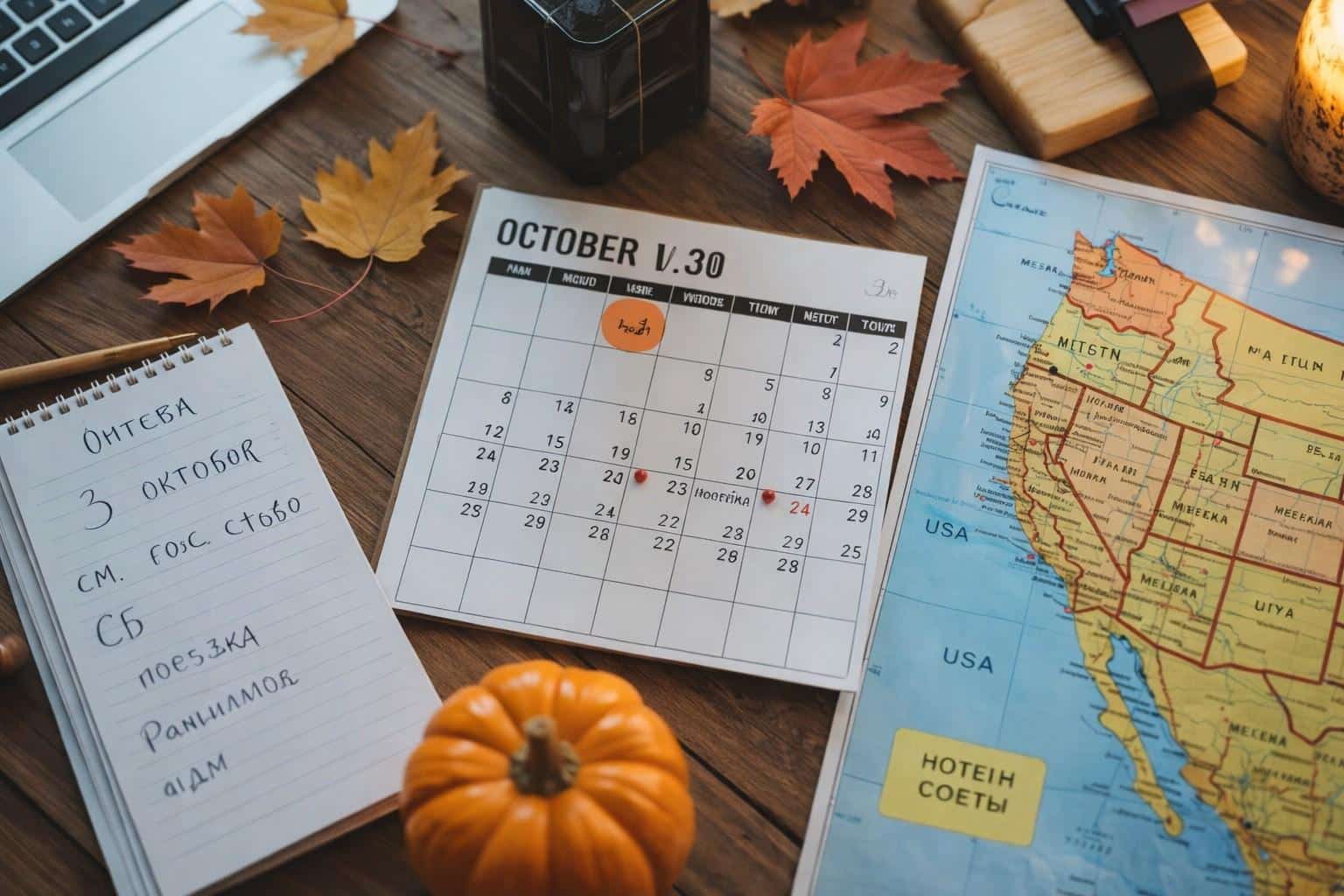
The Optimal Booking Timeline
Most people book Halloween trips too late. Here’s the actual timeline by destination:
- Salem: Book accommodation in June for Halloween weekend. July–August is the outer limit. After Labor Day, you’re paying a significant premium for what’s left.
- Sleepy Hollow (Jack O’Lantern Blaze tickets): Buy in August. The event physically sells out.
- New Orleans: October 1st is the target for booking Frenchman Street area hotels. The Marigny and French Quarter fill fast.
- West Hollywood: Hotels within walking distance of Santa Monica Boulevard fill by early October. The event itself is free and requires no ticket.
- NYC Village Parade: No ticket needed. Hotel rooms in Manhattan are always expensive; the parade date doesn’t create the same premium as Salem because NYC has enormous hotel capacity.
- Anoka/Irvington/St. Helens: Book 4–6 weeks out. These don’t have Salem’s accommodation pressure.
Crowd Management — The Weekend vs. Weekday Calculus
For Salem specifically: the difference between a midweek October visit and the Halloween weekend is not just crowd size—it’s experience quality. Midweek Salem in mid-October offers:
- Accessible ghost tours with small groups
- Shorter queues at the Peabody Essex Museum
- Hotel rates 40–60% lower
- Actual conversations with locals rather than shuffling through packed streets
The tradeoff is atmosphere. Halloween weekend in Salem, for all its chaos, has an electric energy that the quieter midweek visit cannot fully replicate. Know which you’re buying.
Budget Planning by Destination — Real Numbers
| Destination | 2-Night Trip (per person, incl. accommodation + events) | Peak Multiplier vs. Off-Season |
|---|---|---|
| Salem, MA (Halloween weekend) | $700–1,100 | 4–5x |
| Salem, MA (mid-October weekday) | $300–450 | — |
| New York City | $500–800 | 1.5x |
| New Orleans | $400–700 | 2–3x |
| West Hollywood | $350–600 | 1.5–2x |
| Sleepy Hollow, NY | $300–550 | 2–3x |
| Indianapolis (Irvington) | $200–350 | 1.2x |
| St. Helens, OR | $150–280 | 1.5x |
Five Things Your Competitors Don’t Cover
1. The “Second City” Strategy
Every major Halloween destination has a satellite city within 1–2 hours that offers comparable atmosphere at a fraction of the price and crowd. Salem’s satellite is Portsmouth, NH (authentic colonial history, ghost tours, less than 2 hours away). New Orleans’ satellite is Natchitoches, LA (America’s oldest permanent European settlement, runs its own October ghost tour circuit). Sleepy Hollow’s satellite is Cold Spring, NY (Hudson Valley village with its own ghost walk and far fewer tourists).
2. The Haunted Hotels Problem
Many articles recommend “haunted hotels” as a selling point. The Hawthorne Hotel in Salem, the Stanley Hotel in Estes Park, Hotel Monteleone in New Orleans—these are real properties with real histories. But the “documented paranormal activity” framing is a marketing claim, not a verifiable fact. What is verifiable: these are genuinely historic buildings with excellent locations. Book them for the history and the location, not the ghost promises.
3. Little Five Points, Atlanta Is Underrated on a National Scale
Atlanta’s Little Five Points Halloween Festival and Parade doesn’t appear in most top-10 national lists. It runs on the weekend before Halloween in the Inman Park/L5P neighborhood—a two-day event with two stages of live music, an artist market, food trucks, and a parade. Attendance runs 20,000–40,000, which puts it in a sweet spot: substantial enough to feel like an event, small enough to be navigable. The neighborhood’s arts-and-creative identity gives the costumes a distinct character compared to the party-focused events in WeHo or New Orleans.
4. The Louisville Double-Header
Louisville, Kentucky has two distinct Halloween events that most guides treat as one. The Jack-O’-Lantern Spectacular in Iroquois Park (5,000 hand-carved pumpkins along a quarter-mile trail, running mid-October through early November) and the separate downtown Thriller Parade on Halloween night are different events, different locations, and target different crowds. The Jack-O’-Lantern Spectacular is family-oriented and ticketed ($10–15). The Thriller Parade is free, adult-leaning, and involves a mass Thriller dance reenactment on Main Street.
5. Theme Park Halloween Events Are a Different Product
Universal Studios Hollywood’s Halloween Horror Nights, Disney’s Mickey’s Not-So-Scary Halloween Party, and Knott’s Scary Farm are enormous, professionally produced events with millions of combined attendees. They’re deliberately absent from most “best Halloween celebrations” lists because they’re a separate product category—ticketed after-hours theme park events rather than community or civic celebrations. They’re not lesser; they’re different. If production value and IP-themed haunted houses are your priority, they belong on your shortlist. If cultural authenticity and organic community are your priority, they don’t.
Planning Checklist
- Define your experience type (party, history, family, literary, pop culture)
- Set a realistic budget including accommodation at October premium pricing
- Identify your target dates: Halloween weekend (atmosphere max, crowd max) vs. mid-October (better access, lower cost)
- Book accommodation first, events second—this reverses most people’s instinct
- For Salem’s Jack O’Lantern Blaze and Sleepy Hollow’s Blaze, treat tickets as perishable inventory and buy the moment you have confirmed travel dates
- Research the “satellite city” near your target destination as a backup or adjacent day-trip
- Check event-specific costume rules (West Hollywood bans masks; some family events require age-appropriate attire)
- Plan transportation: Salem (drive or commuter rail from Boston), WeHo (rideshare only), Sleepy Hollow (Metro-North from Grand Central), New Orleans (walkable once there)
Frequently Asked Questions About Halloween Festivals in the USA
1. What is the best Halloween destination in the United States?
The best destination depends on the experience you want. Salem, Massachusetts is ideal for history and atmosphere, New York City offers unmatched spectacle with its Village Halloween Parade, and New Orleans delivers the best nightlife-focused Halloween experience.
2. When is the best time to visit Salem during Halloween season?
Mid-October (around October 10–18) is the best time to visit Salem. You’ll get smaller crowds, better hotel prices, and easier access to tours compared to the extremely crowded Halloween weekend.
3. Which Halloween festivals are best for families?
Family-friendly destinations include Irvington in Indianapolis, Anoka in Minnesota, and Sleepy Hollow in New York. These locations offer manageable crowds, community events, and activities suitable for children.
4. How much does a Halloween trip in the USA cost?
A typical 2-night Halloween trip can cost between $200 and $1,100 per person depending on the destination. Salem and New York are more expensive during peak season, while smaller cities like Indianapolis or St. Helens are more budget-friendly.
5. Do Halloween events require tickets in the USA?
Not all events require tickets. Large public events like the NYC Village Halloween Parade and West Hollywood Carnaval are free, while attractions like the Jack O’Lantern Blaze or special Halloween balls usually require advance booking.
6. Which city has the biggest Halloween celebration?
New York City hosts one of the largest Halloween celebrations with over 50,000 participants in the Village Halloween Parade, while West Hollywood attracts around 500,000 attendees for its street carnaval.
7. Are Halloween festivals in the USA suitable for solo travelers?
Yes, many Halloween festivals are great for solo travelers. Cities like New Orleans and New York offer safe, social environments where you can easily join events, parades, and nightlife activities.
8. How early should I book a Halloween trip?
For popular destinations like Salem or Sleepy Hollow, booking 2–4 months in advance is recommended. For smaller cities, booking 4–6 weeks ahead is usually enough.
Planning a trip to America’s biggest festivals? Check out our Ultimate Fourth of July Travel Guide 2026 and Mardi GrasFestival: History & Traditions in New Orleans for more American festival guides.

Abhay Ramola researches world festivals across primary sources, local accounts, and on-ground reporting. He founded Dionfest to cover what gets missed when festivals become tourism content the history, the ritual, and the people behind it.
Pingback: Burning Man 2026: Dates,Tickets & What to Expect - Dion Fest