Mid-Autumn Festival 2026: Date, Traditions, Mooncakes & Travel Tips
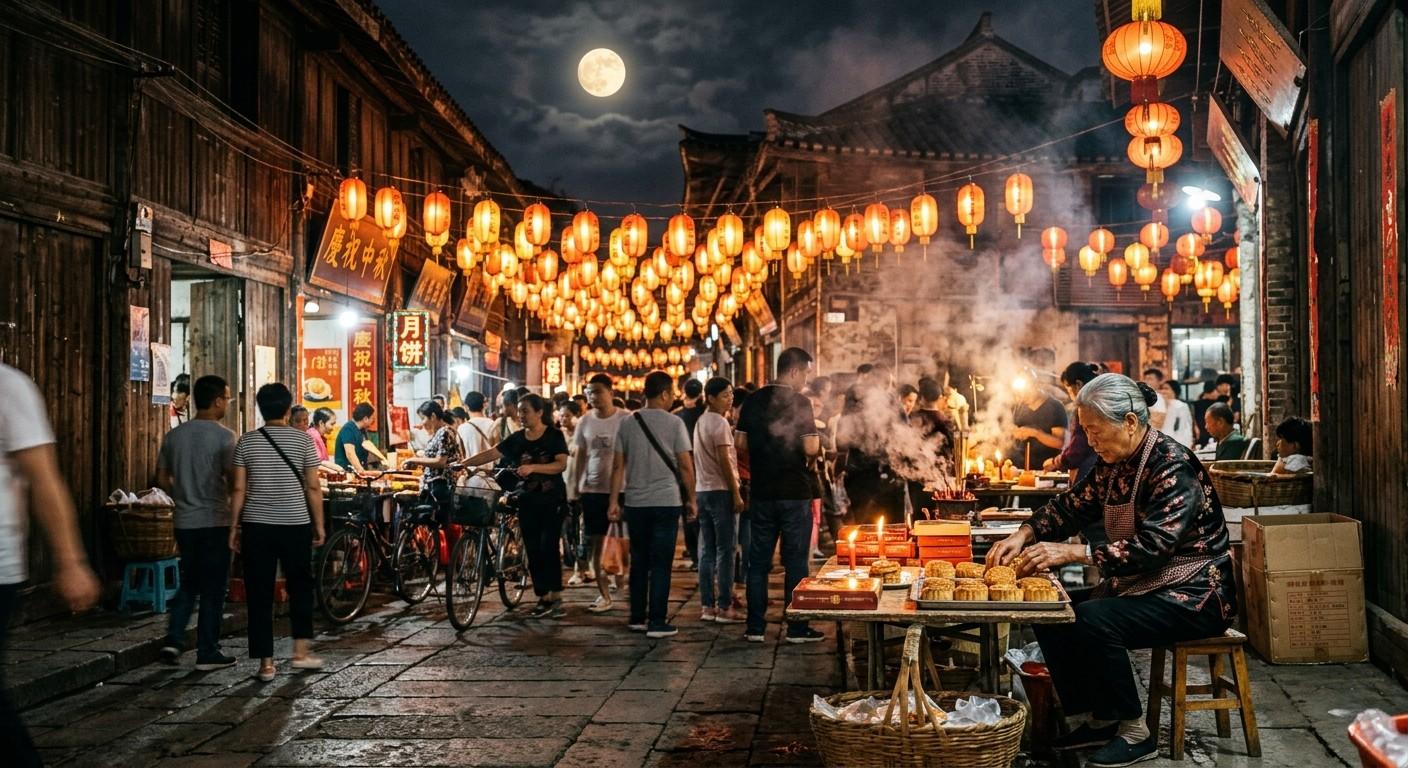
The smoke hits you before the light does. Incense from a dozen directions, sweet and woody, mixing with the warm sugar smell of lotus paste being pressed into molds in the shop behind you. Paper lanterns — red, pink, yellow — bob at chest height, held by children who are too excited to walk straight. Someone’s grandmother is arranging offerings on a folding table on the pavement: pomelos, mooncakes still in their boxes, a thermos of tea. Above all of it, the moon hangs so round and low it looks slightly fake, like a prop someone forgot to dim. You haven’t eaten yet, you’re mildly lost, and you already don’t want to leave.
The Mid-Autumn Festival is a harvest and lunar celebration observed across China, Taiwan, Hong Kong, Vietnam, Singapore, and diaspora communities worldwide, held annually on the 15th day of the 8th lunar month. It is known above all for mooncakes — dense, filled pastries exchanged as gifts — and for families gathering under the full moon. What most articles skip: the festival means something genuinely different to a grandmother in Chengdu than to a twenty-year-old in Taipei, and those two experiences barely overlap.
| Detail | Info |
|---|---|
| Festival Name | Mid-Autumn Festival (中秋節 / Tết Trung Thu) |
| Country / Region | China, Taiwan, Hong Kong, Vietnam, Singapore, Malaysia |
| Type | Cultural / Seasonal / Family |
| 2026 Dates | September 25, 2026 (eve: Sept 24) |
| Duration | 1–3 days (public holiday varies by country) |
| Best For | Families, cultural travelers, food lovers |
| Crowd Level | High in cities; Extreme in Hong Kong and Taipei |
| Avg. Daily Budget | CNY 300–600 / USD 40–85 (China); HKD 500–900 / USD 65–115 (HK) |
| Nearest Airport | Varies: PEK/PVG (China), HKG (Hong Kong), TPE (Taiwan) |
| Visa Required | Yes for China; On arrival or visa-free for HK/Taiwan (check nationality) |
When Is Mid-Autumn Festival 2026
The Mid-Autumn Festival falls on the 15th day of the 8th month of the lunar calendar the night of the year’s brightest full moon. In 2026, Mid-Autumn Festival falls on September 25. It’s observed across China, Taiwan, Hong Kong, Vietnam, Singapore, Malaysia, and wherever Chinese and Vietnamese communities exist worldwide.
Mid-Autumn Festival 2026 Date in Taiwan
In Taiwan, Mid-Autumn Festival 2026 falls on September 25 a public holiday. Taiwan’s celebration is somewhat different from mainland China’s. The mooncake tradition is shared, but Taiwan has added its own custom: barbecuing outdoors on Mid-Autumn Festival night. This started from a soy sauce advertisement in the 1980s that showed families grilling together, and somehow became a nationwide tradition. On Mid-Autumn Festival evening in Taiwan, the smell of charcoal and grilled meat fills every neighborhood simultaneously.
Mid-Autumn Festival 2026 Date in Singapore and China
In Singapore, September 25 is a public holiday for Mid-Autumn Festival 2026. The Chinatown area of Singapore hosts one of the most elaborate lantern displays in Southeast Asia the streets are decorated weeks in advance with large themed lantern installations. In mainland China, the date is the same. Golden Week in China begins on October 1st (National Day), so Mid-Autumn Festival in 2026 falls within the Golden Week holiday period meaning most people get several days off around it.
The Real Story Behind Mid-Autumn Festival
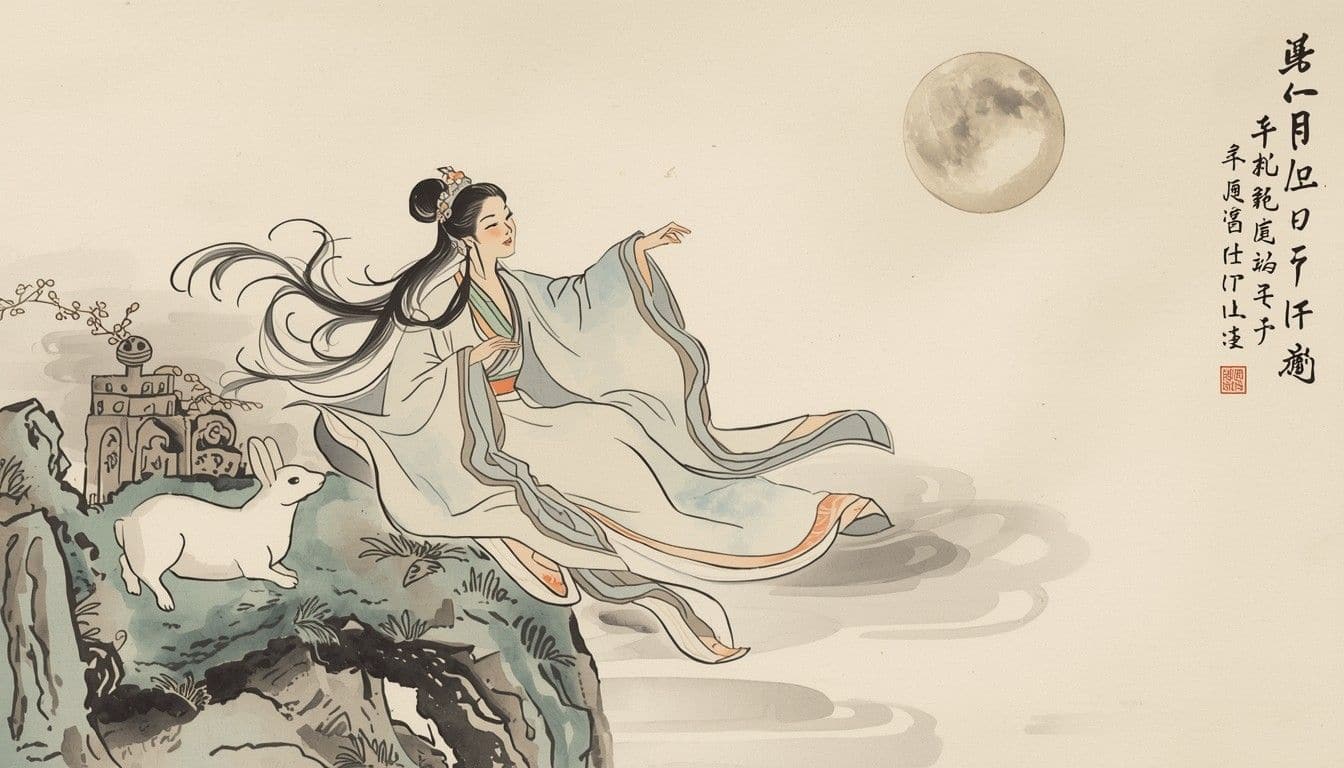 The festival’s roots trace to harvest worship practiced during the Shang Dynasty (roughly 1600–1046 BCE), when Chinese emperors offered sacrifices to the moon in autumn. It became a formal holiday during the Tang Dynasty (618–907 CE), when Emperor Xuanzong reportedly threw elaborate moon-gazing banquets in his palace gardens.Mid-Autumn Festival history.
The legend that stuck the one locals actually tell is Chang’e and Hou Yi. Hou Yi, a divine archer, shot down nine of ten suns to save the earth. As reward, he received an elixir of immortality. His wife Chang’e drank it accounts differ on whether by accident or to prevent a villain from stealing it and floated to the moon, where she lives eternally with a jade rabbit. On the 15th night, the moon is fullest: families gather beneath it partly to feel, symbolically, close to her.
During the Yuan Dynasty, mooncakes reportedly carried hidden messages coordinating a rebellion against Mongol rulers. Whether historically accurate or not, every Chinese person knows this story.
Moon Festival Taiwan 2026
What Makes Taiwan’s Celebration Different
Beyond the barbecue tradition, Taiwan’s Mid-Autumn Festival has a relaxed, neighborhood character. Families and friends gather on rooftops, in parks, and outside their apartment buildings to grill, eat mooncakes, drink tea, and look at the moon. It’s less ceremonial than the mainland Chinese version and more social. Pomelos large citrus fruits are traditional Mid-Autumn Festival food in Taiwan, often worn as hats by children in an unofficial tradition that’s as silly as it sounds. Lanterns are released in some areas, though restrictions apply in cities due to fire risk.
Mooncake Festival 2026 Traditions
Mooncakes are the defining food of Mid-Autumn Festival dense, rich pastries with fillings like lotus seed paste, red bean, or salted egg yolk. Traditional mooncakes are heavy and sweet a single one can have 800 calories. Modern versions have expanded to include snow skin mooncakes (lighter, refrigerated), ice cream mooncakes, and versions with premium fillings like truffle or durian. In China and Singapore, mooncakes are given as gifts in elaborate boxes it’s a significant commercial season for bakeries and luxury brands. The mooncake is round, representing the full moon and family completeness — the same symbolism found in tang yuan at the Lantern Festival.
What Actually Happens at Mid-Autumn Festival Day by Day
The Eve (Sept 24, 2026)
 In the morning, markets fill with last-minute mooncake buyers and families buying pomelos — the large citrus fruit is practically mandatory on the offering table. Mooncake shops that have been pre-selling tins since August suddenly have lines out the door. By afternoon, supermarkets are chaotic in a friendly way; people are loading bags with fruit, snacks, and paper lantern kits for children.
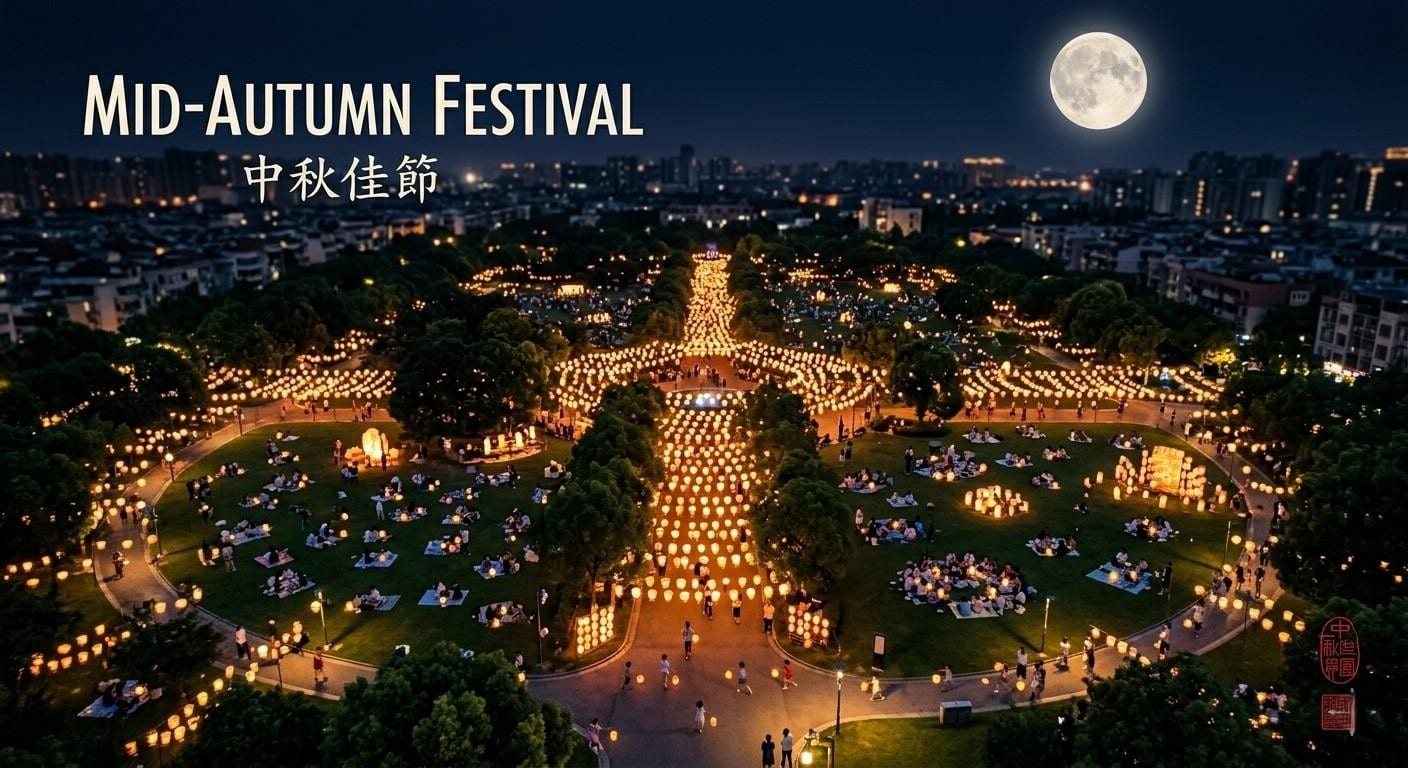
Evening is when it happens. Families eat dinner together — usually a meal heavy on round foods (dumplings, glutinous rice balls, whole fish) because round symbolizes completeness. Then, somewhere between 8 and 10 PM, they go outside. In Hong Kong’s Victoria Park or Taipei’s Daan Park, thousands gather. In smaller cities and rural areas, it’s quieter: a rooftop, a courtyard, neighbors pulling chairs into the alley. Children carry lanterns. Adults eat pomelo and argue about whether the new mooncake flavors are an abomination.
I made the mistake of arriving in Chengdu on the festival evening itself with no mooncakes and no pomelo, assuming I’d buy some at the venue. There was no venue — just a neighborhood park where families had already claimed every bench. A woman named Mrs. Liu, perhaps reading my confusion, handed me a slice of red bean mooncake without a word and gestured for me to sit on the wall near her family. I ate it watching her grandchildren chase each other with glowing plastic lanterns. It was the best thing that happened to me that trip.
[Cultural festivals in East Asia]
Festival Day (Sept 25, 2026)
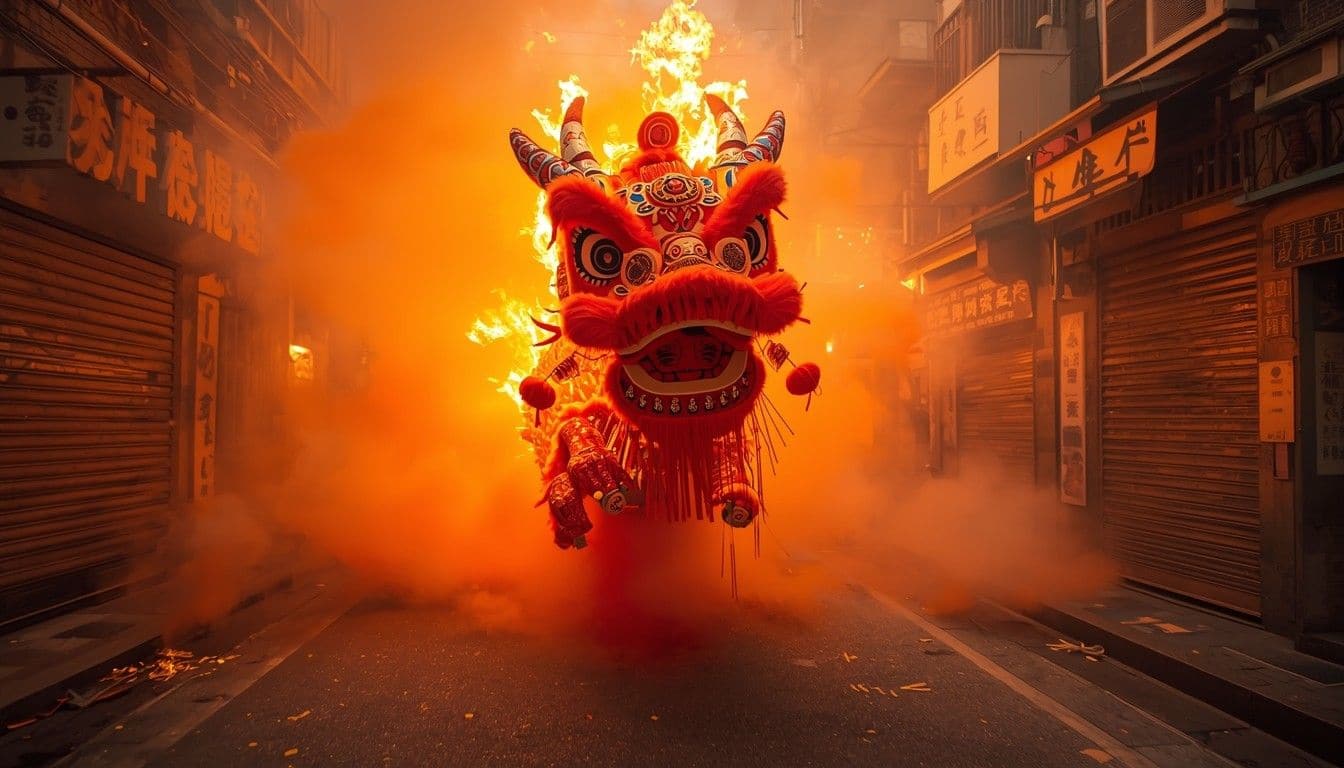
The morning is slow and domestic — families are still at home, finishing leftover festival food. If you’re in Hong Kong, the Tai Hang Fire Dragon Dance begins in the evening: a 67-meter dragon made of incense sticks, carried by hundreds of participants through narrow streets. It’s been running since the 1880s and smells exactly as intense as it sounds — your hair will hold that incense smoke for two days.
In Vietnam, Tết Trung Thu takes a slightly different form, centered visibly on children. The lion dance processions in Hanoi’s Old Quarter and Ho Chi Minh City are louder and more chaotic than anything in mainland China, and the bánh nướng (baked mooncakes) are denser and sweeter than their Chinese counterparts.
Best Places to See Mid-Autumn Festival in 2026
 1. Hong Kong — Tai Hang, Wan Chai The Tai Hang Fire Dragon Dance is the single most cinematic thing you can witness during this festival anywhere in the world. The dragon is lit with thousands of burning incense sticks, carried at shoulder height through a neighborhood of narrow streets. Honest downside: crowds are severe, and the route is short — you’ll need to position yourself early or accept watching from three people deep. Best for: Solo travelers, photographers, anyone who wants spectacle.
2. Taipei, Taiwan — Daan Forest Park & Dihua Street Taipei’s celebration feels more accessible than Hong Kong’s. Lantern-making workshops run in community centers; Dihua Street’s traditional shops sell old-style paper lanterns alongside modern LED versions. The city doesn’t shut down the way it does for Lunar New Year, so restaurants stay open. Honest downside: the official lantern events can feel slightly municipal — organized but not electric. Best for: Families, first-time visitors to Taiwan.
3. Chengdu, China — People’s Park & surrounding neighborhoods Chengdu’s celebration is less touristy and more genuinely local than Beijing or Shanghai. The city’s teahouse culture means people gather outdoors naturally; parks fill with families who’ve brought entire meals. Honest downside: signage is almost entirely in Mandarin, and English is limited — worth downloading a translation app before you go. Best for: Cultural travelers who want to feel like a participant rather than an audience.
4. Hanoi, Vietnam — Old Quarter (Hàng Mã Street) Hàng Mã Street transforms entirely: it’s lined wall-to-wall with paper lanterns, star-shaped and multi-colored, and the sound of drums from lion dance rehearsals starts early. Tết Trung Thu here has a stronger children’s festival energy than anywhere else on this list. Honest downside: the street is narrow and extremely crowded; pickpocketing spikes during the evening peak. Best for: Families with children, travelers who’ve already done the China circuit.
[Southeast Asian cultural festivals]
5. Singapore — Chinatown & Gardens by the Bay Singapore’s version is polished — lantern displays at Gardens by the Bay are large-scale and well-organized, and the light installations along the waterfront are genuinely impressive. Honest downside: it feels more like a festival product than a festival; the corporate sponsor presence is noticeable. Best for: Comfort-seeking travelers, those combining with a Singapore stopover.
My Top Pick: Tai Hang, Hong Kong. Arrive by 7:30 PM and stand on the corner of Wun Sha Street and Tai Hang Road. The dragon comes through twice, and the second pass — when the incense has burned lower and the smoke is thickest — is the moment. Nothing I’ve seen at this festival comes close to the feeling of 300 people carrying a burning dragon six inches from your face.Tai Hang Fire Dragon Dance official info.
Mid-Autumn Festival Travel Guide 2026 Tips That Actually Help
3-Day Itinerary (Hong Kong)
| Morning | Afternoon | Evening | |
|---|---|---|---|
| Day 1 | Arrive HKG, check into Kowloon hotel, dim sum lunch | Walk Nathan Road, buy lantern supplies in Mong Kok markets | Light testing for camera setup; early dinner in Wan Chai |
| Day 2 (Festival Eve) | Visit Tai Hang neighborhood in daylight to map the route | Rest, nap — you’ll be out late | Tai Hang Fire Dragon Dance; position by 7:30 PM |
| Day 3 (Festival Day) | Sleep in, hotel breakfast | Victoria Park lantern fair (morning is calmer) | Moongazing from Lugard Road on The Peak — bring snacks |
Essential Tips:
- Best day to arrive: Two days before the festival date. One day before is logistical chaos; day-of means you miss the market energy.
- Worst area to stay: Directly adjacent to major lantern displays — noise and crowds run past midnight.
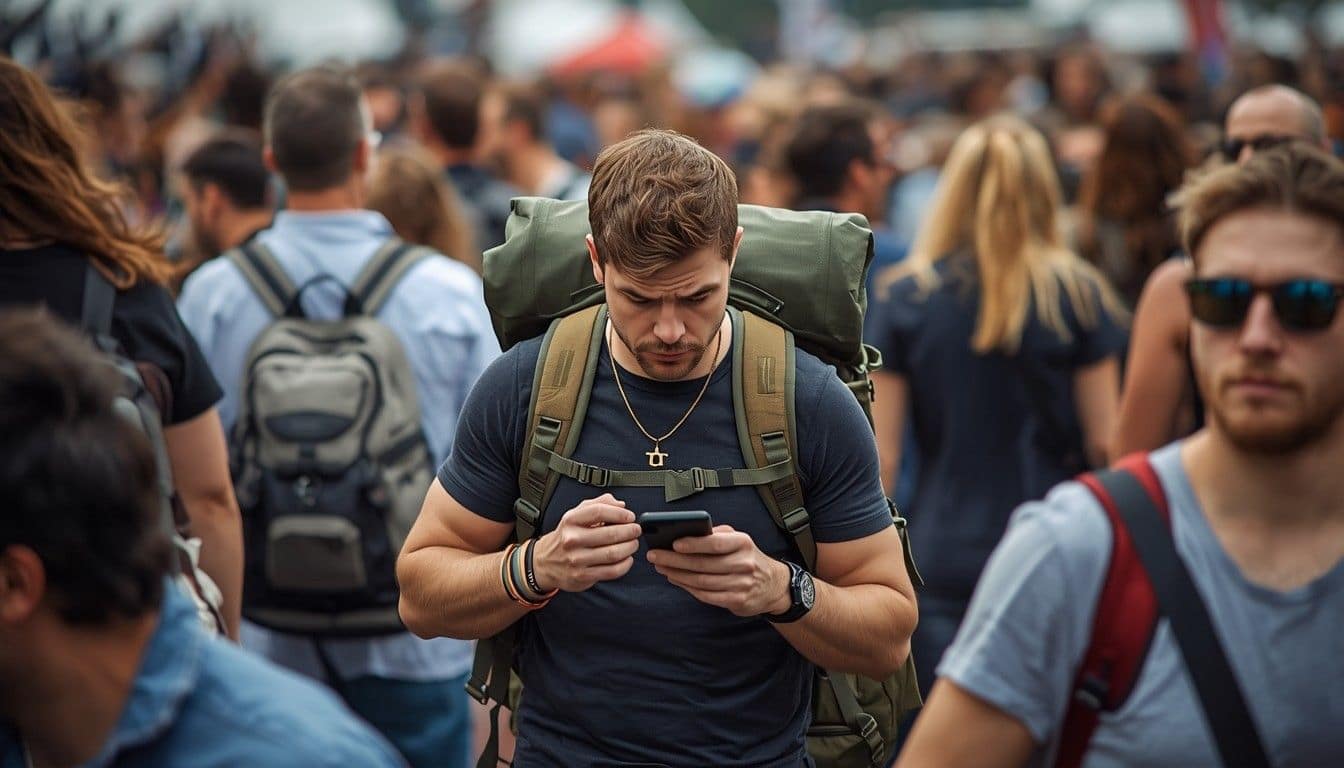
- What to wear: Comfortable layers; evenings cool fast in Hong Kong in late September. Don’t bring a large backpack — you will not be able to move in the crowds.
- One etiquette rule outsiders break: Don’t photograph family offerings tables without asking. They are not decorations.
- Safety tip: In dense lantern crowds, keep your phone in a front zip pocket. Not a back pocket. Front zip.
- Best free thing: Standing in a neighborhood park watching families share mooncakes under the actual moon.
- Best paid experience: A harbor cruise timed to the full moon rise — pricey but the reflection on Victoria Harbour is not replicable on land.
The Mistake I Made: I booked accommodation in Causeway Bay thinking I’d be central to everything. What I didn’t understand was that Causeway Bay is the everything — the MTR exits disgorge crowds directly into the lantern fair zone, and getting back to my hotel at 11 PM took 45 minutes of shuffling through a crowd that had nowhere to go. The next night I walked to Sheung Wan first and took a taxi. Book in Kowloon or Sheung Wan. Your feet will thank you.
Mid-Autumn Festival Cost Guide What to Budget in 2026
| Category | Budget | Mid-Range | Splurge | Pro Tip |
|---|---|---|---|---|
| Accommodation | HKD 400–600 / USD 51–77 (hostel) | HKD 900–1,500 / USD 115–192 | HKD 2,500+ / USD 320+ | Kowloon is cheaper than HK Island for equal quality |
| Food & Drinks | HKD 100–150 / USD 13–19 | HKD 250–400 / USD 32–51 | HKD 600+ / USD 77+ | Cha chaan tengs (local diners) are cheap and excellent |
| Local Transport | HKD 30–50 / USD 4–6 (Octopus card) | Same — MTR covers everything | Taxi: HKD 100–200 | Buy Octopus card at airport; skip tourist passes |
| Festival Entry | Free (most public events) | Free | Harbor cruise: HKD 350–500 / USD 45–64 | Fire Dragon Dance is free; arrive early for position |
| Souvenirs | HKD 50–100 / USD 6–13 | HKD 200–400 / USD 26–51 | Custom mooncake tins: HKD 600+ | Buy mooncakes to take home; pack carefully |
| Daily Total | HKD 580–900 / USD 74–115 | HKD 1,350–2,250 / USD 173–288 | HKD 3,450+ / USD 440+ | — |
Prices increase 30–60% during festival week. Book accommodation 2–3 months in advance.
7 Things Most Articles Don’t Tell You About Mid-Autumn Festival
The mooncake you’re given is almost certainly not the one people actually want to eat. Traditional lotus seed paste mooncakes with salted egg yolk are the prestige gift, but younger Chinese increasingly prefer the snow skin (ice cream) or fruit-jelly varieties. The tins are kept; the mooncakes inside are sometimes quietly composted.
Pomelo peel ends up on children’s heads. A genuine tradition across southern China and Taiwan: kids cut the top off the pomelo, hollow it slightly, and wear the peel as a hat. It looks absurd and everyone does it. If you see a child wearing a green citrus helmet, this is intentional.
The festival has historically been used to transmit coded messages. The Yuan Dynasty rebellion theory — that mooncakes hid notes coordinating an uprising — is treated skeptically by historians but is part of every Chinese person’s cultural knowledge. It gives the festival a faint revolutionary undercurrent that tourists never hear about.
In Vietnam, this is primarily a children’s festival, not a family-reunion one. While China and Taiwan center the celebration on adult family gatherings, Tết Trung Thu in Vietnam emphasizes children’s processions and performances. Adults participate; children lead.
Mooncake gifting is a serious social transaction. The brand of mooncake tin you give a business associate signals your relationship status and your budget. Showing up with a supermarket-brand box to a professional contact is roughly equivalent to bringing a gas station bottle of wine to a dinner party. Know your audience.
The full moon is not always visible. September weather in Hong Kong and southern China means cloud cover is entirely possible. Locals will still gather, sit outside, and celebrate under a white haze, because the ritual matters more than the celestial outcome.
Some cities celebrate louder the night before than the night of. Festival eve markets and family dinners carry more genuine emotion than the public displays on the holiday itself. If you have one evening to spend, the eve is the one.
Mid-Autumn Festival Mistakes First-Timers Almost Always Make
 ❌ Mistake: Buying mooncakes at the airport as souvenirs on the way home. Why it hurts: Most airport mooncakes are overpriced and shelf-stale. The good ones sold out weeks ago. ✅ Fix: Buy from a bakery or hotel patisserie in the city, three to four days before you leave. Refrigerate them.
❌ Mistake: Arriving the morning of the festival expecting to find accommodation. Why it hurts: Hotels in Hong Kong, Taipei, and Singapore are fully booked within the festival-week bracket, often months in advance. Fix: Book lodging at least 8–10 weeks before the September date. Mid-week arrival (Tuesday or Wednesday before the Friday festival) gives better rates.
❌ Mistake: Wearing white to a family-hosted celebration. Why it hurts: White is associated with mourning in Chinese culture. It won’t cause offense from a stranger on the street, but it’s awkward if you’re invited to someone’s home. Fix: Wear any other color. Red is auspicious; most other colors are neutral.
❌ Mistake: Photographing mooncakes or offerings on someone’s altar table without permission. Why it hurts: These are sincere religious or ancestral offerings for many families, not aesthetics. Fix: Ask. In most cases, people are happy to include you — the gesture of asking is what matters.
❌ Mistake: Planning to eat a full mooncake as a meal component. Why it hurts: A single traditional mooncake can top 700–900 calories and is extremely dense. Eating one before dinner ruins dinner and makes you feel terrible. Fix: Share a mooncake between four people as a dessert. That’s actually how it’s intended.
❌ Mistake: Assuming all ATMs will work normally during the festival week. Why it hurts: In smaller cities, ATM cash runs short during holiday periods. Card acceptance varies widely at street stalls. Fix: Withdraw cash two days before the festival date. Carry more than you think you’ll need.
Mid-Autumn Festival Questions Travelers Actually Ask
How do I get to Hong Kong from the nearest major airport for Mid-Autumn Festival? Hong Kong International Airport (HKG) connects directly to the city via the Airport Express train, which takes 24 minutes to Hong Kong Station and costs HKD 115 (about USD 15). From there, the MTR system covers most festival destinations efficiently.
Is Mid-Autumn Festival safe for solo female travelers? Yes — the public festival areas in Hong Kong, Taipei, and Singapore are generally safe, well-lit, and heavily populated. The main risk is pickpocketing in dense crowds; keep valuables in front-accessible pockets and stay aware of your surroundings in the peak evening hours.
What should I wear to Mid-Autumn Festival? Comfortable clothes you can walk several kilometers in, with layers for the evening cool. In Hong Kong in late September, temperatures drop to around 24–26°C (75–79°F) after dark but the humidity stays high. Avoid white, avoid heels, avoid a large backpack.
How much does Mid-Autumn Festival cost per day in 2026? In Hong Kong, budget travelers can manage on HKD 580–900 (USD 74–115) per day including accommodation. Mid-range visitors typically spend HKD 1,350–2,250 (USD 173–288). Most festival events themselves are free.
Is Mid-Autumn Festival too crowded for first-time visitors? The festival is crowded — genuinely, not in a warning-label way. Hong Kong’s Tai Hang streets and Taipei’s major parks see thousands of people between 8 and 10 PM on festival eve. If you manage crowds well and arrive early to stake a position, the density is part of the experience. If you hate being shoulder-to-shoulder with strangers for two hours, aim for smaller cities like Chengdu or a residential neighborhood rather than a tourist hotspot.
Where should I stay near Mid-Autumn Festival celebrations in Hong Kong? Kowloon (particularly Jordan or Tsim Sha Tsui) gives you easy MTR access to festival areas without placing you inside the crowd zone. Sheung Wan on Hong Kong Island is a quieter alternative with good transport links. Avoid Causeway Bay unless you want to be in the middle of it.
Can I attend Mid-Autumn Festival without booking anything in advance? The festival itself requires no tickets — street events, lantern displays, and the Fire Dragon Dance are all free and open. What you cannot leave unbooked is accommodation and any restaurant reservations you care about. Both fill up weeks before the holiday weekend.
If I only have one day, which day of Mid-Autumn Festival should I attend? Festival eve — the night before the actual holiday date (September 24, 2026) — gives you the fullest experience. Families are out, markets are active, lanterns are everywhere, and in Hong Kong the Fire Dragon Dance runs on the eve as well as the holiday night. The holiday morning itself is quiet; the energy peaks at night.
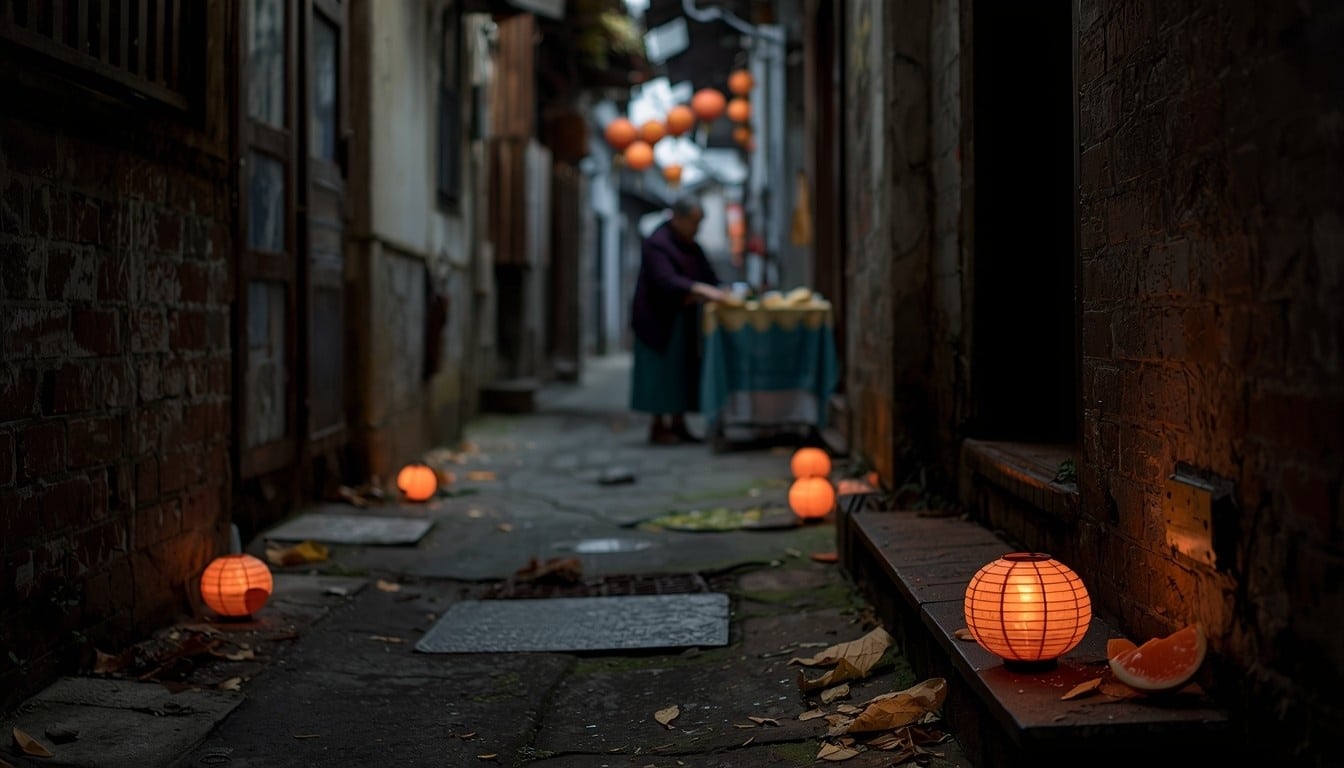 By 11 PM, the streets around Tai Hang were not empty, but they were emptier — the dragon had retired, the incense smoke was thinning, and someone’s child had fallen asleep against a folding chair with a half-eaten pomelo slice in one fist. I walked back toward Causeway Bay the long way, past a family quietly packing up their offering table: a thermos, some fruit, a small photograph. The woman folding the tablecloth looked up and gave me a nod that wasn’t quite a smile — the nod of someone who has just done something they do every year and considers the year incomplete without it.
That nod was what the whole night was actually about. Not the dragon, not the mooncakes, not the lanterns, though all of those were worth it. The festival is a renewal of something ordinary: the fact that certain nights belong to certain people, in a specific arrangement, under a specific sky.
When did you last let a night belong entirely to something outside of yourself?
Priya, traveling from Mumbai

Abhay Ramola researches world festivals across primary sources, local accounts, and on-ground reporting. He founded Dionfest to cover what gets missed when festivals become tourism content the history, the ritual, and the people behind it.