
Tanabata Festival 2026: Japan’s Star Festival Complete Guide
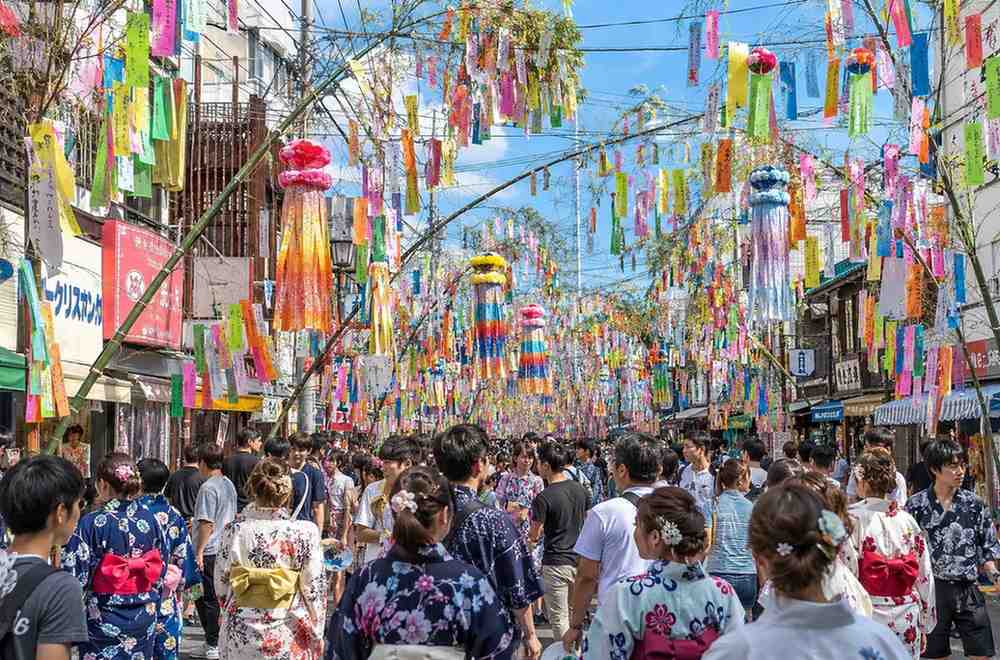
Every July 7, millions of people across Japan tie small paper strips to bamboo branches and send their wishes skyward. That’s Tanabata — a 1,300-year-old star festival built around two lovers separated by the Milky Way, a single night of reunion, and the very human habit of writing down what you hope for. This guide covers everything you need to know: the legend, the 2026 festival dates, where to go, and what to actually expect when you get there.
What Is Tanabata Festival
Tanabata is a Japanese summer festival based on a Chinese star legend. The name means “Evening of the Seventh” it’s observed on July 7th in most of Japan, though some regions celebrate it on August 7th following the old lunar calendar. The festival is marked by colorful paper decorations hung from bamboo stalks and wishes written on small pieces of paper called tanzaku.
Tanabata Star Festival The Story Behind It
The Tanabata story comes from Chinese mythology and arrived in Japan over 1,300 years ago. Two stars Vega (Orihime, the weaving princess) and Altair (Hikoboshi, the cowherd) represent two lovers separated by the Milky Way. They were kept apart by the king of the heavens because their love made them neglect their duties. Once a year, on the seventh day of the seventh lunar month, a bridge of birds forms across the Milky Way and the two can meet. If it rains on Tanabata night, the birds can’t form the bridge and the meeting is delayed another year. The story gives the festival its particular mood hopeful, slightly melancholic, tied to the sky.
Tanabata Sky Lantern Festival Traditions
Writing wishes on tanzaku paper strips and hanging them from bamboo is the main tradition. The wishes are meant to be read by the stars by Orihime and Hikoboshi as they meet. Each color of tanzaku has a different meaning: pink for love, yellow for wealth, blue for academic success, white for purity, purple for wisdom. The bamboo decorations are elaborate in festival settings streamers, origami cranes, and paper ornaments hang alongside the tanzaku. In some regions, sky lanterns are released on Tanabata night, connecting the festival to the star theme more directly.
When Is Tanabata in 2026?
- Standard date (most of Japan): July 7, 2026
- Sendai Tanabata Matsuri: August 6–8, 2026
- Hiratsuka Tanabata (Kanagawa): July 3–5, 2026 (confirm closer to the date)
- Asagaya Tanabata (Tokyo): Late July/early August 2026
The July vs. August split is the thing most guides gloss over. The difference matters if you’re traveling specifically for the festival.
Most of Japan — Tokyo, Kyoto, Osaka — celebrates on July 7. But several cities held to the old lunar calendar and shifted the date roughly a month later. Sendai’s version, which runs in August, is the largest tanabata matsuri in Japan by attendance, drawing around two million visitors over three days.
If you’re building a Japan trip around Tanabata, decide first which one you want. The vibe, scale, and weather are different.
Official travel information is available on Japan’s national tourism website.
The Legend of the Tanabata Stars
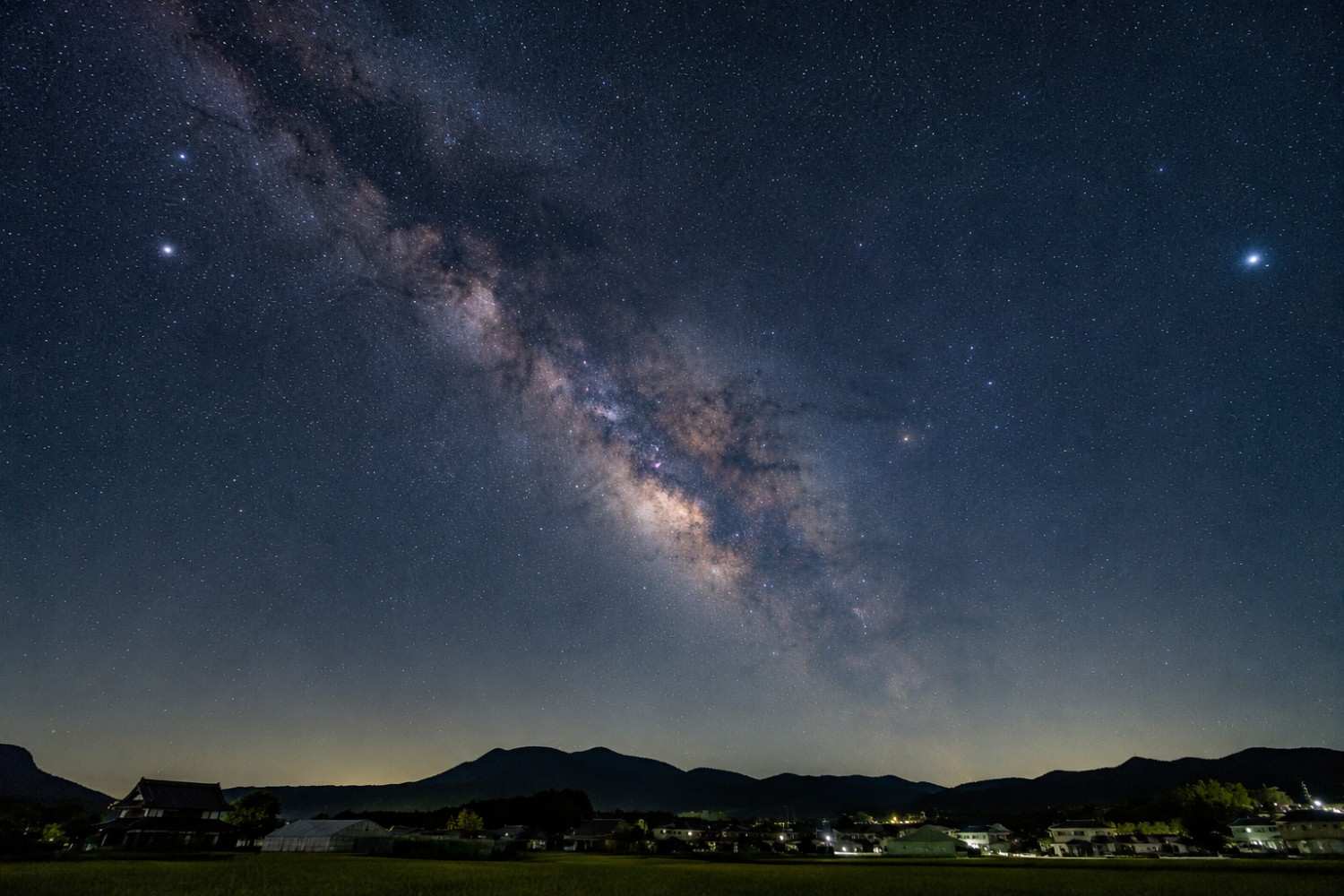 Orihime (織姫, “Weaver Princess”) is represented by the star Vega in the constellation Lyra. Her father, the sky god, had her weave cloth all day on the banks of the Milky Way. She was good at her work but lonely.
Her father arranged for her to meet Hikoboshi (彦星, “Cowherd Star”), represented by Altair in Aquila. They fell in love immediately and, predictably, stopped doing their jobs entirely. Orihime stopped weaving. Hikoboshi’s cows wandered the heavens.
Her father separated them, placing the Milky Way between them. Orihime was devastated. Eventually, he relented: they could meet once a year, on the seventh night of the seventh month, if Orihime worked hard the rest of the year. On that night, a flock of magpies forms a bridge across the Milky Way so the two can cross.
If it rains on Tanabata night, the magpies can’t fly, the bridge doesn’t form, and the two remain apart for another year. This gives the holiday a melancholy edge that the decoration-and-wishes surface doesn’t fully capture.
In astronomical terms, Vega and Altair are about 16 light-years apart. The folklore treats them as neighbors separated by a river. That gap between myth and physics is part of what makes it interesting.
How Tanabata Is Celebrated in Japan
Writing Wishes on Tanzaku
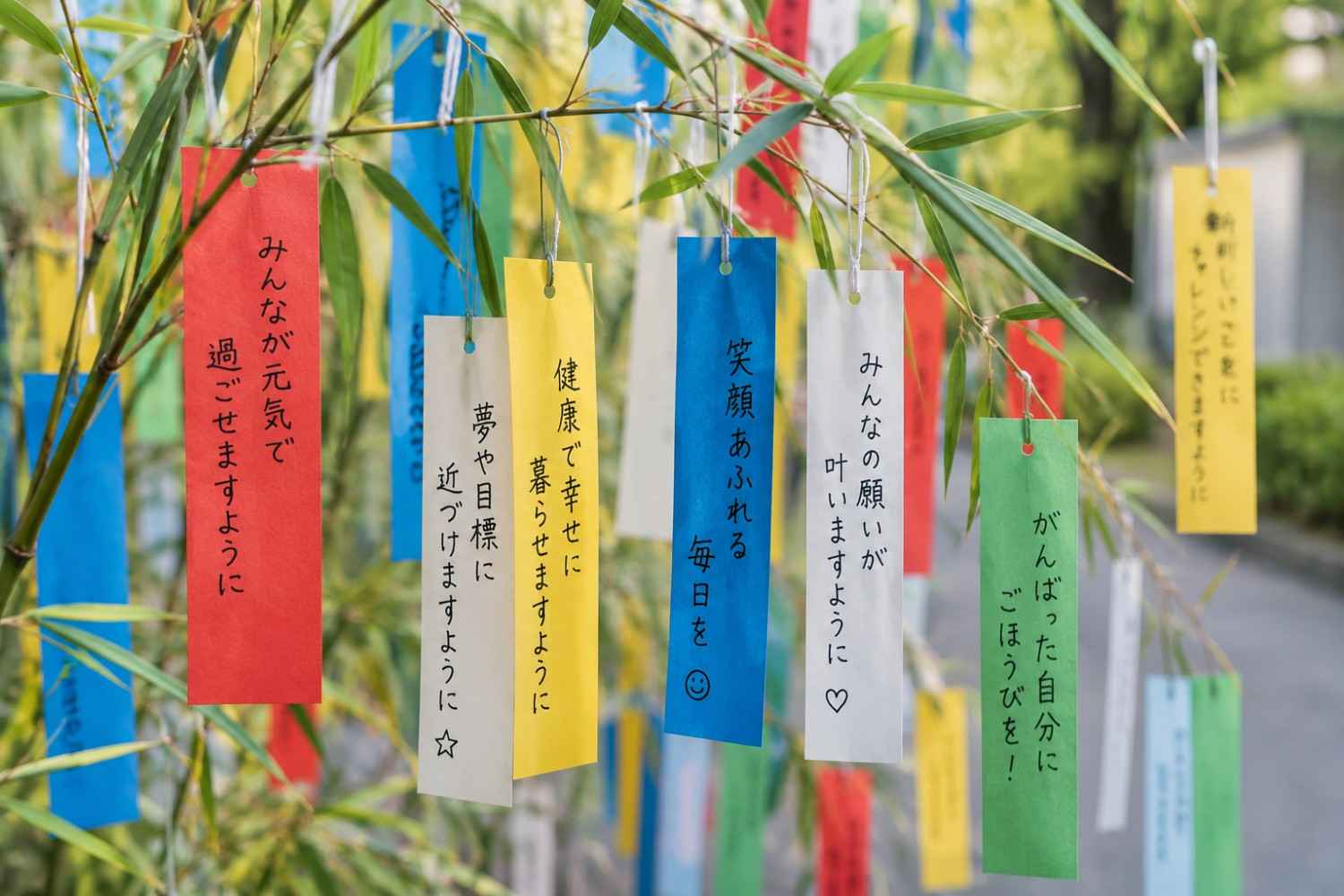 The main custom is writing a wish on a narrow strip of colored paper called tanzaku (短冊) and hanging it on a bamboo branch. The colors originally corresponded to the five elements of Chinese cosmology: green, red, yellow, white, and black/purple. Modern versions skip the symbolism and use whatever colors are available.
What to write: traditionally, wishes relating to skills and improvement — getting better at calligraphy, passing an exam, becoming a better cook. Not lottery numbers. The festival grew out of a weaving ceremony where women prayed for skill at their craft, and that framing stuck.
The bamboo with wishes is set outside to catch dew. After the festival, it’s burned or floated down a river so the wishes reach the sky.
Paper Decorations
Beyond tanzaku, there are standard decorations you’ll see at every tanabata celebration:
- Toami (casting nets): for good harvests and catches
- Kinchaku (coin purses): for saving money and business
- Kamigoromo (paper kimono): to improve weaving skill and ward off illness
- Fukinagashi (paper streamers): the long, colorful ones that look like wind in photographs — they represent the thread Orihime weaves
- Kuzukago (waste basket): an odd one, representing cleanliness and not being wasteful
- Tanzaku: the wish strips themselves
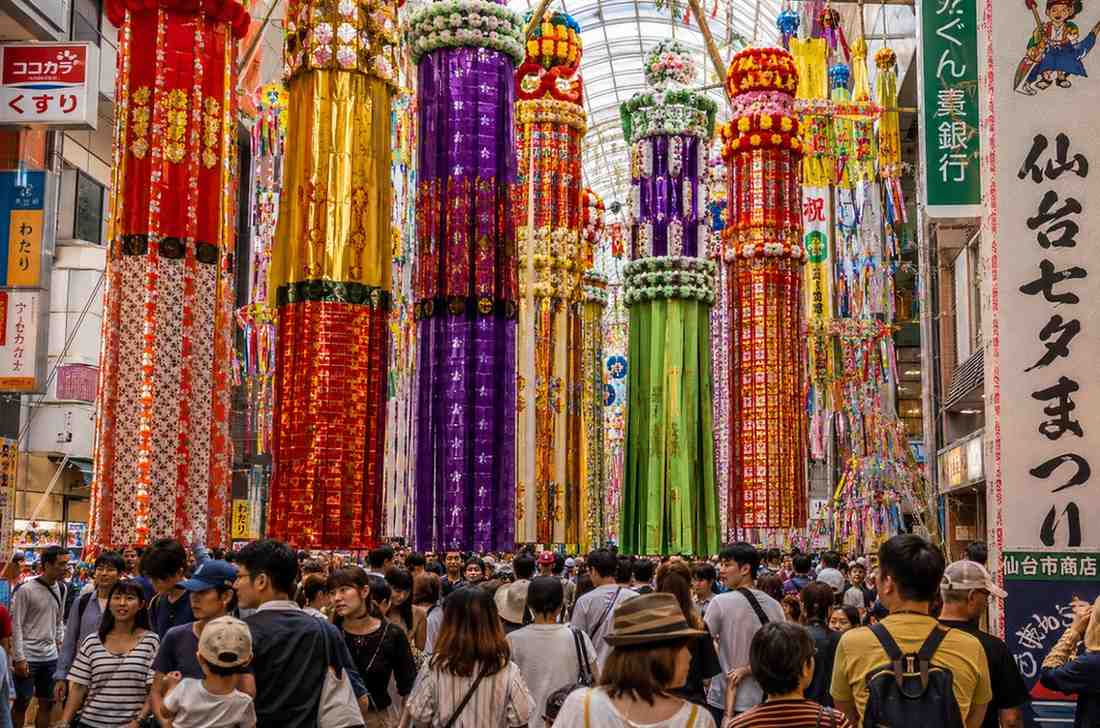
Sendai’s decorations are an entirely different scale. The bamboo trees there are enormous — some nearly 10 meters tall — and covered in tens of thousands of washi paper ornaments made by local shop associations. Each neighborhood association competes on craftsmanship. Walking through the covered shopping arcades during Sendai Tanabata feels less like a street fair and more like walking through a paper forest.
How Tanabata Is Celebrated Across Japan
The Sendai Tanabata Festival in Miyagi Prefecture is the largest in Japan held August 6th to 8th, it draws over two million visitors and features enormous handmade paper decorations hung from shopping arcades and streets throughout the city. The decorations are made months in advance by local businesses and residents. Hiratsuka in Kanagawa holds one of the other major Tanabata festivals in July. Smaller neighborhood Tanabata events happen across the country school children make tanzaku decorations, bamboo stalks appear in shopping centers and train stations, and the imagery of the two stars is everywhere in early July.
Major Tanabata Festivals in 2026
Sendai Tanabata Matsuri (Miyagi Prefecture)
 Dates: August 6–8, 2026
This is the one to see if you can only see one. About 3,000 bamboo decorations hang across the Ichibancho and Clis Road shopping arcades. The tradition here goes back to the Date clan era in the 1600s, though the modern iteration took shape after the Second World War as a way to revive the city.
The night before the main festival (August 5), a fireworks display at Nishiki-cho Park kicks things off. During the three days, the city gets around 2 million visitors.
For official decoration photos and updates, check the Sendai Tanabata official website. Getting there: Sendai is about 90 minutes from Tokyo by Shinkansen on the Tohoku line.
Hiratsuka Tanabata Matsuri (Kanagawa Prefecture)
Dates: Typically the week spanning July 7 — check 2026 dates closer to the event
Hiratsuka runs a tanabata celebration that predates many others and bills itself as one of Japan’s three major Tanabata festivals alongside Sendai. The decorations here are competitive in quality, and the festival draws around three million visitors over several days — more than Sendai, though Sendai’s decoration quality is generally considered the benchmark.
Hiratsuka is accessible from Tokyo’s Tokaido line, about 65 minutes from Shinjuku.
Tokyo Tanabata Events
Tokyo doesn’t have a single city-wide tanabata festival. Instead:
- Asagaya Pearl Center (Suginami Ward): Late July/early August. Known for its large, creative tanabata decorations made by local craftspeople. One of the more photogenic events in Tokyo.
- Koenji Awa Odori: Technically an awa dance festival, but coincides with the tanabata season.
- Shinjuku area shrines: Smaller neighborhood events on July 7.
Kyoto
Kyoto marks July 7 with ceremonies at several shrines, most notably Kyoto Aqua House (near Kamo River) and some neighborhood events. Kyoto’s version is quieter and more ceremonial than the big festival cities — better if you prefer something low-key.
If you’re already in Kyoto for Tanabata, note that Gion Matsuri runs through the entire month of July — Japan’s largest summer festival happens in the same city, same month.
Shonan Hiratsuka vs. Sendai: Which Should You Choose?
| Sendai | Hiratsuka | |
|---|---|---|
| Date | Early August | Early July |
| Decoration style | Traditional washi paper, enormous scale | Colorful, modern and traditional mix |
| Attendance | ~2 million | ~3 million |
| From Tokyo | 90 min (Shinkansen) | 65 min (local train) |
| Crowds | Very high | Very high |
| Best for | Photography, cultural depth | Accessibility, scale |
Both have free entry. Both are extremely crowded.
Tanabata Sky Lantern Festivals
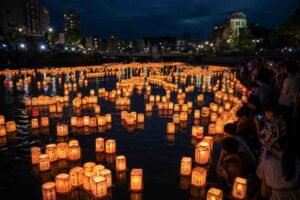
The tanabata sky lantern festival concept doesn’t have deep roots in traditional Japanese Tanabata practice. Sky lanterns (tōrō nagashi) are more closely associated with Obon in August, when lanterns are floated on rivers to guide the spirits of ancestors home.
That said, several modern tanabata events have added sky lantern releases or floating lantern ceremonies as part of the broader summer festival experience:
- Shiogama Minato Festival (near Sendai): Combines summer festival traditions including lanterns
- Some resort areas in Hokkaido and Kyushu have created hybrid summer light events marketed as tanabata sky lantern festivals, particularly for domestic tourism
If you’ve seen photos of lanterns floating in water or rising into sky under the framing of “tanabata” — those are usually either: Obon events mislabeled, tōrō nagashi ceremonies scheduled close to Tanabata, or modern event creations that combine both.
It’s not wrong to enjoy them. Just worth knowing the distinction.
If lantern festivals specifically interest you, the Nagasaki Lantern Festival in February is Japan’s largest dedicated lantern event — more directly tied to that tradition than most Tanabata events.
Tanabata Food
 No single dish defines Tanabata the way mochi defines Obon, but there are regional and seasonal associations:
- Sōmen (thin white noodles): The most common Tanabata food. The thin white strands represent Orihime’s weaving thread. Eaten cold in summer, they’re practical and seasonal. Many families serve sōmen on July 7.
- Tanabata sweets: Confectioneries around Japan produce star-shaped wagashi (traditional sweets) in July. Blue and silver versions are common.
- Summer festival staples at the larger matsuri: yakitori, takoyaki, kakigōri (shaved ice), yakisoba.
If you’re in Sendai specifically, try the local food stalls during the festival. The covered arcades have vendors throughout.
Practical Travel Information for 2026
When to Book
Sendai hotels fill up fast for August 6–8. Book accommodation three to four months in advance at minimum. The bullet train (Shinkansen) tickets can be bought a month before departure — reserved seats for peak Tanabata weekend will sell out, so set a reminder.
For train schedules and area maps, Japan Guide’s Sendai page has practical logistics covered.
What to Wear
Both July and August are hot and humid across most of Japan. Cotton yukata (casual summer kimono) are appropriate and many visitors wear them. Comfortable walking shoes matter more than footwear that looks traditional. Expect to walk several kilometers.
Best Time to Visit the Festivals
- Sendai: The mornings of August 6 and 7 have smaller crowds. By afternoon it’s packed. The evening of August 5 (fireworks) is worth it but requires staking out a spot early.
- Hiratsuka: Weekday evenings are less crowded than weekends.
- Tokyo’s smaller events: Early evening, avoiding the 5–7pm commuter rush.
Photography
The covered arcade at Sendai is challenging to photograph well because of the low light and competing colors. A wide-angle lens helps. Early morning on the first day, before crowds arrive, gives the best conditions. The fukinagashi streamers move in any breeze, which helps with longer exposures.
Planning a longer Japan trip? Japan’s spring festivals like Hanami are worth combining with a summer Tanabata itinerary if you’re visiting between April and August.
Tanabata Outside Japan
China: Qixi Festival (七夕節)
The same story. China’s version is now often framed as a Valentine’s Day equivalent. In 2026, Qixi falls on August 22 (it follows the lunar calendar). The romantic emphasis is stronger in China than in Japan, where the holiday is more about wishes and crafts.
South Korea: Chilseok (칠석)
Same date, same stars, similar legend. Chilseok has traditional foods (wheat noodles and wheat pancakes) and fewer of the paper decoration customs. Less commercially visible than either the Japanese or Chinese versions.
Vietnamese: Ngâu Rain
Vietnamese folklore has the same weaver and cowherd story. Rain on the seventh day of the seventh lunar month is called “ngâu rain” — the tears of the reunited couple. The holiday isn’t celebrated with the same visibility as in Japan.
Questions People Actually Search For
Is Tanabata a public holiday in Japan? No. It’s a traditional festival (matsuri) but not a national holiday. Businesses and schools stay open on July 7.
Can tourists participate in Tanabata? Yes. Writing wishes on tanzaku strips and hanging them on bamboo is open to everyone. At most festival sites and some shrines, paper and pens are available for visitors. The Sendai festival is free to attend and requires no registration.
Do you need to speak Japanese to enjoy Tanabata? No. The main activities — walking through the decorations, buying festival food, writing a wish — are accessible without language. Larger events in Sendai and Hiratsuka have some English signage.
What is the correct date: July 7 or August 7? July 7 is the standard date used across most of Japan and in government context. August dates apply to specific regional festivals (Sendai, some Tohoku cities) that kept the lunar calendar timing. Both are correct within their contexts.
What should I write on a tanzaku? A wish or goal. Traditionally something skill-based — studying hard for an exam, improving at a hobby, learning something new. No rules against other wishes. Keep it brief; the strips are narrow.
A Note on the Stars
Vega and Altair are genuinely among the brightest stars visible from Japan in summer. On a clear July night away from city lights, both are easy to find. Vega is in the constellation Lyra, nearly overhead in midsummer. Altair is the central star of the Summer Triangle.
The Milky Way that supposedly separates them is visible under dark skies, though not from central Tokyo or Osaka. If you’re traveling to rural areas around Tanabata, it’s worth looking up.
The chance that two stars 16 light-years apart have any awareness of each other is, of course, zero. The story is about the human habit of projecting longing onto the sky — which is exactly why it’s lasted 1,300 years.
Japan’s festival calendar doesn’t stop in summer. If you’re planning a winter visit, the Sapporo Snow Festival in Hokkaido is the cold-weather equivalent in scale.

Abhay Ramola researches world festivals across primary sources, local accounts, and on-ground reporting. He founded Dionfest to cover what gets missed when festivals become tourism content the history, the ritual, and the people behind it.



2 thoughts on “Tanabata Festival 2026: Japan’s Star Festival Complete Guide”