
Cherry Blossom Festival (Hanami): The Complete Travel Guide to Japan’s Most Magical Spring Celebration
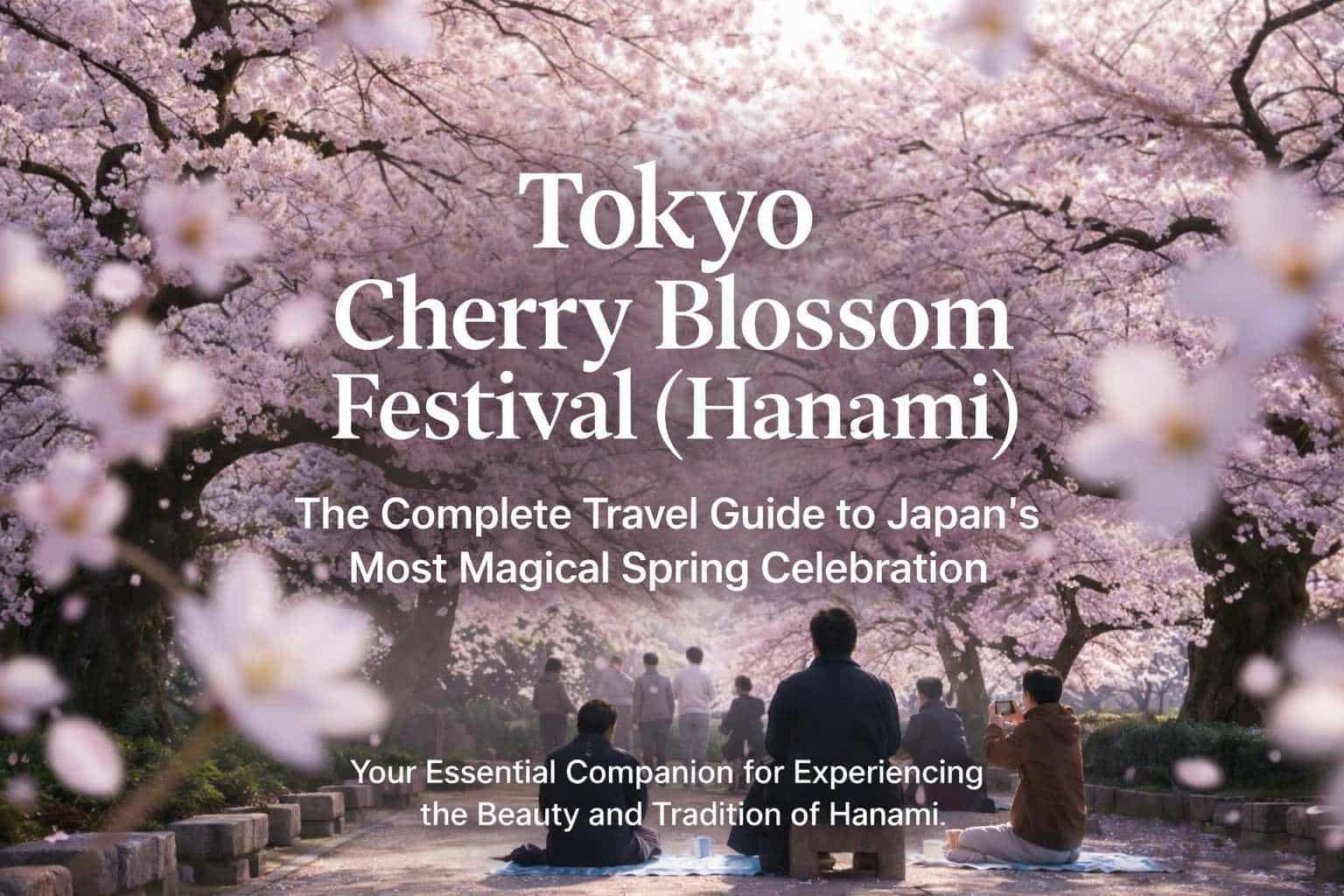
There’s a moment, usually somewhere between the first gasp and the second glance, when the sight of cherry blossoms stops you cold. Pink and white petals carpet the ground, float on the water, drift through warm spring air — and suddenly, you understand why millions of people plan entire trips around two weeks of blooming trees. The cherry blossom festival, known in Japan as hanami, is not just a visual spectacle. It’s a feeling. An emotion wrapped in petals. And once you’ve experienced it, even once, you’ll spend the rest of your years trying to get back.
Quick Facts: Cherry Blossom Festival at a Glance
| Detail | Information |
|---|---|
| Festival Name | Cherry Blossom Festival / Hanami (花見) |
| Country/Region | Japan (also celebrated in USA, South Korea, Canada, Europe) |
| Main Culture/Religion | Japanese culture; rooted in Shinto and Buddhist traditions |
| Celebration Time | Late March to early May (varies by region) |
| Duration | 1–2 weeks per location; up to 6 weeks across Japan |
| Main Highlights | Outdoor picnics under sakura trees, sake celebrations, traditional tea ceremonies, lantern-lit night viewing (yozakura), taiko drum performances, parades, blossom-themed foods |
What Is the Cherry Blossom Festival in Japan
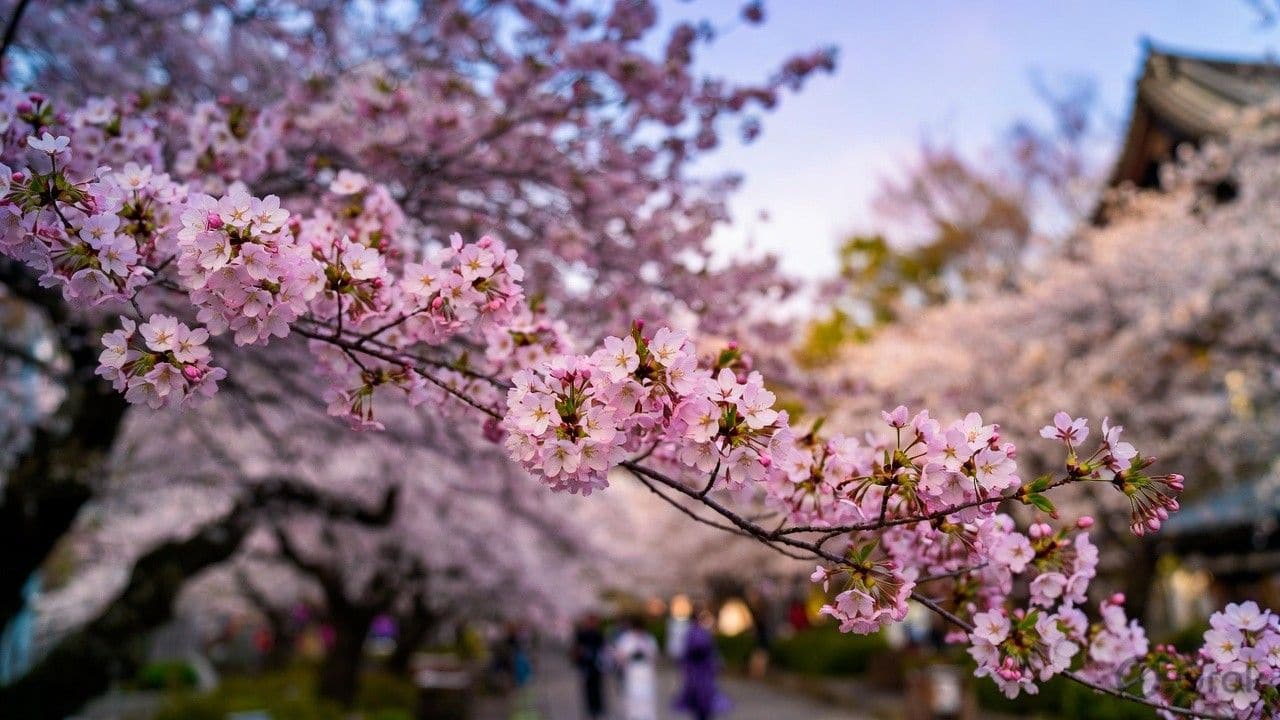 Japan doesn’t have one official cherry blossom festival it has hundreds of them, held in parks, castle grounds, and riverbanks across the country every spring. What ties them together is hanami: the tradition of gathering under blooming cherry trees to eat, drink, and enjoy the flowers. The season typically runs from late March in the south to early May in the north, moving up the country as temperatures rise.
The Japanese Name Hanami and What It Means
Hanami literally means “flower viewing” “hana” (flower) and “mi” (viewing). In practice, it almost always refers to cherry blossom viewing specifically. The tradition goes back over a thousand years, originally practiced by Japanese aristocrats who wrote poetry under the blossoms. By the Edo period, it had spread to common people. Today it means picnics, blue tarps spread under sakura trees, convenience store bento boxes, and cans of beer more casual than its origins, but no less serious about the flowers.
When Is Cherry Blossom Season in Japan
The timing depends entirely on location and that year’s temperatures. Tokyo typically sees peak bloom in late March to early April. Kyoto is usually a few days behind Tokyo. Osaka, Hiroshima, and areas further south bloom earlier. Tohoku and Hokkaido in the north can see cherry blossoms as late as April and May. The Japan Meteorological Corporation releases annual sakura forecasts starting in January, and people plan trips around these predictions. Climate has been pushing bloom dates earlier over the decades.
Where to See the Best Cherry Blossom Festivals in Japan
Sakura Festival Spots Worth Traveling To
Ueno Park in Tokyo is the most famous hanami spot it has around 800 cherry trees and gets extremely crowded during peak bloom. Maruyama Park in Kyoto has a famous weeping cherry tree that’s lit up at night. Hirosaki Castle in Aomori has over 2,500 trees and is considered one of the best sakura spots in Japan it blooms later than the rest of the country, usually late April. Yoshino in Nara Prefecture has 30,000 cherry trees on a mountain and is considered the most dramatic single sakura landscape in Japan. The Philosopher’s Path in Kyoto a canal-side walkway lined with cherry trees is one of the most photographed sakura spots in the world.
History and Origins of Hanami
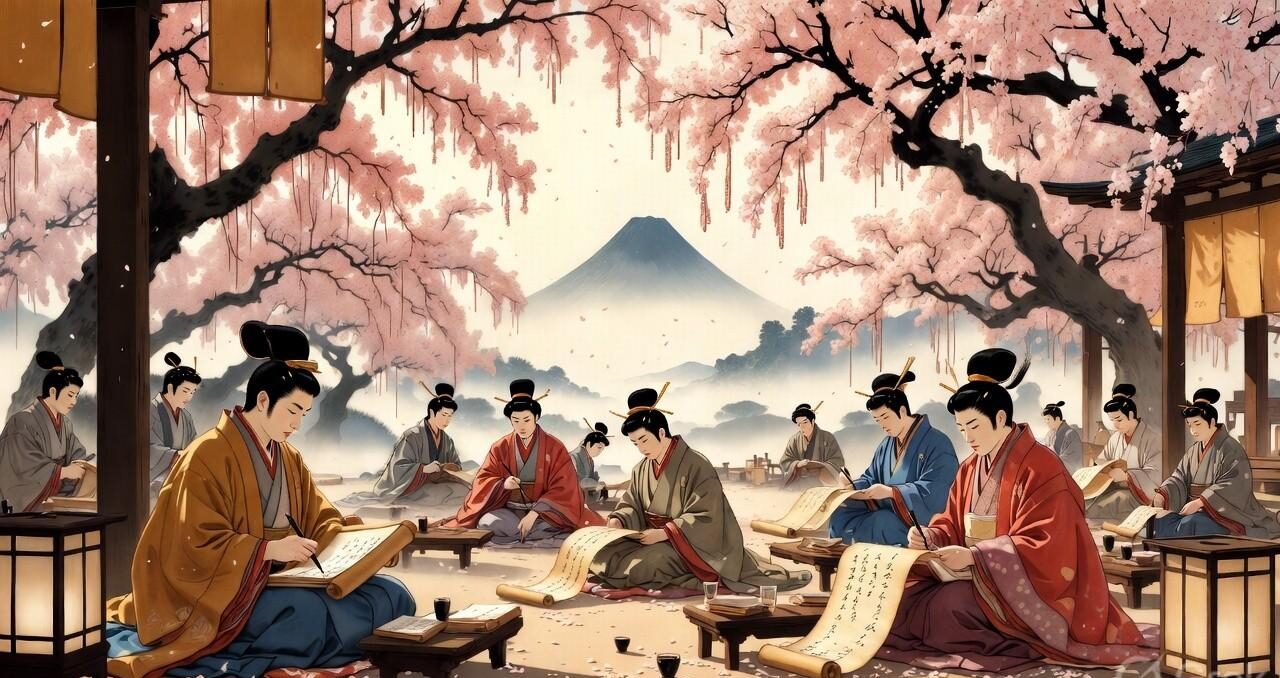 The tradition of cherry blossom viewing stretches back over 1,200 years. Historians trace hanami to Japan’s Nara period (710–794 CE), though the earliest recorded celebrations centered around ume (plum blossom) trees, following a Chinese tradition of the time.
The shift to sakura began during the Heian period (794–1185 CE), when Emperor Saga hosted the first imperial cherry blossom viewing party at Kyoto’s Jishu Shrine in 812 CE. Aristocrats were so moved by the display that they began planting cherry trees in their own gardens. These royal viewings gave rise to elaborate poetry, painting, and performance — all celebrating the brief, dazzling bloom.
Farmers of ancient Japan also attached deeper meaning to the trees. One leading theory holds that the word “sakura” itself is tied to sagami, the God of Rice Fields, making the tree a sacred vessel for agricultural deities. When the blossoms opened each spring, farmers took it as a divine signal that rice-planting season had begun.
By the Edo period (1600–1868), Shogun Tokugawa Yoshimune actively planted cherry trees in public spaces, and hanami became a tradition enjoyed by all levels of society not just the elite. The samurai class adopted sakura as a personal symbol too, seeing the brief, brilliant bloom as a mirror of a warrior’s life: short, vivid, and fearless in its falling.
Cultural and Spiritual Significance
Cherry blossoms occupy a unique place in the Japanese soul. They carry the philosophical concept of mono no aware a deep, bittersweet awareness of impermanence. The flowers bloom for barely a week or two before scattering. That fragility is the point. The sakura teaches, without words, that beauty doesn’t last and that’s exactly what makes it precious.
In Shinto belief, cherry trees are thought to house kami, sacred spirits or forces of the natural world. In Buddhist thought, the brief bloom echoes the teaching of anicca impermanence a reminder to embrace life’s fleeting moments rather than mourn their passing.
During the Meiji and WWII eras, this symbolism took on darker dimensions, with falling petals used as a metaphor for fallen soldiers. Today, the association has softened back into something life-affirming. Sakura season in Japan also coincides with the start of the fiscal and academic year, making the blossoms a symbol of fresh beginnings, first days, and new chapters.
How the Cherry Blossom Festival Is Celebrated
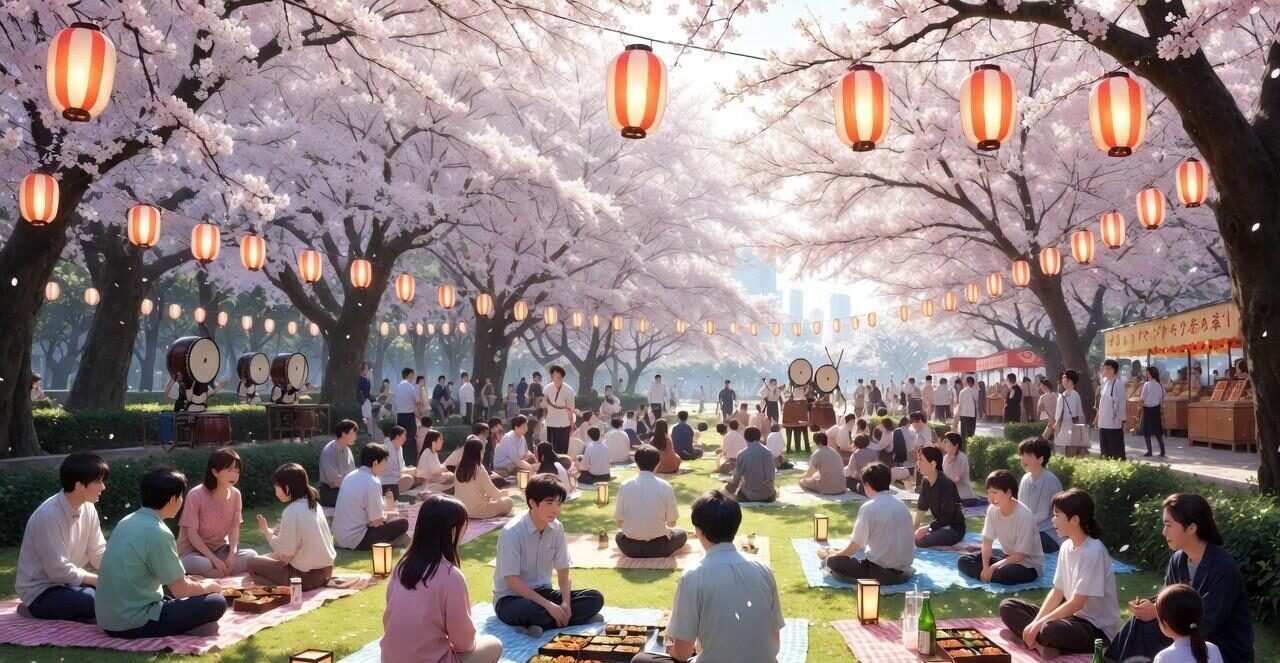 Across Japan, hanami celebrations tend to follow a delightfully consistent rhythm, even as the details shift from city to city and family to family.
The Picnic Gathering: The heart of hanami is the outdoor picnic. Groups arrive early sometimes very early to claim their spot beneath the most impressive trees. Blue plastic tarps are spread, bento boxes are unpacked, and the sake starts flowing. The mood is relaxed and convivial, with strangers often sharing space and sometimes even food.
Traditional Foods: Seasonal foods play a big role. Hanami dango (sweet rice dumplings skewered in pink, white, and green) are ubiquitous. Sakura mochi (rice cakes wrapped in salted cherry leaves), onigiri (rice balls), and tempura fill picnic baskets. Sakura-flavored everything — from lattes to Kit Kats to potato chips floods convenience stores and cafes for the season.
Sake and Tea: Sake is the traditional drink of hanami, and it’s consumed freely throughout the day. Traditional tea ceremonies are also a popular component at more formal events, often featuring tea sets decorated with cherry blossom motifs.
Yozakura – Night Viewing: Many famous parks illuminate the trees with paper lanterns and spotlights after dark, creating a hauntingly beautiful experience called yozakura (night cherry blossoms). The blossoms seem to glow from within. It’s worth staying out late for.
Cultural Performances: Taiko drumming, traditional dance, Noh theater, and live music performances appear at larger festivals. Washington D.C.’s National Cherry Blossom Festival adds giant parade floats, kite-flying competitions, and fireworks displays to the mix.
Hanami Traditions What People Actually Do
Flower Viewing Culture in Japan
Hanami is not a solemn occasion. Groups of friends, families, and coworkers spread out tarps under the trees, bring food and drinks, and spend hours outside. In major parks, the best spots get claimed early sometimes the night before by whoever is willing to sit there and hold the space. Companies sometimes ask junior employees to go early and secure a spot. The food is whatever people bring: convenience store onigiri, homemade bento, store-bought sakura mochi. The point is being outside together while the flowers last.
How Sakura Season Is Different from Any Other Festival
Cherry blossoms last about two weeks at peak, and the specific timing is uncertain until a few days before it happens. This unpredictability is part of what makes hanami different from any scheduled festival. There’s a concept in Japanese culture called mono no aware an awareness of transience, a bittersweet appreciation of things that don’t last. Sakura season is the most visible expression of this. The flowers are beautiful partly because they fall so quickly. That awareness that you only have a few days and then it’s over changes how people experience the season.
Best Places to Experience the Cherry Blossom Festival
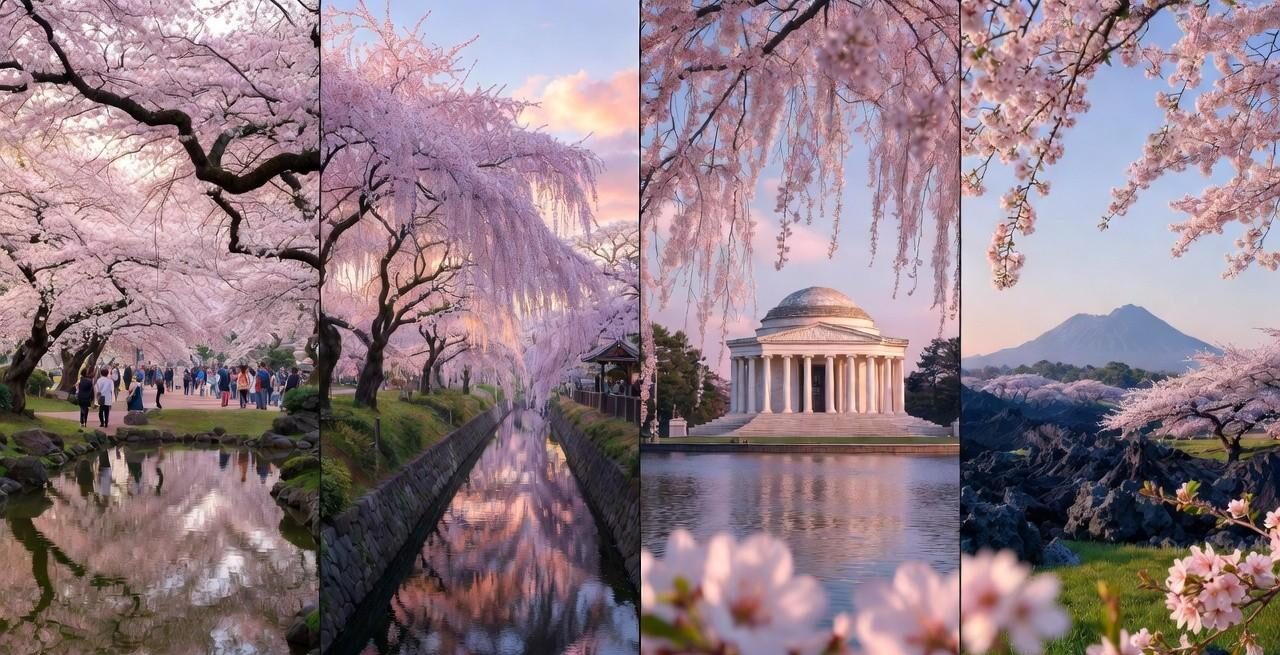 1. Ueno Park, Tokyo Home to more than 1,200 cherry trees, Ueno Park is Japan’s most iconic hanami location. It’s lively, a little chaotic, and absolutely packed — which only adds to the energy. Surrounded by museums and temples, it’s the full Tokyo hanami experience.
2. Maruyama Park, Kyoto Kyoto’s best-known hanami spot is anchored by a massive weeping cherry tree that’s illuminated at night. The combination of traditional architecture, lantern glow, and falling petals here is the stuff of postcards — and dreams.
3. Hirosaki Park, Aomori For those willing to travel north, Hirosaki is widely considered one of the best places to see cherry blossoms in Japan for first-time visitors looking for something beyond the standard tourist trail. With over 2,600 trees surrounding a feudal castle, reflected in the moat, it’s breathtaking.
4. Chidorigafuchi, Tokyo This spot along the Imperial Palace moat offers a completely different hanami experience: rowboats drifting beneath overhanging branches of sakura, petals falling into the green water below. Quiet, romantic, and impossibly scenic.
5. Washington D.C., USA Japan gifted 3,000 cherry trees to the United States in 1912 as a symbol of friendship. Today, those trees and their descendants line the Tidal Basin, and the National Cherry Blossom Festival runs for three weeks each spring, drawing over 1.5 million visitors with parades, fireworks, and cultural events.
National Cherry Blossom Festival Washington D.C. https://nationalcherryblossomfestival.org
Travel Tips for Visiting the Cherry Blossom Festival
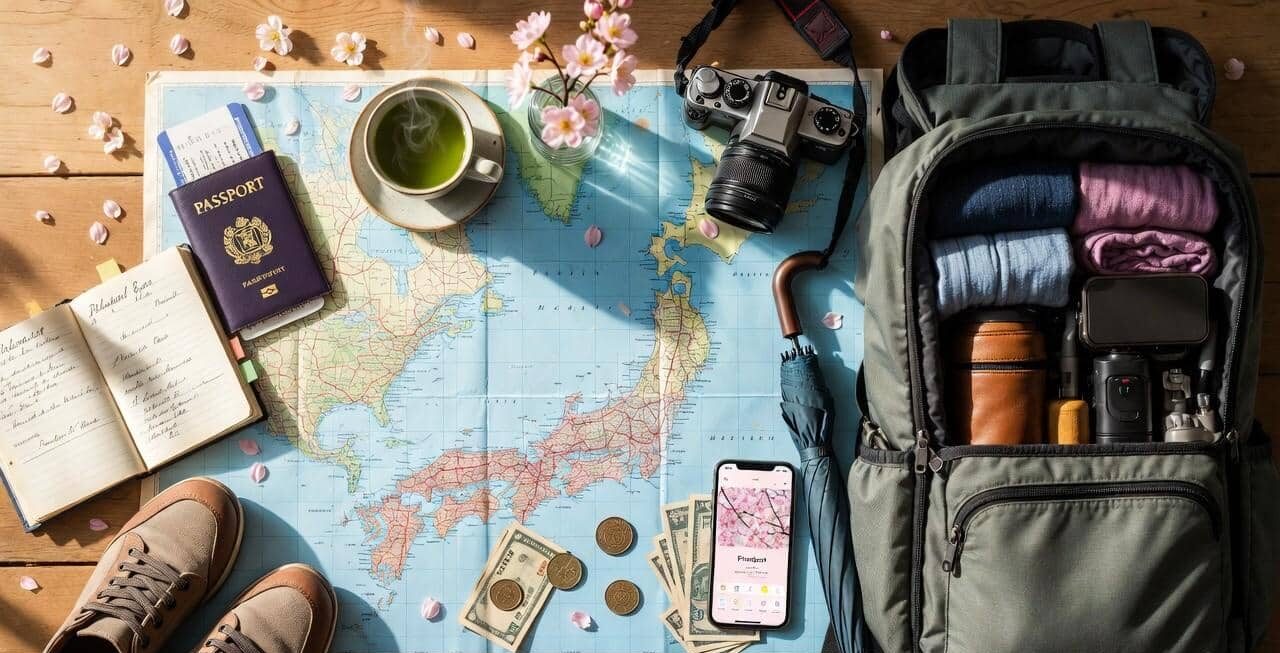 What to Wear: Spring weather in Japan can be deceptively cold, especially in the evenings. Layer up — a light jacket over a spring outfit is ideal. Comfortable walking shoes are essential; you’ll cover a lot of ground.
Best Time to Go Out: Mornings (before 9 a.m.) offer the most peaceful viewing experience at popular spots. Weekday mornings especially. Evenings are magical for yozakura but come with larger crowds. Peak weekends at famous parks like Ueno can feel overwhelmingly busy.
Cultural Etiquette: Clean up after yourself — many Japanese parks have no public trash cans, so bring your own bags. Avoid sitting in spaces that are visibly reserved. Keep noise levels respectful. Don’t shake or climb trees to dislodge petals (it happens, sadly).
Book Accommodation Early: This cannot be stressed enough. Hotels near popular hanami spots in Tokyo and Kyoto sell out 3–6 months in advance. If you’re planning a trip around peak bloom, start your booking early.
Follow the Sakura Forecast: Peak bloom lasts only 7–10 days per location. Check the official Japan Meteorological Agency sakura forecast before finalizing your travel dates — getting there a week early or late can mean the difference between peak bloom and bare branches.
Safety Tips: Cherry blossom season is very safe for tourists. Be mindful of pickpockets in extremely crowded parks, and stay hydrated — spring days can turn surprisingly warm when you’re out for hours.
Estimated Daily Budget for Cherry Blossom Season Travel in Japan
| Expense | Budget Traveler | Mid-Range | Comfortable |
|---|---|---|---|
| Accommodation (per night) | ¥3,500–6,000 (hostel/guesthouse) | ¥10,000–18,000 (business hotel) | ¥25,000+ (ryokan/boutique) |
| Food per day | ¥1,500–2,500 (convenience stores, ramen) | ¥4,000–7,000 (restaurants + picnic) | ¥10,000+ (kaiseki, fine dining) |
| Local Transport | ¥500–1,000 (IC card) | ¥1,500–3,000 (metro + bus) | ¥3,000+ (taxis + rail) |
| Estimated Daily Total (USD) | ~$35–55 | ~$100–185 | ~$250+ |
Note: A JR Pass is highly recommended for travelers moving between cities during cherry blossom season — it can significantly reduce transportation costs.
Interesting Facts About the Cherry Blossom Festival
- Edible cherries don’t grow on hanami trees. The ornamental sakura varieties used for cherry blossom viewing rarely produce fruit. Only one commercial cherry-bearing tree species — the Sato-nishiki — is grown for eating in Japan, and it’s mostly found in Yamagata Prefecture.
- Japan has a dedicated Cherry Blossom Day. March 27 is officially Sakura No Hi, or Cherry Blossom Day, established in 1992 by the Cherry Blossom Association to promote the cultural importance of sakura.
- Macon, Georgia calls itself the Cherry Blossom Capital of the World. With over 300,000 sakura trees — more than any other city on earth — Macon hosts its own International Cherry Blossom Festival every spring.
- The blossom front moves like a weather system. The sakura zensen (cherry blossom front) moves northward across Japan at roughly the same pace as a person walking. It enters Okinawa in late January and reaches Hokkaido by late April or May.
- Toyotomi Hideyoshi threw a five-day hanami party for 5,000 guests. In 1594, the powerful feudal lord organized one of history’s most extravagant cherry blossom celebrations at Yoshino, complete with sake banquets and Noh performances.
- Vancouver has more cherry trees than many Japanese cities. With over 40,000 cherry blossom trees of various varieties, Vancouver’s annual bloom transforms the city into a surprisingly Japan-like destination each spring.
Common Mistakes to Avoid
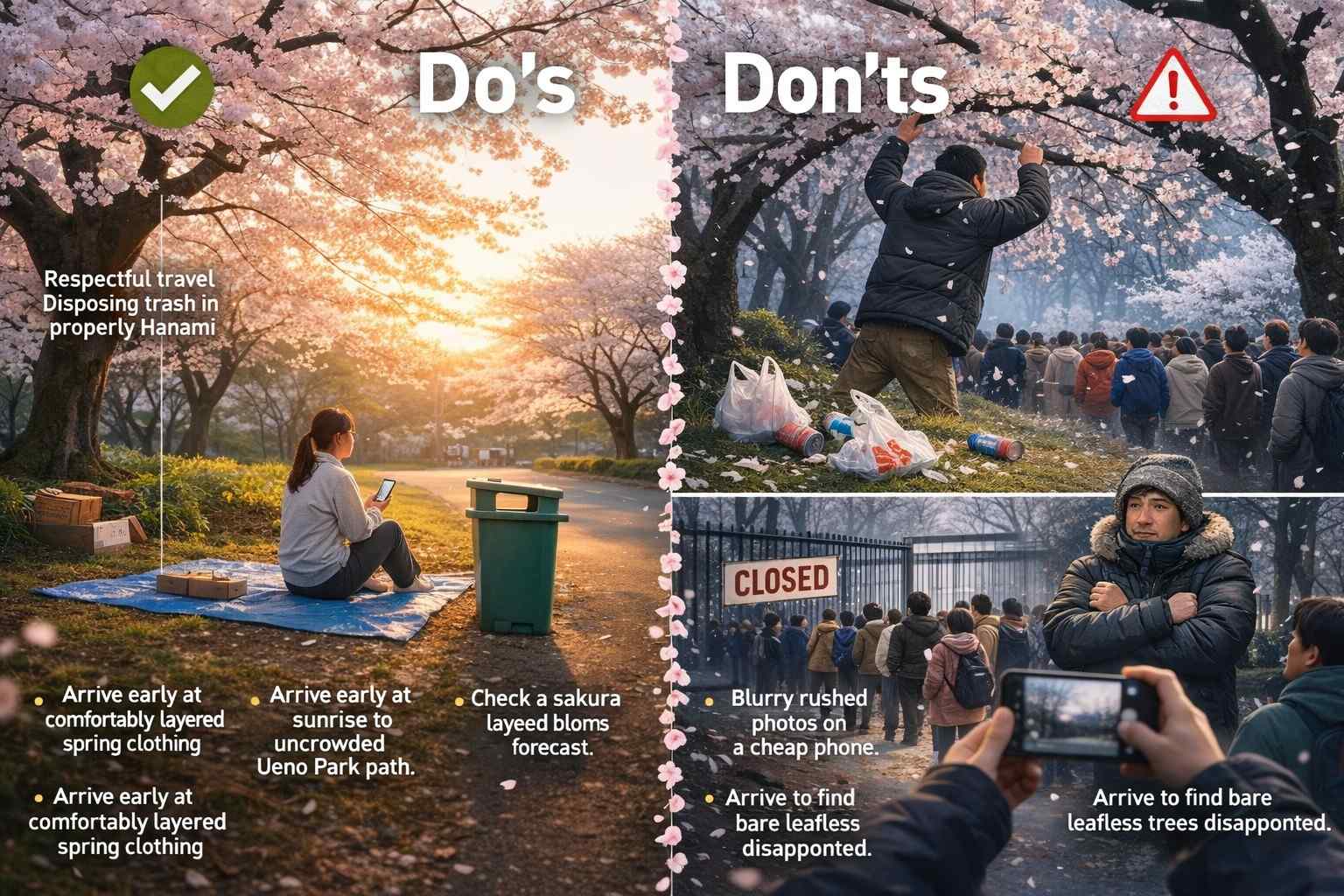 1. Visiting without checking the forecast. Cherry blossoms don’t follow your vacation schedule. Many travelers book flights months in advance and arrive to find the trees bare or already fallen. Always check the current-year sakura forecast before committing to dates.
2. Underestimating crowd sizes at famous spots. Ueno Park and Maruyama Park on a sunny weekend are genuinely overwhelming. If you’re hoping for a quiet, contemplative experience, go early, go on a weekday, or choose a lesser-known location like Hirosaki or Chidorigafuchi.
3. Not booking accommodation early enough. This mistake leaves travelers scrambling for overpriced last-minute rooms far from where they want to be. Book 4–6 months ahead for cherry blossom season trips to popular cities.
4. Rushing through multiple cities. The temptation to “collect” cherry blossoms across three cities in five days is understandable, but it’s exhausting and often means you miss peak bloom everywhere. Pick one or two locations and go deep.
5. Ignoring convenience stores. Japan’s konbini (convenience stores) become sakura wonderlands in spring — stocked with seasonal dango, sakura mochi, and blossom-flavored drinks that are genuinely delicious and ridiculously affordable. Don’t skip them in favor of restaurant food only.
Frequently Asked Questions
What is the Cherry Blossom Festival? The Cherry Blossom Festival, called hanami in Japanese, is the traditional practice of gathering outdoors to admire blooming cherry blossom trees (sakura) each spring. It involves picnics, sake, cultural performances, and a collective appreciation for the beauty of the season.
Why is the Cherry Blossom Festival celebrated? Hanami is rooted in both agricultural tradition and spiritual significance. Farmers once read the blooms as a divine signal to begin rice planting. Over time, the festival evolved into a cultural celebration of springtime renewal, impermanence, and the fleeting nature of beauty — concepts deeply valued in Japanese philosophy.
When is the Cherry Blossom Festival celebrated? The season typically begins in late January in Okinawa and travels northward, reaching Tokyo and Kyoto around late March to early April, and arriving in Hokkaido by late April or early May. The exact dates vary each year depending on weather conditions.
How long does the Cherry Blossom Festival last? Each location experiences peak bloom for about 7–10 days. However, since different regions bloom at different times, the total national season across Japan can span six or more weeks. Some organized festivals, like the National Cherry Blossom Festival in Washington D.C., run for three full weeks.
Where is the Cherry Blossom Festival most popular? Japan remains the spiritual home of hanami, with Tokyo, Kyoto, and Aomori’s Hirosaki Park among the most celebrated destinations. Outside Japan, Washington D.C., Vancouver, Seoul, and Macon, Georgia all host major annual cherry blossom events.
Conclusion
There’s a reason people return to the cherry blossom festival year after year, even when they’ve seen it before. Maybe especially when they’ve seen it before. The sakura doesn’t let you grow bored of it — it’s there for ten days, burning pink and white against the sky, and then it’s gone. And in that going, it reminds you of something true: that the most beautiful things in life are the ones that don’t stay.
Whether you’re spreading a picnic blanket in Ueno Park, drifting in a rowboat at Chidorigafuchi, or simply pausing beneath a flowering tree in your own city, hanami offers something rare — permission to stop, look, and feel grateful for right now. That’s not a small thing. In fact, it might be the whole point.

Abhay Ramola researches world festivals across primary sources, local accounts, and on-ground reporting. He founded Dionfest to cover what gets missed when festivals become tourism content the history, the ritual, and the people behind it.

2 thoughts on “Cherry Blossom Festival (Hanami): The Complete Travel Guide to Japan’s Most Magical Spring Celebration”