
Air Pollution and Brain Damage: What New Research Says About the Silent Threat Inside Your Head

Air Pollution and Brain Damage What New Research Is Finally Telling Us
Air pollution and brain damage have more in common than most people ever imagined. For years, we focused on lungs and hearts. We measured coughs and chest pain. But a growing body of research now points somewhere far more alarming the human brain.
A 2023 study published in The Lancet Planetary Health found that people living in high-pollution areas had measurably smaller brain volumes. Another study from USC tracked 998 older women and found that those exposed to higher levels of fine particle pollution showed faster cognitive decline equivalent to nearly two years of accelerated brain aging.
This is not theoretical. This is happening right now, in cities, in homes, in lungs and in minds.
How Air Pollution Gets Into Your Brain
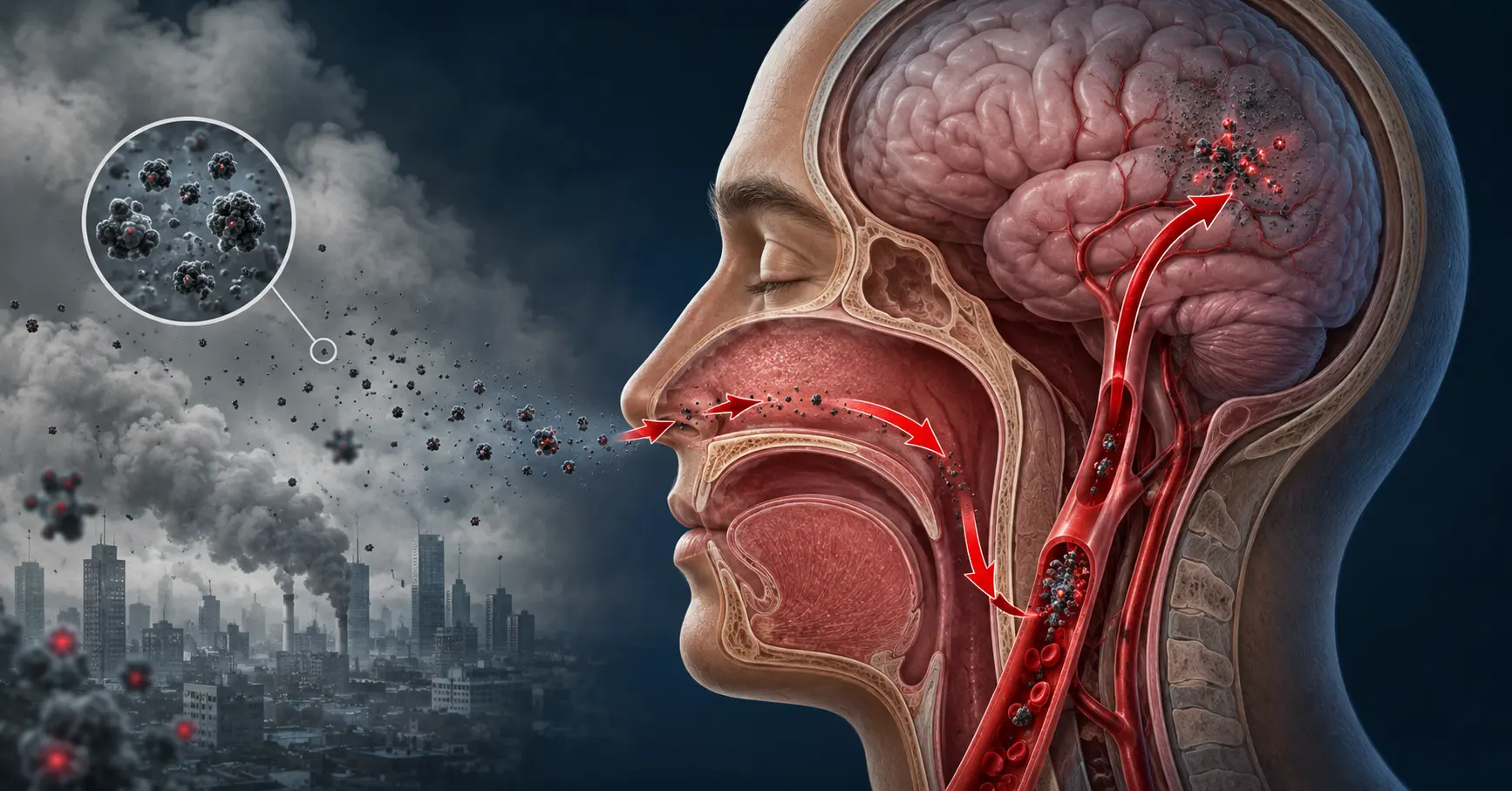 Most people assume pollution stops at the lungs. It doesn’t.
Fine particulate matter called PM2.5 is so small that 30 of these particles lined up would equal the width of a single human hair. When you breathe them in, they pass through lung tissue, enter the bloodstream, and travel throughout the body.
Here’s where it gets serious:
- PM2.5 crosses the blood-brain barrier – the protective wall that keeps most toxins out of your brain. Once inside, these particles trigger inflammation that can damage neurons directly.
- Ultrafine particles travel through the olfactory nerve – meaning they can bypass the bloodstream entirely, moving from your nose directly into brain tissue through the nerve that controls your sense of smell.
- Nitrogen dioxide (NO2) and ozone enter through the lungs and cause systemic inflammation, which the brain then responds to with its own inflammatory cascade.
You can read more about how these same pollutants first attack the respiratory system in this breakdown of how air pollution damages your lungs.
Which Pollutants Are Most Dangerous for Your Brain
Not all air pollution is equally harmful to brain health. Here’s what the research flags most consistently:
PM2.5 (Fine Particulate Matter) This is the most studied and most dangerous. Sources include vehicle exhaust, coal burning, and wildfire smoke. Long-term PM2.5 exposure is linked to hippocampal shrinkage that’s the memory center of the brain.
Nitrogen Dioxide (NO2) Primarily from traffic and combustion engines. A 2021 study in JAMA Psychiatry found that children living near high NO2 areas had a higher risk of developing psychiatric disorders, including depression and anxiety, by age 18.
Carbon Monoxide (CO) Even at low levels, CO reduces oxygen delivery to brain cells. Short-term spikes can cause confusion. Prolonged low-level exposure is now being studied for links to long-term cognitive impairment.
Heavy Metals (Lead, Mercury) Found in industrial pollution and older road dust. Lead is a well-established neurotoxin there is no safe level. Mercury disrupts nerve signal transmission and has been linked to developmental delays in children.
Air Pollution, Brain Inflammation, and Dementia
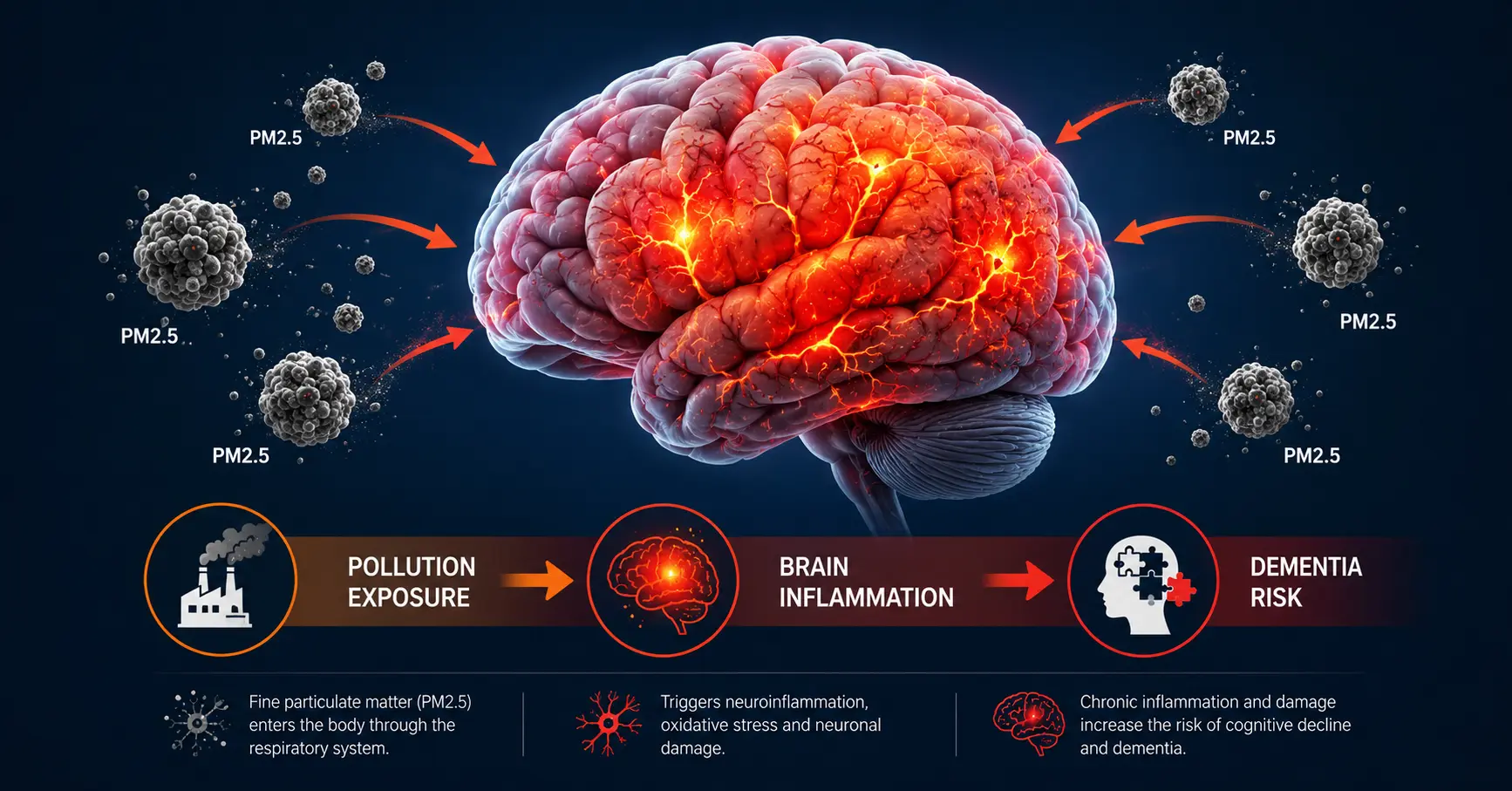 This is where the research gets most alarming.
A large UK Biobank study involving over 30,000 participants found that people exposed to higher PM2.5 levels had greater white matter damage the brain’s communication network. White matter damage is an early marker for dementia.
Separately, a Harvard study published in 2020 found that long-term exposure to PM2.5 was associated with a 16% higher risk of Alzheimer’s disease in older adults, even after controlling for other factors like smoking and socioeconomic status.
The mechanism appears to be chronic neuroinflammation. When pollutants enter the brain, microglia (the brain’s immune cells) go into attack mode. Normally this is protective. But chronic, repeated activation triggered by daily pollution exposure leads to sustained inflammation that gradually destroys neurons.
It’s the same slow burn that drives Alzheimer’s progression. Pollution appears to pour fuel on that fire.
This is also connected to cardiovascular damage. The same inflammation pathways that affect the brain also affect your heart. Air pollution’s link to heart attacks explains how the cardiovascular damage begins and the brain doesn’t escape that chain reaction.
Can Children’s Brains Be Permanently Damaged?
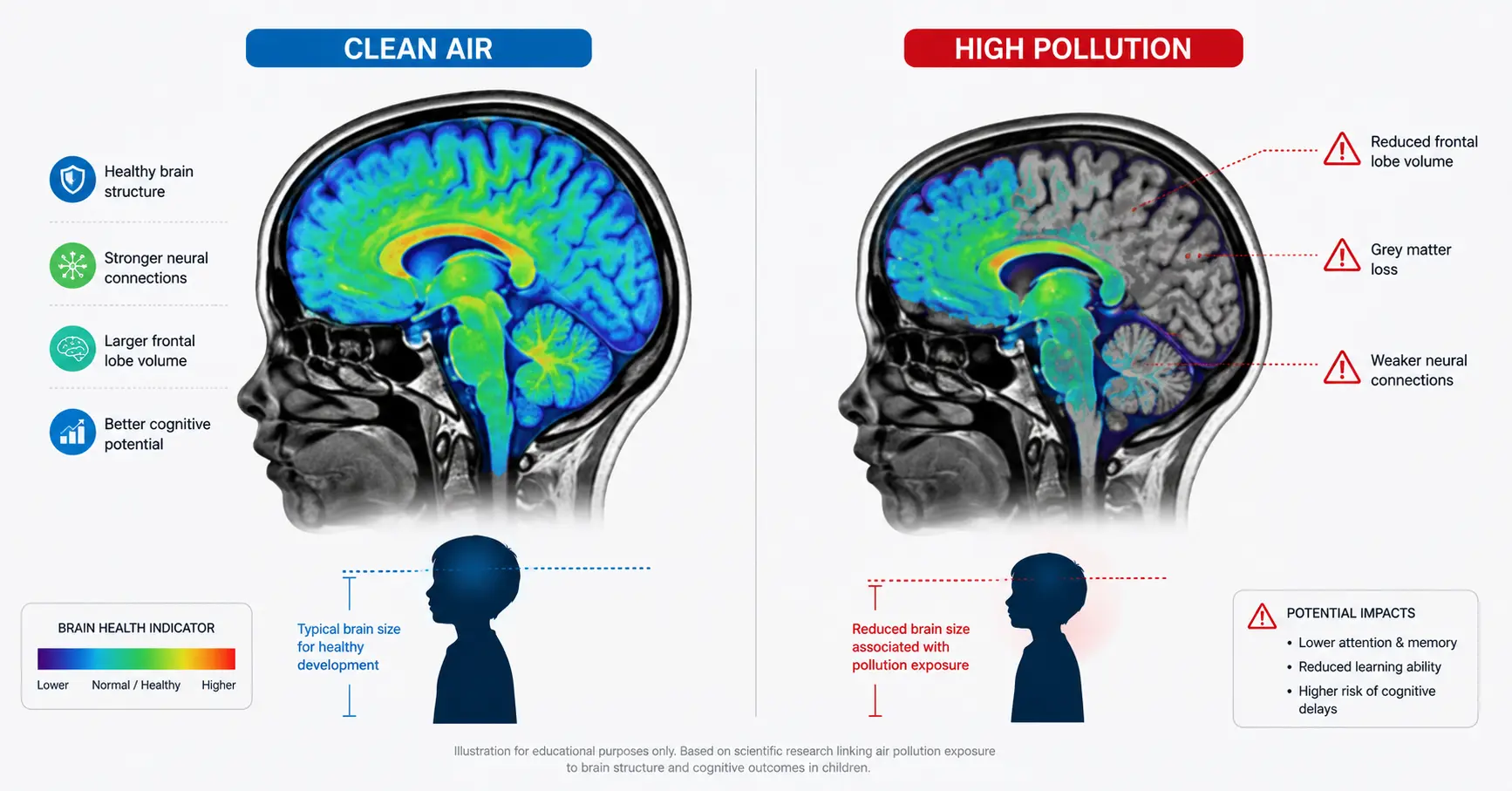 Yes. And the evidence here is especially troubling.
A 2020 WHO report stated that 93% of children worldwide breathe air that exceeds safe pollution limits. Children breathe faster than adults, inhale more air relative to body weight, and their brains are still developing making them far more vulnerable.
Research findings in children include:
- Lower IQ scores in children exposed to higher traffic-related air pollution in early life, even after adjusting for parental education and income.
- Reduced gray matter volume in the frontal and parietal lobes areas responsible for decision-making, attention, and language.
- Higher rates of ADHD in children living near major highways, based on multiple independent studies across the US, Europe, and Asia.
- Slower processing speed in cognitive tests taken at ages 7-10 among children who had higher prenatal exposure to polycyclic aromatic hydrocarbons (PAHs) from traffic.
These effects appear to be at least partially permanent if exposure happens during critical windows of brain development particularly before age 5.
Who Is at the Highest Risk?
Not everyone is equally affected. The research consistently identifies certain groups as significantly more vulnerable:
- Older adults (65+): Aging brains have fewer repair mechanisms. The blood-brain barrier also becomes more permeable with age, letting more pollutants through.
- Children under 5: Developing brains are far more sensitive to neurotoxic exposure.
- People with pre-existing cardiovascular disease: The inflammation loop between heart and brain amplifies the damage on both ends.
- People with APOE4 gene variant: This is the strongest known genetic risk factor for Alzheimer’s and studies suggest carriers show accelerated cognitive decline when exposed to higher PM2.5 levels.
- Low-income urban populations: These groups typically live closer to high-traffic roads, industrial zones, and areas with poor air quality monitoring, making their exposure both higher and less documented.
FAQ
Q: Can short-term air pollution exposure cause brain damage? Brief spikes like a wildfire smoke event or being stuck in traffic likely don’t cause permanent damage in healthy adults. However, research shows they can cause temporary cognitive impairment, reduced reaction time, and mood changes within hours of exposure. The real risk comes from consistent, long-term exposure.
Q: Does air pollution cause depression or anxiety? Growing evidence says yes. A 2019 study across 151 US cities found a statistically significant link between PM2.5 levels and rates of major depressive disorder and bipolar disorder. The mechanism involves both neuroinflammation and disruption of serotonin metabolism.
Q: Is indoor air pollution also a brain health risk? Yes. Indoor air can be 2-5 times more polluted than outdoor air, according to the EPA. Cooking fumes (especially high-heat frying), gas stoves, mold, and VOCs from furniture and paint all contribute. HEPA filtration and proper ventilation significantly reduce this risk.
Q: At what age does air pollution start damaging the brain? Damage can begin before birth. Prenatal exposure to traffic pollution has been linked to lower birth weight, reduced brain volume at birth, and slower cognitive development in the first years of life. There is no safe developmental window when the brain is fully protected.
Q: Does moving to a cleaner area reverse the damage? Partially. Studies show that reducing exposure does slow further cognitive decline. Some repair appears to happen, particularly in younger people. But damage accumulated during critical developmental periods appears to be largely permanent, which is why prevention especially for children matters far more than remediation.
Bottom line: Air pollution and brain damage are not a future risk. They are a present reality for hundreds of millions of people. The research is clear, the mechanisms are understood, and the populations most at risk are identified. What happens next depends on both policy and personal action — and the time to take both seriously is now.

Abhay Ramola researches world festivals across primary sources, local accounts, and on-ground reporting. He founded Dionfest to cover what gets missed when festivals become tourism content the history, the ritual, and the people behind it.