Edinburgh Fringe 2026: The Full Ticket & Dates Guide
Key Facts
| Festival Name | Edinburgh Festival Fringe |
| Also Called | The Fringe |
| 2026 Dates | August 7–31, 2026 |
| Preview Shows | From August 3, 2026 |
| Location | Edinburgh, Scotland, UK |
| Duration | 25 days |
| Shows in 2026 | 3,649 confirmed |
| Performances | 53,884 |
| Venues | 258 across Edinburgh |
| Countries Represented | 71 |
| Ticket Price Range | Free–£30+ |
| Where to Book | edfringe.com / EdFringe app |
| Programme Launch | June 4, 2026 |
| Founded | 1947 |
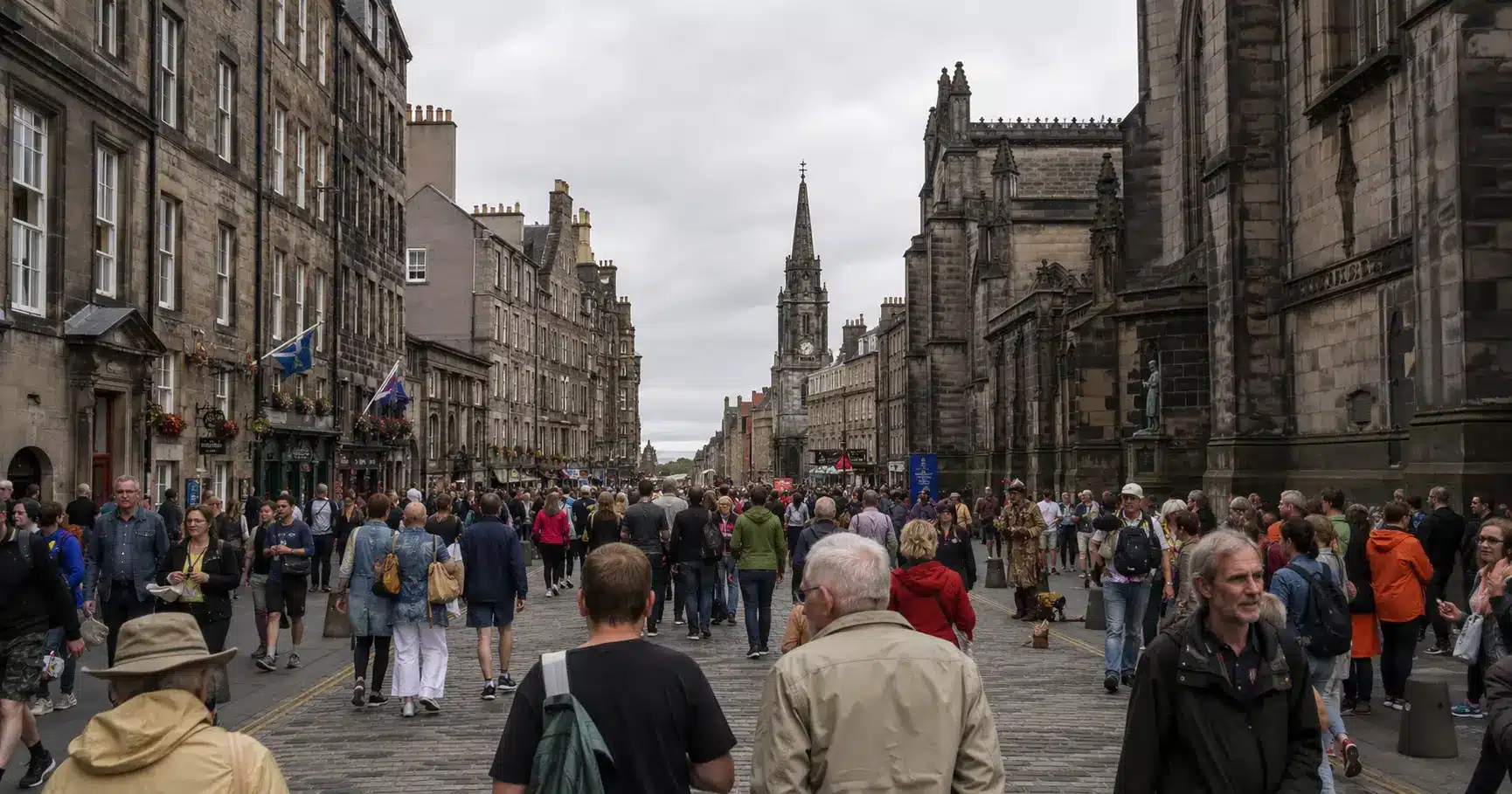
Walk down Edinburgh’s Royal Mile at 2 PM on any day in August and something will happen to you before you reach the end.
A man in a kilt will hand you a flyer for a show about his divorce. A six-person circus troupe will almost knock you over with a spinning pole. Someone will grab a passing stranger from the crowd to assist in a trick that goes slightly wrong, to enormous applause. Ahead, a comedian with a megaphone announces his show starts in nine minutes in a pub basement and somehow, people go.
This is the Edinburgh Festival Fringe. In 2026, it runs August 7 to August 31 25 days in which the whole city converts itself into the world’s largest performing arts festival.
The 2025 edition sold 2.6 million tickets and hosted 53,942 performances across 301 venues with participants from 68 countries. The 2026 programme launched June 4 confirms 3,649 shows across 258 venues, with artists from 71 countries. Prominent themes this year include artificial intelligence, identity crisis, the manosphere, social class, Y2K nostalgia, and resilience.
If you’re planning to attend, buying tickets, or just trying to understand what the Fringe actually is this covers everything.
In short: The Edinburgh Festival Fringe is an open-access arts festival every August in Edinburgh, Scotland. In 2026, it runs August 7-31. Over 3,600 shows across 258 venues cover comedy, theatre, dance, music, circus, and more. Anyone can perform. Tickets range from free to £30+, available at edfringe.com.
What Is the Edinburgh Festival Fringe? History and Origin
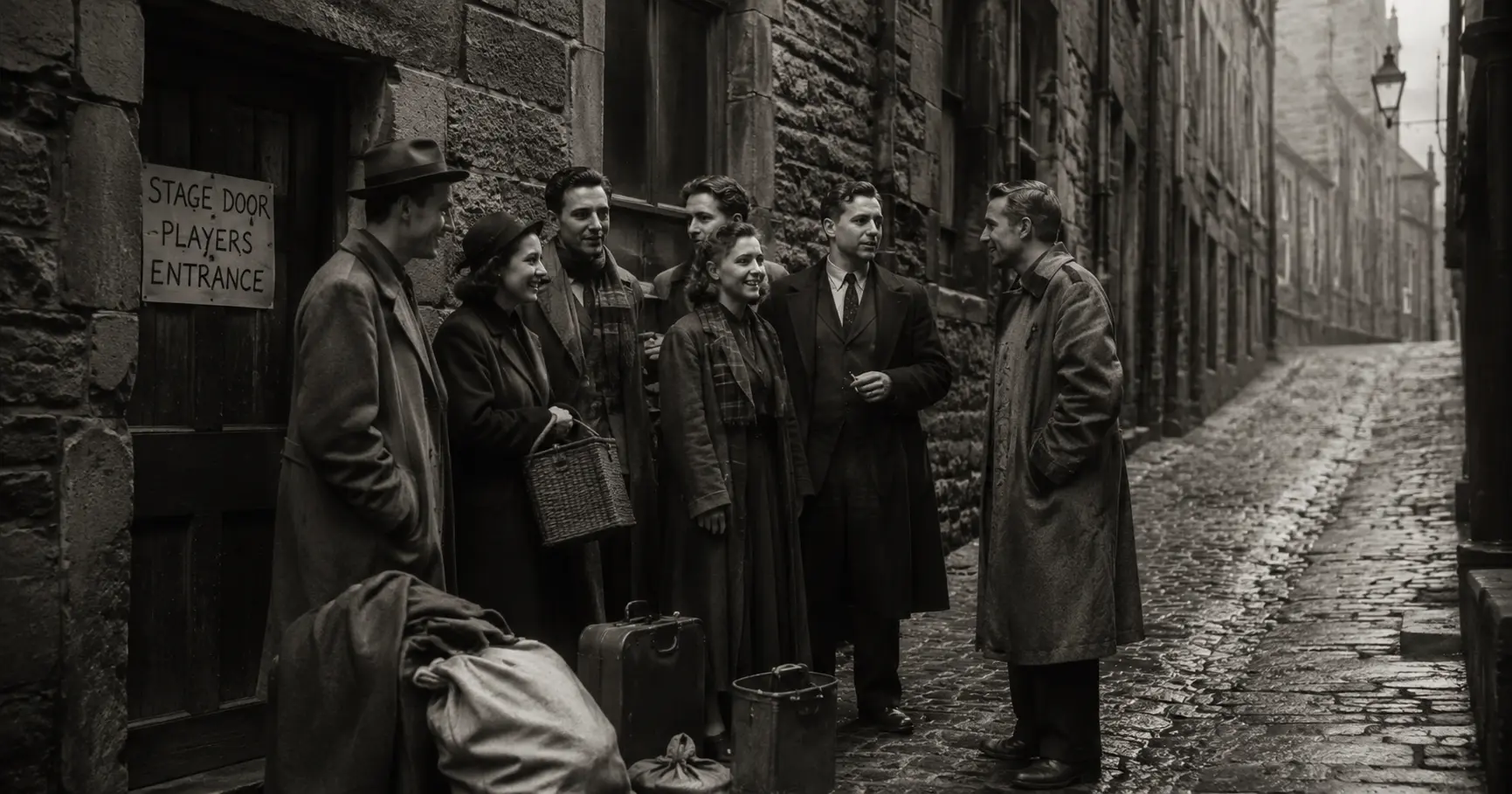 In 1947, Edinburgh launched its first international arts festival curated, invitation-only, formally programmed. Eight theatre companies who hadn’t been invited decided to show up anyway and perform on the city’s edges. Nobody approved them. Nobody asked for them. They just came.
That uninvited fringe became the Fringe.
From those eight companies, it grew into the largest performing arts festival on earth with one rule that has never changed in 79 years: no selection committee, no gatekeeping, no board deciding who is good enough. If you can find a venue and pay the registration fee, you can perform.
That open-access policy is what separates the Fringe from every other major arts festival. A first-year drama student and a BAFTA winner perform in the same city on the same day. The audience decides what matters.
The results speak for themselves. Robin Williams performed here. Billy Connolly built his career here. In 2013, Phoebe Waller-Bridge staged a small, odd show called Fleabag in a 100-seat room. You know what that became.
The Edinburgh Festival Fringe Society, set up in 1958 to help coordinate the festival without controlling it, remains the world’s most unusual arts body its job is to run the infrastructure without ever deciding what happens inside it.
Edinburgh Fringe 2026 Dates and Week-by-Week Guide
Official run: August 7–31, 2026
Programme launch: June 4, 2026
Where to book: edfringe.com
The festival builds and winds down in stages. Here is what each period actually looks like:
Preview Period: From August 3
Many shows run preview performances before their official opening. Tickets are often cheaper, the city is warming up rather than fully alive, and you may catch a performance that is still finding its rhythm which is either annoying or part of the experience depending on who you are. If you want value and don’t mind a show that’s not yet polished, previews are worth considering.
First Week: August 7–13
The festival opens. Street performances begin on the Royal Mile. Not every show has started yet some have staggered opening dates but the full programme is live. This is the easiest time to get tickets for popular shows before word spreads and before reviews drive demand.
Middle Two Weeks: August 14–27
This is the full Fringe. Every show is running. The Royal Mile is packed from morning to midnight. Reviews are published, which means good shows start selling fast. The Pleasance Courtyard at 2 PM feels like its own festival. Popular comedy shows can sell out with 48 hours’ notice.
Half Price Hut opens: Wednesday, August 12. From this date you can buy same-day (and after 2 PM, next-day) half-price tickets in person at the Fringe Box Office, 180 High Street.
Final Week: August 28–31
Award announcements and strong reviews drive demand. Sell-outs are common. If you’re going in the final week, book your show tickets before you arrive in Edinburgh.
What Shows Can You See? The 2026 Programme
 The 2026 programme officially launched June 4 and features 3,649 shows, 53,884 performances, from artists representing 71 countries. Here is what each genre actually looks and feels like on the ground:
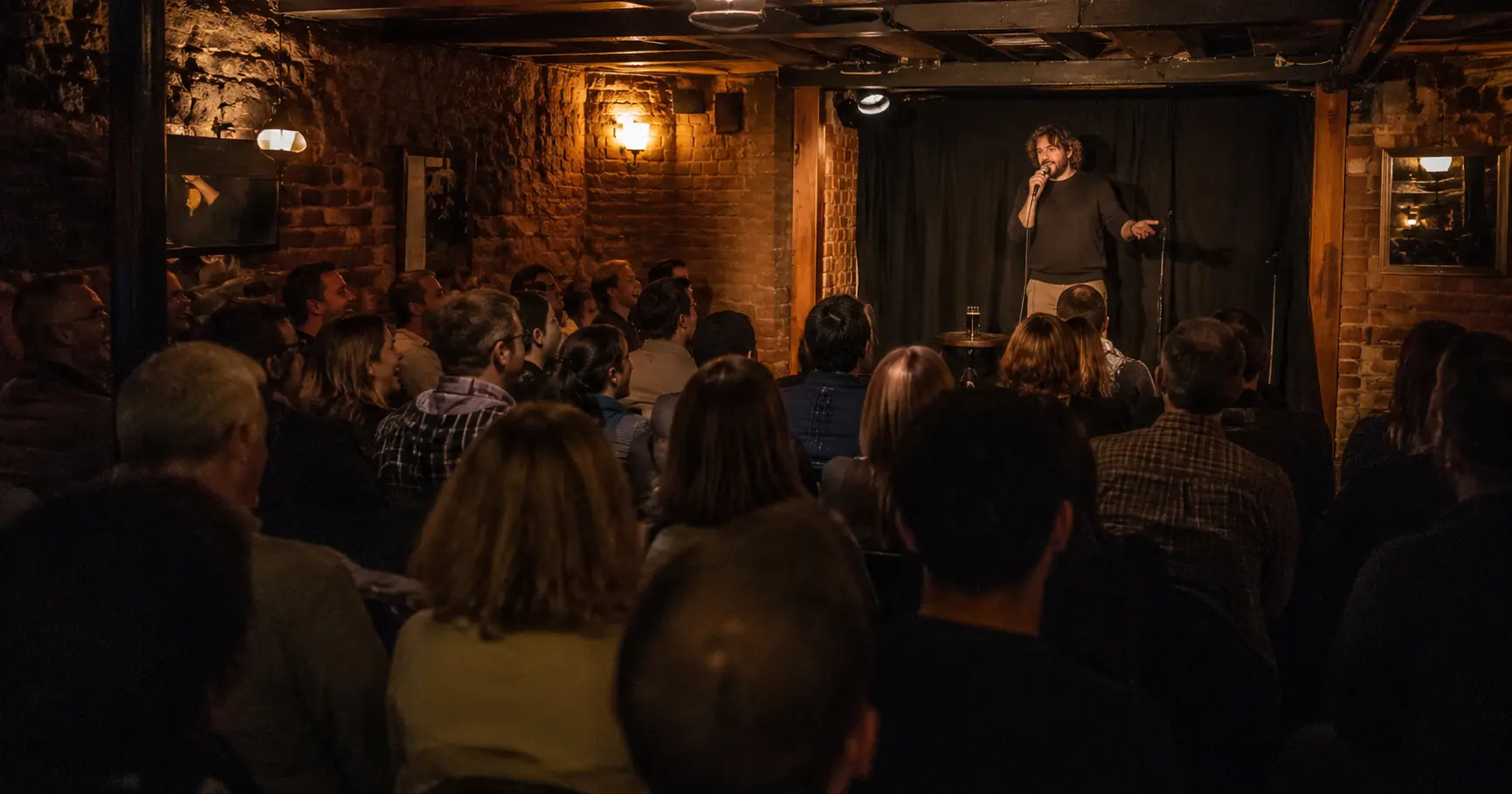
Comedy — The biggest draw at the Fringe, and the most talked-about category. Established names test new material before touring. Unknown acts who’ll headline arenas in three years perform in 40-seat rooms. Late-night comedy shows after 10 PM, sometimes after midnight — run more unfiltered as the hour progresses and the audience gets looser.
Theatre — One-person shows are everywhere and range from extraordinary to undercooked. Full company productions, student work, and experimental pieces that wouldn’t get near a conventional stage anywhere else. Some of the most important theatre made in the UK in the past decade had its first audience here.
Circus and Physical Theatre — Aerial acts, acrobatics, contortion, clown work. Often technically the most impressive things at the festival. The Spiegeltent at Underbelly is worth going to specifically for this.
Cabaret and Variety — Late-night, sharp, frequently political. The Gilded Balloon specialises in this.
Dance — Contemporary and classical, often in unexpected spaces — church halls, converted warehouses, outdoor courtyards.
Music — Classical, folk, jazz, and experimental. Many music shows are free.
Spoken Word — Poetry, storytelling, literary performance. Often the most surprising genre for first-timers who dismiss it.
Children’s Shows — A full programme, particularly strong in the first two weeks. Street performances suit all ages.
Musicals — Fringe premieres of original work and reimagined classics. Some of the most ambitious productions attempt material that mainstream venues won’t touch.
2026 Programme Themes
The 2026 programme announcement highlighted recurring themes across this year’s shows: artificial intelligence and its cultural effects, cults, the manosphere, identity crisis, social class, Y2K nostalgia, and underneath all of it the question of how people find resilience in an unstable world.
These aren’t imposed categories. They’re what independent artists from 71 countries chose to make work about in 2026. That collective focus tends to be more honest than a news cycle.
Made in Scotland Showcase
The Made in Scotland showcase features specially selected Scottish productions always a useful starting point if you want local work without scrolling through the full programme. Check edfringe.com for the full 2026 list once the programme is live.
How to Buy Edinburgh Fringe 2026 Tickets
Tickets went on sale following the programme launch on June 4, 2026.
Three Ways to Book
edfringe.com — The main booking site. Available 24 hours. Browse all 3,649 shows, filter by genre, date, venue, and price. Start here.
The EdFringe App — Free to download. Includes a “Nearby Now” function showing what’s starting close to you right now, a saved show list, and “Shake to Search” for random discovery. Download it before you arrive — it works offline for already-purchased tickets.
Fringe Box Office in person — 180 High Street, Edinburgh EH1 1QS. Open during the festival for in-person and phone bookings. Also where you collect your free printed programme from June 4.
What You Need to Know About Tickets
No physical tickets. All Fringe tickets are e-tickets. After booking you get an email with a QR code. That’s what you show at the venue door.
Booking fee: £1.50 per ticket, maximum £9 per transaction. Under UK consumer rules, this fee is already included in the advertised price what you see at checkout is what you pay.
Half Price Hut — Opens August 12 at 180 High Street. In-person only. Half-price tickets for that day’s shows from participating venues. After 2 PM, next-day tickets are added. Check the EdFringe website each morning before you leave your accommodation they publish the day’s Half Price Hut listings online, which means you can decide before queuing, not while standing in line hoping for something decent.
Free shows: The PBH Free Fringe and Laughing Horse Free Comedy networks run dozens of free shows daily at bars across Edinburgh. These run on a pay-what-you-can basis you watch, then put in what you feel it was worth at the end. Some of the best performances at the Fringe are completely free. Seriously.
Key Venues at the Fringe
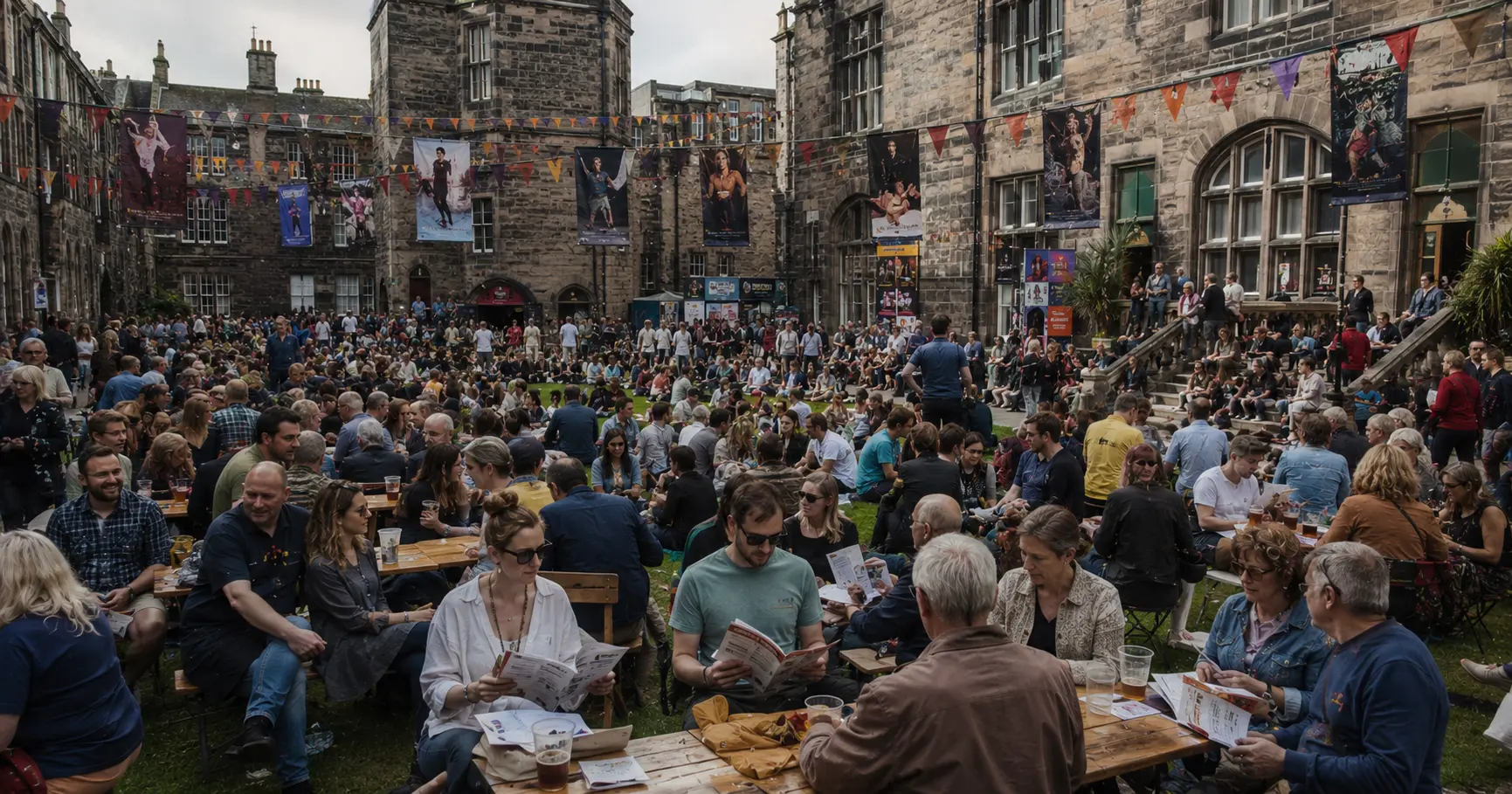 The Fringe uses 258 venues in 2026. Bars, university halls, churches, converted warehouses, and pub basements all become stages. A few areas worth knowing:
The Royal Mile — Not a venue but the main artery of the festival. Street performers work here every day from late morning to midnight. Comedians hand out flyers. Every few metres someone is performing at you. The street programme is produced by the Fringe Society buskers, circus performers, and living statues running eight hours a day. No ticket needed, but performers work for tips.
Pleasance Courtyard — One of the main multi-venue hubs, south of the Royal Mile. Several indoor theatres plus an outdoor courtyard where everyone spreads out between shows. Worth making a full day of.
Gilded Balloon — Known for late-night comedy and cabaret. Shows start at 10 PM and run until the comedian runs out of material or the audience gives up.
Underbelly / George Square — Large outdoor venue area including the Spiegeltent, a circular ornate tent used for cabaret and variety. One of the more visually distinctive spaces at the festival.
Summerhall — Former veterinary college turned arts complex. One of the most atmospheric venues in Edinburgh, running serious theatre and art alongside Fringe programming.
Grassmarket and Cowgate — Further from the main Fringe cluster. Some venues here run extended licences. A few are literally underground — tunnels beneath the Old Town that date to the 18th century.
Traverse Theatre — Edinburgh’s dedicated new writing theatre runs its own programme alongside Fringe programming. One of the most reliable places to find strong theatre work.
Fringe Box Office: 180 High Street, Edinburgh EH1 1QS
How Much Does It Cost?
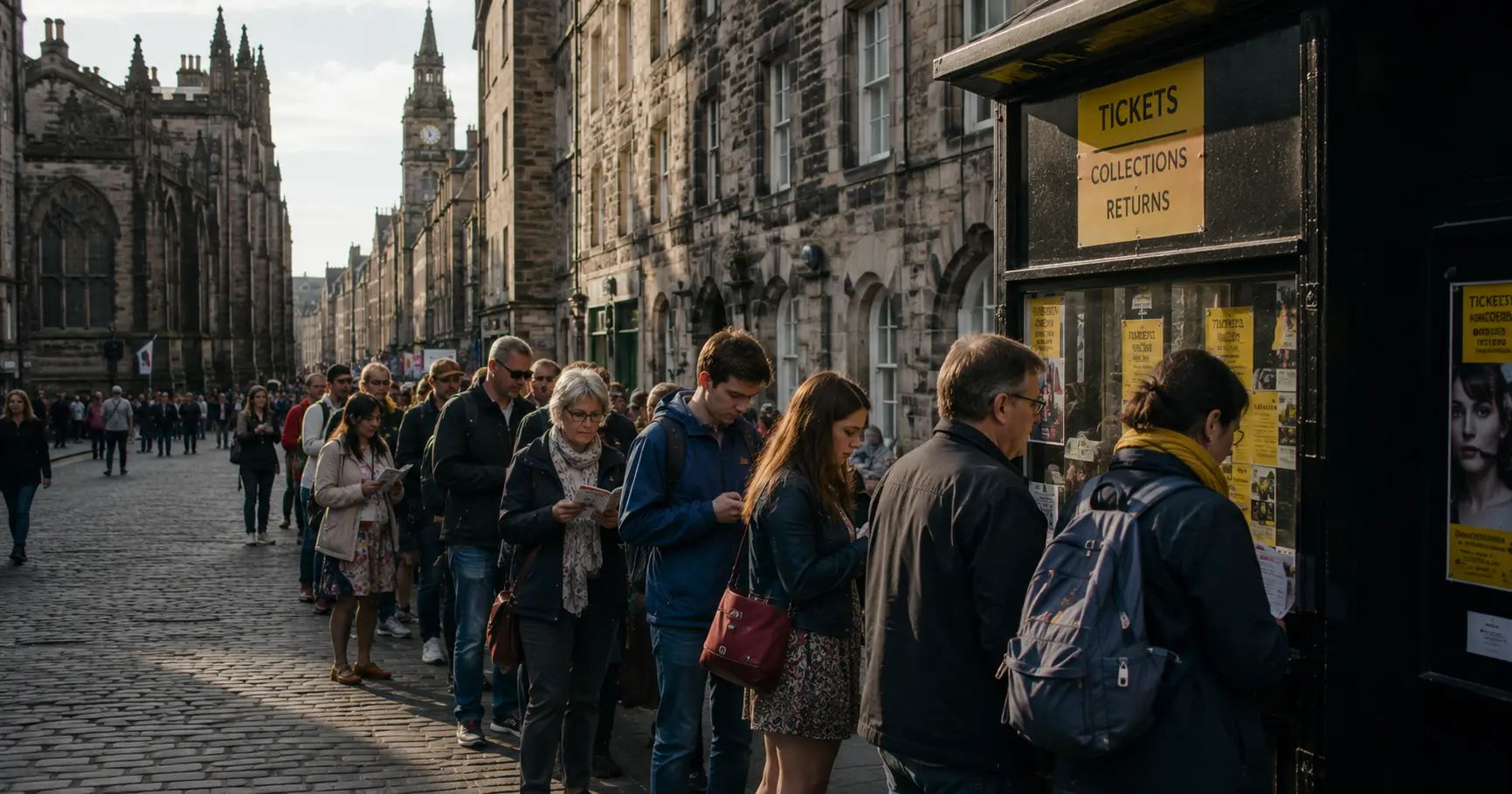
Show Tickets
Free to £30+. Most ticketed shows fall between £8 and £18. Big-name comedy acts go higher sometimes to £35 or £40. Student and late-night shows tend to be cheaper.
Half Price Hut: From August 12, half-price same-day tickets in person at 180 High Street.
Free shows: PBH Free Fringe and Laughing Horse no ticket, bucket at the end.
Booking fee: £1.50 per ticket, already included in the advertised price.
Accommodation
This is where Edinburgh in August gets seriously expensive. City-centre hotels and apartments run £150–£250+ per night and book out months ahead. Hostels and university halls are cheaper. If you’re booking in June or later and central options are gone check Kirkcaldy, Linlithgow, or Dunbar and commute by train. The rail links are fast and trains run late.
Getting Around Edinburgh
The Lothian Buses day ticket costs around £6 for unlimited city travel. Buy it on the Lothian Buses app on your phone. Edinburgh’s Fringe areas are also walkable but the Old Town is almost entirely on a steep hill. Everything you want to see is either uphill or downhill from where you’re standing. On flat terrain your feet are fine. On Edinburgh’s cobblestones in August, after five shows, your feet will have opinions.
Realistic Day Budget
| 3 ticketed shows (~£12 average) | £36 |
| Booking fees | £4.50 |
| Meals and drinks | £25–£40 |
| Transport (Lothian day ticket) | £6 |
| Total | ~£70–£85/person/day |
Mix in free shows and that drops considerably. A day with two free shows and one ticketed show runs closer to £40–£50.
Best Time to Visit Which Week?
Best value, fewer crowds: First week (August 7–13) or preview period (from August 3). The programme is fully live, tickets are easier to get, and the city is busy but not at peak pressure. Some preview tickets are discounted.
Best overall experience: Second week (August 14–20). Full programme, reviews are published so you can make informed choices, and the Royal Mile is running at full capacity without the final-week ticket pressure.
Best for award-winning shows: Final week (August 28–31). By this point, the Fringe awards have been announced, critics have published their picks, and audiences know which shows are worth queuing for. Book these shows early.
Avoid if you dislike crowds: The stretch around August 21–27 is typically the busiest. Edinburgh’s streets in August slow everything down — a 10-minute walk takes 20. The weather, usually around 18°C but capable of turning cold and wet in a single hour, adds its own variable.
A useful note from VisitScotland: August also hosts the Edinburgh International Festival (August 7–30), the Edinburgh Art Festival (August 14–30), the International Book Festival (August 15–30), and the International Film Festival (August 13–19). All run simultaneously. You can fill an entire August with nothing but Edinburgh festival programming.
A First-Timer’s Real Experience
Kat Masterson, a theatre writer who attended for the first time in 2022, wrote a useful account at katmasterson.com. It’s more practical than most planning guides because it’s specific:
The best show she saw was unplanned someone handed her a flyer outside a museum. She had a gap in her schedule and went. Her advice: always leave one empty slot per day for exactly this.
The Half Price Hut works if you prepare. She checked the EdFringe website each morning for that day’s listings before heading out. Most visitors don’t know the listings are published online — they just queue at the booth and hope.
Venues are harder to find than addresses suggest. Churches, lecture halls, museum basements some took real work to locate. Her fix: note the venue number, not just the name. Every Fringe venue has a numbered banner outside during the festival.
Shows are not like formal theatre. She sang along at a Dolly Parton tribute. She clapped through an acrobatics show. At the Fringe, audience participation is expected and sometimes unavoidable.
Restaurants fill completely. August Edinburgh is fully booked. Eat early, carry snacks, and book any specific restaurant before you arrive.
10 Things You Won’t Read in Other Guides
These come from what experienced Fringe-goers consistently report the things that don’t make it into official guides:
1. The best shows are often in the smallest rooms. A 30-seat room above a pub gave some of the most talked-about Fringe performances of recent years. Big venue does not mean better show.
2. The smell of the Royal Mile in August is distinctive. Rain on old stone, hot food from a dozen carts, and the crowd. If you’ve been once, you’ll recognise it before you turn the corner.
3. You will see a show that is genuinely terrible. This is not a failure it’s part of the deal. The open-access policy means quality varies drastically. A bad show with a good audience can still be memorable. A flop you witness before anyone else has reviewed it becomes a story.
4. Performers are everywhere off-stage. The comedian whose show you just saw is eating at the same pub as you. The Fringe is small enough that this happens constantly. If they did a good show, tell them. It genuinely matters to performers who spent a year building a show for 40 people.
5. Flyering isn’t just noise — it’s a system. When a performer hands you a flyer and looks genuinely nervous, they wrote that show. A 30-second conversation with them tells you more than any review. Ask them what it’s about. If their answer is interesting, go.
6. The Half Price Hut queue before noon is manageable. After 2 PM, it’s a different situation entirely. Go early.
7. Three shows a day is the right number. Four is possible. Five leaves you numb. Six and you’re spending money to sit in a room not fully watching anything.
8. The weather changes fast. Edinburgh’s August weather is routinely described as “four seasons in one day.” This is accurate. A rain jacket you can fold into a bag is not optional.
9. Some venues are underground. Cowgate and Grassmarket have basement and tunnel venues. If you’re claustrophobic, check the venue description before booking. Some spaces are genuinely below street level.
10. The Fringe is different every single time. The same comedian in the same venue two nights apart delivers two different shows. Audience size, energy, and what happened that day all change the performance. This is what makes it live.
Interesting Facts About the Edinburgh Festival Fringe
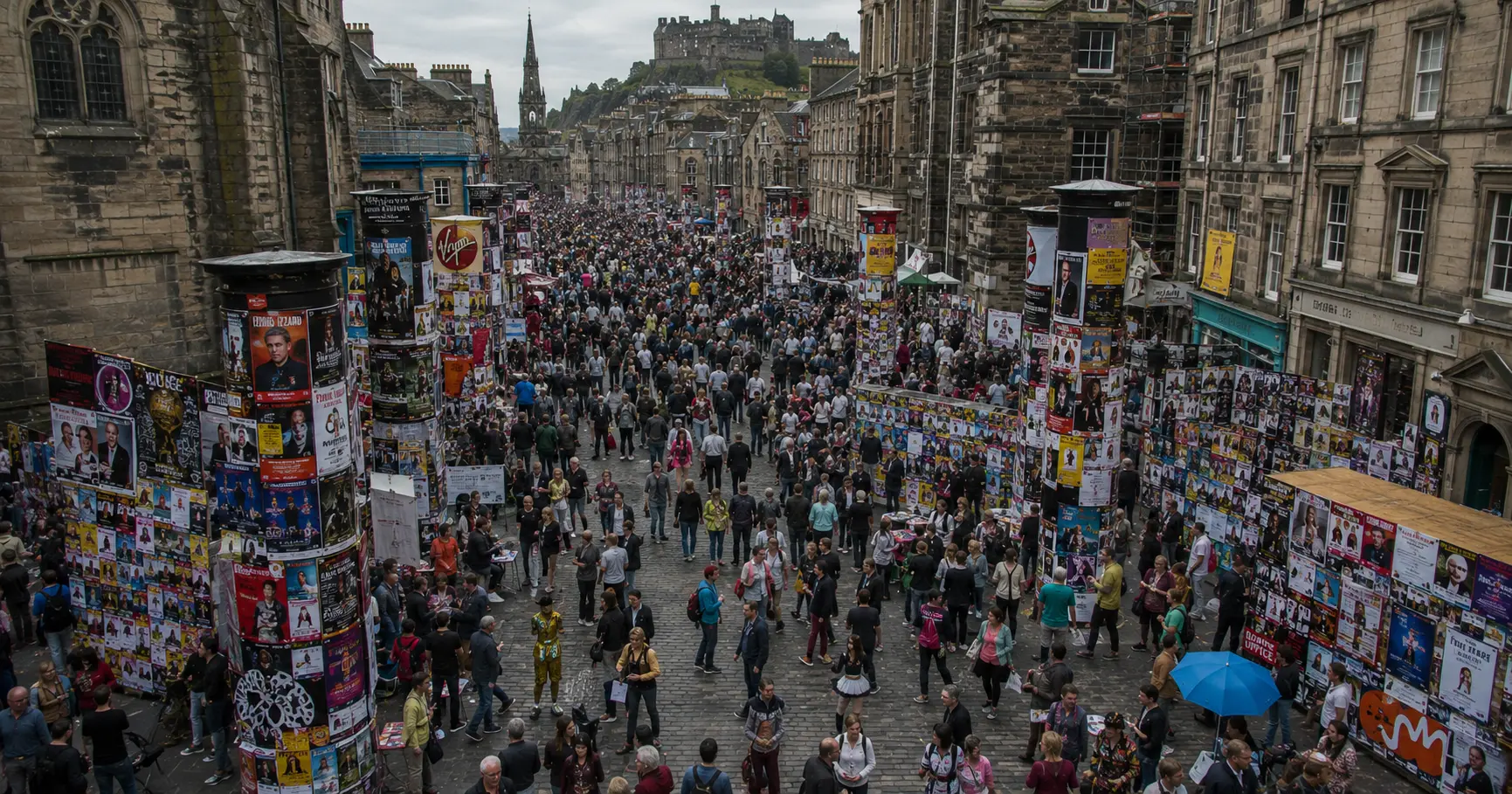
- The Edinburgh Festival Fringe is the largest performing arts festival in the world larger than the Sydney Festival, Glastonbury, or any other comparable event by number of performances.
- When the first eight uninvited companies showed up in 1947, they performed at the Church of Scotland Assembly Hall. The building is now one of the Fringe’s official venues.
- In ticket volume, only the FIFA World Cup and the Olympic Games sell more tickets than the Edinburgh Fringe.
- The word “Fringe” in the festival’s name was coined by critic Robert Kemp in 1948 he wrote about performers “on the fringe” of the official festival. The name stuck.
- Phoebe Waller-Bridge’s Fleabag was staged at the Fringe in 2013 with a cast of one (herself) and ran for one hour in a 100-seat room. The BBC TV adaptation eventually won six Emmy Awards.
- The Fringe has no jury, no artistic director, no panel deciding what gets in. Any registered artist who finds a venue can perform. This has been the rule since 1947.
- In 2026, the Fringe features work from 71 countries more than the number of countries that competed in the 2024 Paris Olympics (206 nations competed, but fewer than 71 countries had arts representation at the Fringe).
- The shortest show at a typical Fringe runs around 45 minutes. The average show is one hour dictated by back-to-back venue scheduling. Some venues run seven to eight shows per day in the same room.
- The Free Fringe now the PBH Free Fringe, named after its founder Peter Buckley Hill began in 1996 when Buckley Hill simply booked a pub room and did comedy for free. It now runs hundreds of shows daily.
Practical Tips Before You Go
Book accommodation before anything else. Before finishing this article. Edinburgh in August sells out months ahead and prices rise fast. If central options are gone, check Kirkcaldy, Linlithgow, or Dunbar (30–45 minutes by train) and commute in.
Download the EdFringe app. Browse shows, build a saved list, and use Nearby Now once you’re in the city. It works offline for tickets you’ve already purchased.
Don’t over-schedule. Three or four shows a day is the working number. Six shows a day leaves you exhausted and resentful by day three you’ve spent money and energy on things you barely experienced.
Pack a rain jacket. Edinburgh in August averages around 18°C. It can also rain sideways with no warning. A waterproof that folds into a bag is not optional — it’s the difference between a good day and a bad one.
Leave 30 minutes between shows at the same venue. Leave more if you’re moving between venues. Edinburgh crowds in August slow everything down.
Check the Half Price Hut listings online each morning. The EdFringe website publishes the day’s half-price availability before the physical booth opens. Plan before you queue.
Take a chance on something unknown. The Fringe’s open-access policy exists so that undiscovered work finds audiences. If a flyer makes you laugh or a Royal Mile preview catches you, go. This is how the Fringe is supposed to work, and it’s where the best memories come from.
Wear comfortable shoes. Edinburgh’s Old Town is almost entirely on a steep cobblestone hill. After five shows and two miles of walking, bad shoes become the main story of your day.
FAQ
When is the Edinburgh Festival Fringe 2026?
Edinburgh Festival Fringe 2026 runs August 7 to August 31. Preview performances begin from August 3. The printed programme launched June 4, 2026, and tickets are on sale at edfringe.com from that date.
How many shows are at Edinburgh Fringe 2026?
The 2026 Edinburgh Festival Fringe features 3,649 shows across 258 venues, totalling 53,884 performances. Artists come from 71 countries. Genres include comedy, theatre, circus, dance, music, cabaret, spoken word, musicals, physical theatre, and children’s shows.
How do I buy Edinburgh Fringe 2026 tickets?
Tickets are available at edfringe.com and the free EdFringe app. You can also book in person or by phone at the Fringe Box Office, 180 High Street, Edinburgh EH1 1QS. A booking fee of £1.50 per ticket applies, already included in the advertised price. All tickets are e-tickets delivered by email with a QR code.
What is the Half Price Hut at Edinburgh Fringe?
The Half Price Hut is an in-person daily service at the Fringe Box Office, 180 High Street. In 2026 it opens Wednesday August 12. It sells half-price tickets for that day’s shows from participating venues. After 2 PM, next-day tickets are added. The day’s listings are also published on the EdFringe website each morning — check before you queue.
Are there free shows at Edinburgh Fringe?
Yes. The PBH Free Fringe and Laughing Horse Free Comedy networks run dozens of free shows daily at bars across Edinburgh. Street performances on the Royal Mile are also free and run all day. Most free shows use a pay-what-you-can model — you watch for free and contribute what you want at the end.
Which week is best to visit Edinburgh Fringe 2026?
The second week August 14–20 — gives you the full programme, published reviews to help you choose, and full festival energy without the final-week ticket pressure. The first week and preview period are quieter and cheaper. The final week has the most critically recognised shows but also the most competition for tickets.
How much does Edinburgh Fringe cost?
Show tickets range from free to £30+, with most ticketed shows between £8 and £18. A realistic day budget excluding accommodation is £70–£85 per person (three ticketed shows, food, and transport). Mixing free shows cuts this significantly. Accommodation is the biggest cost — budget £150–£250+ per night for city-centre options in August.
What is the Edinburgh Fringe open-access policy?
The Fringe has no selection process and no artistic gatekeeping. Any artist who can find a venue and register can perform. This has been the policy since 1947. It is what separates the Fringe from every other major arts festival and is why quality varies widely — and why stumbling onto something remarkable before anyone else knows about it is possible.
Where exactly is Edinburgh Fringe held?
The Fringe takes place across Edinburgh, Scotland, in 258 venues in 2026 theatres, church halls, university rooms, bars, basements, converted warehouses, and outdoor spaces. The Royal Mile is the main hub for street performances and free acts. Key indoor hubs include Pleasance Courtyard, Gilded Balloon, Underbelly, and Summerhall.
Is Edinburgh Fringe good for families?
Yes. There is a dedicated children’s programme, particularly strong in the first two weeks. Street performances on the Royal Mile suit all ages at no cost. Many free shows have no age restrictions. Check individual show listings for recommended ages some late-night shows are explicitly adults-only.
Who got famous at the Edinburgh Fringe?
Robin Williams, Billy Connolly, and Rowan Atkinson all performed here early in their careers. Phoebe Waller-Bridge staged the first run of Fleabag at the Fringe in 2013 before it became an award-winning TV series. The Fringe has served as the launchpad for a significant portion of British and international comedy and theatre talent over the past eight decades.
What are the themes of Edinburgh Fringe 2026?
The 2026 Edinburgh Festival Fringe programme highlights several recurring themes across this year’s shows: artificial intelligence, cults, the manosphere, identity crisis, social class, Y2K nostalgia, the state of the world, and resilience. These reflect what independent artists from 71 countries chose to make work about in 2026 not imposed categories, but a collective picture of what’s on people’s minds.
Conclusion
Edinburgh Festival Fringe 2026 runs August 7 to August 31. The 2026 programme is live at edfringe.com with 3,649 shows, 53,884 performances, and artists from 71 countries.
Book accommodation first. Then your tickets. Then plan your days loosely enough structure to have a base, enough open space for the Fringe to surprise you. The shows are everywhere. A central Edinburgh hotel booked after June is increasingly difficult to find.
One practical reality: the Fringe is not something you observe from a safe distance. Street performers will pull you in. Comedians in the queue will try material on you. A stranger at the Half Price Hut will give you the best recommendation of the whole trip. That is how this festival has worked for 79 years, and it is not going to change in 2026.
Read Next:
- Burning Man 2026: Dates, Tickets, and What to Expect — Black Rock City, Nevada, August 30–September 6. The other major open-access creative festival of August.
- Parintins Folklore Festival 2026 — Brazil’s extraordinary three-day theatrical battle in the Amazon.

Abhay Ramola researches world festivals across primary sources, local accounts, and on-ground reporting. He founded Dionfest to cover what gets missed when festivals become tourism content the history, the ritual, and the people behind it.