World Health Day 2026: What It Actually Is, What It Gets Wrong, and Why It Still Matters
Every April 7, the internet lights up with infographics, retweets, and hashtags. Organizations post their pledges. Hospitals announce free checkups. The WHO releases its annual theme. By April 8, most of it is gone scrolled past, forgotten, filed under “awareness.”
That’s not cynicism. That’s just the pattern.
Underneath the campaign noise, though, World Health Day is pointing at something real. The question isn’t whether the day matters. It does. The question is whether you’re engaging with the parts that actually do anything or just the parts that feel good to share.
If you’re new to global health conversations, this post gives you the full picture. If you’ve been in this space a while, you’ll find the parts worth re-examining.
What Is World Health Day and Why Does It Happen Every April 7?
World Health Day falls on April 7 every year to mark the founding of the World Health Organization in 1948. It’s not a public holiday. There’s no single venue, no central parade. It’s a globally coordinated awareness campaign running simultaneously across hospitals, schools, clinics, workplaces, and government institutions in nearly every country.
Each year, the WHO picks a theme that reflects what it sees as the most urgent public health issue. In 2026, that theme is “Together for Health. Stand with Science.”
That phrase didn’t land from nowhere.
What Does “Stand with Science” Actually Mean in 2026?
On the surface it sounds obvious of course we should stand with science. But the WHO didn’t pick this theme because things are going well.
Public trust in health institutions has been eroding since COVID-19. Research tracking reactions to WHO social media posts has documented a measurable rise in anger, skepticism, and mockery particularly around vaccines and climate-linked health risks and that trend has been climbing since 2021.
Post a WHO graphic today and check the comments. Someone will question the data. Someone else will bring up pandemic-era messaging contradictions. A third person will ask whether the WHO is politically compromised. These aren’t fringe reactions anymore.
“Stand with Science” is not a celebration. It’s a response to a real credibility problem one the institution is still working out how to solve.
For anyone writing about global health, running awareness campaigns, or just trying to have honest conversations about public health with an audience: you’re operating in this context whether you acknowledge it or not. Pretending the distrust doesn’t exist won’t make your message land. It’ll make you sound like you haven’t been paying attention.
People aren’t skeptical of science because they’re ignorant. Many are skeptical because they feel misled before. That requires a different kind of response than just saying “trust the experts” louder.
What World Health Day Actually Looks Like on the Ground
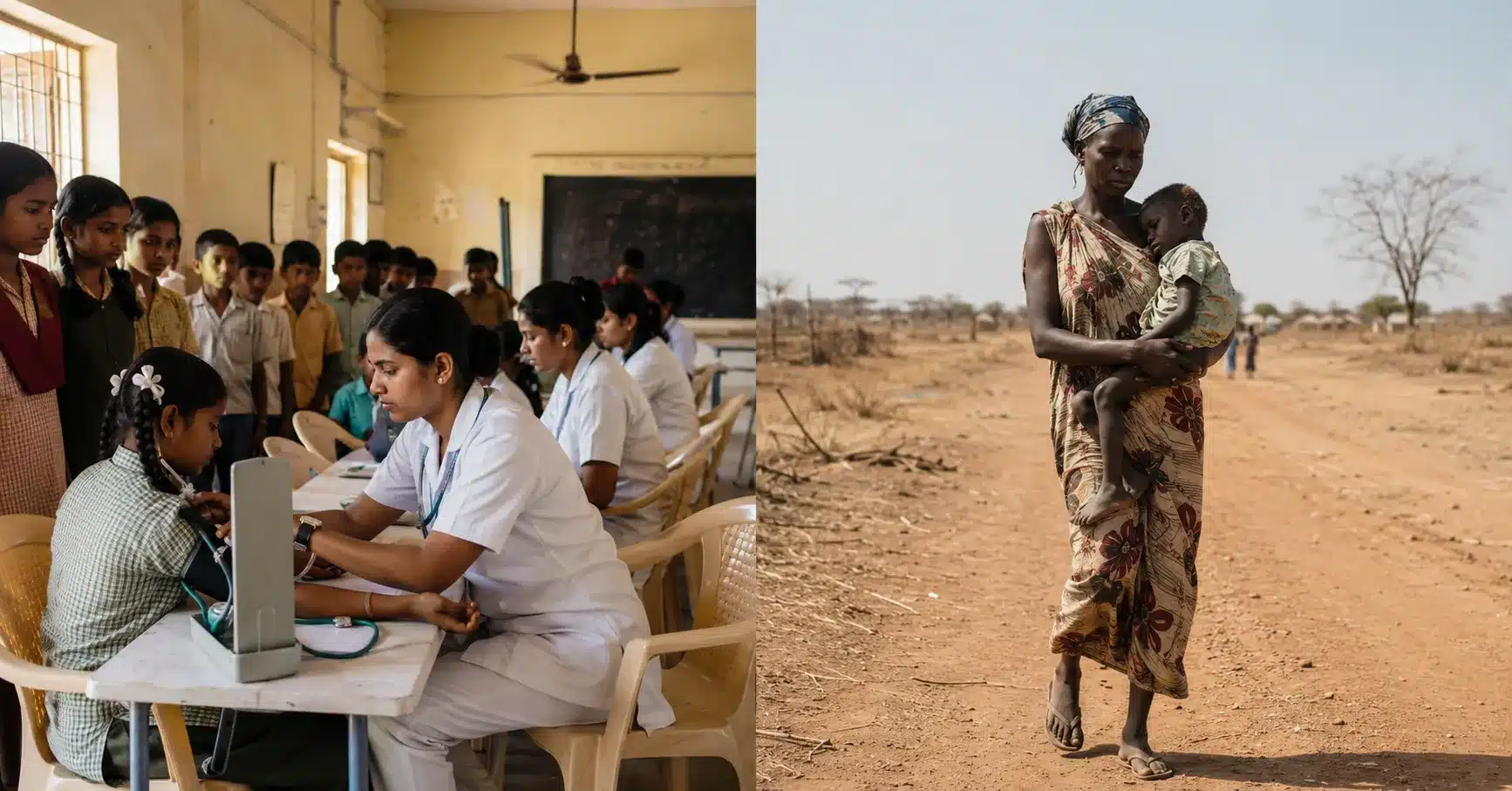 Walk into a World Health Day event and forget the polished WHO posters you’ve seen online.
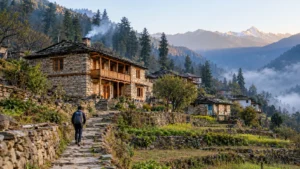
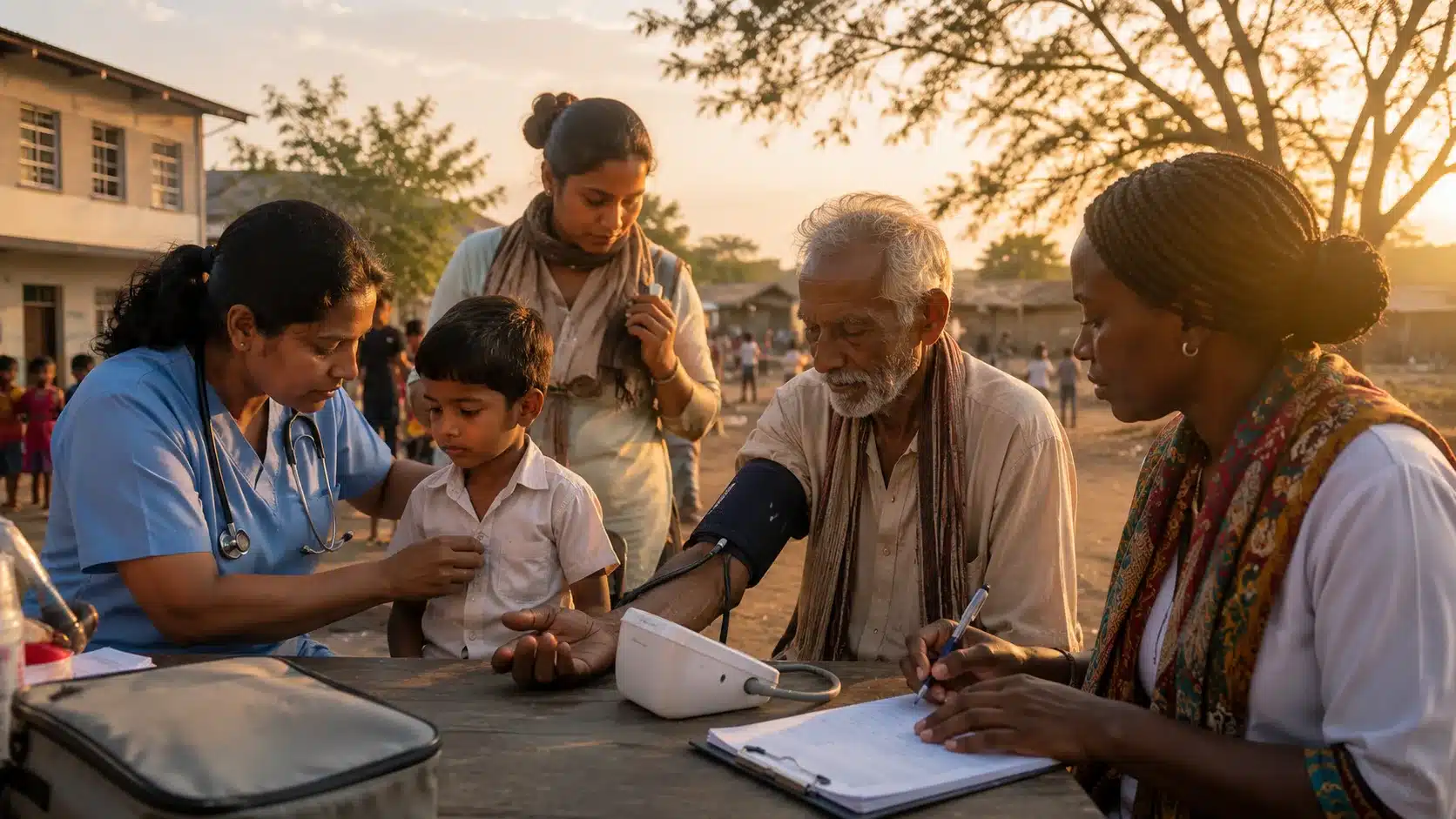
What you actually get is a government school hall in a place like Dehradun plastic chairs scraping against a stone floor, a BP cuff getting passed from one kid’s arm to the next, nursing students with clipboards trying to maintain a queue that keeps dissolving. The smell is chalk dust and antiseptic. The noise is kids whispering and a ceiling fan doing its best. There’s no stage, no keynote speaker in a blazer. Just a table, a scale, and a line of children who’ve never had anyone measure their height and weight with this kind of care before.
Not grand. Not glamorous. Quietly urgent.
And at that exact same moment, on the other side of the world, a mother in South Sudan is walking an hour in open heat a sick child against her chest toward the only clinic for miles.
Both scenes happen on the same April 7. The school hall in Uttarakhand and the dirt road outside Joda. That gap is the actual atmosphere of this day. It’s uncomfortable to sit in, which is probably the point.
The 2026 Campaign: One Health, One Planet
The 2026 campaign also pushes a framework called One Health the idea that human health, animal health, and environmental health are not separate systems. Disease outbreaks don’t happen in a vacuum. They come from the intersection of human behavior, animal ecosystems, climate patterns, and food supply chains. Treat them as separate problems and you keep solving the wrong thing.
Two major events anchored the campaign this year:
- The International One Health Summit (April 5–7, Lyon, France), hosted under the French G7 Presidency
- The inaugural Global Forum of WHO Collaborating Centres (April 7–9), pulling together nearly 800 scientific institutions from over 80 countries
That’s the largest scientific network ever assembled around a UN agency. Whether that scale produces coordination or just a very large group photo is something worth watching.
The Insider Secret Nobody Talks About
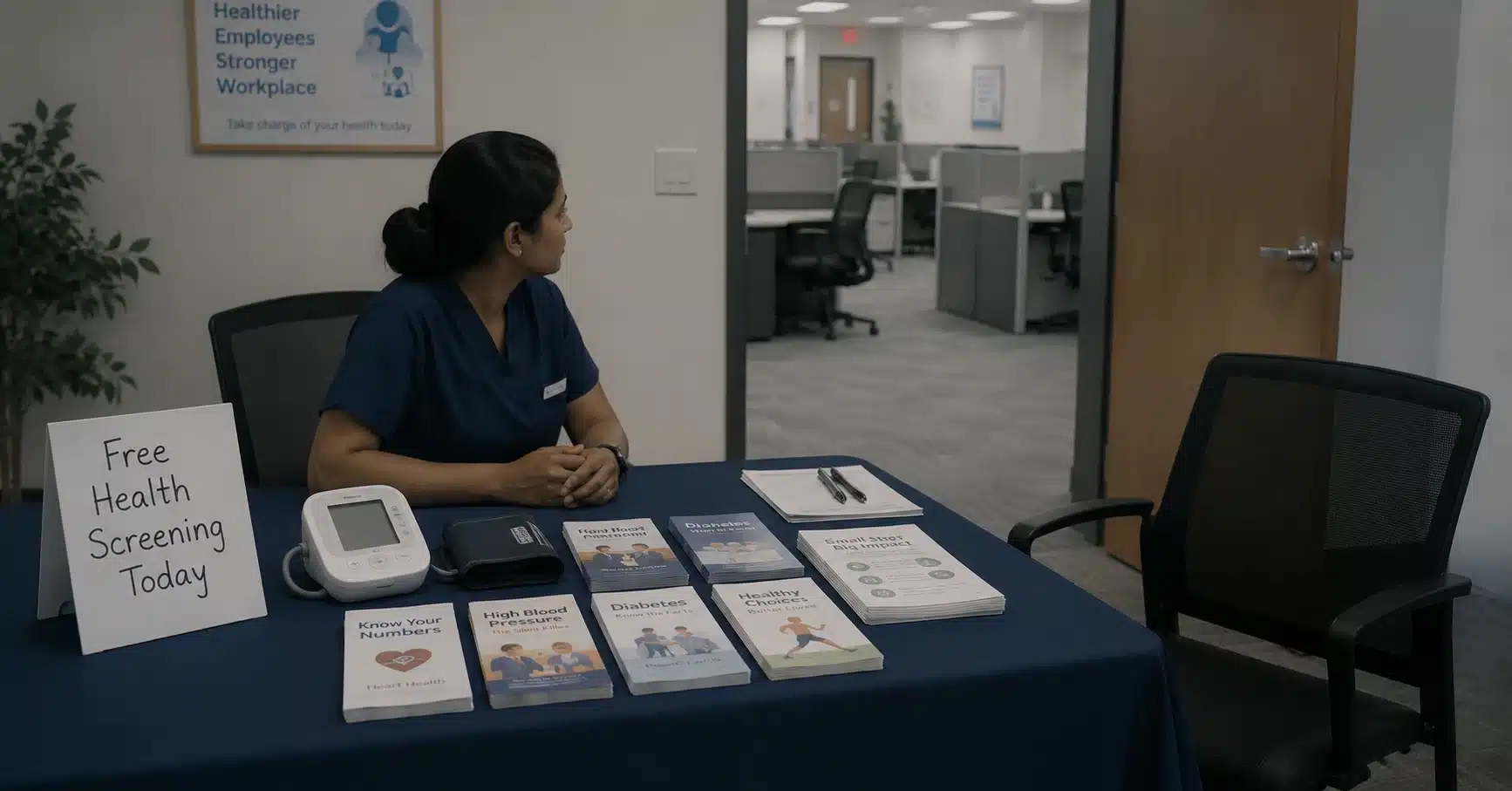 Here’s what most people completely miss about this day and I mean people who actually care about health, not just those who repost an infographic and move on.
Your workplace almost certainly has a free screening on or around April 7. Blood pressure, BMI, maybe blood sugar. The room will be half empty.
The sign goes up on the notice board a week before. On the day itself, the person running the stall spends more time straightening their brochures than talking to anyone. The people who show up are usually already health-conscious. The ones who actually need it the ones eating at their desk, skipping doctor visits for three years, quietly carrying stress they’ve never named walk right past.
The access exists. The barrier isn’t geography or money. It’s the twenty seconds it takes to walk into a room and admit you haven’t been paying attention to your own body.
Don’t share a post. Walk into that room.
How World Health Day Actually Gets Observed, Country by Country
The format depends entirely on where you are:
- South Asia: Free health camps, mobile health units, school screenings. NGOs like Smile Foundation India run mobile healthcare into communities that wouldn’t otherwise see a clinic van.Though outdoor health events carry their own environmental risks that organizers rarely account for.
- Europe and North America: Workplace health fairs, hospital open days, social media campaigns. Mostly about reminding people to book the checkups they’ve been putting off.
- Conflict and fragile states: Organizations like IOM use the day to document access gaps rather than celebrate progress. In South Sudan, Sudan, and similar contexts, the day reads less like a campaign and more like an audit of what’s still missing.
- Online, everywhere: #WorldHealthDay runs across every platform. Engagement is high. Retention is short.
The format isn’t really the issue. The question underneath all of them is the same: does it reach the people who need it most? The honest answer, in most cases, is no.
The Health Data Worth Actually Knowing
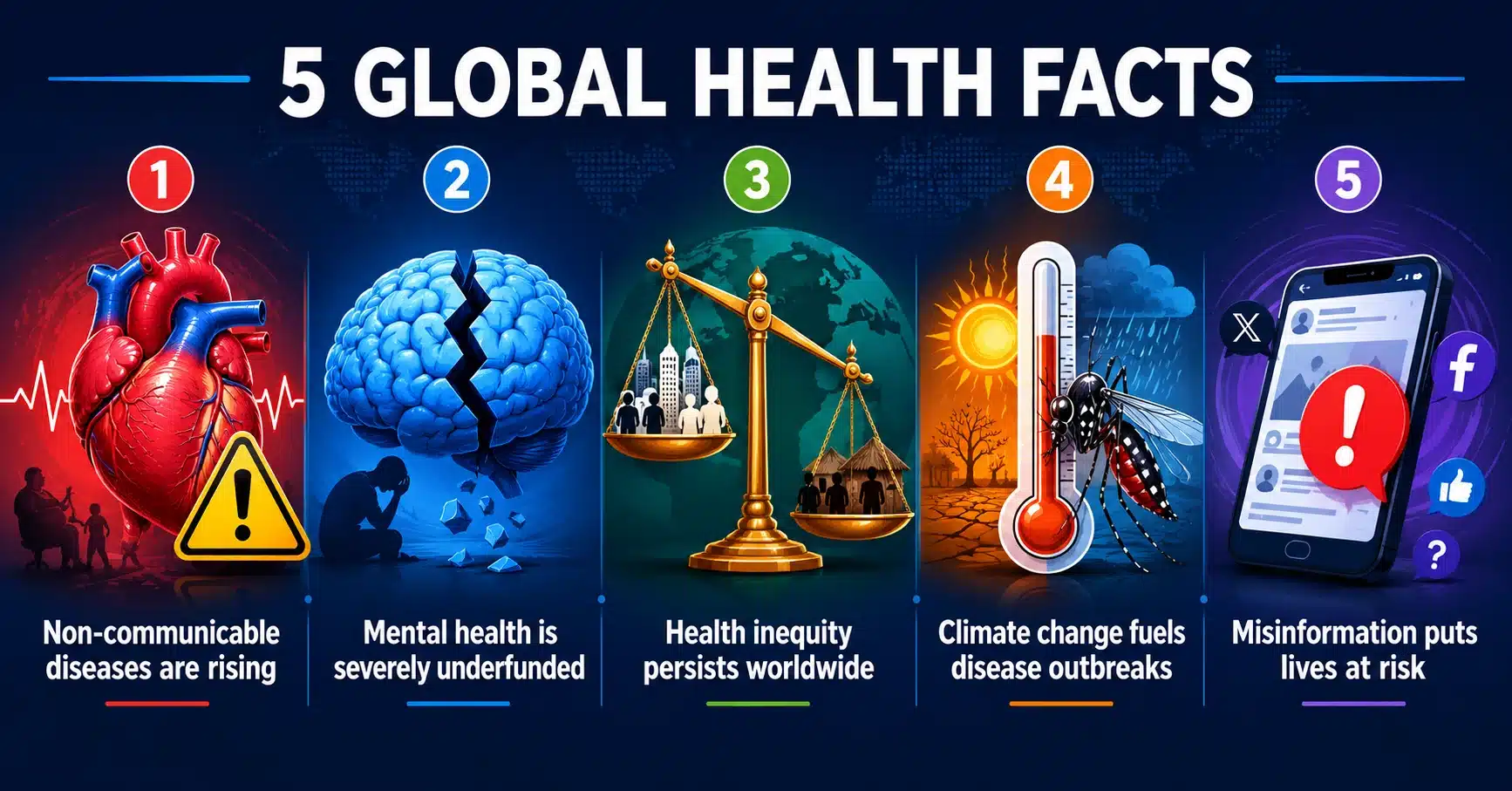 A few things that don’t get enough attention in the April 7 conversation:
- Non-communicable diseases heart disease, diabetes, certain cancers cause more deaths globally than anything else, and most of the risk factors respond to early intervention that never happens.
- Mental health stays one of the most underfunded areas in healthcare almost everywhere, including in wealthy countries.
- Health inequity isn’t narrowing. The gap between what high-income and low-income populations can access diagnostics, treatment, preventive care is not a developing-world problem. It runs through every country.
- Climate change is reshaping disease geography in ways that health systems aren’t built for. Mosquito ranges are expanding. Heat events are killing people who weren’t in the risk category five years ago.
Air pollution alone is now linked to measurable neurological damage something most people still don’t connect to public health. - Misinformation has a body count. Vaccine hesitancy, delayed treatment-seeking, and distrust in clinical guidance all translate into preventable deaths. That’s not a rhetorical point.
What World Health Day Actually Gets Right (and Where It Falls Short)
It’s worth being straight about both.
The campaign talks mostly to people already in the conversation those who read health articles, attend screenings, follow WHO. The people furthest from care are the hardest to reach with an awareness campaign, almost by definition. That’s a structural problem, not a failure of effort.
Annual themes also create a rhythm that can feel like progress without requiring anyone to check whether last year’s theme moved anything. What happened after 2025’s “Healthy Beginnings, Hopeful Futures”? Most people couldn’t tell you, including most people who shared it.
At the same time: the day does create a genuine synchronized moment where health becomes a global conversation, even briefly. That matters for policy momentum in ways that are hard to measure but real. Free screenings, however patchy, do reach people who wouldn’t otherwise walk into a clinic. The One Health framework is genuinely important science that needs more political traction. And public commitments made on April 7 can be held against governments on April 8, if anyone bothers to track them.
The Question That Stays With You
What stays with me about World Health Day isn’t the theme or the hashtag or even the statistics.
It’s the question that sits underneath all of it the one nobody answers cleanly: who is this day actually reaching?
The people who read the articles, attend the screenings, share the posts are largely already in the conversation. The mother walking an hour in the South Sudan heat isn’t on social media. The kid in a Dehradun government school getting his first-ever health checkup doesn’t know it’s World Health Day. He just knows someone finally checked.
That’s what doesn’t leave you. Not inspiration exactly more like a low-grade restlessness. The infrastructure to do more exists. The knowledge exists. The will, in pockets, exists.
And every April 7, the same question comes back: who is being reached, and who is still left out?
Carry that past April 7. That’s the only part of the day that actually has a point.
What You Can Do That Isn’t Just Posting
This week:
- Show up to the free screening at your workplace or community center, even for ten minutes — the barrier is smaller than you think
- Book the checkup you’ve been postponing
- Look up the WHO’s One Health framework if it’s new to you — it’s worth understanding
This month:
- Have one real health conversation with someone in your life who avoids them
- Send one piece of verified health information directly to someone who needs it — not a broadcast post, a message to one person
- Look up what your local government pledged on World Health Day 2025. See if they did it.
Long term:
- Support organizations running on-the-ground health work in under-resourced communities — mobile clinics and direct service, not just awareness
- Push your employer for year-round preventive health access, not just one day in April
Final Word
World Health Day is imperfect. The trust erosion is real. The reach gap between a summit in Lyon and a school hall in Dehradun and between that school hall and a dirt road in South Sudan is real and not shrinking.
But April 7 is still worth something: a moment where health gets to be the global conversation. Where the question of who is being reached, and who isn’t, at least gets asked out loud.
What happens on April 8 is the actual answer.

Abhay Ramola researches world festivals across primary sources, local accounts, and on-ground reporting. He founded Dionfest to cover what gets missed when festivals become tourism content the history, the ritual, and the people behind it.