Cultural Festival Packing List: Essential Gear for Remote Destinations
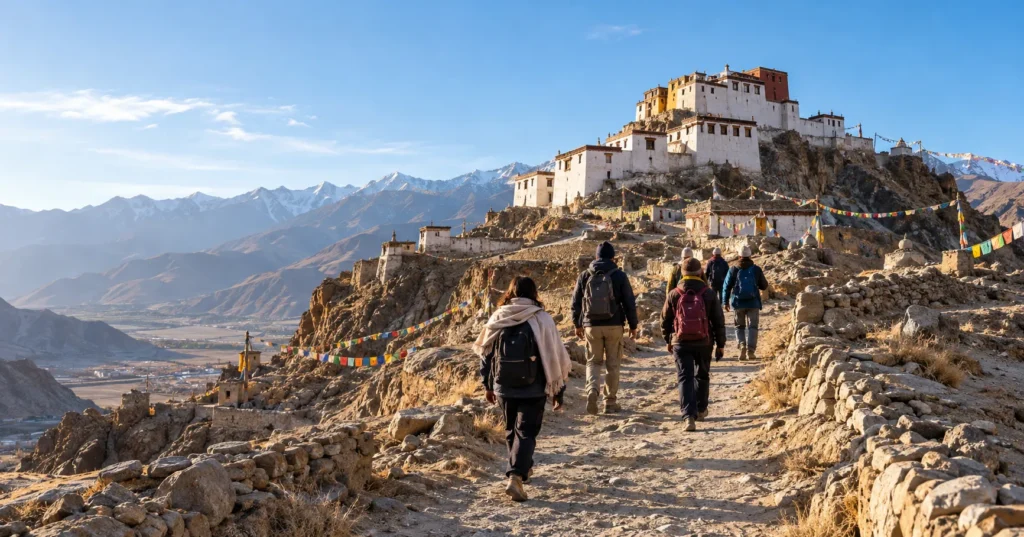
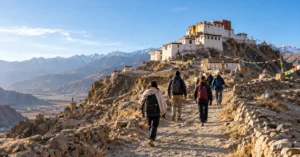
In an average June, Leh swings from about 11°C at night to about 24°C in the afternoon, at roughly 3,500 metres. Hill fairs in Uttarakhand bring a different problem: monsoon rain on forest trails. Most packing lists online are written for music festivals. Those lists focus on tents, sleeping gear and earplugs. A cultural festival in the Himalayas needs something else.
This list covers Himalayan fairs such as those in Ladakh and Uttarakhand. For a desert or coastal festival, swap the cold layers for heat gear.
How this list differs from a music festival list
| Music festival list | Remote Himalayan cultural fair | |
|---|---|---|
| Clothing | Sun, rain and mud gear | Modest clothes for sacred sites, plus cold layers |
| Money | Cards and apps | Cash in small notes |
| Biggest risk | Weather and crowds | Altitude, rain on roads, being far from help |
| Rules | Venue bag rules | Dress customs, photo etiquette, local plastic rules |
Two kinds of Himalayan fair, packed differently
| Ladakh fair (Hemis type) | Uttarakhand hill fair (Devrana type) | |
|---|---|---|
| Height | Leh is about 3,500 m | Devrana is about 2,500 m |
| Main weather problem | Cold nights, strong sun, thin air | Monsoon rain, slippery trails, slow roads |
| Where you stay | Leh hotels, booked early | Basic guesthouses in Naugaon |
| Pack extra | Sun protection, altitude plan | Rain cover, headlamp, spare day of medicines |
Dionfest Hemis guide advises booking Leh hotels three to four months ahead. Its Devrana guide says to base yourself in Naugaon, which has basic guesthouses.
Clothing for the weather and local dress customs
Dress for the place first
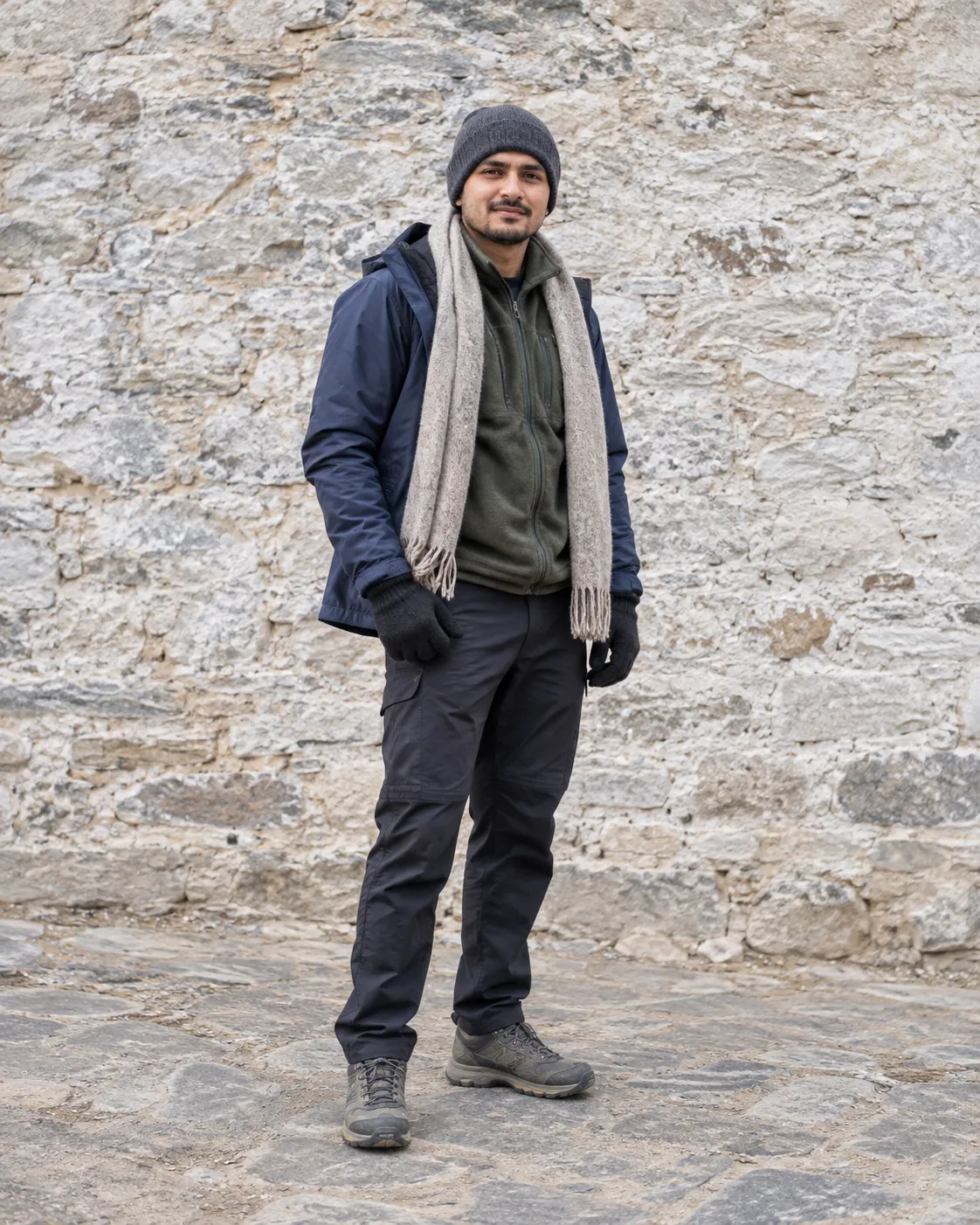
- Many temples and monasteries in Ladakh and northern India expect shoulders and knees covered, hats off in prayer halls, and shoes off at inner doors. This is a general custom, not one fixed rule. Check the signs at each site.
- Loose trousers or a long skirt, plus a top with sleeves, cover the basics.
- A light scarf or shawl fixes most dress problems fast.
- You do not need to copy local festival dress. Modest everyday clothes are enough.
Dress for the weather in layers
Wikipedia’s Leh climate table (1951–2020 normals) gives these averages for Leh town.
| Month | Average high | Average low | Day–night gap |
|---|---|---|---|
| June | 24.4°C | 11.3°C | 13.1°C |
| July | 28.5°C | 15.9°C | 12.6°C |
| September | 23.4°C | 9.2°C | 14.2°C |
These are averages for the town. Individual days, early mornings and higher sites can be colder.
- Pack a thin base layer, a warm fleece, and a windproof, waterproof outer layer. Ladakh’s police describe the region as a cold desert with extreme weather.
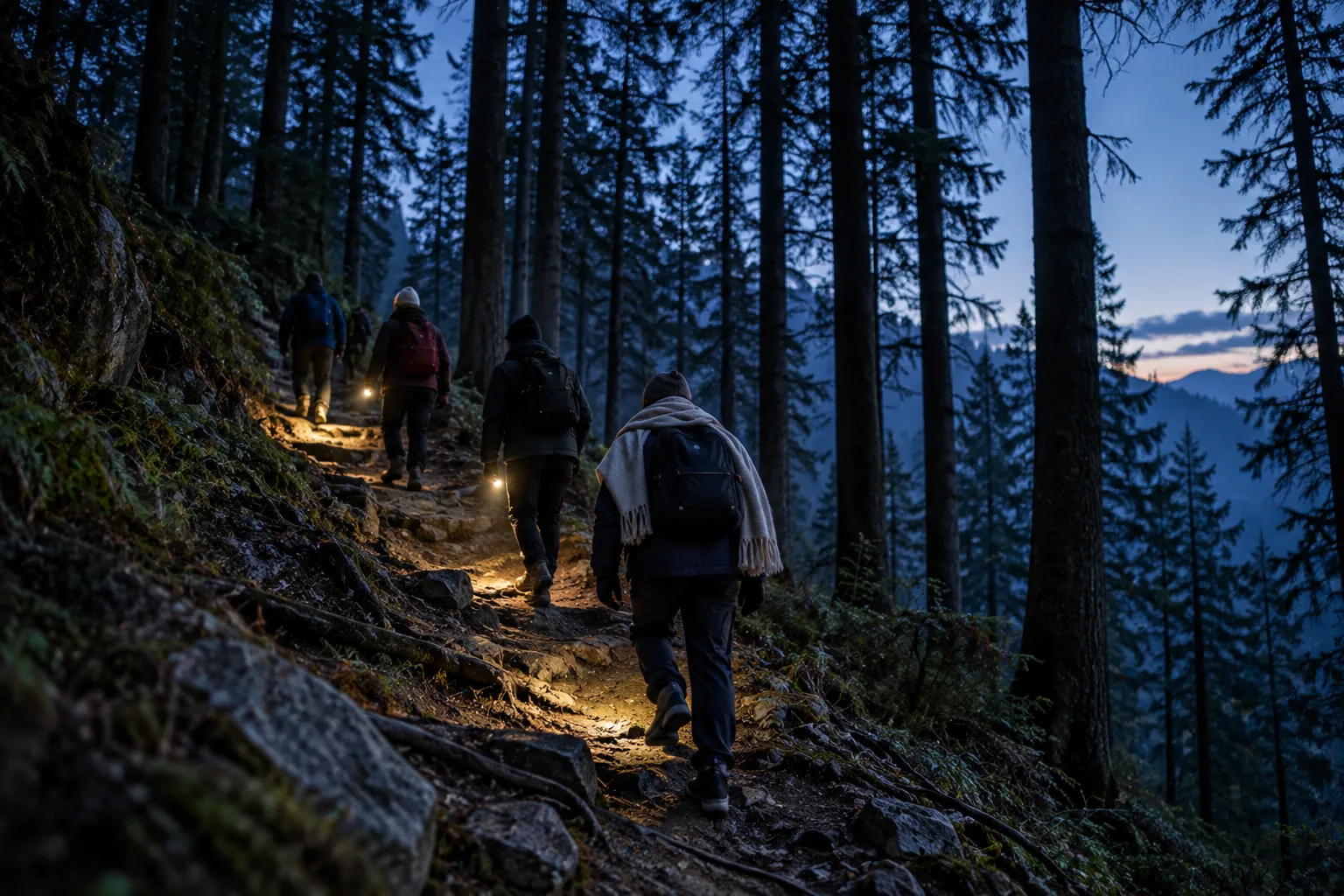
- Add a warm cap and gloves for dawn rituals. The main ritual at Danda Devrana starts at 4 AM.
- WHO says UV intensity rises by close to 10% for every 1,000 metres of altitude. Pack a hat, UV sunglasses, high-SPF sunscreen and lip balm.
- DionFest Hemis Festival guide lists a light jacket, high-SPF sunscreen and UV sunglasses for a late-June Ladakh trip. Check the IMD Leh forecast before you leave.
Comfortable footwear and rain protection
Footwear
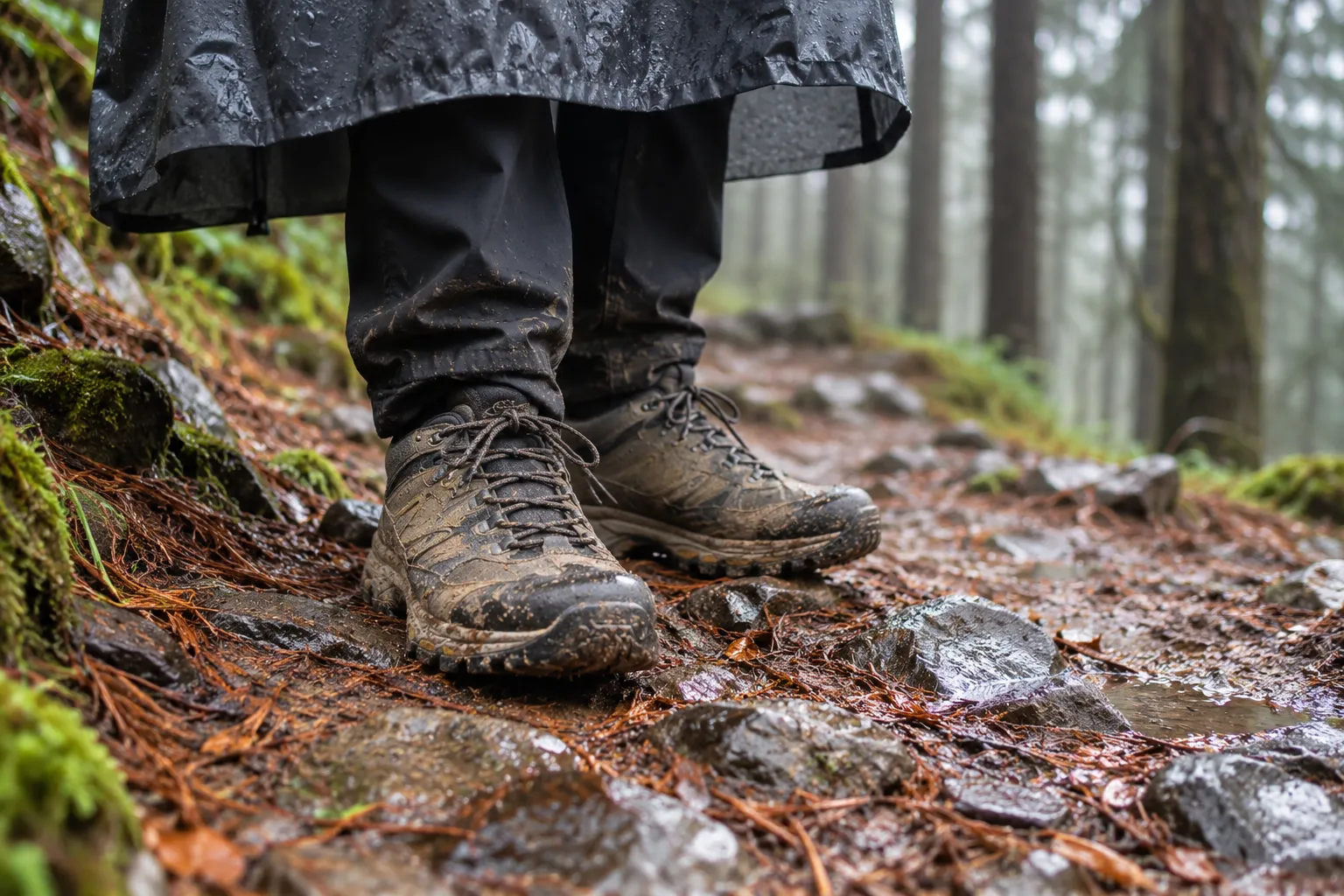
- Choose closed, grippy shoes that are already broken in.
- You may walk the last part. The final section to Devrana is a forest trail.
- Shoes come off at many entrances. Pick a pair that slips off easily, and carry clean spare socks and a cloth bag for the shoes.
Rain
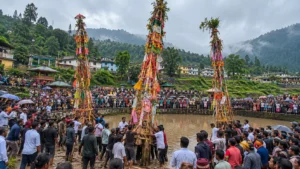
- Danda Devrana falls in Ashadh (June–July), when the monsoon starts and mountain roads can be hard going.
- In 2026 the monsoon reached Uttarakhand on June 30, and landslides then blocked the Kedarnath and Badrinath routes.
- Pack a rain jacket or poncho, a rain cover for your daypack, and zip pouches for your phone, documents and medicines.
- Dry Ladakh has road risks too. The Manali–Leh and Leh–Srinagar highways can see landslides or snow blockages, especially in June–July. Add a buffer day. DionFest’s cultural heritage trip planning guide suggests keeping one buffer day in the itinerary.
Medicines, toiletries and personal essentials
Medicines
- Carry regular prescription medicines in their original packs, with a copy of the prescription.
- The CDC says climbing gradually gives your body time to adjust, and that acetazolamide may be considered if a fast ascent can’t be avoided. It is a prescription medicine.
- Do not copy a dose from any website. Official Ladakh pages disagree. The Ladakh Tourism advisory lists 250 mg twice daily from two days before arrival. The Ladakh Police page lists 125 mg every 12 hours from 24 hours before arrival, if a doctor advises it. Ask your own doctor.
- A basic kit to discuss with a doctor or pharmacist: pain relief, oral rehydration salts, anti-diarrhoea tablets, antacid, antiseptic and blister plasters.
Toiletries
- Take small sizes of sunscreen, lip balm, moisturiser and hand sanitiser, plus tissues and wet wipes.
- Carry a small bag for your own waste. A June 2026 report says littering in Ladakh now carries a Rs 5,000 penalty.
Documents, permits and money
- Bring original photo ID plus copies, and printed tickets and bookings. Reports say all visitors to Ladakh’s protected areas must carry identity proof.
- Permits: sources disagree. Voice of Ladakh reported in August 2021 that the Ladakh administration removed the inner line permit requirement for Indian nationals, while foreign tourists still need a permit. Yet a 2026 travel guide still says Indian visitors need permits for Nubra, Pangong and Tso Moriri. Check the LAHDC Leh permit site before you go. Foreign visitors should plan for a permit.
- Carry cash in small notes. Ladakh Police say ATMs exist in Leh but are sparse elsewhere. DionFest Hemis guide says the stalls there do not accept cards. Its Devrana guide says to carry cash only, with no digital payments in the area.
- Ladakh Police say only postpaid mobile connections work in Ladakh. Check with your provider, and download offline maps.
Power bank, torch, water bottle and daypack
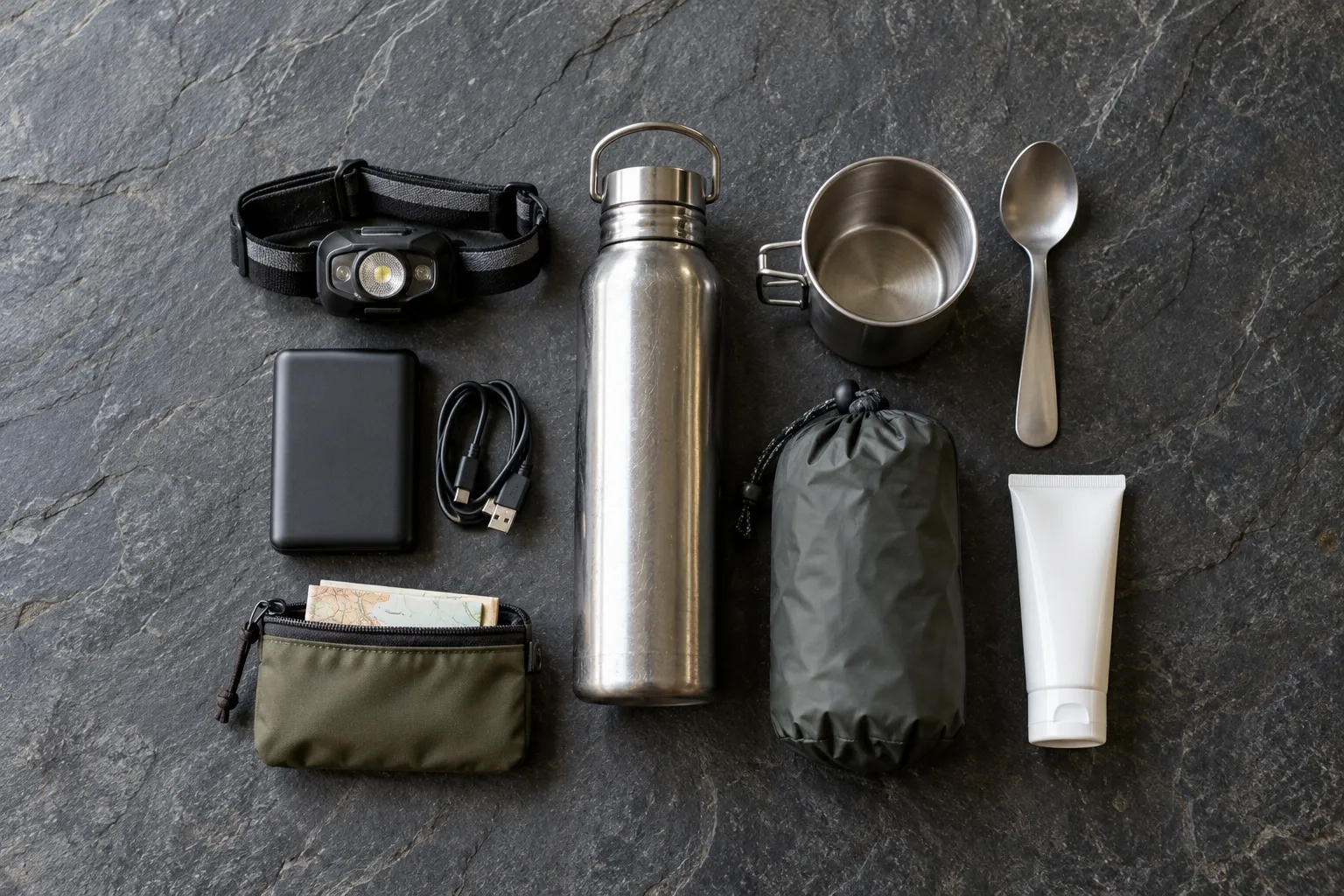
- Power bank: India’s DGCA issued a dangerous goods advisory circular dated 11 November 2025, which says to carry power banks and spare batteries only in hand baggage. On 4 January 2026 the DGCA clarified that power banks cannot be used to charge devices at any time during a flight. Charge everything before you fly, keep the power bank where you can see it, and check your airline’s own limit.
- Torch: A headlamp keeps both hands free on a dark forest path. Bring spare batteries.
- Water bottle: Carry a refillable one. In June 2026 Ladakh ordered strict enforcement of its ban on identified single-use plastic items, including plastic cutlery, cups, plates and straws. Violators face a Rs 10,000 penalty, and random checks are planned at Leh Airport and entry points. A steel cup and spoon help you stay on the right side of that. Ask your hotel where to refill.
- How much to drink: The Ladakh Tourism advisory suggests 3–4 litres a day. Wilderness Medical Society guidelines say forced overhydration does not prevent altitude illness and raises the risk of low blood sodium. Drink regularly, but don’t force it.
- Daypack: Keep it small enough to hold in front of you in a crowd. DionFest’s Hemis guide advises watching your bag in the courtyard and arriving by 7 AM. Pack it the night before. It should hold:
- water
- a warm layer
- a rain cover
- a torch
- a power bank
- cash
- a copy of your ID
- a snack
- sun protection
- tissues
- a cloth bag for rubbish
Packing for high-altitude or remote locations
- Rest comes first. Ladakh Tourism asks visitors to allow at least 48 hours to acclimatise in Leh, with complete rest on day one and only short, easy walks on day two. Keep your first-day items in your hand baggage: a warm layer, medicines and water.
- Don’t put the festival on day two. The Hemis guide above plans two rest days in Leh first.
- Know the warning signs. Altitude sickness symptoms include headache, nausea, vomiting, fatigue, dizziness and poor sleep. Treatment means stopping any further climb and, if symptoms are severe or getting worse, going down. This is general information, not medical advice.
- Save emergency numbers offline. Ladakh Police list 112. Ladakh Tourism lists SNM Hospital, Leh, at 01982-252014.
- Remote fairs have little infrastructure. DionFest’s Danda Devrana Mela guide says there is no tourist infrastructure at or near Devrana, and visitors base themselves in Naugaon. Carry everything you need for the whole day, plus an extra day of medicines and snacks in case roads are slow.
- A regular’s view of the walk. DionFest’s founder, Abhay Ramola, grew up in Naugaon. In the Devrana guide he describes the walk up in June and July: apple orchards along the trail, and drums that can be heard before the fair comes into view.
- Ask before photographing people or rituals. The same guide notes that many Rawain communities are cautious about photos of deity-related practices.
Printable pre-departure checklist
Download the one-page PDF version: cultural-festival-packing-checklist. The same list is below.
One week before
- Festival dates confirmed on the organiser or tourism site, not a blog
- Weather and road status checked
- Doctor visit for regular medicines and altitude advice
- Airline’s power bank rule checked
- Permit rules checked
- Buffer day booked, and ATM and refill points known
Documents and money
- Photo ID and copies
- Printed tickets and bookings
- Emergency numbers saved offline
- Cash in small notes
- Postpaid SIM or offline maps
Clothing
- Sleeved top and long trousers or skirt
- Scarf or shawl
- Base, warm and windproof layers
- Cap and gloves
- Hat, UV sunglasses, sunscreen, lip balm
Footwear and rain
- Broken-in, grippy closed shoes
- Clean spare socks and a cloth shoe bag
- Rain jacket or poncho
- Daypack rain cover
- Zip pouches
Health
- Prescription medicines and a copy of the prescription
- Altitude plan from your doctor
- Pain relief, oral rehydration salts, anti-diarrhoea tablets, antacid
- Antiseptic and blister plasters
- Hand sanitiser, tissues, wipes
Power, light, water
- Power bank in your hand baggage
- Charging cable
- Headlamp and spare batteries
- Refillable bottle
- Steel cup and spoon
Tick this off the night before. On the morning you leave, check the road status and weather once more.

Abhay Ramola researches world festivals across primary sources, local accounts, and on-ground reporting. He founded Dionfest to cover what gets missed when festivals become tourism content the history, the ritual, and the people behind it.