Cheung Chau Bun Festival: Why One Hong Kong Island Builds Towers of Buns
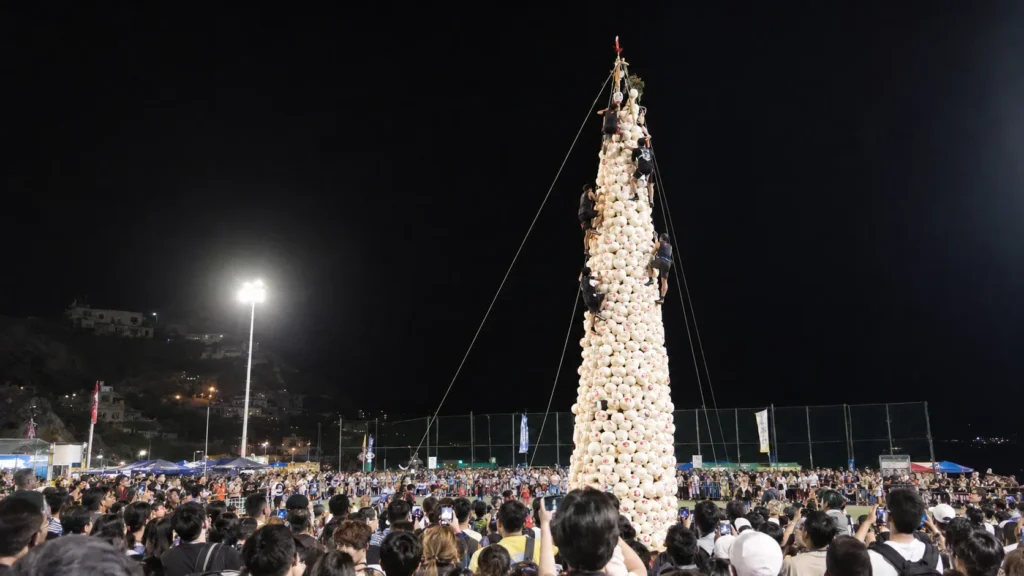
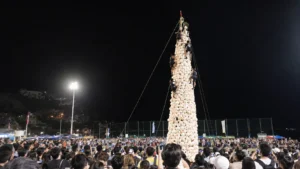
At midnight on 25 May 2026, twelve climbers raced up a 14-metre tower of buns on Cheung Chau, a small island off Hong Kong. They had three minutes to grab as many buns as they could. RTHK reported that firefighter Kwok Ka-ming won his 11th men’s title, and ice-climbing athlete Janet Kung (also reported as Kung Tsz-shan) took the women’s.
Why do tens of thousands of visitors come to watch twelve people climb a tower of buns? The government’s Bun Carnival page says the festival programme draws tens of thousands of local and international visitors each year.
The short version: the climb is the newest part of an old Taoist ritual. And “the bun tower” is really two different structures.
Quick facts
The next final is expected on the night of 13 May 2027, but the organiser has not confirmed it yet.
| Fact | Detail |
|---|---|
| What it is | A Taoist peace ritual (Jiao) on Cheung Chau, plus a separate bun-climbing contest |
| Main day | The 8th day of the 4th lunar month, the same day as Buddha’s Birthday |
| 2026 final | 11:30 pm on 24 May to 12:45 am on 25 May (LCSD) |
| 2027 | Buddha’s Birthday is gazetted for Thursday 13 May. The organiser’s 2027 programme was not out when checked |
| The climb | 12 finalists, three minutes, a tower about 14 metres high |
| Ferry | Sun Ferry from Central Pier 5: about 35 to 40 minutes by fast ferry, 55 to 60 by ordinary ferry (Sun Ferry) |
| Spectator tickets | For 2026, 1,650 free tickets were announced for the night, first come, first served. Not confirmed for 2027 |
The short answer
- The festival is officially the Cheung Chau Jiao Festival, a Taoist peace ritual. Hong Kong’s heritage office ties it to a legend about a plague and to thanks given to the sea deity Pak Tai.
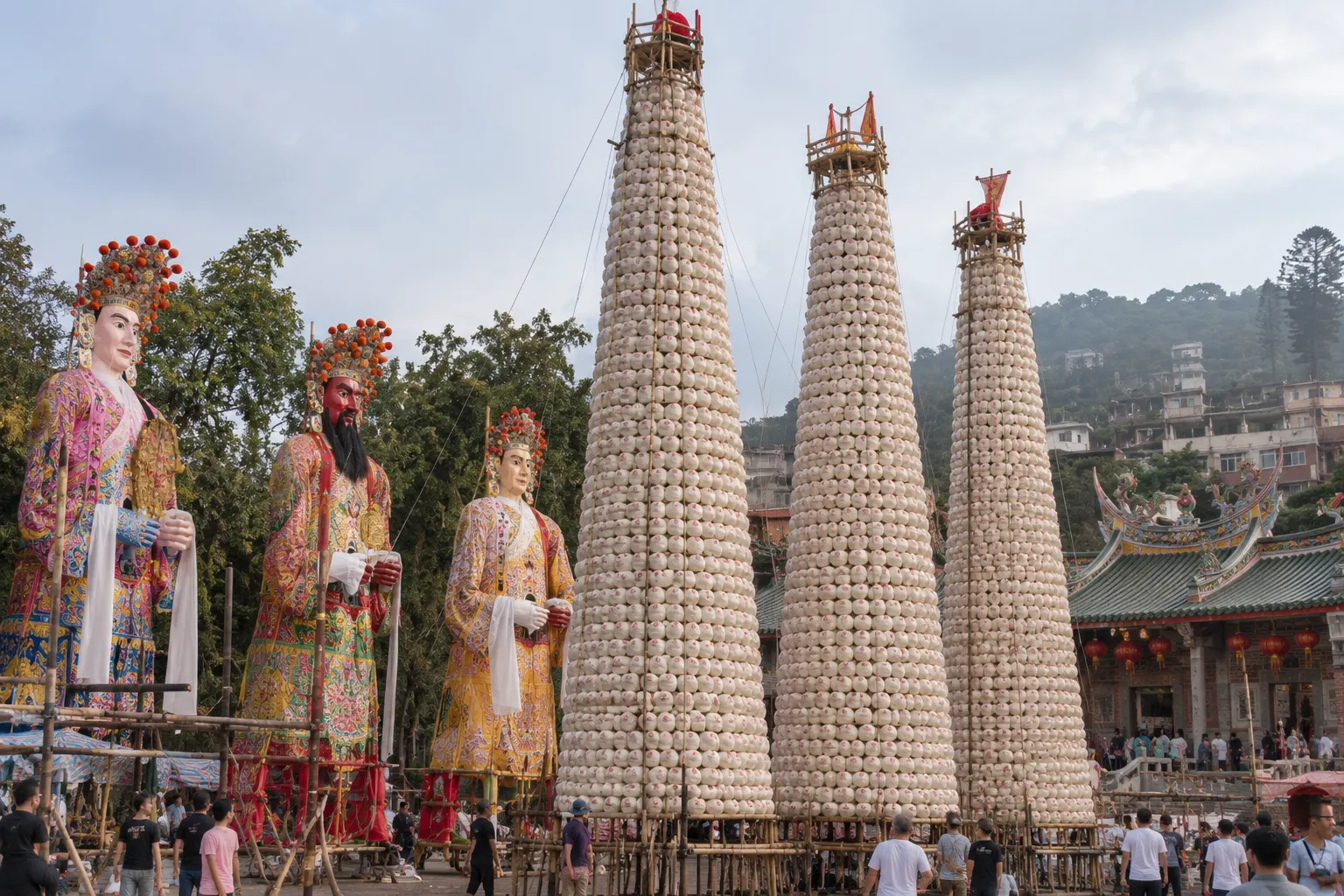
- Towers of buns are built as offerings for wandering spirits. The race people see on the news is a separate, modern contest.
- The race uses a steel tower and plastic buns. It was banned after a tower collapsed in 1978 and came back in 2005 with strict limits.
- It is a Taoist ritual that shares its date with Buddha’s Birthday. It is not a Buddhist festival.
Jiao: the ritual under the buns
The formal name is Cheung Chau Jiao Festival (長洲太平清醮, also written Tai Ping Ching Chiu or Da Jiu). A Jiao is a Taoist offering ritual held for a community’s peace.
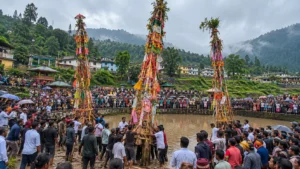
Hong Kong’s Intangible Cultural Heritage Office tells the origin as a legend. A plague struck Cheung Chau in the late Qing dynasty. Islanders of Huizhou and Chiu Chow origin invited Taoist priests, set up an altar near Pak Tai Temple, prayed, repented and comforted the spirits of the dead from land and sea. They also paraded statues of deities through the lanes. The plague ended, and islanders have held the ritual every year since to thank Pak Tai.
The same office says the festival was added to China’s third national list of intangible cultural heritage in 2011. That is a national list. Some travel sites call it UNESCO-listed, but the official sources do not.
According to the Hong Kong Memory heritage archive, the Jiao runs for three days. A Taoist priest leads offerings, repentance and rites to appease spirits and thank the heavens. During this period many islanders keep a vegetarian diet, as Our China Story describes.
Eric Ho, vice chairman of the Cheung Chau Rural Committee, told Atlas Obscura in 2018 that the three-day vegetarian diet is one of the festival’s most important cultural aspects. He said at least half of the island’s food suppliers had agreed to offer vegetarian options in 2017, as visitor numbers grew. Ho also said that since the 1970s many restaurants have served meat again from about 3 pm on the last day, right after the parade.
The main day is the 8th day of the 4th lunar month. Hong Kong Memory says the organising committee settled on that date after asking Pak Tai through divination. The day is also Buddha’s Birthday in Hong Kong, as Time Out Hong Kong notes, which is why the two get confused.
Why buns?
Sources point to two reasons: offerings and luck.
Offerings. Hong Kong Memory says three large bun mountains and several dozen small ones are built to appease wandering spirits. Beside them stand paper figures about five metres tall. One is the King of Ghosts, believed to be an incarnation of Guanyin, whose job is to keep the spirits orderly while they accept the offerings. The King of Ghosts is burned at about 11 pm, and the archive describes the bun scramble following at midnight.
 Luck. RTHK notes that taking a bun from the top is traditionally believed to bring luck to the climber’s family. One culture guide, The Honeycombers, links the climb to a Chiu Chow custom called coeng gu (搶孤), where people grab offerings believed to carry divine blessings. DionFest did not find this explanation in the official heritage text, so treat it as one interpretation.
The buns people eat are ping on buns: white, round, stamped in red with characters meaning peace and safety. Time Out lists lotus seed, sweet bean and sesame as common fillings.
Two kinds of towers
Most guides describe “the bun tower” as one thing. Taken together, the sources suggest there are two.
| Ritual bun mountains | Competition tower | |
|---|---|---|
| Purpose | Offerings for wandering spirits (Hong Kong Memory) | A sporting contest, revived in 2005 (LCSD) |
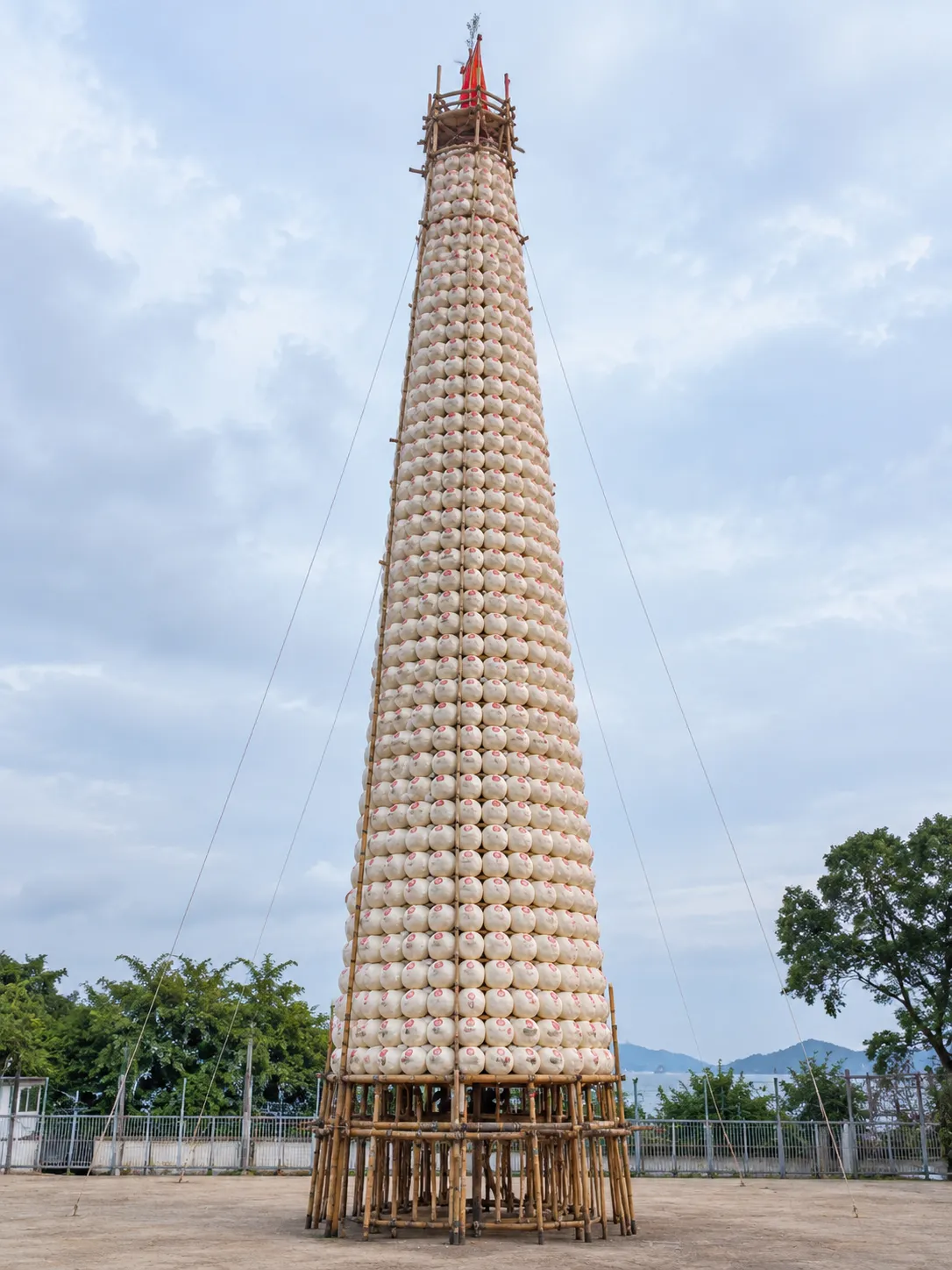
| Frame | Traditionally bamboo, about 60 feet tall (SCMP) | Steel, built separately (SCMP) |
| Height today | Reports range from about 40 ft (RTHK, 2023) to 60 ft (SCMP, Atlas Obscura) | About 14 metres (RTHK, TVB) |
| Buns | Blessed buns shared with the public after the festival (Atlas Obscura, 2018) | Plastic buns, about 9,000 in 2024 (AP via NBC News) |
| Where | Around Pak Tai Temple | Soccer pitch of Pak Tai Temple Playground (LCSD) |
Before 1978 the same big bamboo towers were also the climbing towers. That is the history most visitors miss.
1978: the collapse that stopped the race
Until 2005 the scramble was a free-for-all. The South China Morning Post’s 2023 explainer describes it as a mass climb by young local men up bamboo towers.
In the early hours of 10 May 1978, two of the three towers fell. The SCMP’s report that morning counted 24 people hurt, and it described a crowd of about 2,000 scattering in panic. Later accounts put the injured at about 100. A University of Hong Kong student archive says around 200 people were climbing the three towers when one gave way. The government banned the scramble.
It returned in 2005 with new rules. The SCMP explainer says the climbing tower must be steel, and only 12 finalists, chosen through preliminary rounds, take part.
Atlas Obscura credits the revival, in part, to a 2001 animated film, My Life as McDull, whose pig hero trains to be a bun snatcher. It also reports that plastic buns replaced edible ones on the climbing tower in 2007, a change organisers said looked better and avoided health-rule problems.
The race today
The Leisure and Cultural Services Department (LCSD) runs the modern contest with the Hong Kong Cheung Chau Bun Festival Committee. For 2026, the rules were:
- Applicants must be 18 or older and in good health, and enter an e-ballot. Entries were capped at 200.
- People who live, work or study on Cheung Chau got priority in the ballot.
- Everyone had to complete safety and fall-prevention training on 12 April before the selection contest on 26 April.
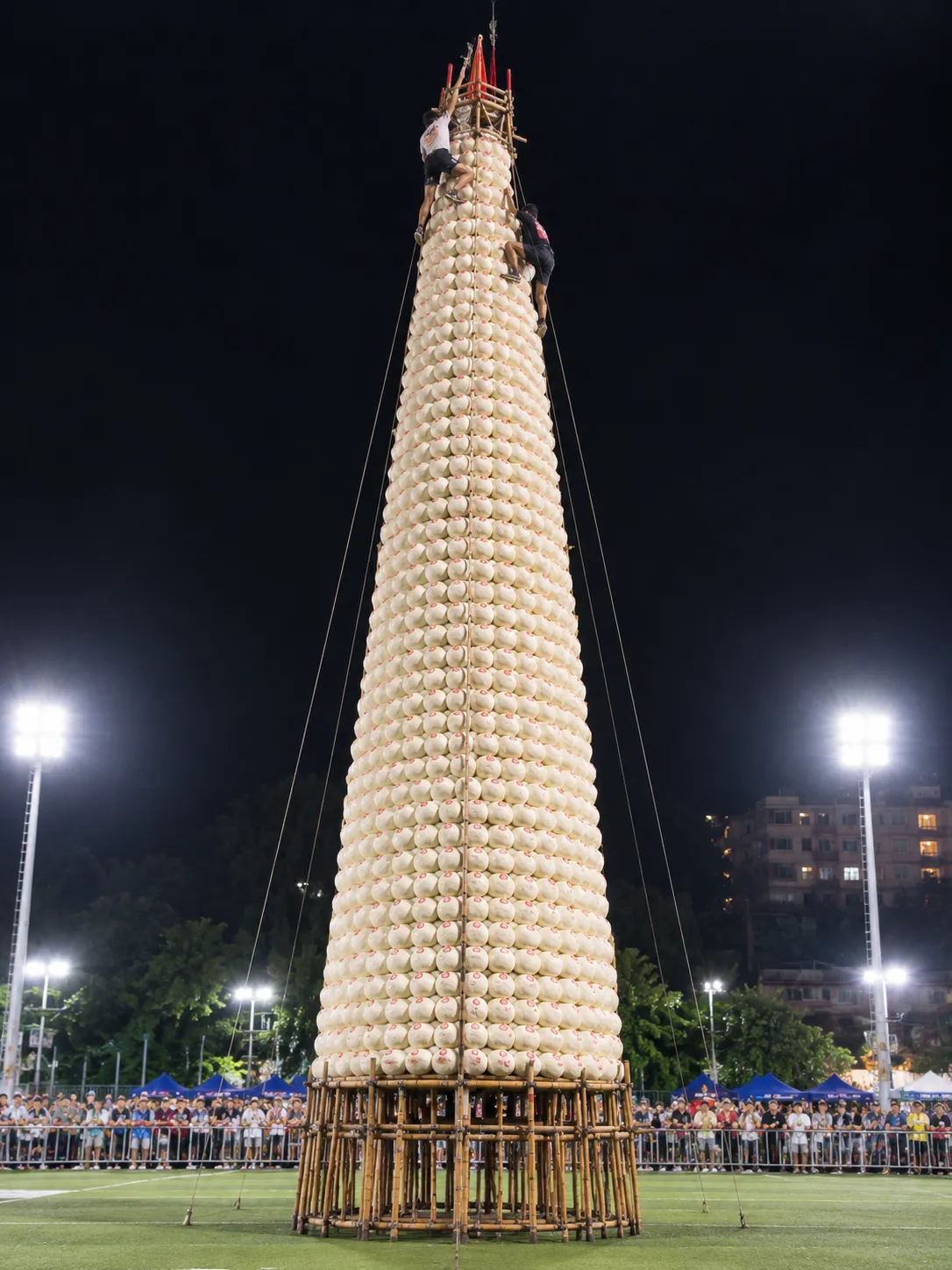
- Twelve finalists climbed on the night of 24 May. Points depend on how high each bun hangs.
TVB reported that the tower is split into three height sections, with the 9-point buns at the top gone in under two minutes. Nine men and three women reached the 2026 final. According to TVB, Kung’s win made her a three-time winner. Since 2016, a three-time champion earns the honorary title “King of Kings” or “Queen of Queens” (LCSD). China Daily reported her 2026 score as 760 points.
Kwok told RTHK he felt tired at the start, perhaps from the long wait, and made a small mistake early on. He recovered, collected enough 9-point buns to win, and called the 11th title “pretty special”.
Crowds are large. In 2024, officials said more than 51,000 visitors came to the island, NBC News reported.
One visitor, a student from mainland China named Lin Xinyu, told AP the trip began as a food outing and that the crowd and the festival were a surprise (NBC News).
Timeline
The ritual is more than a century old, but the climbing contest people watch today dates from 2005.
| When | What happened | Source |
|---|---|---|
| 24 to 25 May 2026 | Twelve climbers race up the 14-metre tower. Kwok Ka-ming wins his 11th men’s title and Janet Kung the women’s | RTHK |
| 2016 | “King of Kings” and “Queen of Queens” titles begin for three-time champions | LCSD |
| 2011 | The Jiao Festival joins China’s third national list of intangible cultural heritage | LCSD |
| 2007 | Plastic buns replace edible ones on the climbing tower, according to Atlas Obscura | Atlas Obscura |
| 2005 | The scramble returns with a steel tower and 12 finalists | SCMP |
| 10 May 1978 | Two bun towers collapse and the scramble is banned | SCMP |
| Late Qing dynasty | A plague and the first Jiao, according to legend | ICHO |
The final night, in order
This sequence combines Hong Kong Memory’s description of the ritual with LCSD’s 2026 programme.
- Afternoon: the Piu Sik (“floating colour”) parade. Children in costume are carried above the crowd on steel frames. AFP’s 2025 report mentions characters such as Ne Zha and the Monkey King. The Standard reported that the 2026 parade set off at 2 pm from the Pak Tai Temple Playground.
- Evening: residents lay out 36 tables of vegetarian offerings for wandering spirits while Taoist priests chant.
- About 11 pm: the King of Ghosts figure is burned.
- 11:30 pm to 12:45 am: the Bun Scrambling Final (2026 schedule).

Voices from the island
Official pages describe the festival. Press reports show who carries it. DionFest did not interview anyone, and each account below is one person’s view, not a survey.
- Parade teams. Piu Sik designer Wong Shing-chau told The Standard in 2024 that most teams volunteer and some pay for props themselves. He asked the government to fund teams directly, not through the organising committee. In 2026, Anil Kwong Sai-loi, president of the Cheung Chau Wai Hoi Luk Clansmen Association, said he hoped the parade would lift spirits and boost local spending, The Standard reported. That year’s floats took on news themes such as oil prices, scams and public transport fares.
- Tower builders. In 2023, RTHK reported that the big bamboo towers were replaced by three drawings after a contractor told organisers it lacked the manpower. A customer surnamed Yiu said she was a little disappointed, as the drawings did not look like the towers she remembered from childhood. In May 2024, three bamboo display towers fell in strong wind and rain before the festival. Committee chairman Yung Chi-ming called it a once-in-a-century event and said the rebuilt towers were reinforced (The Standard, 2024).
- Bakers. Kwok Yu-chuen, who had worked in a Cheung Chau bakery for 40 years, told AFP in 2017 that many people hope for peace, safety and good health by eating the buns. In 2024, Martin Kwok of Kwok Kam Kee Cake Shop expected a quieter festival because the main day fell midweek, the SCMP reported. Officials later reported more than 51,000 visitors (NBC News). One shopkeeper’s impression is not attendance data.
- Bun supplier. Martin Kwok of Kwok Kam Kee said in a 2026 Malay Mail report that his bakery makes more than 60,000 buns in the eight to ten days around the festival, with about ten bun masters at the peak. He described the festival as a family reunion, bigger than Chinese New Year for the Kwoks.
- Ritual towers. Kwok said his shop and one other bakery still supply the edible buns on the towers at Pak Tai Temple: three large, three medium and 36 small. He put each large tower at about 2,000 buns, down from 6,000. Atlas Obscura reported about 20,000 per tower in 2018, so treat tower bun counts as unsettled. He also said his shop supplied edible buns for the climbing tower for the first two years after 2005, and that organisers then moved to plastic because the tower stands exposed to sun and rain.
- Returning islanders. Tiffany Chow, who took part in the 2024 parade, told AP it is a call back home: the time when islanders unite and she sees friends she has not seen for a year (NBC News).
- Climbers. When training ended in April 2026, TVB reported that the oldest trainee was 73 and the youngest 19. The second-oldest said he joined to challenge himself.
- Visitors. Shan, a visitor from Shenzhen, told The Standard in 2024 that she came after seeing the event on Xiaohongshu. AFP’s 2025 coverage quoted two students who also learned of it there. Several TripAdvisor reviews mention heavy crowds, and some call it worth it anyway.
Where sources disagree
| Question | What sources say | What DionFest uses |
|---|---|---|
| When was the plague? | Official text says only “late Qing dynasty”. Wikipedia’s Yuk Hui Temple page gives 1777. A travel blog gives 1894. | “Late Qing dynasty, according to legend” |
| Were pirates involved? | The heritage office mentions only a plague. AFP says islanders drove away pirates and the plague. | Pirates as local lore, not official text |
| UNESCO listing? | Some travel sites say yes. LCSD and the heritage office say national list, 2011. | National list |
| Tower height? | About 14 m (RTHK, TVB, 2026). AFP in 2017 and Atlas Obscura in 2018 gave about 18 m (60 ft) for the climbing tower. AP gave 46 ft (about 14 m) in 2024. | 14 m for the current competition tower |
| 1978 injuries? | 24 (SCMP report that morning). About 100 (later accounts). | Both, with dates |
| How long is the festival? | Three-day Jiao (Hong Kong Memory). “Five-day” (AFP). “Seven days” (a travel blog). The Standard listed 21 to 25 May in 2026, the 5th to 9th day of the 4th lunar month. The wider Bun Carnival programme ran from 12 April to 25 May. | Name which part you mean |
| What is the climbing tower made of? | SCMP, Atlas Obscura and a University of Hong Kong student archive say steel. AP called it a bamboo tower in 2024. The Standard reported that the bamboo towers that fell in 2024 were display towers, not the climbing tower. | Steel for the climbing tower, bamboo for the display towers |
Getting to Cheung Chau, and getting home
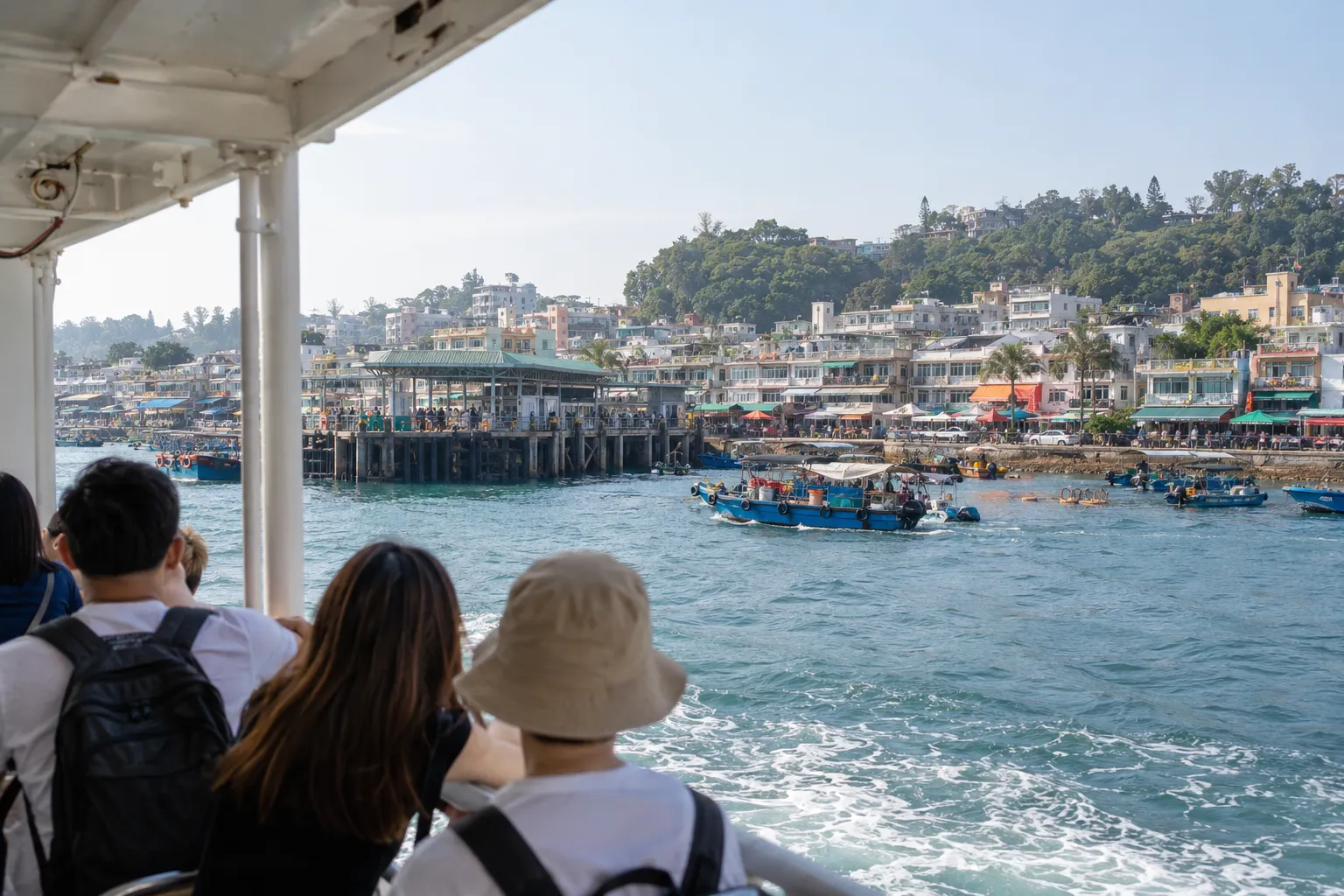 The regular ferry timetable ends before the final does, so plan how you will get home.
Sun Ferry runs the Central Pier 5 route. Its timetable page gives about 35 to 40 minutes by fast ferry and 55 to 60 minutes by ordinary ferry. On Sundays and public holidays, adult fares were HK$24.80 for ordinary class and HK$47.60 for the fast ferry. From Monday to Saturday they were HK$16.70 and HK$32.90. Fares were checked on 9 October 2026 and can change.
The gap is the timing. In the current timetable, the last scheduled sailing from Cheung Chau leaves at 11:30 pm on Sundays and public holidays, and at 11:45 pm from Monday to Saturday. The 2026 final ran from 11:30 pm to 12:45 am. Since 13 May 2027 is a public holiday, the holiday timetable should apply that day.
The regular timetable has no late-night festival sailings. Ahead of the 2026 final, the Transport Department announced a special Cheung Chau to Central ferry at 1:15 am on 25 May and special overnight buses from Central Pier 5, The Standard reported. Time Out listed the same 1:15 am sailing for 2025. Nothing is announced for 2027, so check Sun Ferry’s news page and government transport notices, or plan to stay overnight.
Time Out’s 2026 guide advised arriving by noon for the afternoon parade and bringing cash, water, a portable fan and a compact umbrella.
If you plan to go in 2027
The Hong Kong government has gazetted Buddha’s Birthday for Thursday 13 May 2027, The Standard reported. Since the festival’s main day follows the same lunar date, the final is expected around that night. The organiser’s 2027 programme was not yet published when this was checked, because the LCSD page still showed the 2026 schedule.
Two things to confirm closer to the date:
- Spectator tickets. For the 2026 final, The Standard reported that 1,650 free tickets would be handed out from 10 pm on the night, first come, first served, one per person, for four spectator zones at the football pitch. Nothing is announced for 2027, so check the LCSD site closer to the date.
- Cancellation risk. The SCMP’s 2023 explainer said the relaunched festival had been dropped or cut short four times since 2005.
DionFest did not attend the festival. This guide is based on official sources and press reports.

Abhay Ramola researches world festivals across primary sources, local accounts, and on-ground reporting. He founded Dionfest to cover what gets missed when festivals become tourism content the history, the ritual, and the people behind it.