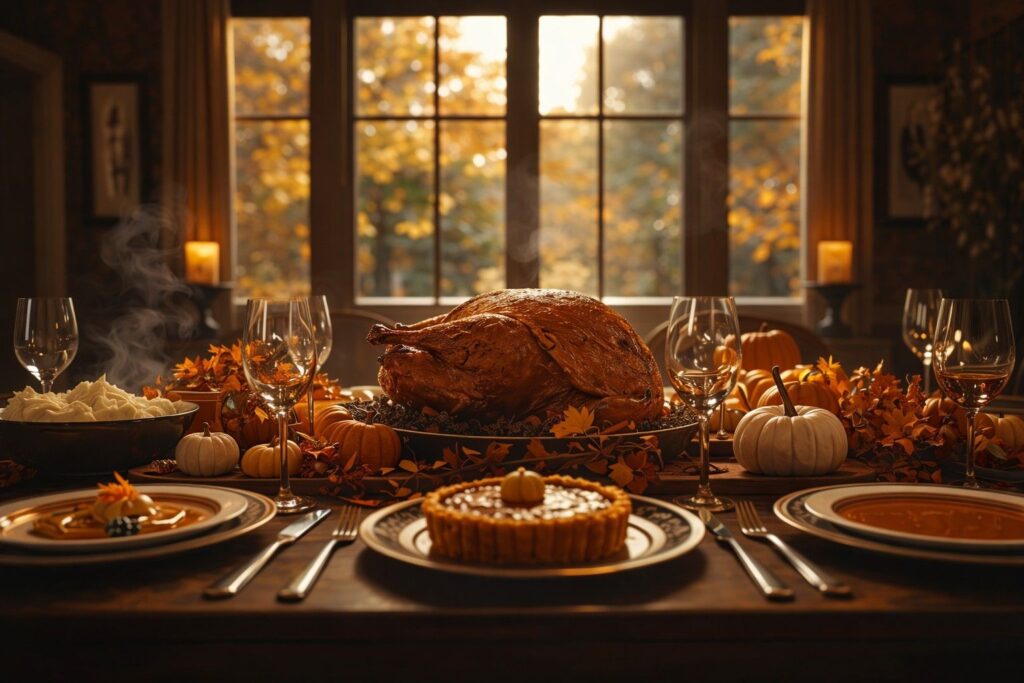
The smell hits you first — butter, sage, and something caramelizing in an oven that’s been running since 6 a.m. Outside, the air is cold enough to see your breath, and the streets are quiet in that specific way only possible when everyone is somewhere else, inside, together. A football game murmurs from a back room. Someone is arguing, gently, about whether the pie needs more time. Then a door opens, and a stranger waves you in like you’ve been expected all along.
That’s the thing about Thanksgiving nobody warns you about.
Thanksgiving is a national holiday celebrated across the United States every fourth Thursday of November, centered on a shared meal with family and friends. It is known for its elaborate feast — roast turkey, stuffing, cranberry sauce, and pumpkin pie — eaten together as an act of gratitude. What surprises most international visitors is that Thanksgiving is less a public spectacle and more a private ritual: the real celebration happens behind closed doors, not in a stadium or a square.
Quick Facts
| Detail | Info |
|---|---|
| Festival Name | Thanksgiving |
| Country / Region | United States of America (nationwide) |
| Type | Cultural / Seasonal / Historically Contested |
| 2026 Dates | Thursday, November 26, 2026 |
| Duration | 1 day (extended weekend: Thu–Sun) |
| Best For | Families, cultural travelers, food lovers |
| Crowd Level | High (travel days); Intimate (the day itself) |
| Avg. Daily Budget | $80–$150 USD (mid-range) |
| Nearest Airport | Varies — NYC, Chicago, LA are major hubs |
| Visa Required | Yes (ESTA or B-2 visa for most nationalities) |
Why Thanksgiving 2026 Belongs on Your Travel List
No other American holiday asks this directly: what are you grateful for? Thanksgiving strips away the commercial scaffolding that surrounds most U.S. holidays — no costumes, no fireworks, no elaborate decorations — and replaces it with a table, some food, and the expectation that you’ll sit still long enough to mean it.
For cultural travelers, this is the most honest window into American domestic life available. You won’t find it in Times Square. You’ll find it in someone’s dining room in Ohio, or a church hall in Georgia, or a fire escape apartment in Brooklyn where six people are eating off mismatched plates.
The honest caveat: if you don’t have a personal invitation to someone’s home, attending Thanksgiving as a solo international traveler requires creativity. The holiday doesn’t have a public venue. Plan accordingly.
The Real Story Behind Thanksgiving
The story most Americans learn in school — Pilgrims and Wampanoag people sharing a peaceful harvest meal in Plymouth, Massachusetts in 1621 — is real, but incomplete. That gathering did happen, and it lasted three days, but it wasn’t called Thanksgiving and it wasn’t repeated annually. The holiday as Americans know it today was formally declared a
national holiday by President Abraham Lincoln in 1863 — you canread the original proclamation on the Library of Congress website(https://www.loc.gov/resource/mal.4233400/), during the Civil War, partly as a political act of national unity.
Over the following century, Thanksgiving absorbed different regional traditions: Southern cornbread stuffing, New England clam chowder as a starter, Midwestern green bean casseroles invented by a Campbell’s Soup marketing team in 1955 (yes, really). The Macy’s Thanksgiving Day Parade in New York began in 1924, started by immigrant employees who wanted to celebrate their new American identity.
For many Indigenous Americans, the fourth Thursday of November is observed as the National Day of Mourning — a solemn counter-narrative that has been held in Plymouth, Massachusetts since 1970. This context is not a footnote. It is part of the holiday’s full truth.
What Thanksgiving Means to the People Who Actually Celebrate It
Ask an older American about Thanksgiving and they’ll likely tell you about their grandmother’s kitchen, a specific smell, a tablecloth that came out once a year. Ask someone in their twenties and you might get a more complicated answer — appreciation for the gathering, discomfort with the mythology, and a negotiation between honoring family and being honest about history.
For non-religious Americans, Thanksgiving functions as the secular substitute for a spiritual holiday: a mandated pause, a moment of counting what you have. For religious families, grace before the meal carries genuine weight.
The thing outsiders most consistently misunderstand is that the food is not the point — the food is the vehicle. Nobody actually cares that much about the green bean casserole. What they care about is that making it means someone showed up. Commercialization has added Black Friday to the holiday’s tail end, which many Americans resent deeply. The dinner table and the shopping mall exist in real tension, and most families quietly choose one or the other.
What Actually Happens at Thanksgiving — Day by Day
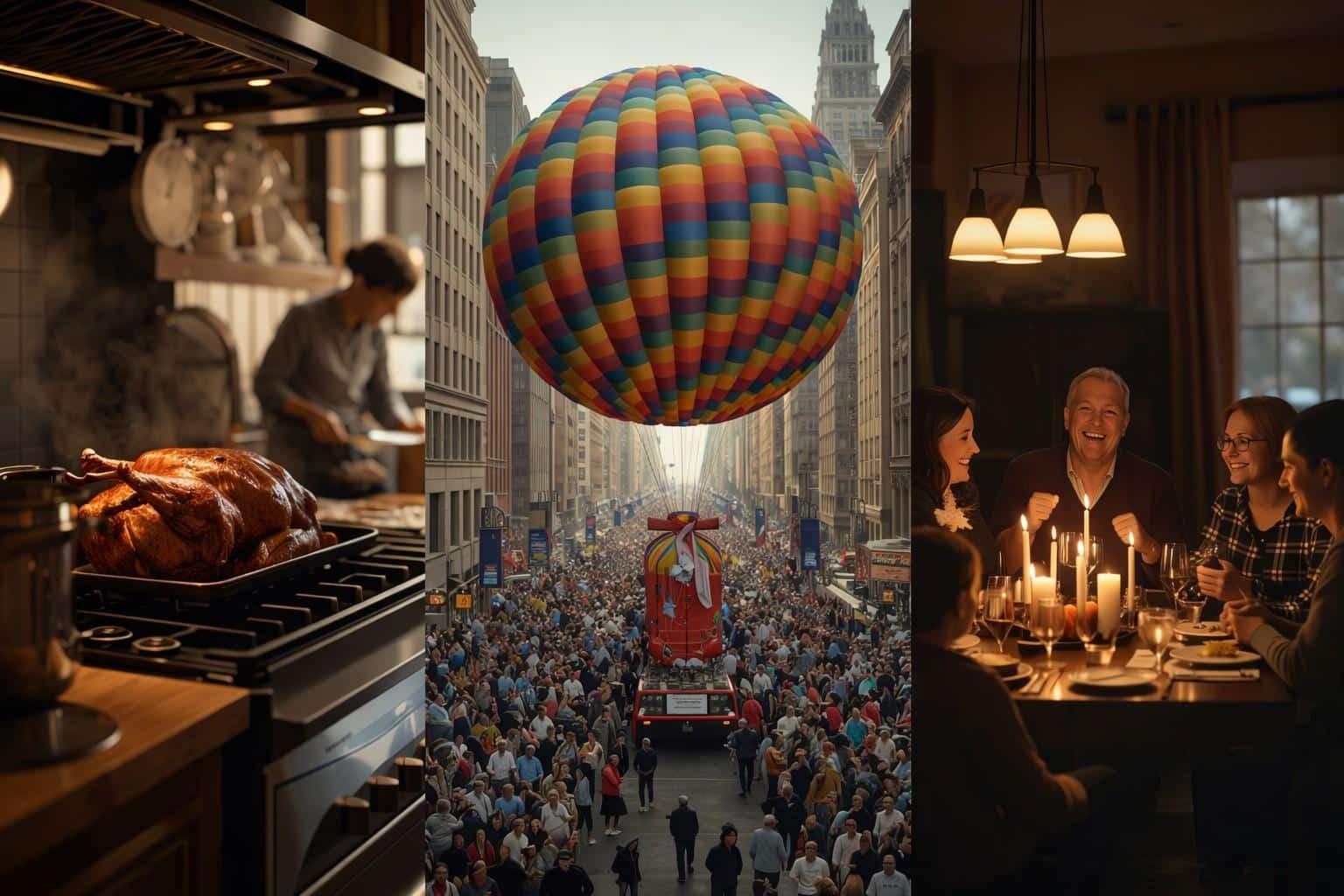 Because Thanksgiving is a single day, here’s how it typically unfolds from morning to night.
Morning: The cook — usually one person who has accepted this fate — starts early. Turkey prep begins by 7 or 8 a.m. For a 15-pound bird, you’re looking at four to five hours of roasting. Kitchens fill with the smell of onion, celery, and thyme long before anyone else is awake. The Macy’s Thanksgiving Day Parade airs on NBC from 9 a.m.to noon Eastern Time — official parade route and timing detailsare updated annually on the Macy’s website(https://www.macys.com/social/parade/), and in millions of households, it runs in the background as a kind of ambient soundtrack. Balloon floats the size of buildings drift down Central Park West. If you’re in New York City and want to see the parade in person, stake out a spot on 6th Avenue by 7:30 a.m. — [INSERT INTERNAL LINK FROM DIONFEST.COM — SAME CATEGORY: Cultural Festivals in the USA] has a solid breakdown of the best parade viewing spots.
Midday: Guests arrive. This is where Thanksgiving gets complicated and beautiful simultaneously. The table gets set. Someone brings a dish nobody asked for. A football game — specifically NFL games, which have aired on Thanksgiving since 1920 — dominates the living room. The Detroit Lions and Dallas Cowboys traditionally host games, and for many families, the sport is as ceremonial as the meal.
The Meal (typically 2–5 p.m.): The turkey comes out. Side dishes crowd every surface. The canonical Thanksgiving plate includes: roast turkey, mashed potatoes, gravy, stuffing (or “dressing,” depending on which part of the country you’re in — and yes, people have feelings about this), cranberry sauce, sweet potato casserole, and some form of green vegetable that everyone ignores. Pumpkin pie arrives after, usually with whipped cream or vanilla ice cream. Some families do pecan pie. Some do both.
My own first Thanksgiving as a guest rather than a host involved a confident declaration that I preferred dark meat turkey. My host — a woman from South Carolina who had been cooking since 5 a.m. — stared at me for a long moment, then wordlessly placed the entire turkey leg on my plate. I had not accounted for how large a turkey leg actually is. I finished it. She nodded once, and I think I passed some kind of test.
Evening: The meal ends. Nobody moves for a while. Leftovers get packed. People fall asleep on sofas. This post-dinner torpor is so universal it has a name: the “food coma.” Around 7 or 8 p.m., families watch more football or a movie. By 9 p.m., the kitchen is clean and the house is quiet in a way that feels earned.
Best Places to Experience Thanksgiving in 2026
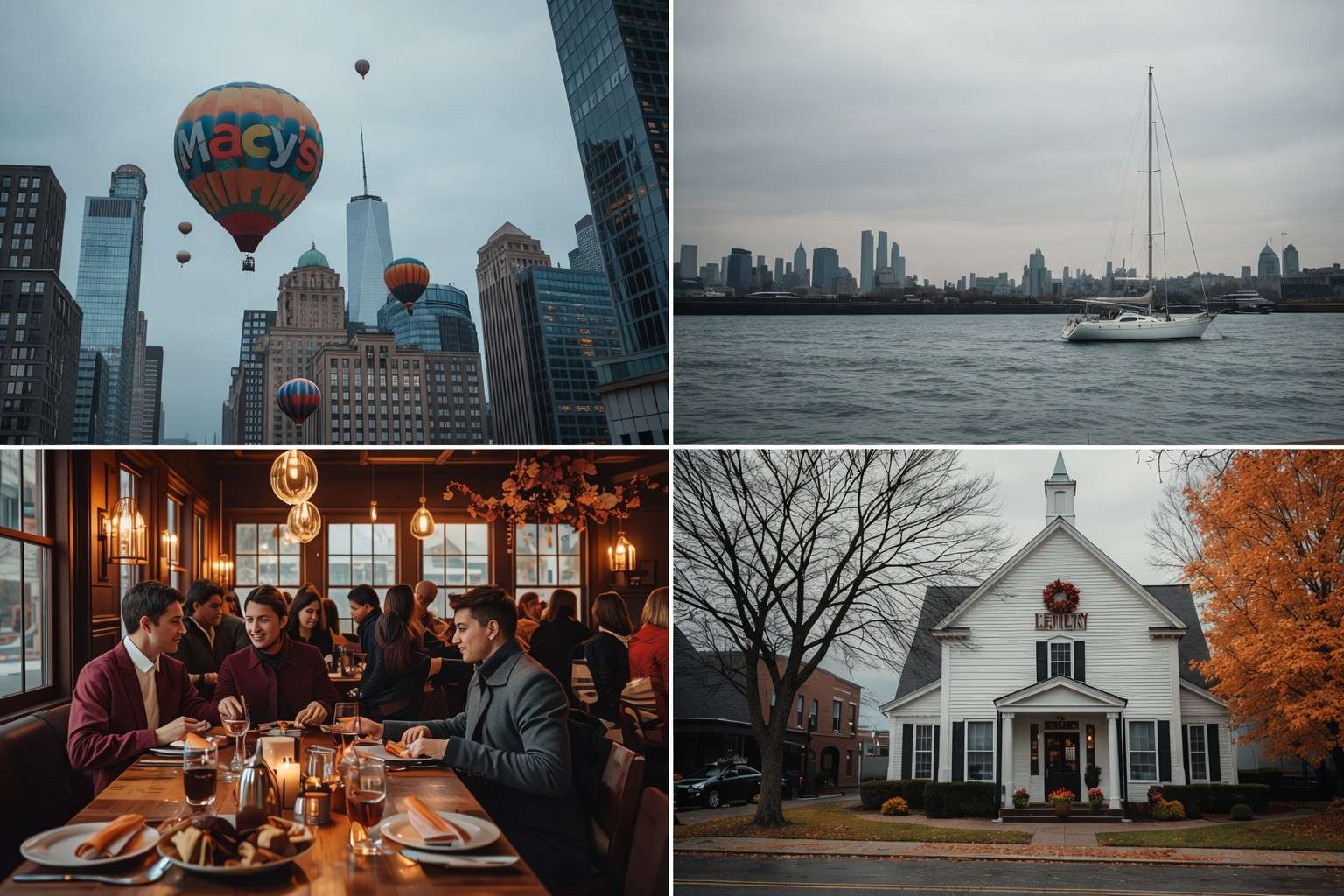 1. New York City — The Macy’s Parade The parade is the one fully public Thanksgiving event in America, and it runs straight down Manhattan from 77th Street to 34th Street. What makes it special is scale: the balloon inflation the night before (Wednesday evening in the Upper West Side) is actually more intimate and impressive than the parade itself. Honest downside: The crowds on parade day are genuinely extreme. Millions of people, cold temperatures, limited bathroom access. Best for: First-time visitors, families with children.
2. Plymouth, Massachusetts The origin point. Plymouth holds both a traditional Thanksgiving celebration and the National Day of Mourning, which runs concurrently. Attending both — if you’re thoughtful about it — gives you the fullest picture of what this holiday actually contains. Honest downside: It’s a small town. Book accommodation months in advance. Best for: History-focused travelers.
3. New Orleans, Louisiana Thanksgiving in New Orleans gets a Cajun treatment — andouille sausage in the stuffing, sweet potato pie instead of pumpkin, and a city that never quite turns off its hospitality even for a domestic holiday. Some restaurants offer full Thanksgiving menus with a Louisiana accent. Honest downside: This is a restaurant Thanksgiving, not a home experience. Best for: Food travelers, solo visitors without a home invitation.
4. San Francisco, California The city has a strong tradition of “Friendsgiving” — chosen-family Thanksgiving gatherings — which tend to be more diverse, more inclusive of dietary restrictions, and more open to strangers than traditional family dinners. Community organizations regularly host open Thanksgiving meals. Honest downside: Accommodation costs spike significantly during the holiday weekend. Best for: Solo travelers, LGBTQ+ visitors, international guests without existing connections.
5. A Small Town in the American Midwest This is deliberately vague, because the point is to accept an invitation, not find a destination. Towns in Indiana, Ohio, Iowa, or Missouri offer the closest thing to “original” Thanksgiving — church potlucks, school gymnasium community dinners, neighbors who genuinely mean it when they say there’s room at the table. Honest downside: You have to know someone, or find a community organization hosting a public meal. Best for: Cultural immersion travelers.
My Top Pick: Plymouth, Massachusetts, on Thanksgiving morning. Walk down Leyden Street — the oldest street in the country — before the ceremonies begin, around 7 a.m., when the town is still quiet and the harbor is grey and cold. That hour, before the speeches and the crowds, is when the weight of the place actually lands. [https://www.dionfest.com/category/america/: Cultural Festivals in the USA]
Thanksgiving Travel Guide 2026 — Tips That Actually Help
3-Day Itinerary (Based in New York City)
| Morning | Afternoon | Evening | |
|---|---|---|---|
| Day 1 (Wed) | Fly in, check in | Walk Upper West Side, watch balloon inflation (77th St & CPW, starts ~3 p.m.) | Dinner at a NYC restaurant (book ahead — many close Thursday) |
| Day 2 (Thu — Thanksgiving) | Parade viewing (arrive by 7:30 a.m., 6th Ave between 38th–50th) | Find a community Thanksgiving meal or pre-booked restaurant | NFL game at a bar, or a quiet walk through an empty Midtown |
| Day 3 (Fri) | Sleep in — you’ve earned it | Explore a neighborhood (avoid Midtown: Black Friday shopping chaos) | Leftover-style meal at a deli or diner |
Essential Tips:
- Best day to arrive: Tuesday before Thanksgiving. Wednesday is the single busiest travel day of the American year — airports become genuinely unpleasant.
- Worst area to stay: Midtown Manhattan on Black Friday. You will not be able to move.
- What to wear: Layers. Late November in most of the U.S. is cold, often wet. Leave the wheeled suitcase at home if you’re parade-going — you’ll be standing for hours.
- One local etiquette rule outsiders break: Do not arrive empty-handed to a home Thanksgiving. Bring wine, flowers, or a dessert. Showing up with nothing reads as genuinely rude, not charmingly European.
- Safety tip: The Wednesday night before Thanksgiving is informally the biggest bar night of the year in America. If you’re out that night, use rideshare apps rather than driving — DUI arrests spike significantly.
- Best free experience: Balloon inflation night in New York — massive floats being pumped up on a residential street, with kids and locals crowding around.
- Best paid experience: A pre-booked Thanksgiving dinner at a restaurant doing a traditional menu. Prices run $65–$120 per person, but it’s the closest a solo traveler gets to the real thing.
The Mistake I Made: I assumed that because Thanksgiving is a national holiday, restaurants and shops would stay open. I was wrong. I arrived in a mid-sized American city on Thanksgiving afternoon expecting to find lunch and found instead a locked streetscape, a closed pharmacy, and a gas station selling beef jerky and energy drinks. What I thought was a city that would be operating normally turned out to be a city that had entirely gone home. Book your meals in advance, confirm they’re open on the day itself, and keep snacks in your bag.
Thanksgiving Cost Guide — What to Budget in 2026
| Category | Budget | Mid-Range | Splurge | Pro Tip |
|---|---|---|---|---|
| Accommodation | $80–$120/night | $150–$250/night | $350+/night | Book 2–3 months out; prices rise 40–60% |
| Food & Drinks | $20–$40/day | $60–$100/day | $120+/day | Wed night restaurants are packed; reserve early |
| Local Transport | $5–$15/day | $25–$50/day | $80+/day | Uber surges badly on parade morning |
| Festival Entry | Free (parade) | $0–$25 | $65–$120 (restaurant dinner) | Parade is free; no tickets needed |
| Souvenirs | $10–$20 | $30–$60 | $100+ | Skip Times Square; try local markets |
| Daily Total | ~$115–$195 | ~$235–$455 | $650+ | — |
Prices increase 30–60% during Thanksgiving week. Book 2–3 months in advance.
7 Things Most Articles Don’t Tell You About Thanksgiving
 The real “main event” happens the night before. Thanksgiving Wednesday — “Drinksgiving” or “Blackout Wednesday” as it’s sometimes called — is when Americans who’ve returned to their hometowns meet up at old haunts. It’s louder, stranger, and more revealing of American social dynamics than the holiday itself.
Leftovers are culturally non-negotiable. Bringing home a foil-wrapped plate of leftovers is not an afterthought — it’s expected. The Thanksgiving leftover sandwich (turkey, stuffing, cranberry sauce, all stacked on white bread) is arguably the best thing about the entire holiday.
Black Friday was not always about shopping. The term originally referred to the financial chaos of the day after Thanksgiving — massive crowds, overwhelmed city infrastructure — before retailers reframed it as a sales opportunity in the 1980s. Many Americans now deliberately avoid stores on that day as a form of protest.
Turkey was not the original centerpiece. The 1621 feast most likely featured venison, seafood, and wildfowl — not necessarily turkey. Turkey became dominant in the 19th century partly because it was a practical size for a group meal and partly because of a campaign by writer Sarah Josepha Hale, who lobbied presidents for decades to establish the holiday.
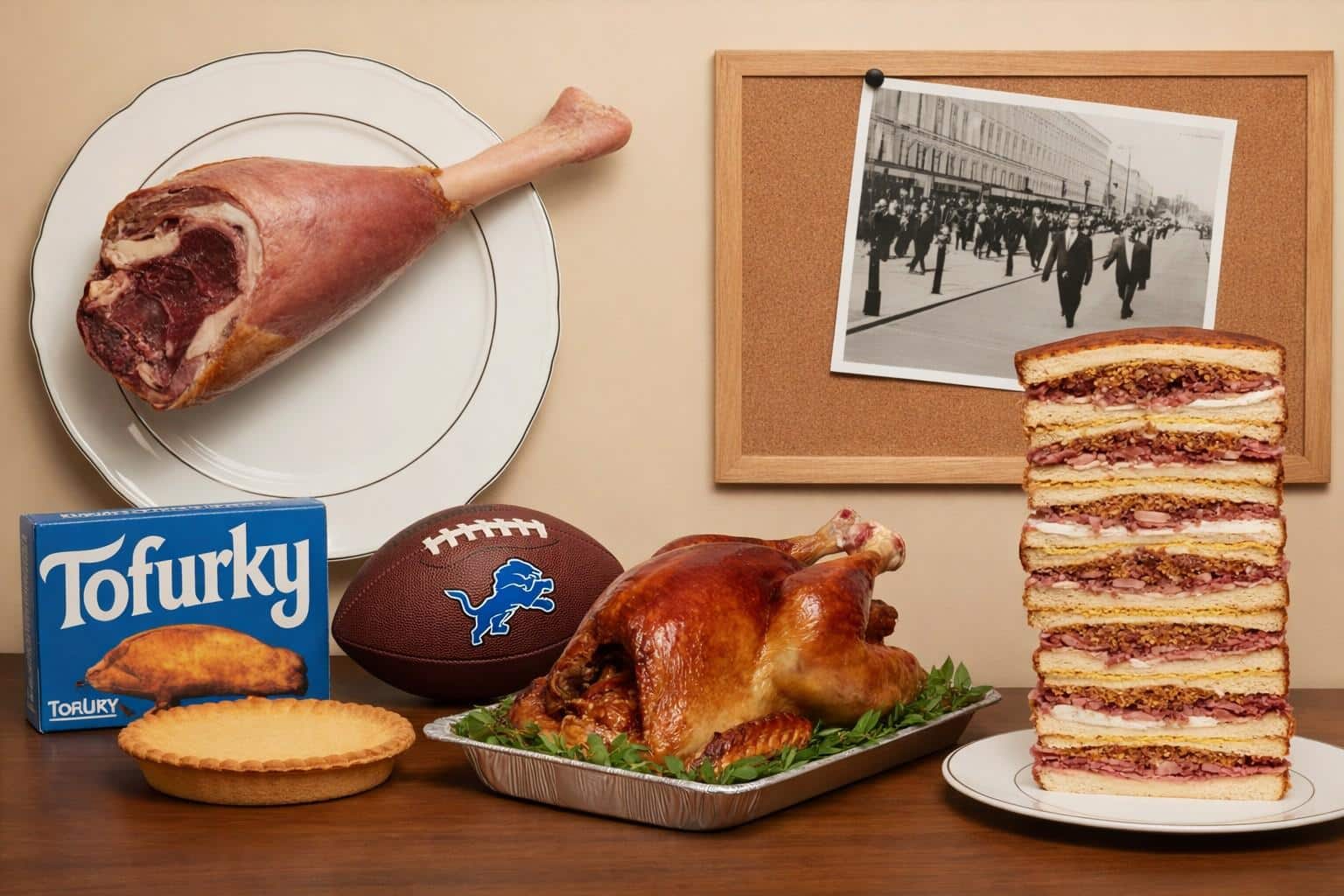
Tofurky is a real product and has been since 1995. The vegetarian/vegan Thanksgiving market is substantial — and growing. Major grocery chains stock an entire seasonal section of meat-free holiday alternatives.
The Detroit Lions have played on Thanksgiving every year since 1934. Losing is also something of a tradition: the Lions have one of the worst Thanksgiving game records in NFL history, yet the game remains a fixture. Detroit residents have complicated feelings about this.
In many immigrant households, Thanksgiving is celebrated more earnestly than in native-born American ones. For families who became American citizens, the holiday carries genuine emotional weight — a moment to mark belonging. Some of the most elaborate Thanksgiving tables in the country are in Vietnamese, Nigerian, and Haitian-American homes, with dishes that have no historical connection to 1621 and are better for it.
Thanksgiving Mistakes First-Timers Almost Always Make
❌ Mistake: Flying on the Wednesday before Thanksgiving. Why it hurts: It’s the most congested travel day of the American calendar. Delays are routine, airports are chaotic, and rideshare wait times double. ✅ Fix: Fly Tuesday at the latest. You’ll pay less and arrive sane.
❌ Mistake: Expecting public events and open businesses on Thanksgiving Day itself. Why it hurts: Most independent restaurants, shops, and attractions close. The holiday is domestic by design. ✅ Fix: Pre-book any restaurant meal weeks in advance. Confirm the day before that they’re open.
❌ Mistake: Wearing a Native American costume or headdress. Why it hurts: It’s considered deeply offensive and is increasingly confronted publicly. ✅ Fix: Don’t. There’s no alternative costume needed. Just dress normally.
❌ Mistake: Photographing someone else’s family dinner without asking. Why it hurts: Thanksgiving is an intimate, private occasion. Treating it like a street festival photo opportunity is intrusive. ✅ Fix: Ask first, always. Most people will say yes — but asking matters.
❌ Mistake: Assuming the Macy’s Parade is easy to see on the day. Why it hurts: Without a good position secured by 7 a.m., you’ll be watching over shoulders and between hats for three hours. ✅ Fix: Go to the balloon inflation on Wednesday evening instead. Smaller crowd, more access, genuinely more interesting.
❌ Mistake: Bringing up the holiday’s colonial origins unprompted at someone’s dinner table. Why it hurts: While the critique is legitimate and important, ambushing a family you’ve just met with a historical lecture is a social grenade. ✅ Fix: If the topic comes up naturally, engage thoughtfully. If it doesn’t, read the room.
Thanksgiving — Questions Travelers Actually Ask
How do I get to New York City from the nearest major airport for Thanksgiving? JFK, LaGuardia, and Newark airports all serve New York. From JFK, take the AirTrain to Jamaica station, then the LIRR or E train into Manhattan — around 60–75 minutes total. Book ahead; holiday week transport fills quickly.
Is Thanksgiving safe for solo female travelers? Yes — Thanksgiving itself is one of the safer times to travel in the U.S., as most people are home with family. The Wednesday night bar scene is livelier and warrants standard urban caution: stay in well-lit areas, use rideshare apps rather than hailing cabs.
What should I wear to Thanksgiving events? For the Macy’s Parade: serious cold-weather layers, waterproof shoes, and a hat. For a home dinner: smart casual is universally appropriate — no need to dress formally, but don’t show up in gym clothes.
How much does Thanksgiving cost per day in 2026? Budget travelers spending carefully can get by on $115–$195 USD per day, including accommodation. Mid-range travelers should expect $235–$455. The holiday itself has no entry fee, but accommodation and restaurant prices surge sharply.
Is Thanksgiving too crowded for first-time visitors? The travel infrastructure (airports, trains) is genuinely strained on Wednesday and Sunday. The holiday day itself is unusually quiet in public spaces — most people are indoors. Paradoxically, Thanksgiving Day is one of the calmest days to walk around a major American city.
Where should I stay near Thanksgiving events in New York? The Upper West Side puts you close to both the balloon inflation and the parade route. Midtown is convenient but expensive and chaotic on Black Friday. Brooklyn neighborhoods like Park Slope or Williamsburg offer better value and easier transit access.
Can I attend Thanksgiving without booking in advance? For the parade, yes — it’s free and public. For restaurants, absolutely not. Most Thanksgiving restaurant seatings sell out two to four weeks before the holiday. Community organization dinners (churches, shelters that welcome guests) sometimes accept walk-ins, but call ahead.
If I only have one day, which day of Thanksgiving should I attend? Thanksgiving Thursday itself. Wednesday is chaotic travel; Friday is commercial. Thursday morning — parade or not — is when the specific atmosphere of the holiday is most present: the quiet streets, the smell of cooking drifting from apartment windows, the sense that an entire country has simultaneously paused.
After the parade, I walked south through an empty Midtown. The balloon handlers had packed up. The crowds had dissolved into subway stations and taxis. On 5th Avenue, a woman in a yellow coat was sweeping confetti off the steps of a building, alone, with the focused patience of someone doing a job that has to be done before anything else can begin.
I thought about how Thanksgiving, for all its complications — the history it glosses over, the family tensions it concentrates, the consumerism it drags behind it — still manages to ask something genuine of the people who participate in it. Not a performance of gratitude. An actual pause.
What would it mean to build one day a year like that into your life, wherever you’re from?
— Priya, traveling from London