Yi Peng Lantern Festival: History, Traditions, Meaning and 2026 Guide
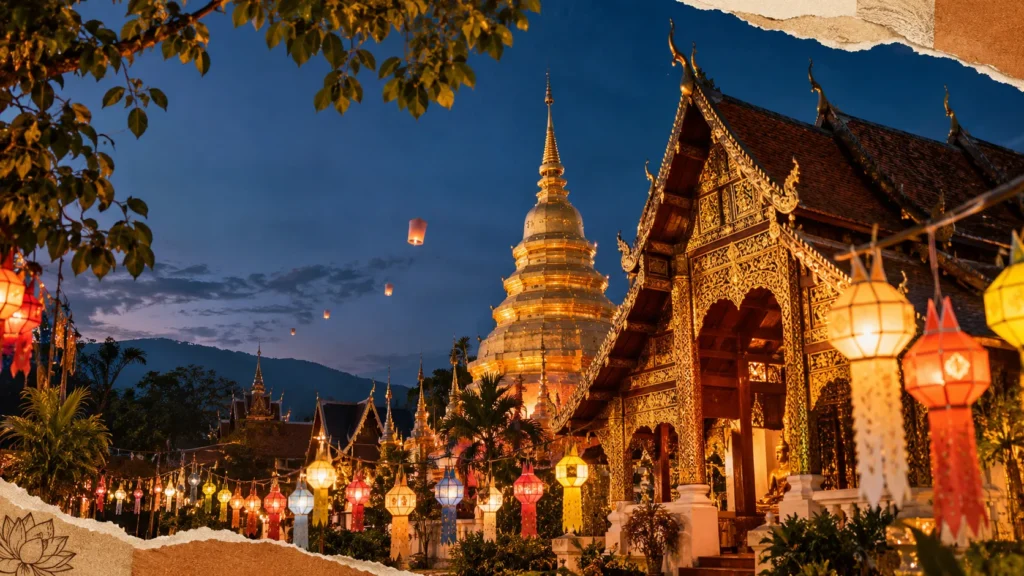
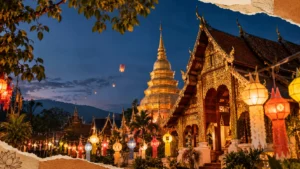
Every November, Northern Thailand enters a season of light. Temples display colourful lanterns, communities prepare traditional offerings, and the full moon illuminates celebrations across the Lanna region.
Known as the Yi Peng Lantern Festival, this annual celebration is deeply connected to the cultural and religious traditions of Northern Thailand. Chiang Mai is its best-known destination, but the festival’s story extends beyond the famous photographs of thousands of glowing lanterns rising into the night.
Traditional Yi Peng includes temple offerings, candlelight rituals, decorated lanterns and a distinctive Lanna custom known as Sapao. In places such as Lamphun, the celebration also takes the form of elaborate lantern displays and religious processions.
For 2026, Chiang Mai’s municipal Yi Peng celebrations are scheduled for November 23–25, while the province has announced specific dates, times and restrictions for permitted lantern releases.
Understanding these traditions makes it easier to appreciate Yi Peng as a living cultural celebration rather than simply a tourist attraction.
Yi Peng Lantern Festival at a Glance
| Detail | Information |
|---|---|
| Festival name | Yi Peng (Yee Peng) |
| Cultural origin | Lanna, Northern Thailand |
| Main destination | Chiang Mai |
| Other important locations | Lamphun and Lampang |
| Calendar | Second lunar month of the traditional Lanna calendar |
| Typical period | Around the full moon, usually in November |
| Main traditions | Lantern displays, candlelight offerings, Sapao and temple activities |
| Chiang Mai municipal dates in 2026 | November 23–25 |
| Permitted sky-lantern release dates in Chiang Mai province | November 24–25, subject to local restrictions |
The dates above describe the announced 2026 programme in Chiang Mai, not a fixed annual date for every Yi Peng celebration in Northern Thailand.
What Is the Yi Peng Lantern Festival?
Yi Peng is a traditional Lanna festival celebrated in Northern Thailand. The word is also written as Yee Peng or Yipeng.
The festival is associated with the full moon of the second month in the traditional Lanna lunar calendar. This period generally coincides with the full moon of the twelfth month in the central Thai lunar calendar, when Loy Krathong is observed.
Light plays an important role in the celebration. Communities decorate temples, homes and public spaces with lanterns and lamps. Religious offerings and traditional activities are also part of the observance.
The festival is especially associated with Chiang Mai, the historic centre of the Lanna Kingdom. However, its cultural expressions can also be found in other Northern Thai provinces.
One important point is that Yi Peng is not defined only by floating sky lanterns. Its traditional practices include forms of merit-making, devotional offerings and community participation that existed independently of modern mass-release events.
The History and Origins of Yi Peng
Yi Peng has a long association with the history of the Lanna region.
The Northern Thai Information Center at Chiang Mai University documents the festival as an ancient Lanna tradition and preserves accounts of its historical and religious practices.
Some traditional accounts connect the observance to the former Hariphunchai Kingdom, whose historical centre was in present-day Lamphun.
One account describes a cholera outbreak that led people to leave Hariphunchai and migrate to Pegu, now associated with Bago in Myanmar. After some returned, they remembered relatives who had remained behind by preparing boats or containers filled with offerings and floating them on local rivers.
The story is preserved in regional cultural accounts. It should be understood as a traditional explanation, not as a conclusively established historical origin for every Yi Peng custom.
The Chiang Mai University archive also records several religious legends associated with the lighting and floating of candles.
These accounts explain why light became an important part of the festival’s spiritual expression.
The Meaning of Light in Lanna Traditions
For many Buddhist communities, lighting candles and lamps is an act of devotion.
The light represents religious reverence and is associated with merit-making and the worship of the Buddha. Traditional Lanna sermons and religious texts also describe the spiritual significance of offering light.
Different communities may interpret particular rituals in different ways. It is therefore more accurate to describe these meanings as traditional religious beliefs rather than claim that every participant celebrates for exactly the same reason.
This spiritual context helps explain why temple lanterns and candlelight offerings remain important even as modern tourism has brought greater attention to sky lantern releases.
Traditional Yi Peng Celebrations Beyond Sky Lanterns
The most recognisable photographs of Yi Peng show large numbers of illuminated paper lanterns rising into the sky.
However, several other traditions help explain the festival’s cultural importance.
1. Traditional Lanna Lantern Decorations
Lantern-making is an important part of Northern Thai decorative culture.
During Yi Peng, colourful lanterns are displayed around temples, houses and public spaces. Their shapes, materials and decorations vary.
The Tourism Authority of Thailand documents the role of lantern displays in Lamphun’s Pranee Khom Saen Duang tradition.
These decorations are not simply visual attractions. In the documented Lamphun tradition, hanging lanterns is associated with Buddhist devotion and prayers for prosperity and peace.
2. Sapao: The Traditional Boat Offering
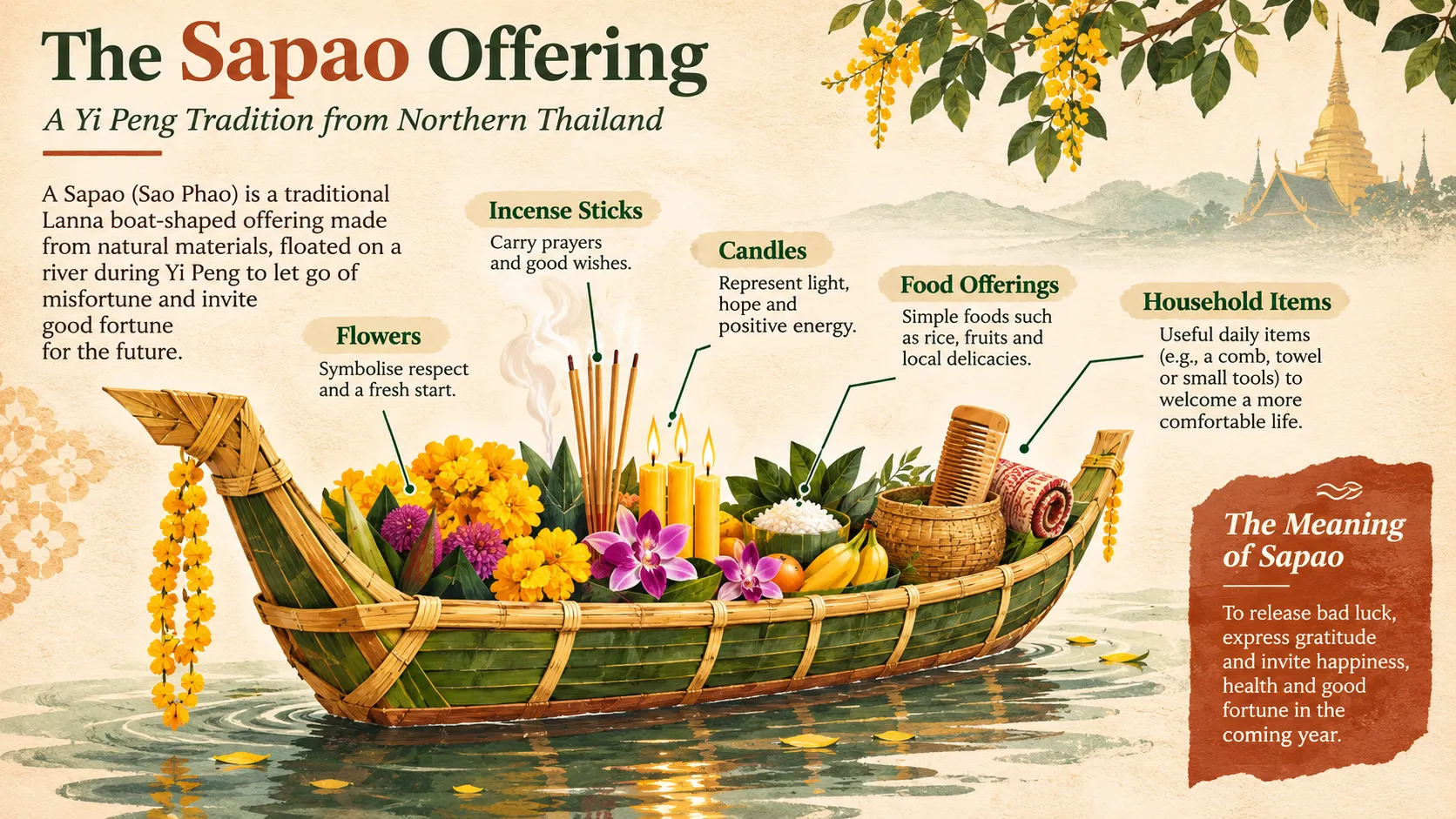 One of the most interesting aspects of Yi Peng is the traditional practice known as Sapao.
A Sapao is a decorated boat-shaped offering. Traditional versions were made using materials such as bamboo and banana trunks and could carry flowers, incense, candles, food, clothing and other useful items.
According to the Chiang Mai University Library’s Northern Thai Information Center, Sapao offerings were traditionally floated along rivers such as the Mae Ping and Mae Kuang.
The practice was associated with merit-making, remembering deceased relatives and charitable giving.
Historical descriptions also explain that some offerings carried practical items that people downstream could collect and use.
This makes Sapao particularly important when understanding the festival. It connects religious devotion with remembrance, community participation and generosity.
The tradition is also an example of how Yi Peng has cultural dimensions that are not always visible in modern tourism photographs.
3. Candlelight and Temple Offerings
Lighting candles and offering lamps are closely connected with Buddhist religious practices during Yi Peng.
The Chiang Mai University archive records traditional accounts explaining the merit associated with offering light to the Buddha.
Temples and religious spaces provide an important setting for these activities.
For visitors, observing these practices offers a different perspective on the festival from attending a large outdoor lantern-release event.
4. Traditional Processions and Community Activities
Yi Peng also includes community celebrations and organised cultural activities.
In Chiang Mai, the annual municipal programme brings together public festivities and traditional elements.
In Lamphun, the Pranee Khom Saen Duang celebration includes a lantern procession towards Wat Phra That Hariphunchai.
These activities demonstrate that Yi Peng is not a single event taking place at one venue. Its expression varies between communities and locations.
Yi Peng vs Loy Krathong: What Is the Difference?
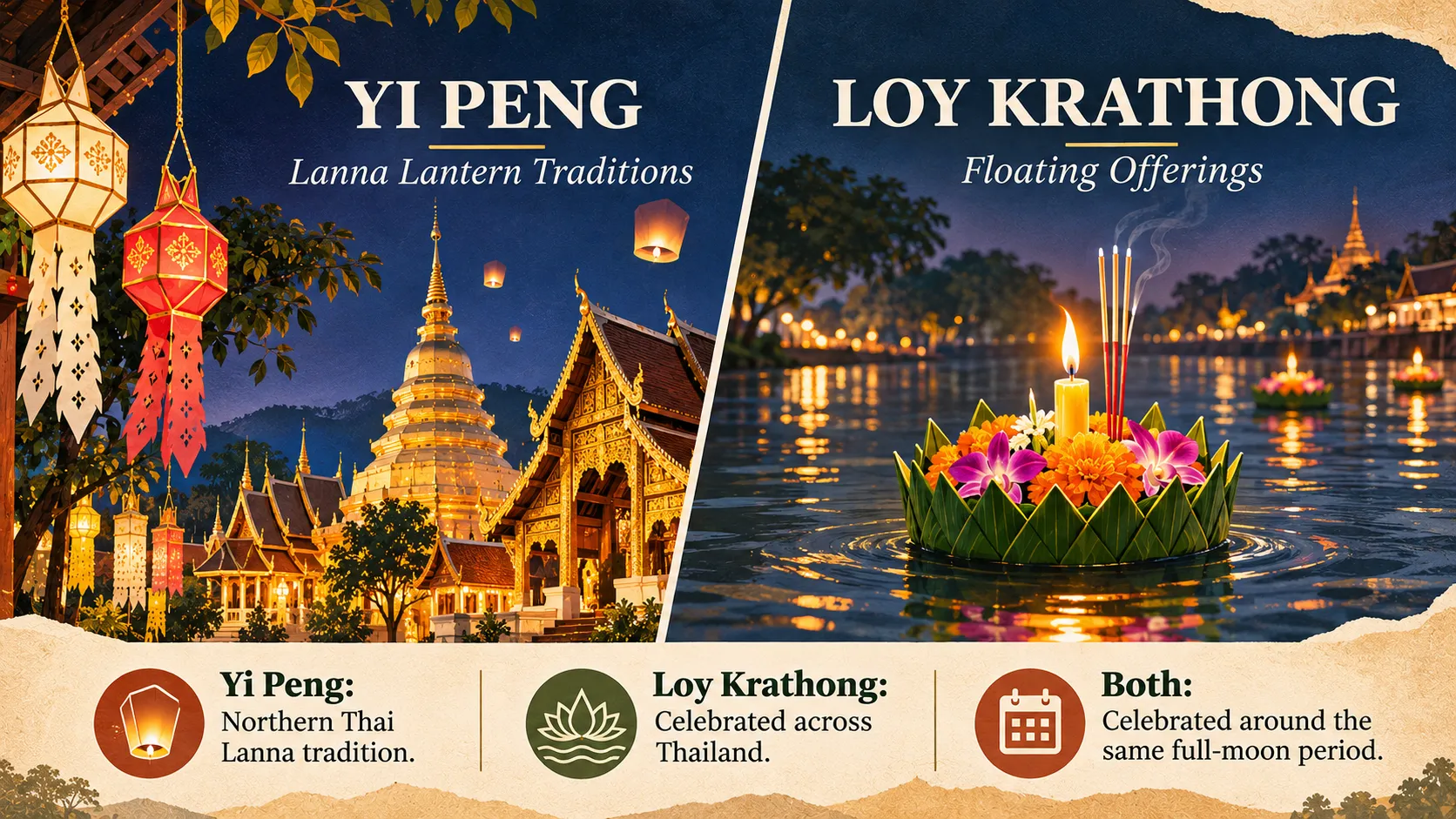 Yi Peng and Loy Krathong are often discussed together because they occur around the same full-moon period.
However, they have distinct cultural identities and traditional practices.
| Feature | Yi Peng | Loy Krathong |
|---|---|---|
| Cultural association | Lanna, Northern Thailand | Celebrated across Thailand |
| Calendar connection | Second month of the Lanna lunar calendar | Twelfth month of the central Thai lunar calendar |
| Main traditional expressions | Lantern displays, light offerings and Sapao | Floating decorated krathongs |
| Important locations | Chiang Mai, Lamphun and other Northern Thai communities | Multiple regions across Thailand |
| Relationship | Northern Thai cultural observance | Wider Thai festival of floating offerings |
A krathong is a decorated floating offering traditionally placed on water.
Yi Peng, meanwhile, includes a wider range of Lanna traditions, including hanging lanterns, candlelight offerings and Sapao.
The two celebrations overlap in the calendar, and Chiang Mai often experiences both during the same festival period.
Research published in 2026 in the International Review for Spatial Planning and Sustainable Development also discusses the distinction between traditional Lanna Sapao customs and the development of Loy Krathong practices in Chiang Mai.
Understanding this difference prevents a common misunderstanding: Yi Peng is not simply another name for every Loy Krathong celebration.
Where to Experience Yi Peng in Northern Thailand
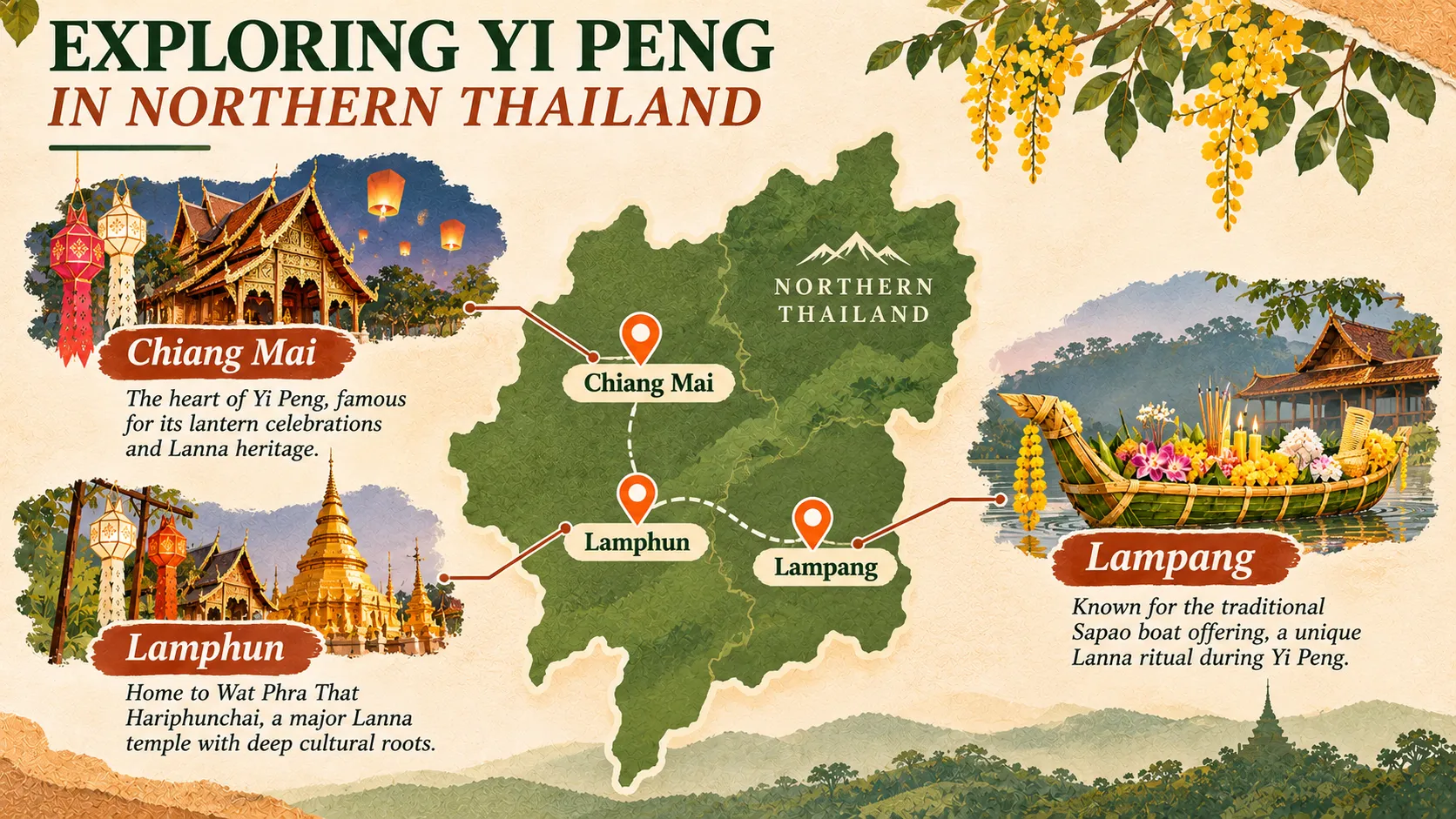 Although Chiang Mai attracts the greatest international attention, other destinations provide valuable perspectives on the region’s lantern traditions.
Chiang Mai
Chiang Mai is the best-known destination for Yi Peng.
The city combines traditional temple decorations, public celebrations, lantern displays and river-related activities.
The Ping River and the historic city area are important parts of the festival’s cultural setting.
Visitors should distinguish between the municipal festival and privately organised sky-lantern release events. They are not interchangeable, and the rules for releasing lanterns depend on the specific location and official permissions.
Lamphun
Lamphun offers an especially interesting perspective on the traditional religious side of Yi Peng.
The Pranee Khom Saen Duang, often described as the Hundred-Thousand Lantern Festival, is associated with Wat Phra That Hariphunchai.
According to the Tourism Authority of Thailand, the tradition honours the sacred pagoda and Queen Chama Thewi, who is remembered as the city’s first monarch.
Visitors can learn about decorated lanterns, Buddhist devotion and local community participation.
The celebration also includes cultural markets and handicrafts, connecting the festival with local creative traditions.
Lampang
Lampang is another important destination for understanding Northern Thailand’s traditional Sapao customs.
The Chiang Mai University cultural archive documents the Long Sapao Chao Wiang Lakorn tradition.
Its historical descriptions include boat-shaped offerings, community processions and floating Sapao on the Wang River.
This is a useful reminder that Lanna festival traditions are not identical in every province. Local communities have their own customs and interpretations.
Yi Peng 2026: Dates and Important Travel Information
If you are planning to visit Chiang Mai during the 2026 festival, it is important to understand the difference between the municipal celebrations and permitted sky-lantern releases.
According to the Chiang Mai Provincial Public Relations Department, the municipal Yi Peng celebrations are scheduled for November 23–25, 2026.
The province has announced the following permitted release windows:
- November 24: Sky lanterns and fireworks may be released from 7:00 PM until 1:00 AM the following day, subject to permission and location restrictions.
- November 25: Sky lanterns and fireworks may be released during the same evening window.
- Smoke lanterns have a separate permitted period on November 24, from 10:00 AM to 12:00 PM, subject to the applicable rules.
These are provincial rules for 2026. They should not be assumed to apply to future years.
Can You Release a Sky Lantern Anywhere in Chiang Mai?
No.
Chiang Mai province uses controlled release areas because of aviation and public-safety concerns.
The provincial authorities require permission for releases, with applications handled through the Bampen system and the relevant district administration.
The designated restricted zones include areas where lantern releases are prohibited. These include Mueang Chiang Mai and Hang Dong districts.
Buying a lantern from a street vendor does not give someone permission to release it.
Visitors should follow the latest provincial announcement and only participate at a location and time that has been authorised.
For official updates, consult the Chiang Mai Provincial Public Relations Department.
Are Ticketed Lantern Release Events Part of the Festival?
Some private organisers arrange ticketed events featuring coordinated sky-lantern releases.
The CAD Khomloy Sky Lantern Festival is one example. Its published event information describes a separate organised programme at the CAD Cultural Center Lanna.
These commercial events should be distinguished from the broader municipal and community celebrations.
Before purchasing a ticket, check:
- The exact event date and venue.
- Whether the organiser has the necessary release permissions.
- What the ticket includes.
- Whether transport is included.
- The cancellation and refund conditions.
- Whether the event’s arrangements have changed.
You can consult the CAD event information and ticket website.
Do not assume that attending a ticketed event is necessary to appreciate Yi Peng. Traditional lantern decorations, public celebrations and temple activities are also important parts of the festival.
Will Yi Peng Affect Flights at Chiang Mai Airport?
It can.
Sky lantern releases require careful coordination with aviation authorities because airborne lanterns can create risks for aircraft.
For the 2026 festival, Chiang Mai Airport announced adjustments to flight operations during specified lantern-release periods.
The airport also advised passengers travelling between November 21 and 28 to check their flight status directly with their airlines.
Its published guidance recommends arriving at least two hours before domestic departures and three hours before international departures during the affected travel period.
If you are visiting Chiang Mai in November 2026, confirm your flight schedule before leaving for the airport.
The Environmental and Safety Considerations of Sky Lanterns
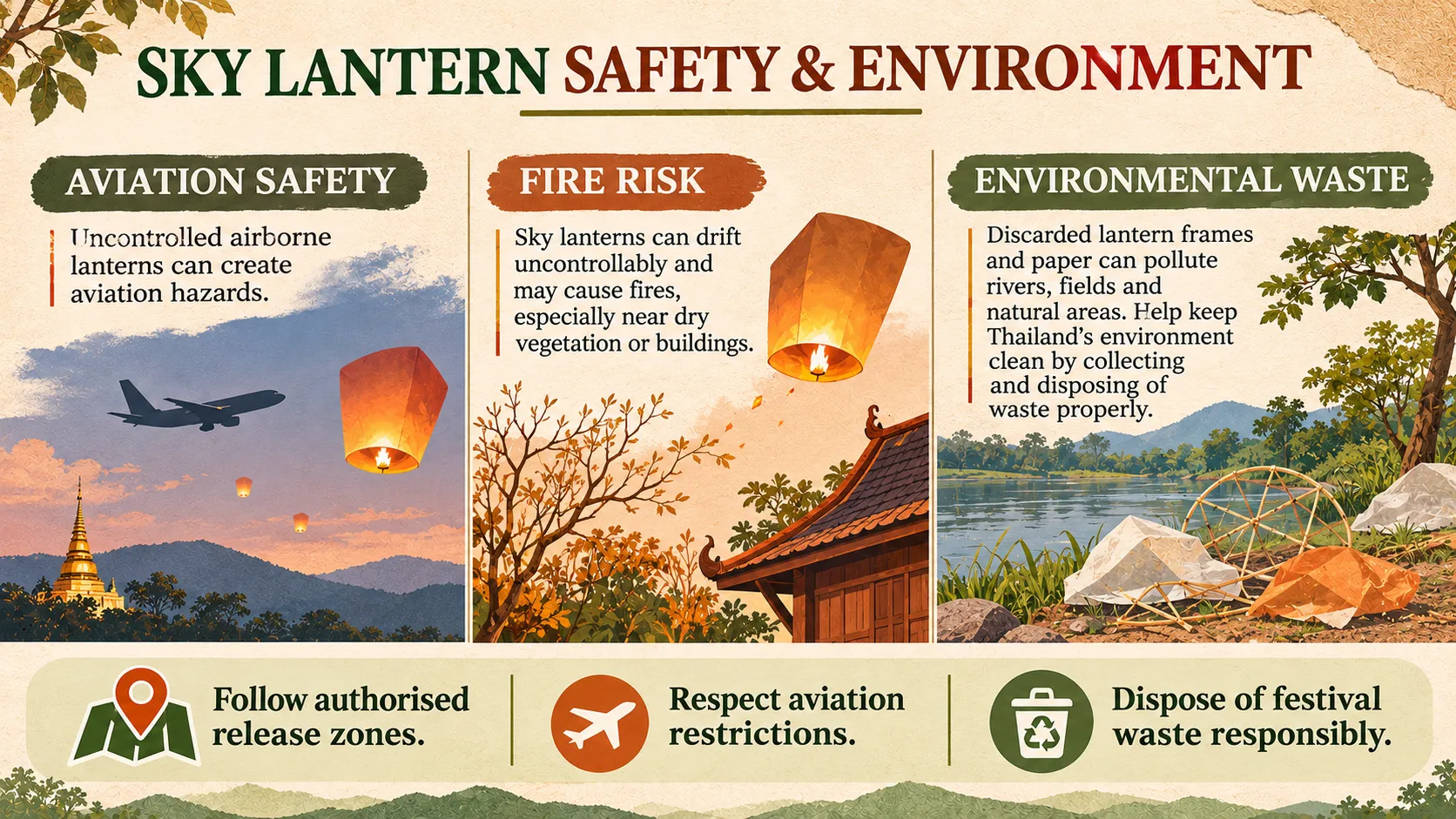 The visual appeal of sky lanterns should not overshadow their practical risks.
A sky lantern contains a burning fuel source that allows it to rise into the air. Once released, its flight path and landing place cannot be controlled by the person who launched it.
This creates several concerns.
Aviation safety: Lanterns can interfere with aircraft operations. Chiang Mai’s authorities coordinate release restrictions with aviation-related agencies.
Fire risk: A lantern carrying a burning fuel source can become a hazard if it lands near buildings, vegetation or other combustible materials.
Waste and local surroundings: Lantern frames and other materials can remain after the celebration. Responsible event management should account for collection and disposal rather than assuming every released lantern disappears without consequence.
The Civil Aviation Authority of Thailand has published guidance on floating lantern restrictions and aviation hazards.
For 2026, Chiang Mai’s provincial authorities have also emphasised designated release zones, permits and safety arrangements.
Visitors can support responsible celebrations by:
- Never releasing a lantern in a restricted area.
- Following instructions from local authorities and event organisers.
- Avoiding the release of personal lanterns outside approved events.
- Respecting temple grounds, waterways and public spaces.
- Supporting organisers who provide clear safety and waste-management arrangements.
Respect for the tradition includes respect for the people, places and environment affected by the celebration.
Frequently Asked Questions About Yi Peng
When is the Yi Peng Lantern Festival celebrated?
Yi Peng is celebrated around the full moon of the second month of the traditional Lanna lunar calendar. It generally coincides with Loy Krathong in the central Thai lunar calendar, usually in November.
When is Yi Peng in Chiang Mai in 2026?
Chiang Mai’s municipal celebrations are scheduled for November 23–25, 2026. The provincial sky-lantern release windows are November 24 and 25, subject to official permissions and restrictions.
Is Yi Peng the same as Loy Krathong?
No. Yi Peng is a Northern Thai Lanna cultural observance, while Loy Krathong is celebrated across Thailand and is associated with floating decorated offerings on water. Their dates often coincide.
What does Yi Peng mean?
Yi Peng refers to the second month in the traditional Lanna calendar. The festival is associated with the full moon of that month.
Why do people light lanterns during Yi Peng?
Lanterns and candlelight are associated with Buddhist devotion, merit-making and traditional religious beliefs. Their meaning can vary between communities and particular rituals.
What is Sapao in the Yi Peng Festival?
Sapao is a traditional Lanna boat-shaped offering. It could carry flowers, incense, candles, food and useful items before being floated on a river as an act of merit-making, remembrance or charity.
Where is the best place to experience Yi Peng?
Chiang Mai is the best-known destination. Lamphun is particularly valuable for its Pranee Khom Saen Duang lantern tradition, while Lampang offers another perspective through its traditional Sapao celebrations.
Can tourists release lanterns in Chiang Mai?
Only at permitted locations and during authorised periods. Restricted areas, including Mueang Chiang Mai and Hang Dong districts, prohibit releases under the 2026 provincial rules. Visitors should check the latest official announcements.
Do you need a ticket to attend Yi Peng?
Not every part of the festival is a private ticketed event. Some independent organisers sell tickets for coordinated mass-release programmes. Check the arrangements for the particular event you want to attend.
Sources and Further Reading
The following sources were used to prepare this guide:
- Chiang Mai University Library – History of Yi Peng
https://lannainfo.library.cmu.ac.th/en_lannatradition/yeepeng-history.php
Historical and religious accounts of the Lanna festival. - Chiang Mai University Library – Making the Sapao
https://lannainfo.library.cmu.ac.th/en_lannatradition/yeepeng-sapuo.php
Traditional Sapao offerings, their construction and their cultural significance. - Tourism Authority of Thailand – The Hundred-Thousand Lantern Festival in Lamphun
https://www.tourismthailand.org/Articles/hundred-thousand-lantern-en
Lamphun’s Pranee Khom Saen Duang tradition, religious meaning and cultural activities. - Chiang Mai Provincial Public Relations Department – Yi Peng 2026 Lantern Release Measures
https://chiangmai.prd.go.th/th/content/category/detail/id/9/iid/552702
Provincial permissions, restricted zones and permitted release periods. - Chiang Mai Provincial Public Relations Department – Yi Peng 2026 Preparations
https://chiangmai.prd.go.th/th/content/category/detail/id/9/iid/548860
Festival arrangements and safety measures. - Chiang Mai Provincial Government – 2026 Yi Peng Festival Announcement
https://www.chiangmai.go.th/managing/public/newsshow/15372
Official municipal festival dates, November 23–25, 2026. - Chiang Mai Airport – 2026 Yi Peng Flight Preparations
https://chiangmai.prd.go.th/th/content/category/detail/id/9/iid/557018
Flight-operation adjustments and passenger travel guidance. - International Review for Spatial Planning and Sustainable Development – Spatial and Social Mechanisms for Urban Development through Community Festival
https://www.jstage.jst.go.jp/article/irspsd/14/4/14_10/_html/-char/en
Research discussing Yi Peng, traditional Sapao practices and changes in festival development. - Civil Aviation Authority of Thailand – Floating Lantern Safety Guidance
https://www.caat.or.th/wp-content/uploads/2025/09/floating-lantern-update-eng.pdf
Lantern specifications, permissions and aviation-safety considerations.
Exploring these traditions helps visitors understand why Yi Peng remains an important part of Northern Thailand’s cultural identity.

Abhay Ramola researches world festivals across primary sources, local accounts, and on-ground reporting. He founded Dionfest to cover what gets missed when festivals become tourism content the history, the ritual, and the people behind it.