
How Air Pollution Silently Destroys Your Lungs And What’s Already Happening Inside You Right Now
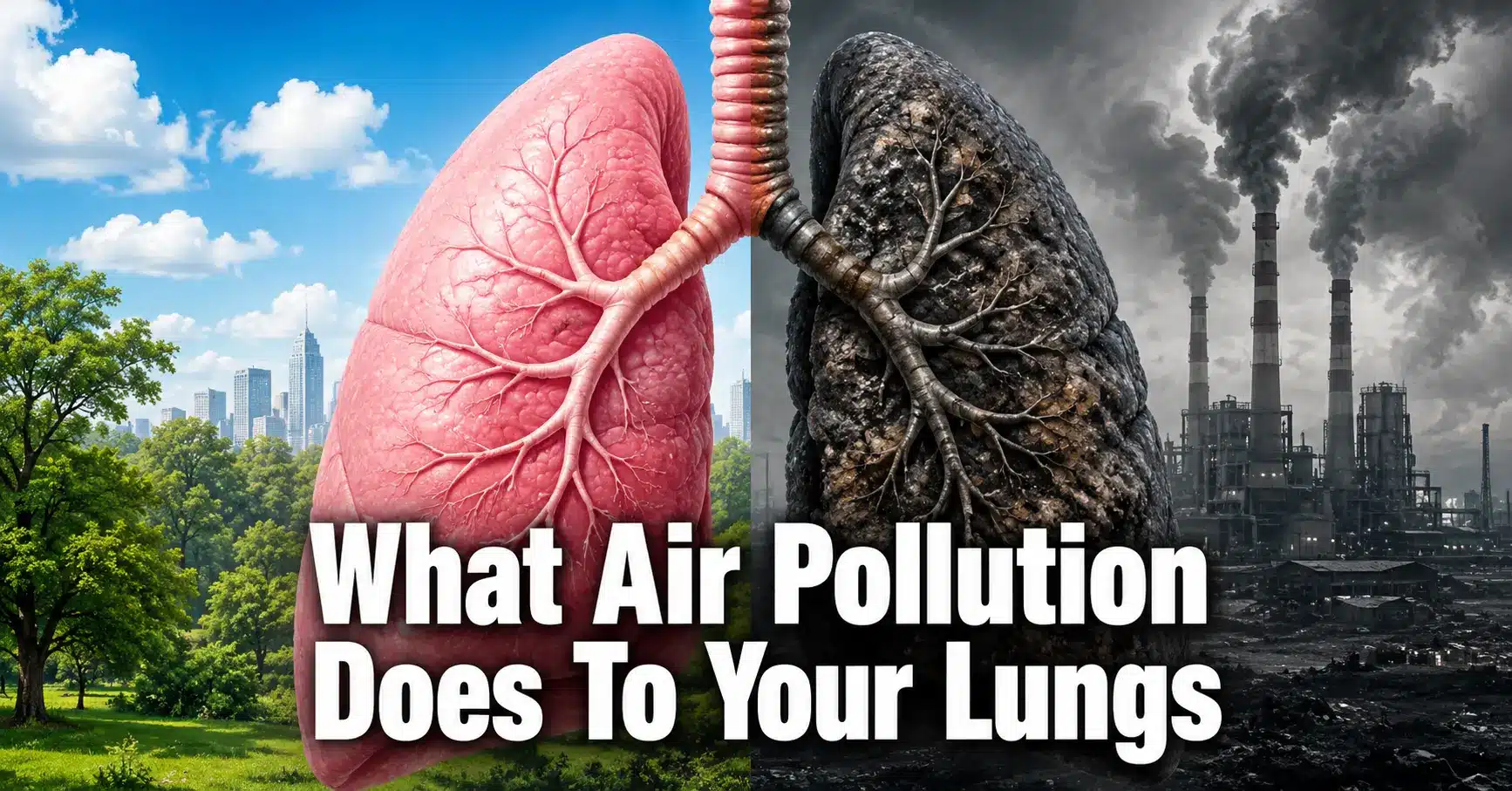
Why Air Pollution Is a Slow, Hidden Killer
Most people think of air pollution as an outdoor problem smog you see, smoke you smell. But the real damage happens quietly, deep inside your lungs, long before you notice any symptoms.
The World Health Organization estimates that 7 million people die every year from diseases linked to air pollution. That makes it one of the leading environmental causes of death on the planet. Yet most of us never once think about the air quality when we step outside.
Here’s what almost no article tells you: lung damage from air pollution is cumulative. Each breath in a polluted environment adds a tiny layer of harm. Over years and decades, those layers build into conditions that can permanently cut your breathing capacity.
You don’t feel it happening. That’s exactly what makes it so dangerous.
That’s why global initiatives like World Environment Day exist — to remind us every year that this invisible threat demands real action.
What Air Pollution Is Actually Made Of
 Before we talk about lung damage, you need to know what you’re actually breathing. “Air pollution” is not one thing it’s a soup of different particles and gases, each attacking your respiratory system in its own way.
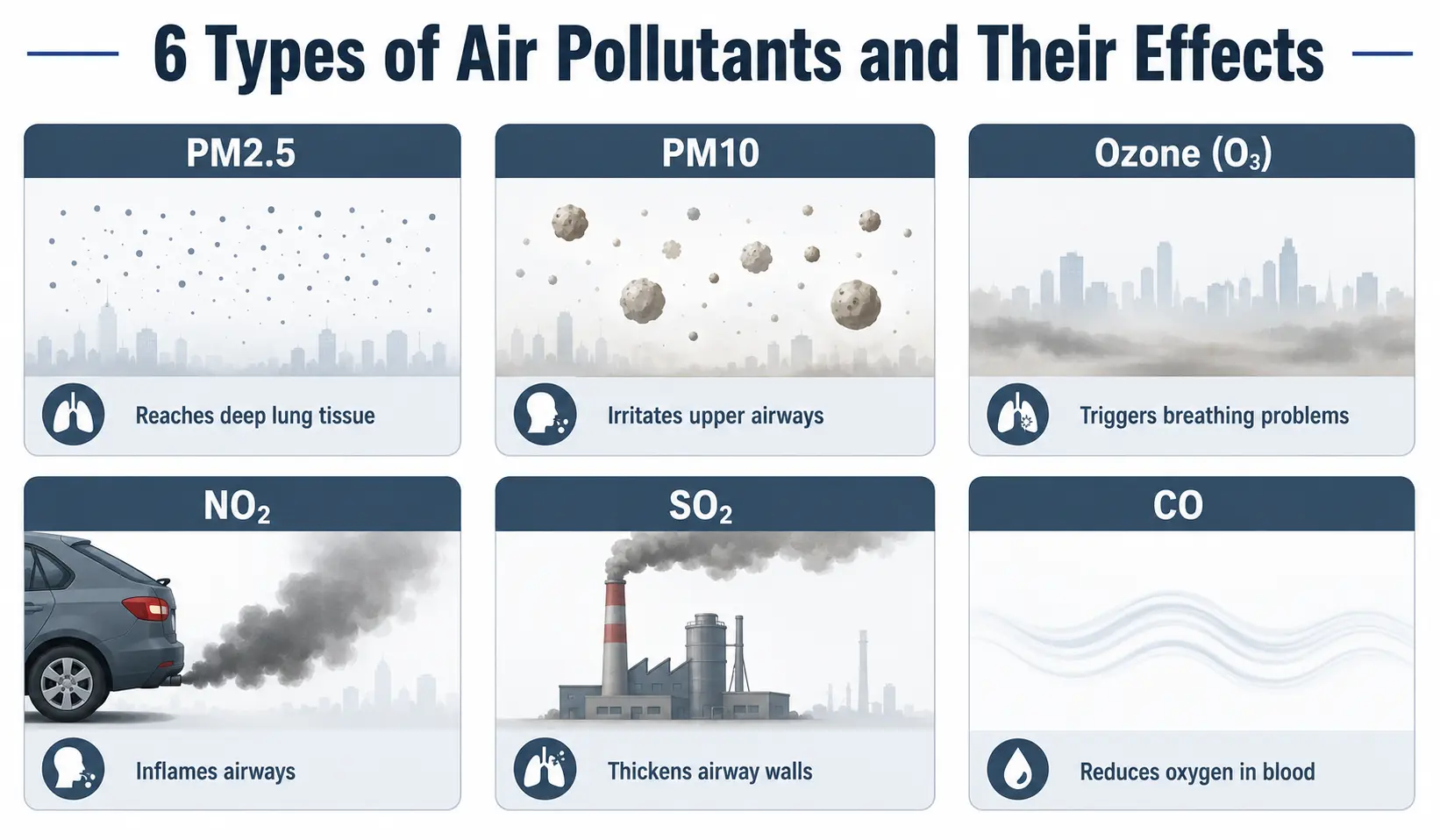
The main pollutants that damage lungs:
- PM2.5 (Fine Particulate Matter): Particles smaller than 2.5 micrometers in diameter. They are so tiny they bypass your nose and throat entirely and travel deep into the alveoli — the tiny air sacs where oxygen enters your blood. These are the most dangerous particles for lung tissue.
- PM10 (Coarse Particulate Matter): Slightly larger particles from dust, pollen, and construction debris. They irritate upper airways and trigger asthma and bronchitis attacks.
- Ozone (O3): At ground level, ozone is not a protective layer it’s a lung irritant formed when vehicle exhaust and industrial gases react with sunlight. It causes airway inflammation with every breath.
- Nitrogen Dioxide (NO2): Released by cars, trucks, and power plants. Long-term exposure thickens the walls of your airways, making it harder to breathe.
- Sulfur Dioxide (SO2): Produced by burning coal and oil. It constricts airways almost immediately and contributes to acid rain, which carries its own respiratory hazards.
- Carbon Monoxide (CO): Replaces oxygen in your blood. Even low levels reduce the amount of oxygen your organs receive, including lung tissue itself.
- Volatile Organic Compounds (VOCs): Released by paints, solvents, vehicle exhausts, and factories. Many are carcinogenic and cause chronic inflammation.
The scariest thing? These pollutants don’t work alone. They interact, they compound each other, and your lungs absorb the combined damage all at once.
What Happens the Moment You Breathe Polluted Air
Your nose and throat are your first line of defense. Tiny hairs called cilia sweep particles out before they go deeper. Mucus traps pollutants. But this system has limits.
When PM2.5 particles enter, they are simply too small to be caught. They go straight past your trachea, bypass your bronchi, and land directly in the alveoli. There, your immune system sends macrophages cells that engulf foreign invaders to try to destroy them.
The problem is that many pollutant particles can’t be broken down. Macrophages engulf them but can’t digest them. They become overwhelmed, they die, and they release inflammatory chemicals as they go. This triggers oxidative stress a cascade of chemical reactions that damage the cells lining your lungs.
This process begins with your very first exposure to heavily polluted air. For most city dwellers, it’s been happening since childhood.
How Air Pollution Damages Your Lungs Over Time
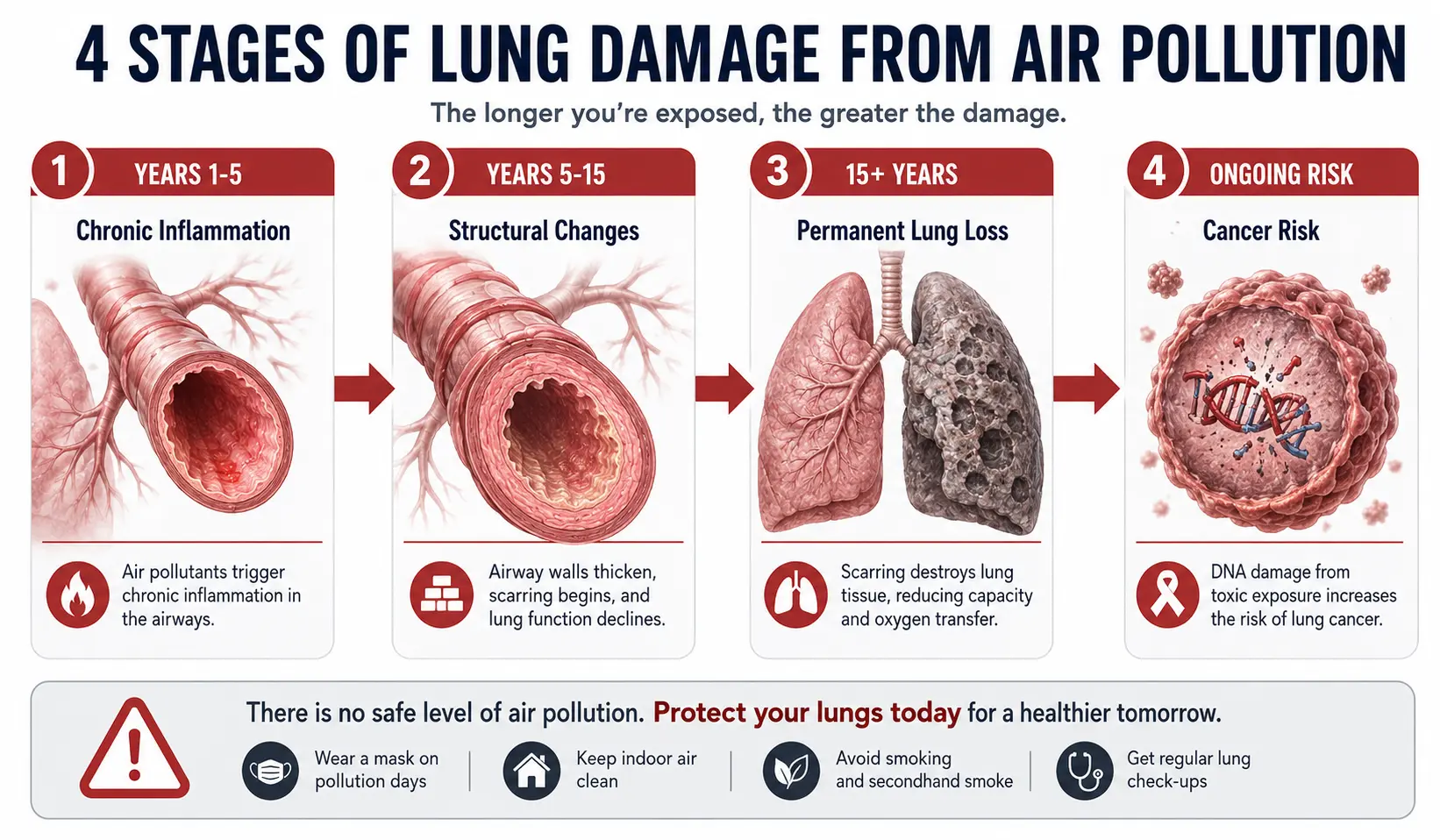 This is where the long game plays out. One bad air day doesn’t ruin your lungs. But five years? Twenty years? The damage compounds like interest on a debt.
Stage 1: Chronic Inflammation (Years 1–5 of Heavy Exposure)
Persistent exposure to pollutants keeps your lungs in a constant low-grade state of inflammation. Your airways stay slightly swollen. Mucus production increases. You might notice a persistent cough, especially in the mornings, that you write off as a cold or allergies.
Researchers at Harvard found that people living within 50 meters of a major highway show measurable reductions in lung function compared to those living further away — and many of those people feel completely fine.
Stage 2: Structural Airway Changes (Years 5–15)
Over time, chronic inflammation starts to physically reshape your airways. The walls of your bronchi thicken. The cilia that sweep out particles become less effective. Your airways narrow.
Studies using CT scans show that long-term exposure to PM2.5 causes measurable airway remodeling the walls literally grow thicker and stiffer. This is the same structural change seen in early-stage COPD.
At this point, your lungs can still function but they’re working harder than they should be. You might notice you get winded more easily climbing stairs, or that respiratory infections take longer to clear.
Stage 3: Permanent Lung Function Loss (15+ Years)
This is where reversibility becomes a real question. After years of remodeling, scar tissue forms in lung tissue — a process called pulmonary fibrosis. Scar tissue doesn’t stretch the way healthy lung tissue does, so your lungs can’t expand fully.
The American Lung Association reports that long-term exposure to air pollution accelerates the natural decline in lung function that comes with aging. In simple terms: pollution makes your lungs age faster than the rest of you.
A landmark study published in The Lancet tracked over 300,000 people across eight European countries and found that even moderate long-term exposure to PM2.5 — at levels many cities consider “safe” caused significant lung function decline.
Stage 4: Cellular DNA Damage and Cancer Risk
The most alarming stage involves changes at the cellular level. PM2.5 particles and certain VOCs can penetrate cell membranes and damage DNA directly. The International Agency for Research on Cancer (IARC) classified outdoor air pollution and PM2.5 specifically — as a Group 1 carcinogen in 2013. That puts it in the same category as cigarette smoke and asbestos.
Lung cancer risk rises with cumulative exposure even in non-smokers. About 10–15% of lung cancer patients worldwide have never smoked a cigarette.
Diseases That Air Pollution Directly Causes
Air pollution doesn’t just make existing conditions worse. It causes them. Here’s what long-term exposure leads to:
Chronic Obstructive Pulmonary Disease (COPD): A permanent narrowing and obstruction of airways that makes every breath a conscious effort. Once established, COPD is irreversible. Air pollution accounts for roughly 14% of global COPD cases according to the WHO.
Asthma: Repeated airway inflammation from pollution sensitizes the immune system over time. Children who grow up in high-pollution areas have significantly higher rates of asthma. Even adults can develop adult-onset asthma from prolonged pollution exposure.
Lung Cancer: As mentioned above, air pollution is a confirmed carcinogen. The risk is lower than from smoking but real and measurable especially for people living near heavy traffic or industrial zones for decades.
Pulmonary Fibrosis: Repeated inflammation and injury leads to progressive scarring of lung tissue. This reduces breathing capacity and has no reliable cure.
Bronchitis (Chronic): Airways that stay chronically inflamed produce excess mucus and become susceptible to repeated infections. Over time, this becomes a permanent condition rather than an acute one.
Pneumonia: Polluted air weakens the lungs’ natural defenses, making you far more vulnerable to bacterial and viral pneumonia and far slower to recover.
Who Is Most at Risk?
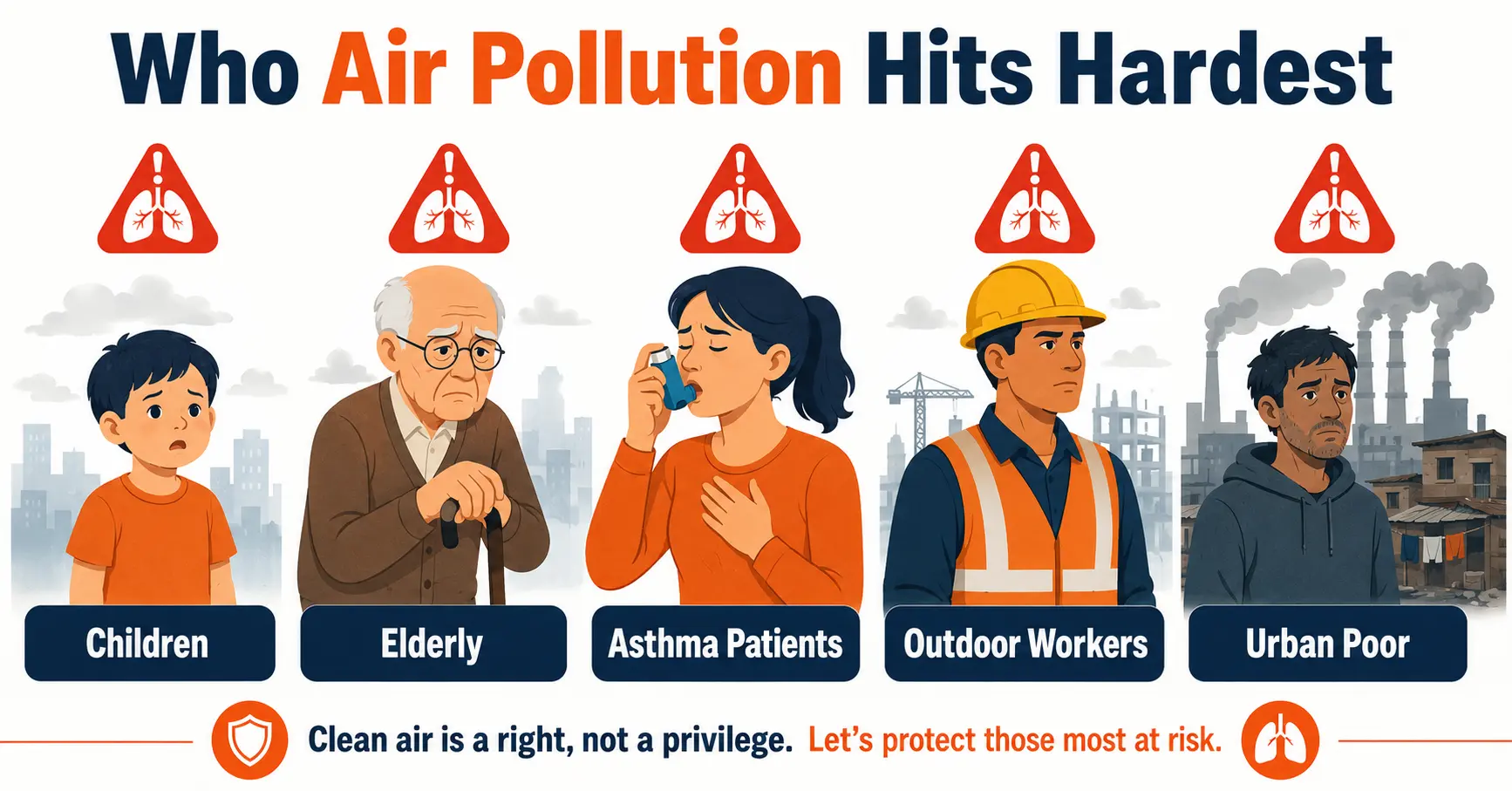 Pollution harms everyone’s lungs, but some groups face dramatically higher risk.
Children are especially vulnerable because their lungs are still developing. Exposure to air pollution in early childhood can permanently limit maximum lung capacity meaning they never reach the lung function level they should have had. A child in a polluted city may have lungs 20% less capable than they would have been in clean air.
Older adults already experience natural lung function decline. Pollution accelerates that decline sharply.
People with existing respiratory conditions asthma, COPD, emphysema face life-threatening flare-ups on high-pollution days. Hospital admissions for respiratory emergencies spike predictably when air quality indexes rise.
Outdoor workers — farmers, construction workers, traffic police, delivery drivers — spend hours each day breathing unfiltered outdoor air. Their cumulative exposure dwarfs that of office workers.
People in low-income urban neighborhoods are disproportionately affected because pollution sources like highways, factories, and waste facilities are more commonly located near lower-income communities.
Can Your Lungs Recover from Pollution Damage?
The answer depends on how far the damage has gone and it’s more nuanced than most people expect.
In early stages, yes. If you move away from heavy pollution or significantly reduce exposure before permanent structural changes occur, your lungs can recover meaningful function. Studies of people who relocated from high-pollution to low-pollution areas showed measurable improvements in airway inflammation and lung function over 1–3 years.
Inflammation can be reversed. Your body is remarkably good at reducing airway inflammation when the irritant is removed. Airways can widen, mucus production can normalize, and cilia can regain some of their sweeping function.
Scar tissue cannot be undone. Once pulmonary fibrosis has formed, that tissue is permanent. You can slow further scarring, but you can’t remove what’s already there.
DNA damage is a separate concern. Cellular mutations that have already occurred don’t automatically reverse. Your immune system removes many abnormal cells, but not all — which is why cancer risk remains elevated even after pollution exposure stops.
The bottom line: the earlier you reduce exposure, the more your lungs can heal. Every year matters.
How to Protect Your Lungs from Air Pollution
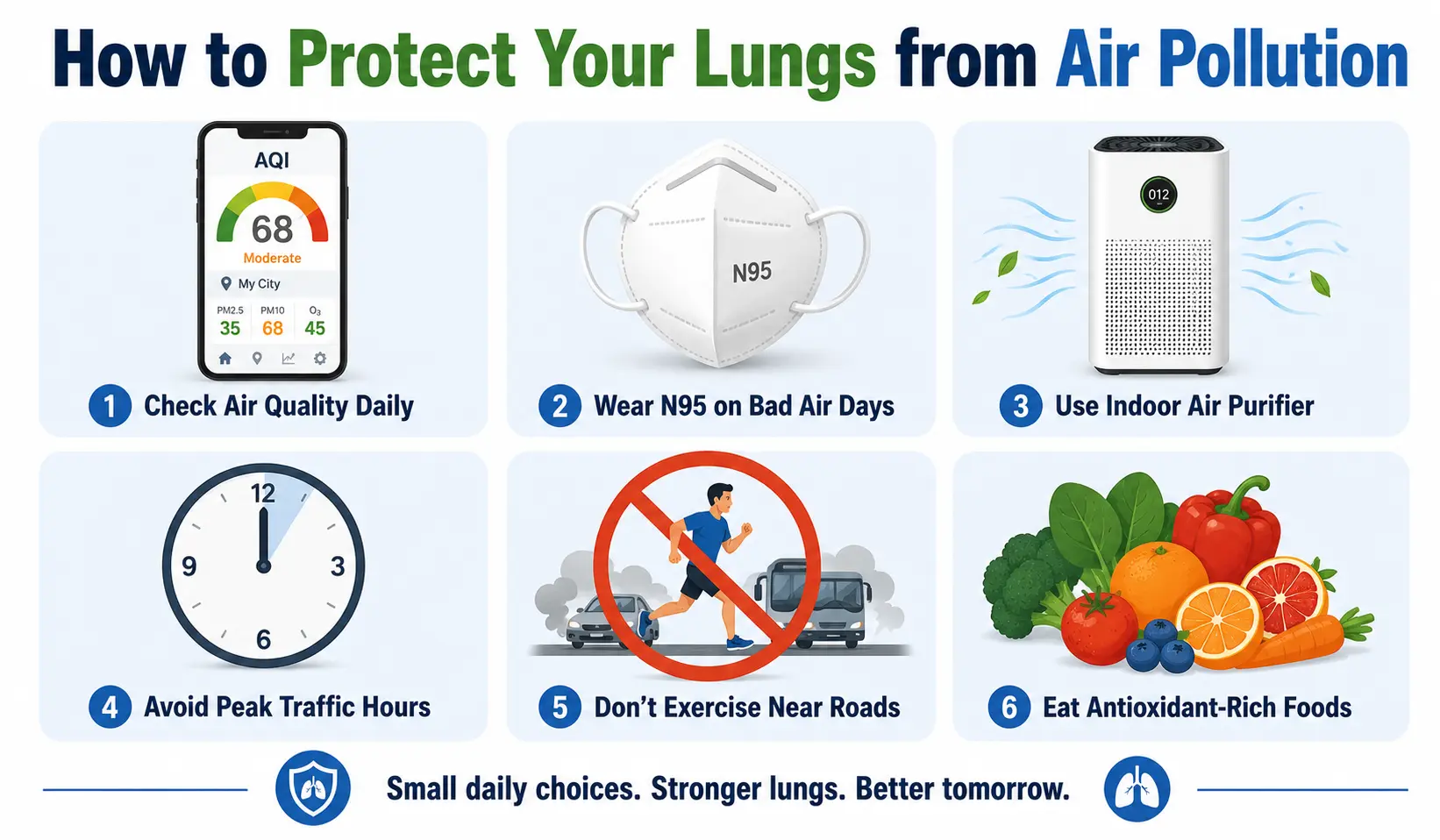 You can’t eliminate your exposure entirely if you live in a city. But you can take targeted steps that meaningfully reduce your lung damage over time.
Check air quality daily before going outside. Apps like AirVisual, IQAir, and government air quality indexes (like India’s CPCB dashboard or the US EPA’s AirNow) give real-time PM2.5 and AQI readings. On days above AQI 150, limit strenuous outdoor activity.
Wear an N95 or N99 respirator on high-pollution days. Standard surgical masks do not filter PM2.5. Only masks rated N95 or higher block fine particles effectively. This is not just for pandemic preparedness it’s practical lung protection for city dwellers.
Keep indoor air clean. Outdoor pollutants enter homes through windows, doors, and ventilation. A HEPA air purifier in your bedroom can reduce indoor PM2.5 levels by 50–70%, dramatically cutting the hours you spend breathing polluted air. Avoid using gas stoves without ventilation, as they release NO2 indoors.
Avoid peak traffic hours. PM2.5 concentrations near roads are highest during morning (7–10 AM) and evening (5–8 PM) rush hours. If you walk, cycle, or run outdoors, shift your schedule to midday or early morning.
Don’t exercise next to roads. Heavy breathing during exercise pulls far more air and pollutants deep into your lungs. A study from the University of Cambridge found that cycling on a busy road was actually worse for lung health than not exercising at all on high-pollution days.
Eat an antioxidant-rich diet. Vitamins C and E, omega-3 fatty acids, and polyphenols (found in berries, leafy greens, nuts, and fish) help neutralize some of the oxidative damage that pollution causes in lung tissue. This doesn’t cancel pollution, but it meaningfully reduces cellular damage.
Support tree-planting initiatives. Trees act as natural air filters, absorbing PM2.5 and releasing clean oxygen. India’s Van Mahotsav campaign plants millions of trees every July supporting or participating in such efforts directly contributes to cleaner air in your city.
Never smoke. Smoking and air pollution damage lungs through overlapping mechanisms. A smoker in a heavily polluted city isn’t dealing with two separate problems — the damage compounds exponentially.
Get lung function tested. If you’ve lived in a polluted city for more than a decade, ask your doctor for spirometry a simple breathing test that measures lung capacity and airflow. Catching early-stage decline gives you years to slow or reverse it.
FAQ: Air Pollution and Lung Health
Does indoor air pollution damage lungs the same way outdoor pollution does?
Yes. Indoor air pollution — from cooking smoke, mold, VOCs from furniture and paint, and outdoor air entering the home can be as harmful as outdoor pollution. In fact, the WHO estimates that indoor air pollution kills more people globally than outdoor pollution, largely due to cooking with solid fuels in poorly ventilated homes. Your lungs don’t distinguish between indoor and outdoor PM2.5. If it reaches your alveoli, it causes the same damage.
Can children’s lungs fully recover if they move to cleaner air?
Children have greater lung plasticity than adults, meaning their lungs are still growing and can compensate better for early damage if the exposure stops. Studies show that children who move from polluted to clean-air environments before age 12 can recover significant lung function. After adolescence, the window for full recovery narrows. Early intervention makes a measurable difference.
Is air pollution worse than smoking for your lungs?
Smoking delivers far more concentrated pollutants directly to lung tissue and remains the leading cause of lung cancer. But the distinction matters less than most people think: both cause inflammation, airway remodeling, and cellular DNA damage through overlapping biological pathways. For someone living in a heavily polluted city for 30 years, the lung function loss can rival that of a light smoker. And critically — 7 billion people breathe polluted air every day; far fewer smoke.
How quickly does air pollution affect lung function?
Acute effects — irritation, inflammation, reduced airway diameter happen within hours of exposure on a bad air day. Chronic structural damage takes years to develop. But measurable changes in lung inflammation markers appear in blood tests within days of sustained high-pollution exposure. The short-term effects largely reverse when air quality improves; the long-term structural damage does not.
Are air purifiers actually effective against lung damage from pollution?
A good HEPA air purifier genuinely reduces indoor PM2.5 and can measurably improve respiratory health outcomes. A 2015 randomized trial published in JAMA Internal Medicine found that participants using HEPA air purifiers showed significantly lower airway inflammation markers and improved lung function compared to a control group using sham purifiers. The effect was most pronounced in people with asthma. Purifiers don’t replace reducing outdoor exposure, but they meaningfully reduce the hours per day your lungs are under attack.
The Honest Conclusion About Air Pollution and Your Lungs
Air pollution is not a distant problem or an abstract environmental concern. It is actively reshaping the tissue inside your lungs with every breath you take in a polluted environment.
The damage is slow, invisible, and cumulative. That’s what makes it so easy to ignore until it can no longer be ignored, because breathing has become hard work.
The good news is that reducing your exposure at any point slows the damage. Your lungs are resilient organs with real capacity for recovery, especially when structural damage hasn’t yet taken hold. Air quality monitoring, proper masks, indoor air filtration, and smart outdoor habits aren’t overcautions they are direct investments in the only set of lungs you’ll ever have.
Start paying attention to air quality the way you’d check the weather. Because the air you breathe today is quietly building the lungs you’ll live with tomorrow.
Individual habits matter — but so does collective pressure. Movements like Earth Day have pushed governments to pass cleaner air laws. Your voice in those movements is as important as your N95 mask.

Abhay Ramola researches world festivals across primary sources, local accounts, and on-ground reporting. He founded Dionfest to cover what gets missed when festivals become tourism content the history, the ritual, and the people behind it.





1 thought on “How Air Pollution Silently Destroys Your Lungs And What’s Already Happening Inside You Right Now”