
Earth Day: What It Is, Why It Matters, and How You Can Actually Help
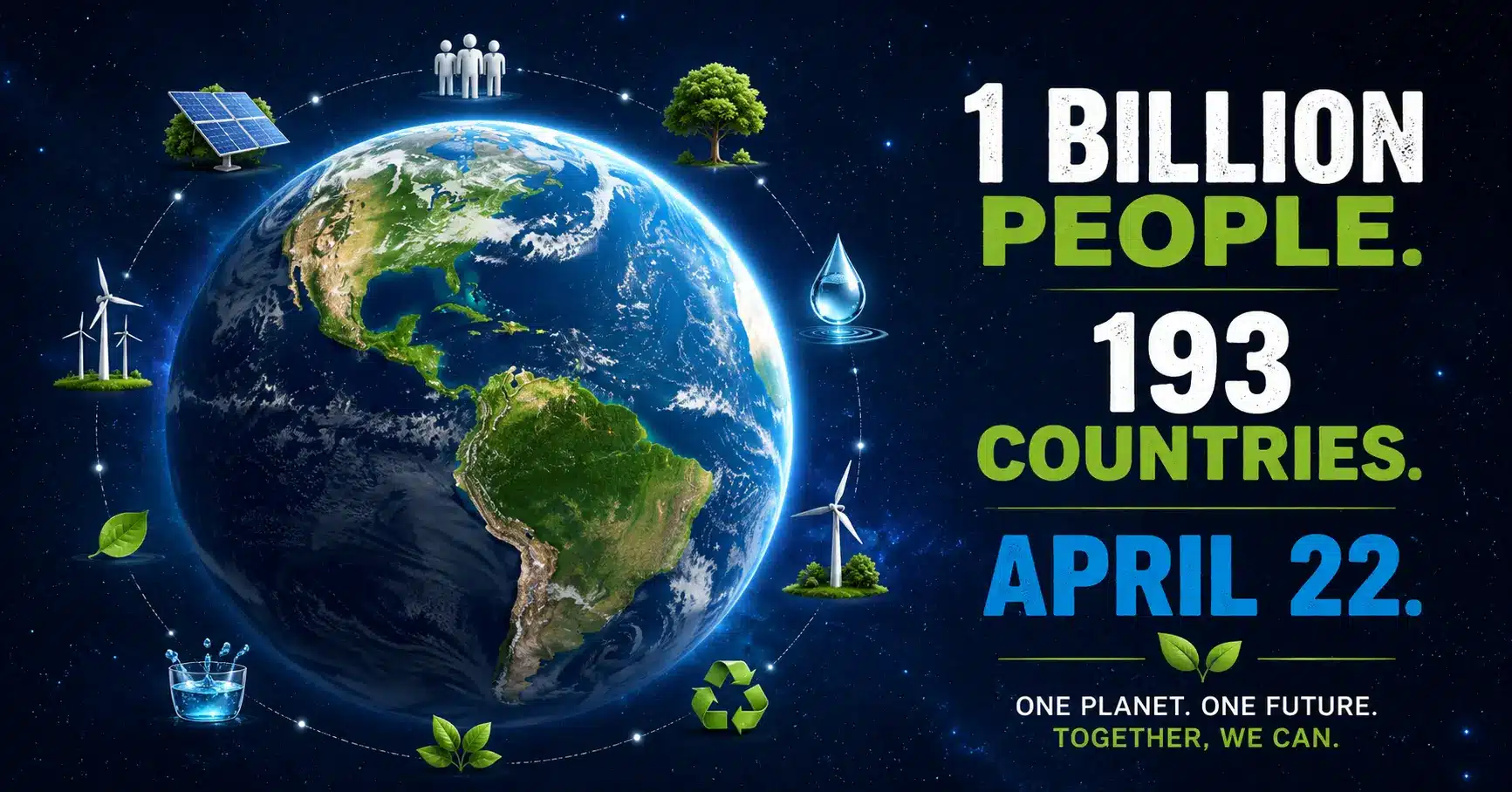
Every April 22, over a billion people across 193 countries take part in Earth Day — the largest civic event on the planet. But most people don’t know how it started, what it’s actually achieved, or how to do something meaningful beyond posting a green hashtag. This guide covers all of it, including Earth Day 2027 planning if you want to get ahead.
What Is Earth Day?
Earth Day is an annual event on April 22 dedicated to raising awareness about environmental issues and pushing for real policy change. It’s not a holiday in the traditional sense. There’s no day off from work. The point is to show up and do something, not celebrate.
The 2025 theme was “Our Power, Our Planet,” which focused on the global push to triple renewable energy production by 2030. Each year has a specific focus, so the activities and goals shift accordingly.
At its core, Earth Day is a coordination mechanism — a single day where individuals, schools, businesses, and governments around the world focus on the same set of problems at the same time.
The History Behind Earth Day
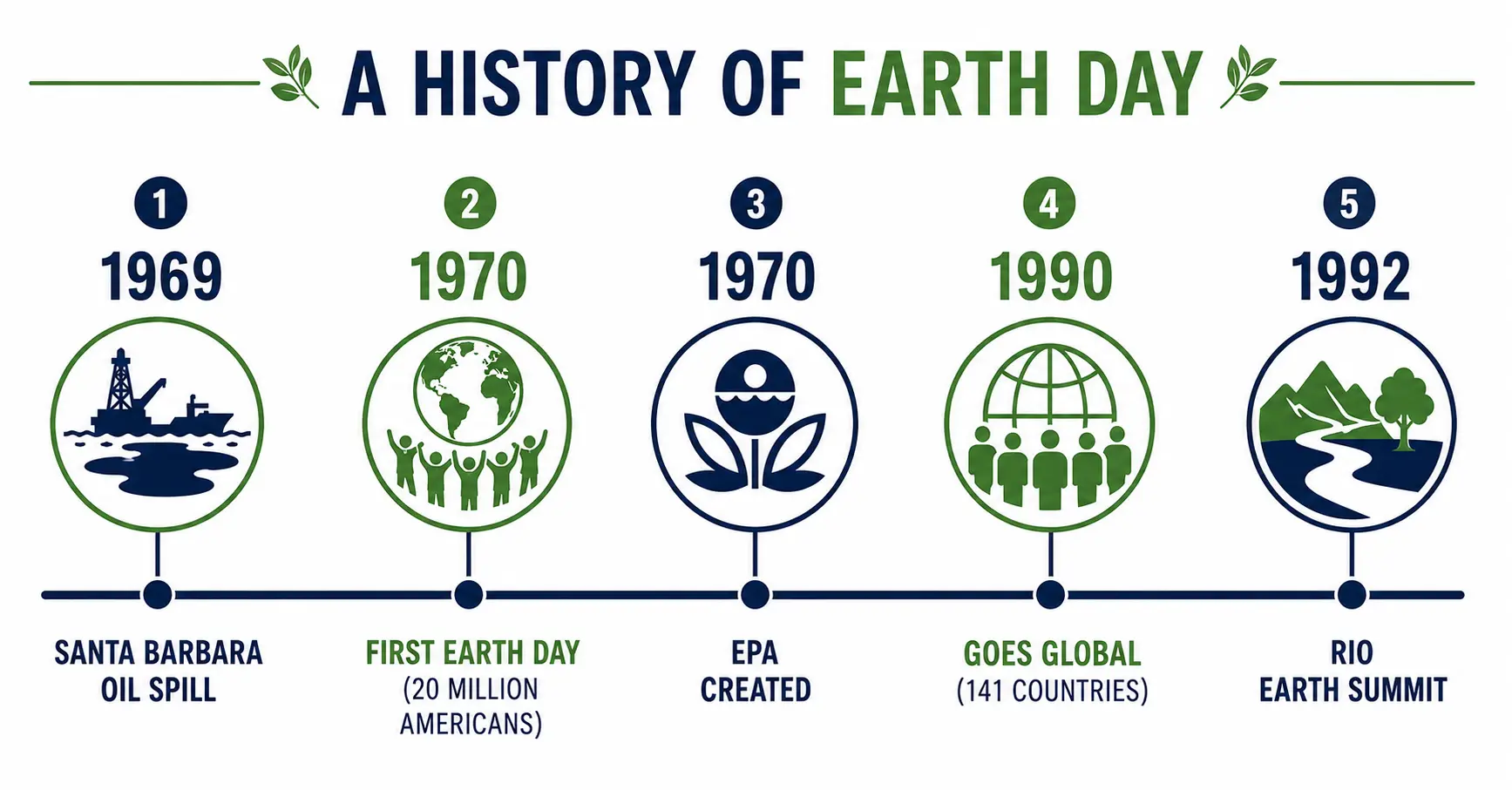 Earth Day was founded by U.S. Senator Gaylord Nelson after the massive 1969 Santa Barbara oil spill. He wanted to channel the energy of the anti-war movement into an environmental cause. He hired 25-year-old activist Denis Hayes to organize it.
On April 22, 1970, 20 million Americans took to the streets. That’s roughly 10% of the U.S. population at the time. The political impact was immediate:
- The U.S. Environmental Protection Agency (EPA) was created in December 1970.
- The Clean Air Act, Clean Water Act, and Endangered Species Act all passed within the next three years.
Earth Day went global in 1990. Denis Hayes coordinated 200 million people in 141 countries. That mobilization helped set the stage for the 1992 UN Earth Summit in Rio de Janeiro.
Today, EARTHDAY.ORG (formerly the Earth Day Network) coordinates the annual event and runs year-round campaigns on climate policy, plastic reduction, and environmental education.
World Earth Day vs. Environment Day: What’s the Difference?
People often mix these up. They are two separate events with different origins and scopes.
World Earth Day (April 22):
- Organized by EARTHDAY.ORG
- Focused on broad environmental action — climate change, deforestation, plastic pollution
- Started in the United States in 1970
- Primarily driven by civil society, schools, and NGOs
World Environment Day (June 5):
- Organized by the United Nations Environment Programme (UNEP)
- Has a government-to-government focus and officially designated host countries
- Started in 1974, following the 1972 Stockholm Conference on the Human Environment
- More policy-focused, with each year centered on a single theme (e.g., land restoration, plastic pollution)
Both matter. But if you’re planning school activities or community events, Earth Day on April 22 has far more public participation infrastructure behind it.
Earth Day Activities You Can Do This Year
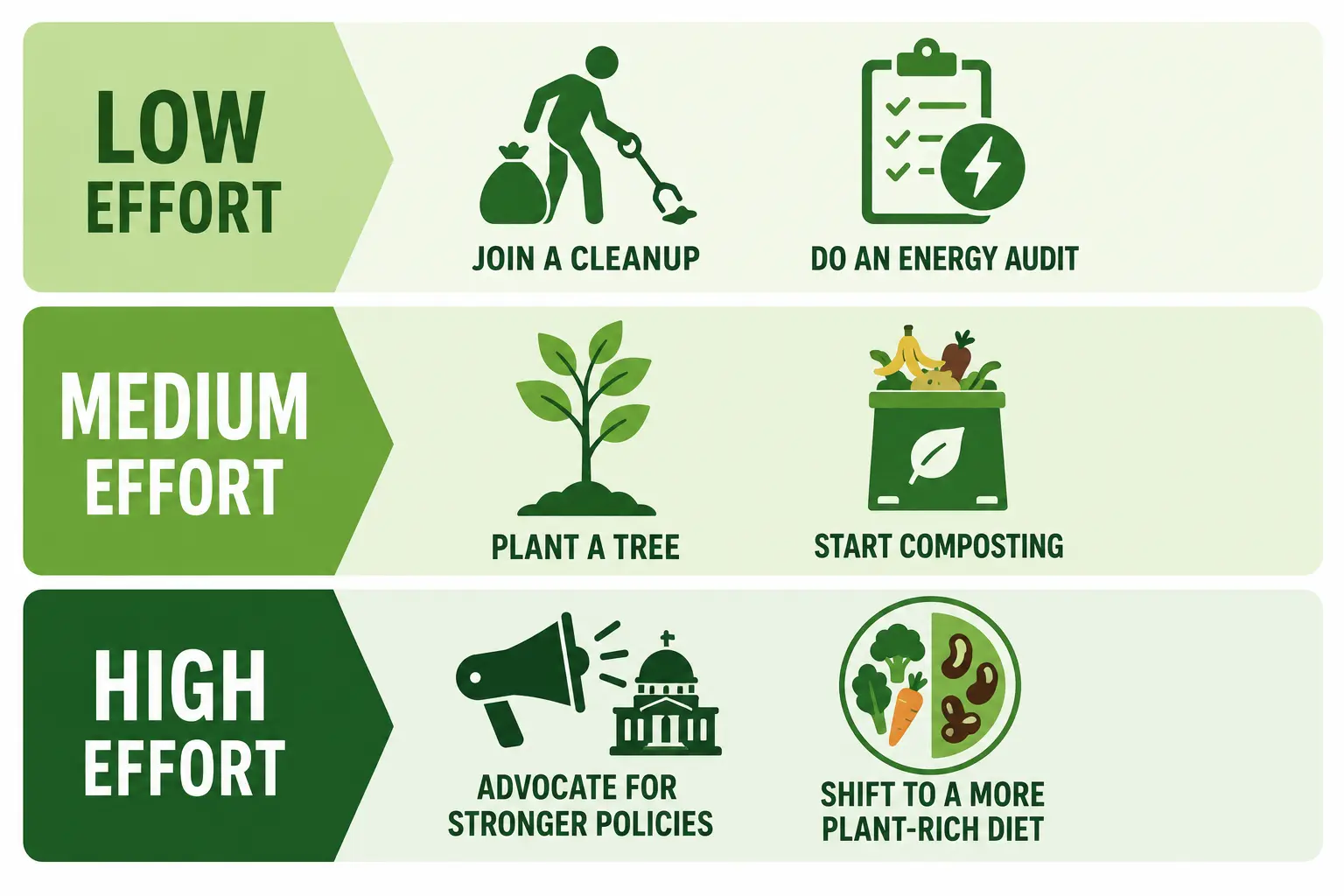 The most common mistake people make is doing something symbolic with no lasting effect. Planting one tree is fine. Planting 50 with a neighborhood group and maintaining them is better. Here’s a range of options by effort level:
Low Effort (1–2 Hours)
- Join a local cleanup organized through EARTHDAY.ORG’s event finder — these are free, pre-organized, and happening in most cities worldwide.
- Do a home energy audit: check for drafts, identify which appliances use the most electricity, and switch off devices on standby. The average U.S. household wastes about $200/year on standby power alone.
- Switch one regular purchase to a package-free or refillable version (soap, shampoo, cleaning products).
Medium Effort (Half a Day)
- Organize a tree-planting session in your neighborhood. Contact your local municipality — many cities provide free saplings on or around Earth Day.
- Hold a clothing swap with friends or colleagues instead of buying new clothes. The fashion industry produces 10% of global carbon emissions.
- Start composting at home. Food waste in landfills generates methane, a greenhouse gas 25 times more potent than CO2 over 100 years.
High Effort (Ongoing Commitment)
- Advocate for a specific policy change — contact your city council about EV charging infrastructure, single-use plastic bans, or green space preservation.
- Volunteer with a local environmental organization. One hour a week over a year adds up to 52 hours of meaningful work.
- Shift your diet: reducing beef consumption by half cuts your food-related carbon footprint by roughly 30%, according to research published in the journal Nature.
Earth Day Projects for Elementary Students
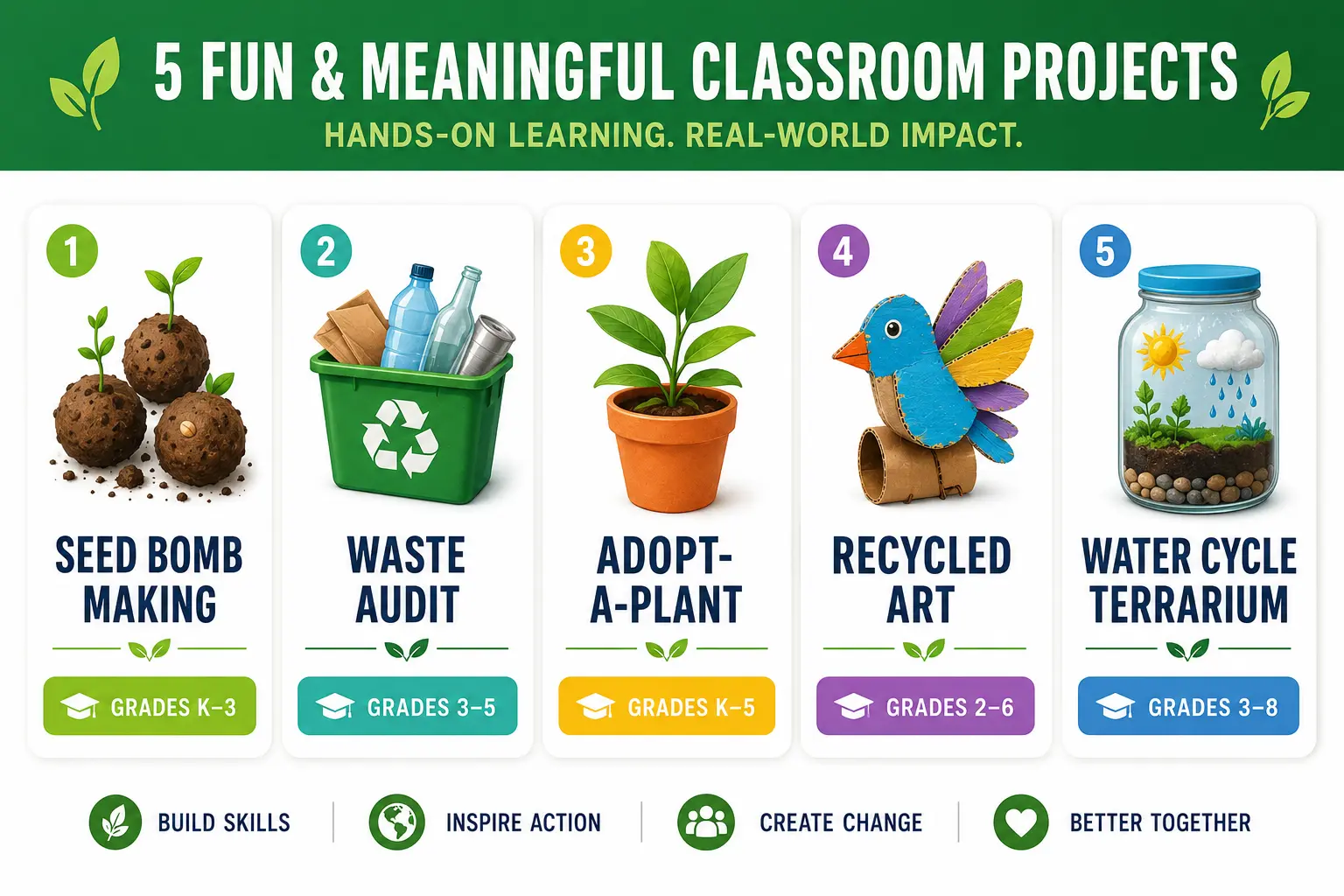 Good Earth Day projects for elementary students do three things: they’re hands-on, they connect to a visible real-world outcome, and they give kids a sense of agency rather than just alarm.
Here are projects that actually work in a classroom setting:
Seed Bomb Making (Grades K–3)
Students mix clay, soil, and wildflower seeds into small balls that can be tossed in bare dirt areas to encourage pollinator habitats. No digging required. Bees, butterflies, and other pollinators are critical — one-third of the world’s food supply depends on them. Kids can throw seed bombs in school garden areas or take them home.
Classroom Waste Audit (Grades 2–5)
Students sort a week’s worth of classroom waste into categories: recyclable, compostable, landfill. They tally up the numbers and present findings to another class or the school principal. This teaches data collection, environmental science, and public speaking simultaneously.
Adopt-a-Plant (Grades 1–4)
Each student receives a seedling to grow at school or take home. They track its growth, learn about photosynthesis, and understand what plants need to survive. The connection between plants and clean air becomes concrete rather than abstract.
Recycled Art Projects (Grades K–5)
Students bring in clean packaging materials — cardboard tubes, bottle caps, newspaper — and build sculptures or functional objects. A popular version is building a working bird feeder from a plastic bottle. This directly connects the concept of reducing waste to a visible, creative result.
Water Cycle Terrarium (Grades 3–5)
Students build a mini water cycle inside a clear plastic container using soil, small plants, and water. They observe condensation forming on the lid and reconnect to the lesson within days. It’s a compact, visible demonstration of how Earth’s systems work.
For teachers, EARTHDAY.ORG’s education portal offers free downloadable lesson plans, activity guides, and curriculum kits aligned with U.S. Common Core and Next Generation Science Standards.
How to Make Earth Day Count at Work or in Your Community
Most corporate Earth Day efforts are performative. One recycling bin in the break room and a green logo on social media is not action — it’s marketing.
If you want to lead something real:
For workplaces:
- Run a sustainability audit of your office’s energy and waste. Many utility companies offer free assessments.
- Push for remote work policies to stay or expand. Office commuting is a major source of per-employee emissions.
- Switch your company’s energy supplier to a certified renewable source. In many regions, this is a straightforward contract change.
For communities:
- Connect with your local government’s sustainability or environment department. Most municipalities have one and are often understaffed and looking for volunteers.
- Start a buy-nothing group or community tool library so resources get shared rather than bought and thrown out.
- Organize a neighborhood composting program. Several cities will subsidize or supply bins.
Earth Day 2027: What’s Coming and How to Prepare
Earth Day 2027 falls on Thursday, April 22, 2027. While the official theme hasn’t been announced yet, EARTHDAY.ORG’s multi-year focus areas give a clear picture of what to expect: the push to end plastics, accelerate renewable energy, and restore biodiversity will remain front and center.
If you’re a teacher, event organizer, or community leader planning ahead, here’s what to do now:
- Register your planned event on EARTHDAY.ORG’s platform. Early registration gets your event listed on the global map and helps with coordination.
- Begin building partnerships with local businesses, schools, or city agencies now. Major collaborative events take 6–12 months to organize properly.
- Watch for the 2027 theme announcement, which usually comes in late 2026. Aligning your event with the official theme helps attract media coverage and participant buy-in.
Earth Day 2030 will mark the 60th anniversary and will likely be a major milestone event. Starting to build your organization’s involvement now puts you ahead of the curve.
What Real Impact Looks Like
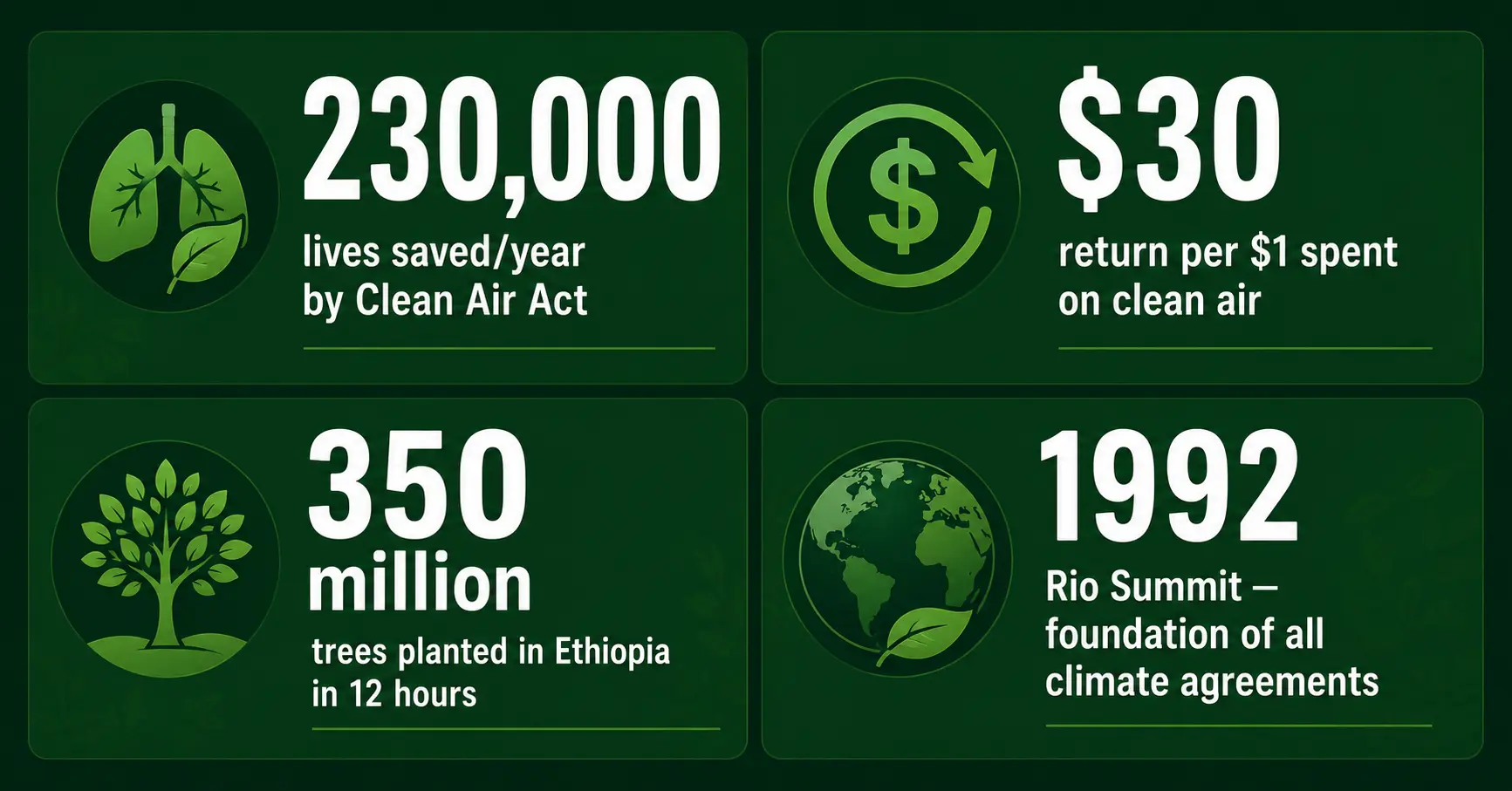 Here’s what Earth Day has actually helped accomplish since 1970, beyond the symbolic:
- The U.S. Clean Air Act, passed months after the first Earth Day, has prevented an estimated 230,000 early deaths per year in the United States and generates $30 in benefits for every $1 spent, according to the EPA.
- Earth Day 1990 directly pressured world leaders and contributed to the 1992 Rio Summit, which produced the UN Framework Convention on Climate Change — the foundation for every climate agreement since.
- The 2016 Paris Agreement signing on Earth Day was not coincidental. EARTHDAY.ORG actively campaigned for that date to create a symbolic and public moment of global commitment.
- India planted 50 million trees in a single day in 2016 as part of Earth Day commitments. Ethiopia planted 350 million trees in 12 hours in 2019.
The day has real legislative and behavioral track record. That doesn’t mean every Earth Day post or event moves the needle — most don’t. What does move the needle is organized, sustained action that uses Earth Day as a launch point, not a finish line.
FAQ
Q: When is Earth Day celebrated each year? Earth Day is always on April 22. It does not move to the nearest Monday or Friday. If April 22 falls on a weekend, events are sometimes held on adjacent weekdays, but the official date stays fixed.
Q: Is Earth Day the same as World Environment Day? No. Earth Day is April 22, organized by EARTHDAY.ORG, and has been running since 1970. World Environment Day is June 5, organized by the United Nations, and started in 1974. Both focus on environmental issues but have different organizational structures and audiences.
Q: What is a good Earth Day activity for a family with young children? A neighborhood litter pickup is the most accessible option — it requires no preparation, has a visible result, and works for any age. Pair it with a conversation about where trash goes and why it matters. For indoor options, starting a small herb garden or making seed bombs are both low-cost and genuinely educational.
Q: How can I find Earth Day events near me? EARTHDAY.ORG maintains a global event map at earthday.org. You can search by location for cleanups, tree plantings, film screenings, and more. Most events are free. Local libraries, schools, and city parks departments often run independent events as well.
Q: What will the Earth Day 2027 theme be? The official theme for Earth Day 2027 has not been announced yet. EARTHDAY.ORG typically reveals the annual theme in the fall of the preceding year. Based on current multi-year campaigns, topics like plastic pollution, renewable energy, and biodiversity restoration are the most likely focus areas.
Earth Day works when people treat it as a starting point, not a checkbox. One cleanup, one tree, one policy email — none of it changes the planet alone. But the same action repeated by millions of people, coordinated on the same day, with the same pressure on the same governments, has a 50-year track record of actually working. April 22 gives you the moment. What you do with it is up to you.

Abhay Ramola researches world festivals across primary sources, local accounts, and on-ground reporting. He founded Dionfest to cover what gets missed when festivals become tourism content the history, the ritual, and the people behind it.





2 thoughts on “Earth Day: What It Is, Why It Matters, and How You Can Actually Help”