
Hemis Festival 2026: Complete Guide to Ladakh’s Greatest Buddhist Celebration
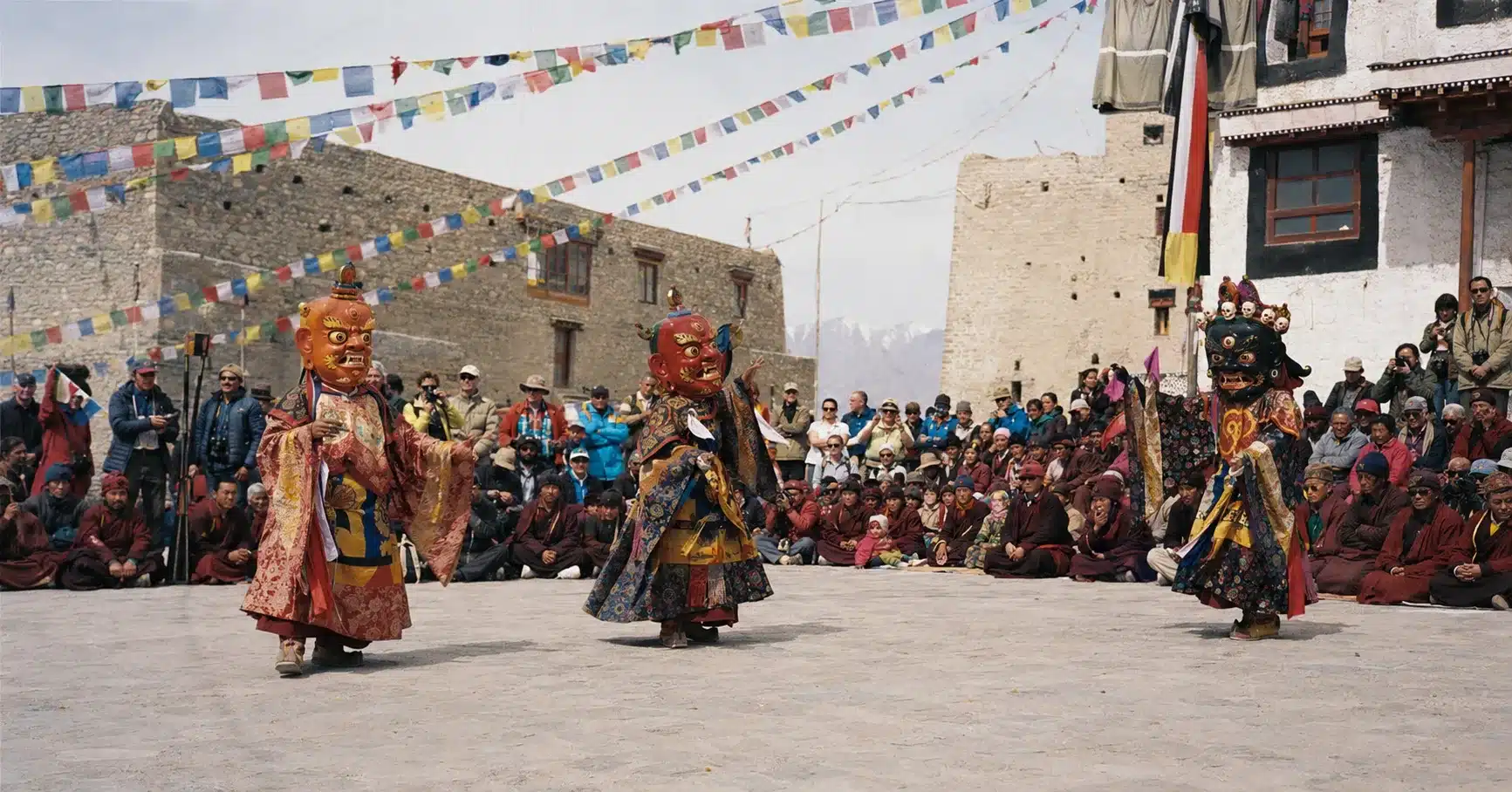
At around 8 AM on June 24th, 2026, the silence of a high-altitude desert will break. Deep horns called Dungchen will echo off stone monastery walls and roll across the valley. Monks in hand-painted masks fearsome faces of deities and demons will step into the open courtyard. Pilgrims, photographers, backpackers, and Ladakhi families will press together under a 3,500-metre sun to watch a dance that has not changed in 300 years.
This is the Hemis Festival. In 2026, it falls on June 24 and 25.
Key Facts Hemis Festival 2026
| Detail | Information |
|---|---|
| Festival Name | Hemis Festival (Hemis Tsechu) |
| 2026 Dates | June 24 – June 25, 2026 |
| Timing | Starts at 8:00 AM, runs till evening |
| Location | Hemis Monastery, Ladakh |
| Distance from Leh | ~45 km southeast |
| Type | Buddhist religious festival |
| Celebrates | Birth anniversary of Guru Padmasambhava |
| Duration | 2 days |
| Entry Fee | Free (Indian citizens, no permit needed) |
| Calendar Basis | 10th day of the 5th Tibetan lunar month |
What is the Hemis Festival?
The Hemis Festival is the most well-known Buddhist festival in Ladakh. It is held every year at Hemis Monastery the largest monastery in the region to mark the birth anniversary of Guru Padmasambhava, also called Guru Rinpoche.
Guru Padmasambhava was born in the 8th century CE and is credited with bringing Tantric Buddhism from India into Tibet and the Himalayan region. The Nyingma school of Tibetan Buddhism considers him the “Second Buddha.”
Hemis Monastery was re-established in 1672 by King Sengge Namgyal of Ladakh. It belongs to the Drukpa Kagyu lineage of Tibetan Buddhism. The monastery’s connection to Ladakhi royalty is part of why this festival is bigger than any other monastery festival in the region.
Often called the Kumbh Mela of the Himalayas, Hemis draws thousands of pilgrims and tourists every year who come to witness the Cham dances and experience one of India’s most intact living Buddhist traditions.
One thing worth knowing before you arrive: the Cham dances are not a performance in any modern sense. Buddhist tradition holds that witnessing them cleanses negative karma. The monks are not dancing for the audience. They are praying.
Hemis Festival 2026 Dates, Timing & Location
Dates: June 24 and 25, 2026.
The festival follows the Tibetan lunar calendar specifically the 10th day of the 5th lunar month. In Gregorian terms, this lands in June or July. For 2026, it is June 24 and 25.
One thing to get right before you plan: Several websites are currently claiming 2026 is the special 12-year thangka year. This is wrong. The giant two-storey Thangka of Guru Padmasambhava decorated with silk, gems, and pearls is displayed only during the Tibetan Year of the Monkey. The last display was in 2016. The next is 2028. If the giant thangka is your main reason to go, book for 2028.
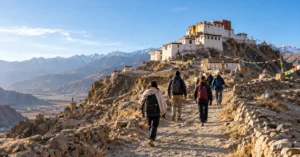
Venue: Hemis Monastery (Hemis Gompa), 45 km southeast of Leh. From Leh, you leave the Leh-Manali highway near Karu and follow a valley road straight to the monastery gate. The drive is about 1 to 1.5 hours.
Timing: Events begin at 8:00 AM. Arriving late means losing your spot. The festival runs through the evening with breaks between performances.
The Cham Dance What Actually Happens
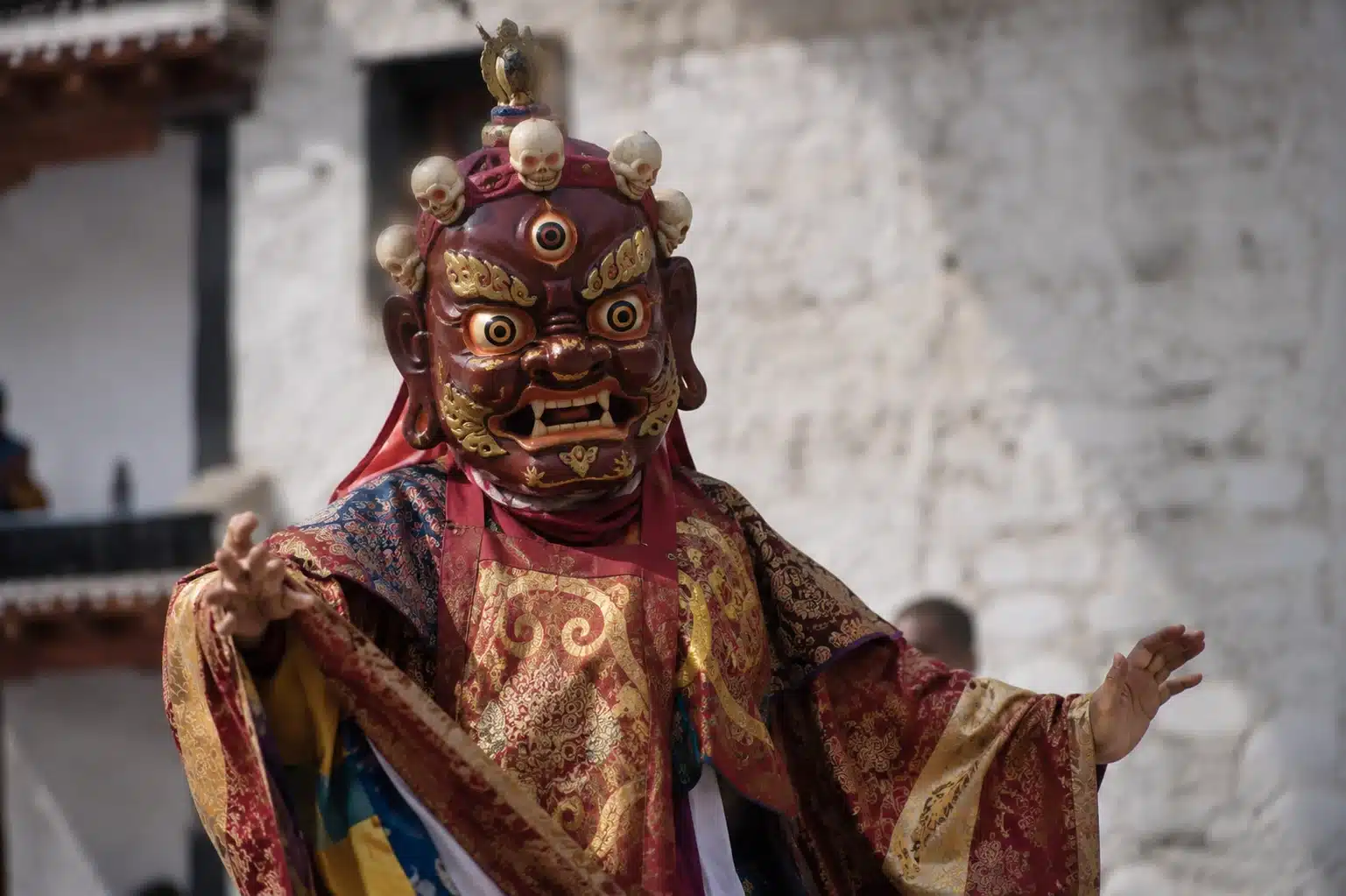 Monks in thick silk robes and papier-mâché masks enter the monastery courtyard in a slow, deliberate procession. Each mask represents something specific fierce deities, skull-faced protectors (Dharmapalas), animals, demonic forces. Some of these masks are centuries old. Between festivals, they live in the monastery museum.
The dance is not improvised and it is not symbolic in a vague way. Every gesture has a fixed meaning. Every drum beat marks a shift in the story — the battle between good and evil, knowledge and ignorance.
The instruments set the pace: the low boom of Dungchen (long Tibetan horns, sometimes 3 metres tall), the crash of Rol-Mo (hand cymbals), and the Nga (drums). Travel writer Priya Chauhan, who attended the festival in 2014, wrote that the music “starts on a slow note and quickly picks up pace” as the performance builds toward its climax the moment the head Lama destroys a dough effigy called Storma, a symbolic destruction of evil forces.
Day 1:
- Morning prayers and musical invocations
- Cham dance performances in the open courtyard
- Display of smaller sacred Thangkas for blessings
Day 2:
- Cham dances continue with new performers and costumes
- Senior Lamas lead prayer sessions between dances
- Final act: destruction of the Storma effigy
Between performances, the courtyard does not empty. Pilgrims place butter lamps. Families sit with packed lunches. Monks move between the inner sanctum and the courtyard. There are moments of complete silence between the drums. Those moments are, for many visitors, the most memorable part.
Other Attractions Beyond the Dance
Most visitors focus entirely on the Cham Dance and walk past everything else. That is worth fixing.
The Monastery Museum: Inside Hemis Monastery is a small museum with ancient ritual masks, gold and silver statues, manuscripts, and Thangka paintings going back several centuries. The objects here tell the history of this place better than any guidebook. Many tourists never go in.
The Cultural Market: Stalls fill the monastery courtyard and surrounding area during the festival. Local artisans sell Ladakhi handicrafts Thangka paintings, prayer wheels, handwoven shawls, turquoise jewellery, traditional silverwork. Prices are negotiable and the goods are genuine, unlike most souvenir shops in Leh city.
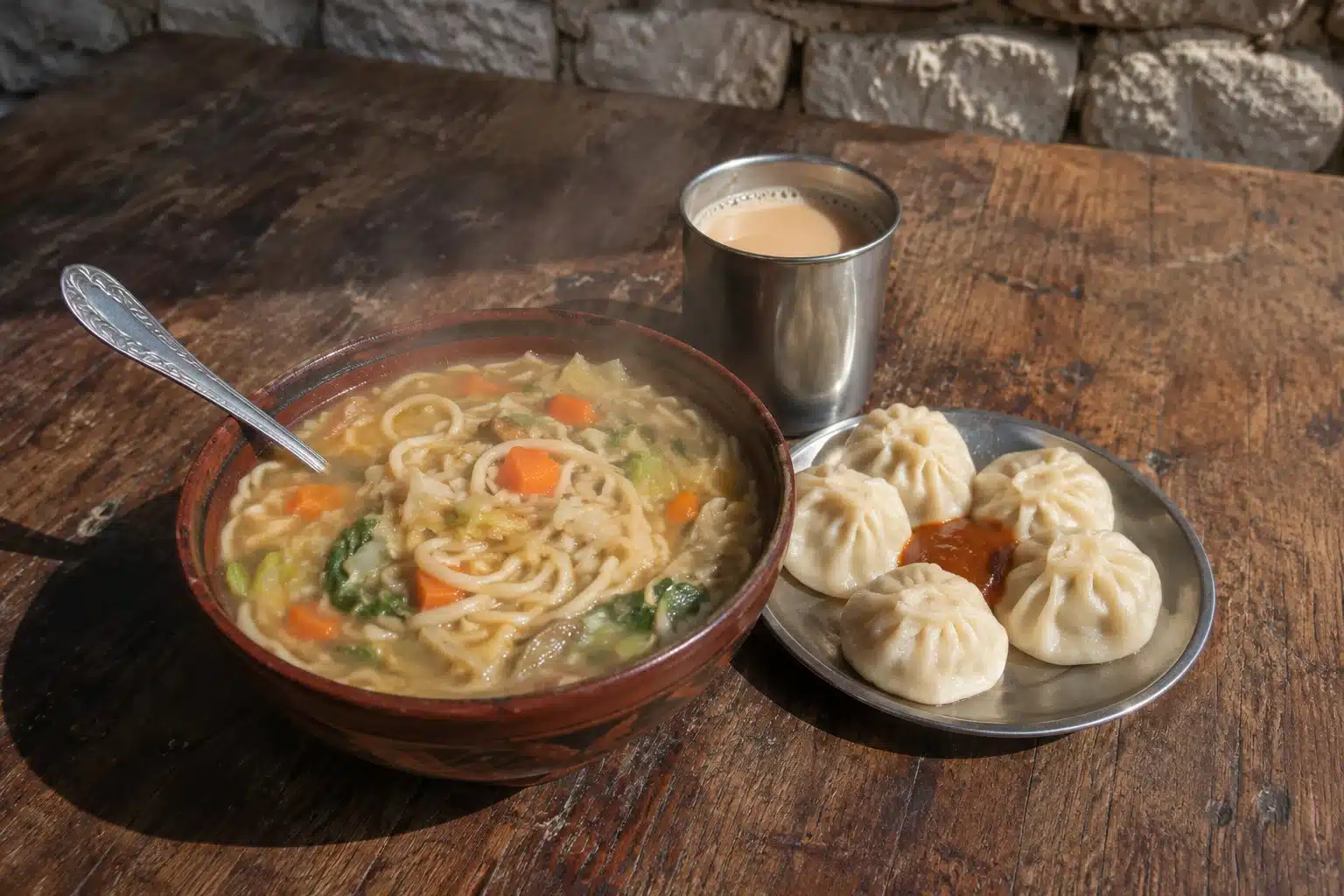
Food Stalls: Traditional Ladakhi food Thukpa (noodle soup), Momos (dumplings), Butter Tea (Gur Gur Chai). If you have not had butter tea before, try it. It is warm, slightly salty, and nothing like what the name suggests.
Real Visitors Share Their Experiences
Three people who actually attended Hemis Festival. Their accounts cover things most travel articles skip.
Priya Chauhan (travel writer, attended 2014 Hemis Festival, MakeMyTrip blog) describes watching the masked performers in brocade clothes that caught the July sun. She notes that some of those masks felt “more expressive than us” more alive than human faces in the crowd. She also writes about the food: there is something she calls “heavenly” about eating Thukpa and Momos at the small Tibetan cafe just outside the monastery, in the cool mountain air, after a full day of watching the dances. That cafe, she says, is one of the clearest memories she carries from the whole trip.
The blogger at Inside Himalayas (attended 2016, the last 12-year thangka year) arrived at the monastery at 9 AM thinking that was early. The courtyard was already packed. Traffic jams had formed on the narrow uphill road to the monastery. The actual dances did not begin until after 10 AM. Her note: “I arrived at 9am, by which point the monastery courtyard was already packed.” Arrive at 7 AM minimum if you want a standing spot with a clear view. She also confirms what we said about the giant thangka it was displayed only in the very early morning before most people arrived, then taken away. She had visited Hemis many times without crowds. The festival, she says, completely changes the place.
The blogger at Suitcase and World (attended July 2017) planned her entire India trip around the Hemis Festival the rest of the itinerary was built around these two days. She describes her driver dropping them off when the road became too thick with traffic, then walking uphill with the crowd to the monastery gate. Short walk but steep. What stays with her is this: the sound of drums reached her before she could see anything. The festival starts before you arrive.
How to Get to Hemis Monastery
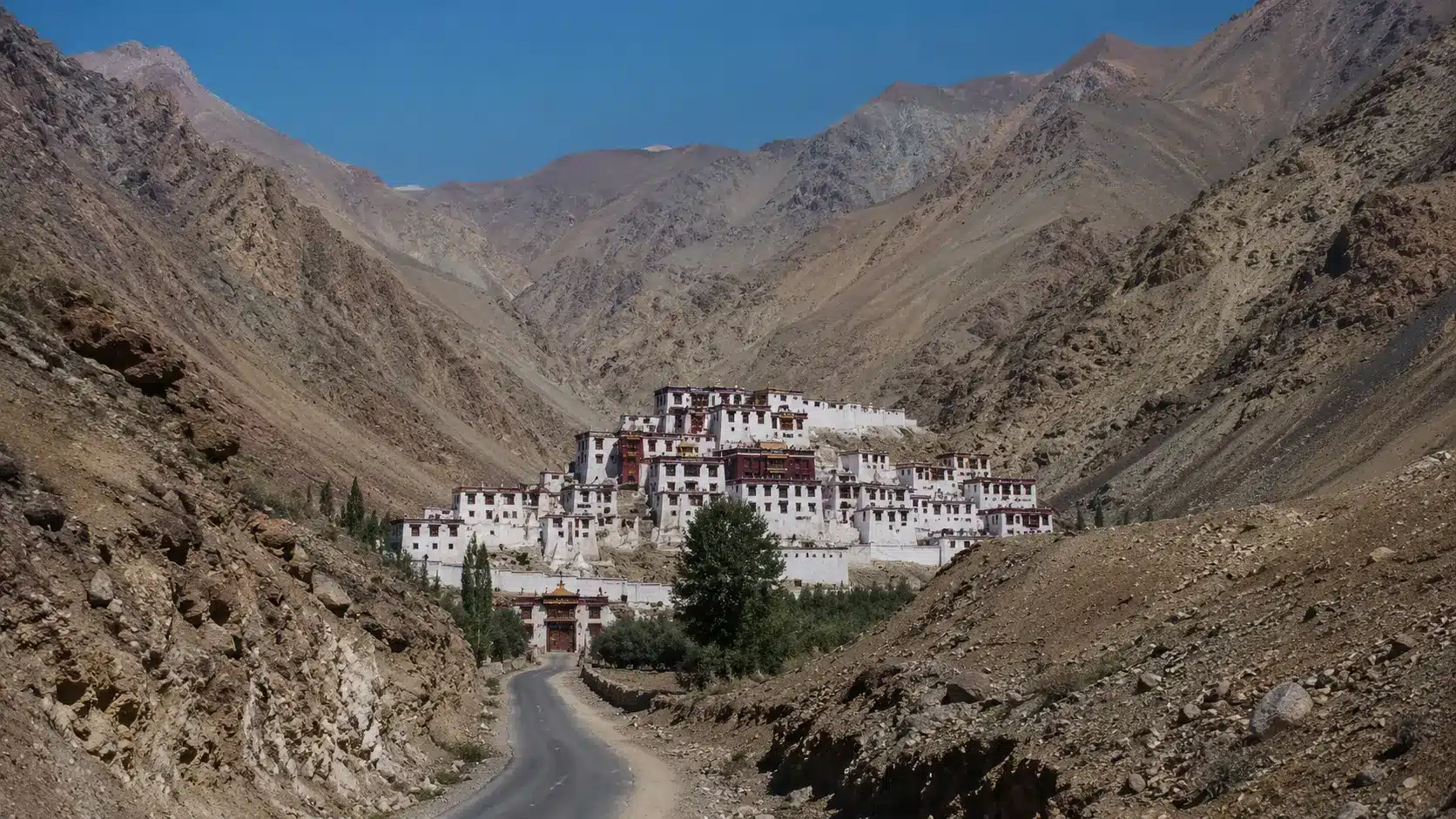 By Air: Fly into Kushok Bakula Rimpochee Airport in Leh. Direct flights from Delhi, Mumbai, and Srinagar. Book early June flights fill fast. Do not go to Hemis on the day you land. Rest in Leh for 2 full days first. The altitude is 3,500m and your body needs time.
By Taxi from Leh: 45 km, 1 to 1.5 hours. Shared cabs and local buses also run this route. You turn off the Leh-Manali highway at Karu, then follow the valley road to the monastery.
By Road from Manali or Srinagar: Scenic overland routes, both 2+ days of travel. The Manali-Leh highway opens in June. Srinagar to Leh is roughly 434 km via NH1. Not for people in a hurry.
Practical Guide What to Wear, Eat & Expect
 Clothing:
- Cover shoulders and knees inside the monastery. This is not flexible.
- Even in late June, mornings and evenings drop to 8–12°C. A light jacket is not optional.
- High-altitude sun hits harder than you expect. SPF 50+, UV sunglasses, wide-brim hat.
Money:
- Carry cash. ATMs are limited around Hemis and stalls do not take cards. The nearest reliable ATM is in Leh city.
Photography:
- Fine during the Cham Dance. Turn off flash near Thangkas and inside the museum it damages old paint and monks will ask you to stop.
- Ask before photographing monks or local families nearby.
Altitude:
- Ladakh sits above 3,500m. Hemis is slightly higher. Acute Mountain Sickness (AMS) headache, nausea, dizziness is common for people who move too fast after landing.
- Two full rest days in Leh before going to Hemis. Walk slowly, drink water, skip the alcohol.
- If symptoms worsen, get back down to lower altitude immediately.
Accommodation:
- Book hotels in Leh 3–4 months before festival dates. June is peak season and rooms go fast.
- Villages near Hemis (Karju, Martselang, Stakna) have limited homestays if you want to stay close.
Common Mistakes Tourists Make
- Going straight from the airport to Hemis. The altitude will punish you. Two rest days in Leh first.
- Arriving at 9 or 10 AM. By then the courtyard is already full. The Inside Himalayas blogger found this out the hard way in 2016. Aim for 7 AM.
- Skipping the museum. Most visitors walk past it. Go in.
- No cash. Stalls are cash only. You will miss the food and the handicraft market.
- Flash photography near sacred objects. Turn it off before entering.
- Believing 2026 is a giant thangka year. It is not. Several websites have this wrong. The next giant thangka display is 2028.
Interesting Facts
- Hemis Monastery was re-established in 1672 under royal patronage King Sengge Namgyal of Ladakh. That royal backing is why this festival is larger than any other monastery festival in the region.
- The Cham Dance is a moving meditation within Buddhist tradition it is a spiritual practice for the monks performing it, not just a show.
- Hemis is one of the few Ladakhi festivals held in summer, which is why it draws more tourists than any other monastery festival.
- Some of the masks worn during the Cham Dance are 200+ years old and stored in sealed vaults between festivals.
- The Dungchen horns used during performances can extend up to 3 metres in length.
- Every 12 years, during the Tibetan Year of the Monkey, a two-storey Thangka decorated with gems and silk is unfurled. Last display: 2016. Next: 2028.
FAQ Hemis Festival 2026
When is Hemis Festival in 2026?
June 24 and 25, 2026. It falls on the 10th day of the 5th month of the Tibetan lunar calendar. Dates shift each year verify from Ladakh Tourism before booking flights.
Where is Hemis Festival held?
Hemis Monastery (Hemis Gompa), roughly 45 km southeast of Leh city, Ladakh.
What is the main attraction at Hemis Festival?
The Cham Dance a sacred masked performance by monks. Each dancer wears hand-painted masks representing deities and demonic forces. It is considered both a ritual and a form of meditation in Buddhist tradition.
Is there an entry fee for Hemis Festival?
Free for Indian citizens. No permits needed. Foreign tourists should carry valid ID and check Inner Line Permit requirements for other parts of Ladakh.
How do I reach Hemis Monastery from Leh?
Taxi from Leh 45 km, 1 to 1.5 hours. Turn off the Leh-Manali highway at Karu and follow the valley road to the gate. Shared cabs also run this route.
Is the giant thangka displayed at Hemis Festival 2026?
No. The giant two-storey Thangka is displayed only during the Tibetan Year of the Monkey, every 12 years. Last display: 2016. Next: 2028. Multiple websites currently have this wrong 2026 is not a thangka year.
What should I wear to Hemis Festival?
Cover shoulders and knees inside the monastery. Bring layers (8–12°C in mornings and evenings even in June). SPF 50+ sunscreen and UV sunglasses for daytime.
How many days should I plan?
5–6 days minimum. Two days acclimatising in Leh after landing. Two days at the festival (June 24–25). One to two days for nearby monasteries like Thiksey and Shey.
Is Hemis Festival safe for tourists?
Yes. The main risks are altitude sickness (acclimatise in Leh first) and crowding in the courtyard (arrive early, keep an eye on your bag).
What food is available at Hemis Festival?
Thukpa (noodle soup), Momos, Butter Tea. Carry cash — stalls do not accept cards.
Conclusion
The Hemis Festival does not rush you. The altitude slows you down. The Cham Dance slows you down further. There are no loud speakers, no DJ sets, no light shows. Just monks in masks, drums, mountains, and a 300-year-old ritual happening in real time.
Plan early, spend two rest days in Leh, arrive at the monastery by 7 AM on June 24th, and give yourself both days. If you are planning other major Indian summer festivals, our guide to Jagannath Rath Yatra 2026 is worth reading another massive festival happening in the same season, very different in character.

Abhay Ramola researches world festivals across primary sources, local accounts, and on-ground reporting. He founded Dionfest to cover what gets missed when festivals become tourism content the history, the ritual, and the people behind it.
Hahahaha You are so good