
How Kanwar Yatra Impacts North India’s Roads, Rivers & Air (2026)
Key Facts
| Festival | Kanwar Yatra (Kawad Yatra / कांवड़ यात्रा) |
| 2026 Start Date | July 30, Thursday |
| 2026 Peak Day | August 11 (Sawan Shivratri — Jalabhishek day) |
| 2026 End Date | August 28 (Shravana Purnima / Raksha Bandhan) |
| Devotees (2025 record) | 4.5 crore at Haridwar alone |
| States Affected | UP, Uttarakhand, Delhi, Haryana, Rajasthan, Bihar, Jharkhand, MP, Punjab |
| Waste left in Haridwar (2025) | ~7,000 metric tonnes |
| Noise recorded in Delhi (2025) | 87.5 dB peak in Shahdara |
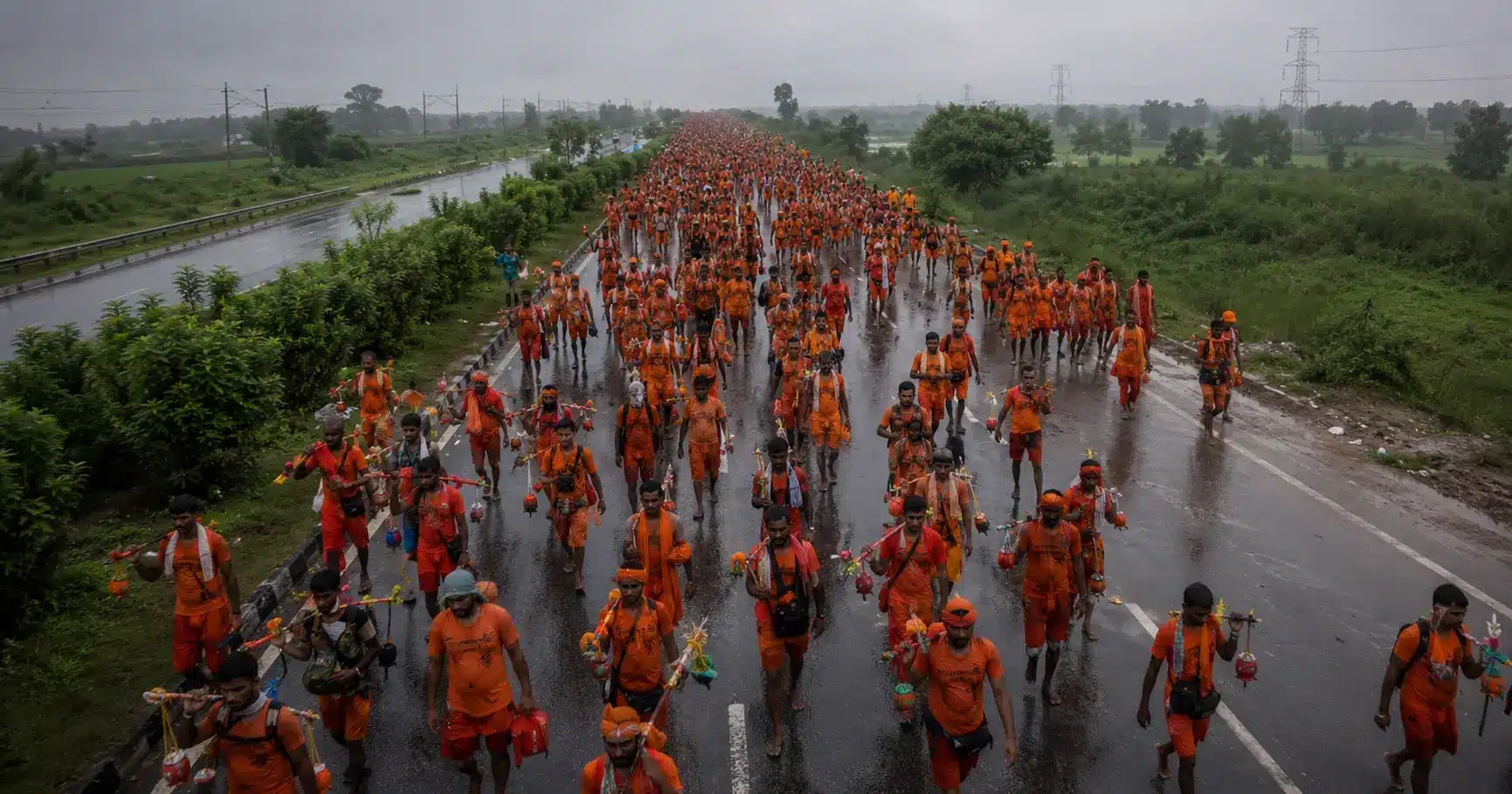
By the second week of August every year, the Delhi–Dehradun highway stops looking like a national road. It turns into something else — saffron as far as you can see, millions of barefoot men and women moving in one direction, kanwar poles balanced on their shoulders, pots of Ganga water swinging on either end.
This is Kanwar Yatra. By attendance, it is one of the largest annual religious foot pilgrimages on earth.
The faith behind it is real. What this article is about is the scale 4.5 crore people crossing North India over two weeks, using roads that were not built for this, stopping at rivers that are already under pressure, and passing through cities at 87 decibels. Here’s what actually happens.
In short: Kanwar Yatra is an annual Hindu pilgrimage during the month of Sawan (July–August) where devotees walk to sacred Ganga ghats, collect holy water, and carry it home to pour over Shiva temples. In 2026, it runs July 30 to August 28. The peak is August 11 Sawan Shivratri when the Jalabhishek ritual happens.
What Is Kanwar Yatra? Origin and Tradition
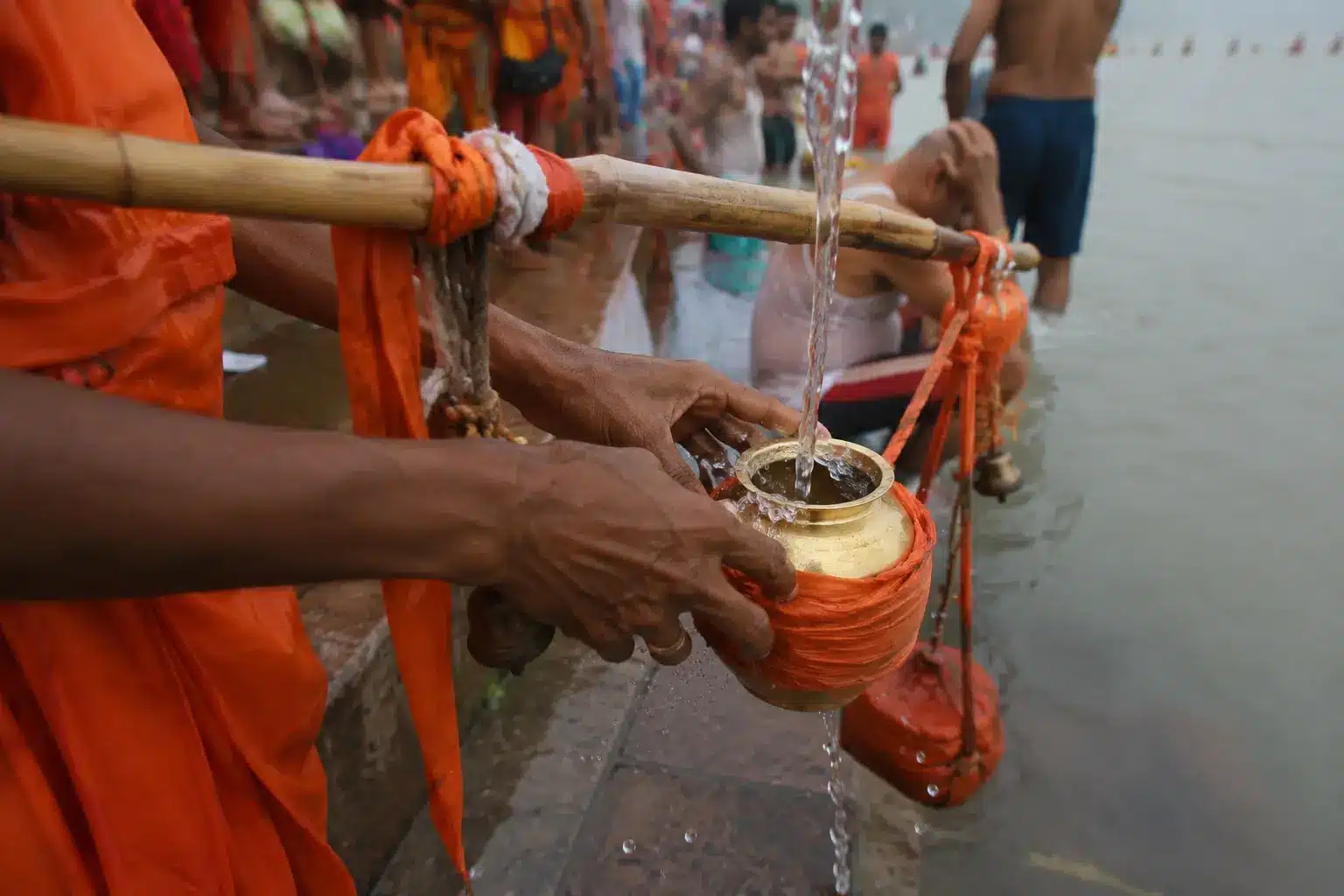 Kanwar Yatra happens every year during the Hindu month of Shravan Sawan in common usage. Devotees, called Kanwariyas, walk to a sacred Ganga ghat, fill clay or metal pots with Ganga water, and carry them back to pour over a Shivalingam at a temple in their hometown. This act — the offering of Ganga water to Shiva is called Jalabhishek.
The bamboo pole carrying the pots is the kanwar. It has two pots, one on each end, balanced on the pilgrim’s shoulders. One rule is non-negotiable: the pots cannot touch the ground from the moment they are filled until the offering is made. Rest stops along the route have hooks specifically for this so pilgrims can sleep without setting the kanwar down.
The mythology connects to Samudra Manthan the churning of the cosmic ocean in Hindu scripture. When Shiva swallowed the Halahal poison produced during the churning, Ganga water was offered to cool his throat. Kanwariyas recreate this offering each year.
Most pilgrims from UP, Delhi, Haryana, and Rajasthan go to Haridwar. Pilgrims from Bihar and Jharkhand typically go to Sultanganj, then walk over 100 km to Baidyanath Dham in Deoghar barefoot, during monsoon.
The tradition itself is centuries old. The environmental strain is not. The scale that creates traffic shutdowns, 7,000-tonne waste piles, and 87 dB noise levels in residential areas is a product of the last 25 years. The yatra has grown about four times over in that period. The infrastructure has not.
Kanwar Yatra 2026 Dates, Scale & States Involved
Kanwar Yatra 2026 starts July 30 (Purnimanta calendar, used across North India) and ends August 28 which is also Shravana Purnima and Raksha Bandhan this year.
The critical date is August 11 Sawan Shivratri. This is when Kanwariyas perform the Jalabhishek. The auspicious window for the ritual falls between 4:54 AM on August 11 and 1:52 AM on August 12. Haridwar on this day is as crowded as it gets.
The four Sawan Somwars (Monday fasts within the yatra period): August 3, 10, 17, 24 these days also see unusually high footfall at Shiva temples across the region.
States involved:
- Source (where Kanwariyas collect water): Uttarakhand (Haridwar, Rishikesh, Gangotri, Gaumukh), Bihar (Sultanganj)
- Transit and sending: UP, Delhi, Haryana, Rajasthan, MP, Chhattisgarh, Punjab, Jharkhand
On scale: In 2025, a record 4.5 crore Kanwariyas visited Haridwar. That is roughly the population of Argentina. The Haridwar–Meerut–Ghaziabad–Delhi corridor is the most used route. Police from 14 western UP districts coordinate with Uttarakhand, Delhi, and Haryana just for this one corridor.
If you want to understand how this compares to the scale of Kumbh Mela which drew 660 million over 45 days in 2025 Kanwar Yatra is shorter and faster-moving, but concentrated along specific road corridors rather than a single site.
The Road Impact Highways Shut, Cities Paralysed
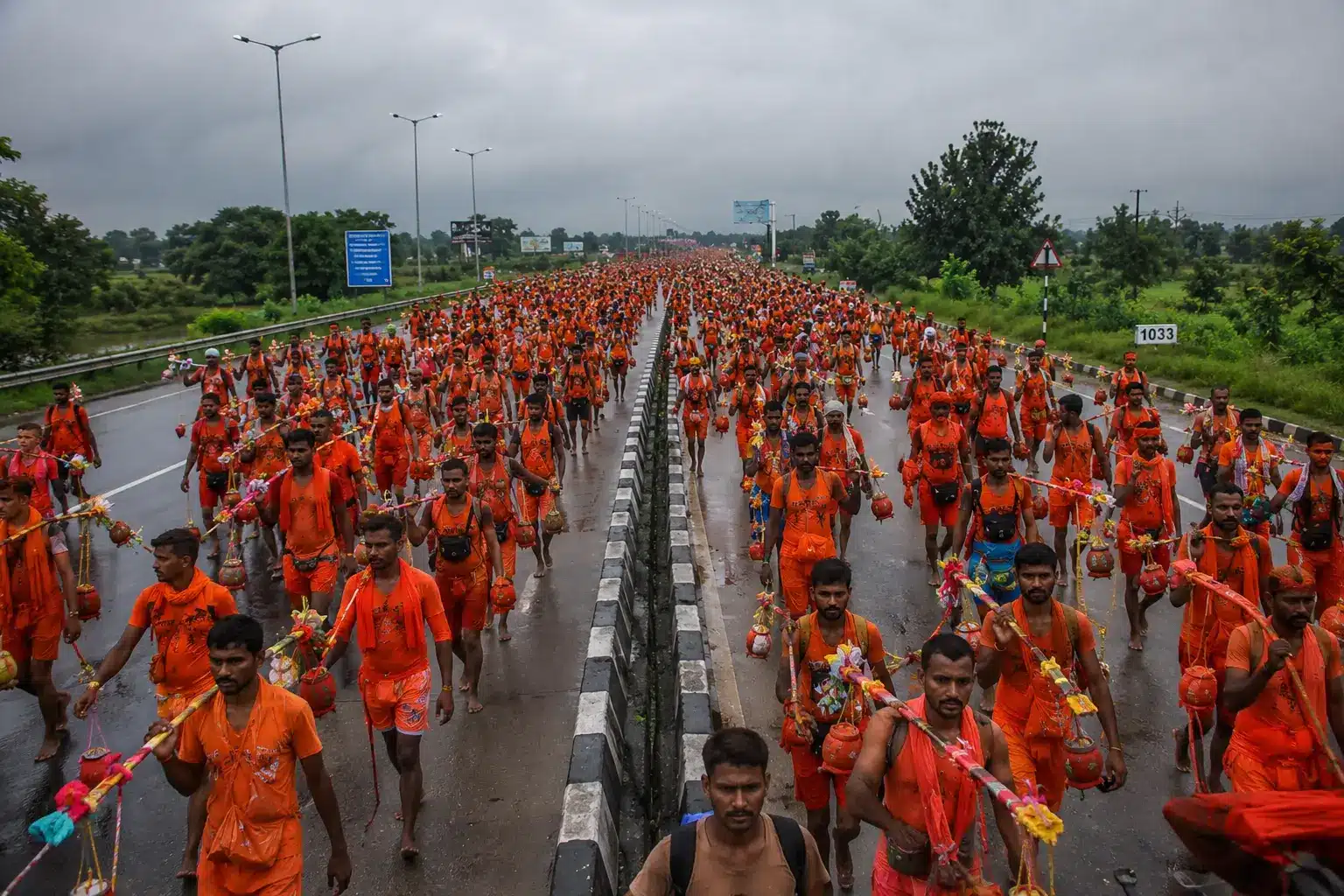 This is the impact most people experience directly including people who have nothing to do with the pilgrimage.
NH-58 (Delhi to Haridwar/Dehradun) gets progressively restricted every year:
- Around July 22: heavy vehicles banned
- Around July 25: only light vehicles allowed, left lane only, Delhi to Haridwar direction
- Roughly July 29 through the first week of August: complete closure to all vehicles sometimes up to two weeks
In 2024, the full closure ran July 29 to August 2. Both sides of NH-58 were shut. Motorists were diverted to alternative routes by police. Simultaneously, restrictions hit the Delhi–Meerut Expressway and multiple Delhi border points Kadrabad village in Modinagar, Mohan Nagar, Loni Road, and the UP–Delhi border at Dilshad Garden.
Sanjai Chauhan, Circle Officer (Traffic), Haridwar, described the 2025 approach: “Strategic diversions, expanded parking areas, and encouraging kanwariyas to use designated routes helped ensure minimal disruption at bottleneck zones like Singh Dwar, Bahadrabad, and Narsan trisection.” — Asianet Newsable, July 2025
That approach worked better than previous years. But better than before and actually manageable are different things. Fourteen districts from western UP, plus Uttarakhand, Haryana, and Delhi police, coordinate in real time through a shared WhatsApp group during peak days. The scale of logistics required to move 4.5 crore people along a single corridor tells you something about what the road impact looks like from the outside.
What this means for ordinary commuters:
- Truck routes carrying goods between Delhi and the hills are rerouted or delayed for days
- Ambulances in Ghaziabad, Meerut, and Muzaffarnagar face increased response times
- Long-distance buses are suspended or take several extra hours
- Residents in towns along the yatra route deal with blocked access for the better part of two weeks
The River Impact What the Ganga Looks Like After 4.5 Crore Visitors
 The Ganga at Haridwar is already receiving wastewater from cities along its length before a single Kanwariya arrives. It is relatively clean by Gangetic plain standards — but it is not clean.
Then 4.5 crore people arrive over two weeks.
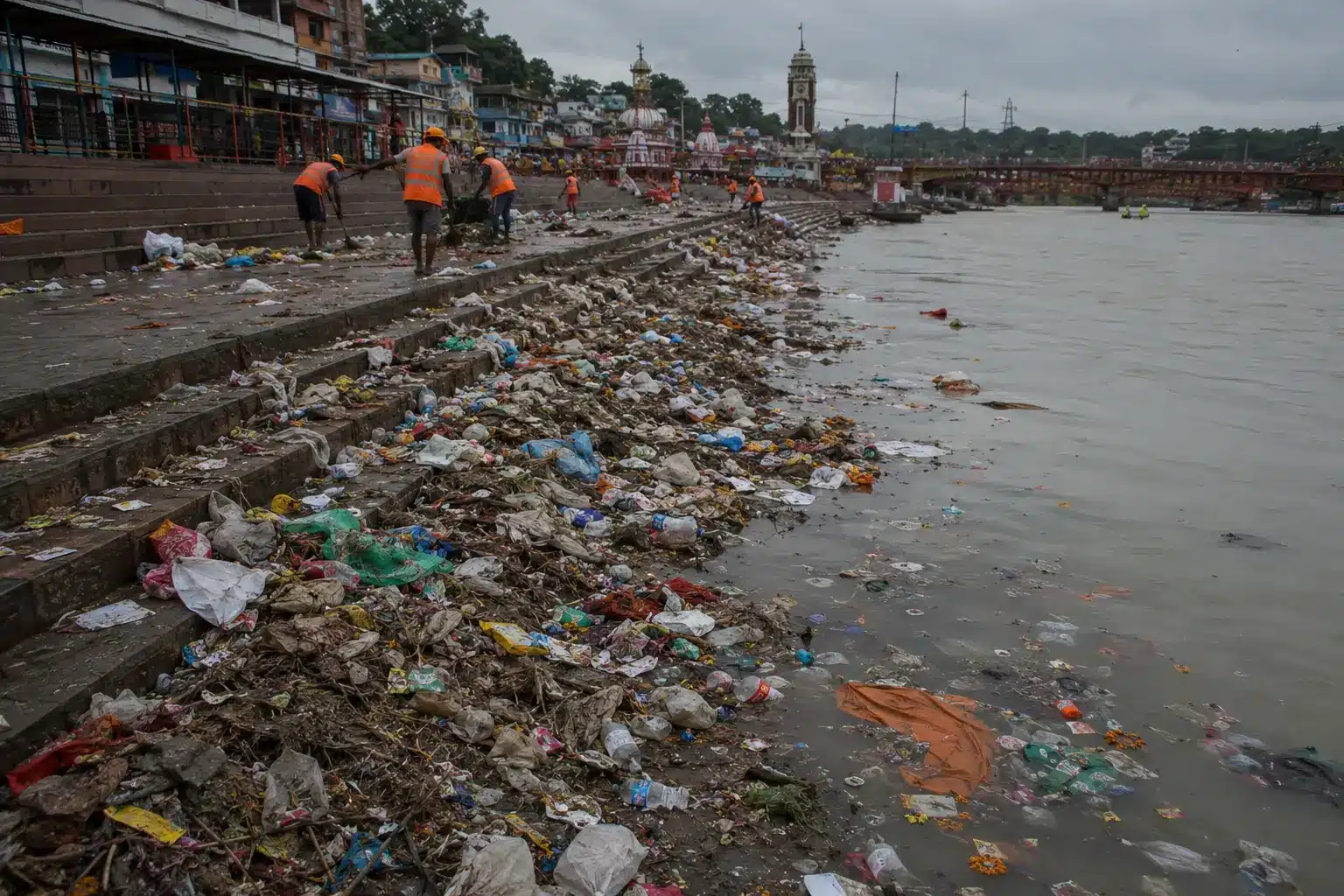
What gets left at the ghats:
- Plastic bags, empty water bottles, polythene sheets
- Single-use cups and plates from bhandaras (free food stalls set up for pilgrims along the route)
- Clothes and shoes discarded after the yatra ends
- Faecal waste from inadequate sanitation
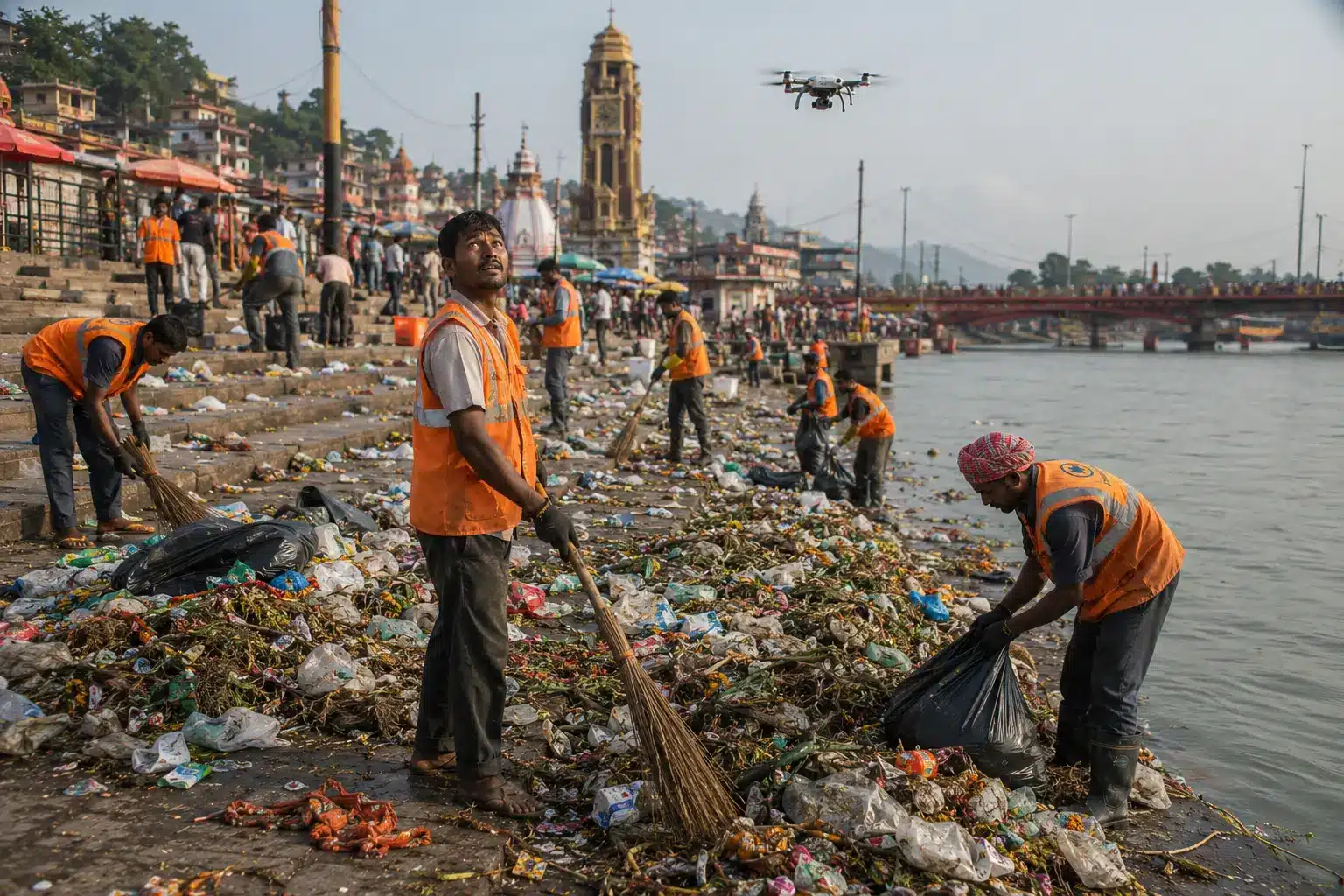
Former municipal councillor Dinesh Joshi, who has watched this play out for years, described what Haridwar looks like after: “Plastic sheets, plates, polybags, and even discarded clothes lie scattered around the ghats and streets.” Asianet Newsable, July 2025
Vipin Sharma, a local Haridwar resident, pointed to a source of waste that rarely gets discussed: the bhandaras. Voluntary groups set up free food and juice stalls along the route an act of genuine service. But the disposable glasses and plates handed out at these stalls end up on the road because there is no waste collection at temporary stalls. Nobody picks them up. The Print, July 2025
Nitin Gautam, who manages Har Ki Pauri as President of Shri Ganga Sabha, said bluntly that plastic is the biggest problem. Bags, polythene sheets, disposable cups, polythene used as makeshift bedding all left at or near the ghat. His team was cleaning the ghats at midnight during the yatra just to keep pace. They were not keeping pace. The Print, July 2025
The waste figures:
Haridwar’s normal daily waste output is about 30 metric tonnes. During Kanwar Yatra 2025, the city ended up with approximately 7,000 metric tonnes after the yatra ended confirmed by Haridwar Nagar Nigam Commissioner Nandan Kumar. During the 2023 edition, the two-week period generated 30,000 metric tonnes total. That is a thousand times the normal daily rate.
At least 50% of the 2023 waste was plastic, according to officials.
On river water quality:
This is the honest part: precise water quality data measured specifically during Kanwar Yatra is limited in published research. What is well-documented for similar Indian festivals — including the river impact of Holi colours on the Yamuna is that mass gatherings spike plastic and microplastic concentrations at ghats. The same pattern applies here, but Kanwar Yatra-specific river testing data has not been published with the same detail as Kumbh Mela and Magh Mela studies. What you have is a documented mountain of plastic waste near the ghats, and reasonable certainty that some of it reaches the river.
The Noise Problem DJ Trucks and 87 dB Streets
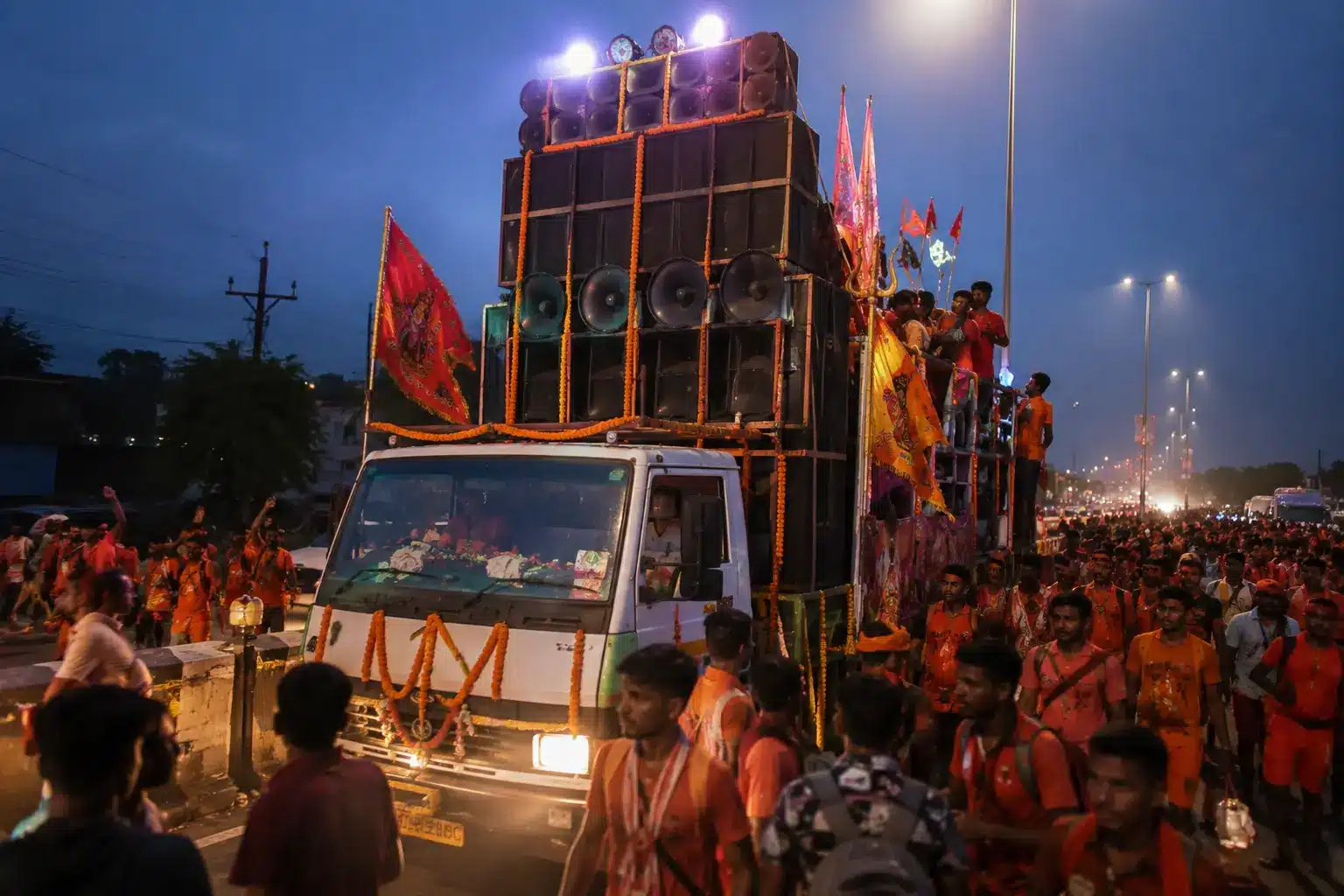 Traditional Kanwar Yatra sounds like devotional chants Har Har Mahadev, Bol Bam moving along highways. That still happens. But layered on top is something different: trucks fitted with enormous DJ sound systems playing amplified bhajans and Bollywood remixes at high volume, all day, while moving through residential areas.
2025 readings:
Shahdara, East Delhi, recorded a peak of 87.5 decibels during the 2025 yatra. Shahdara sits on a main route used by pilgrims from Delhi, Haryana, and Rajasthan, and the trucks ran from morning to night for several days.
A shopkeeper from Seelampur, which is in the same zone, described it as being inside a DJ club even with all windows shut. Kids and elderly residents could not sleep. Walls vibrated. NewsBytesApp, July 2025
For reference: India’s Noise Pollution Rules set the legal limit at 55 dB in residential areas during the day, and 45 dB at night. Shahdara hit 87.5 dB. That is not a marginal breach it is the level associated with power tools and heavy machinery.
Delhi Police received over 350 noise and traffic complaint calls within a five-day period during the 2025 yatra’s peak, with the highest volumes from ITO, Anand Vihar, Dhaula Kuan, Mehrauli, and Outer Ring Road. Business Today, July 2025
What has been done about it: Uttarakhand police set height and width restrictions on DJ trucks in 2025 — to prevent traffic obstruction, not to limit noise. No state has implemented decibel caps with enforcement along yatra routes. The Noise Pollution Rules exist but are not applied systematically during Kanwar Yatra.
This connects to a wider pattern. If you want to understand how festival noise and air pollution affect outdoor gatherings generally, the dynamics are the same concentrated population, no ambient relief, and no enforcement mechanism for the duration.
What Are Authorities Actually Doing?
Waste:
- 1,000+ sanitation workers deployed in Haridwar during peak days
- Drone surveillance to locate garbage concentrations from the air and deploy ground teams
- Round-the-clock cleaning near Har Ki Pauri and key ghats during the yatra itself
Ratan Mani Dobhal, a social activist in Haridwar, raised a question that has gone unanswered for years: what actually happens to the cleanup funds? The pilgrim count rises each year. The waste figure rises. More public money goes in. Nobody publishes a clear accounting of where that money goes. Asianet Newsable, July 2025
Traffic:
- Phased highway restrictions coordinated across 14 districts and 4 states
- Real-time communication through a dedicated WhatsApp group
- Alternative diversion routes for goods vehicles and long-distance buses
On this front, there is genuine improvement. Uttam Singh Chauhan, an advocate from Vishnu Garden Colony in Haridwar, acknowledged in 2025 that routing kanwariyas through designated corridors outside the main city limits had noticeably reduced noise and congestion in the town centre compared to previous years. Asianet Newsable, July 2025
River:
- Bioremediation systems are used in some Prayagraj drains but primarily around Kumbh Mela events, not consistently during Kanwar Yatra
- Uttarakhand’s Ganga monitoring stations record water quality year-round, but data is not published in real time during the yatra
What Would Actually Help?
RC Dubey, a retired professor at Gurukul Kangri University in Haridwar, put the core problem flatly: “Every year, we witness the same issues garbage piles, traffic jams, and rising noise levels.” Asianet Newsable, July 2025
That observation holds. The fixes are not technically complicated. What they require is enforcement and political will both of which have lagged the yatra’s growth consistently.
Waste prevention, not just cleanup:
The current system is cleanup-after-the-fact. Every year, 1,000 workers with drones clean up what 4.5 crore people left behind. What would actually reduce the pile: mandatory biodegradable packaging at ghat entry points, waste bins at 200-metre intervals along main routes, and a ban on single-use plastic at all bhandaras. These have been proposed. Implementation hasn’t followed.
Noise limits with actual enforcement:
A decibel cap for DJ trucks say, 75 dB at the source with spot checks at major city entry points would be straightforward to implement. The political will has not existed.
Sanitation infrastructure on route:
Pilgrims walking hundreds of kilometres in monsoon heat have almost no access to toilets along the route. The result is open defecation and contamination near water sources. Temporary sanitation stations at rest camps not just at Haridwar would reduce both. Van Mahotsav runs every July with government-backed awareness campaigns for India’s environment. Kanwar Yatra sanitation does not have a comparable programme.
Published river data during the yatra:
Publishing real-time water quality readings from Haridwar ghats during the peak period the same way AQI data is published for cities — would create public pressure and administrative accountability at the same time.
One thing worth noting here: Mahamandaleshwar Hari Chetnanand Maharaj of Udasin Akhada said in 2023 that a pilgrimage which leaves the Ganga or the ghats polluted is not fully successful. He cited Vedic texts directly. This is not an environmentalist critique from outside it comes from within the tradition. That gives it a different kind of weight. The Tatva, July 2023
If you’re interested in the broader question of what large festival gatherings do to Indian rivers, World Cleanup Day which falls on September 20 each year often includes river cleanup drives specifically in Ganga and Yamuna zones. It is not a solution, but it is a data point on what post-festival rivers look like and who ends up cleaning them.
6 Facts You Probably Didn’t Know
- Haridwar generates 30 metric tonnes of waste per day normally. During Kanwar Yatra 2023, the two-week period produced 30,000 metric tonnes a thousand times the daily rate.
- The kanwar must never touch the ground. Throughout the return journey, pots stay elevated at all times. Rest stops have hooks specifically for hanging kanwars so pilgrims can sleep without setting them down.
- There are five types of Kanwar Yatra. Dandavat Kanwar is the hardest the pilgrim prostrates their body full-length on the ground after every step. Covering the full distance this way takes months.
- Sultanganj to Deoghar is 105 km. Bihar and Jharkhand Kanwariyas cover this distance barefoot, during monsoon, on roads that are not closed for them.
- The 87.5 dB reading from Shahdara in 2025 is above the WHO’s recommended upper limit for sustained environmental noise (70 dB), and nearly double the legal residential daytime limit in India.
- Haridwar deployed drones in 2025 to find garbage. Municipal teams located waste concentrations from the air and dispatched ground crews based on drone footage. First time this approach was used at this scale for the yatra cleanup.
FAQ
When is Kanwar Yatra in 2026?
Kanwar Yatra 2026 runs July 30 to August 28. The most important day is August 11 Sawan Shivratri when Jalabhishek happens. The auspicious window for the ritual falls between 4:54 AM on August 11 and 1:52 AM on August 12.
How many people participate?
In 2025, 4.5 crore Kanwariyas visited Haridwar a record. Across all routes including Sultanganj in Bihar, the total participation is typically between 2 and 4 crore annually.
Which highways get closed?
NH-58, connecting Delhi to Haridwar and Dehradun, faces the most severe restrictions. At peak, it is closed completely to all vehicles for several days. The Delhi–Meerut Expressway and major roads through Ghaziabad, Meerut, and Muzaffarnagar are also restricted. Officials from 14 western UP districts coordinate with Uttarakhand, Haryana, and Delhi.
How much waste does Kanwar Yatra generate?
In 2025, approximately 7,000 metric tonnes of waste were collected in Haridwar after the yatra. In 2023, the two-week period produced 30,000 metric tonnes. Haridwar’s normal daily waste output is about 30 metric tonnes.
Does Kanwar Yatra pollute the Ganga?
The waste data at the ghats is clear plastic, polythene, and solid waste accumulate near the water in large quantities. Published river quality data specifically from the Kanwar Yatra period is limited compared to the well-documented Kumbh Mela research. The reasonable conclusion is that some of the waste reaches the river; the exact quantities haven’t been independently tested and published the way Kumbh Mela data has.
What is the noise level during Kanwar Yatra?
Delhi’s Shahdara district peaked at 87.5 dB during the 2025 yatra. The legal residential limit in India is 55 dB during the day. DJ trucks mounted on vehicles are the primary noise source as they pass through cities.
Is there a DJ ban?
No. In 2025, Uttarakhand police set size restrictions on DJ trucks for traffic reasons, not noise. There is no decibel cap enforced along yatra routes in any state.
What happens to local residents during the yatra?
Residents along the main routes Ghaziabad, Meerut, Muzaffarnagar, and parts of Delhi deal with road closures, noise levels that disrupt sleep for several days, limited emergency vehicle access, and post-event waste near their homes. Traffic management has improved year over year. Noise and waste have not.
Where do Kanwariyas collect Ganga water?
The main collection points are Har Ki Pauri in Haridwar, and the ghats at Rishikesh, Gangotri, and Gaumukh in Uttarakhand. Bihar and Jharkhand pilgrims collect from Sultanganj, then walk 105 km to Baidyanath Dham in Deoghar.
What is being done to reduce the environmental impact?
More sanitation workers, drone surveillance for waste, and better traffic coordination. Waste prevention — stopping plastic from reaching ghats in the first place has seen almost no progress. No consistent noise enforcement exists. No real-time water quality monitoring is published during the yatra period.
Conclusion
 Kanwar Yatra is not getting smaller. The 4.5 crore figure from 2025 is almost certainly not the ceiling. The yatra has grown consistently for 25 years and nothing suggests that changes.
The issue is the gap between that growth and the infrastructure responding to it. A former municipal councillor describes plastic-covered ghats. The man who manages Har Ki Pauri is cleaning at midnight just to keep up. A retired professor says it’s the same problems every year. A religious leader says that a yatra which pollutes the Ganga is not a successful one.
The same people, saying the same things, every July.
The fixes are not complex: biodegradable packaging at ghats, noise limits with enforcement, sanitation along routes, public water quality data during peak days. None of these require new technology. They require someone deciding to implement them before the next 30,000 tonne cleanup.

Abhay Ramola researches world festivals across primary sources, local accounts, and on-ground reporting. He founded Dionfest to cover what gets missed when festivals become tourism content the history, the ritual, and the people behind it.




It is the best time to make some plans for the long run and it’s time to be
happy. I’ve learn this publish and if I could I want to counsel you few attention-grabbing issues or suggestions.
Perhaps you could write next articles referring to this article.
I want to read more things about it!
Thank you so much for your kind words and valuable feedback! 😊
I’d truly appreciate it if you could share your suggestions with me via email using the contact details on this page. If your ideas fit the topic, I’d be happy to include them in the article and give you proper credit by mentioning your name.
Looking forward to hearing from you. Thank you for your support!