Raulane Festival: The Ancient Himalayan Festival of Kinnaur, History, Rituals & Meaning
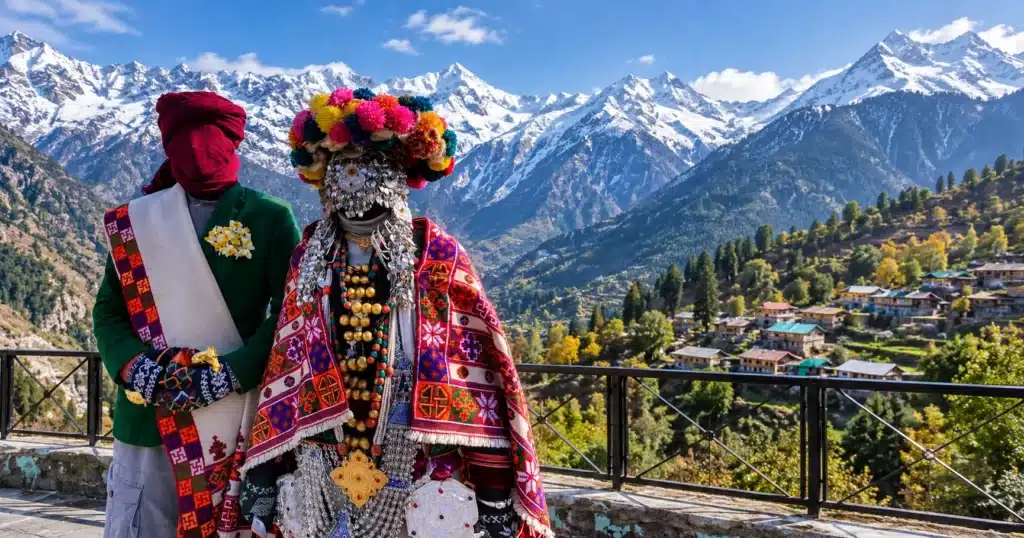
In November 2025, a single photograph did what centuries of quiet mountain ritual never tried to do. It showed a figure in Kinnaur, face completely wrapped in cloth, buried under heavy wool and silver, standing in snow in front of a crowd. Within days, the picture had spread across Indian social media, and a festival almost nobody outside Himachal Pradesh had heard of, Raulane, became one of the most searched cultural traditions in the country. The people who actually celebrate it were, by most accounts, not particularly interested in any of that.
This guide covers what Raulane actually is: who the Raula and Raulane are, what the Sauni tradition means to the villages that keep it, the rituals and clothing involved, and what’s genuinely known about its history versus what’s passed down as belief. It also covers, honestly, why a private winter ritual suddenly went viral, and what that means for a community that has never treated it as a tourist event.
Fast facts
- What it is: A Kinnauri ritual honouring and bidding farewell to the Sauni, guardian spirits believed to protect villages through winter
- Where: Kinnaur district, Himachal Pradesh, most prominently in Kalpa; village-specific variations exist elsewhere in the district
- When: No fixed date. Typically held in late winter to early spring, often around the time of Holi, timing varies by village
- Central figures: Raula (groom) and Raulane (bride), both roles performed by men, chosen from village divisions called Saring
- Age: Local oral tradition holds it to be roughly 5,000 years old; this figure is unverified and comes from inherited belief, not documented record
- 2025-2026 spotlight: A viral photograph from mid-November 2025 brought national and international attention within days, covered by NDTV, ThePrint, and other outlets
Raulane is a centuries-old Kinnauri ritual that marks the seasonal departure of the Sauni, mountain spirits believed to guard villages through winter, performed by two men dressed and masked as a symbolic bride and groom. It has no fixed calendar date, is celebrated differently from village to village, and became a national talking point in late 2025 after a single photograph went viral, a level of attention the community itself never sought.
What is Raulane?
Raulane is a spring thanksgiving and farewell ritual from Kinnaur district in Himachal Pradesh. At its core, it’s an act of gratitude: villagers believe that mountain spirits called the Sauni descend from high-altitude pastures to watch over their community during the harsh winter months, and Raulane is how the community thanks them and sends them back to the mountains as spring returns.
The ritual centres on two symbolic figures, the Raula and the Raulane, a ceremonial “groom” and “bride,” both played by men. Their pairing represents the connection between the villagers and the Sauni they’re honouring. Unlike a wedding, their roles aren’t romantic or narrative; they’re symbolic, and the two figures move through the village in slow, deliberate, near-silent procession, pausing at shrines to receive offerings from residents who have watched this same ritual their whole lives.
Where is it celebrated?
Raulane is native to Kinnaur, a mountainous, historically restricted tribal district in eastern Himachal Pradesh bordering Tibet. It’s most prominently associated with Kalpa, where a multi-day fair centred on the Vishnu and Brahma Narayan temple complex draws locals, nearby villagers, and increasingly, outside visitors. Other accounts place the ritual, or closely related village-specific versions of it, at additional Kinnauri temples, including Nagin Narayan.
Kinnaur’s villages don’t celebrate Raulane identically. Each community follows its own schedule and its own variation of the ritual, which is typical of the district’s broader pattern of geographically isolated villages maintaining distinct local forms of shared traditions, similar to various regional fairs in Uttarakhand.Kothi and parts of the Sangla Valley are also named in connection with the festival, though Kalpa’s celebration is the most widely documented.
Who are Raula and Raulane?
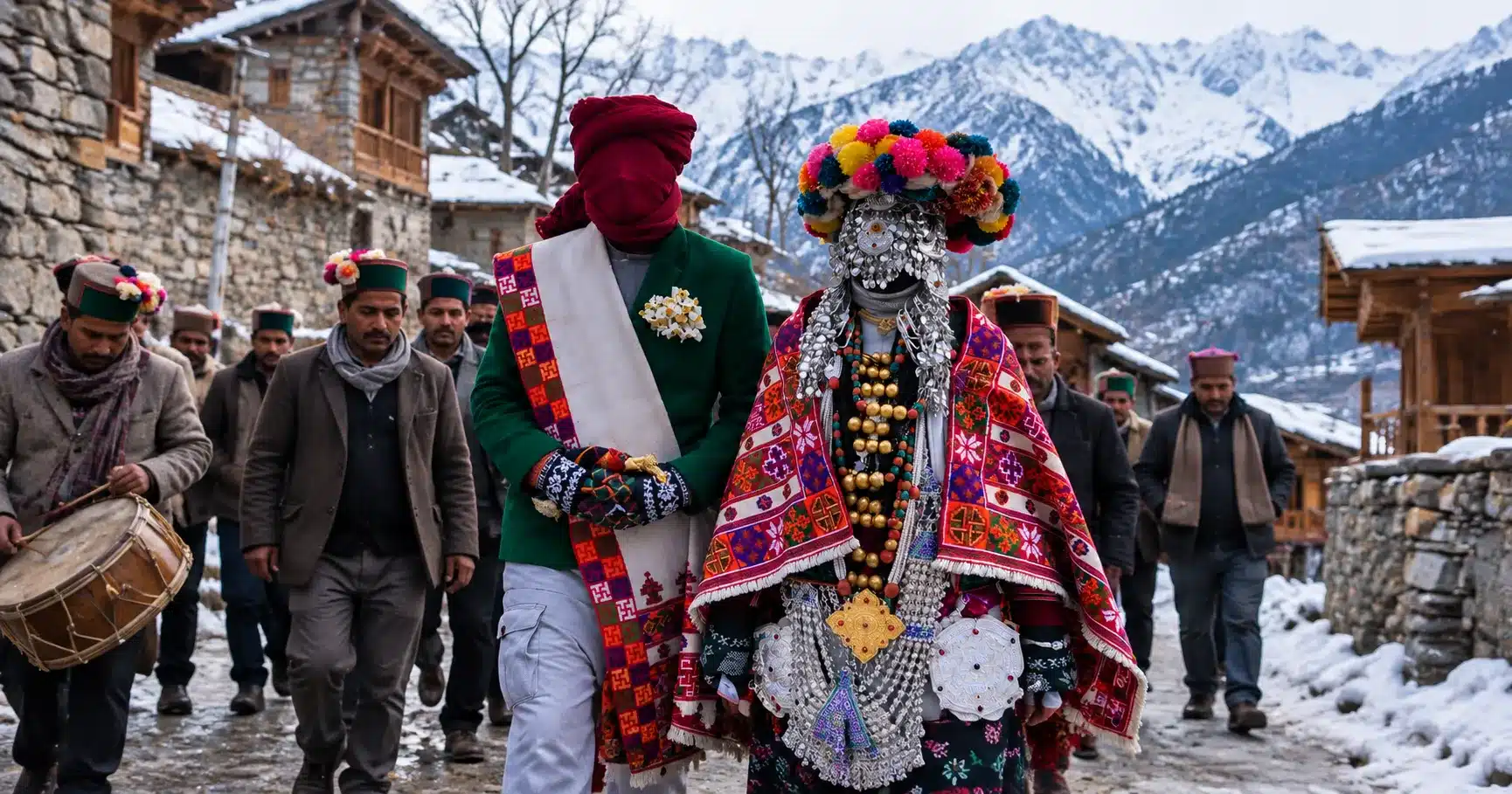 The Raula and Raulane are the ritual’s central figures, chosen from two different village divisions known as Saring, and traditionally always performed by men, regardless of which of the two roles they play.
Raula, the groom figure, has his face completely wrapped and concealed in gacchi, a woven cloth, so that no part of his skin is visible. The Raulane, the bride figure, is similarly transformed through mask and heavy traditional dress. According to at least one temple account, a third figure, Pundlu, is also part of the core cast at some village celebrations, though this appears to vary by location and isn’t universally described across every source covering the festival. Once dressed, neither figure speaks. Their movements are slow and almost trance-like as they process through the village, and one detail recurs across several accounts of the ritual: it’s said that the louder the Raula laughs during the celebration, the better the coming harvest is expected to be, a small piece of folk prophecy woven into an otherwise solemn ceremony.
The transformation is treated as more than costume. The mask and wrapping are described by people who study the tradition as a way of stepping into a liminal, sacred space, setting the wearer’s everyday identity aside for the duration of the ritual.
The Sauni: Kinnaur’s mountain fairies
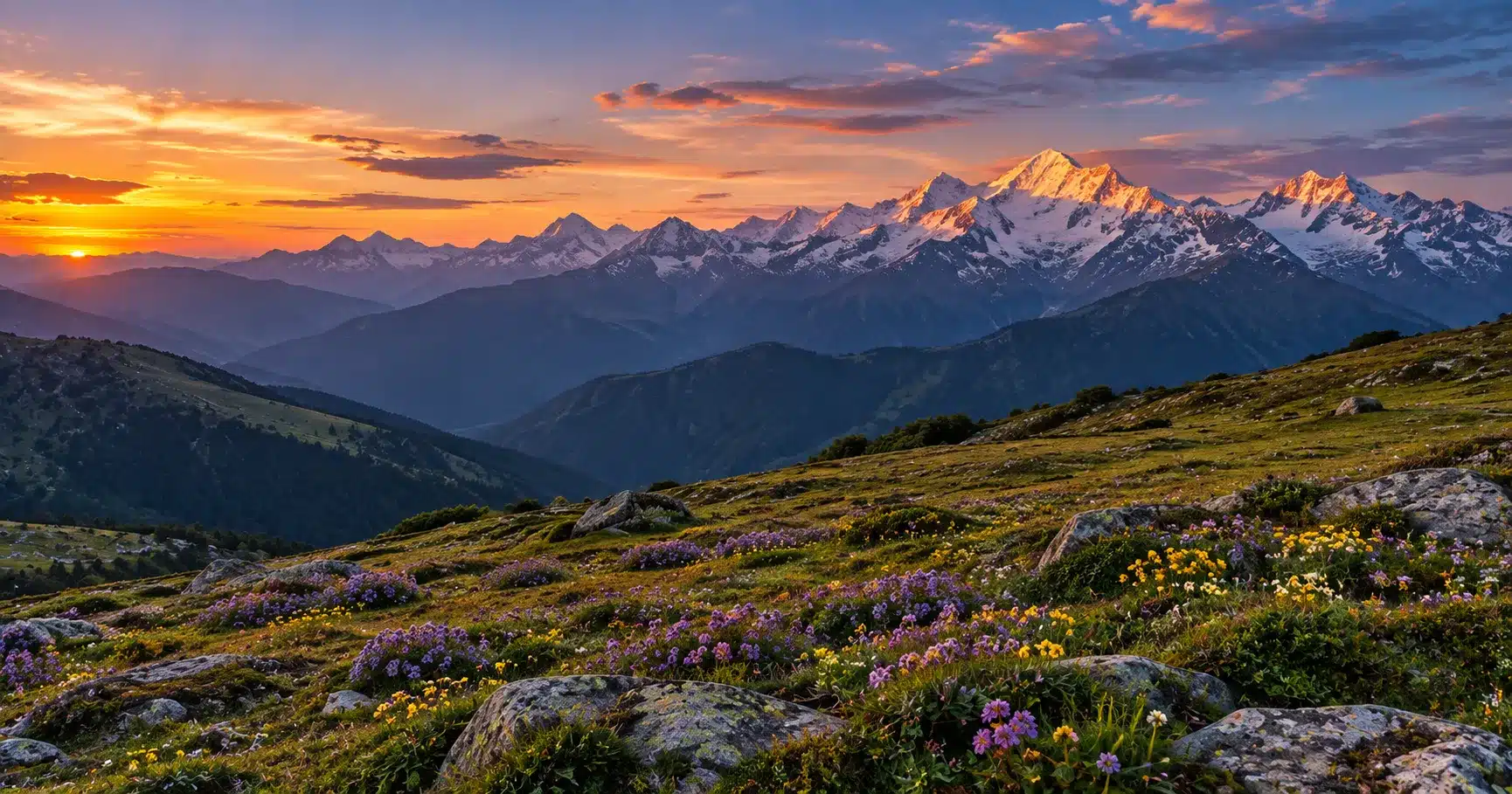 The Sauni are the guardian spirits at the centre of the entire festival, described across Kinnauri folklore as mountain fairies or celestial protectors who descend from high alpine meadows, known locally as Kanda, to watch over villages during the coldest months of the year.
According to local belief, the Sauni provide warmth, guidance, and protection through winter, then return to the high pastures as the weather turns. Raulane is the community’s ceremonial send-off, a mix of thanks and farewell performed at the point in the year when the practical need for that protection is ending and the agricultural calendar is about to begin again. The belief sits within a broader pattern common across Kinnaur: because of the district’s geographic isolation, its communities developed distinct styles of worship and festivals built around local deities and protective spirits, many oriented around safeguarding villages from harsh weather and what tradition describes as malevolent forces.
Traditional clothes and jewellery
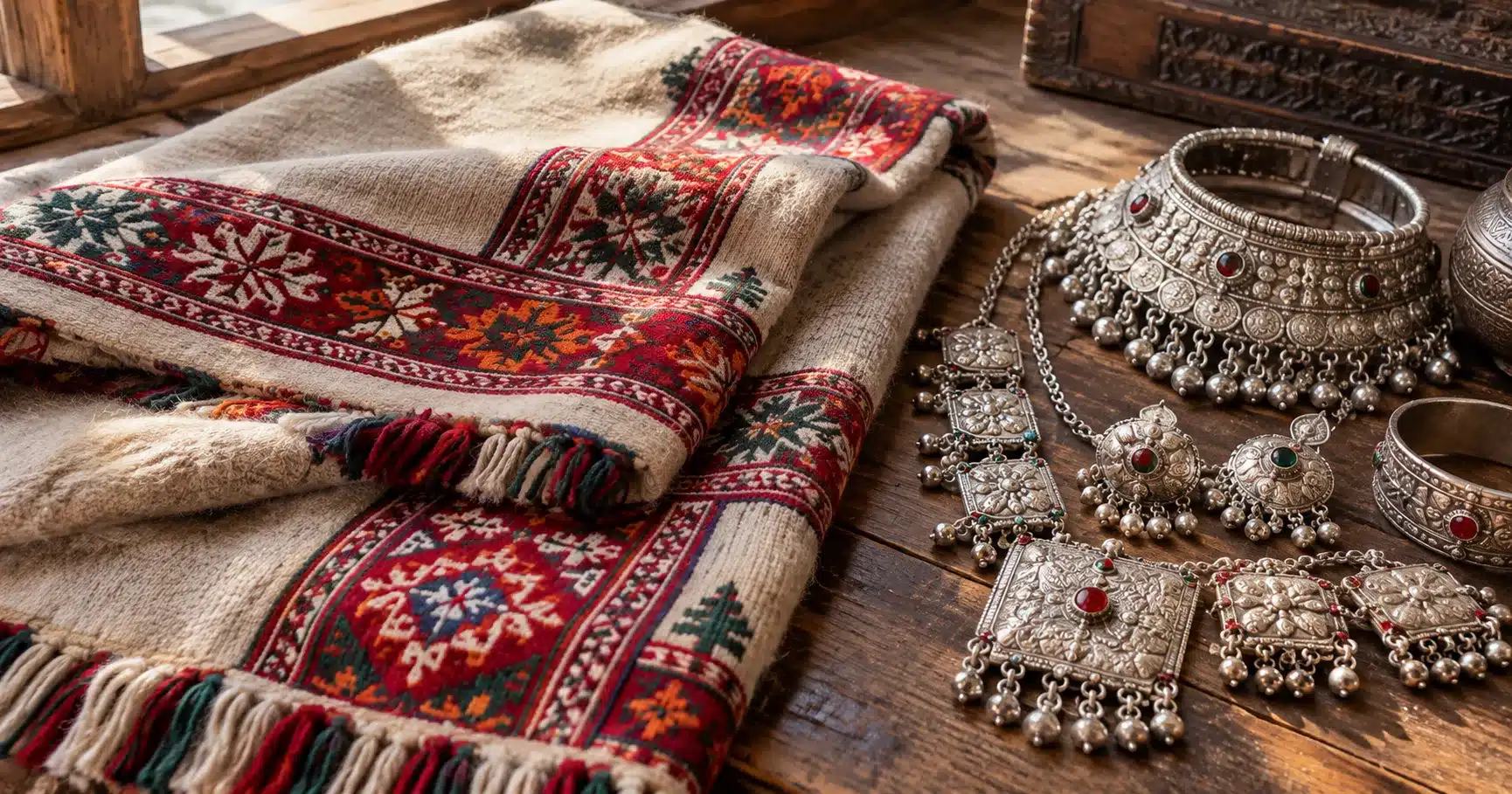 The clothing worn by the Raula and Raulane is deliberately heavy, warm, and rooted in everyday Kinnauri material culture rather than costume designed purely for spectacle.
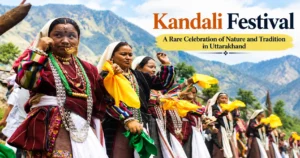
Kinnauri traditional dress itself follows clearly gendered conventions: women traditionally wrap a woollen shawl-like garment called a dohru, paired with a choli, a full-sleeved blouse, often with decorative embroidered borders, while men wear a long woollen robe called a chhuba, closer in style to an achkan, along with a woollen cap known as a thepang. Because the Raulane figure is dressed and presented as the ceremonial bride, accounts of the festival describe him wearing women’s dress elements, the dohru and choli, rather than the men’s chhuba the Raula figure wears, which is itself part of what makes the transformation feel complete rather than symbolic in name only. Substantial silver jewellery, some of it ancestral, is brought out of family storage specifically for the occasion. Families are described as retrieving heirloom pieces passed down through generations for the festival, turning the clothing itself into a form of living memory alongside the ritual. The masks worn by both figures are typically carved from wood, with strong, deliberately non-naturalistic features that further separate the wearer from an ordinary human presence during the ceremony.
Rituals of Raulane
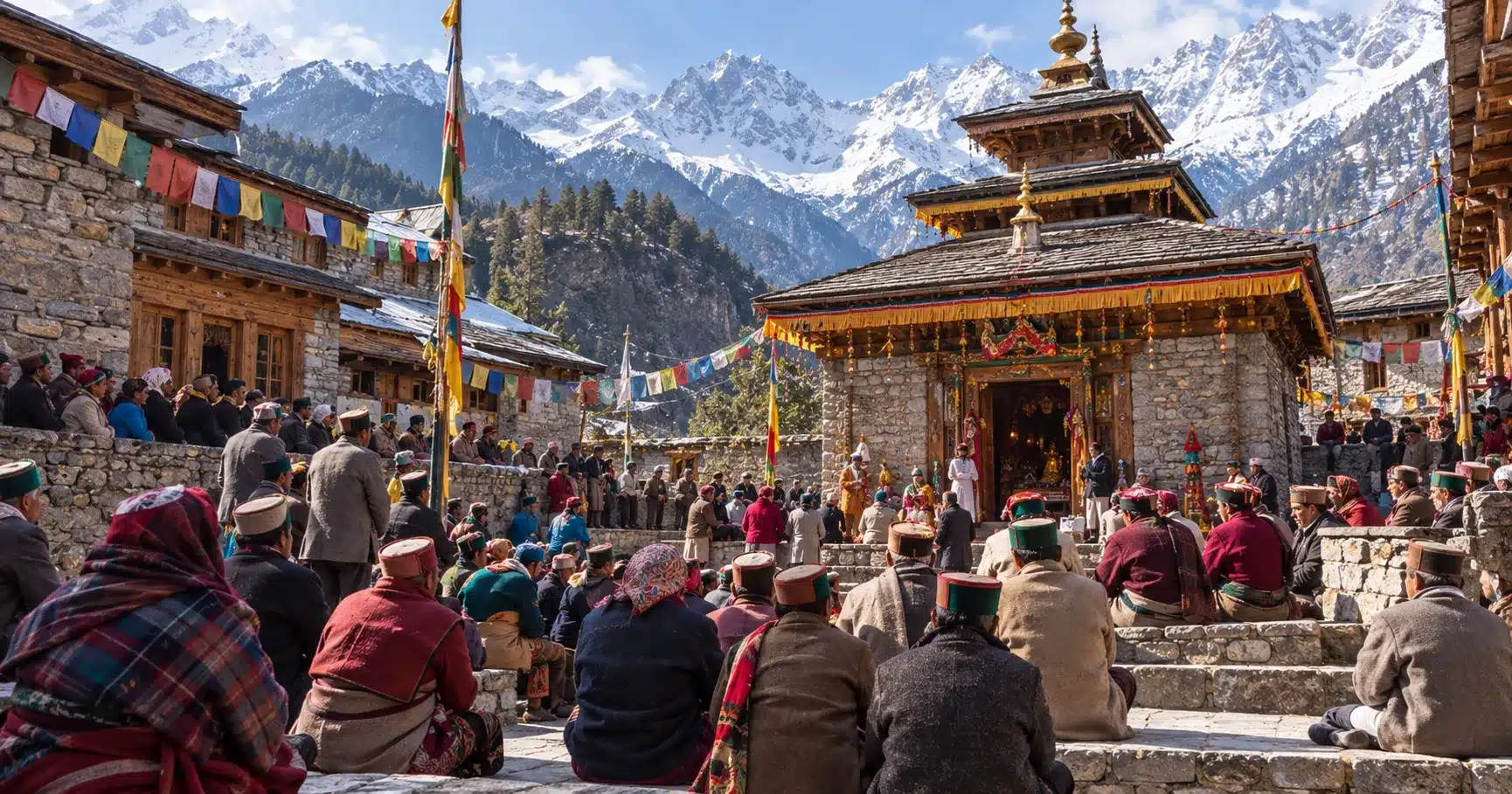 The ritual unfolds gradually, beginning with the dressing and masking of the Raula and Raulane and building toward a procession through the village that draws in the wider community.
Once transformed, the pair move through the village lanes in slow, deliberate steps, pausing at shrines along the way to receive offerings. At the ritual’s emotional centre is the temple itself, where the atmosphere is described as shifting from festive to reverently quiet as the Raula and Raulane enter and perform a slow, rhythmic dance, intended to harmonise the human and spiritual worlds rather than entertain an audience. Music and folk song accompany much of the procession, and the wider community participates in some form throughout, whether through offerings, singing, or simply gathering to witness a ritual most attendees have seen every year of their lives. At Kalpa specifically, the celebration is reported to run across five days, concluding with a final day of gathered festivity at the temple complex.
History: what’s known and what’s believed
Raulane’s history is a genuine mix of documented fact and inherited belief, and treating the two as equally certain would misrepresent both.
What’s reasonably well established: Raulane is old, it belongs to Kinnaur’s Kanaura community, and it’s part of a wider regional pattern of festivals built around local deity worship and protection from harsh winter conditions, a pattern academic researchers studying Kinnauri social and religious structures have documented as central to the district’s traditional power and belief systems. What’s less certain, and openly acknowledged as such even by outlets covering the festival’s recent popularity, is the claim that Raulane is roughly 5,000 years old. That figure comes from local oral tradition rather than documented historical record, and multiple accounts of the festival explicitly note that its exact age cannot be verified, even as they describe its rituals and continuity as evidence of a lineage stretching back many generations. The honest version of the history, then, is this: Raulane’s age is unverifiable but its endurance isn’t in question. It has survived through oral transmission, not written record, passed down the way most of Kinnaur’s local ritual life has been for as long as anyone can document.
Why the Raulane Festival went viral
The short answer is a single image and a very specific kind of curiosity. In mid-November 2025, a photograph from a Raulane celebration, showing the fully concealed face, heavy woollens, and a crowd gathered in snow, began circulating widely on social media, prominently including a post that drew significant attention on X in the days around November 15. Within a week, NDTV, ThePrint, and other national outlets had published explainers on what the festival actually was, and by early 2026 travel writers, YouTube creators, and cultural commentators had followed.
What made it spread wasn’t scale or spectacle in the conventional sense, it was closer to the opposite. Coverage of the moment consistently points to the festival’s total lack of performance for an outside audience as the actual hook: no stages, no promotional material, no rituals staged for cameras, just a small community practising something largely unchanged for generations, encountered by the wider internet almost by accident. The masks, the concealed faces, and the unusual premise of men ritually embodying a bride and groom added a layer of mystery that a more polished, tourism-oriented festival typically doesn’t have. It’s worth being direct about the asymmetry here: the virality was almost entirely an outside phenomenon. Multiple accounts of the community’s own relationship to the festival describe it as something performed for the deity and the village, not for visibility, and note that residents have continued the ritual largely unchanged by the attention it received.
How visitors can experience it respectfully
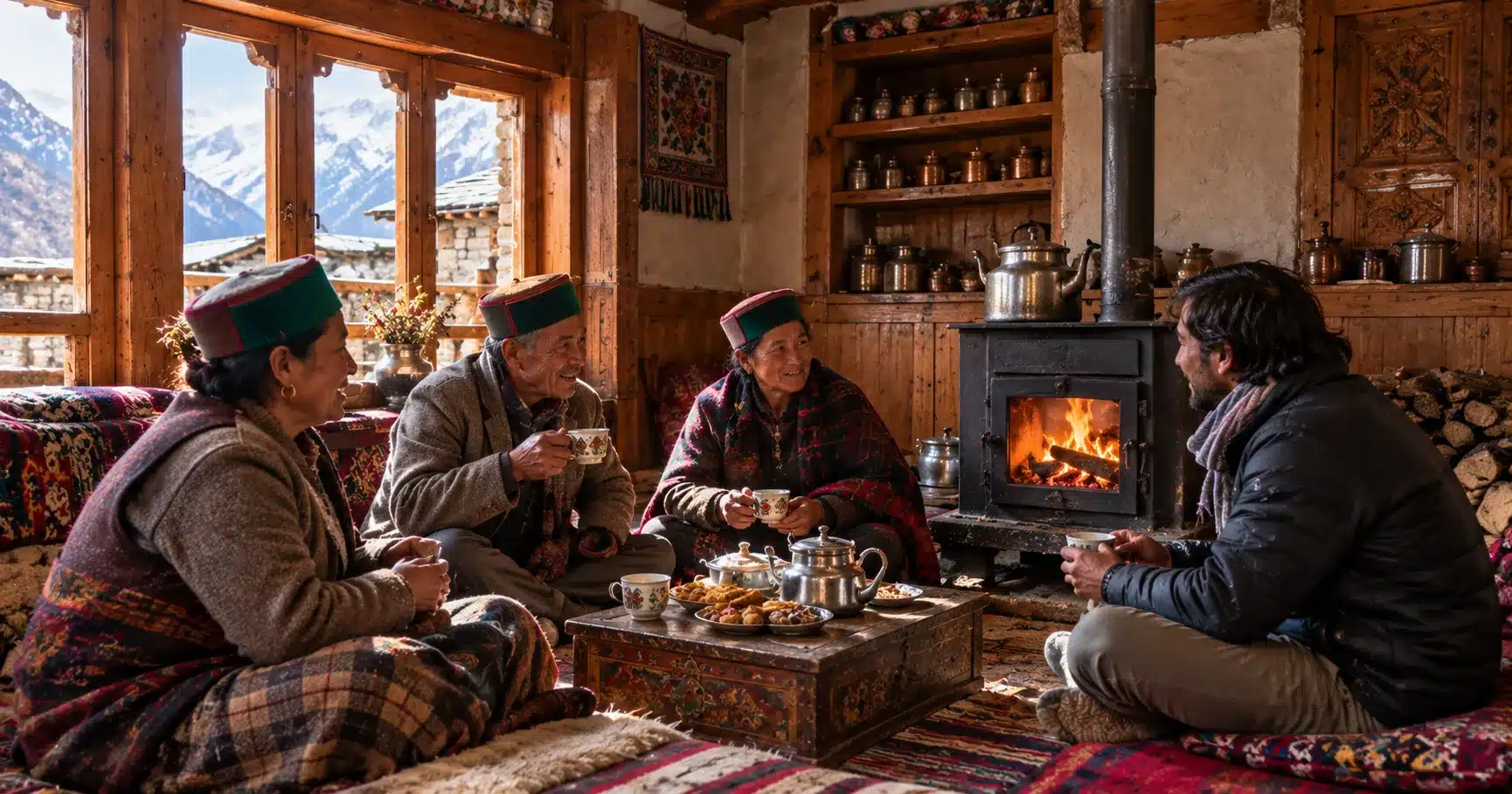 Raulane is not organised or marketed as a tourist event, and treating it as one is the fastest way to have a poor and disrespectful experience of it.
Visitors who do attend, typically by travelling independently to Kalpa or arranging a homestay in the region during the appropriate season, are consistently advised to dress modestly, avoid black clothing on certain ritual days, carry a head covering for temple areas, and never enter restricted parts of the temple complex. Photography etiquette matters more here than at most festivals: guidance repeatedly stresses asking permission before photographing participants or rituals, rather than treating the ceremony as a photo opportunity. Because Raulane has no single fixed date and varies by village, anyone planning a visit should confirm timing locally rather than assuming a set calendar window, and should approach the experience as a guest at someone else’s sacred occasion rather than as an audience at a performance. Homestays in the region offer the most commonly recommended way to engage respectfully, since they position a visitor as part of the community’s rhythm for a few days rather than a spectator passing through. Speaking with village elders, where welcomed, is also frequently cited as the richest way to understand the festival, since much of its real detail exists only in memory and oral history rather than any written account.
FAQ
What is the Raulane Festival?
Raulane is a Kinnauri ritual from Himachal Pradesh in which the community honours and bids farewell to the Sauni, guardian spirits believed to protect villages through winter, through a symbolic ceremony centred on two masked figures, the Raula and Raulane, both traditionally played by men.
Where is the Raulane Festival celebrated?
Primarily in Kinnaur district, Himachal Pradesh, most prominently in the village of Kalpa. Related or village-specific versions of the ritual are also associated with other parts of Kinnaur, including Kothi and parts of the Sangla Valley.
When does Raulane take place?
There’s no single fixed date. It’s generally held in late winter to early spring, often around the time of Holi, with timing varying by village. A multi-day fair version of the celebration in Kalpa has run across five days in recent years.
Who are the Raula and Raulane?
The Raula (groom) and Raulane (bride) are the festival’s central symbolic figures, both always played by men and chosen from two village divisions called Saring. Their pairing represents the community’s connection to the Sauni spirits, and their roles are ceremonial rather than romantic.
Is Raulane really 5,000 years old?
That figure comes from local oral tradition and cannot be independently verified through documented historical record. What is well established is that the ritual is genuinely old and has been passed down through oral transmission across many generations within Kinnaur’s Kanaura community.
Why did Raulane suddenly become famous in 2025?
A photograph from the festival, showing a fully masked and wrapped participant in snow, went viral on social media in mid-November 2025. National outlets including NDTV and ThePrint covered the story within days, driven largely by the ritual’s total lack of tourist-oriented performance, which added to its sense of mystery and authenticity for a wider audience encountering it for the first time.
Can tourists attend the Raulane Festival?
Outsiders do sometimes witness the ritual, but the community does not present it as a tourist event, and it remains a deeply personal, community-focused occasion. Visitors who attend are advised to dress modestly, seek permission before photographing anyone, avoid restricted temple areas, and treat the experience as a guest at a sacred occasion rather than a performance.
Is Raulane connected to Holi?
Not directly, but the timing often overlaps. Raulane typically takes place around the same season as Holi, and Kinnaur has its own distinct regional version of Holi, called Faguli, celebrated in the Sangla Valley with masks, hay costumes, and Kinnauri percussion, a separate but culturally related tradition from the same district.
The bottom line
Raulane’s sudden fame says more about the internet’s appetite for the unmediated and unexplained than it does about the festival itself, which has continued largely as it always has, regardless of who’s watching. The genuinely interesting parts of the story aren’t the viral photo but everything underneath it: a ritual built on gratitude toward spirits nobody can prove exist, sustained for generations through memory rather than documentation, performed by men who don’t speak and don’t perform for anyone outside their own community. Whatever Raulane’s exact age turns out to be, its endurance through oral tradition alone, in a district that has always been hard to reach and harder to standardise, is the part worth paying attention to long after the viral moment fades.

Abhay Ramola researches world festivals across primary sources, local accounts, and on-ground reporting. He founded Dionfest to cover what gets missed when festivals become tourism content the history, the ritual, and the people behind it.