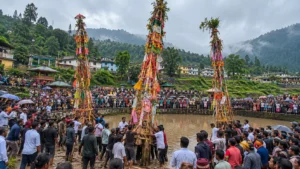
Behdienkhlam Festival: How Jowai’s Pnar Community Drives Away Disease
Behdienkhlam means “to drive away the plague” in the Pnar language. The people who organise it describe a wider purpose. When Seiñraij Jowai announced the 2026 schedule, its president said the festival is observed to seek blessings for good health, prosperity, peace, an abundant harvest, success in livelihood, educational progress and overall well-being.
The 2026 festival ran from 6 to 9 July in Jowai, in West Jaintia Hills, Meghalaya. Some travel and holiday pages still list 11–14 July for 2026. Those dates match what Outlook Traveller reported for 2025, not what the organiser announced.
Quick facts
- Who: the Pnar (Jaintia) community, followers of the indigenous Niamtre faith
- Where: Jowai, headquarters of West Jaintia Hills. Meghalaya Tourism also names Tuberkmai (East Jaintia Hills) as a major site
- 2026 dates: 6–9 July
- Length: four days and three nights per the organiser. Meghalaya Tourism says typically three to four days
- Organiser: Seiñraij Jowai
- Key places: Aitnar (the sacred pool) and Iawmusiang
- Key objects: sacred logs (Dieñkhlam, Khnong) and tall decorated rots
Several spellings are in use: Behdienkhlam, Behdeinkhlam and Behdieñkhlam. They all mean the same festival.
Why Is Behdienkhlam Called a Festival That Drives Away Disease?
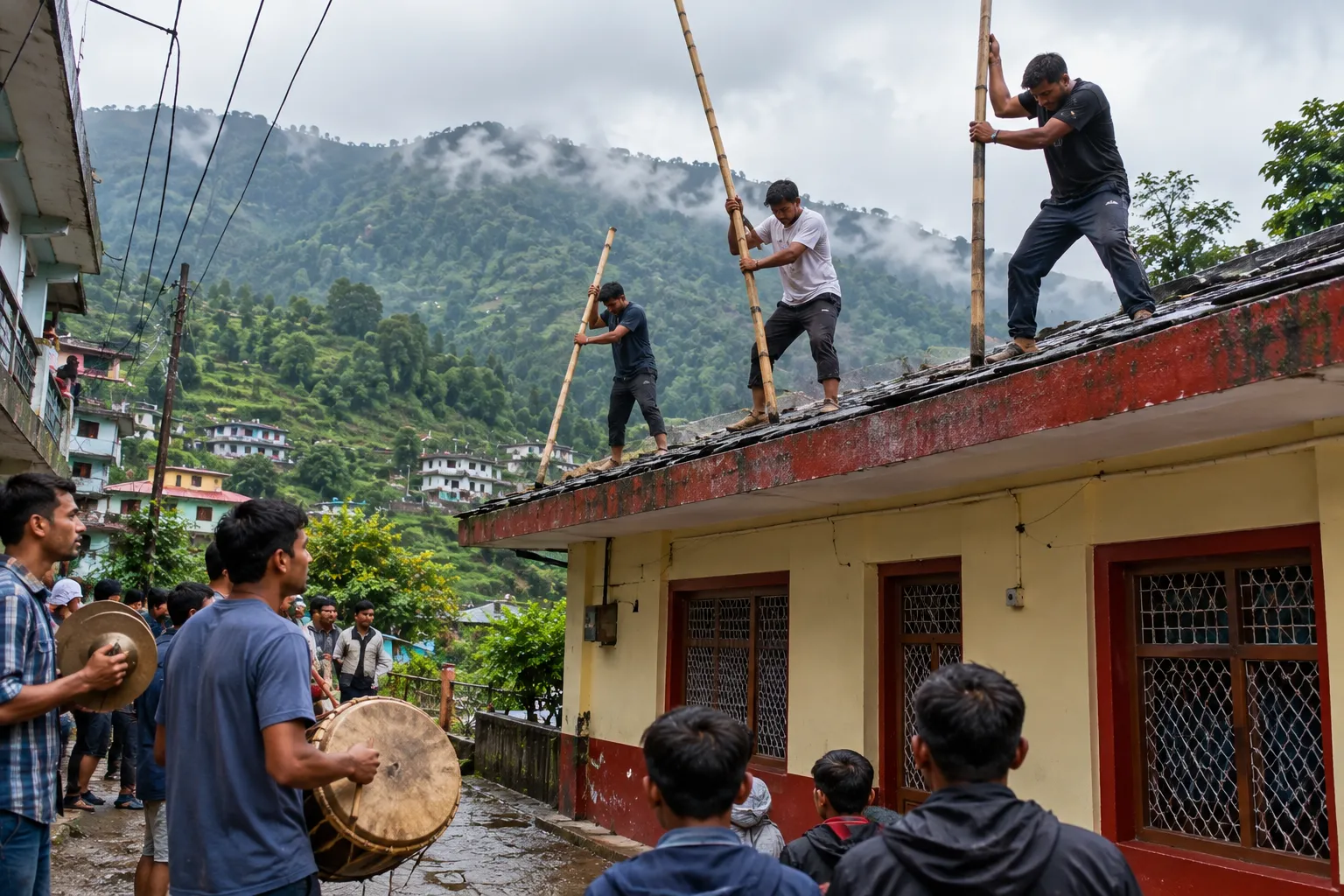 It starts with the name. Writer HH Mohrmen, in The Shillong Times, breaks it into three Pnar words: beh (to chase away), dieñ (wood or log) and khlam (plague, epidemic). Many travel pages translate it as “driving away plague with sticks”. Both readings fit the festival. A log is central, and the Meghalaya Government portal describes young men beating the roof of every house with bamboo poles to chase away evil spirits and disease.
A 2021 Shillong Times feature adds that in an earlier form the festival was called Ka Chad Soo Sngi Le Iaw, a dance lasting four days, three of them market days.
There is also a story behind the name. DionFest found three versions. None gives a date.
- The four sisters. A photo-essay on Sahapedia says an epidemic of cholera once spread through the Jaintia hills. Four sisters, Ka Doh, Ka Bon, Ka Wet and Ka Tein, carried the longest tree trunk from the forest and buried the plague in a pool of mud. They are believed to be the matrilineal ancestors of Jowai’s Jaintia population.
- A warning and protector deities. Indpaedia says a plague was foretold. The people of Jowai went to the shrines of their protector deities, who told them to hold the festival every year.
- A covenant. Dr Omarlin Kyndiah writes that the Creator agreed to return once a year to live among the people for four days and three nights. People honour Him through joy, dance, gratitude and unity, not through sacrifice alone.
So is it only about disease?
Local sources say no.
The organiser’s own list is wider than disease. The official Meghalaya Tourism page agrees: it says the festival is held just after sowing, to ward off disease, misfortune and evil spirits. So disease is one of several things people pray about.
Mohrmen argues that the festival is not solely about plague. Above all it is worship, and for him it is about fulfilling the covenant between God and the people. A 2026 news report makes a similar point. According to the Niamtre faith, it is not only a ritual against sickness. It also renews the community’s resolve to overcome social evils and keep harmony.
Taken together, these sources suggest “plague” works as a symbol for anything that harms the community.
One belief is easy to see at the festival. Hundreds of devotees rush to touch the sacred log, believing it protects them from illness and brings good health. These are matters of faith. The sources describe what participants believe, not a medical claim.
What Happens Over the Four Days
 Each year’s programme differs in detail. The pattern below combines the 2026 reports with older local coverage, so check the organiser’s schedule.
Before the festival. Preparations begin in March, led by the Dalloi and Wasan with clan elders.
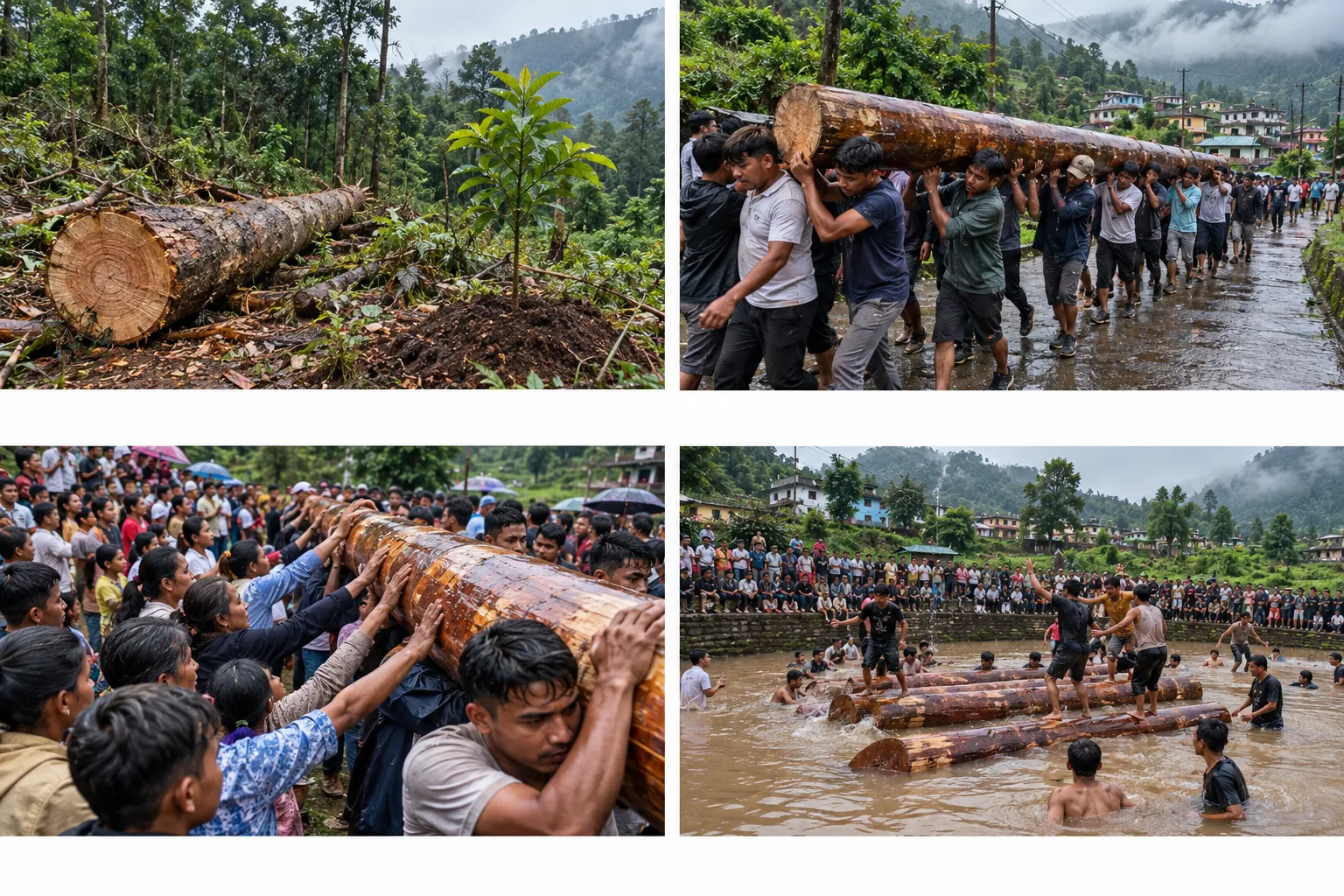
Day 1 (Pynsin). In 2024, a long log called the Symbud Khnong was brought from Riatturiem to New Hill, with the faithful dancing to drums, bugles and cymbals.
Day 2 (Mulong). A 2025 local account says religious leaders under the Dolloi perform a ritual at Aitnar as early as 5 am. The men of each locality then fetch their Dieñkhlam, a sacred log, from the forest. Their families prepare the food and drink they carry.
Day 3. In 2026, rites ended at Madan Moosyiem, where the priest offered libations. Elders of the Kmai Raij prepared the traditional musical instruments, the Bom and Bhuri.
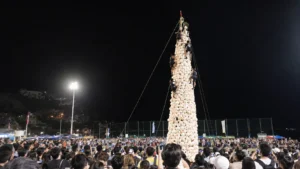
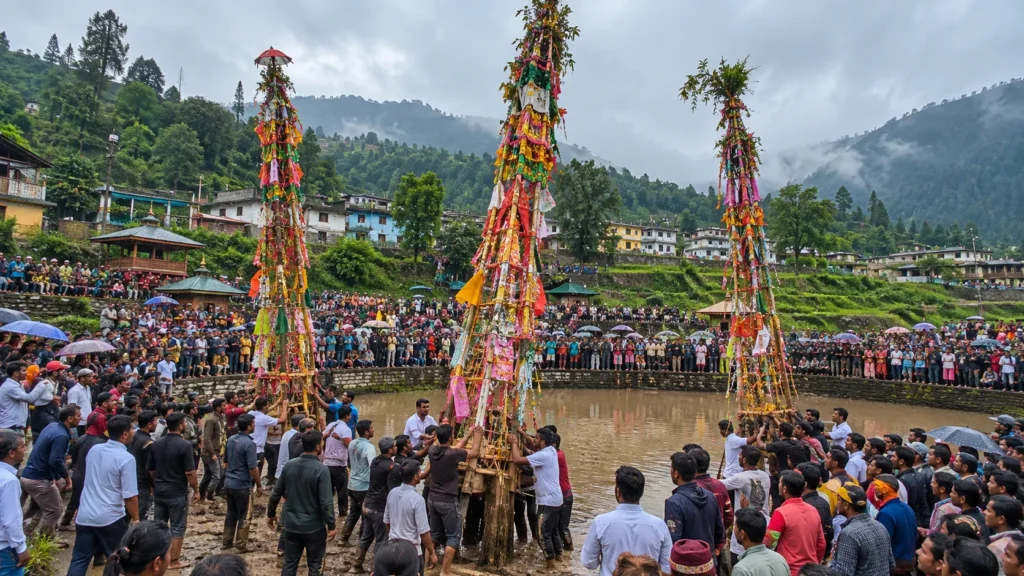
Day 4 (Muchai). The climax. Decorated rots from different localities are immersed in the Syiem Aitnar pool along with the sacred logs. The day ends with the Datlawakor match.
What the Logs, Rots and Pool Mean
- Logs (Dieñkhlam, Khnong). Large, straight, polished trunks, ceremonially felled from designated forests and brought to Jowai. The central ritual follows the log from forest to pool.
- Rots. Tall structures of bamboo, coloured paper and tinsel, built by youth from each locality. Some English-language reports call them raths (chariots), but they are not the chariots of Puri’s Jagannath Rath Yatra.
- Aitnar. Dr Kyndiah writes that the rots are immersed here to signify disorder returning to the depths and harmony being restored.
- Datlawakor. A football-like game with a wooden ball. In 2026, the teams represented the upper and lower valleys of the Myntdu River. By tradition, the winning side is blessed with a good harvest.
The harvest link is part of the timing too. The government portal says the festival is held every year in July after the sowing period. The rites ask for a good crop as well as protection from sickness.
Women’s role is described differently across sources. The government page says women do not take part in the dancing but offer sacrificial food to the spirits of the forefathers. Sahapedia says women prepare offerings for their clan ancestors. Treat any single account as incomplete.
What It Looks and Sounds Like, as Reported
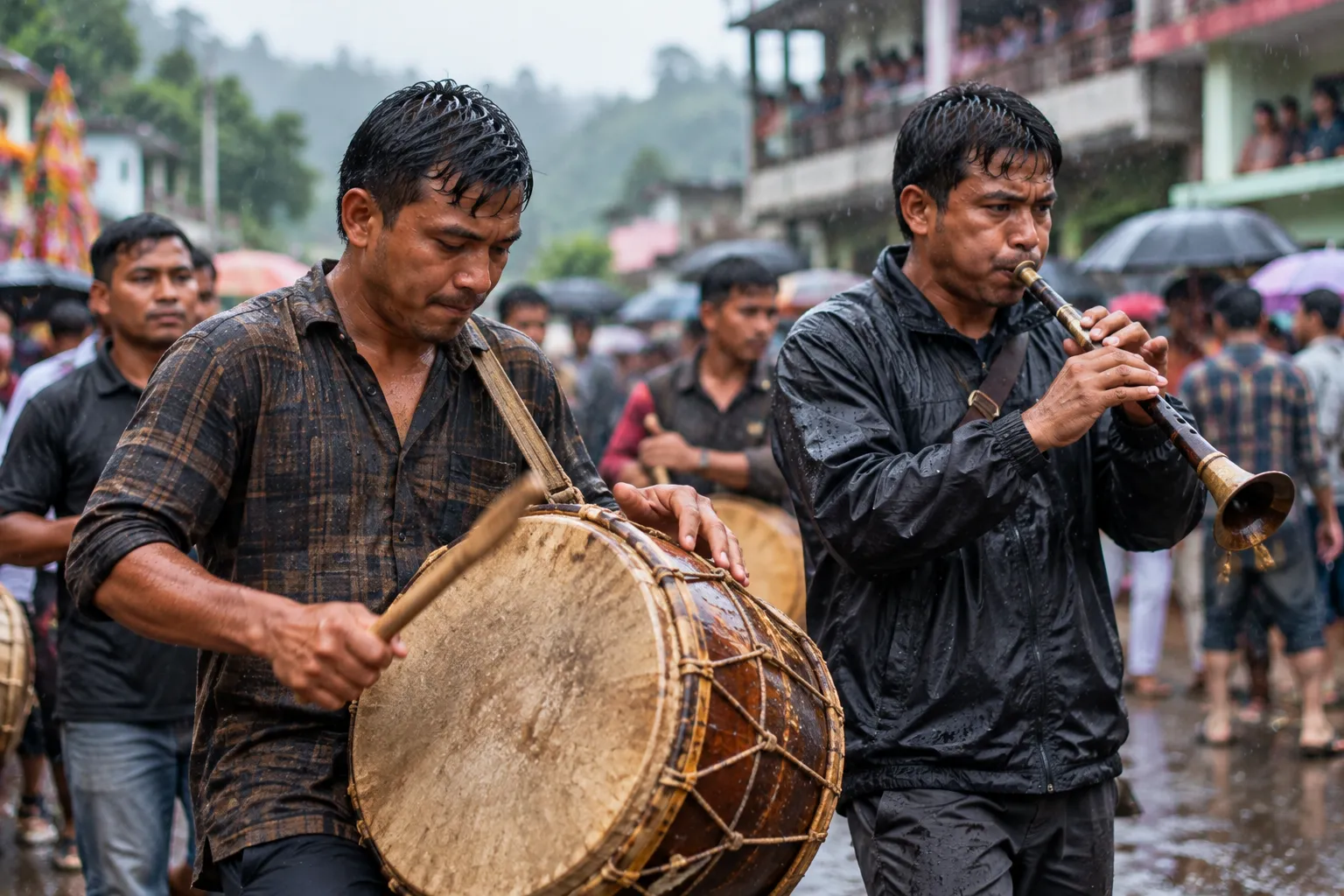
- A Shillong Times report on the 2026 climax describes drumbeats, traditional pipes and chants, with rots from different localities carried into the muddy water of Aitnar.
- Photographer Mrigank Kulshrestha documented the festival for Sahapedia. He writes that it rained continuously during his stay, and that he walked through mud for many kilometres.
- He also writes that he expected few people at the ritual on a hill outside Jowai. Instead, men of all ages had arrived as early as 4 am and had already begun.
- The government portal adds that rain on the festival day is considered desirable.
What Changed in 2026
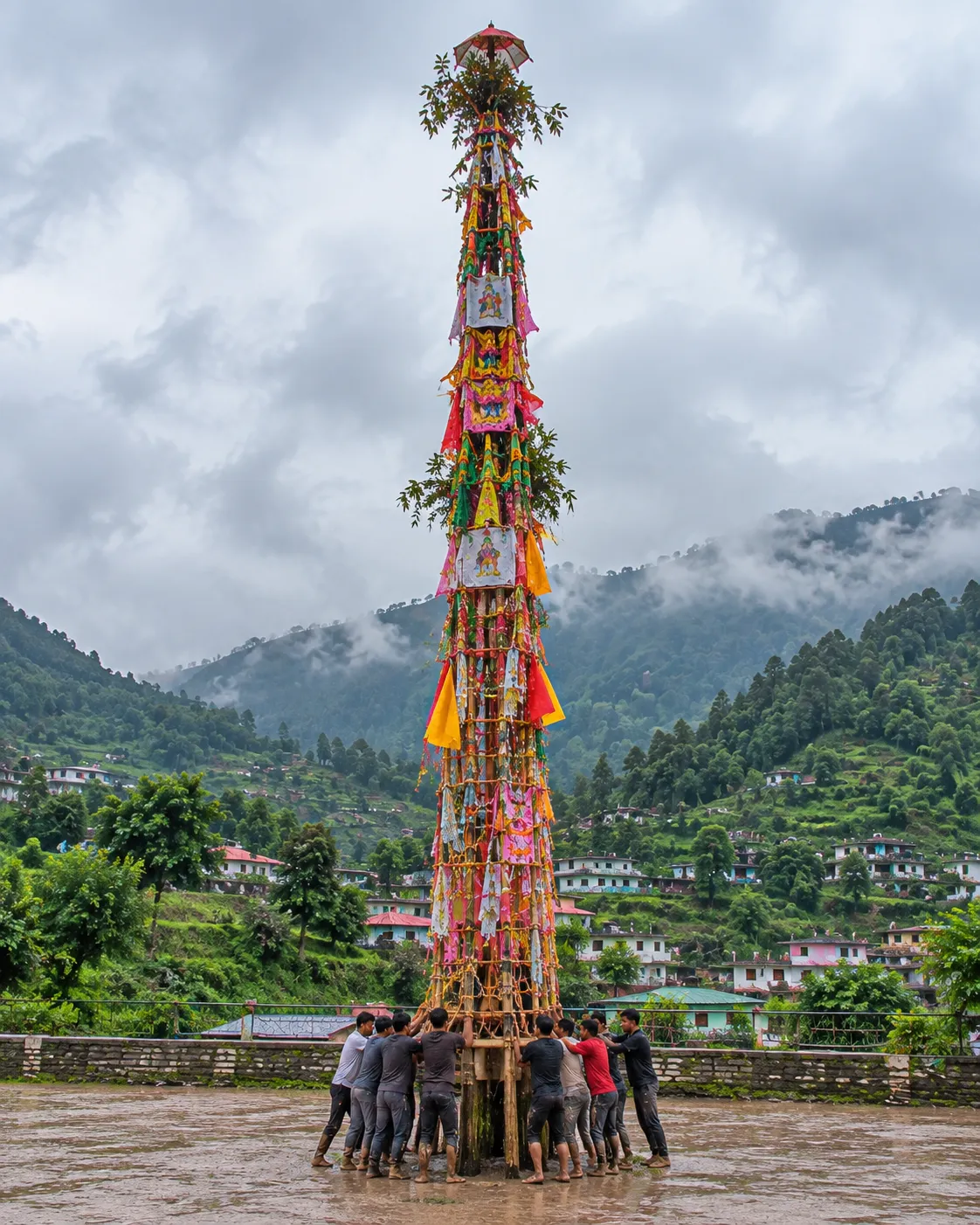
The rots spoke about today’s problems. There were 13 rots at Aitnar. Themes included Messi and Ronaldo, healthy living, discouraging alcohol, and children’s growing addiction to mobile phones. Another report adds environmental protection, technology and artificial intelligence, public health and greed.
Forest care was reported. This year, trees were cut only after traditional invocations, and saplings were planted at the felling sites. India also has a national tree-planting week every July; DionFest covers it in the Van Mahotsav 2026 guide.
Behdienkhlam Dates: Why You Cannot Reuse Last Year’s
| Year | Reported dates | Source |
|---|---|---|
| 2024 | 30 June – 3 July | Syllad |
| 2025 | 11–14 July | Outlook Traveller |
| 2026 | 6–9 July | Syllad, The Shillong Times |
The dates move by several days each year. I found no published rule for how they are set. The 2027 dates have not been announced as far as I could find. One aggregator lists 10–13 July 2027, but it gives no source, so treat it as a guess. The organiser, Seiñraij Jowai, announces the schedule locally. Check local news before you plan.
Visiting Jowai
- Distance. The West Jaintia Hills district site puts Jowai 60 km from Shillong. Other sites say 64–65 km.
- Transport. The district site says buses, cars and Sumos run from Shillong along NH-40, and are available from Mawlong hat (the MUDA parking lot).
- Airport. The nearest is Umroi Airport near Shillong. Guwahati’s airport is the other option.
- Stay. Sources disagree. Outlook Traveller lists hotels, guesthouses and homestays. Another travel site says options are few and advises booking ahead or staying in Shillong. Book early.
- Final-day traffic. In 2026, police enforced no-entry zones, one-way routes and parking rules on 8 and 9 July. On the final day, parking was set up at Jrisalein Ground, Seiñraij Ground at Iawmusiang and Madan Ryngkaw at Tpep Pale. The organiser also asked people to use fewer private vehicles. Expect something similar, and check local notices.
- Weather. Taken together, the sources suggest planning for rain and mud.
- Rules. I found no official visitor rules or photography guidance from Seiñraij Jowai, so I wrote none.

Abhay Ramola researches world festivals across primary sources, local accounts, and on-ground reporting. He founded Dionfest to cover what gets missed when festivals become tourism content the history, the ritual, and the people behind it.