Obon: Japan’s Festival for the Dead Explained Simply
Every summer, tens of millions of Japanese people travel home to their families, light fires in front of their houses, and dance in circles in the streets. For three days, Japan effectively shuts down — airports overflow, trains sell out weeks in advance, and whole city blocks smell like incense.
This is obon, and most outsiders have no idea it’s happening or why.
If you want to understand obon — what it actually is, what people do, and why it still matters to modern Japan — this guide covers all of it. No prior knowledge needed.
What Is Obon Festival in Japan?
Obon is a Japanese Buddhist festival that honors the spirits of ancestors. It’s believed that during Obon, the spirits of the dead return to visit their living relatives. Families return to their hometowns, clean ancestral graves, light lanterns to guide the spirits home, and perform traditional Bon Odori dances. It’s one of the most important occasions in the Japanese calendar for family reunion comparable in that sense to Chinese New Year, though the mood is quieter and more reflective.
Think of it less like Halloween (though the ghost angle is real) and more like a family reunion where the guests of honor are invisible. Japan has many such seasonal celebrations tied to nature and memory — from the cherry blossom festivals of spring to the stargazing wishes of Tanabata in July — and obon sits right at the heart of the summer calendar.
Obon Day When It Falls Each Year
Obon is observed in mid-August in most of Japan specifically August 13th to 16th. Some regions, particularly in Tokyo and parts of Kanto, observe it in mid-July instead, following the old lunar calendar dates. The core days are the same regardless of month: the 13th is when spirits are welcomed, the 15th or 16th is when they’re sent back. The send-off toro nagashi, the floating of paper lanterns on rivers happens on the final evening.
Is Obon a Public Holiday in Japan
Obon is not an official national holiday in Japan but it functions as one. Most companies give employees time off during Obon week in August, and it’s one of the three major travel periods in Japan alongside New Year and Golden Week. Trains and flights book out weeks in advance. Many businesses, particularly small family-run shops and restaurants, close for several days. The country essentially pauses for a week, even without a formal holiday designation.
Obon Festival Meaning: Where Does It Come From?
The roots of obon go back over 500 years, but the story behind it is older. It comes from a Buddhist tale about a monk named Mokuren, who used his spiritual powers to look for his dead mother. He found her suffering in the realm of hungry ghosts. His teacher told him to make offerings to Buddhist monks — and when he did, his mother was freed.
Mokuren was so relieved that he danced for joy. That dance became the template for the Bon Odori you still see today.
Over time, obon absorbed older Japanese folk beliefs about ancestors and spirits, so today it’s a mix of Buddhist ritual and pre-Buddhist tradition. Most Japanese people don’t think of it as strictly religious, though. For the majority, the obon festival meaning is more personal: it’s a time to remember people you’ve lost.
Japan has one of the world’s lowest rates of religious identification (surveys consistently show over 60% of Japanese say they have no religion), yet obon participation remains close to universal. That tells you something about what it actually is — less a religious ceremony, more a cultural obligation.
When Is Obon Day?
Here’s where it gets slightly complicated. There is no single obon day across all of Japan.
Most of Japan celebrates obon from August 13 to 16. This is the most common period, and the one you’ll see referenced in travel guides.
Tokyo and some other urban areas hold it a month earlier: July 13 to 16. This version follows the old lunar calendar converted to the solar calendar directly.
Some rural areas, especially in parts of Okinawa and certain mountain regions, still follow the actual lunar calendar, so their obon floats to a different date each year.
The August version is by far the largest. If you look up pictures of massive bon odori dances or crowded bullet train platforms, those are almost always from August.
How Do Japanese People Actually Celebrate Obon?
 There’s a sequence to it. Here’s what happens across the three days:
Day 1 (Mukaebi — the welcoming fire):
- Families light small fires called mukaebi at the entrance of the house to guide the spirits home.
- Many people travel to graveyards to clean and decorate the grave, and then light incense to signal to the ancestor’s spirit that it’s time to return.
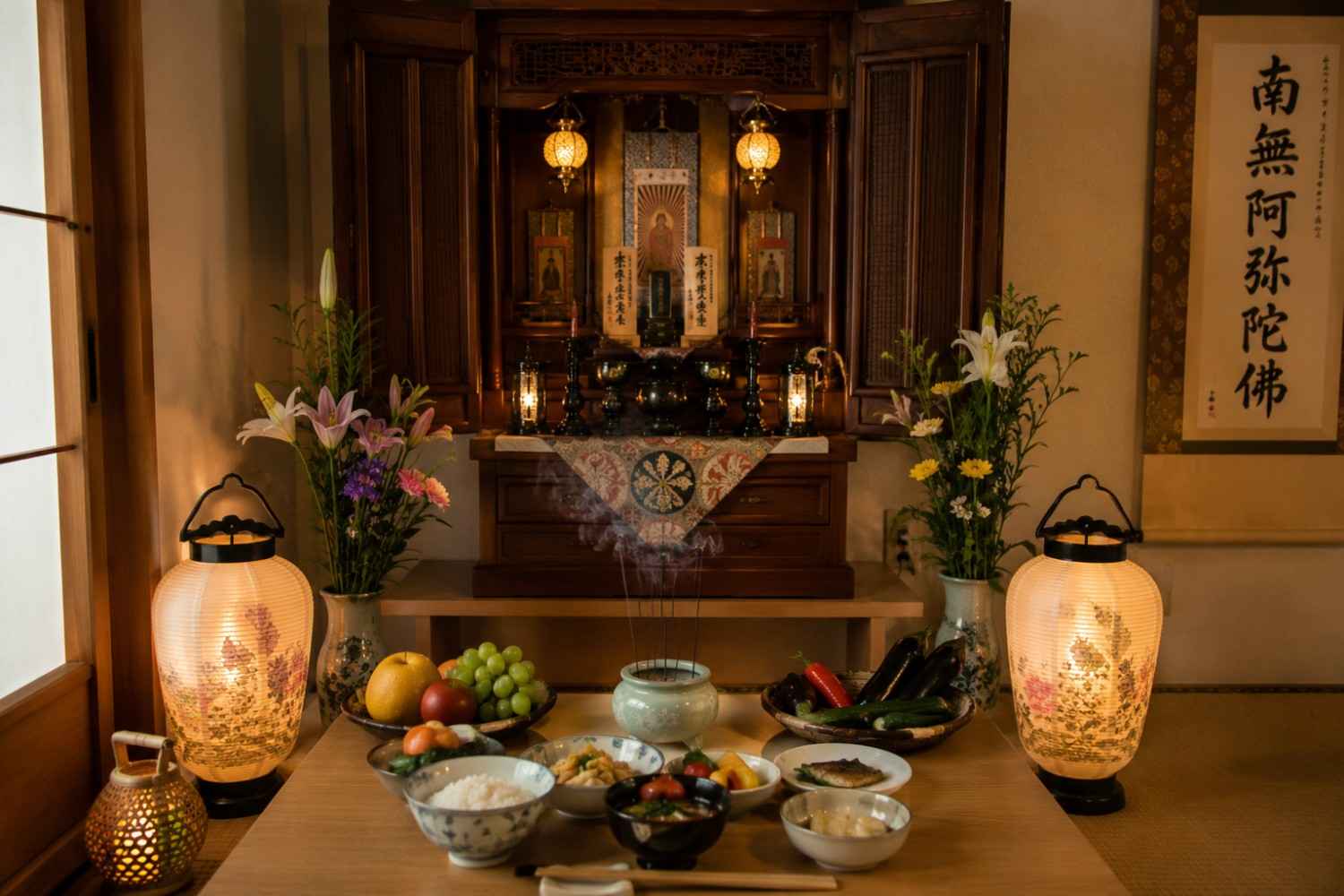
- A special altar called a shoryodana is set up inside the home, with offerings of food, water, flowers, and incense.
Days 2-3 (The reunion period):
- The spirits are considered to be present in the home during this time.
- Families stay together, share meals, and visit relatives.
- Community bon odori dances take place at local shrines, parks, or temples during the evenings.
Final Day (Okuribi — the sending-off fire):
- The spirits have to go back. Families light fires again to help them on the way.
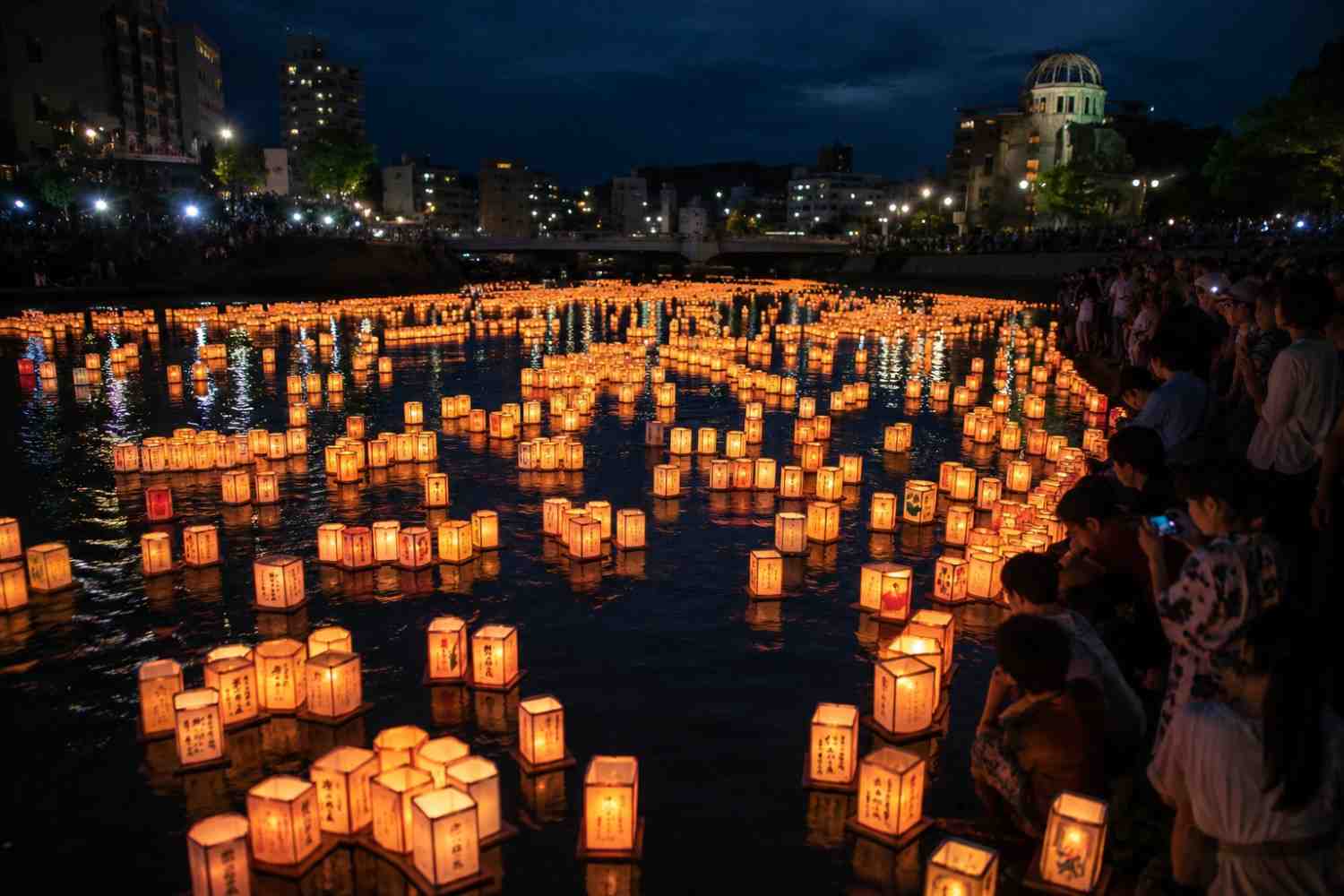
- In some areas, people float small paper lanterns on rivers or the ocean to carry the spirits away. This is called toro nagashi, and it’s one of the most visually striking parts of the entire obon celebration.
The toro nagashi is the part that ends up in photos — thousands of glowing lanterns drifting downstream in the dark.
The Bon Odori
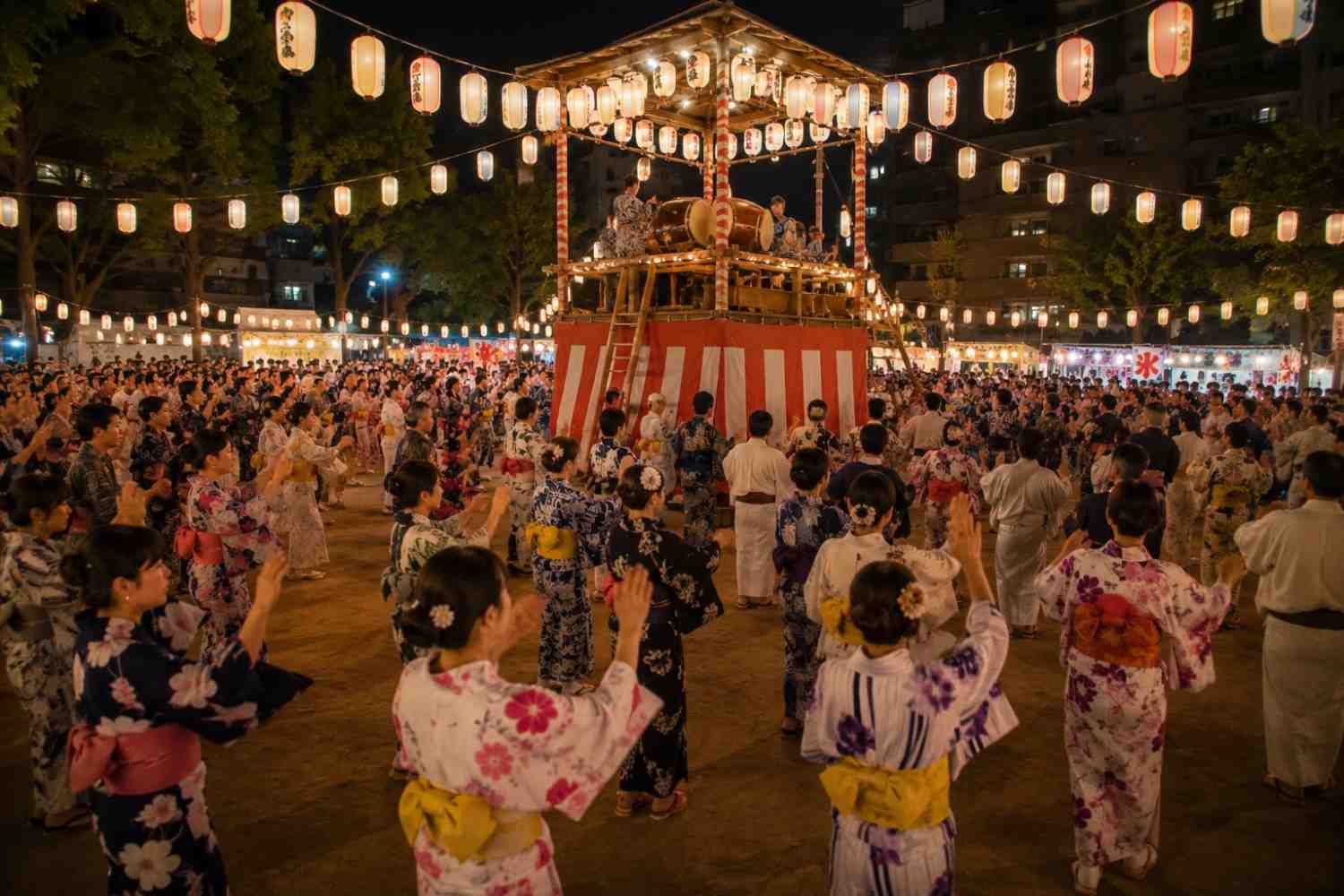 Bon Odori literally means “Bon Dance.” It’s a community dance that happens in the evenings during obon, usually around a raised platform called a yagura, where musicians play drums (taiko) and sometimes live vocals or recorded music.
The dance form is deliberately simple. Most bon odori dances use repetitive movements that anyone can learn in minutes. The point is not performance it’s participation. Elderly women, children, men in business clothes who came straight from work, tourists who have no idea what they’re doing — all of them join the circle and move together.
Different regions have their own styles. The Awa Odori in Tokushima Prefecture is the biggest and most famous bon odori event in Japan, drawing roughly 1.3 million visitors over four days each August. Dancers wear wide-brimmed straw hats and perform with a particular off-beat rhythm that looks relaxed and chaotic but is actually quite specific.
The Gujo Odori in Gifu Prefecture runs for 32 nights (not just the obon period), includes all-night dancing sessions, and is one of Japan’s three great folk dances.
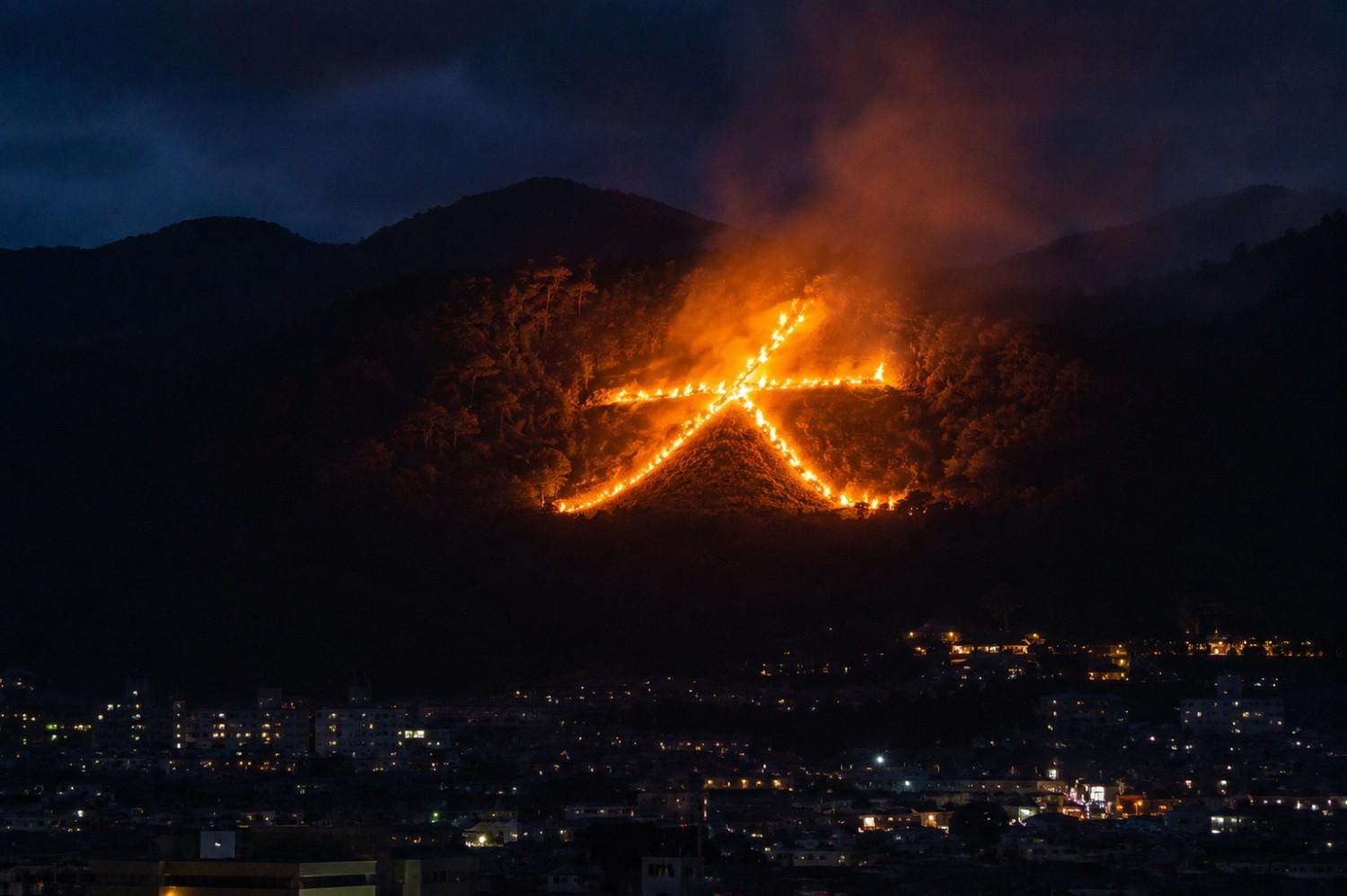
Kyoto’s Daimonji Gozan Okuribi is different — five giant bonfires are lit on the mountains surrounding the city to send the spirits off. The largest forms the character 大 (dai, meaning “great”) and is visible across most of the city. If you’re planning a Kyoto visit, it’s worth pairing this with the Gion Matsuri festival, which runs through most of July just before obon season begins.
Obon Celebration by Region: It’s Not the Same Everywhere
 Japan has 47 prefectures, and obon customs vary enough that two Japanese people from different regions might describe the holiday quite differently. A few examples:
- Tokushima: Awa Odori dominates everything. The city of Tokushima alone hosts 1.3 million visitors for this one event.
- Kyoto: The Daimonji fires on August 16 are the defining image of obon here. People watch from rooftops and riverside seats.
- Okinawa: Eisa dance is performed instead of (or alongside) bon odori. Eisa is louder, uses larger drums, and involves younger performers doing more physical, acrobatic movements.
- Nagasaki: Shoro Nagashi, where elaborate floats are carried through the streets and finally pushed out to sea, is the local tradition. Nagasaki is also famous for its winter light displays — if you’re visiting this city across seasons, check out the Nagasaki Lantern Festival held every February.
- Akita: The Nishimonai Bon Odori features dancers wearing kasa (cone-shaped hats) that hide their faces, which originally symbolized that the dancers were spirits of the dead.
The hidden-face version in Akita is the detail that most people find unsettling. It flips the usual framing — instead of welcoming the dead, the living temporarily become the dead.
What Obon Is NOT (Common Misconceptions)
Obon is not Japan’s version of Halloween. The timing is different, the mood is different, and the purpose is different. Halloween in Western culture is largely secular and focused on costumes and candy. Obon is family-centered and rooted in grief and memory.
Obon is not a sad holiday. Outsiders sometimes assume that a festival for the dead must be mournful. Most Japanese people describe it as warm, even joyful. The atmosphere at a bon odori dance is festive: food stalls, music, light.
Obon is not a national public holiday. This surprises many people. Japan does not officially recognize obon as a national holiday. However, a large portion of Japanese companies give employees the week off around mid-August as obon yasumi (obon vacation). The country functions as if it were a holiday even though it isn’t one legally.
Is Obon a Public Holiday?
No — not officially. Japan’s official public holidays include New Year’s (January 1), Coming-of-Age Day, Golden Week (late April to early May), and others. Obon is not on that list.
But that legal technicality doesn’t mean much in practice. Most private-sector companies in Japan take 4 to 8 days off around mid-August for obon yasumi. Government offices stay open. Schools are already on summer break.
The effect is that Japan has two major national travel periods: Golden Week in spring and Obon in August. Both are among the busiest travel seasons in the country. Shinkansen tickets for obon week sell out more than a month in advance.
Can Tourists Attend Obon Celebrations?
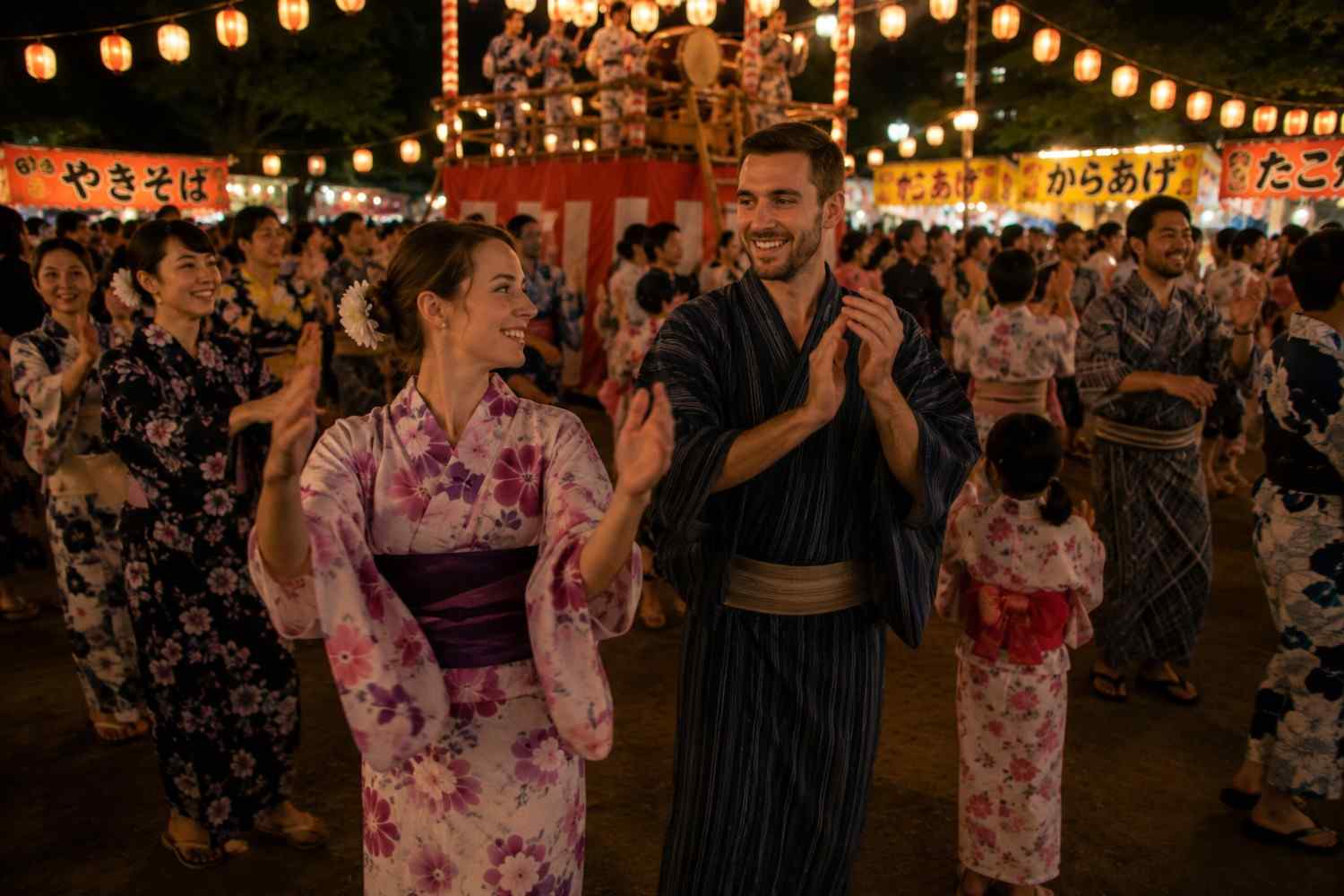 Yes, and they’re welcome at most events.
Bon odori dances at local temples and parks are open to anyone. You can join the circle. Nobody expects you to know the steps. Watch for a few minutes, then follow along. That’s what everyone else is doing too.
The major events — Awa Odori in Tokushima, Daimonji in Kyoto — draw hundreds of thousands of domestic and international visitors. These are not quiet neighborhood rituals; they’re large public festivals with crowds, vendors, and organized viewing areas.
A few things to know before you go:
- Book accommodation early. Mid-August in major Japanese cities fills up fast. Do this at least two months ahead.
- Respect the graveyard visits. If you happen to be near a cemetery during obon, keep your voice low and don’t take photos of strangers.
- Dress for the heat. August in Japan is brutally hot and humid. Many people wear yukata (light summer kimono) to obon events, and that’s fine for tourists to do too.
- Find your local obon. Tokyo and Osaka have big events, but smaller neighborhood bon odori dances can be more memorable. Check local ward office websites or ask at your hotel.
If you’re building a Japan itinerary around festivals, obon pairs well with a summer trip that also includes the Sapporo Snow Festival in February for a full seasonal view of Japan’s festival calendar across the year.
Obon Festival Traditions
Obon Lanterns and What They’re For
Lanterns are central to Obon in two ways. Mukaebi welcoming fires are lit at the entrance of homes on August 13th to guide the returning spirits. On the final evening, toro nagashi involves setting small paper lanterns afloat on rivers, lakes, or the sea to guide the spirits back to the other world. The sight of hundreds of lit lanterns floating on dark water is one of the most recognizable images of Japanese summer. The most famous toro nagashi takes place in Hiroshima on August 6th the anniversary of the atomic bombing where it carries additional layers of meaning.
Obon Celebration Customs Across Japan
Bon Odori Obon dancing is the most widespread Obon tradition. Communities set up a yagura (wooden tower) in a park or temple ground, drummers play from the top, and people dance in a circle around it. The dances vary by region — each area has its own traditional Bon Odori style. Awa Odori in Tokushima, one of the most famous, draws over a million visitors annually. Families visit and clean ancestral graves during Obon week. Offerings of food and incense are placed at home altars. The festival has a dual character it’s a time of remembrance, but the Bon Odori evenings are genuinely festive and community-oriented.
FAQ
What is the obon festival about? Obon is a time when Japanese families honor their dead ancestors. The belief is that ancestors’ spirits return to visit once a year, so families go home, clean graves, make offerings, and participate in community dances called bon odori. It runs for about three days each August (or July, in some areas).
Is obon only for Japanese people? No. While obon is a Japanese cultural tradition, the community dances and public events are open to anyone. Tourists regularly join bon odori dances without any problem. The private parts of obon — grave visits, home altars, family gatherings — are family matters, but nothing about the public events excludes outsiders.
Why do Japanese people go home during obon? Going home during obon is both a cultural obligation and a practical tradition. Since ancestors’ spirits are believed to return to the family home, family members try to be there too. For many Japanese people, obon is one of the few times per year they see extended family. It functions similarly to how Thanksgiving works in the United States — a homecoming built around a specific belief or tradition.
What do Japanese people eat during obon? There’s no single obon meal, but several traditional foods appear consistently. Somen (thin noodles) are common because they’re easy to prepare in summer heat. Ohagi (sticky rice cakes covered in sweet red bean paste) and seasonal vegetables are placed on the altar as offerings. Street food at bon odori events includes yakitori, takoyaki, kakigori (shaved ice), and festival staples you’d find at any Japanese summer event.
Is it true that obon is a ghost festival? The “ghost festival” label comes from Western observers trying to translate the concept. It’s not wrong exactly — ancestor spirits are involved — but “ghost” carries connotations of horror or fear that don’t match obon’s actual tone. A more accurate framing is that it’s a homecoming for the dead, with the living family making sure everything is ready for the visit.
The Part Most Articles Skip
One thing consistently missing from obon coverage is this: obon is doing something quietly remarkable in a modernizing society. Japan’s population is aging faster than almost any country on earth. Rural towns are emptying as young people move to cities. The traditional family structures that once made obon automatic are under real pressure.
And yet obon persists. The trains still fill up. The fires still get lit. Young people who moved to Tokyo ten years ago still go back to their grandparents’ house in Kagoshima or Fukuoka for those three days.
That’s not nostalgia. It’s something more durable. The obon festival meaning, at its core, is about refusing to forget the people who came before you. That idea doesn’t need a religion to hold it together. It just needs a fire and a reason to go home.
Japan’s festival calendar is full of that same spirit — whether it’s the paper wishes tied to bamboo at Tanabata or the lantern-lit streets of Nagasaki in winter. Obon is just the one that brings the whole country home at once.
Planning to visit Japan in August? Check regional obon dates before booking, as Tokyo observes the holiday in July. The August 13–16 period sees the highest travel volumes nationwide.

Abhay Ramola researches world festivals across primary sources, local accounts, and on-ground reporting. He founded Dionfest to cover what gets missed when festivals become tourism content the history, the ritual, and the people behind it.