
Golden Week China 2026: Why 7 Days Off Means 6-Day Weeks
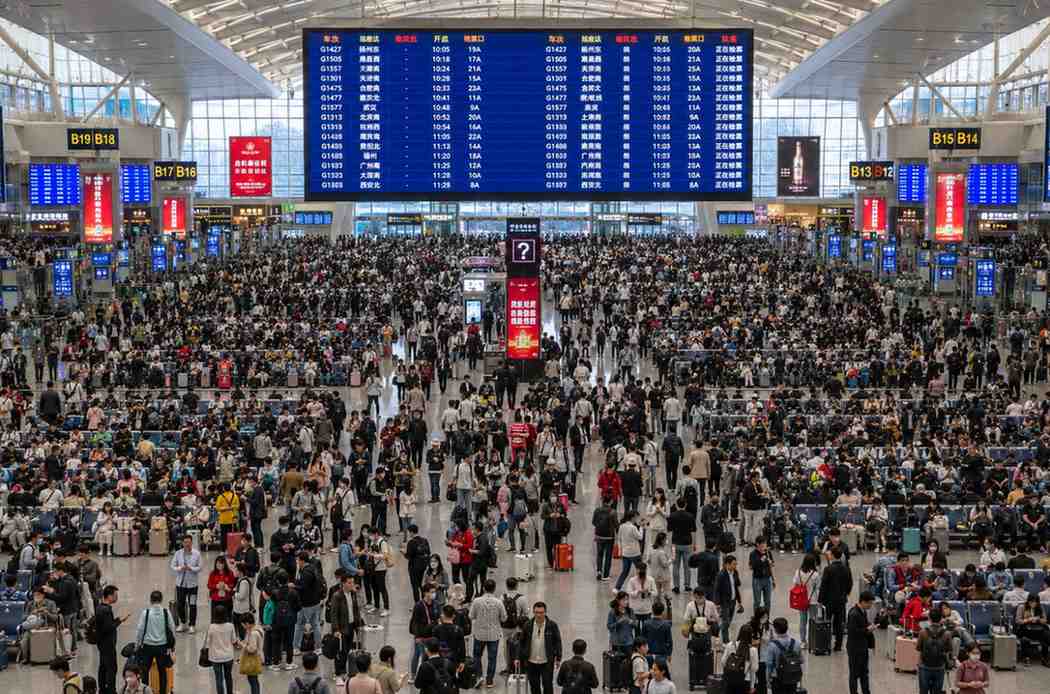
China shuts down once a year — and over a billion people move at the same time.
That’s Golden Week. If you’ve heard the name but never quite understood what it means, this guide covers everything from scratch. What is Golden Week, when does it happen in 2026, why does China have it, and what actually goes on during those seven days?
Whether you’re planning to visit China, doing business there, or just curious — read on.
What Is China’s Golden Week Holiday?
Golden Week is a seven-day national holiday in China. The government created it to give workers a long break, boost domestic tourism, and help people travel home to see family.
The name “Golden Week” comes from the tourism and retail industry. During these seven days, spending spikes dramatically — so businesses call it “golden.” The name stuck.
The most well-known Golden Week is the National Day Golden Week, which runs every year from October 1 to October 7. October 1 is China’s National Day — the anniversary of the founding of the People’s Republic of China in 1949.
China also has a Spring Festival Golden Week (Chinese New Year), which we’ll cover below.
Golden Week China 2026: Exact Dates
National Day Golden Week 2026 runs from Thursday, October 1 to Wednesday, October 7.
That’s seven full days off. Here’s the complete breakdown:
| Date | Day | Status |
|---|---|---|
| October 1, 2026 | Thursday | National Day (Public Holiday) |
| October 2, 2026 | Friday | Public Holiday |
| October 3, 2026 | Saturday | Weekend |
| October 4, 2026 | Sunday | Weekend |
| October 5, 2026 | Monday | Public Holiday |
| October 6, 2026 | Tuesday | Public Holiday |
| October 7, 2026 | Wednesday | Public Holiday |
Important note: Saturday, October 10, 2026 is a designated make-up workday. Workers in China are required to work that Saturday to compensate for the extended holiday. More on this system below.
In 2026, the Mid-Autumn Festival (September 25) falls one week before National Day. Since the two holidays don’t overlap, Golden Week stays at its standard seven days — not the extended eight days that sometimes happens when Mid-Autumn and National Day fall in the same week.
The official schedule was confirmed by China’s State Council on November 4, 2026.
The History Behind Golden Week
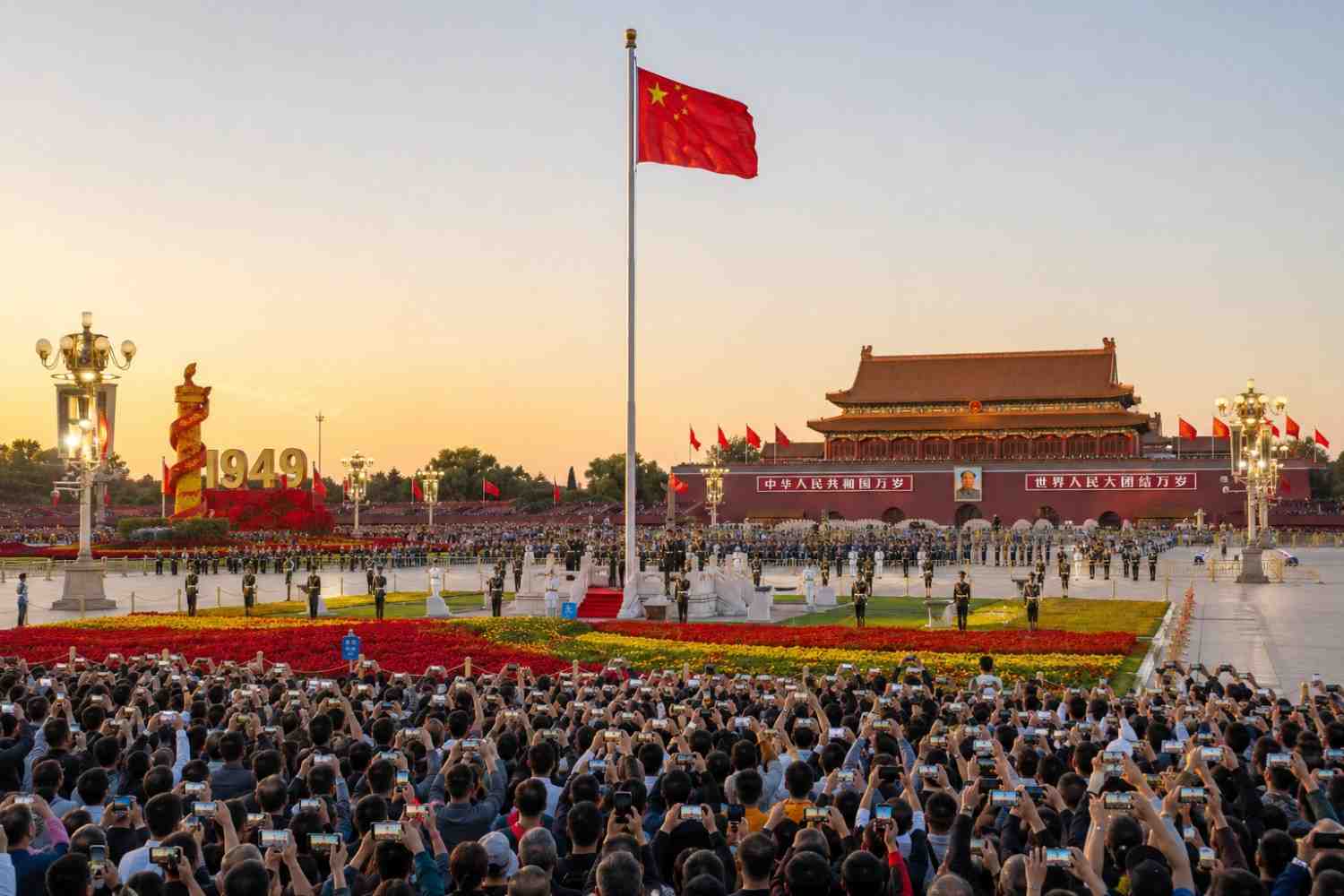 Golden Week didn’t always exist. China introduced it in 1999 — specifically for the National Day holiday.
The reasoning was practical. China’s economy was growing fast, but domestic tourism wasn’t keeping up. Most workers had very little paid time off and couldn’t afford to travel during short breaks. The government created Golden Week as a deliberate economic tool: give people a long enough break, and they’ll actually spend money traveling.
It worked. Tourism numbers jumped significantly in the years after 1999.
In 2000, the government added a second Golden Week for Spring Festival (Chinese New Year), creating two annual mega-holidays.
A third Golden Week for Labor Day (May 1) was introduced but later shortened in 2007. In 2019, Labor Day was extended back to five days, though it’s not technically a “Golden Week” by the original definition.
Today, Golden Week is one of the largest annual human movements on earth.
What Happens During Golden Week?
 The short answer: everything at once.
Here’s what Golden Week looks like across China:
Travel surge: Hundreds of millions of people travel during this week. Trains, flights, and highways operate at or beyond capacity. In 2023, China saw over 826 million domestic trips made during the National Day Golden Week alone.
Family reunions: Many workers who live far from their hometown use Golden Week to travel back and see family — similar to how Chinese New Year works, but on a slightly smaller scale.
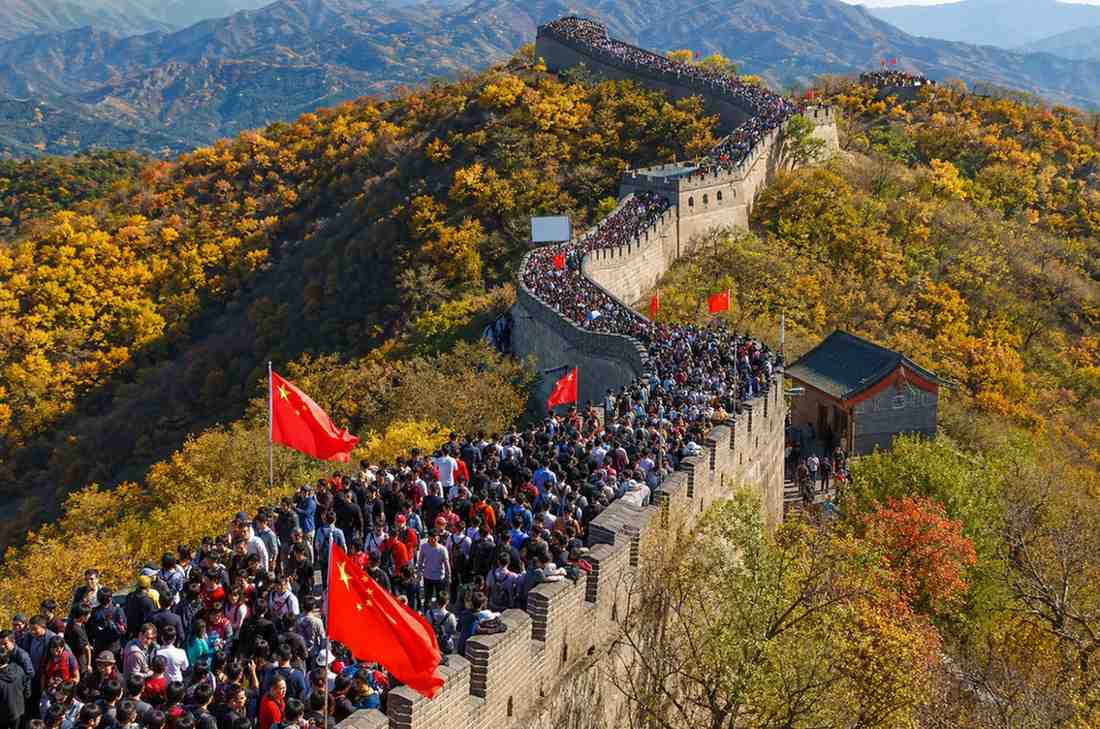
Tourism at full speed: Every major tourist site in China — the Great Wall, West Lake in Hangzhou, the Bund in Shanghai — gets extraordinarily crowded. Queues of several hours are normal at popular attractions.
Shopping and discounts: Retailers run major sales during Golden Week. Malls, e-commerce platforms, and markets all see heavy activity. It’s one of the biggest retail periods of the year.
National Day ceremonies: On October 1 specifically, large-scale events take place in Beijing. The flag-raising ceremony at Tiananmen Square attracts tens of thousands of spectators. Fireworks, performances, and cultural events happen across the country.
How Many Golden Weeks Does China Have?
Technically, China has two official Golden Weeks:
1. Spring Festival Golden Week (Chinese New Year)
This is actually the bigger one culturally. In 2026, Spring Festival falls on February 17, and the holiday runs from February 15 to February 23 — nine days total, the longest Spring Festival break in Chinese history. This is when the largest human migration on earth happens, as hundreds of millions of people travel home for family reunions. If you’re interested in the full story of this festival, this guide to the Chinese Spring Festival breaks it down in detail.
2. National Day Golden Week (October)
This is the one most people outside China refer to when they say “Golden Week.” Seven days in early October, focused on leisure travel and celebration of China’s founding.
There’s also a Labor Day holiday (May 1–5, 2026) that many people informally call a Golden Week due to its five-day length, but it’s officially shorter than the original seven-day model.
The “Make-Up Workday” System Explained
This is the part that confuses most foreigners — and even some Chinese workers.
China’s government creates long holidays by borrowing days from nearby weekends. Here’s how it works:
Normally, October 1–3 would be the official National Day holiday. To turn that into a full seven-day break (October 1–7), the government designates nearby Saturdays as mandatory workdays.
So in 2026, workers get seven days off in a row — but they must work on Saturday, October 10 to make up for it.
This system is called “调休” (tiáo xiū) in Chinese, which roughly means “swap rest.” China is one of the only major economies in the world that does this systematically and at a national level.
The tradeoff is real. You get seven days off together, but the week after feels harder because you’re working a six-day week. Many Chinese workers and social media users complain about this system every year.
For businesses and travelers, this matters practically:
- Chinese banks, government offices, and courts are closed for the full seven days.
- The week after Golden Week, workers are back on a six-day schedule.
- Planning meetings or transactions around this period requires knowing these swap dates.
How Golden Week Affects Travel in China
 If you’re traveling to China, Golden Week is something to plan around — carefully.
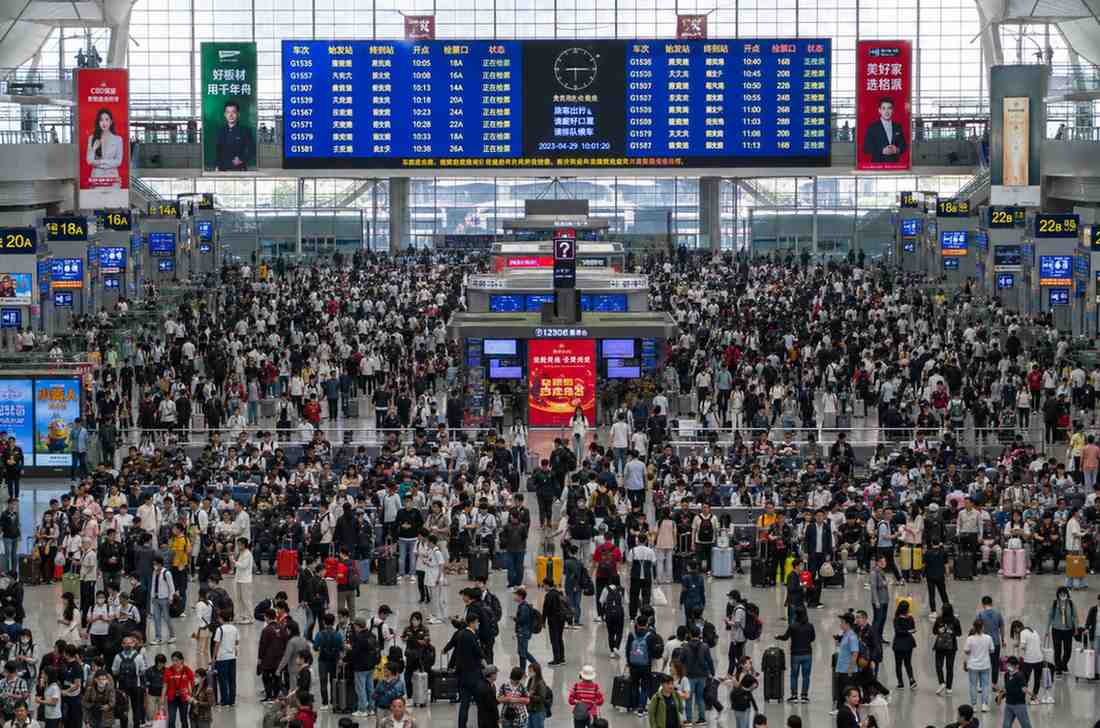
Train tickets: China’s high-speed rail network is the best in the world, but during Golden Week, tickets sell out within minutes of becoming available. Tickets open 15 days before travel. If you need to travel by train during Golden Week, set a reminder for the exact moment bookings open.
Flights: Domestic and international flights to popular destinations fill up fast. Prices rise significantly — sometimes two to three times the normal rate — in the two weeks surrounding the holiday.
Hotels: Rooms in tourist cities like Beijing, Shanghai, Xi’an, Chengdu, and Guilin are heavily booked. Prices spike, and popular hotels may be fully sold out months in advance.
Crowds at attractions: The Great Wall at Badaling, West Lake in Hangzhou, and the Terracotta Warriors in Xi’an can have daily visitor counts that make a relaxed visit nearly impossible during Golden Week. Timed entry systems help but don’t eliminate the problem.
What actually works: Visiting smaller cities and less-famous attractions during Golden Week gives you a much better experience. Places like Zhangjiajie, Dunhuang, or smaller ancient towns can still be crowded but rarely hit the same extreme levels as the top-tier destinations.
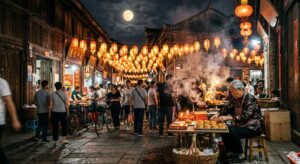
Golden Week is also a great time to explore China’s food culture. Markets, night bazaars, and local restaurants are all buzzing. China’s incredible diversity of regional food is part of what makes this holiday so lively — something our Dragon Boat Festival guide touches on in the context of food traditions too.
Golden Week and the Chinese Economy
Golden Week was never just a cultural holiday. It was built as an economic tool, and it still functions as one.
During the 2023 National Day Golden Week, domestic tourism revenue hit approximately 753 billion yuan (around $103 billion USD) in just seven days. That’s not a typo. One week of travel and spending generates more economic activity than many countries produce in a month.
Retail also sees massive spikes. E-commerce platforms like Taobao, JD.com, and Pinduoduo run Golden Week sale campaigns. Physical malls across tier-1 and tier-2 cities see foot traffic jump to levels that normally only happen during Chinese New Year.
The flip side is real too. Factories slow down. Supply chains get disrupted. Foreign businesses that deal with Chinese suppliers or logistics often find that orders placed just before Golden Week may not ship until a week or more after the holiday ends. If you’re running a business that depends on Chinese manufacturing or exports, build this delay into your planning calendar.
Tips If You’re Visiting China During Golden Week 2026
Visiting China during Golden Week isn’t a mistake — but going in unprepared is.
Book everything early. Trains, flights, and hotels for the October 1–7 window should ideally be booked weeks in advance. The closer you get to the holiday, the worse your options and the higher your costs.
Consider arriving before or leaving after the peak. Traveling September 28–30 or October 8–10 gives you access to the festive atmosphere with significantly fewer crowds at major sites.
Pick your destinations wisely. Beijing, Shanghai, Hangzhou, and Chengdu will be packed. Consider destinations like Pingyao (ancient walled city in Shanxi), Zhangjiajie (the surreal pillar mountains), or Lijiang (old town in Yunnan) — still popular, but not at the same crush level as the biggest cities.
Use timed entry tickets. Most major tourist attractions in China now require advance booking for timed entry. Don’t assume you can show up and buy a ticket at the gate during Golden Week.
Have cash or a functioning Chinese payment app. Alipay and WeChat Pay dominate in China. Foreign cards are accepted in some places but not all. Sort out your payment method before you arrive.
Expect the National Day atmosphere. Streets are decorated with red flags and flowers. Tiananmen Square in Beijing has special viewing hours for the flag-raising ceremony on October 1 — it starts at sunrise, which is around 5:55 AM in Beijing. The entire country has an energetic, celebratory mood that’s genuinely worth experiencing.
If you’re interested in how China celebrates other major holidays, the Mid-Autumn Festival guide is worth reading too — especially since that festival falls just six days before Golden Week 2026 begins, on September 25.
FAQ
Q: What are the exact Golden Week China 2026 holiday dates?
National Day Golden Week 2026 runs from Thursday, October 1 to Wednesday, October 7. Saturday, October 10 is a mandatory make-up workday for most employees in China.
Q: What is China’s Golden Week holiday actually celebrating?
The October Golden Week celebrates China’s National Day — October 1, 1949, when Mao Zedong officially proclaimed the founding of the People’s Republic of China. The holiday itself was introduced in 1999 as a way to stimulate domestic tourism and give workers a meaningful rest period.
Q: Is Golden Week only in October?
No. China has two official Golden Weeks. The Spring Festival Golden Week (Chinese New Year) happens in January or February each year. In 2026, it runs February 15–23. The National Day Golden Week runs October 1–7 every year.
Q: Should I visit China during Golden Week?
You can have a good trip during Golden Week, but you need to plan ahead. Book trains, flights, and hotels weeks in advance. Avoid the most-visited attractions on peak days (October 1–3 are the most crowded). Choose smaller cities or less-famous sites for a more relaxed experience. The festive atmosphere is genuinely special, but the crowds at top destinations are extreme.
Q: Do businesses in China close during Golden Week?
Government offices, banks, courts, and schools close for the full seven days. Most tourist attractions, hotels, restaurants, malls, and large shops stay open — often with extended hours. Small family-run shops may close for part of the week. If you’re doing business with Chinese companies, expect delays in communication and order processing during this period.
Golden Week is one of those things that sounds simple on paper — a week off work — but in practice represents something much larger. It’s the moment China breathes collectively, moves, celebrates, and spends. For anyone trying to understand modern China, watching how 1.4 billion people use seven days tells you a lot about the country’s priorities, its energy, and where it’s heading.
If you found this guide useful, explore more of our guides on China’s festivals and celebrations — from the Lantern Festival to the Qingming tomb-sweeping tradition.

Abhay Ramola researches world festivals across primary sources, local accounts, and on-ground reporting. He founded Dionfest to cover what gets missed when festivals become tourism content the history, the ritual, and the people behind it.







Hmm it appears like your website ate my first comment (it was super long) so I guess I’ll just
sum it up what I submitted and say, I’m thoroughly
enjoying your blog. I as well am an aspiring blog blogger but I’m
still new to the whole thing. Do you have any suggestions for first-time blog writers?
I’d really appreciate it.
Thank you so much for your kind words! 😊 I’m glad you’re enjoying the blog.
Don’t worry about the missing comment—it happens sometimes. As for blogging, my biggest advice is to stay consistent, write about topics you’re genuinely interested in, and focus on helping your readers rather than trying to impress search engines. The more you write, the better you’ll become.
Wishing you all the best on your blogging journey, and thanks again for stopping by!
Ahaa, its nice dialogue about this piece of writing here at this web site, I have read all that, so now me also
commenting here.