
Pongal Festival: History, Traditions, Rituals, and Cultural Significance
What Is Pongal Festival
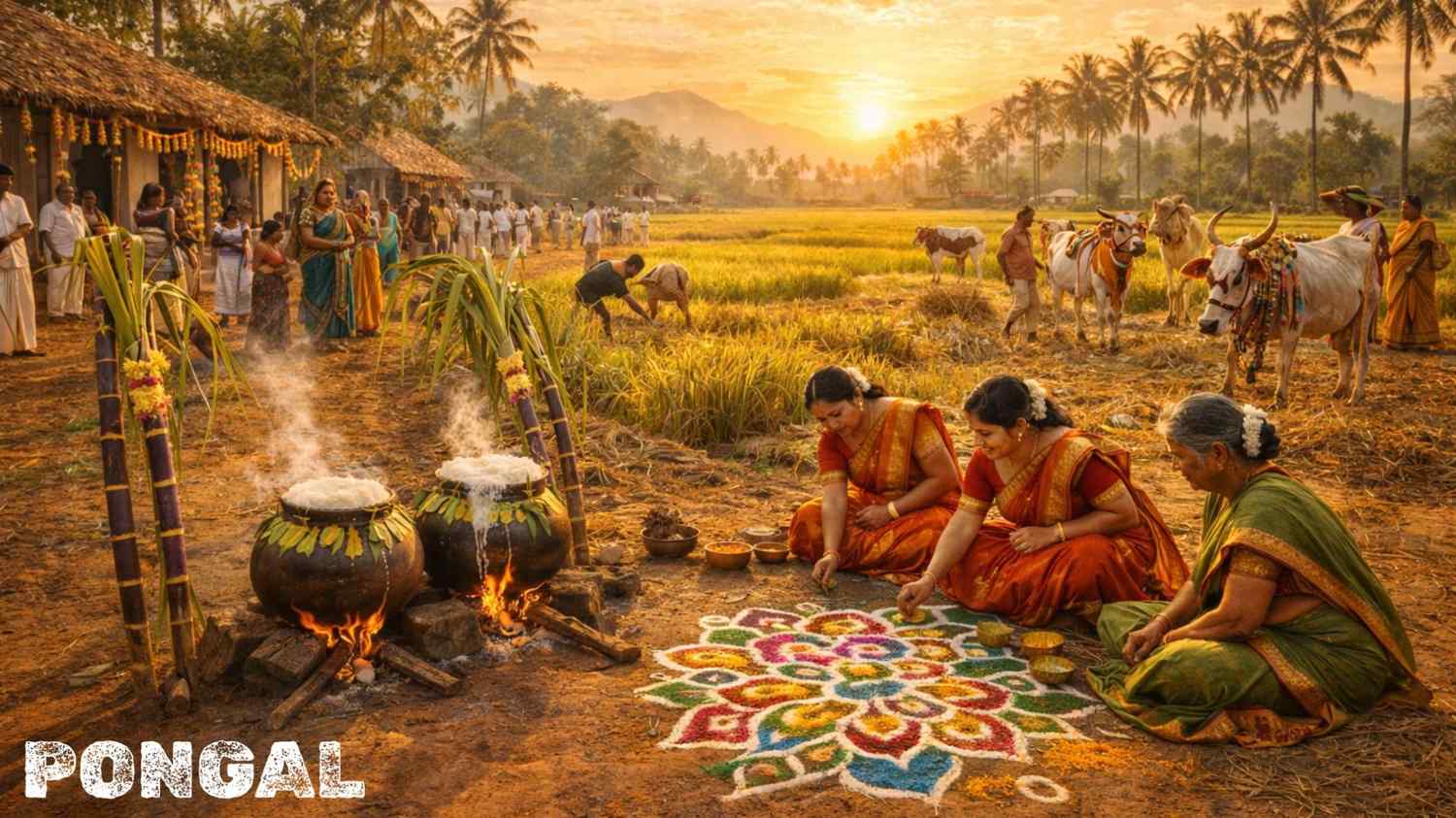
Pongal is a four-day harvest festival celebrated primarily in Tamil Nadu, usually from January 14th to 17th. It marks the end of the winter solstice and the beginning of the sun’s northward journey. For Tamil families, it’s the most important festival of the year bigger than Diwali in many households. The name comes from the Tamil word meaning “to boil over,” which refers to the ritual of cooking the first rice of the harvest season until it spills over the pot a sign of abundance.
Pongal Meaning What the Name Refers To
“Pongal” literally means “boiling over” or “spilling over” in Tamil. The dish prepared during the festival also called pongal is a sweet rice and lentil preparation cooked in a clay pot over an open fire. When it boils and overflows, people shout “Pongalo Pongal!” a cry of celebration. The overflow symbolizes surplus, prosperity, and a good harvest ahead. The name applies to both the festival and the dish, which is intentional the food and the occasion are inseparable.
Why Pongal Festival Is Celebrated
Pongal is fundamentally a thanksgiving festival farmers give thanks to the sun, the rain, and their cattle for making the harvest possible. It aligns with Makar Sankranti across the rest of India, both marking the same solar event: the sun’s transition into Capricorn and the start of Uttarayan. In Tamil culture, this is the time when the northeast monsoon ends and the harvest is gathered. The festival honors the forces natural and divine that made that harvest happen.
When it’s celebrated: Tamil month of Thai (mid-January) and relation to Makar Sankranti / Uttarayana
Pongal is celebrated in the Tamil month of Thai, which typically falls between January 14 and January 17 in the Gregorian calendar. This period marks the Sun’s transition into Capricorn (Makara), initiating its northward journey known as Uttarayana. Across India, this solar movement is celebrated as Makar Sankranti under different regional names.
Thai Pongal, the second day and main observance, is dedicated to the Sun God (Surya) in recognition of his role in agriculture. The longer daylight hours following Uttarayana symbolize growth, renewal, and life-giving energy—making this period ideal for a harvest festival.
Quick snapshot: four-day harvest festival in Tamil culture
In summary, Pongal is a four-day harvest festival that celebrates nature, food, and community.
• Bhogi marks renewal and letting go of the old
• Thai Pongal centers on gratitude to the Sun
• Mattu Pongal honors cattle
• Kaanum Pongal strengthens social bonds
Together, these days form a complete cycle of thanksgiving and renewal in Tamil culture.
History and Significance of Pongal
Pongal Festival History in Brief
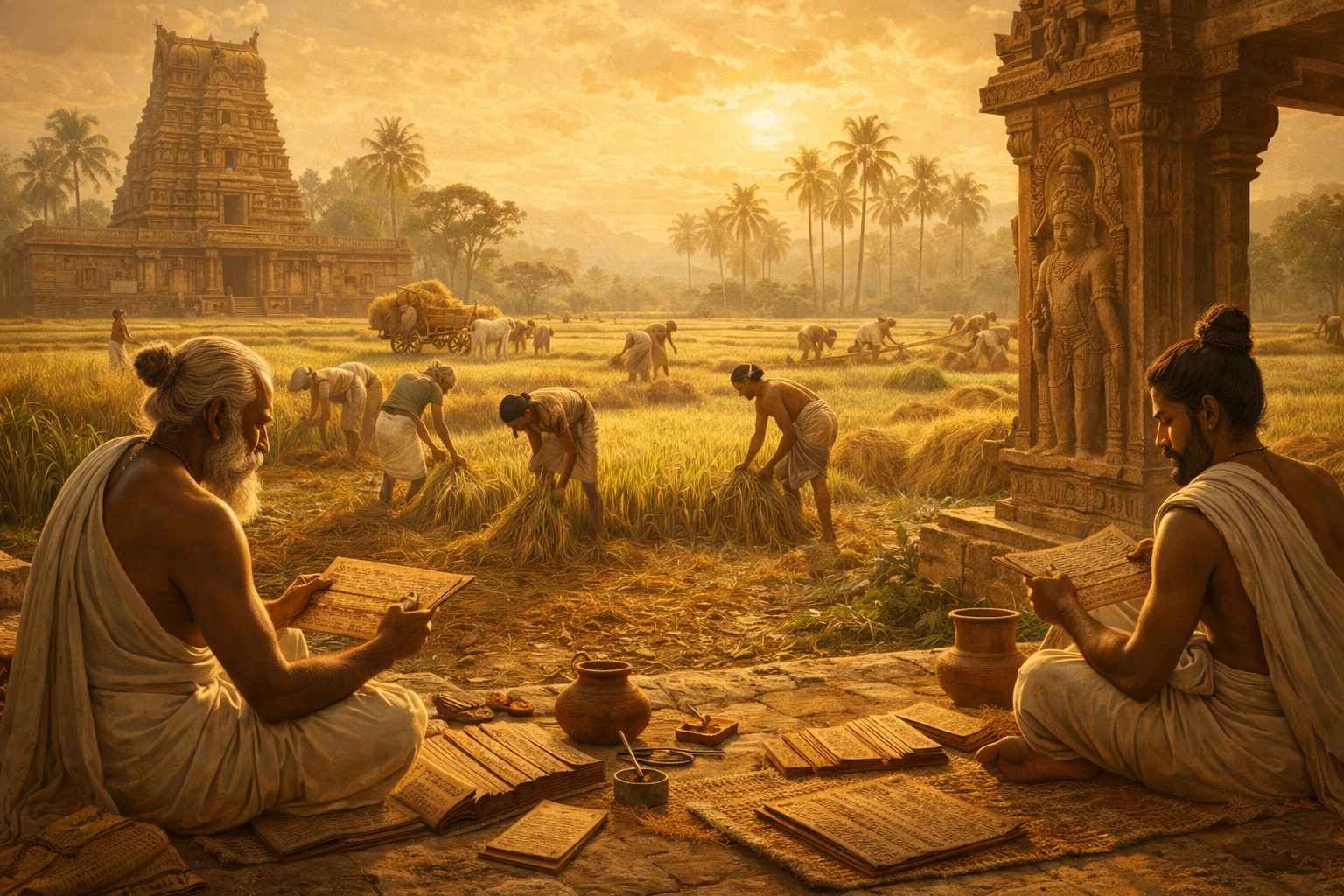
Pongal has been celebrated in Tamil Nadu for over a thousand years. References to the festival appear in Sangam literature ancient Tamil poetry dating back to at least the 3rd century BCE. The four-day structure, the boiling of the rice, and the decoration of cattle are all described in early texts. It predates many other Indian festivals in written documentation. The festival survived colonial rule largely intact because it was embedded in agricultural cycles rather than temple institutions.
Importance of Pongal in Tamil Culture
Pongal is not just a religious event it’s a cultural identity marker. For Tamil people both inside and outside India, Pongal is the festival that represents Tamil heritage most directly. In Tamil Nadu, schools and government offices close for the full four days. In Chennai, the city visibly changes streets are decorated with kolam (rice flour designs), sugarcane stalks appear at doorways, and the smell of jaggery and cardamom comes from every kitchen. For Tamil diaspora communities in Singapore, Malaysia, the UK, Canada, and the US, Pongal celebrations keep the connection to home alive.
The Four Days of Pongal Traditions and Rituals
Different Types of Pongal Festival Days
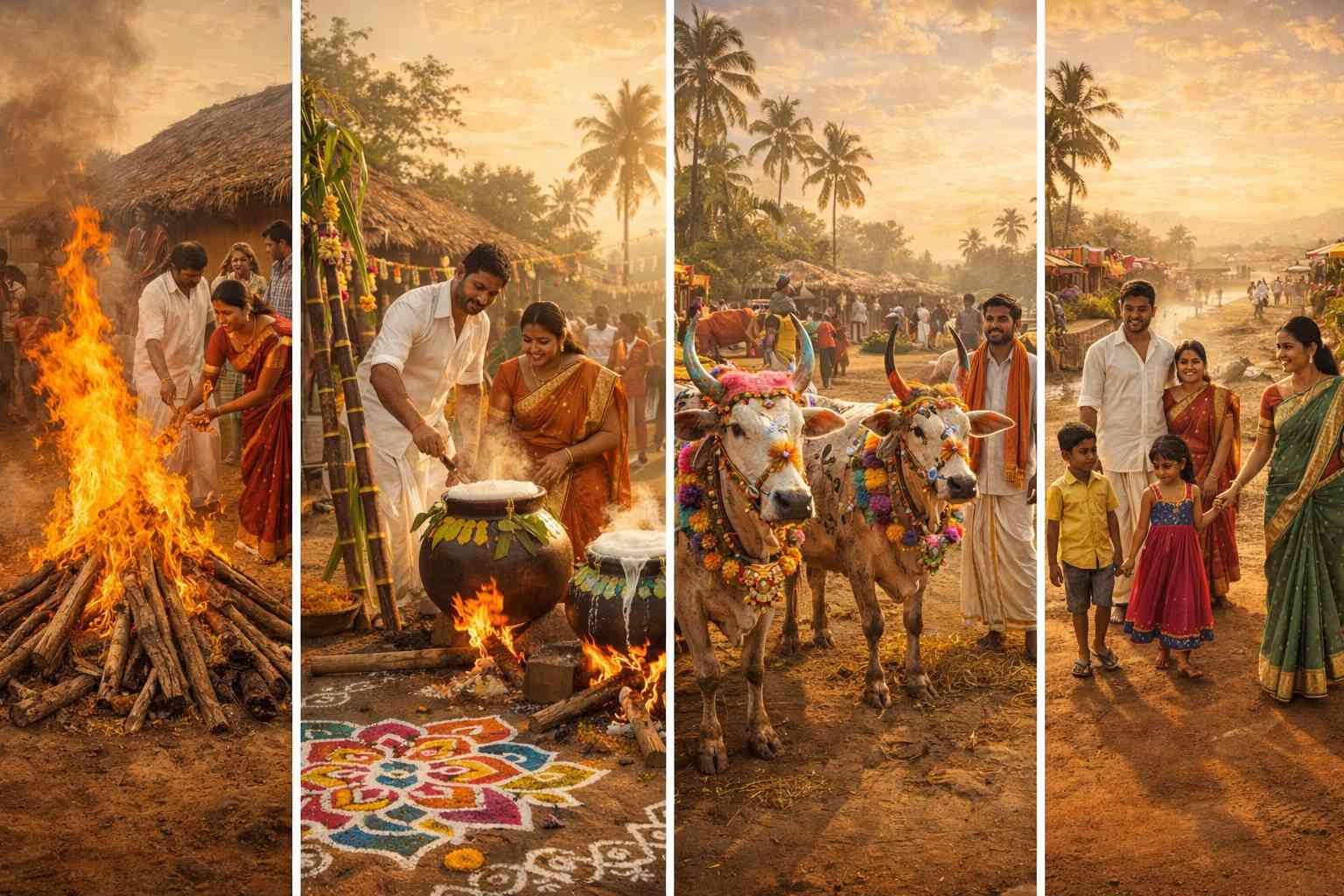
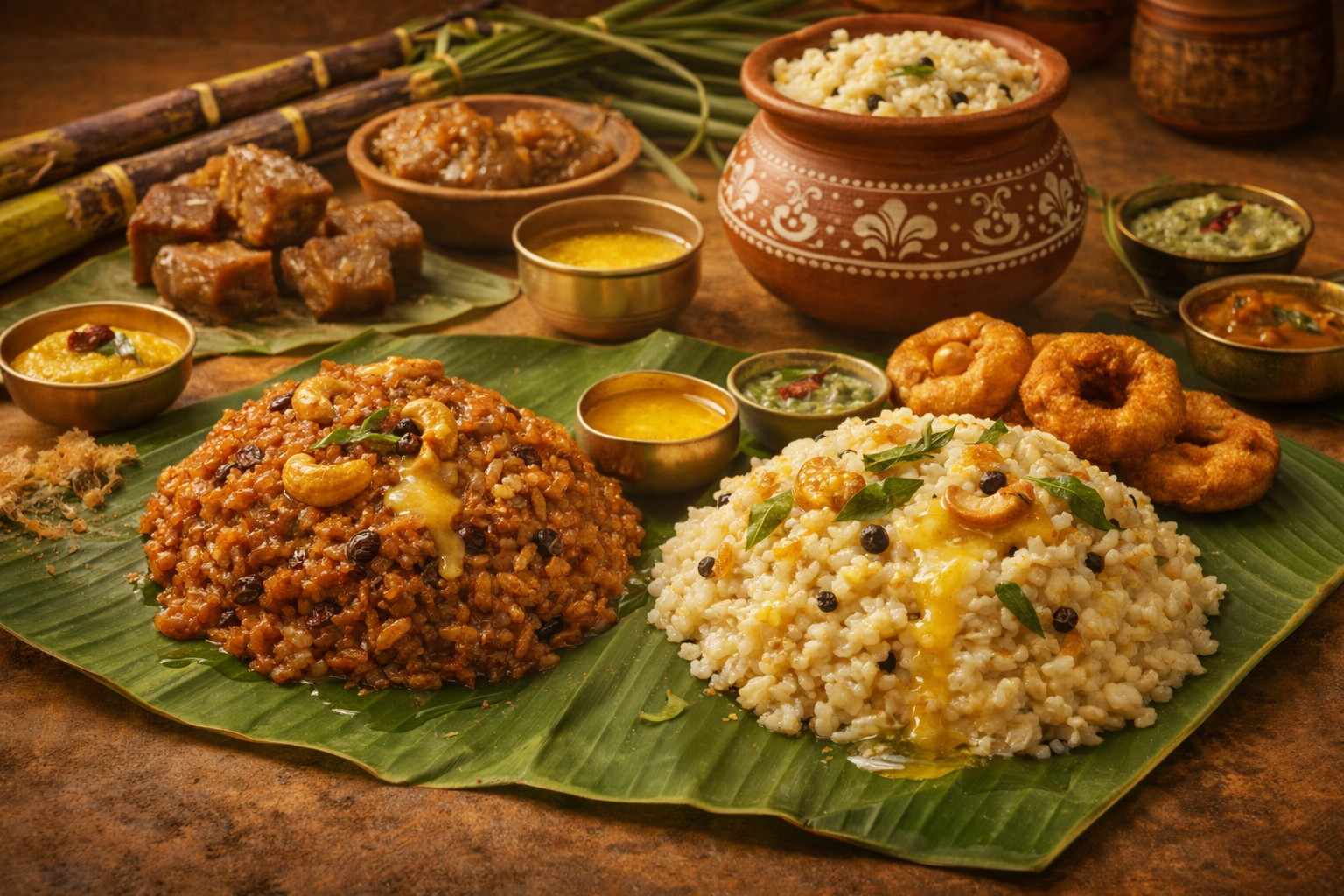
The four days each have a name and purpose. Bhogi Panchami is the first day people discard old possessions and light bonfires to mark the end of the old and the start of the new. Thai Pongal is the main day the ritual cooking of pongal happens on this morning, dedicated to the sun god Surya. Mattu Pongal is the third day, dedicated to cattle cows and bulls are bathed, decorated with flowers and painted horns, and honored for their role in the harvest. Kaanum Pongal is the fourth day a social day when families visit each other and young people seek blessings from elders.
How Pongal Is Celebrated at Home
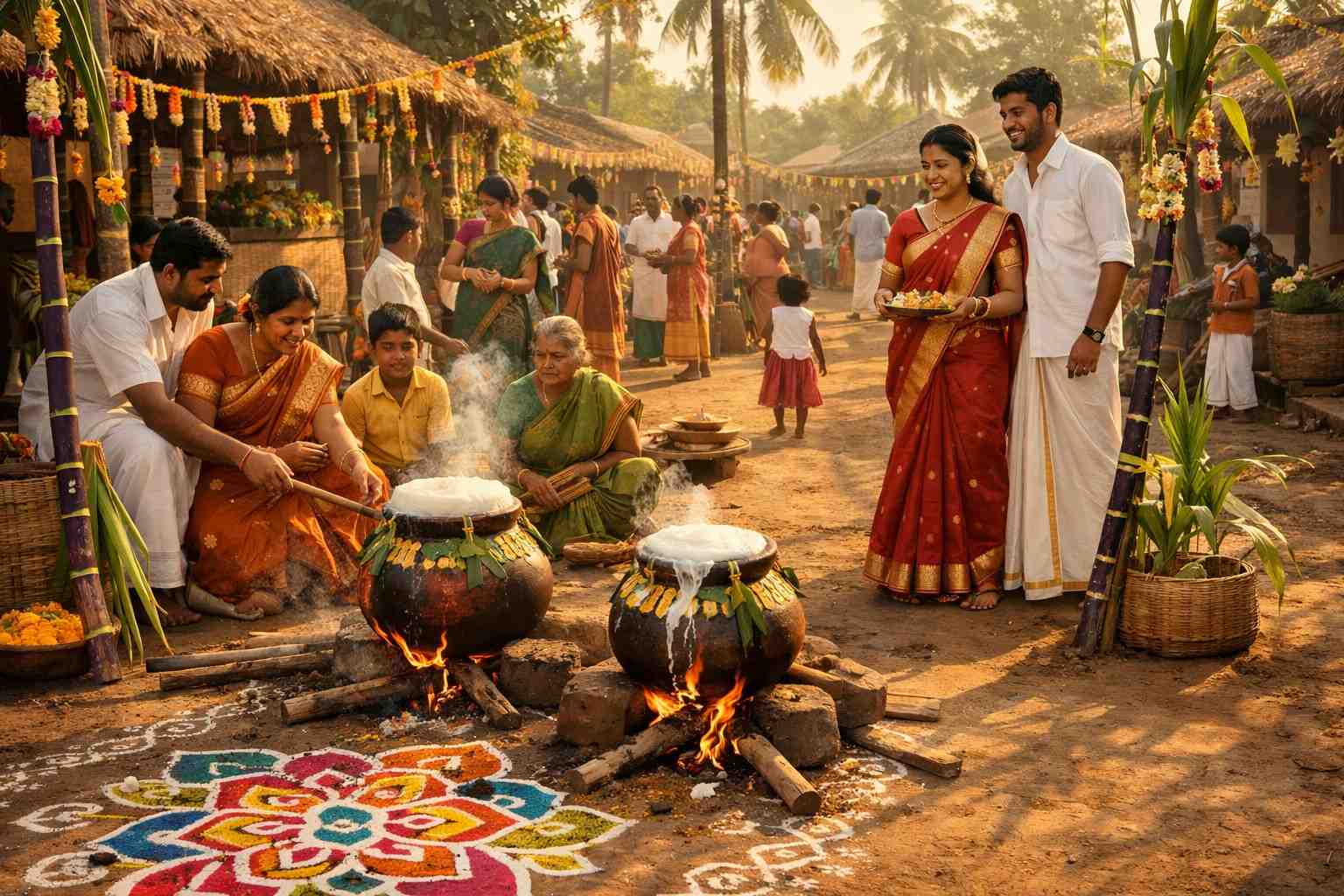
On Thai Pongal morning, families wake before sunrise. A clay pot is set up outdoors in a courtyard, on a terrace, or in front of the house. New rice, jaggery, and milk are cooked together over a fire made with sugarcane stalks. When the mixture boils and overflows, the family celebrates together. The cooked pongal is offered to the sun before anyone eats. Kolam designs are drawn at the entrance. Sugarcane, turmeric plants with roots attached, and coconuts are placed as offerings. The meal that follows includes the sweet pongal, savory ven pongal, sambar, and coconut chutney.
Culinary Traditions and Symbolic Foods
Pongal (the dish): varieties and ingredients
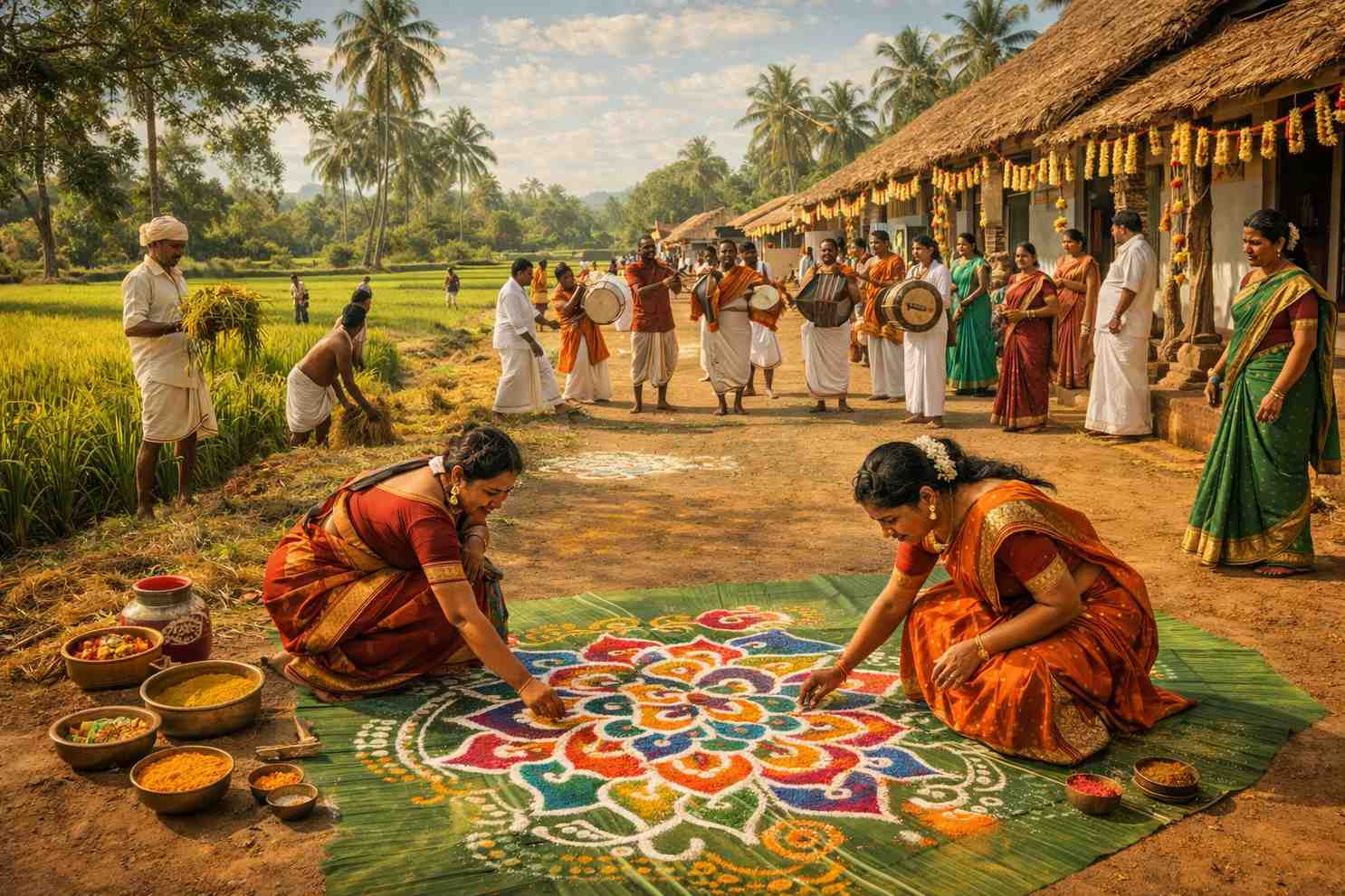
The festival’s name comes from its signature dish. Sakkarai Pongal, the sweet version, is made from new rice, milk, jaggery, ghee, cardamom, and nuts. Ven Pongal, a savory dish of rice and lentils seasoned with pepper and cumin, is equally popular.
In contemporary households, cooker Pongal is widely prepared using pressure cookers. While the method has modernized, the ritual intention remains unchanged.
Other festive foods
Sugarcane is inseparable from Pongal celebrations, symbolizing sweetness and agricultural success. Vadai, payasam, fruits, and regional snacks complement the pongal special meal, adding diversity and richness.
Kitchen ritual & offering
Cooking Pongal is a sacred act. Clay pots are often decorated through pongal paanai painting, especially in homes and schools. The first portion of food is offered to deities before being shared, reinforcing the idea of communal abundance.
Social, Cultural and Agricultural Significance
Agrarian context
Pongal is fundamentally an agricultural festival. It thanks the Sun, rain, soil, farmers, and animals that make food production possible. This holistic worldview emphasizes balance with nature rather than dominance over it.
Community life and cultural expression
Kolam designs, folk songs, dances, and rural sports strengthen social cohesion. These practices reinforce shared values and collective identity, forming the broader pongal theme of unity and gratitude.
Diaspora & cross-border celebrations
Tamil communities worldwide celebrate Pongal in temples, community halls, and homes. Even far from farmlands, the festival preserves cultural memory and identity.
Modern Practices, Tourism, and Contemporary Issues
Urban vs rural celebrations
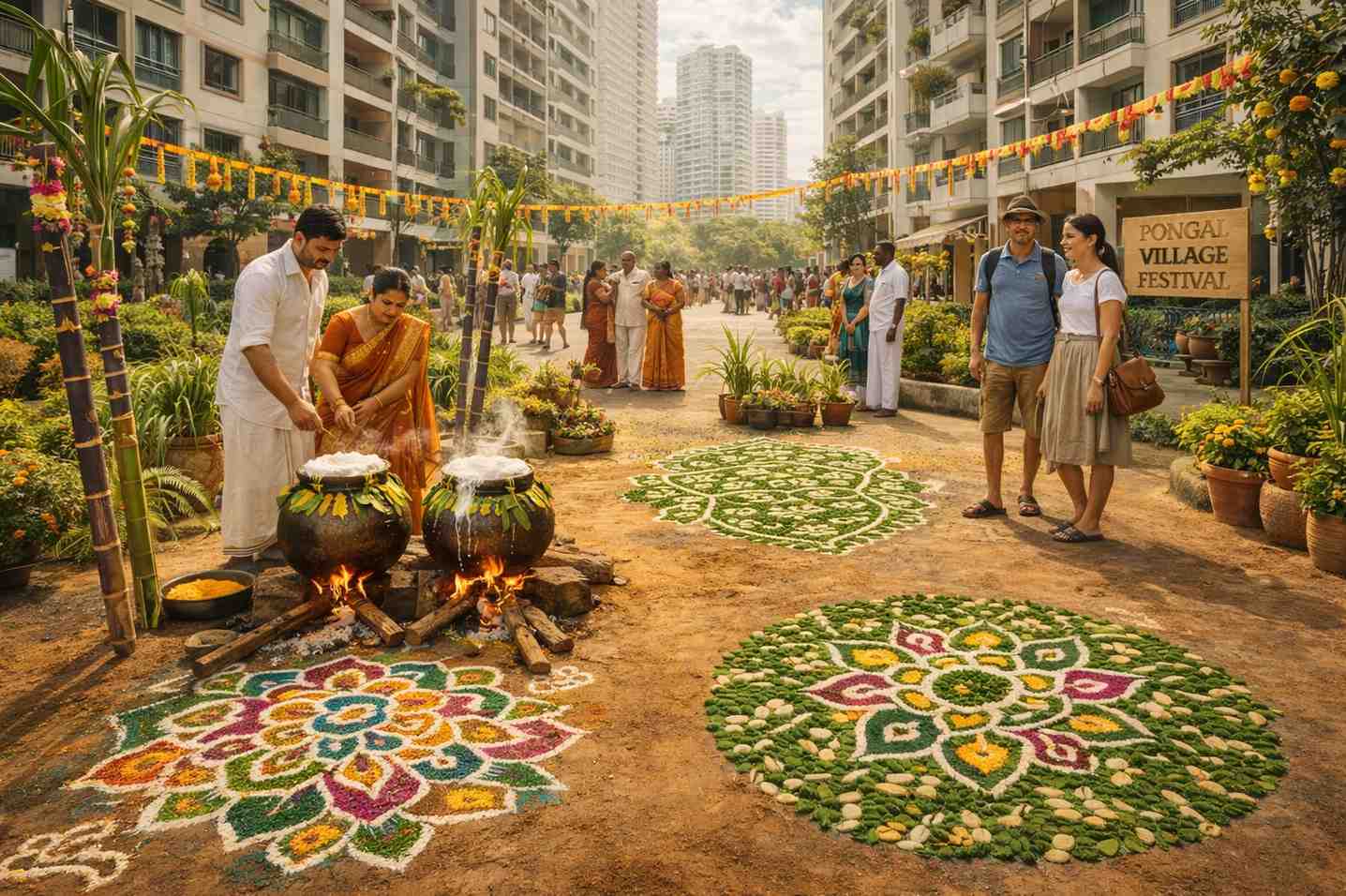
Urban celebrations adapt Pongal to modern living—using pressure cookers, shared spaces, and time-efficient rituals—while rural areas often maintain traditional outdoor practices.
Pongal as cultural tourism
Tourism initiatives promote Pongal as a living heritage festival. Demonstrations of kolam, food preparation, and pongal paanai painting attract visitors seeking authentic cultural experiences.
Contemporary debates & sustainability
Modern Pongal discussions include animal welfare, environmental sustainability, and eco-friendly practices. Many communities now emphasize organic farming, waste reduction, and green celebrations.
Conclusion
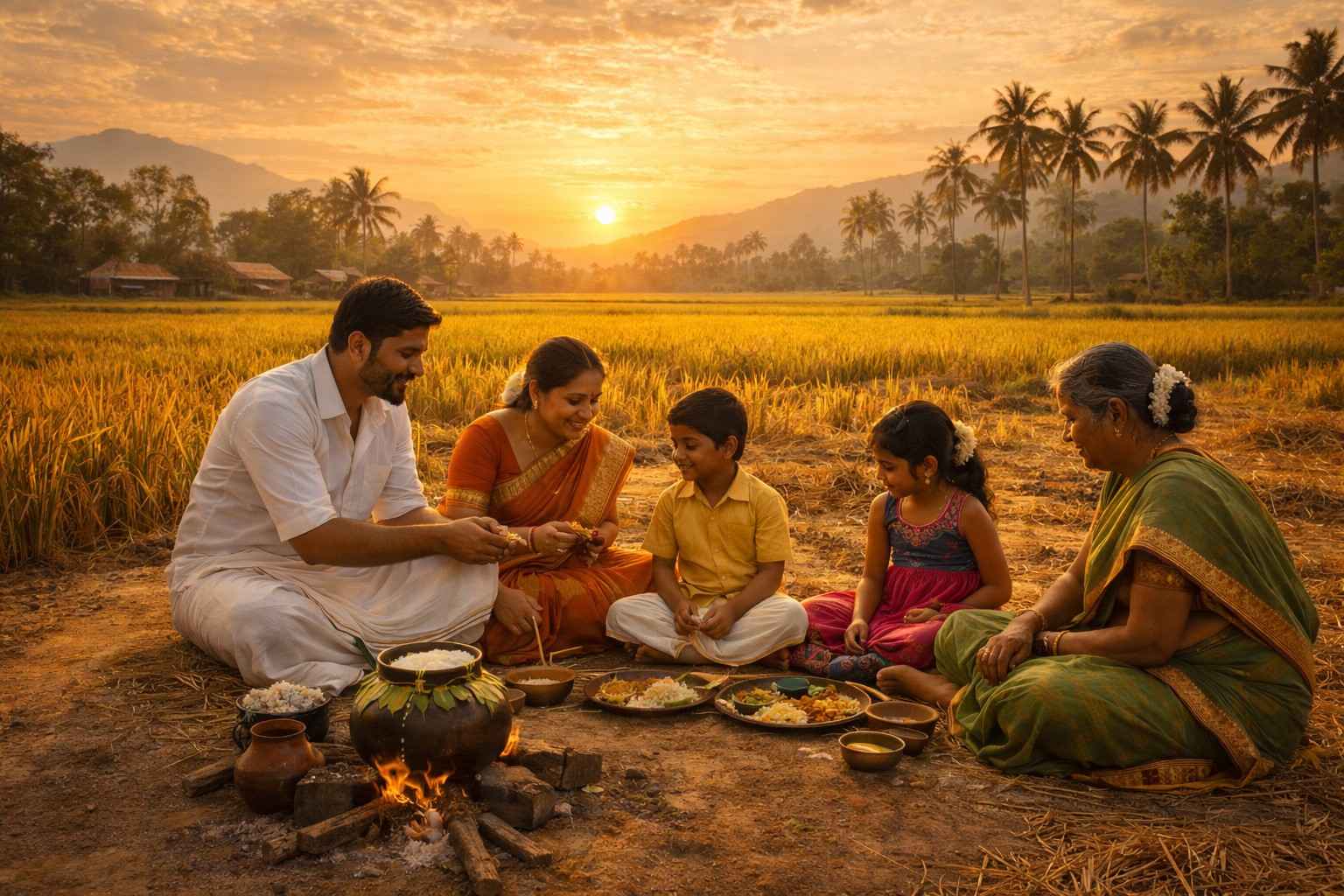
Pongal is more than a festival—it is a philosophy of gratitude. By honoring the Sun, farmers, cattle, and community, it reinforces humanity’s dependence on nature. Rooted in ancient agrarian traditions yet flexible enough to adapt to modern life, Pongal continues to thrive across villages, cities, and global diasporas.
Its simple act of sharing the season’s first harvest remains a powerful reminder that abundance is meaningful only when shared, and prosperity is sustainable only when grounded in respect for nature and community.
If you want to learn more about Indian festivals, you can explore here.dionfest

Abhay Ramola researches world festivals across primary sources, local accounts, and on-ground reporting. He founded Dionfest to cover what gets missed when festivals become tourism content the history, the ritual, and the people behind it.
1 thought on “Pongal Festival: History, Traditions, Rituals, and Cultural Significance”