
Jagannath Rath Yatra 2026: Puri’s Grand Chariot Guide
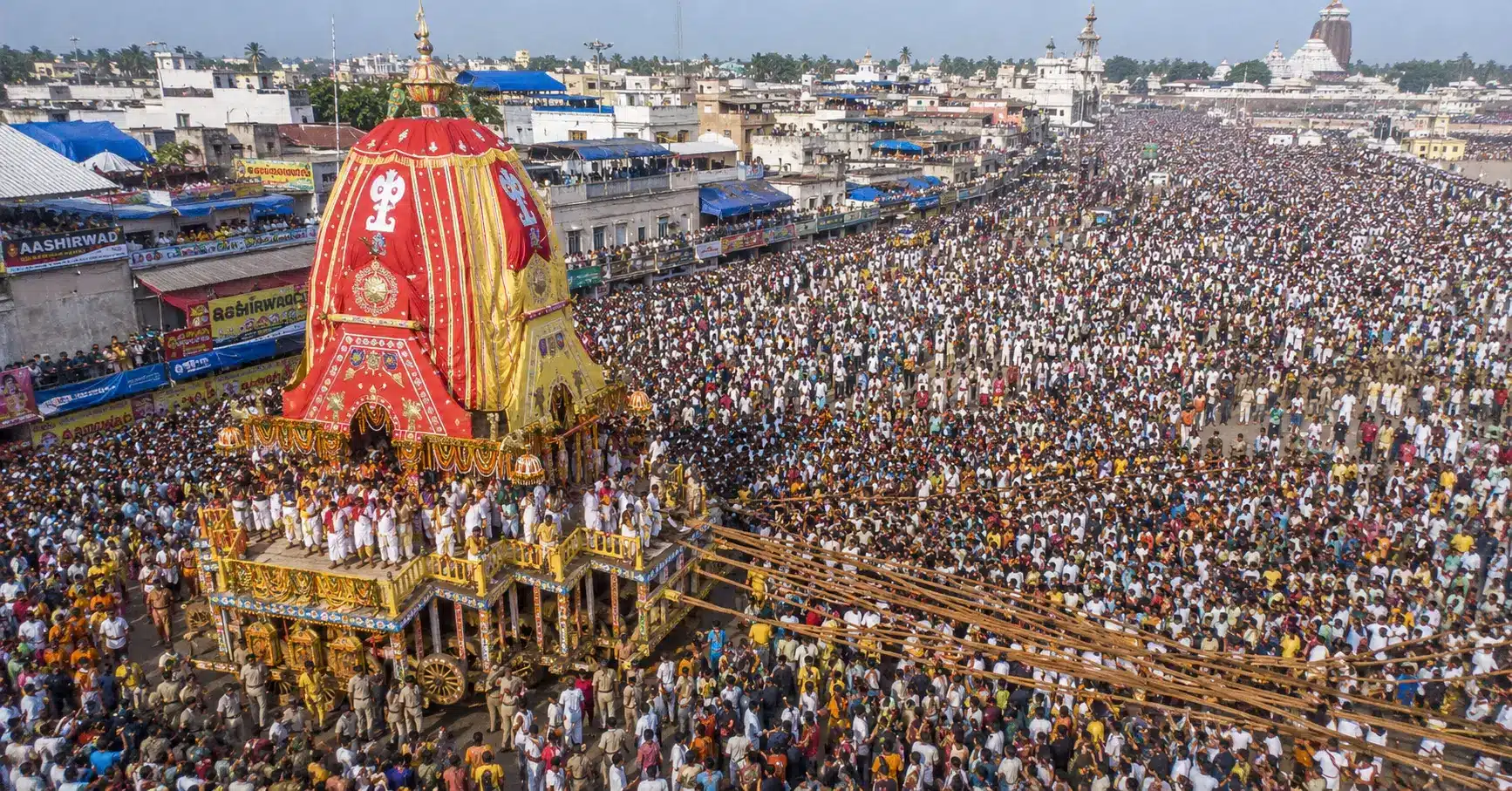
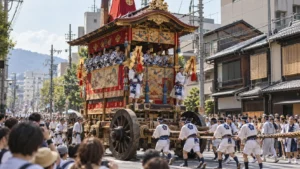
By 6 AM on Rath Yatra day, the Grand Road of Puri is already packed wall to wall. Conch shells blowing. Cymbals crashing. Thousands of voices chanting “Hari Bol” in waves that roll down a 3-kilometre street. When the 45-foot chariot of Lord Jagannath starts moving, you feel the vibration in your chest before you see it move.
This festival has run for over 800 years. It survived pandemics, colonial rule, two COVID lockdowns. It hasn’t missed a year.For another look at India’s largest spiritual gatherings, read our guide to [Kumbh Mela]
KEY FACTS
- Festival: Jagannath Rath Yatra 2026
- Main Date: Thursday, July 16, 2026
- Return Journey (Bahuda Yatra): Friday, July 24, 2026
- Duration: 9 days
- Location: Bada Danda (Grand Road), Puri, Odisha
- Attendance: 10–15 million over 9 days
- Open to: Everyone – procession is public
- Temple sanctum: Restricted to Hindus
What is Jagannath Rath Yatra?
Rath Yatra means “chariot journey.” Once a year, the deities of the 12th-century Jagannath Temple – Lord Jagannath, his brother Balabhadra, and his sister Subhadra – are brought outside and placed on giant wooden chariots. They then travel 3 km down Bada Danda to the Gundicha Temple, pulled by thousands of devotees.
For most of the year, the inner sanctum is inaccessible to ordinary people. On Rath Yatra, the deities come out to them. That’s the point. That’s always been the point.
The Skanda Purana states that witnessing the Rath Yatra earns spiritual merit equal to years of pilgrimage. Locals will tell you the same thing, in fewer words.
Jagannath Rath Yatra 2026 – Dates and Schedule
| Event | Date |
|---|---|
| Anabasara (deities rest, no public darshan) | June 20 – July 14 |
| Nava Jauban Darshan | July 15 |
| Rath Yatra — Main Procession | July 16, 2026 (Thursday) |
| Deities at Gundicha Temple | July 16–23 |
| Bahuda Yatra — Return Journey | July 24, 2026 |
| Suna Besha — Gold ornament darshan | July 24, evening |
| Niladri Bije — Return to main temple | July 25 |
Check exact timings at sjta.org.in before you travel. Last-minute schedule changes happen.
The Three Chariots
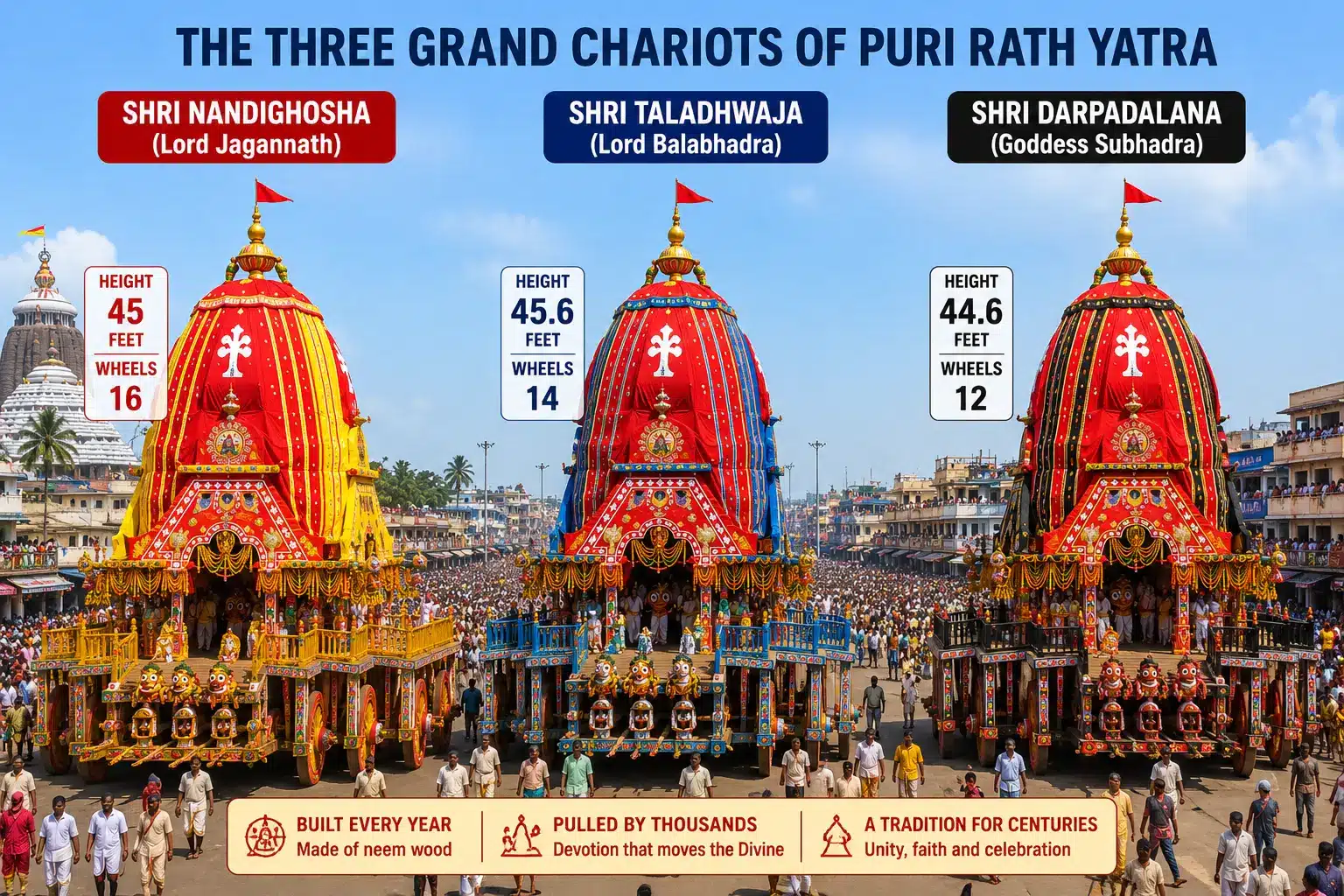 Each deity gets their own chariot, built from scratch every year by over 1,000 artisans. Same wood types, same design, same dimensions – every year, for centuries.
Nandighosa (Lord Jagannath) — 45 feet tall, 16 wheels, red and yellow
Taladhwaja (Lord Balabhadra) — 45.6 feet, 14 wheels, red and blue
Devadalana (Devi Subhadra) — 44.6 feet, 12 wheels, red and black
The chariots are never reused. After the festival ends, the wood is repurposed – some goes to temples, some to cooking the Mahaprasad.
Key Rituals – What Actually Happens
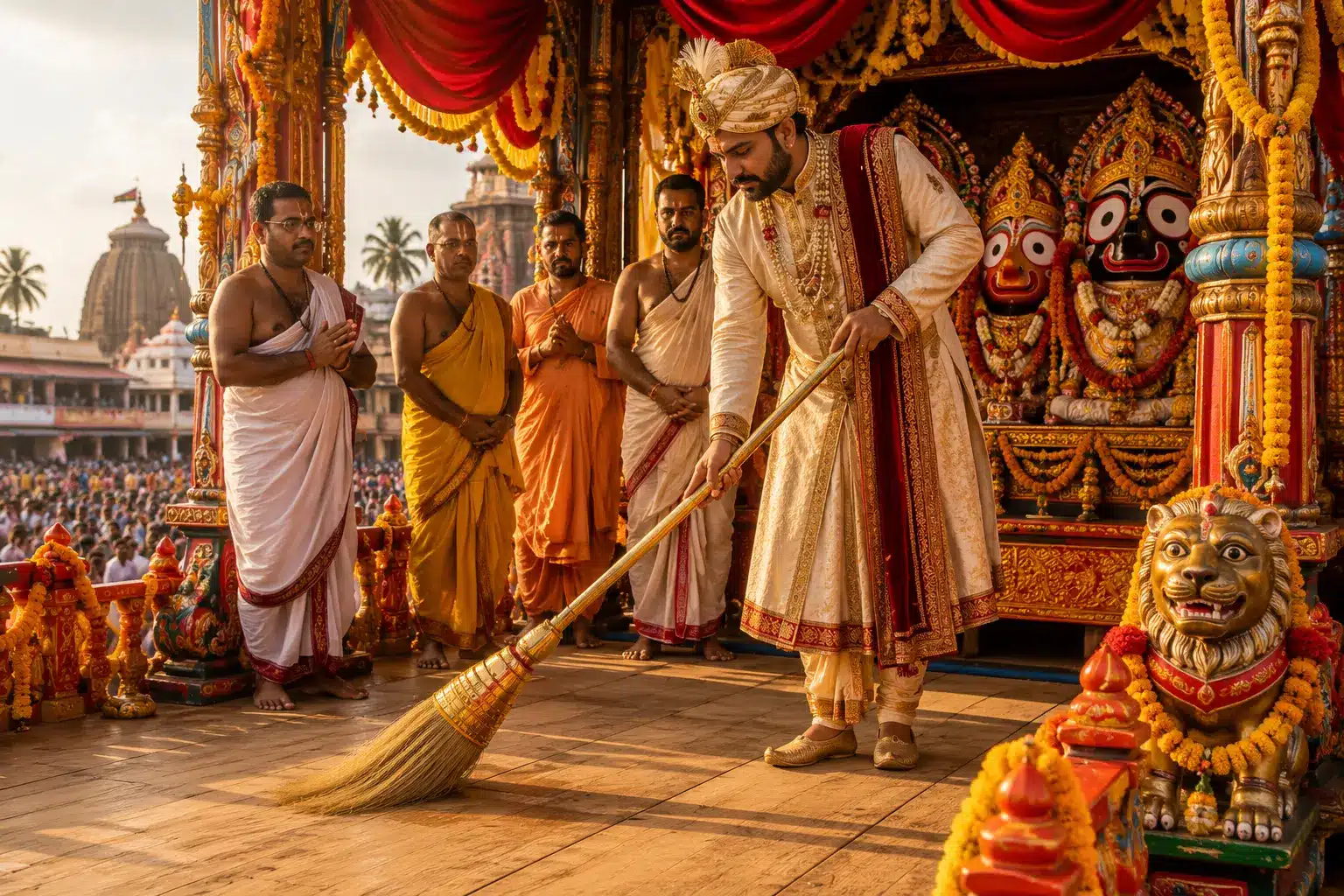 Chhera Pahara — Before the chariots move, the King of Puri arrives and sweeps the chariot floor with a golden broom. A king, sweeping. That’s the ritual. Before the divine, rank means nothing – and the king demonstrates it publicly, every single year.
Pahandi — The slow transfer of the deities from the temple to the chariots, carried by priests in a rhythmic, swaying walk. Takes several hours. Worth watching if you can position yourself near the temple gate early.
Chariot Pulling — Thousands of devotees pull the chariots with thick ropes down Bada Danda. Touching the rope is considered an act of direct service. The crowd doesn’t care who you are – everyone pulls.Devotees who attend also plan visits around Diwali and Maha Shivratri India’s other major pilgrimage festivals.
Seven Days at Gundicha — The deities stay at Gundicha Temple for a week before returning. Darshan here is far less crowded than on the main day.
Bahuda Yatra — The return on July 24. Same energy, opposite direction. The chariots stop at Mausi Maa Temple – the aunt’s house – where the deities are offered Poda Pitha, a traditional rice cake from Odisha.
What Locals Know That Tourists Miss
Go on July 15, not just July 16. The Nava Jauban Darshan happens the day before the main procession. The deities appear in special attire for the first time. Crowd is 30-40% lighter. Darshan is closer. Most tourists don’t know this exists.
Walk to the Gundicha Temple end. Everyone stands in the middle of Bada Danda. The chariots slow down near the Gundicha Temple end – that’s where you can actually grab a rope and pull. The midpoint crowd is dense and the view is the same everywhere.
Mahaprasad closes at noon. The sacred food at Anand Bazaar inside the temple is only served until noon on festival days. This is one of the most significant experiences in Puri – and most visitors miss it because they arrive late and don’t know the time limit.
Combine with Konark. The Konark Sun Temple is 35 km away – one hour by road. UNESCO World Heritage Site. If you’ve traveled from far, skipping it because “the festival took all day” is a mistake you’ll regret.
What First-Timers Get Wrong
Underestimating the heat. July in Puri is 35°C with 85% humidity. By 10 AM, if you’re not used to it, you’ll feel dizzy. Carry minimum 2 litres of water per person. Don’t count on finding stalls in the crowd – finding anything in that density is harder than it sounds.
Arriving too late. The procession starts at 7 AM. For a usable position on Bada Danda, you need to be there by 5:30 AM. People who arrive at 8 AM see the backs of other people’s heads.
Not booking in advance. Hotels near Grand Road sell out 2-3 months before the festival. If you’re reading this in June, check Bhubaneswar (60 km, 1 hour by cab) and book there. Transport into Puri on July 16 is restricted near the festival zone – plan for that.
Carrying too much. Pickpocketing is common in dense festival crowds. Carry only what you need. Leave valuables at the hotel.
Non-Hindu visitors: The street procession is completely open to everyone. You can pull the ropes, buy the food, photograph the chariots. The temple sanctum is restricted to Hindus – but the festival itself has no such restriction.
Getting to Puri
By Train: Puri Railway Station connects to Bhubaneswar, Kolkata, Delhi, Mumbai, and Chennai. Book 60-90 days ahead for July 16 dates – trains fill fast.
By Air: Bhubaneswar’s Biju Patnaik International Airport is 60 km away, roughly 1 hour by road.
By Road: Regular buses and cabs run from Bhubaneswar. Don’t drive your own vehicle into Puri on July 16 – road restrictions near the festival zone are real and enforced.
A Few Facts Worth Knowing
The festival is documented in texts from the 12th century, making it one of the oldest continuously running public festivals anywhere in the world.
Lord Jagannath’s idol is deliberately unfinished – no hands, no feet. It’s meant to represent the formless divine, beyond any fixed shape.
In 2020 and 2021, for the first time in recorded history, Rath Yatra was held without public participation because of COVID. The chariots still moved. Just without the millions of people pulling them.
The Jagannath Temple kitchen cooks Mahaprasad for up to 100,000 people daily. During Rath Yatra, that number climbs significantly.
What Stays With You
I’ve heard that during Rath Yatra, the entire city of Puri fills with something you can’t quite name – part devotion, part chaos, part energy you feel in your bones. When millions of people pull the same rope together, chanting the same words, something shifts. What gets me about this festival is simple: it’s 800 years old, and people still show up in the millions. Not because they have to. Because something about it still means something. Some traditions don’t weaken with time. They get harder to explain, and people keep coming anyway.
FAQ
When is Jagannath Rath Yatra 2026? July 16, 2026 (Thursday). Bahuda Yatra – the return journey – is July 24, 2026.
Where does Rath Yatra happen? The main festival is in Puri, Odisha, on Bada Danda – 3 km between Jagannath Temple and Gundicha Temple. Smaller Rath Yatras happen in cities across India and abroad, but Puri is the original.
Can non-Hindus attend? Yes. The street procession is open to everyone. You can pull the ropes, eat the food, photograph everything. Only the temple sanctum is restricted to Hindus.
How many people attend? 10 to 15 million over the 9-day period. July 16 is the peak.
Is it safe for families and kids? Yes, with preparation. Arrive early, stay hydrated, keep children close, avoid the densest crowd sections. Elderly visitors should position themselves on elevated spots – verandas or balconies along Bada Danda – rather than in the ground crowd.
When should I book hotels? 2-3 months before. Anything near Bada Danda goes first. Bhubaneswar is a practical backup – 60 km, same-day cab.
What is Bahuda Yatra? The return journey. Deities travel back from Gundicha Temple to Jagannath Temple on July 24, same road, opposite direction.
What is Chhera Pahara? The King of Puri sweeps the chariot floor with a golden broom before the procession starts. It means that even kings serve the divine. No title exempts you.
Planning more India festivals? Read our Holi Festival guide.

Abhay Ramola researches world festivals across primary sources, local accounts, and on-ground reporting. He founded Dionfest to cover what gets missed when festivals become tourism content the history, the ritual, and the people behind it.

Nice Blog regarding Rath Yatra .
thank you 😊