India Crosses 300 GW Non-Fossil Power Capacity as Solar Drives Clean Energy Expansion
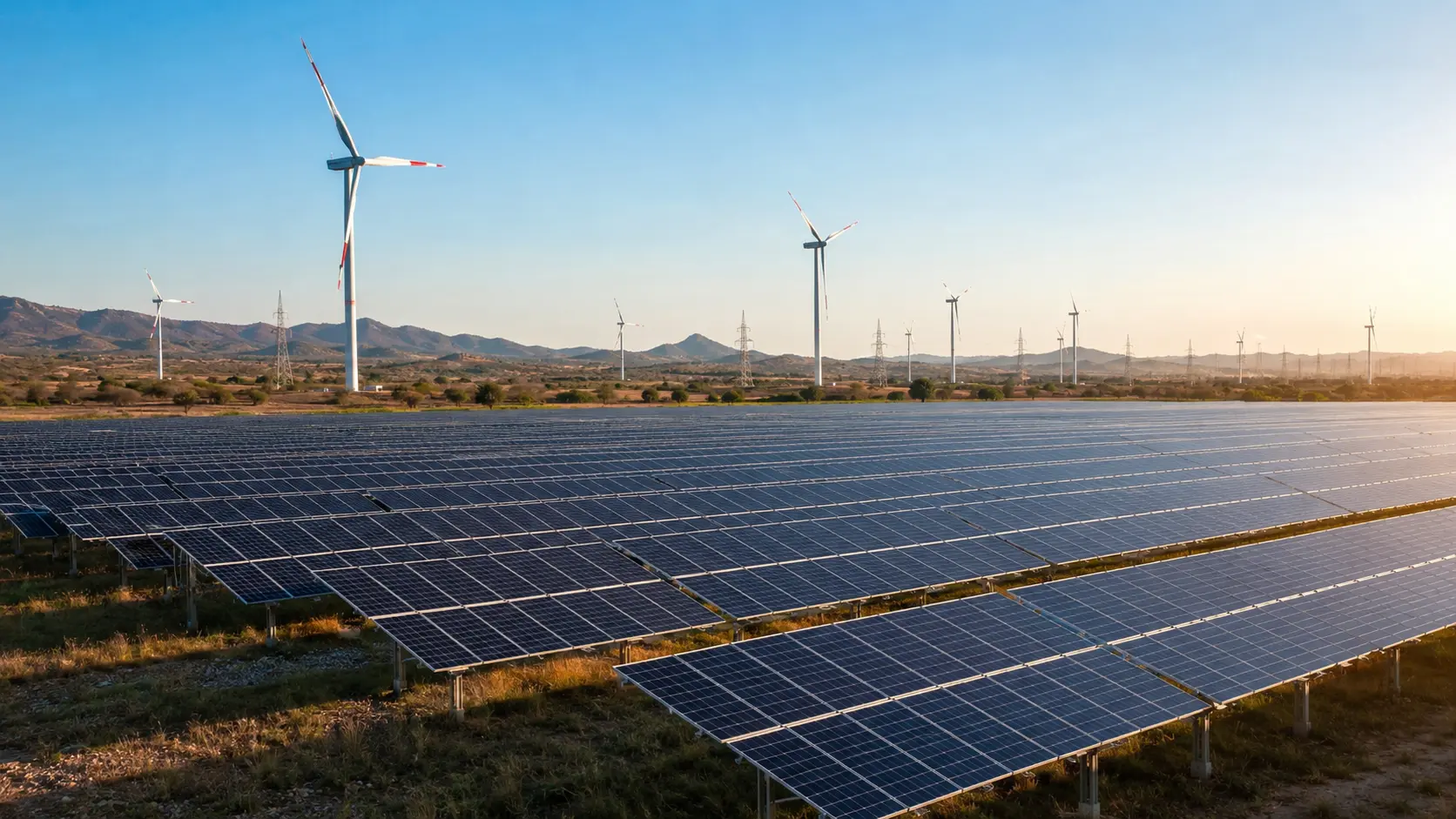
India has crossed a major threshold in its electricity transition, with non-fossil fuel-based installed power capacity reaching 300.50 GW as of July 31, 2026. The milestone represents more than 60% of the country’s earlier 2030 target of 500 GW of non-fossil capacity and comes as India moves toward a more ambitious set of climate commitments for 2035.
The latest capacity figure covers solar, wind, hydropower, bio-power and nuclear energy. Solar has been the biggest contributor to the expansion, accounting for more than half of the total non-fossil capacity.
According to the figures cited by the Ministry of New and Renewable Energy, India had 164.59 GW of installed solar capacity by July 31. Wind capacity stood at 58.14 GW, hydropower at 57.24 GW, bio-power at 11.75 GW and nuclear power at 8.78 GW.
The numbers show how sharply India’s electricity mix has changed over the past decade. Solar capacity, which was only about 2.8 GW in 2014, has expanded to more than 164 GW.
The 300 GW milestone is more than a capacity number
Installed capacity does not mean that all 300.50 GW can produce electricity at the same time. Solar generation, for example, depends on sunlight, while wind output varies with weather conditions.
That distinction is becoming increasingly important as renewable energy occupies a larger share of India’s power system.
India’s government has already acknowledged the need to strengthen battery storage, transmission infrastructure and other technologies alongside renewable generation. The country’s revised climate commitments for 2035 also place greater emphasis on building a cleaner and more resilient energy system.
The immediate challenge, therefore, is shifting from simply adding renewable capacity to ensuring that electricity generated from these sources can reach consumers when they need it.
Solar has become the main engine of India’s transition
The most striking change has been the rise of solar power.
From a relatively small installed base in 2014, India’s solar capacity has expanded to 164.59 GW. This growth has been supported by large utility-scale projects, rooftop installations and government programmes aimed at increasing renewable electricity adoption.
Wind has also expanded considerably, reaching 58.14 GW compared with around 21 GW in 2014.
Hydropower remains another major source of non-fossil electricity, with 57.24 GW installed capacity. Unlike solar and wind, hydropower can in many circumstances provide more controllable generation, although its expansion is affected by geography, environmental considerations and project-development challenges.
Nuclear power, at 8.78 GW, currently represents a much smaller portion of the overall non-fossil capacity but remains part of India’s longer-term strategy for low-carbon electricity generation.
India has raised its climate ambition for 2035
The 300 GW milestone comes against the backdrop of India’s revised Nationally Determined Contribution, or NDC, for 2031-2035.
The Union Cabinet approved the updated NDC on March 25, 2026. India has committed to three major quantitative climate targets for 2035.
First, it aims to raise the share of non-fossil sources in cumulative installed electricity capacity to 60% by 2035.
Second, it has committed to reducing the emissions intensity of GDP by 47% from the 2005 level by 2035.
Third, India aims to create an additional 3.5 to 4 billion tonnes of CO₂-equivalent carbon sink through forest and tree cover, compared with the 2005 baseline.
These targets build on progress under India’s existing 2030 commitments. Government data says emissions intensity of GDP had already fallen by 37.38% between 2005 and 2022. The share of non-fossil sources in cumulative installed electricity capacity crossed 50% in June 2025, ahead of the original 2030 deadline.
India’s long-term climate strategy remains linked to its stated goal of reaching net-zero emissions by 2070.
What does emissions intensity actually mean?
The term can be confusing because it does not refer simply to the total amount of greenhouse gases released.
Emissions intensity measures greenhouse gas emissions in relation to economic output, such as emissions generated for a given amount of GDP. A reduction in emissions intensity means the economy is producing economic value with fewer emissions per unit of output.
This is particularly relevant for a rapidly growing economy such as India. The country’s climate strategy seeks to reduce the emissions associated with economic activity while continuing to expand energy access and economic production.
India has also begun developing sector-specific approaches to emissions reduction. For industries such as steel, greenhouse gas emissions intensity can be measured against the quantity of product produced, creating a basis for tracking and managing industrial emissions.
Renewable energy’s next test is storage
The rapid addition of solar and wind capacity creates a problem that cannot be solved simply by building more generation.
Solar power is strongest during daylight hours, while electricity demand can remain high after sunset. Wind generation can also fluctuate. This creates a mismatch between when electricity is produced and when it is required.
Energy storage can help bridge that gap.
Battery energy storage systems can charge when electricity is plentiful and release power when demand rises. Pumped-storage hydropower can perform a similar function by moving water to an elevated reservoir when electricity is available and releasing it through turbines later.
Other technologies, including compressed-air, thermal, flywheel and gravity-based storage, can serve different applications.
The importance of storage is therefore growing alongside renewable capacity. India’s 2035 NDC specifically identifies battery storage systems and green energy corridors among the measures supporting its clean-energy transition.
Sources Used :
- Press Information Bureau, Government of India — Cabinet approval of India’s Nationally Determined Contribution for 2031-2035.
- Ministry of Environment, Forest and Climate Change / PIB — India’s NDC targets and progress.
- UNFCCC — India NDC 2031-2035 submission.
- Power Foundation of India — recent Indian power-sector and renewable-energy data.
The next question is whether infrastructure can keep pace
Crossing 300 GW is a significant milestone, but it does not by itself guarantee a smooth transition away from fossil fuels.
India will need sufficient transmission capacity to move electricity from renewable-rich regions to major demand centres. It will also need flexible generation, storage and stronger grid management as variable renewable sources account for a larger share of installed capacity.
Recent power-sector data illustrates why this matters. Renewable capacity can grow quickly, but the electricity system must simultaneously expand its ability to absorb, transmit and balance that power.
The government’s own 2035 climate framework recognises this wider challenge by combining renewable expansion with storage, transmission infrastructure, cleaner manufacturing and other measures.
For consumers, the significance of the 300 GW milestone will ultimately be measured not only by how much renewable capacity India installs, but by whether that capacity translates into reliable electricity, lower exposure to imported fossil fuels and a gradual reduction in the emissions associated with economic growth.
India has now crossed another major capacity milestone. The harder phase will be turning that installed capacity into a power system capable of delivering clean electricity reliably throughout the day and across seasons.
“Must read”
How Religious Festivals Affect River Water Quality
What Happens to Festival Flowers After They’re Thrown Away?
The Economic Impact of Festivals on Local Communities

Abhay Ramola researches world festivals across primary sources, local accounts, and on-ground reporting. He founded Dionfest to cover what gets missed when festivals become tourism content the history, the ritual, and the people behind it.