
How Religious Festivals Affect River Water Quality
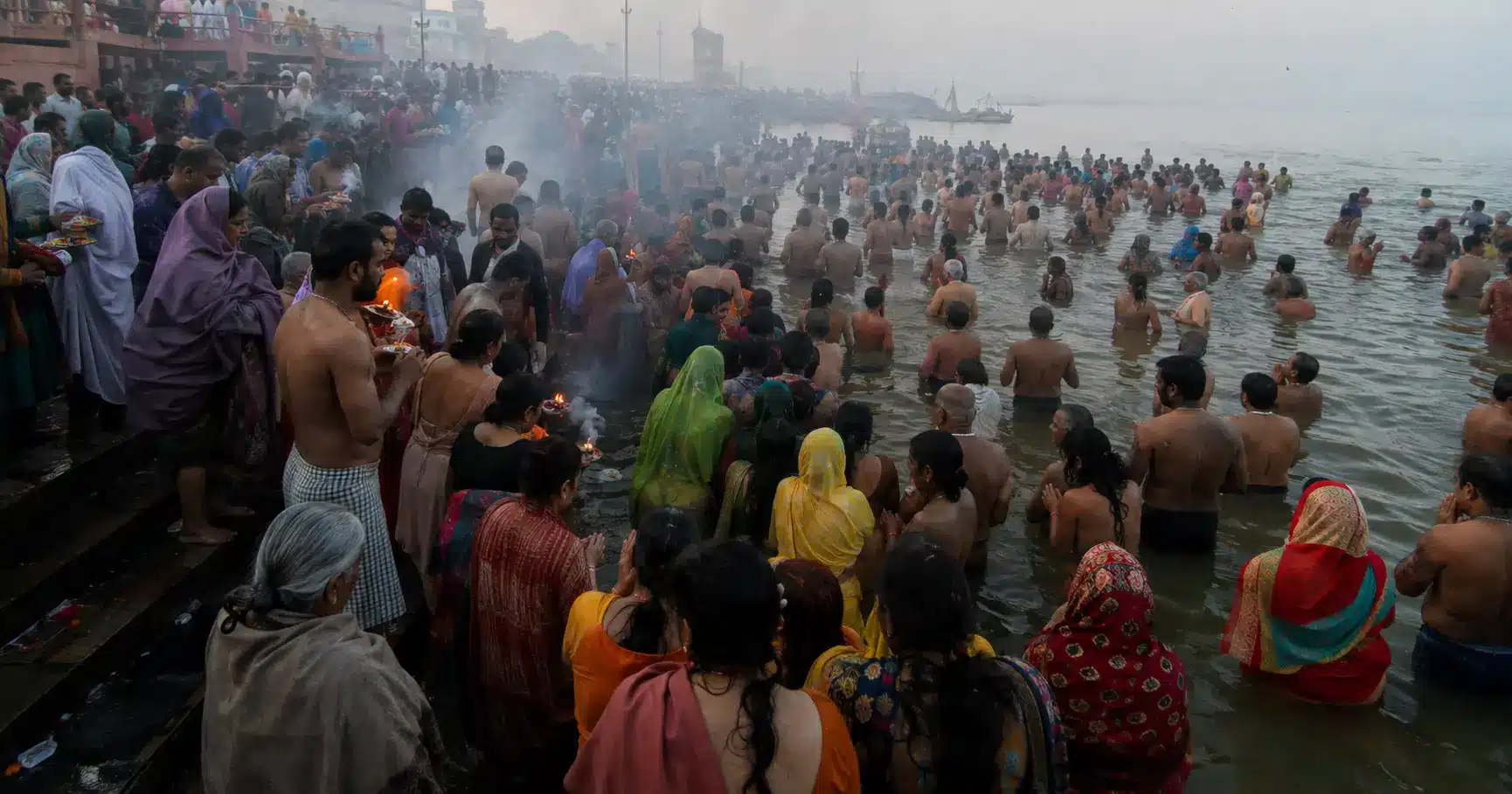
In late January 2026, ammonia levels in the Yamuna spiked to roughly three times what Delhi’s treatment plants could handle, one of the sharpest drops in river water quality the city has recorded. Six of the city’s nine major water plants cut output or shut down entirely. Millions of people went days without a reliable supply. When volunteers waded into the river banks for a clean-up that week, what they pulled out wasn’t just sludge and industrial foam — it was discarded clothes, plastic waste, and religious idols that had been sitting in the water long enough to become part of the riverbed.
The ammonia itself came mostly from industrial effluent upstream, not from religious activity. That distinction matters, and this article won’t blur it. But the idols surfacing alongside the industrial waste made something visible that’s usually invisible: rivers don’t reset after a festival ends. A festival lasts a few days. Whatever went into the water during it stays there, mixing with everything already in the river, until something forces it back to the surface: a drought, a crisis, a clean-up drive.
This article covers what religious festivals actually put into India’s rivers, what that does to measurable water quality, and what the current evidence says about whether artificial immersion ponds — the most-discussed fix — actually work.
Fast facts
- What mainly enters rivers during festivals: idol material (Plaster of Paris, lead- and mercury-based paints), flowers and garlands, milk and food offerings, plastic packaging, and human waste from mass bathing events
- Key water quality measures affected: Biochemical Oxygen Demand (BOD), Dissolved Oxygen (DO), and faecal coliform count
- Safe DO for a river ecosystem: 6 mg/L or above; fish need at least 4–5 mg/L. Parts of the Delhi Yamuna have measured between 0 and 0.4 mg/L
- 2026 flashpoints: a National Green Tribunal case over 11,000 litres of milk and 210 sarees poured into the Narmada River (April 2026); a Yamuna ammonia crisis that cut water supply to millions in Delhi (January 2026)
- Most-researched mitigation: artificial immersion ponds (taalaab), now mandatory for some festivals in Delhi and studied directly against river immersion in peer-reviewed research
Religious festivals in India route a specific, recurring mix of material into rivers: idol debris, flowers, milk, food, plastic, and — at mass-bathing events human waste at a scale few sewage systems are built for. Each of these measurably affects Biochemical Oxygen Demand and Dissolved Oxygen, the two numbers that determine whether a river can support fish at all. Artificial immersion ponds are the most direct fix currently being tested, with mixed but genuinely promising early results.
What actually goes into the river
Strip away the specific festival and the inputs repeat every time: idol material, flowers and garlands, milk and food, plastic packaging, and at the biggest events the sheer human load of mass bathing.
That last one is easy to underestimate. During the Maha Kumbh Mela at Prayagraj (13 January – 26 February 2025), more than 660 million individual dips were recorded at the Sangam over 45 days, with over 54 crore devotees bathing by mid-February alone. The Central Pollution Control Board (CPCB) told the National Green Tribunal that faecal coliform, a direct indicator of sewage contamination, exceeded the permissible bathing limit of 2,500 MPN per 100ml at every monitored location on multiple days, hitting 49,000 MPN/100ml in the Ganga at one point. The CPCB later reframed this using a 40-day median (1,700 MPN/100ml, technically within limits) and told Parliament the river water quality was fit for bathing, a revision opposition MPs publicly disputed as data manipulation. Both the spike numbers and the median are real; they’re just measuring the same event two different ways, and which one you lead with changes the story.
The point isn’t that any single festival is uniquely dirty. It’s that these inputs are consistent enough, year after year, that Indian water-quality research increasingly treats “festival season” as its own measurable category, distinct from a river’s baseline pollution.
Idol immersion: the single biggest event
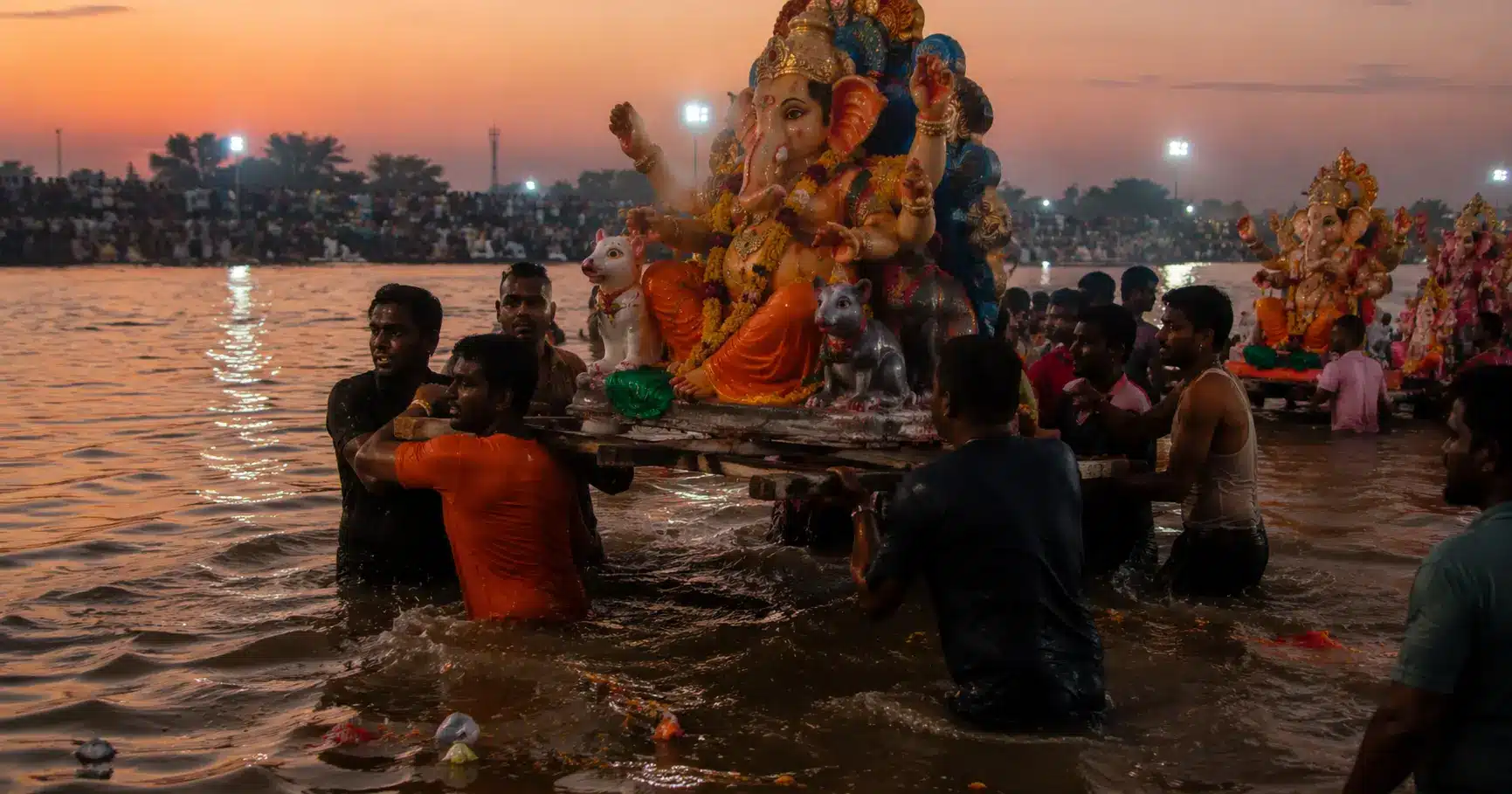 Ganesh Chaturthi and Durga Puja idols are typically made from Plaster of Paris rather than traditional clay, painted with pigments that commonly contain lead, mercury, cadmium, and chromium, and dressed in synthetic-fabric clothing and non-biodegradable decoration. All of it goes into the water at once, on the same one or two auspicious days, concentrating the impact rather than spreading it out.
In Delhi alone, a single Durga Puja immersion day has seen more than 500 idols go into the Yamuna at two ghats, accounting for tonnes of lead-based paint and chemicals in a matter of hours. Peer-reviewed research on the Dikrong River in Arunachal Pradesh measured pH, BOD, Dissolved Oxygen, Chemical Oxygen Demand, and heavy metal content (lead, arsenic, mercury, cadmium) before and after direct idol immersion, and found all of them exceeded permissible limits following immersion, with lead and mercury as the clearest outliers. Fish kills tied directly to idol-related chemicals aren’t hypothetical: in Basti, Uttar Pradesh, a university zoology department attributed a fish die-off in the Kuano river specifically to chromium from idol paint, explaining that the compound jams fish gills and prevents them from breathing.
The National Green Tribunal has required since 2015 that idols use only unbaked clay, natural dyes, and biodegradable decoration, with cloth and plastic removed before immersion. Enforcement is inconsistent. A civil defence volunteer stationed at a Delhi ghat in a more recent immersion season put it plainly: for every person stopped from dumping a bag of puja material into the river, another slips past from the other side.
Read more in our Ganesh Chaturthi 2026 guide, which covers Anant Chaturdashi — the immersion day when most of this enters the water in a single window.
Flowers, milk, and sarees: the offerings problem
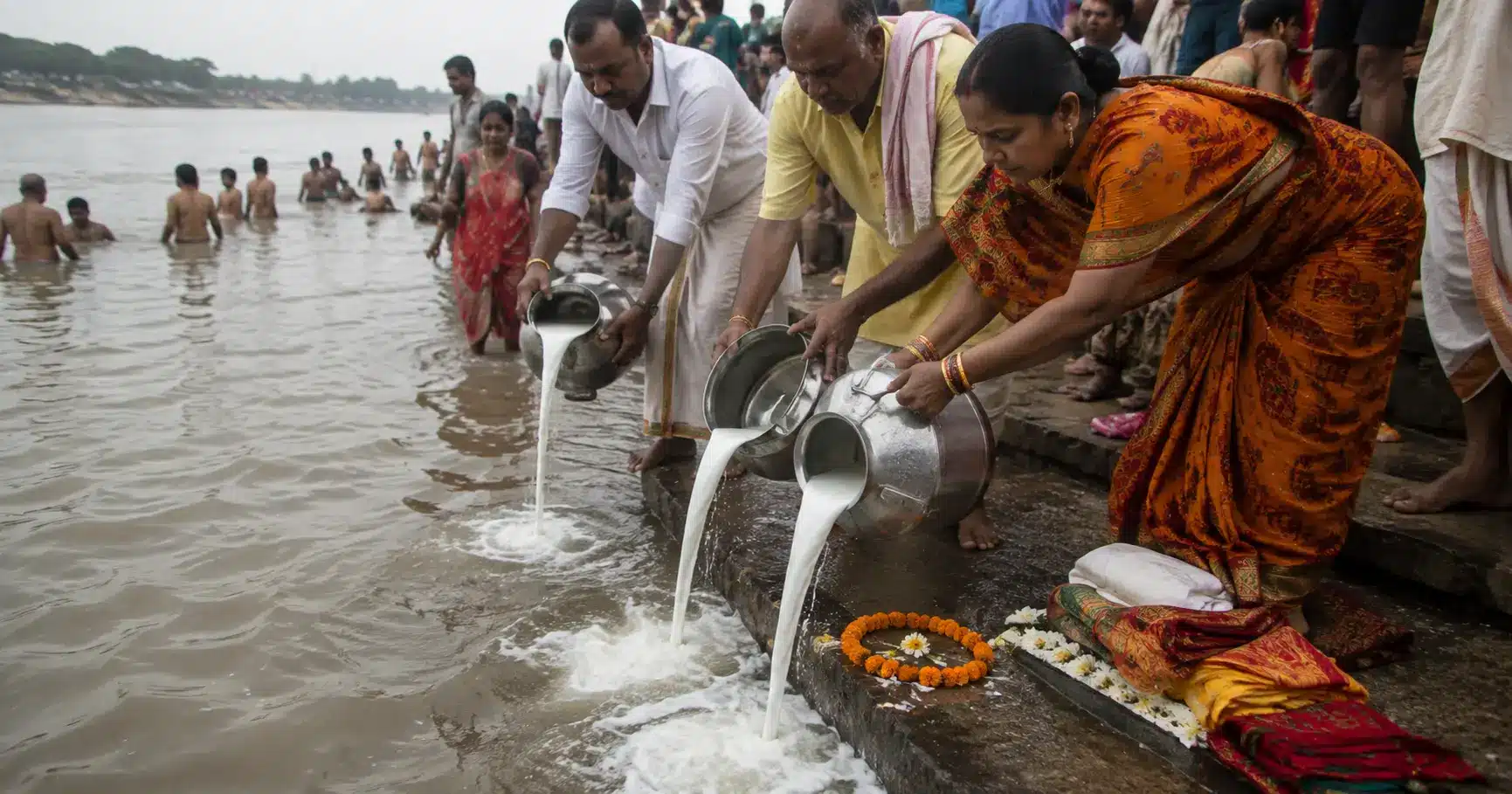 Flowers are the highest-volume offering by weight. We’ve covered the flower-specific pollution and recycling picture in detail separately. But 2026 put a different offering in front of the National Green Tribunal: milk.
In April 2026, organisers of a 21-day religious event at Pataleshwar Mahadev Temple in Satdev village, Sehore district, Madhya Pradesh, poured an estimated 11,000 litres of milk and discharged around 210 sarees into the Narmada River as a closing ritual. A petition followed, and the NGT’s Central Zone Bench in Bhopal directed the Central and Madhya Pradesh Pollution Control Boards to examine whether the practice violates the Water (Prevention and Control of Pollution) Act, 1974. The tribunal noted that no law explicitly bans pouring milk into a river, but that organic substances at that volume can raise Biochemical Oxygen Demand enough to affect aquatic life, and asked for scientific data to settle the question. The pollution board’s own joint report, filed in July, concluded that laboratory dilution testing didn’t establish adverse impact from this specific incident, citing the Narmada’s flow rate and natural reaeration capacity at that stretch. The NGT nonetheless held that while no law prohibits the practice, it should be avoided at this scale, and directed the state pollution board to stay vigilant during future religious gatherings. It’s a narrower finding than the viral coverage suggested: not proof the river was harmed, but a tribunal choosing caution over a clean bill of health.
The underlying chemistry isn’t actually in dispute, even if this particular stretch of river diluted it without measurable harm: milk contains fats, proteins, and lactose, all of which feed bacteria that consume dissolved oxygen as they break the milk down. The Madhya Pradesh Pollution Control Board has separately confirmed that BOD levels in several Narmada stretches already exceed safe limits before events like this add to the load. Sarees and cloth offerings pose a different, more mechanical problem: synthetic fabric doesn’t biodegrade, and it’s one of the more direct contributors to microplastic shedding in slow-moving water, covered in more detail below.
Food offerings and the ancestor-ritual problem
Food is the least-discussed input, but it’s well documented in one specific context: Pitrupaksha, the roughly two-week period each year when Hindus offer food to deceased ancestors, often by placing rice balls (pind) and grain directly into rivers, tanks, and ponds.
Mumbai’s Banganga Tank has recorded fish die-offs tied to this practice in multiple separate years. A scientist with the Central Marine Fisheries Research Institute has explained the mechanism directly: the rice and wheat offered during the ritual becomes food for waterborne bacteria, whose populations then spike and consume the oxygen fish depend on. It’s the same basic mechanism as the milk-offering problem, just an organic load the water can’t process fast enough, from a different ritual and a different season. Locals near Banganga describe the fish deaths as close to an annual event at this point, arriving reliably each September alongside the ritual itself.
Everyday temple food waste adds a smaller, more constant version of the same load: cooked prasad, sweets, and fried food discarded directly into rivers rather than composted or bagged, adding organic matter that behaves the same way in the water regardless of its religious origin.
Plastic: the part nobody associates with devotion
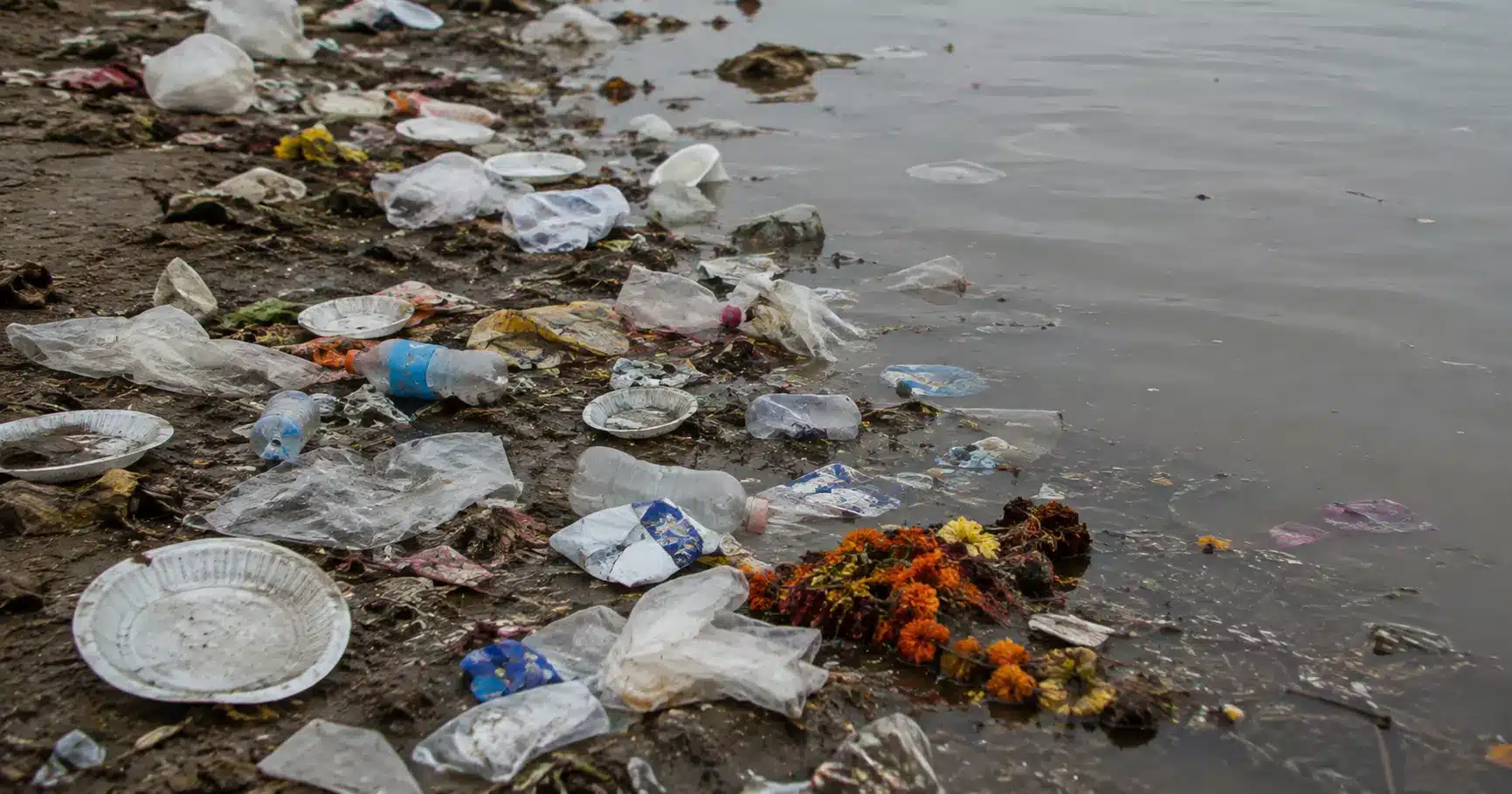 Milk pouches, flower packaging, prasad containers, plastic garlands, and disposable plates and cups make up a large and growing share of festival waste, and unlike flowers or food, none of it biodegrades.
The scale is easiest to see where someone has actually tried to ban it. In 2026, the Kashi Vishwanath Temple in Varanasi imposed a complete plastic ban for the month of Sawan, prohibiting milk in plastic pouches, Ganga water in plastic bottles, and flowers or prasad in polythene packaging. The response was driven by an estimated 20–30 tonnes of plastic waste generated during the month by the 70–80 lakh pilgrims who visit. Haridwar, a smaller city, generates roughly 11 tonnes of plastic waste on an ordinary day and more than double that during festival periods, according to a UN Environment Programme river-plastic tracking project. Broader estimates for large religious congregations put plastic at over 40% of total waste generated, a real driver of poor river water quality wherever collection infrastructure hasn’t kept pace.
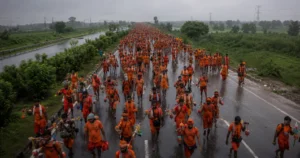
Our own reporting on the Kanwar Yatra, a separate, non-idol pilgrimage that still routes 4.5 crore people along North Indian rivers each July and August, found officials estimating at least half of the waste from the 2023 event was plastic, requiring a 30,000-tonne cleanup. None of that is unique to one pilgrimage; it’s the same packaging problem showing up at a different event on a different river.
Where sewage fits in
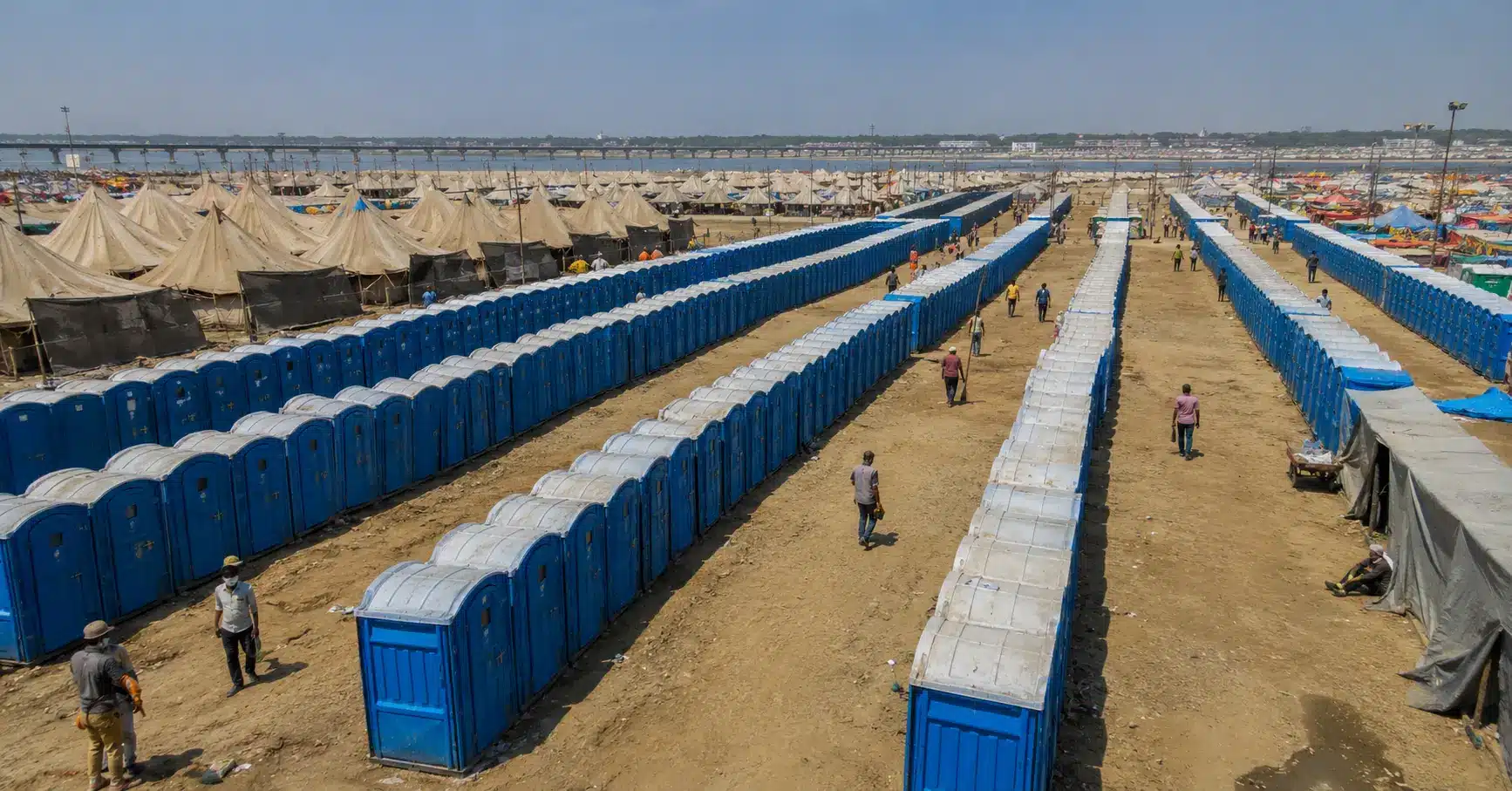 Sewage is the least “religious” input on this list and often the largest by volume, but festivals still make it worse in two specific ways: temporary population surges that overwhelm existing sanitation infrastructure, and construction of festival infrastructure without adequate treatment capacity.
At the 2025 Maha Kumbh, roughly 150,000 toilets were built for the temporary tent city, a genuinely large number, but one serving an event that saw over 400 million visits across 45 days. The NGT separately sought a response from the Uttar Pradesh government after reports of open defecation along the banks of the Ganga during the mela, tied to the same CPCB report that flagged high faecal coliform levels. In Delhi, the more chronic version of this problem is structural rather than seasonal: government monitoring data attributes roughly 76% of the Yamuna’s total pollution load to the 2% of the river’s length that runs through the capital, driven mainly by untreated sewage entering through drains that were never connected to treatment plants.
Festivals don’t create the sewage problem. They stress-test it, briefly and visibly, in a way that’s easier to measure than the everyday version.
BOD and DO: the water quality numbers that actually matter
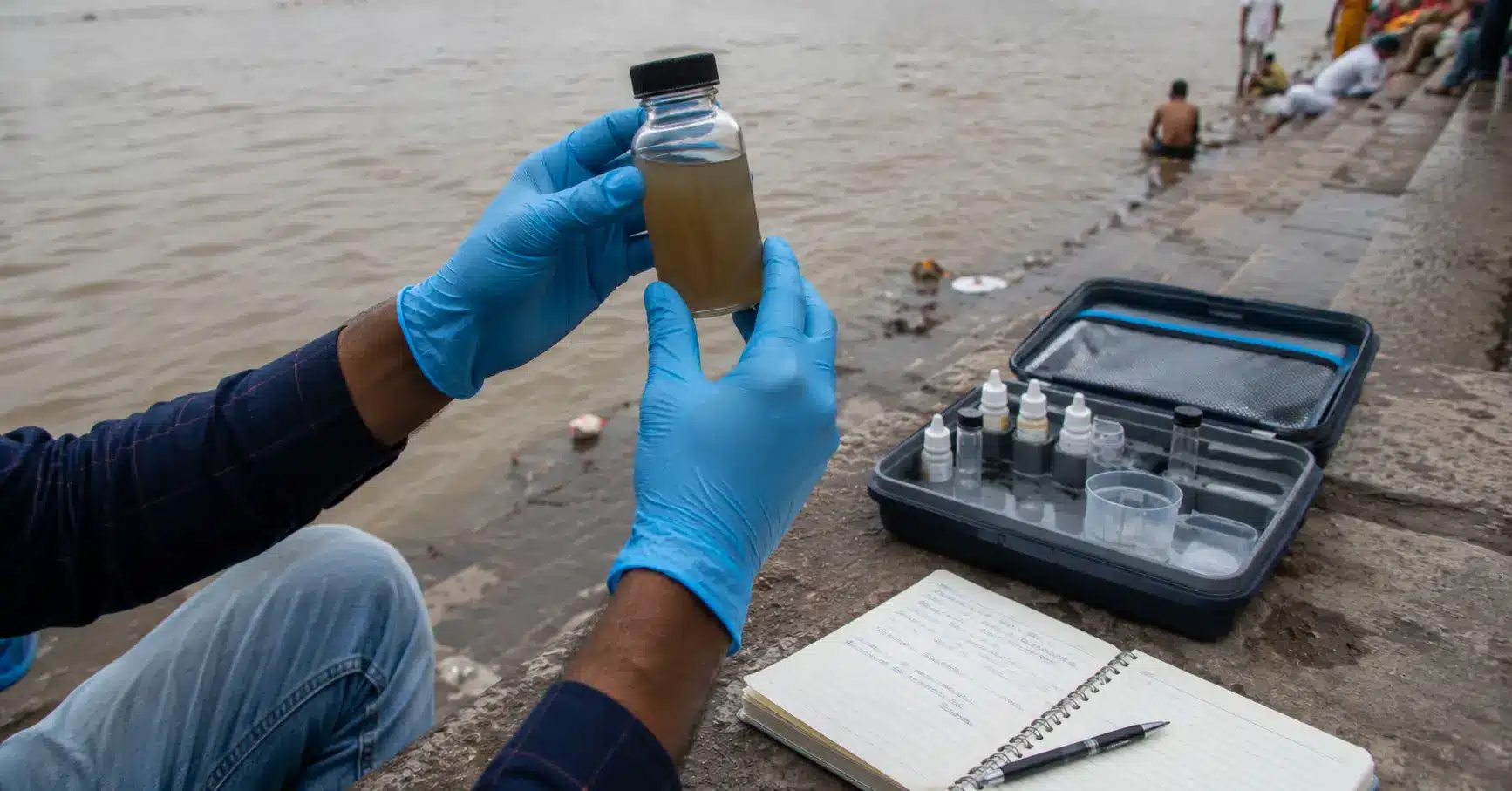 Two measurements do most of the work in this article, and they’re simpler than they sound.
Dissolved Oxygen (DO) is exactly what it says: how much oxygen is actually dissolved in the water, available for fish and other organisms to breathe. A healthy river needs a DO level of 6 mg/L or higher; fish need at least 4–5 mg/L to survive. Below that, they die or leave, assuming they have somewhere else to go.
Biochemical Oxygen Demand (BOD) measures the opposite side of the same equation: how much oxygen bacteria in the water will consume while breaking down organic matter — flowers, milk, food, sewage, anything biological. High BOD means bacteria are using up oxygen faster than it can dissolve back into the water, which drags DO down. The two numbers move in opposite directions for the same reason.
The clearest documented example of a festival moving both numbers in one day comes from the 2013 Kumbh Mela. BOD at the main Sangam bathing spot rose from 4.4 mg/L to 7.4 mg/L between January 13 and 14, the day roughly 8 million people bathed at that single location. In the Delhi stretch of the Yamuna, a University of Chicago-affiliated water monitoring project has recorded DO between 0 and 0.4 mg/L. Residents near one of the city’s most-used immersion ghats describe the change directly: where the river once supported plenty of fish, only a few catfish remain today.
What happens to fish and other aquatic life
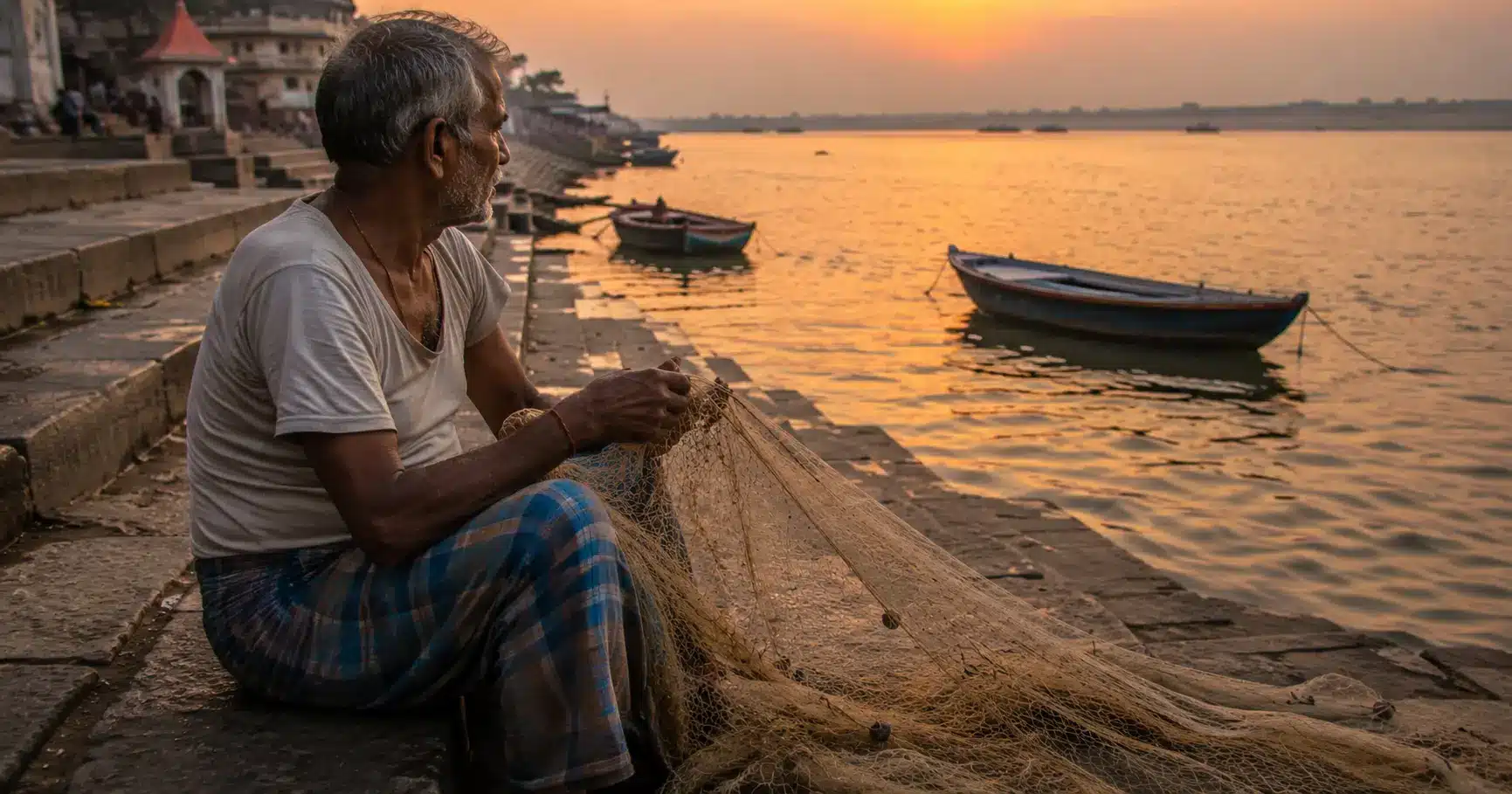 The consequence of low DO and high BOD isn’t abstract. India records mass fish deaths tied to religious ritual timing often enough that South Asia Network on Dams, Rivers and People (SANDRP) has documented recurring cases across multiple World Fisheries Day reports:
- Thousands of dead fish were found floating at Line Tank Pond in Ranchi, Jharkhand, shortly after Diwali and Durga Puja immersion, with the pond left uncleaned afterward
- A university zoology department linked a Kuano River (Basti, UP) fish die-off specifically to chromium leaching from idol paint
- Mumbai’s Banganga Tank has recorded fish deaths tied to Pitrupaksha food offerings in more than one separate year
- In 2018, idol immersion debris was linked to mass turtle and fish deaths washing ashore on Mumbai’s Dadar and Juhu beaches
None of these incidents individually prove a national pattern rivers and tanks die for plenty of non-religious reasons too, including drought and industrial discharge, and some of the sourcing above is regional reporting rather than peer-reviewed study. What’s harder to dismiss is the consistency of timing: the same water bodies, tied to the same rituals, on close to the same dates, year after year.
Microplastics: the part that never leaves
Unlike flowers or food, plastic and synthetic fabric don’t decompose they break down into microplastic fragments that stay in the water column and sediment indefinitely.
A Toxics Link study found microplastics in every single sample collected from the Ganga at Haridwar, Kanpur, and Varanasi, with the highest concentration recorded at Varanasi’s Assi Ghat one of the city’s most-used ritual bathing sites. A 2025 peer-reviewed review of Ganga microplastic pollution specifically identifies religious offerings and ceremonial items as a documented contributor, separate from industrial and municipal sources. Downstream, a study of the Godavari River measured an average microplastic concentration of 3.9 particles per litre, with synthetic fibres consistent with cloth and garland material making up over 80% of particles found by shape.
Researchers studying this specifically flag a genuine tension: mitigation efforts risk being read as intrusions into sacred practice, which is part of why the more promising interventions — explored next — work with the ritual rather than against it.
Do artificial immersion ponds actually work?
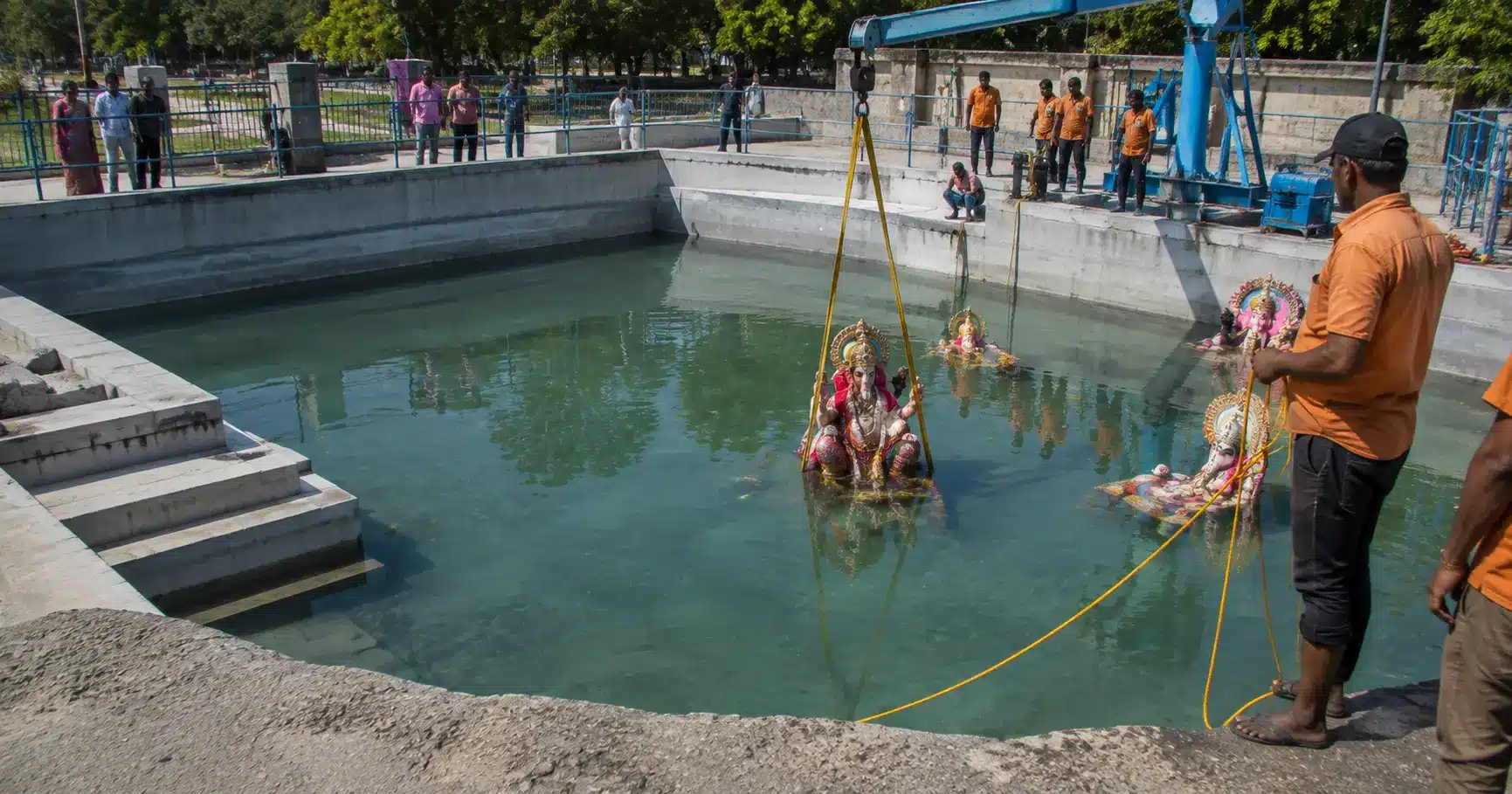
This is the most directly researched mitigation strategy currently in use, and the honest answer is: better than direct river immersion, with real limits.
Delhi has mandated artificial ponds (taalaab) as the default immersion method for both Durga Puja and Chhath Puja in recent years, a shift documented in academic research tracking how it has changed worshippers’ relationship with the Yamuna itself. Delhi Pollution Control Committee data comparing pre- and post-immersion water quality found that in a year when Ganesh idol immersion moved almost entirely to artificial ponds, Total Suspended Solids, BOD, and heavy metal levels in the Yamuna were reduced significantly compared to the previous year’s river-immersion baseline.
The clearest controlled comparison comes from the Dikrong River study cited earlier: researchers directly compared the Vishwakarma Puja festival, where idols went straight into the river, against Durga Puja in the same location, where idols went into artificial ponds instead. The river-immersion festival showed measurably worse pH, BOD, and heavy metal readings than the pond-immersion festival at the same site.
The limits are practical rather than scientific. Environmental activists monitoring Delhi’s pond rollout have pointed out that the number of ponds hasn’t always matched demand, that public awareness of where they are lags behind the policy itself, and that some outlying areas still default to whatever local pond or river is nearest regardless of what the government intended. A pond that exists on paper but isn’t where people actually gather doesn’t stop anyone from using the river instead.
FAQ
What is BOD and why does it matter for rivers?
Biochemical Oxygen Demand measures how much oxygen bacteria consume while breaking down organic matter in water, such as flowers, milk, food waste, or sewage. High BOD means bacteria are using oxygen faster than it can replenish, which lowers the oxygen available for fish and other aquatic life.
What DO level do fish actually need to survive?
A healthy river needs Dissolved Oxygen of 6 mg/L or higher. Most fish need at least 4–5 mg/L. Some stretches of the Delhi Yamuna have measured between 0 and 0.4 mg/L, which is close to unable to support fish life at all.
Do artificial immersion ponds actually reduce river pollution?
Available evidence says yes, measurably. A peer-reviewed comparison on the Dikrong River found rivers used for direct idol immersion had worse BOD, pH, and heavy metal readings than a comparable festival using artificial ponds. Delhi Pollution Control Committee data found similar reductions after shifting Ganesh Chaturthi immersion to ponds. The main limitation isn’t effectiveness it’s coverage and awareness.
Does the Kumbh Mela affect Ganga water quality?
Yes, measurably, during the event itself. Ganga river water quality data from the Central Pollution Control Board recorded faecal coliform levels exceeding safe bathing limits at every monitored site during the 2025 Maha Kumbh, though a later report using a 40-day median value found overall levels within permissible limits, a revision that remains publicly disputed.
Is it true that milk offerings pollute rivers?
The mechanism is real: milk contains fats, proteins, and lactose that feed bacteria, which then consume dissolved oxygen as they break it down, the same way sewage or food waste does. But scale and river conditions matter. A 2026 National Green Tribunal case examined exactly this after 11,000 litres of milk were poured into the Narmada, and the pollution board’s own dilution study found no established harm in that specific instance, given the river’s flow. The NGT still told authorities to stay vigilant rather than treat it as settled.
What happens to idols after immersion?
Clay idols eventually dissolve; idols made from Plaster of Paris often don’t, and can persist in riverbeds for months. Paint pigments containing lead, mercury, and chromium leach into the water during dissolution, which is the main reason the National Green Tribunal has required natural clay and dyes since 2015.
Can religious festivals cause fish to die?
Yes — India has recorded multiple fish die-offs in specific water bodies timed closely to festival rituals, including idol immersion and food-offering rituals like Pitrupaksha. The likely mechanism in most documented cases is oxygen depletion from organic overload, sometimes combined with heavy metal toxicity from idol paint.
How is this different from regular industrial river pollution?
Industrial and sewage pollution is constant and year-round; festival pollution is concentrated into short, predictable windows, which is actually what makes it easier to study and measure directly — water quality before, during, and after a specific immersion day can be compared in a way that’s harder to do with continuous industrial discharge.
What is actually being done to fix this?
Artificial immersion ponds are the most-implemented fix, now mandatory for some festivals in Delhi. Individual temples have started banning plastic packaging during major events. None of these are complete solutions on their own coverage, enforcement, and public awareness all still lag behind the policies.
The bottom line
None of the individual inputs here are new: flowers, milk, food, plastic, and idols have gone into Indian rivers for generations. What’s changed is the scale, and the fact that river water quality is now measurable in a way it wasn’t before: a BOD reading, a faecal coliform count, a microplastic sample. The evidence doesn’t support treating festivals as the primary cause of river pollution in India; sewage and industrial discharge still do far more damage, year-round. But it also doesn’t support treating festival input as negligible. Artificial immersion ponds are the first fix with real data behind them. The gap now is coverage, not proof of concept.
Sources consulted include the Central Pollution Control Board (via National Green Tribunal filings), CNN, The Quint, Tribune India, Deccan Herald, Down To Earth, UNDP India, SANDRP, Mongabay India, Toxics Link, and peer-reviewed research published via IWA Publishing and international engineering journals.

Abhay Ramola researches world festivals across primary sources, local accounts, and on-ground reporting. He founded Dionfest to cover what gets missed when festivals become tourism content the history, the ritual, and the people behind it.


2 thoughts on “How Religious Festivals Affect River Water Quality”