Cultural Travel Budget Guide: How to Calculate Your Festival Trip Costs

Prices, taxes and exchange rates in this guide were checked on 22 October 2026. Every amount marked “example” is invented to show the arithmetic. None of them is a price for any destination.
On the Kyoto City Tourism Association’s page for the 2026 Gion Matsuri, paid seats for the procession run from ¥6,000 to ¥155,000. That is a 26-fold gap for the same procession on the same day. A cultural travel budget cannot be one number copied from a blog. It is a list of lines, and each line has its own source, its own date and often its own currency.
This guide to festival travel costs for an international trip gives the method, a log of official figures with the date each was checked, and two worksheets you can copy, one for 3 days and one for 7.
The formula for cultural holiday expenses: total = fixed costs (flights, visa or entry fees, insurance, SIM) + days × daily costs (lodging, food, local transport) + event costs (seats, entries, experiences) + a buffer. Price each line from a named source, write the date beside it, and convert at the rate on the day you pay.
How to date-stamp every number
A festival trip price runs on three clocks. The price itself changes by year and season. Tax rules change, sometimes on a fixed start date. The exchange rate changes every day.
The European Central Bank (ECB) publishes daily euro reference rates. Here are two dates for the yen and the rupee, and what a ¥100,000 bill cost on each:
| Date | EUR 1 = JPY | EUR 1 = INR | ¥1 in rupees (derived) | ¥100,000 in euros | ¥100,000 in rupees |
|---|---|---|---|---|---|
| 1 September 2026 | 185.63 | 110.0485 | ₹0.5928 | €538.70 | ₹59,284 |
| 20 October 2026 | 177.34 | 106.4590 | ₹0.6003 | €563.90 | ₹60,031 |
Source: ECB reference rates for the Japanese yen and the Indian rupee, read on 22 October 2026. The rupee-per-yen figures and the bill conversions are DionFest calculations (the INR rate divided by the JPY rate).
Between those two dates the euro bought about 4.5% fewer yen. The same ¥100,000 bill cost 4.7% more in euros and 1.3% more in rupees. Your home currency decides how much a move in the yen matters to you. On a ¥300,000 trip bill, the gap between the two dates is about €76 in euros or ₹2,241 in rupees.
The ECB says its reference rates are published for reference purposes only. They are not the rate your bank or an exchange counter will give you. Use them to date-stamp a plan, then replace them with your own card’s or counter’s rate when you pay.
One more conversion trap: when a card terminal or ATM offers to charge you in your home currency, a CEPS policy paper reports that case studies generally find this the more expensive option, because the provider adds a mark-up. Choose the local currency when asked. Check your own bank’s published fees for foreign card use and cash withdrawals before you fill in a worksheet.
Three habits keep a budget honest:
- Write the date next to every price you copy.
- Convert on the day you pay, not the day you plan.
- Re-check each price before you pay. Tickets, taxes and exchange rates each change on their own schedule.
Flights, trains and local transport
Flights. This guide prints no fares, because a fare depends on the airline, the day you buy and the day you fly. Price the same trip on three different booking days. Add the checked bag, seat selection and the transfer from the airport. Write the date next to each figure. Buy non-refundable fares only after the organiser or a tourism body has confirmed the festival date. DionFest guide to planning a cultural heritage trip explains how festival dates are set and who confirms them.
Visas and entry fees. On an international trip, check the destination government’s own site for whether you need a visa or pay an entry fee, what it costs and when you must apply. Write the fee and the date next to it. DionFest’s planning guide notes that the Government of India’s e-visa portal is the official site, and that Indian missions warn about look-alike sites and agents charging facilitation fees.
Trains and buses. Kyoto’s official getting-around guide advises using trains and buses together and names a Subway & Bus 1-Day Pass among several passes. It also says each operator sets its own tickets and that fares can vary from bus to bus. So do the sum yourself. List the trips you will make each day, add up the single fares from each operator’s own page, and compare the total with the pass price. The pass is worth buying only when the single fares cost more.
Large events. At a mass gathering the limit is often seats, not price. DionFest Kumbh Mela guide notes that Indian Railways ran 360 trains on the peak day of the 2025 Maha Kumbh and says to book well ahead. Price your transport as soon as the booking window opens, and keep a second route in mind.
Hotels, hostels and homestays
 Compare one figure: the total per person per night, with taxes and fees, and a note of what it includes. A hostel bed, a hotel room and a homestay can look close on a booking page and differ once meals, cleaning fees and tax are added.
Local lodging tax is easy to miss. The Kyoto City Tourism Association lists a city accommodation tax that applies to hotels, ryokans, simple accommodations and minpaku (residence rentals). It is charged per person per night:
| Accommodation fee, per person per night | Tax, per person per night |
|---|---|
| Under ¥6,000 | ¥200 |
| ¥6,000 to ¥19,999 | ¥400 |
| ¥20,000 to ¥49,999 | ¥1,000 |
| ¥50,000 to ¥99,999 | ¥4,000 |
| ¥100,000 or more | ¥10,000 |
Source: Kyoto City Tourism Association, read on 22 October 2026.
Example only: two guests staying 4 nights at an example rate of ¥12,000 per person per night fall in the ¥6,000 to ¥19,999 band. The tax is ¥400 × 2 guests × 4 nights = ¥3,200, which is about €18 or ₹1,921 at the ECB rates of 20 October 2026.
Homestays. A family-run stay can change other lines of your worksheet, because meals may be included. Ask what is covered, who runs the place, how your payment reaches the host and what happens if the festival date moves. DionFest’s guide to choosing a responsible homestay lists the questions.
Festival weeks. Rates can rise when a festival is on. Check the same room on a date outside the festival and write down the gap yourself. DionFest Gion Matsuri travel guide has a festival-week itinerary you can use to count nights. Price each night in your own worksheet.
Large events. DionFest’s Kumbh Mela guide lists the kinds of stay on offer, from government camps and tent colonies to ashrams and hotels. Before you trust a blog figure for any of them, look for the tariff on the organiser’s or the state government’s own page.
Festival tickets and attraction entry fees
 Many festival events cost nothing to attend. DionFest Eid al-Fitr guide says most Eid events are public and free, and it lists celebrations in Old Delhi, Istanbul, Dubai, Kuala Lumpur and Cairo. If you are comparing destinations like these, price each city with the same worksheet instead of trusting a one-line daily range. When the event itself is free, the cost moves to travel, lodging and food.
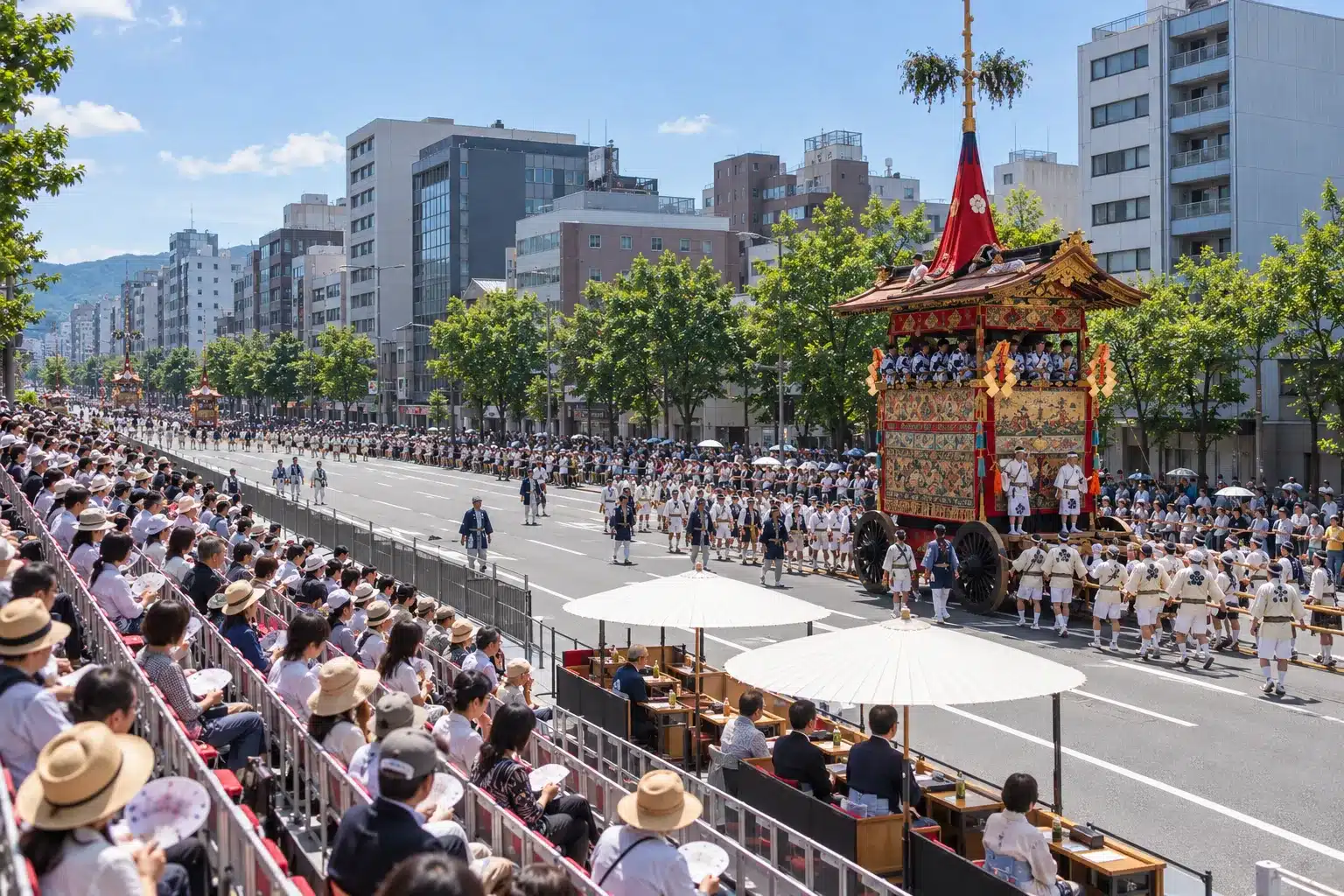
Where seats are sold, the spread can be wide. The Kyoto City Tourism Association sold paid viewing seats for the 2026 Gion Matsuri processions from 10:00 JST on 1 June 2026, online through Ticket Pia and at convenience stores. Its prices include tax:
| Seat type | Procession | Price | At ECB rates, 20 Oct 2026 |
|---|---|---|---|
| General, second row onward | 17 and 24 July | ¥6,000 | €33.83 · ₹3,602 |
| General, front row | 17 and 24 July | ¥8,000 | €45.11 · ₹4,802 |
| Special learning seat, second row onward (live commentary) | 24 July | ¥12,500 | €70.49 · ₹7,504 |
| Special learning seat, front row (live commentary) | 24 July | ¥14,500 | €81.76 · ₹8,704 |
| Premium seat, front row | 17 July | ¥125,000 | €704.86 · ₹75,039 |
| Premium seat, second row onward | 17 July | ¥155,000 | €874.03 · ₹93,048 |
Source: Kyoto City Tourism Association, page updated 1 June 2026, read on 22 October 2026. The euro and rupee columns are DionFest calculations.
The association adds that other processing fees may apply, that the procession goes ahead rain or shine, and that there are no refunds except if the procession is cancelled. Issuance and delivery fees are not refundable. Part of the proceeds supports the festival. Treat a seat as non-refundable money. These are 2026 prices. Use them to see how wide the range can be and what the rules look like, not as 2027 prices. For budget cultural tourism, note the gap: the cheapest seat here costs about 4% of the dearest.
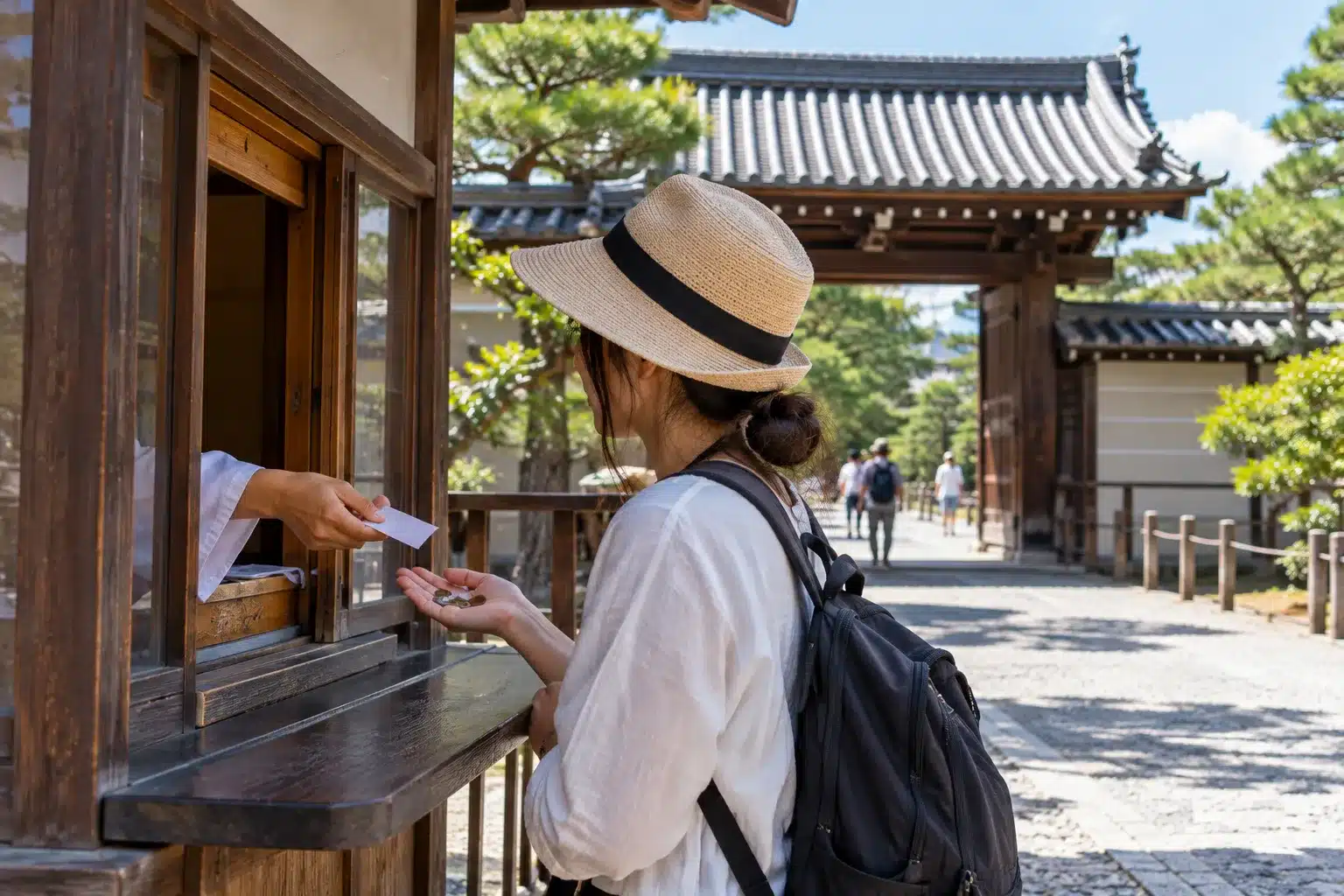
Entry fees. Kyoto’s official currency and tax page recommends changing money in advance because many purchases and temple admission fees can only be paid in cash. Give cash its own line in the worksheet. DionFest cultural festival packing list covers small-note cash for remote fairs.
Food, SIM cards and local experiences
Food. Price one typical day from real menus. Pick two or three places, use each venue’s own page, note the date, and average the main-meal prices. Multiply by the days on which meals are not included in your stay. Treat festival stall food as a separate, small line. Do not copy a daily food range from another site unless it names its source and date.
SIM or eSIM. This is a fixed cost, not a daily one. Before you buy, check that your phone is unlocked and supports eSIM if you want one, that the validity matches your trip, how much data the plan includes and whether the seller needs your passport. Take the price from the seller’s own page on the day you buy, and compare it with your home operator’s roaming pass.
Local experiences. Workshops, guided walks and performances should be priced from the organiser. Ask who receives the money. DionFest’s homestay guide explains how to avoid exploitative cultural experiences, starting with the question of who decided the experience would be shown to visitors.
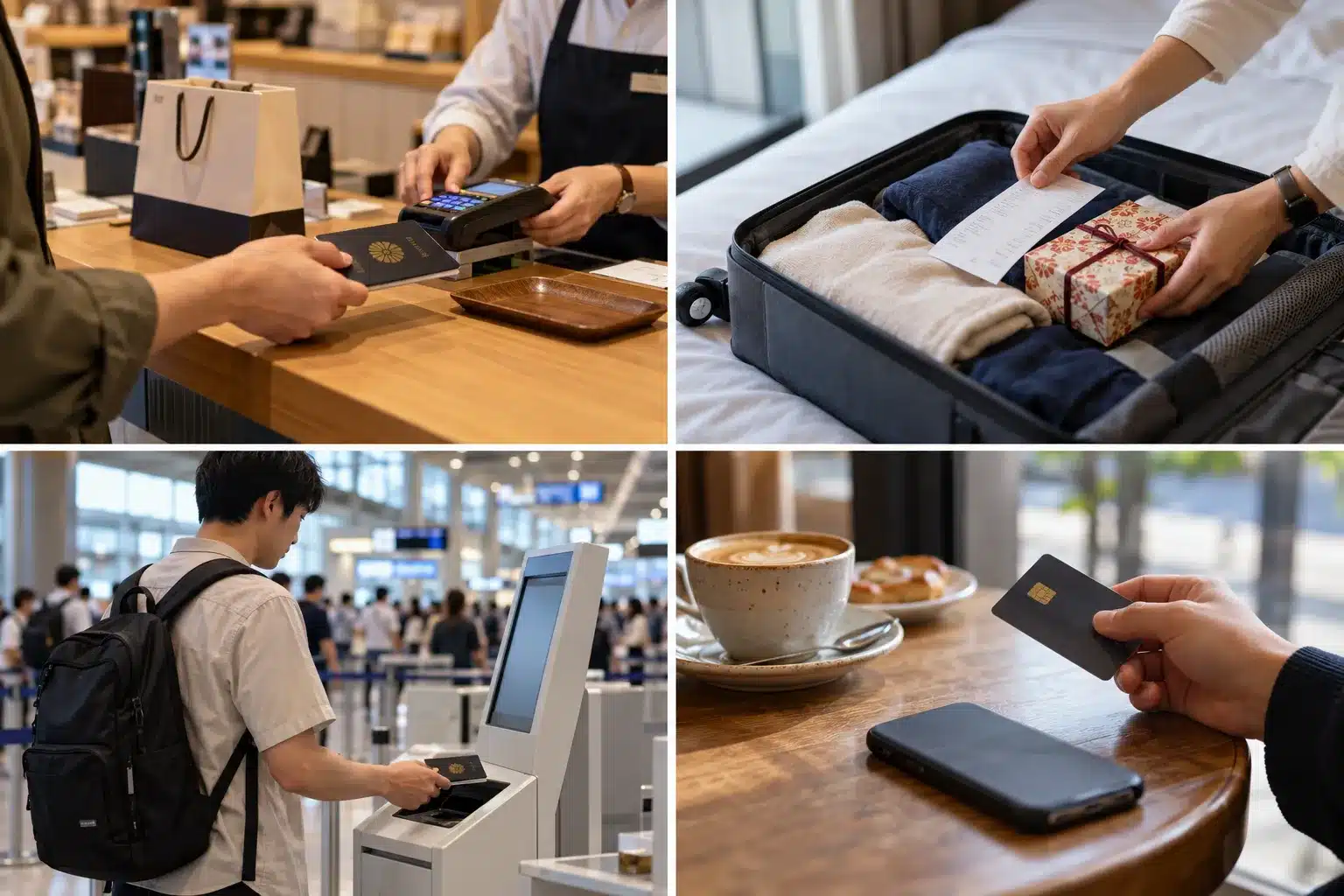
Crafts and souvenirs. In Japan the tax-free shopping rules change on 1 November 2026. The Japan National Tourism Organization says visitors will pay the 10% consumption tax at the time of purchase and receive a refund after completing the procedures before departure. The National Tax Agency says goods must be taken out of Japan within 90 days. A JAL travel guide says refunds are made by the shop or a refund service it contracts. So budget the tax as money you pay first and get back later, and ask the shop what it will pay out.
Emergency funds and unexpected costs
The buffer is your safety net. The Australian government’s Smartraveller site says travellers are responsible for their own finances overseas and that it cannot loan money except in exceptional circumstances. Other governments differ, so check your own government’s consular guidance.
What the buffer needs to cover:
- Non-refundable payments. A Gion seat is lost if you cannot attend. Fares and rooms may carry the same terms.
- A date that moves. Lunar and announced dates can shift, which can mean rebooking.
- Insurance gaps. Check your insurer’s conditions against your government’s travel advice before you pay. The UK’s FCDO advice for India, for example, says travel insurance could be invalidated if you travel against its advice.
- Exchange-rate moves. The yen example above shows a 4.7% swing in under two months in euro terms.
- A lost or blocked card. Carry two ways to pay and keep them in different places.
How big should the buffer be? No source gives a universal percentage. The worksheets below use 15% as an example input, and that figure is not a rule. One way to size your own: list each non-refundable payment and each cost you cannot predict, then hold enough to cover the largest one.
Sample 3-day and 7-day budget worksheets
How to use them: copy the lines, replace each example input with a real price from a named source, and write the source and date in the last column. Convert any foreign-currency price at one rate and note that rate and its date at the top. Nights = days − 1. The sheets are for one traveller. For a group, multiply per-person lines (flight, visa, insurance, SIM, tickets, lodging tax, food) by the number of travellers, and divide a shared room’s rate between the guests.
All inputs below are examples. They are invented, in “units” of your home currency, to show how the arithmetic works. They are not prices for any destination, and they were set on 22 October 2026.
Worksheet A: 3 days (2 nights)
| Line | Formula | Example input | Example total | Your source and date | Actual spent |
|---|---|---|---|---|---|
| Return flight | 1 × fare | 600 | 600 | ||
| Travel insurance | 1 × policy | 30 | 30 | ||
| SIM or eSIM | 1 × plan | 15 | 15 | ||
| Visa or entry fee | 1 × fee (0 if none) | 0 | 0 | ||
| Lodging | nights × rate | 2 × 70 | 140 | ||
| Local lodging tax or fees | nights × rate | 2 × 3 | 6 | ||
| Local transport | days × daily cost | 3 × 20 | 60 | ||
| Food | days × daily cost | 3 × 30 | 90 | ||
| Festival seat or ticket | number × price | 1 × 40 | 40 | ||
| Attraction entries | number × price | 2 × 10 | 20 | ||
| Paid local experience | number × price | 1 × 25 | 25 | ||
| Crafts and souvenirs, with tax | planned amount | 20 | 20 | ||
| Subtotal | 1,046 | ||||
| Buffer | subtotal × 0.15 | 156.90 | |||
| Total | 1,202.90 | ||||
| Cost per day | total ÷ days | 401.00 |
Worksheet B: 7 days (6 nights)
| Line | Formula | Example input | Example total | Your source and date | Actual spent |
|---|---|---|---|---|---|
| Return flight | 1 × fare | 600 | 600 | ||
| Travel insurance | 1 × policy | 60 | 60 | ||
| SIM or eSIM | 1 × plan | 20 | 20 | ||
| Visa or entry fee | 1 × fee (0 if none) | 0 | 0 | ||
| Lodging | nights × rate | 6 × 70 | 420 | ||
| Local lodging tax or fees | nights × rate | 6 × 3 | 18 | ||
| Local transport | days × daily cost | 7 × 20 | 140 | ||
| Food | days × daily cost | 7 × 30 | 210 | ||
| Festival seat or ticket | number × price | 1 × 40 | 40 | ||
| Attraction entries | number × price | 5 × 10 | 50 | ||
| Paid local experience | number × price | 2 × 25 | 50 | ||
| Crafts and souvenirs, with tax | planned amount | 50 | 50 | ||
| Subtotal | 1,658 | ||||
| Buffer | subtotal × 0.15 | 248.70 | |||
| Total | 1,906.70 | ||||
| Cost per day | total ÷ days | 272.39 |
Two lines are missing on purpose. Card and cash-withdrawal fees equal your bank’s published fee times the amount you pay by card or ATM, so add your own. Currency conversion happens last: once real prices are in, convert each foreign line at the rate of the day you pay. If you chose the ¥8,000 general front-row seat, for example, you would enter ¥8,000 and its value on that day (€45.11 or ₹4,802 on 20 October 2026).
One pattern the examples show: fixed costs (flight, insurance, SIM) are 62% of the 3-day subtotal and 41% of the 7-day subtotal, so the cost per day falls from 401 to about 272. That is a DionFest calculation on invented inputs. The pattern holds when a trip has large fixed costs. The amounts do not carry over to any real trip.
What was checked, and when
| Figure | Source | Checked on |
|---|---|---|
| Gion Matsuri 2026 seat prices and rules | Kyoto City Tourism Association | 22 Oct 2026 (page updated 1 Jun 2026) |
| Kyoto accommodation tax bands; cash-only temple fees | Kyoto City Tourism Association | 22 Oct 2026 |
| Subway and bus passes, fares vary | Kyoto City Tourism Association | 22 Oct 2026 |
| Japan tax-free shopping change, 1 Nov 2026 | Japan National Tourism Organization; National Tax Agency | 22 Oct 2026 |
| Yen and rupee reference rates | European Central Bank | 1 Sep and 20 Oct 2026, read 22 Oct 2026 |
| Paying in home currency | CEPS | 22 Oct 2026 |
| Responsibility for money overseas | Smartraveller (Australia) | 22 Oct 2026 |
Before you pay
- Every price in your sheet has a named source and a date beside it.
- Every conversion shows the rate and its date, and you will refresh it on the day you pay.
- You have marked which payments are non-refundable and sized the buffer to cover the largest.
- You know how much cash you need for entry fees, and where you will get it.
- You have checked your bank’s foreign-card fees and will choose the local currency at the terminal.

Abhay Ramola researches world festivals across primary sources, local accounts, and on-ground reporting. He founded Dionfest to cover what gets missed when festivals become tourism content the history, the ritual, and the people behind it.