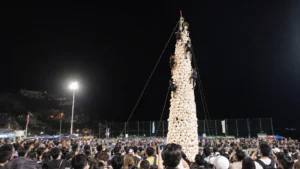
Responsible Cultural Tourism: How to Choose Homestays and Support Local Communities
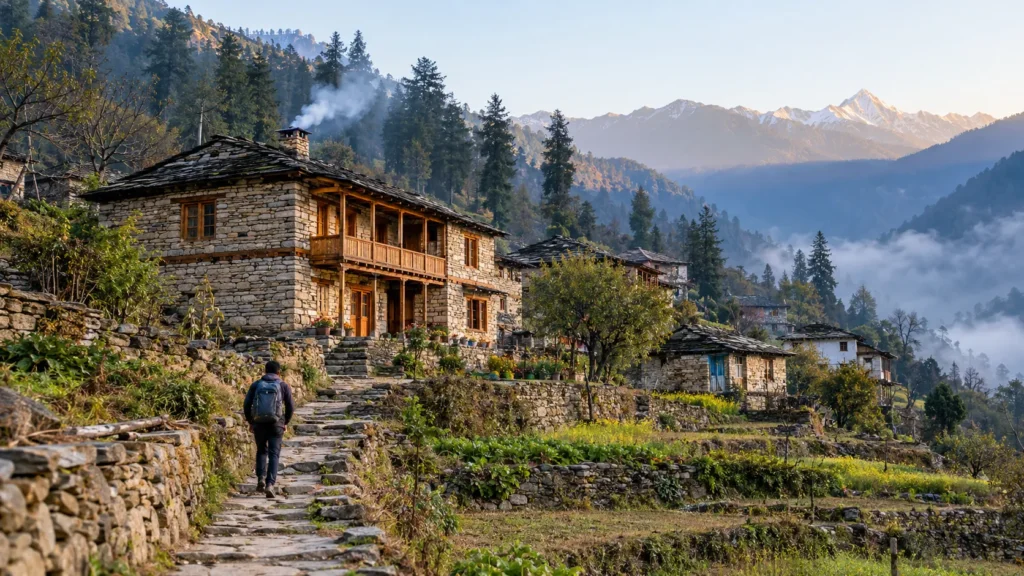
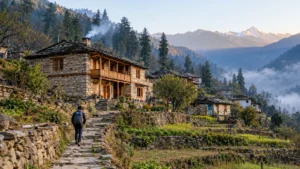
On a booking page, “homestay” and “bed and breakfast” can look interchangeable. In India’s rules they are not. A homestay is a house where the owner’s family lives and lets out a few rooms. A bed and breakfast can be run for the owner by an agent. Uttarakhand’s revised rules, reported in May 2026, keep the two as separate categories.
So the label alone does not tell you who hosts you, who cooks your dinner or who keeps the money. This guide shows how to check, what to ask before you pay, and how to behave once you arrive. India is the worked example because its registration rules are public and were revised this year. Rules differ by country, so look up the tourism body for your destination.
Short answer: a responsible homestay is one where you know who owns and runs it, the registration checks out, and the money and the decisions stay with the people who live there. The sections below show how to check each part.
What responsible cultural tourism means
The Cape Town Declaration of 2002, a founding text of the field, describes responsible tourism as tourism that makes places better to live in and better to visit. Among its listed traits, it brings greater economic benefit to local people, involves them in decisions that affect their lives, and gives visitors more meaningful contact with them (Responsible Tourism Partnership).
For a homestay trip, that turns into three checks. Does the money reach local people? Do they make the decisions? Is the contact respectful on both sides? You will also see the same idea called ethical tourism or sustainable cultural tourism. This guide uses the Declaration’s term and applies it to homestays.
It also uses “community-based tourism” for set-ups where a village group, not a single outside operator, runs the offer and shares the income. Uttarakhand’s new unit model, covered below, is one example.
How to identify locally owned homestays
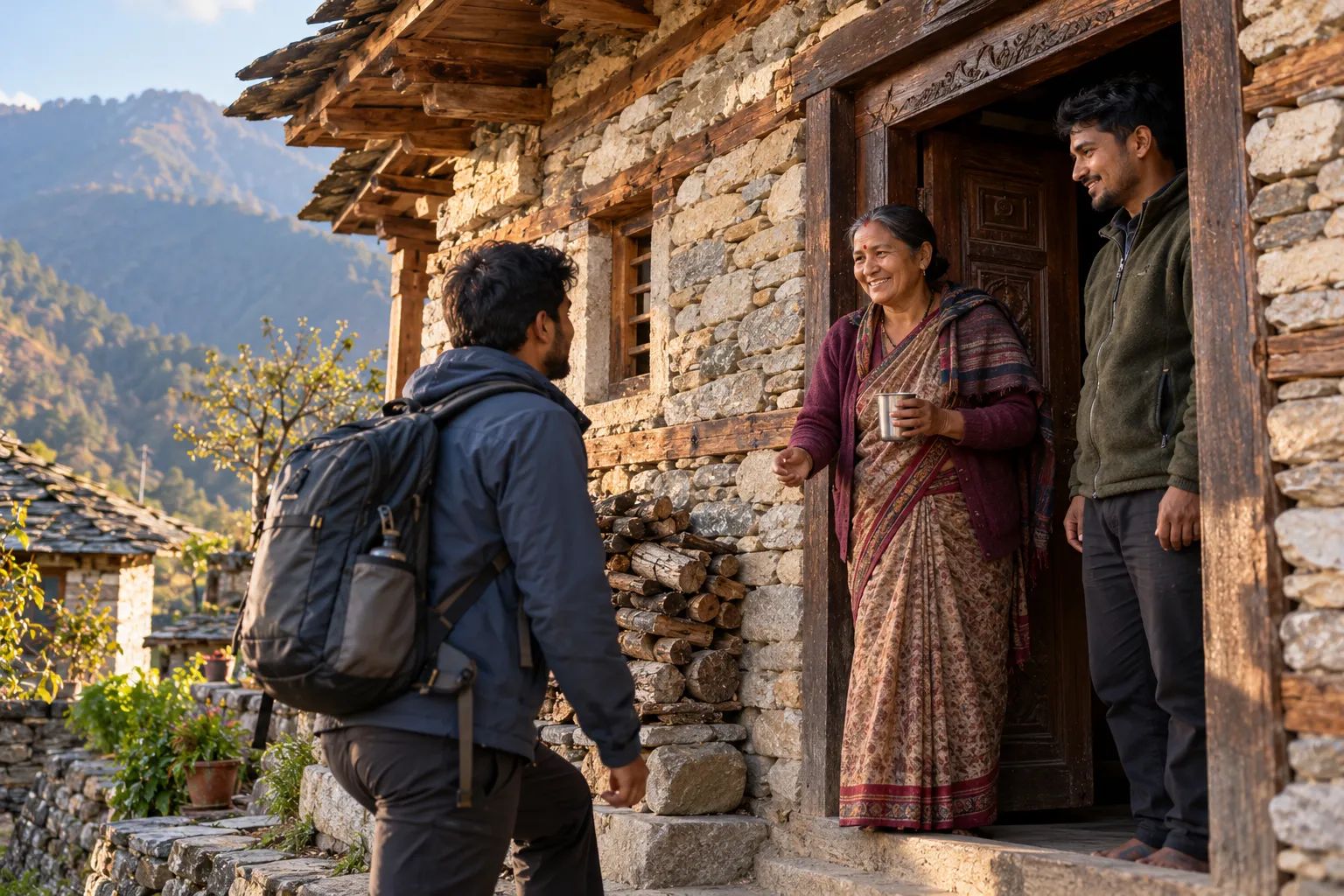 Start with what each label means in the rulebook.
The Ministry of Tourism runs a voluntary scheme called Incredible India Homestay Establishments, graded Gold or Silver, according to a 2025 Rajya Sabha reply. It applies only where the owner and family physically live in the building and let out one to six rooms (12 beds), as the Ministry told Parliament in 2012. A published summary of the scheme adds that a classification lasts two years.
| Label | What the rules say | What it cannot tell you |
|---|---|---|
| Incredible India Homestay (Ministry, voluntary) | Owner and family live on site. One to six rooms. | Whether the family belongs to the village, or whether the classification is still valid |
| Incredible India Bed & Breakfast (Ministry, voluntary) | One to six lettable rooms. A Central Bank of India loan page describes it as a category where the owner does not live on site and an agent may run it | Who actually hosts you |
| State-registered homestay, Uttarakhand | Registration is mandatory under the state’s 2015 rules. Revised rules reported in May 2026 allow up to eight rooms and 24 beds, for permanent residents of the state who own the building | Whether the family lives on site under the revised rules, or who runs it day to day |
| State-registered bed and breakfast, Uttarakhand | A separate category. Up to eight rooms and 24 beds. The unit may be run by the owner or by an authorised operator under a registered agreement | Who hosts you |
| Community-based tourism unit, Uttarakhand (new) | A group of 8 to 10 homestays in one destination or a cluster of three to six villages, run by a registered society, cooperative or community organisation | Whether one exists where you are going. Guidelines were still being drafted in May 2026 |
The Uttarakhand rows come from an ETV Bharat report of 20 May 2026 on rules the state cabinet had approved, and from Airbnb’s host guidance on the 2015 rules. Confirm the current text with the Tourism Department before you rely on a detail.
A registration number shows that a building is registered. It does not show that the family serving your dinner owns the house or belongs to the village. The state’s tourism secretary told ETV Bharat that more than 5,000 homestays are registered in Uttarakhand, so the label covers many kinds of set-up.
Three signals help, though none is proof:
- The host replies as the owner and can say which village the family is from.
- The room count fits the limit. More than six rooms under the Ministry scheme, or more than eight under Uttarakhand’s revised rules, suggests a guest house or hotel under another category.
- Meals come from the family kitchen, not an outside caterer.
Questions to ask before booking
Send these before you pay. They take a few minutes to ask and answer.
- Is this registered as a homestay or a bed and breakfast, and who runs it day to day? The two categories differ on whether the owner lives there.
- What is your registration number? Uttarakhand’s Tourism Department handles homestay registration, so it is the place to check a number.
- How many rooms and guests do you take at one time? Compare the answer with the room limits above.
- Who cooks, and where do the ingredients come from? Meals cooked by the family from local produce keep more of the bill in the village.
- How do I pay, and what happens if the festival date changes? See the note on dates below.
- Is there a village system for guides, rates or rotating guests? Some villages organise this together. Uttarakhand’s new community-based unit is built on the same idea.
- What are the rules for visitors? Ask about dress, photography, closed ceremonies and whether outsiders may attend the festival at all.
- What can the household supply? Water, hot water and power backup differ from village to village. Ask, so your stay does not strain the family. Ask how waste is handled too, and carry your plastic out if there is no collection.
A note on festival dates. Many cultural festivals do not sit on a fixed day. DionFest’s guide to the Danda Devrana Mela says the fair follows the Hindu month of Ashadh and that the exact date should be checked with the Naugaon Block office. The Kandali Festival has no fixed date at all. It follows a plant that flowers about every 12 years. As of October 2026, DionFest’s guide records no announced date, and around 2035 is a projection, not an announcement. Book a stay “for the festival” only after the organisers or the local administration confirm the date, and get the refund terms in writing.
Supporting local guides, artisans and food businesses
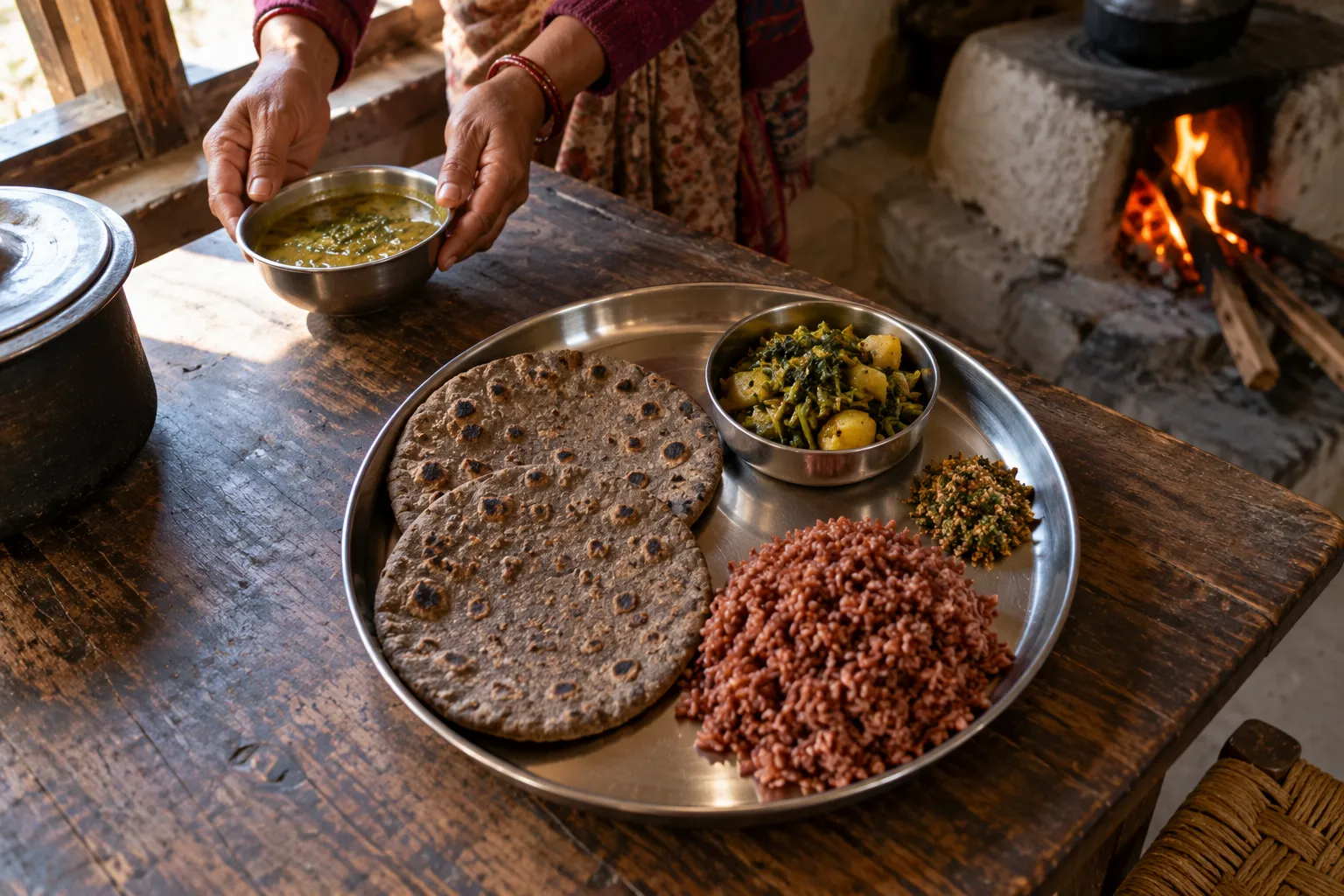 UN Tourism’s Global Code of Ethics for Tourism says local people should take part in tourism and share its benefits fairly. It also says accommodation should fit, as far as possible, into the local economic and social life. The Code is voluntary, but it gives a simple test for each rupee you spend: who receives it?
Studies of tourism “leakage”, meaning spending that leaves the destination, give wide ranges. A speaker at an African tourism forum cited 10 to 20 percent for diversified economies and 40 to 50 percent for small ones. A summary of a Travel Foundation report puts it at 50 to 80 percent in some least developed countries. These are whole-economy estimates. They cannot say what happens to one booking, which is why the questions above matter.
Three practical steps:
- Guides. Ask the host to arrange a guide from the village, and agree the fee beforehand.
- Artisans. Buy from the maker where you can. Ask what the item is made from and how long it took. DionFest guide to how festivals preserve culture explains why: craft income is one way a festival keeps skills alive.
- Food. Eat at the family table and in village eateries.
Kerala shows what an organised version looks like. Kerala Tourism says women’s self-help groups under the Kudumbashree mission grow vegetables for hotels in Kumarakom, and the Grama Panchayat set up a price-fixing committee and a quality committee for the supply. Few villages have anything this formal. Ask your host whether a guides’ association, women’s group or cooperative exists, and use it when it does.
Respecting community privacy and traditions
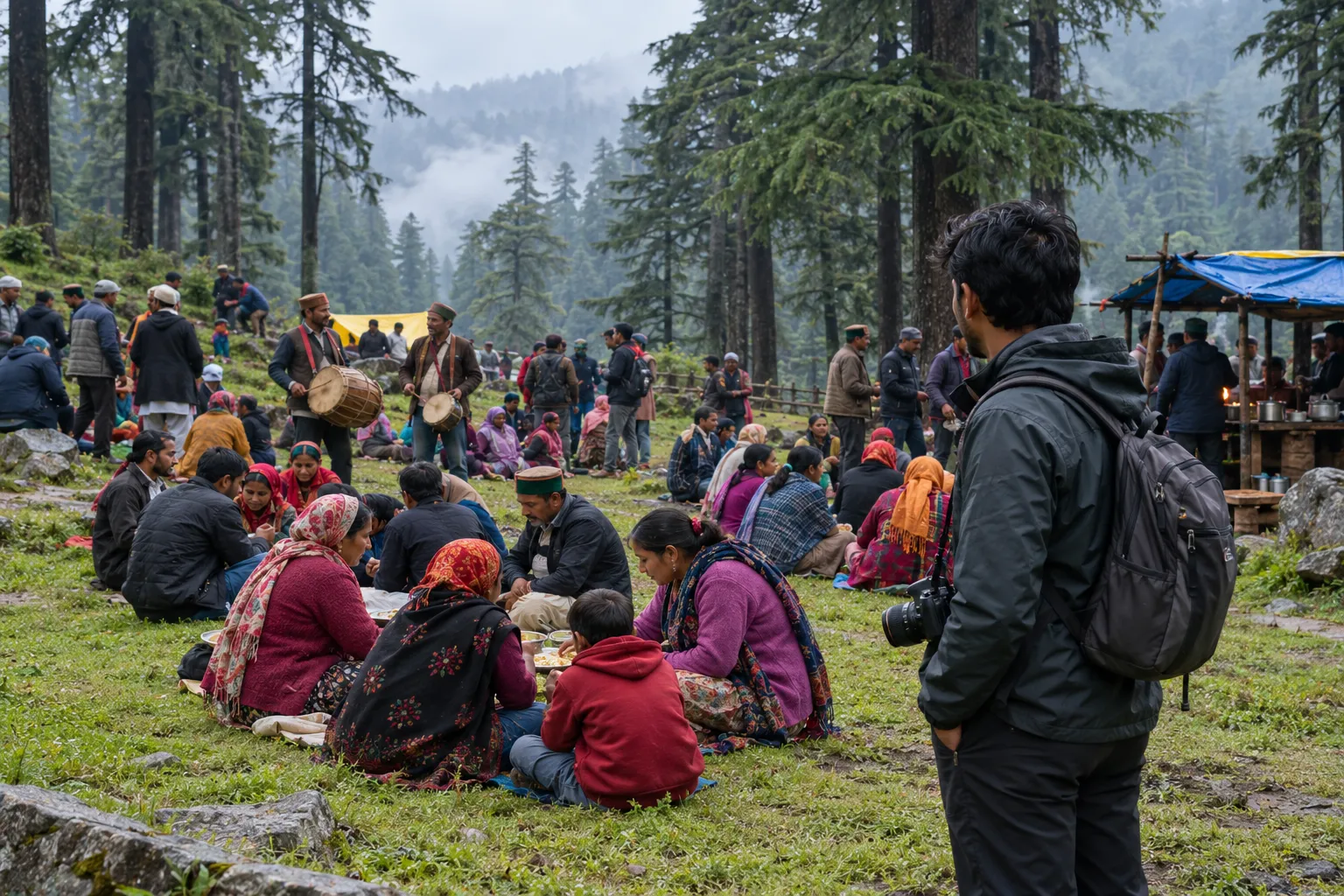 A homestay is a family’s home. Ask before you enter the kitchen, a prayer corner or a family room, and follow the host’s lead on shoes, meals and visiting hours.
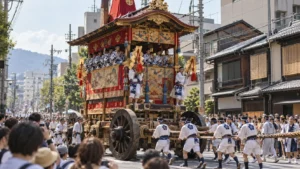
Treat a festival as a community event, not a tourist product. DionFest’s Danda Devrana Mela guide describes a religious gathering with no tourist infrastructure at Devrana, and advises staying in Naugaon. The Kandali guide notes that tourism listings present the festival as an event, but village committees organise it and nothing is scheduled before the next bloom. Taken together, these suggest that a local contact or an invitation matters more than a booking.
On the day, ask before photographing people, rituals or the family’s home. DionFest’s ethical festival photography guide covers permission, sacred sites, children and posting online. The cultural festival packing list covers dress customs and small-note cash for remote fairs. The Global Code also asks visitors to observe the traditions of host communities and to avoid conduct that local people find offensive.
Visitors cause the same problems elsewhere. In Shirakawa-go, a Japanese World Heritage village where people still live in the old farmhouses, the village government lists smoking in the street, littering, trespassing on private property and unauthorised parking among them (Shirakawa Village presentation, 2024). It now runs a responsible-tourism website with five etiquette rules for visitors.
Avoiding exploitative cultural experiences
UNESCO’s ethical principles for safeguarding living heritage say communities should have the main role in safeguarding their heritage and should benefit from its use and promotion. They should also help decide what counts as a threat, including taking a practice out of context, turning it into a product or misrepresenting it.
Turn that into three questions before you pay for any “cultural experience”:
- Did the community choose to show this, and on its own terms?
- Do the people who perform or teach it get paid directly?
- Is it a real practice at its real time, or a ritual staged on request?
Signs to question, though not proof of harm: a show that exists only for visitors with no local organisation behind it; sacred rites offered on demand or with a price list; a fee that goes to an outside operator while the performers receive little.
The clearest documented case in India is the “human safari” in the Andaman Islands. Survival International reported that tourists were promised the chance to spot the Jarawa from the road, and that biscuits and sweets were thrown from vehicles to draw them closer. In 2012 India’s Union Cabinet approved an amendment that sets prison terms of three to seven years for offences in the buffer zone around the Jarawa reserve, including unauthorised entry and photography, according to a DNA report. Most homestay settings are nowhere near this, but the test is the same: who decided that this would be shown to visitors, and who benefits?
How tourism income can support heritage preservation
The evidence is mixed, and most of it here comes from Uttarakhand.
- Officials say the state’s homestay scheme was meant to keep people from migrating to cities. The tourism secretary told ETV Bharat that subsidies have gone to about 1,500 people since the scheme began, and a homestay operator in the Lansdowne area said it has encouraged young people to return to their villages. These are an official figure and one operator’s view, not an independent measure.
- A 2023 study interviewed 22 homestay operators in Ranikhet, in Almora district. All reported better finances and living standards. The sample is small and the answers are self-reported.
- A 2025 open-access paper by Uttarakhand college faculty finds homestays can support cultural continuity. It also warns about commercialisation, weak regulation and the commodification of cultural experiences.
- UNESCO’s 2023 guidance note says communities may want to earn from their heritage and should share fairly in the benefit. It also says economic activity can damage the practices and meanings involved.
- The Global Code says some income from visits to cultural sites should go to their upkeep, and that tourism should let crafts and folklore survive rather than become standardised.
Taken together, these sources suggest homestay income does one thing well: it gives families a reason to stay in, or return to, the villages where living traditions are practised. Whether it also supports a festival, a craft or a language depends on what the host family and the village do with it, and on whether visitors change the tradition to suit themselves.
Shirakawa-go, the Japanese heritage village mentioned earlier, shows what it looks like when visitor money is pointed at heritage on purpose, and where that falls short. About 500 people live in the heritage village of Ogimachi. In 1971 the residents formed a preservation society and agreed not to sell, rent out or demolish the traditional thatched houses. Many of the farmhouses take overnight guests as minshuku, a Japanese kind of homestay (Japan National Tourism Organization).
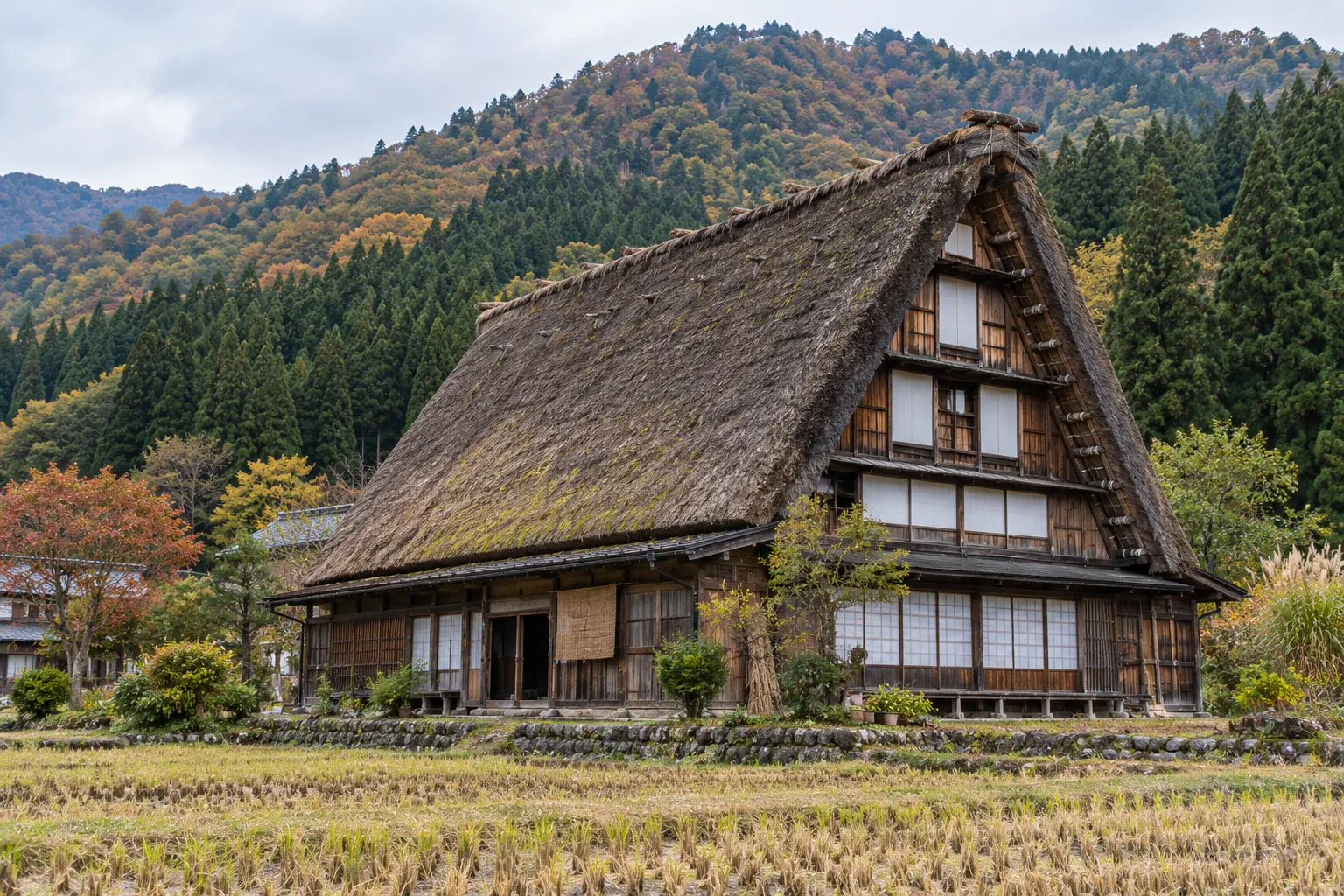 The village’s vice mayor set out the limits in a 2024 presentation (Shirakawa Village). Keeping the roofs up costs about US$356,000 a year, and each roof is replaced roughly every 30 years. Owners get a 90 percent subsidy, which includes national and prefectural money. The village sets aside 30 percent of its tourist parking income as a conservation fund. So visitor money pays for part of the upkeep, not all of it. The same presentation lists overtourism as a problem: in 2023 a village of 1,483 people recorded about 1.7 million visitors. The lesson matches Uttarakhand. Ask where the money goes, and expect the answer to be partial.
DionFest’s guide to how festivals preserve culture describes the pattern from the festival side. Practices last when people keep doing them and when a craft can earn a living. They weaken when rituals are simplified for tourists. The Kandali Festival shows the other half. DionFest’s guide describes a festival that village committees organise about every 12 years, and that works partly as a homecoming for a scattered community. A visitor’s room fee can help a family stay in a valley. It does not replace the community’s part in the festival.
Before you send the deposit
- You know whether the place is a homestay or a bed and breakfast, and who runs it.
- The registration number has been checked with the tourism department.
- The organisers or local administration have confirmed the festival date, and you have the refund terms in writing.
- You have asked about dress, photography and which ceremonies are closed to visitors.
- Your guide, food and craft spending goes to local providers, and no “cultural experience” fails the three questions above.

Abhay Ramola researches world festivals across primary sources, local accounts, and on-ground reporting. He founded Dionfest to cover what gets missed when festivals become tourism content the history, the ritual, and the people behind it.