
Ethical Festival Photography: Permissions, Privacy and Sacred Traditions
Three places, three different rules for the same phone camera.
On 1 September 2026, the Hindu Religious and Charitable Endowments (HR&CE) Department in Tamil Nadu began enforcing a ban on camera phones in 52 major temples it runs. Counters at the entrance hold visitors’ phones for a ₹5 token fee. In Kyoto’s Gion district, signs on private lanes warn of fines of up to ¥10,000, and the Japanese text says tourists may not take photos or enter. At Higashi Honganji, also in Kyoto, personal photos and social media posts are allowed on the grounds, but photography is not allowed during services.
None of these rules is about camera settings. They are about who is in the frame, what that person is doing, and who has the right to say yes. This guide to ethical festival photography shows how to read that situation, then covers permission, rituals, sacred spaces, children, drones and online sharing.
The short version
- Ask before photographing anyone who is the subject of your shot, not just part of the crowd.
- Treat active worship, purification and ceremonies as off-limits until a sign, a priest or an organiser says otherwise.
- Never photograph people who are bathing, changing, grieving or in distress.
- Ask a parent or guardian before photographing a child. Do not post identifiable photos of children you do not know.
- Do not fly a drone at a festival without permission and a check of local aviation rules.
- Caption photos with the festival, place and community. Delete a photo if the person in it asks.
Three levels: a quick way to read any situation
 Not every festival moment is the same. Good festival photography etiquette starts with one habit: sort each moment into a level before you lift the camera.
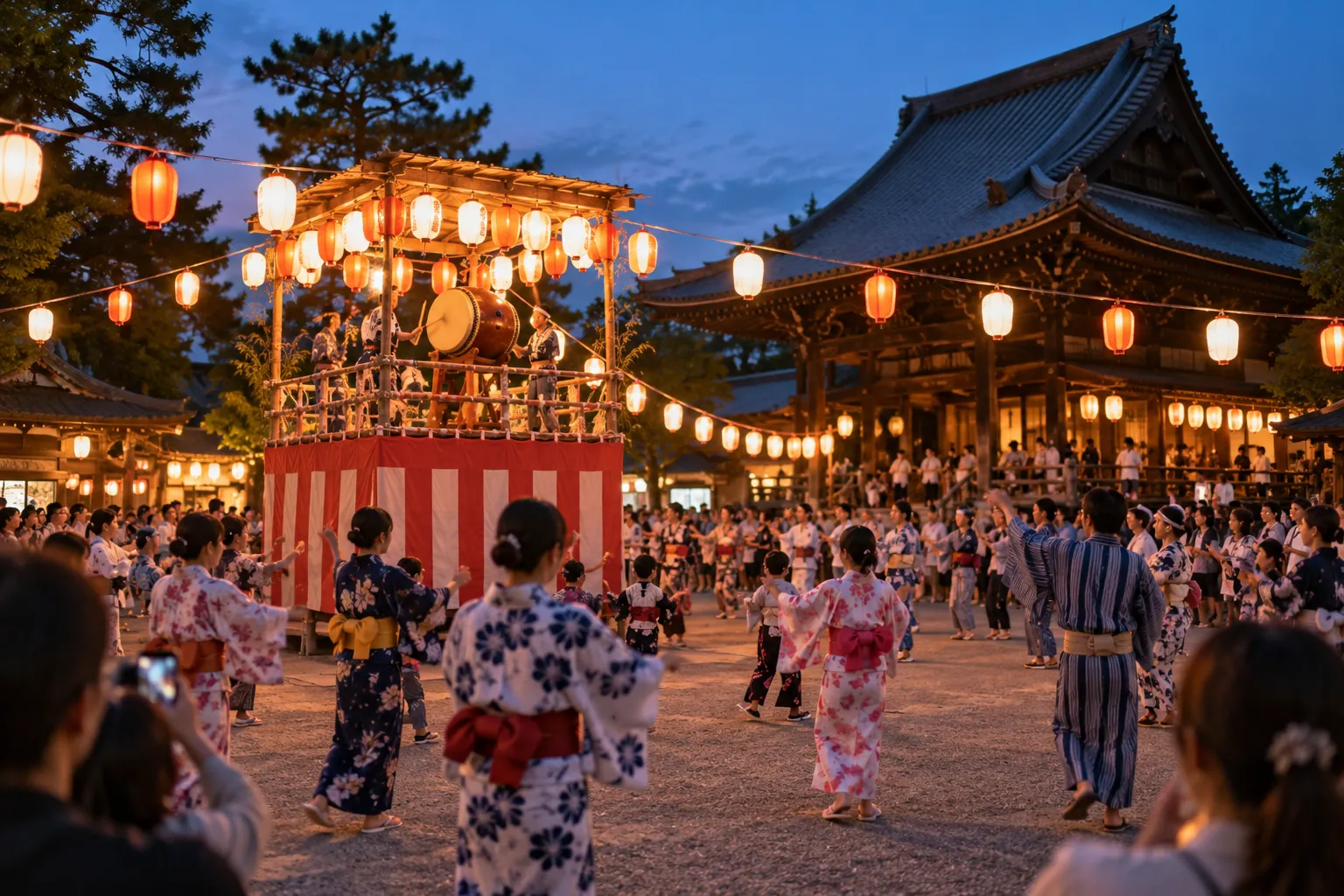
- Level 1: public spectacle. Parades, street dances, market stalls, decorations. Photography is usually fine. Keep your distance, do not block other people, and ask before close-ups of one person.
- Level 2: active ritual. Services, purification, offerings at an altar, priests at work. Rules are often strict and differ from site to site. Look for signs, ask staff, and put the camera away if you are unsure.
- Level 3: private moment. Bathing, changing clothes, grave visits, home altars, mourning, personal distress. These are personal or family acts. Do not photograph them.
One festival can pass through all three levels in a single day. DionFest Obon guide explains that Bon Odori dances at local temples and parks are open to visitors, while grave visits, home altars and family gatherings are family matters. Same festival, different level.
When to ask permission before taking portraits
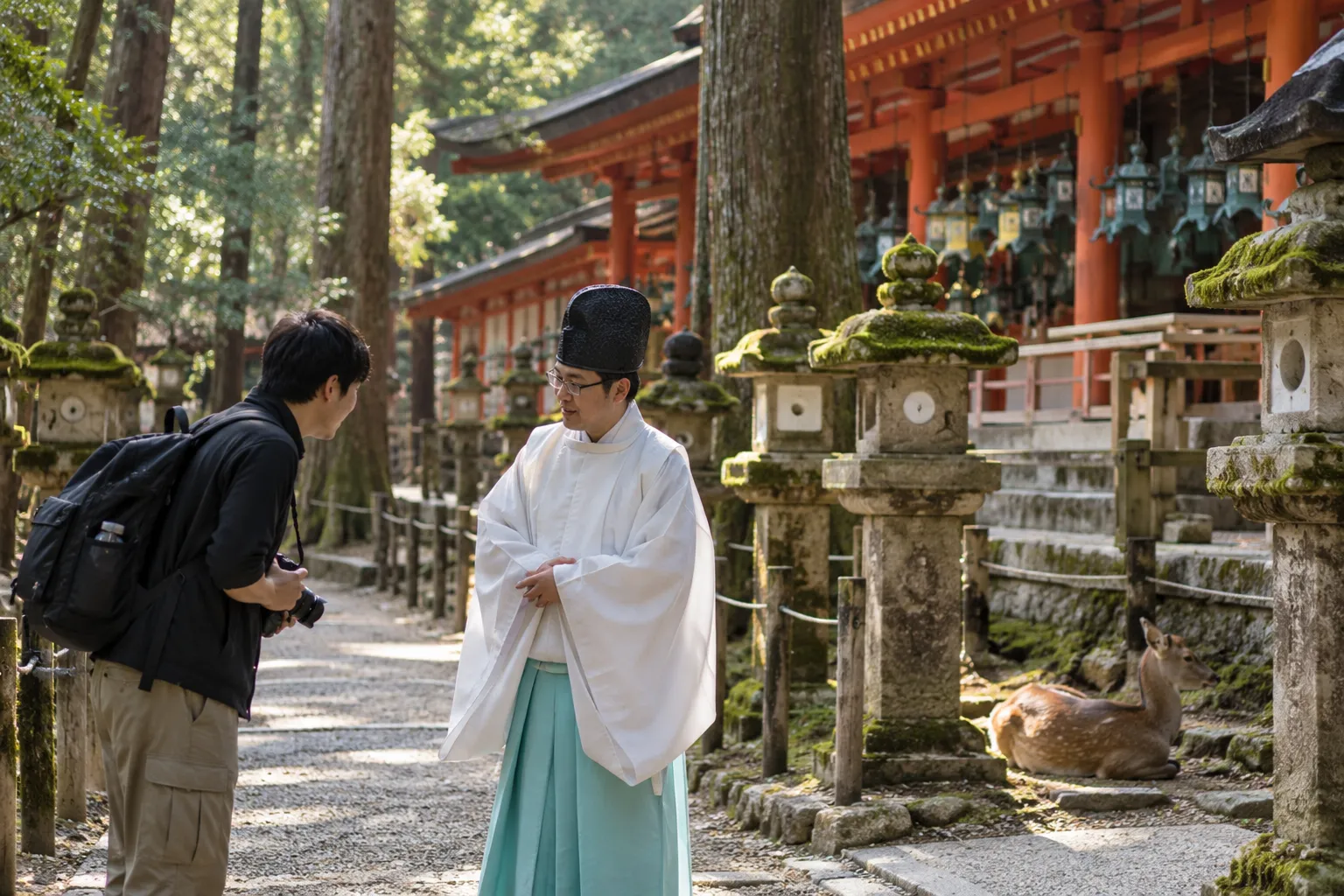 Photography permission at festivals starts with one test: is one person the subject of the photo? If so, ask. A wide shot of a parade with hundreds of faces is one thing. A close portrait of one dancer, one priest or one elderly worshipper is another. The Japan National Tourism Organization’s responsible photography guide says photographing people calls for careful manners and attention to signs that someone would rather not be photographed. Kanagawa Prefecture’s sightseeing manners page adds that visitors should take extra care with portraits, private homes and private property.
Japan has no single law that defines portrait rights. A Tokyo law firm explains that they come from court decisions, not from a statute. Even so, sacred sites take them seriously. Higashi Honganji lists photos that infringe other visitors’ portrait rights among the acts it restricts, and Kasuga Taisha in Nara asks visitors to respect the portrait rights of other worshippers and shrine staff.
Some people need a clear yes before you raise the camera:
- Priests, priestesses and shrine staff. Kasuga Taisha prohibits photos and video of its priests, priestesses and miko without the shrine’s prior permission.
- Performers and people in traditional dress. Wearing a costume in public is not an invitation to be chased. In Kyoto’s Gion district, residents began putting up no-photography signs on private lanes in 2019, with warnings of fines up to ¥10,000. In 2024 the district council went further and asked tourists to stay out of some private lanes altogether. A council member told AFP that tourist groups sometimes ‘act like paparazzi’ when geiko step out of narrow lanes. AFP also reported that a council member had told Japanese media of a maiko whose kimono was torn.
- Pilgrims at prayer. Someone who is praying is not performing for you. See the sections below on rituals and sacred spaces.
The Gion rules cover private lanes, not the public street. A council member said in 2019 that Hanamikoji Street is a city road, so photography there cannot be banned. Reports also differ on how the fine can be enforced: Hyperallergic reported in 2019 that the ban was not legally enforceable. Either way, the message from residents is clear.
How to ask
- Make eye contact, hold up your camera or phone, and wait for a nod.
- Use the local language. In Japanese: 写真を撮ってもいいですか? (Shashin o totte mo ii desu ka?), which means ‘May I take a photo?’ In Hindi: क्या मैं आपकी फोटो ले सकता हूँ? (Kya main aapki photo le sakta hoon?). A woman says ‘sakti’ instead of ‘sakta’.
- Accept a no. If the person turns away, covers their face or shakes their head, lower the camera. Do not take a quiet shot with a zoom lens.
- Delete on request. Higashi Honganji says it may ask visitors to stop recording and delete their data when photography disturbs worshippers or services.
A fast test: if you could not tell the person, to their face, what the photo is for, do not take it.
Photographing rituals, priests and local communities respectfully
 Photographing religious ceremonies starts with consent, and consent can come from one person or from a community. The festival-industry blog Ticket Fairy makes this point: permission can be given by an individual or by a community leader, and when in doubt you should ask or hold back. When you cannot tell who speaks for a ritual, ask the organiser, the temple office or a senior volunteer. If nobody can say yes, treat the answer as no.
Two Japanese sites show how specific written rules can be:
- Kasuga Taisha (Nara). The shrine prohibits anything that could interfere with rituals or disturb other visitors, and names tripods, monopods, selfie sticks, stepladders and lighting equipment. It also asks visitors to take care with the personal information written on ema, the wooden plaques where worshippers write wishes.
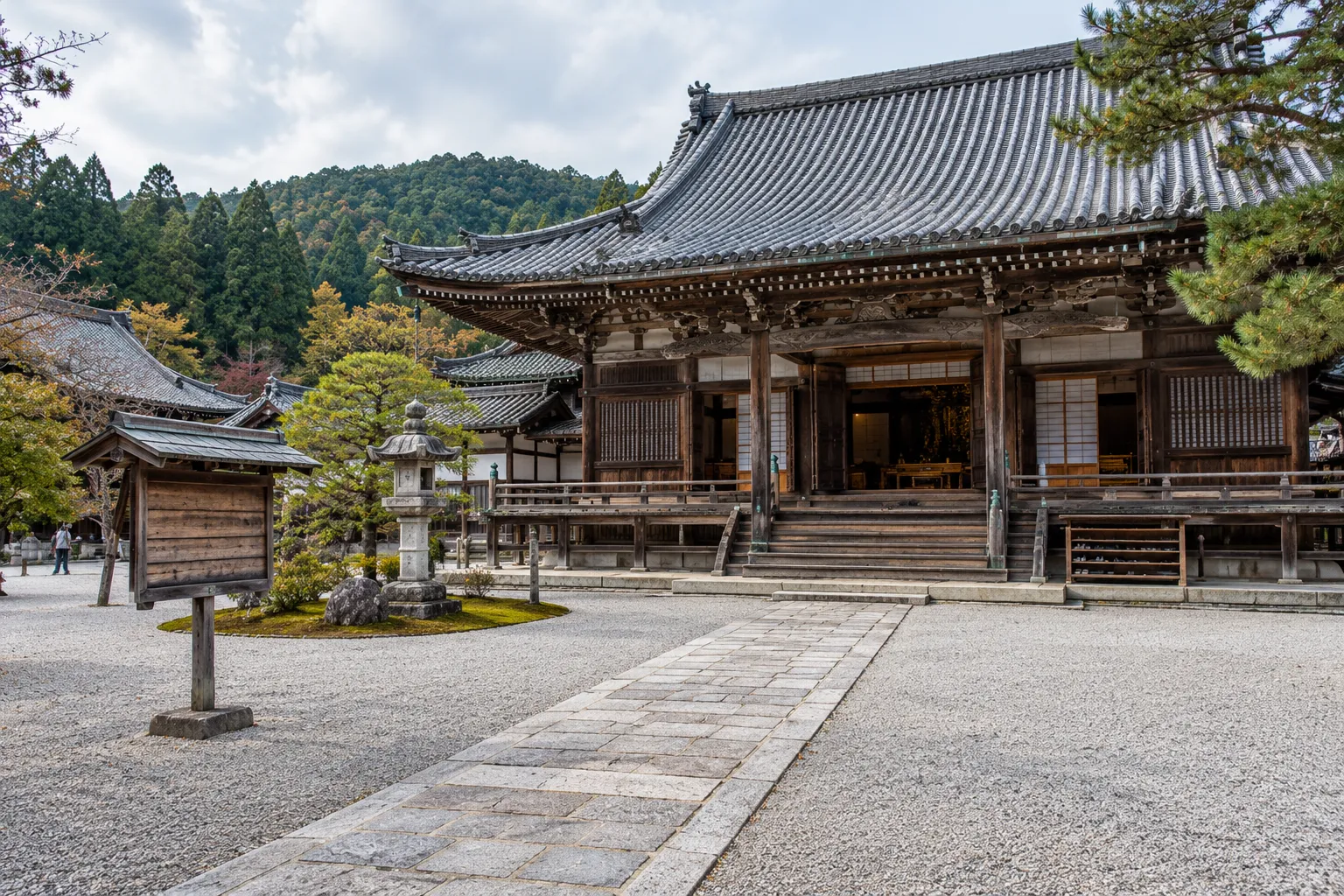
- Higashi Honganji (Kyoto). Photos and videos for personal use, including posting on social media, are allowed on the grounds. Photography is not allowed during services and rituals, and flash is not allowed at all.
The lesson is that one institution can allow photos of its buildings and ban photos of its ceremonies. Check which one you are standing in.
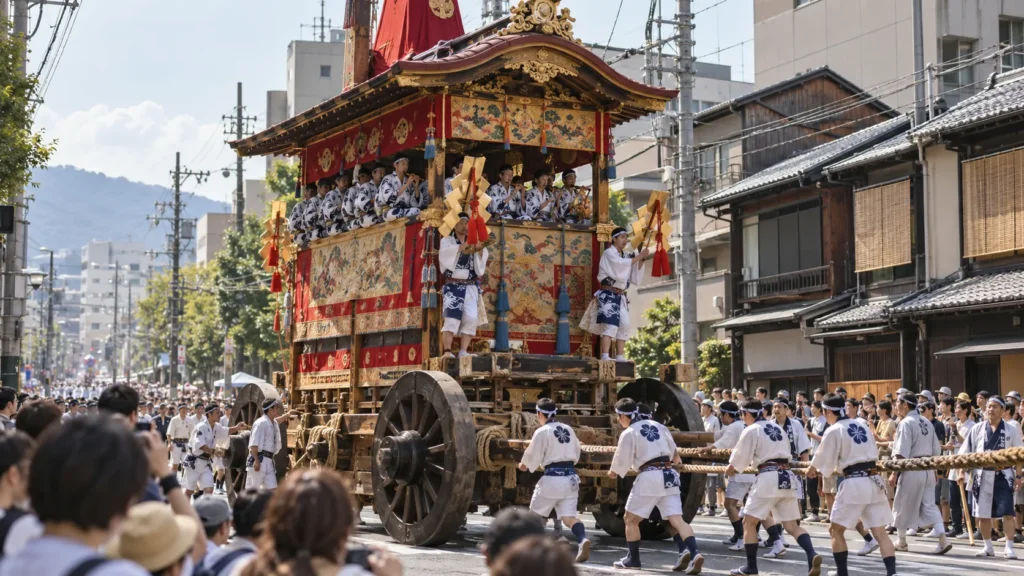
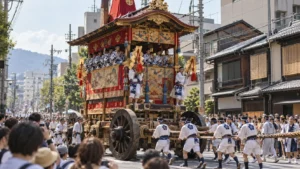
Processions need the same care. DionFest’s Gion Matsuri travel guide notes that visitors should not touch the floats, and lists crowding the handlers, who are concentrating on a delicate task, as a common mistake. Step back and photograph the whole float with the street around it.
The bottom rung
The worst harm happens at Level 3. During Maha Kumbh 2025 in Prayagraj, Uttar Pradesh Police registered cases against social media accounts accused of posting and selling videos of women bathing and changing clothes. Police described it as a violation of the women’s privacy and dignity. Storyboard18 reported 13 FIRs against 140 social media handles, and Siasat reported the arrest of a man police said had filmed women at the Sangam and uploaded the videos to a YouTube channel. A crowd is not consent. A pilgrim bathing in a river is doing something private in a public place.
Restricted photography in temples and sacred spaces
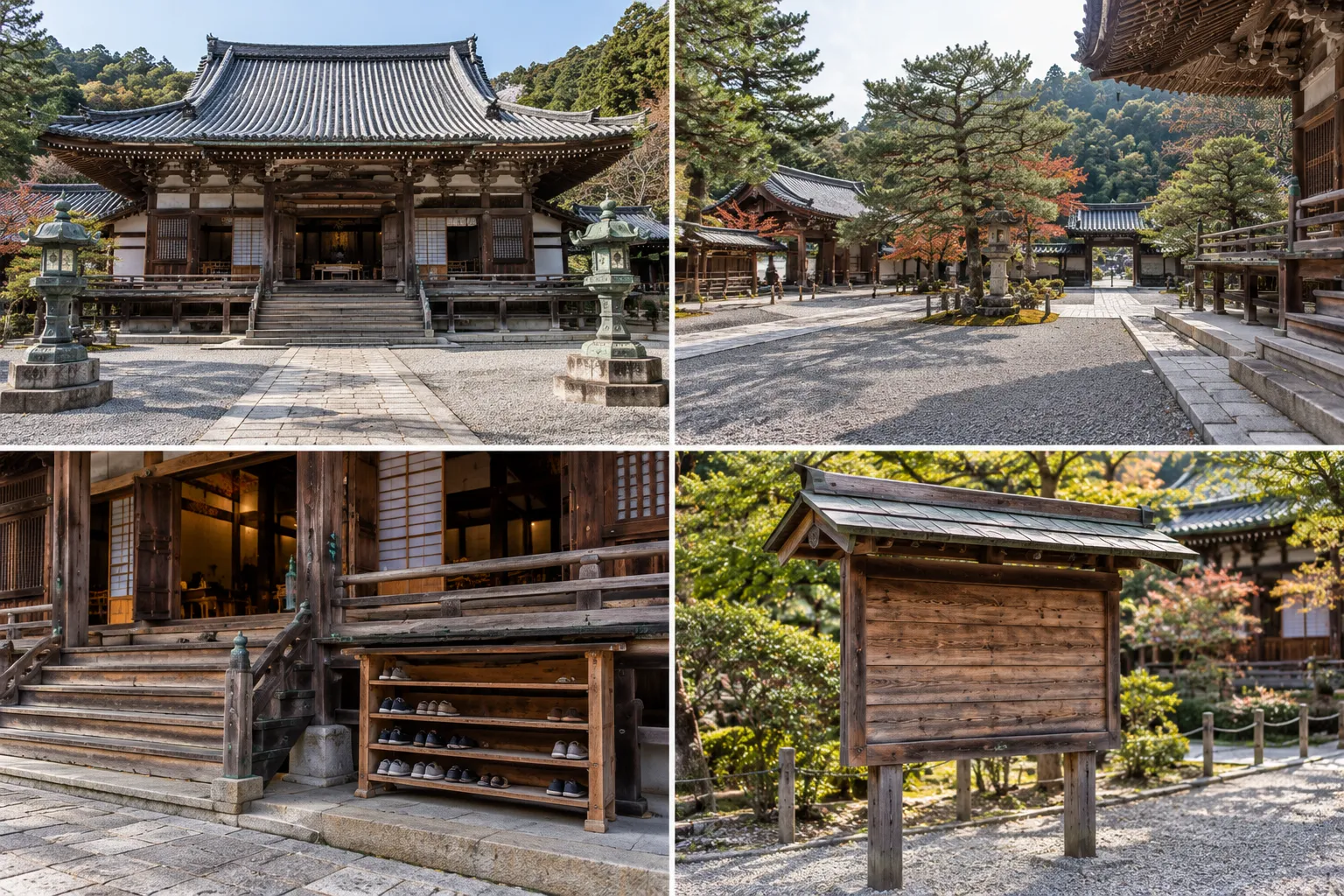 Start with the general pattern in Japan. According to Japan Guide, photography is usually allowed on temple grounds but often forbidden inside the buildings, and at shrines it is usually allowed except inside the buildings. Government sources say the same. Kizugawa City tells visitors that the main hall of most temples is closed to photography and that they should ask first. The Japan National Tourism Organization notes that some sites ban all photography, while others only ban flash or video. A sign reading 撮影禁止 (satsuei kinshi) means no photography. If you see no sign, ask a staff member. No sign does not mean yes.
In India, Tamil Nadu offers the clearest recent example.
- In December 2022 the Madurai Bench of the Madras High Court directed the state’s HR&CE Department to ban mobile phone use in the state’s temples, to protect their sanctity. The court noted that phone bans already existed at the Guruvayur, Madurai Meenakshi Amman and Tirupati Venkateswara temples, as reported by Verdictum and Outlook.
- On 1 September 2026, the department began enforcing a ban on camera phones in 52 major temples it administers. Basic phones without cameras are allowed. Counters at temple entrances hold the smartphones, and a flat ₹5 token fee is charged per phone, according to an ANI report. The department said its latest circular was prompted by visitors taking photos, selfies and reels inside temple premises.
- At the Devarajaswamy-Athi Varadar temple in Kanchipuram, the ANI report says staff record the visitor’s photo, phone model and number when a phone is handed in, and return it against an acknowledgement slip. Notice boards in several languages explain the rule.
The 2026 rule targets camera phones. The 2022 court order, as reported by Verdictum, referred to phones and cameras. Check a temple’s own rule on cameras before you go, and remember that temples outside the department’s list of 52 may set their own rules.
What to do at any sacred site:
- Check the temple’s or shrine’s own website and entrance notices. Both Higashi Honganji and Kasuga Taisha publish their photography rules online.
- Use the deposit counter if there is one. Do not hide a phone.
- Skip flash, tripods, selfie sticks and lights unless the site says they are fine. Japan’s tourism organisation notes that selfie sticks are banned in many temples and shrines, and the Archaeological Survey of India’s photography guidelines say tripods and lighting equipment need site permission at ASI-protected monuments.
- For professional, commercial or media work, ask first. Kasuga Taisha requires prior permission for commercial photography, asks media to consult the shrine before publishing, and says applications must be in Japanese. Higashi Honganji requires prior permission for professional shoots and for photography done for profit.
Photographing children and vulnerable individuals
Children take part in many festivals, from school dance groups to children chosen for ritual roles. They cannot give informed consent to being photographed and shared, so the adult responsible for them has to.
UNICEF’s ethical reporting guidelines are written for journalists, but they set a useful standard. They ask for permission from both the child and the guardian for interviews, videotaping and, where possible, documentary photographs. They put each child’s best interests above any other consideration, and say that a request for identity protection from a child or guardian must be respected in every case.
In practice:
- Ask the parent or guardian first. If you cannot find them, do not take the photo.
- A child in a ritual role is part of the ceremony. Ask the organiser, not the child.
- Keep identifying details out of the frame and the caption: school names, name tags, house numbers.
- Do not photograph a child who is crying, hurt, lost or frightened.
The same care applies to adults who cannot easily protect themselves. Mourners, people who are ill, elderly pilgrims who need help walking or bathing, and anyone in visible distress should be left alone. If someone needs help, help them. Do not photograph them.
Drone rules and photography restrictions
A drone makes every ethical problem bigger. It crosses fences, hovers over private rituals and puts a flying object over a crowd. Rules differ by country and by site.
Japan
- Japan’s transport ministry (MLIT) says drones must not be flown over event sites where many people gather, unless approved. Flights over densely inhabited districts also need approval. MLIT’s flight rules for unmanned aircraft add that local rules can ban flights around temples, shrines and parks. The Japan National Tourism Organization says individual shrines, temples and national parks may require advance permission or ban drones outright.
- Government guidance published in 2019 said violations can bring a fine of up to ¥500,000.
- Kasuga Taisha bans drones in its precincts, especially during rituals and its Kasuga Wakamiya On-matsuri, including the parade route. Higashi Honganji requires permission for any drone over its grounds.
India
- Under the Drone Rules, 2021, airspace is split into green, yellow and red zones on the Digital Sky platform. Permission is needed to fly in yellow and red zones.
- According to a legal explainer, state governments or law enforcement can declare a temporary red zone for up to 48 hours through the platform. That means a festival area can become restricted at short notice.
- A draft Civil Drone (Promotion and Regulation) Bill was released for comment in September 2025 to replace the 2021 Rules. A legal report from June 2026 still describes it as a draft, so check for a newer notice before flying.
If you cannot get written permission from the organiser or the site, and confirm the airspace rules, leave the drone at home. The ethical test is the same as for portraits: would the people below you agree to it?
Other restrictions often travel with drones: no flash during services, no tripods or lights in crowded ritual areas, and written permission for commercial shoots.
Sharing photographs online without misrepresenting a culture
 Cultural photography ethics does not end when you press the shutter. A good photo can still mislead if its caption is lazy.
Name what you shot. Generic captions such as ‘tribal dance’ or ‘traditional festival’ erase the people who keep the tradition alive. Ticket Fairy recommends naming the festival, the community and, with permission, the performers.
- Weak: ‘Traditional Japanese festival.’
- Better: ‘Yamaboko float procession during Gion Matsuri, Kyoto. The festival is organised by Yasaka Shrine.’
Do not strip a ritual of its meaning. Do not use a sacred moment as a backdrop for a joke, a meme or a reel with unrelated music. Ticket Fairy warns that sensational or humiliating images of ceremonies and grieving people cause real harm, and that ethics should come before virality.
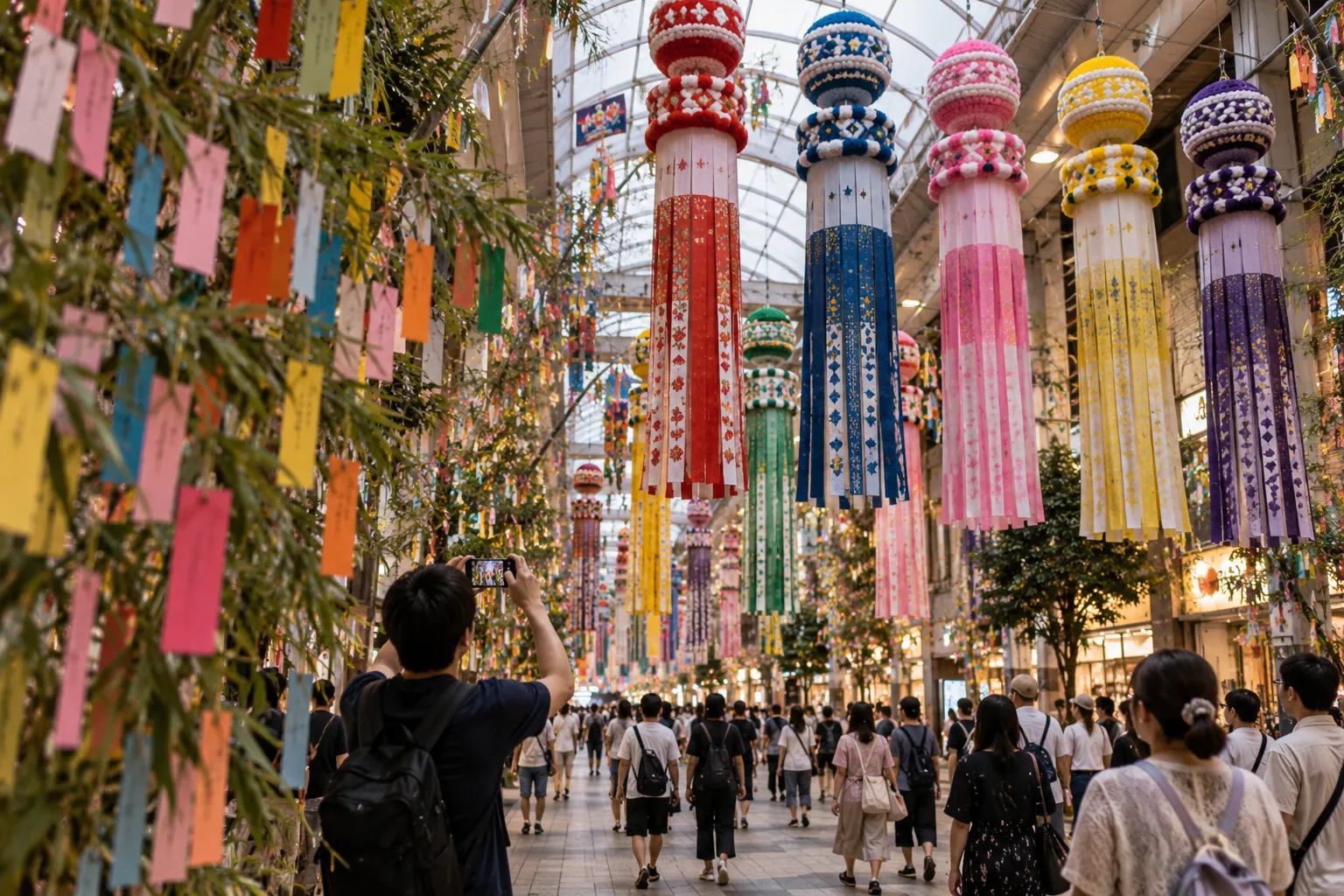
Watch for personal information. Kasuga Taisha asks visitors to take care with the personal details on ema. The same sensible rule applies to wish strips at Tanabata, where visitors write wishes on paper strips called tanzaku and hang them on bamboo, as DionFest’s Tanabata guide explains. Photograph the whole bamboo tree and its decorations rather than one readable strip. That guide also covers the low-light challenges of shooting decorations in covered arcades.
Know the posting rules. Higashi Honganji allows personal social media posts. Kasuga Taisha allows personal posting but asks you to consult the shrine before sending photos or interviews to the media.
Label edited and AI images. If an image is AI-generated or heavily edited, say so. Do not present it as a photo of a real ceremony.
Take photos down when asked. If a person or community asks you to remove a photo, remove it quickly and politely.
Five checks before you post
- Can I name the festival, the place and the community in the caption?
- Did the people in close-ups say yes?
- Does any readable name, ID number or written wish appear? Crop or blur it.
- Is anyone bathing, changing, grieving, or a child I do not know? Do not post.
- Does the temple, shrine or organiser have a rule on posting or media use?
Before your next festival
Find the temple’s or organiser’s own photography page. Learn the two phrases for asking permission in the local language. Decide in advance what you will not post. Rules change, and on the day the rule belongs to the people who run the place.
Heading to a remote Himalayan fair? Dionfest cultural festival packing list covers dress customs, small-note cash and photo etiquette for fairs in Ladakh and Uttarakhand.

Abhay Ramola researches world festivals across primary sources, local accounts, and on-ground reporting. He founded Dionfest to cover what gets missed when festivals become tourism content the history, the ritual, and the people behind it.
1 thought on “Ethical Festival Photography: Permissions, Privacy and Sacred Traditions”