Cultural Festival Etiquette Around the World: A Guide for Visitors
Clap twice at a Shinto shrine in Japan, and you are following the Japan National Tourism Organization’s (JNTO) own instructions. Clap in a Sikh gurdwara, and a visitor guide from the Sikh Coalition says it is not appropriate. At a Japanese Buddhist temple, JNTO says there is no need to clap at all.
One gesture, three answers. That is the main lesson of cultural festival etiquette: there is no world rulebook. Each site has its own rules, and sometimes each day does.
This guide compares the same situations in different places. The examples come from Japan, Thailand, Bali, India and the UAE. Where an official body publishes a rule, the guide uses it and links to it. Where only a community group or a guidebook is available, the text says so. DionFest did not visit these sites for this guide, so everything below rests on the sources named. They were reviewed on 27 October 2026.
The short version
- Check the site’s own notice before you go. Rules change, sometimes for a single day.
- Dress for the strictest place on your route. Carry a light scarf and wear slip-on shoes.
- Treat worship, grave visits and home altars as private unless a sign, priest or organiser says otherwise.
- Ask before you photograph a person, and put the camera away during rituals.
- If you are unsure, watch what local worshippers do, then follow quietly.
Appropriate clothing and footwear
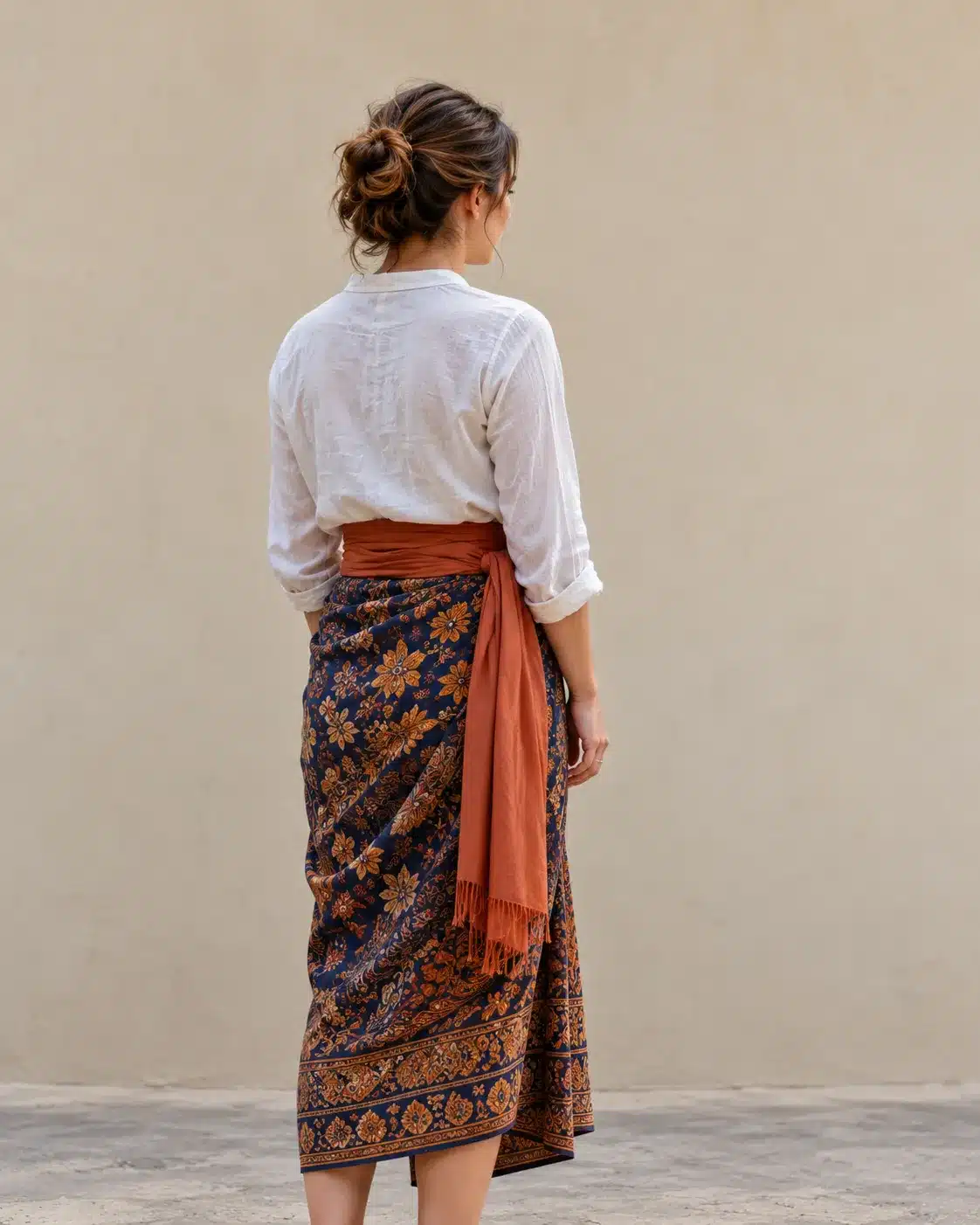 Clothing rules differ by site and by occasion. Here is what the named bodies say.
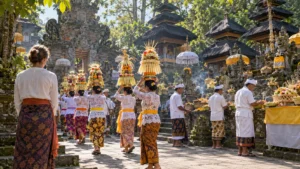
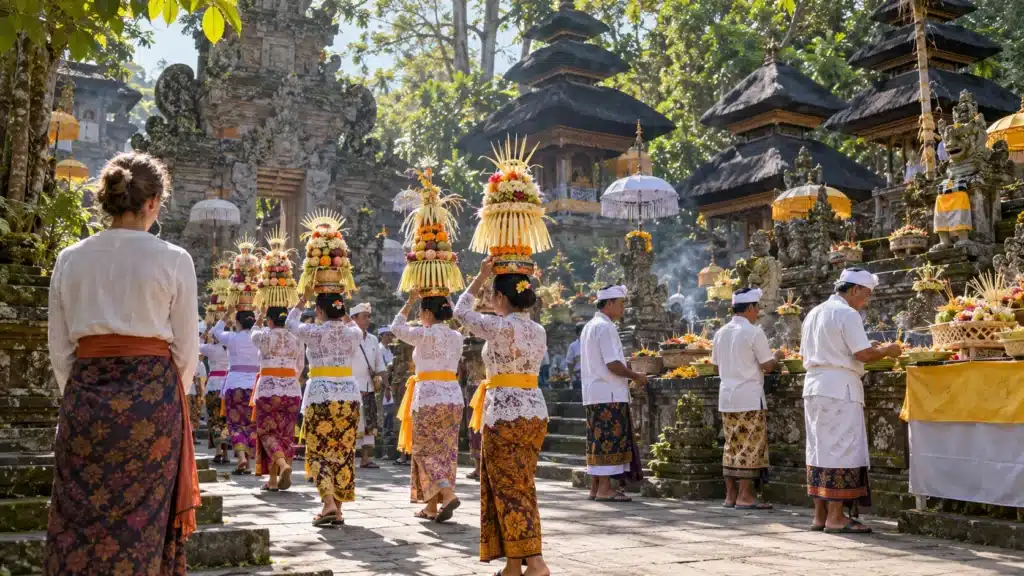
- Bali. The Bali Provincial Government’s guidelines for foreign tourists, issued as Governor’s Circular Letter No. 7 of 2025, ask visitors to dress modestly, especially at temples and religious ceremonies.
- Bangkok’s Grand Palace. The Bureau of the Royal Household says visitors must dress appropriately because the palace is a place of reverence for the Thai people. A February 2026 Tourist Police notice relayed a Royal Household Bureau rule for people paying respects to the royal remains of Queen Sirikit: mourning attire, no jeans for men, and a skirt or traditional wrap for women. That rule is for that queue, not for every visitor.
- Sheikh Zayed Grand Mosque, Abu Dhabi. The mosque’s Mosque Manners guidance rules out see-through clothing, shorts, skirts above the ankle, sleeveless shirts, tight clothing, swimwear and beachwear. The mosque’s FAQ adds that women must wear a headscarf, and the Mosque Manners page asks visitors to pre-book a free online access pass.
- Golden Temple, Amritsar. The SGPC, the Sikh body that runs the complex, advises visitors to avoid showy and short clothes and to cover their heads, as The Statesman reported. Handkerchiefs are provided at the main entrances.
- Japan. JNTO says you may be asked to take off your shoes in temple buildings, and suggests good socks. Its manners guide adds that easy slip-on shoes make life simpler.
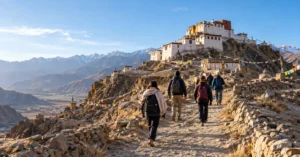
- Hemis Monastery, Ladakh. DionFest Hemis Festival guide says shoulders and knees must be covered inside the monastery.
Head coverings show why one packing rule cannot fit every place. A gurdwara expects covered heads, and the Sikh Coalition says a hat does not count as a head covering. In Thailand, Frommer’s advises removing both shoes and hats before entering temple buildings.
For a full kit list for remote Himalayan fairs, see DionFest cultural festival packing list.
Greetings, gestures and local customs
- Japan. JNTO says Japanese people are less prone to body contact in everyday greetings, including hugs, kisses and handshakes. A nod or bow when you greet someone, or enter or leave a shop, goes a long way. You do not need to master the rules of bowing.
- Thailand. Frommer’s says Thais greet each other with the wai, a bow with palms pressed together, and that foreigners are more or less exempt from it. It also says not to wai a child and not to expect a monk to wai back. The head is treated as the most sacred part of the body, so do not touch anyone’s head. The feet are treated as the lowest part, so do not use a foot to point or touch things. Women should be careful around monks, who are not allowed to touch women.
- Sikh gurdwara. The Sikh Coalition asks visitors to avoid turning their back or pointing their feet toward the Guru Granth Sahib, the Sikh scripture.
Feet appear in both the Thai and the Sikh advice, but they are not one rule. Follow the sign, or the person in front of you.
Rules for temples, shrines and religious spaces
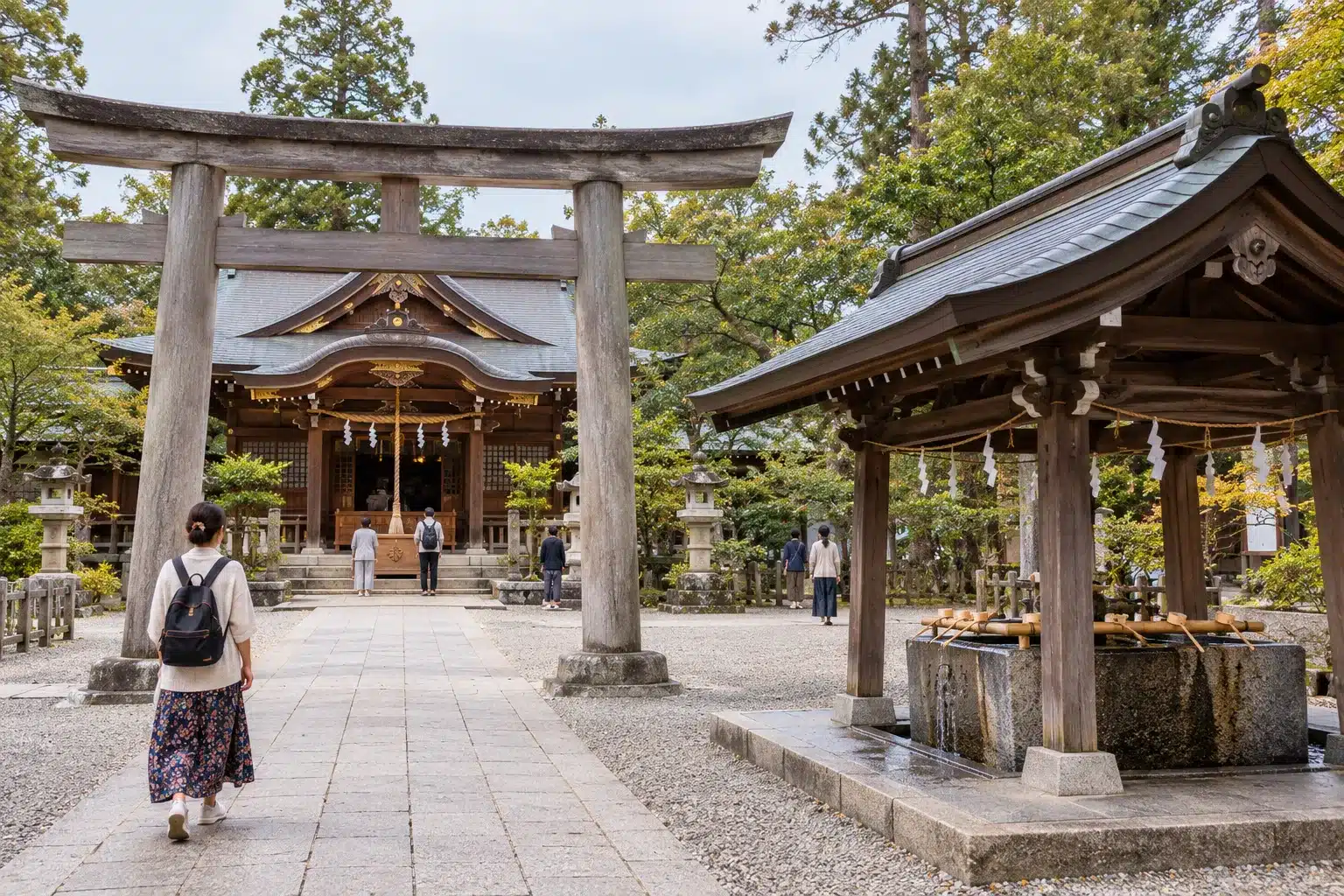 Japan. JNTO describes two different routines.
- At a Shinto shrine: bow once at the torii gate and walk slightly to one side of the centre path. Rinse your hands and mouth at the water pavilion. At the altar, toss in a coin, ring the bell, bow twice, clap twice, pray, then bow once more.
- At a Buddhist temple: JNTO says the rules are less strict, but asks for calm, respectful behaviour. If you light incense, put out the flame by waving your hand, not by blowing. There is no need to clap. Watch for signs that ban photography inside.
Sikh gurdwara. The SGPC guidelines, as reported by The Statesman, ban tobacco, alcohol and other intoxicants, and say the attendants (sewadars) are trained to explain the rules. The Sikh Coalition adds: remove your shoes and wash your hands before the prayer hall, do not walk onto the platform, and accept parshad, the sweet offering, kneeling with folded hands. Clapping is not appropriate. At the Golden Temple itself, the SGPC and its attendants come first.
Bali. The Governor’s circular, as reported by ANTARA, tells foreign tourists to respect temples and sacred objects. They may not enter the main and middle sections of sacred places except to pray. The provincial tourism office’s summary also bans climbing sacred trees and taking inappropriate photos at religious sites.
Abu Dhabi mosque. According to the mosque’s FAQ, smoking is not allowed anywhere on the grounds, and visitors may not bring food or drink, even water.
Puri, India. DionFest’s Jagannath Rath Yatra guide says the street procession is open to everyone, while the temple sanctum is restricted to Hindus. Check the temple administration’s current notice before you travel.
Ladakh. DionFest’s Hemis guide says to switch off flash near thangkas (painted scrolls) and inside the museum, because it damages old paint and monks will ask you to stop.
Food etiquette and accepting local hospitality
- Japan. JNTO says to say “itadakimasu” before a meal and “gochisosama-deshita” after it. People normally wait until everyone has food in front of them. Leaving food on your plate is frowned upon, and asking to take leftovers home is generally not accepted. It is good manners to ask before taking the last bite of a shared dish.
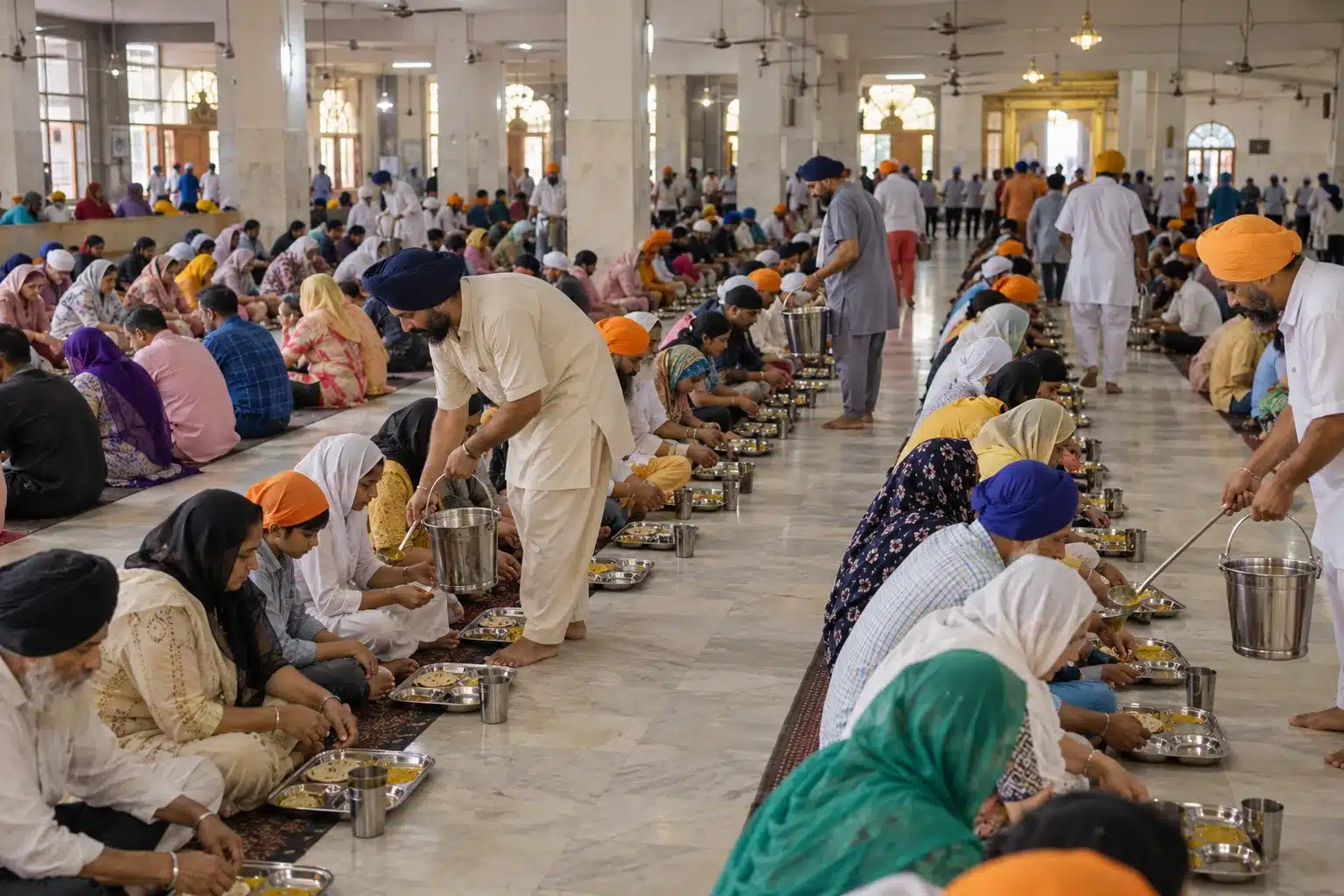
- Sikh langar. The Sikh Coalition says anyone can eat langar, the free community meal. Visitors sit on the floor on mats, and keep their head covering on. It is fine to politely decline food, especially for allergies or dietary needs.
- Parshad. When sweet parshad is handed out at a gurdwara, the same guide says to accept it kneeling, with folded hands.
The pattern is simple. Food at a festival or place of worship is often part of the ritual, so ask how to take it before you reach for it.
Photography, noise and personal space
 Photography. DionFest has a full guide to ethical festival photography. Three examples from it show how much the rules differ:
- In Tamil Nadu, the guide reports, a ban on camera phones began on 1 September 2026 in 52 major temples run by the state’s HR&CE Department. Phones are held at entrance counters for a ₹5 token fee.
- At Higashi Honganji in Kyoto, personal photos are allowed on the grounds, but not during services.
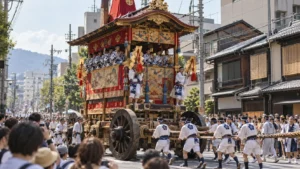
- In Kyoto’s Gion district, signs on private lanes warn tourists against taking photos.
Elsewhere, the SGPC guidance says no photos or video at the Golden Temple without permission, and Bali’s guidelines ban inappropriate photos at religious sites.
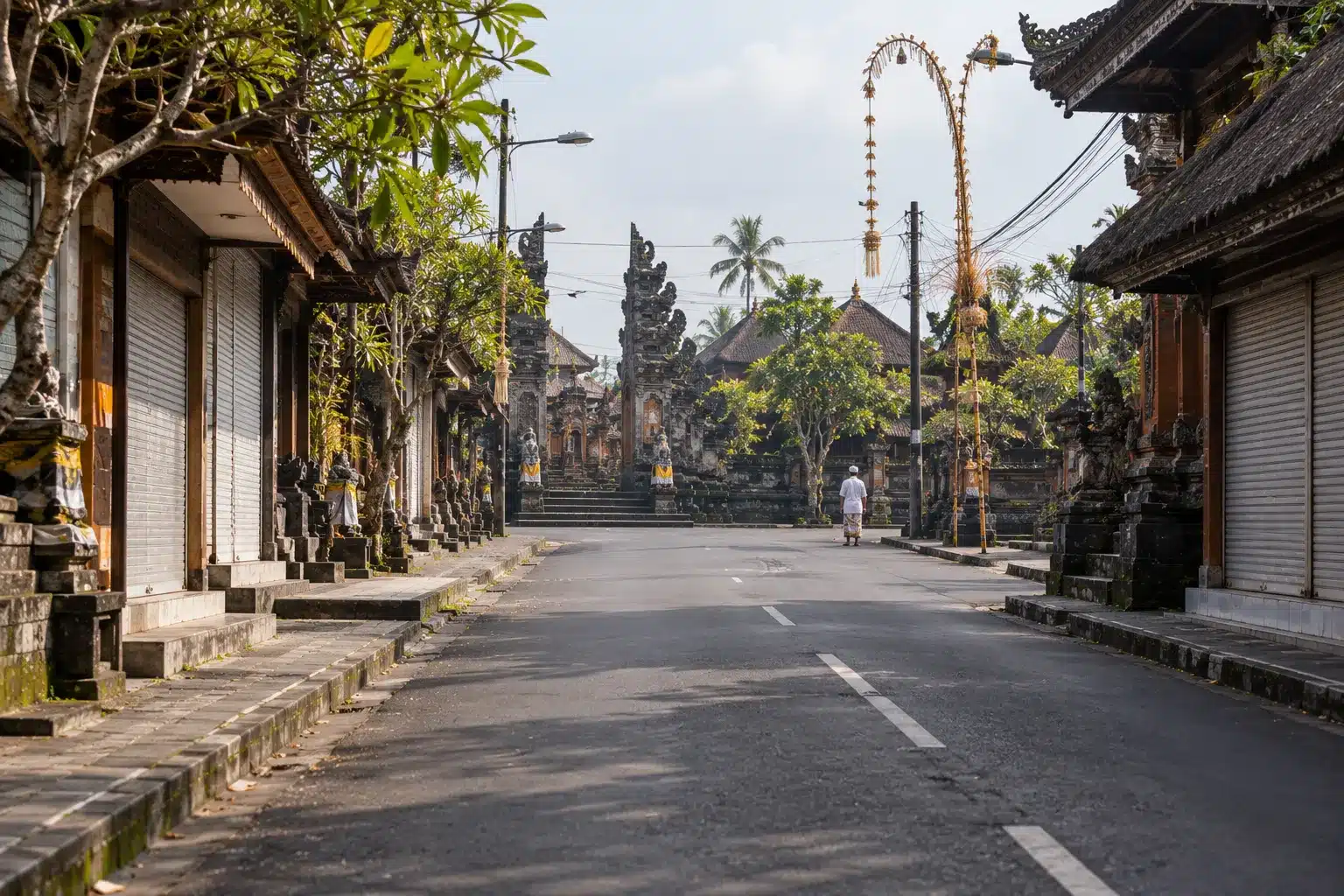
Noise. Bali’s Nyepi is the extreme case. Under Catur Brata Penyepian, the four Nyepi restrictions, there is no fire or light, no work, no travel and no entertainment. Indonesian outlet RRI, citing the Badung government, reports that in 2026 tourists had to stay in their hotel or villa from 19 to 20 March, and that the airport and ports closed. Nyepi moves each year. Sources currently disagree on the 2027 date (8 or 9 March), so check the Bali government’s calendar.
Most places ask for far less. JNTO asks for soft voices on Japanese trains and no phone calls. The Abu Dhabi mosque asks visitors to keep calm and lower their voices. The SGPC asks visitors to silence their phones.
Personal space. Japan and Thailand both limit touching, in different ways, as covered above. In dense crowds, DionFest’s Rath Yatra guide says the procession in Puri starts at 7 AM, that a usable spot on the Grand Road needs an arrival by about 5:30 AM, and that pickpocketing is common, so carry only what you need.
How to behave respectfully during ceremonies
Start with one question: is this a public show, an active ritual, or a private moment? DionFest’s photography guide sorts festival moments into three levels. Public spectacle, such as parades and street dances, is usually fine. Active ritual needs signs, staff or a priest to say yes. Private moments, such as grave visits, home altars and mourning, are not for outsiders.
Three festivals show the levels in practice.
- Obon, Japan. DionFest’s Obon guide says bon odori dances at temples and parks are open to anyone. Nobody expects you to know the steps, so watch for a few minutes, then follow along. Grave visits, home altars and family gatherings are family matters. Near a cemetery, keep your voice low and do not photograph strangers.
- Jagannath Rath Yatra, Puri. The street procession is open to everyone, including pulling the chariot ropes, according to DionFest’s Rath Yatra guide. The temple sanctum is not. Expect heat and very dense crowds.
- Hemis Festival, Ladakh. DionFest’s Hemis guide says the Cham dances are a ritual, not a performance for the audience. Cover shoulders and knees, turn off flash, and ask before photographing monks or local families.
Festivals where you are invited to join. At Songkran and Holi, taking part is the point, so consent becomes the main rule.
- Songkran, Thailand. A Smithsonian Magazine report quotes a Bangkok hotel executive (Centara Hotels & Resorts) telling BBC News that visitors must avoid throwing water on monks or elders, and try not to spray water directly in anyone’s face. This is industry advice, not an official rule.
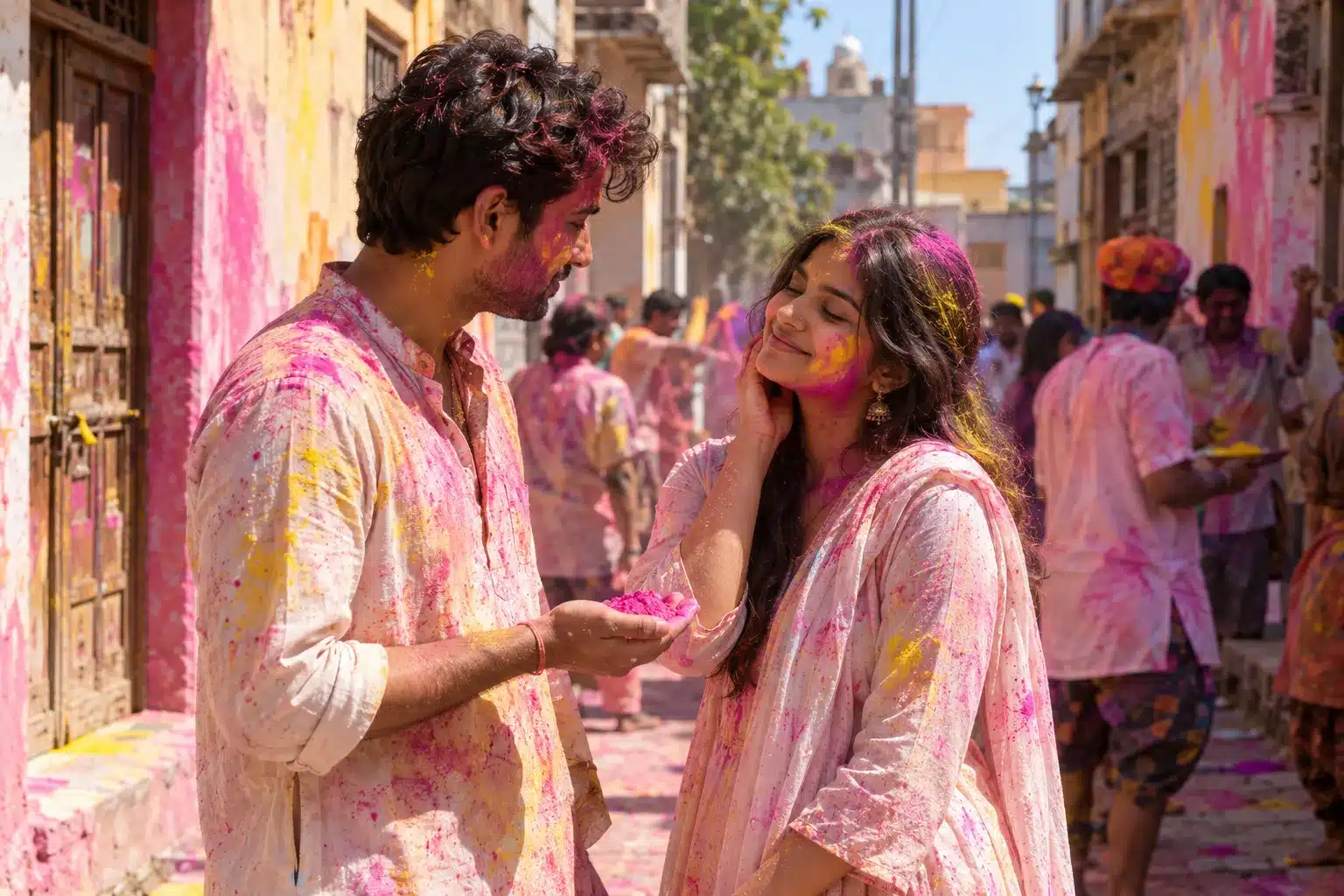
- Holi, India. Lonely Planet says consent matters: do not apply colour to someone without permission, especially on the face, and politely but firmly decline if someone insists on applying it to you. Police warnings back this up. In 2017, Delhi Police warned that forcefully applying colours or throwing water balloons at passers-by could lead to legal action. If someone says no, stop. Advisories differ by city and year, so check the local police notice for your dates.
At many sites, the people who run the ceremony will tell you what to do. At the Golden Temple, SGPC attendants explain the rules. In Bali, local village security officers called pecalang enforce Nyepi. Listen to them.
Before you go
- Find the site’s own page or notice: the temple, shrine, mosque, organiser or tourism board. Check its date.
- Pack a scarf or shawl, slip-on shoes, clean socks and small cash.
- Learn two phrases in the local language: one for “may I take a photo?” and one for “thank you”.
- Decide in advance what you will not photograph or post.
- If nobody on site can say yes to a photo or an action, treat the answer as no.

Abhay Ramola researches world festivals across primary sources, local accounts, and on-ground reporting. He founded Dionfest to cover what gets missed when festivals become tourism content the history, the ritual, and the people behind it.