
Dinofest The Prehistoric Festival Experience That’s Bigger Than You Think
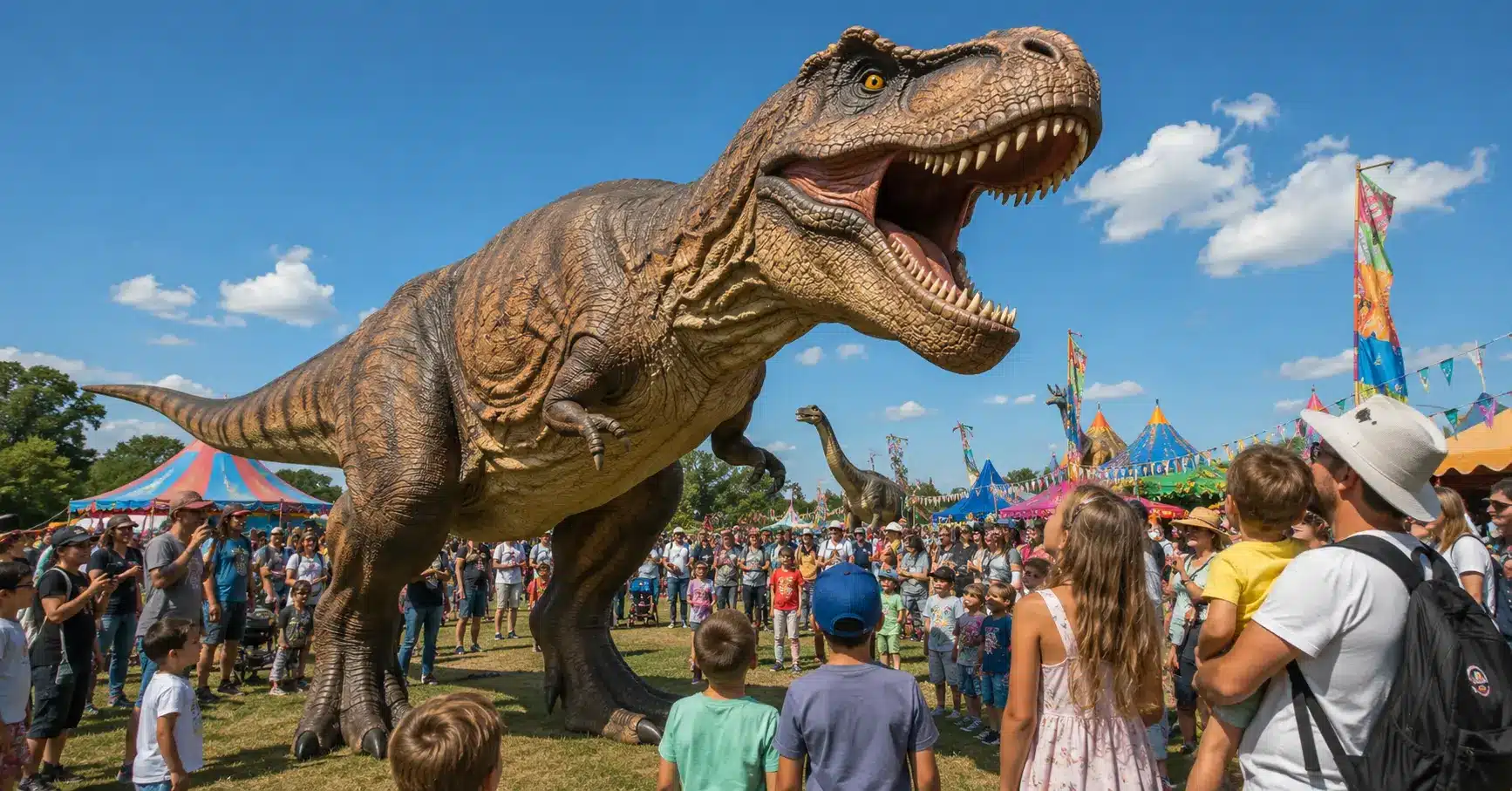
Most people think Dinofest is a children’s event. A few big plastic dinosaurs, some overpriced merchandise, and a dig pit full of sand. That’s the assumption. The reality is different. The original Dinofest International in Philadelphia drew over 150,000 visitors, featured real fossil specimens that rarely leave their vaults, and had working paleontologists presenting live research to the public. It was, by any measure, a serious scientific event that happened to also be fun. Today, Dinofest has spread across continents in dozens of formats some excellent, some not worth the ticket price. This guide tells you exactly what it is, what to expect, and how to find the version worth your time.
What Is Dinofest?
Dinofest is a large-scale dinosaur-themed festival or exhibition that brings prehistoric life to the public through life-size animatronic dinosaurs, fossil displays, paleontology workshops, and immersive experiences.
It isn’t one single event owned by one company. The name “Dinofest” has been used by multiple organizers across different countries from the landmark International Dinofest held in Philadelphia in the 1990s to modern touring exhibitions that set up in parks, fairgrounds, and convention centers worldwide.
Think of it like a food festival. There isn’t one global “Food Festival.” But the format stalls, tastings, live cooking — is immediately recognizable anywhere. Dinofest works the same way.
Where Did Dinofest Start?
The most historically significant Dinofest was Dinofest International, launched in 1994 in Philadelphia, Pennsylvania. It was organized by Dr. Donald Wolberg and the Academy of Natural Sciences.
It drew over 150,000 visitors in its first run. Scientists, fossil hunters, children, and curious adults all showed up in the same space. Real fossil specimens sat next to full-scale reconstructions. Lectures ran alongside hands-on digging sessions.
The event returned in 1996, 1998, and 2000 in different American cities. It helped normalize dinosaur science as public entertainment not dumbed-down, but genuinely accessible.
After Dinofest International wound down, the concept didn’t die. It evolved into dozens of independent dinosaur festivals and touring exhibitions that now operate globally under various names and formats.
What Happens at a Dinofest Event?
Most Dinofest-style events share a core set of features. Here’s what you’ll typically find:
- Animatronic dinosaurs – life-size moving models of T. rex, Triceratops, Brachiosaurus, and others, with sound effects and realistic movement triggered by motion sensors or timed programs.
- Fossil exhibitions – real or high-quality replica fossils displayed with scientific context, sometimes with paleontologists present to answer questions.
- Dig pit activities – sand or soil pits where children (and adults) excavate replica fossils using brushes and tools, mimicking real fieldwork.
- Live talks and demonstrations – paleontologists, science educators, or costumed characters explain how dinosaurs lived, what they ate, and why they went extinct.
- Photo opportunities – staged scenes where you can stand next to a life-size dino model. These are genuinely impressive for scale.
- Themed food and merchandise – dino-shaped snacks, branded merchandise, and educational books.
Some premium events add VR experiences where you walk through a Cretaceous forest in a headset. Others include night sessions with different lighting think glowing dinosaurs under UV lights.
Types of Dinofest Experiences Around the World
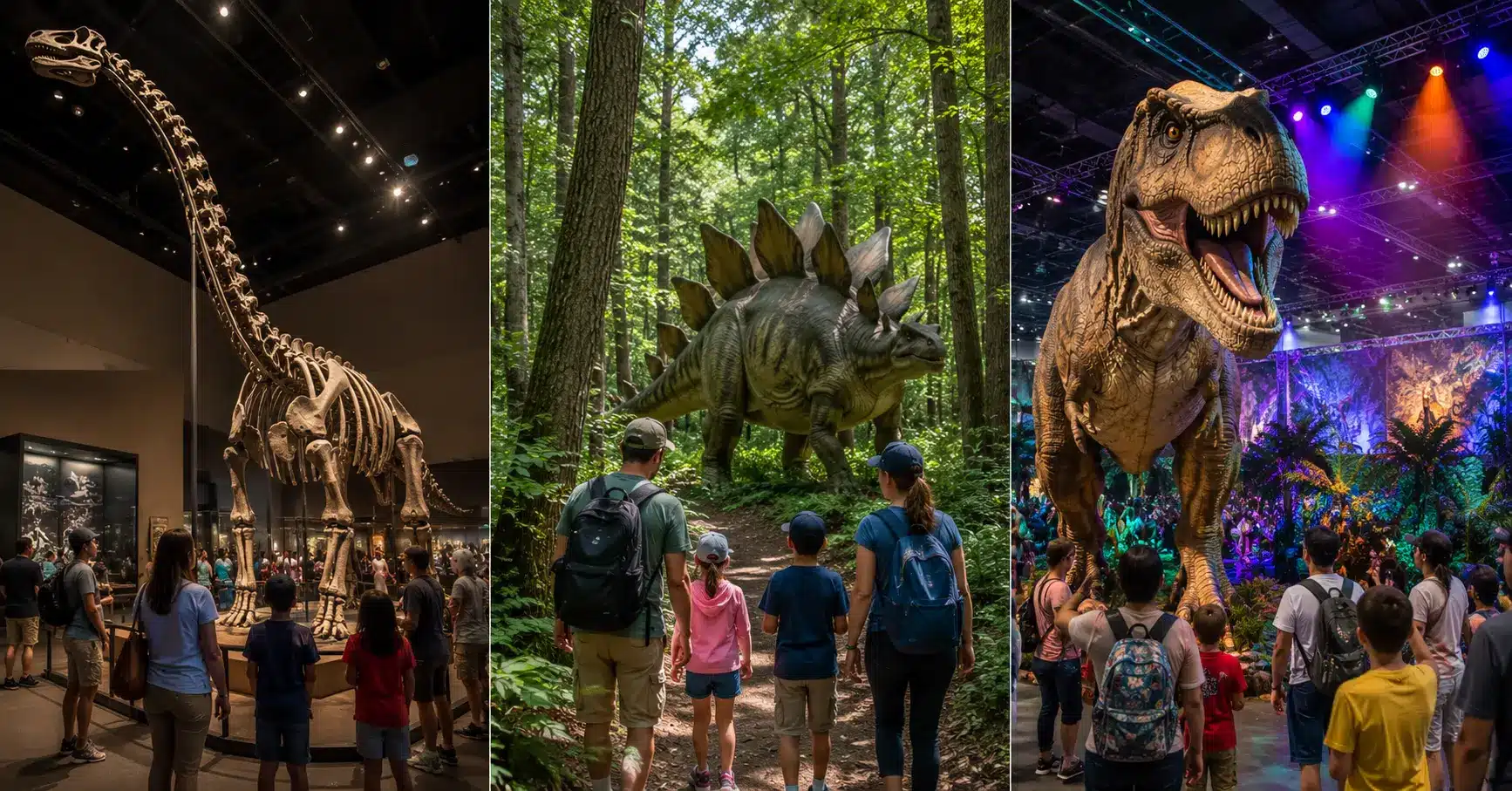 Not all Dinofest events are the same. They range from small community-run setups to massive commercial productions.
Museum-Hosted Exhibitions
Natural history museums sometimes run limited-time Dinofest-style shows. These tend to be the most scientifically accurate because museum curators oversee the content. Fossil collections here are often genuine.
Touring Commercial Shows
These are the most common format today. A production company builds a fleet of animatronic dinosaurs and trucks them from city to city. They set up in fairgrounds, convention halls, or open parks. Ticket prices typically run between $15–$35 per person.
Outdoor Dino Parks
Some locations have built permanent or semi-permanent outdoor dinosaur trails. You walk a path through a forest or park and encounter life-size models at various points. These blend the Dinofest concept with a nature walk.
Science Festival Components
In some countries, Dinofest appears as a segment inside a broader science or family festival. It’s one zone among many rather than the entire event.
Who Goes to Dinofest and Why?
The obvious answer is families with kids. That’s the largest group by far. Children between 4 and 12 years old have a near-universal fascination with dinosaurs, and Dinofest delivers on that in a physical, tangible way that a book or TV show cannot.
But look at actual attendance data from events like the Philadelphia Dinofest International and you see a more varied crowd:
- Amateur fossil hunters who follow paleontology news and want to see real specimens up close.
- Adult dinosaur enthusiasts – yes, this is a real and large demographic. Dinosaur interest doesn’t disappear at age 12 for everyone.
- Teachers and school groups who use Dinofest events as field trips tied to science curriculum.
- Parents who are just as excited as their children, which is more common than organizers publicly acknowledge.
The experience works because it bypasses the abstract. Reading that a T. rex was 12 meters long doesn’t register emotionally. Standing next to a 12-meter model that moves and roars that registers.
Is Dinofest Educational or Just Entertainment?
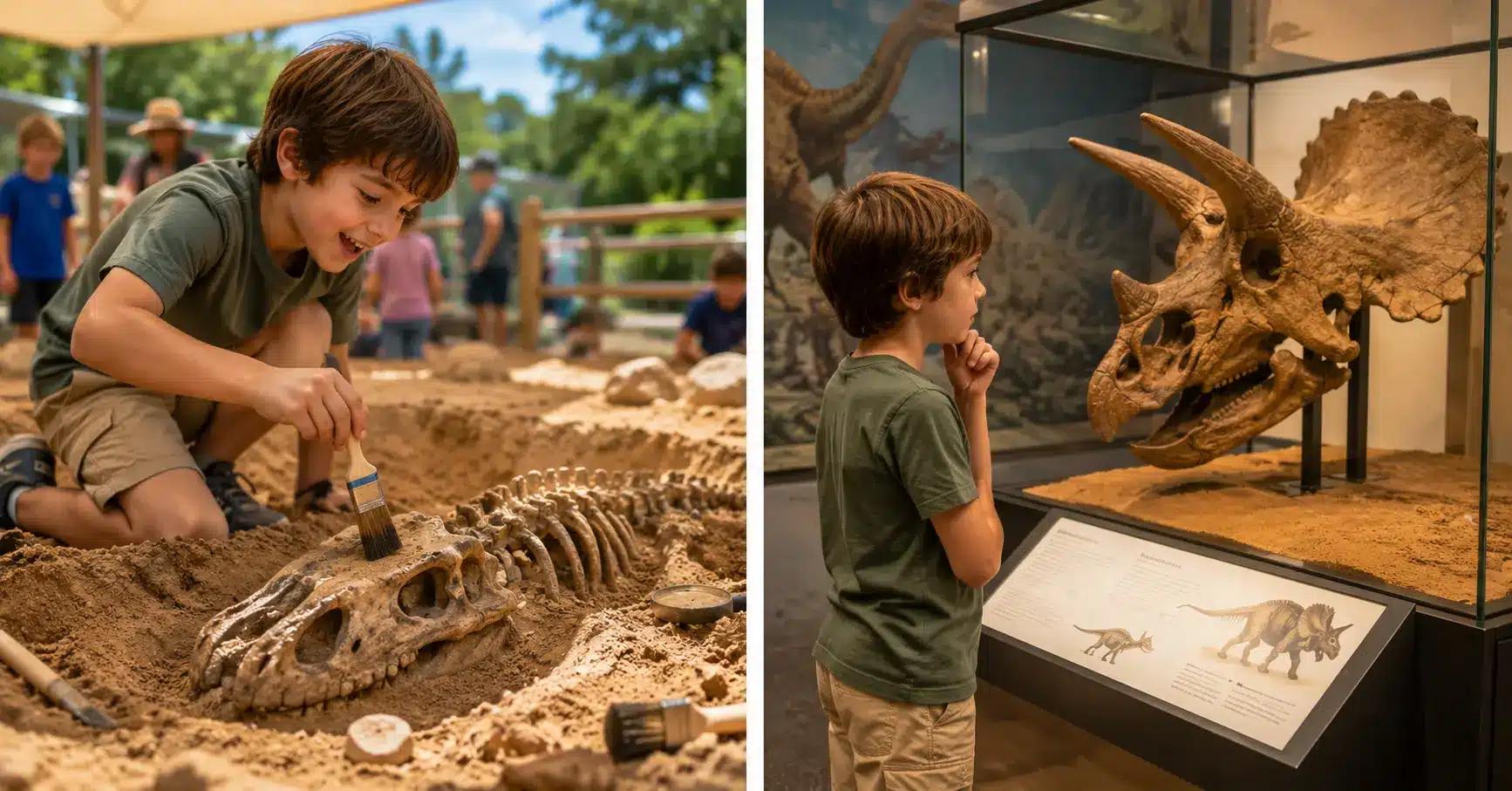 This is the right question to ask, and the honest answer is: it depends entirely on the organizer.
The original Dinofest International in Philadelphia was genuinely educational. Real scientists presented research. The fossil specimens were authentic. Kids and adults left knowing something they didn’t before.
Many modern touring Dinofest-style shows prioritize spectacle over science. The animatronics are impressive. The signage is thin. The experience is closer to a theme park ride than a museum.
How to tell the difference before you buy tickets:
- Check if any professional paleontologists are listed as advisors or presenters.
- Look at what the signs and information boards actually say. Vague, unscientific language is a red flag.
- See if there are any hands-on activities beyond the dig pit – talks, workshops, Q&A sessions.
- Search for reviews that mention the educational content specifically, not just the visuals.
A good Dinofest event should do both – entertain and teach. The entertainment draws you in. The education makes it worth remembering.
The Green Side of Dinofest Nobody Talks About
Here’s something most Dinofest coverage misses completely: these events have a complicated relationship with sustainability.
Large touring exhibitions involve transporting massive animatronic models across hundreds of kilometers by truck. Event setups use significant power for the moving figures. Single-use merchandise and plastic packaging is common at commercial shows.
Some newer Dinofest organizers are aware of this and making changes. Solar-powered lighting at outdoor events, biodegradable packaging, and zero-single-use-plastic pledges are starting to appear in event descriptions.
This parallels a broader shift happening across all festivals globally. Events are realizing that the communities they attract science-minded, nature-curious, family-oriented actually care about how the event is run, not just what’s in it.
If you want to understand what genuinely sustainable festival practices look like, the conversation is much bigger than Dinofest. The Green Man Festival in Wales is one of the best examples in the world 25,000 attendees, no corporate sponsors, and environmental commitments built into the festival’s DNA from day one.
Similarly, the principles behind events like World Environment Day which the UN uses as its primary platform for environmental action reflect the kind of thinking more festival organizers need to adopt.
Dinofest could learn from this. A festival built around ancient life has an obvious narrative connection to planetary stewardship. Very few capitalize on it.
How to Plan Your Dinofest Visit
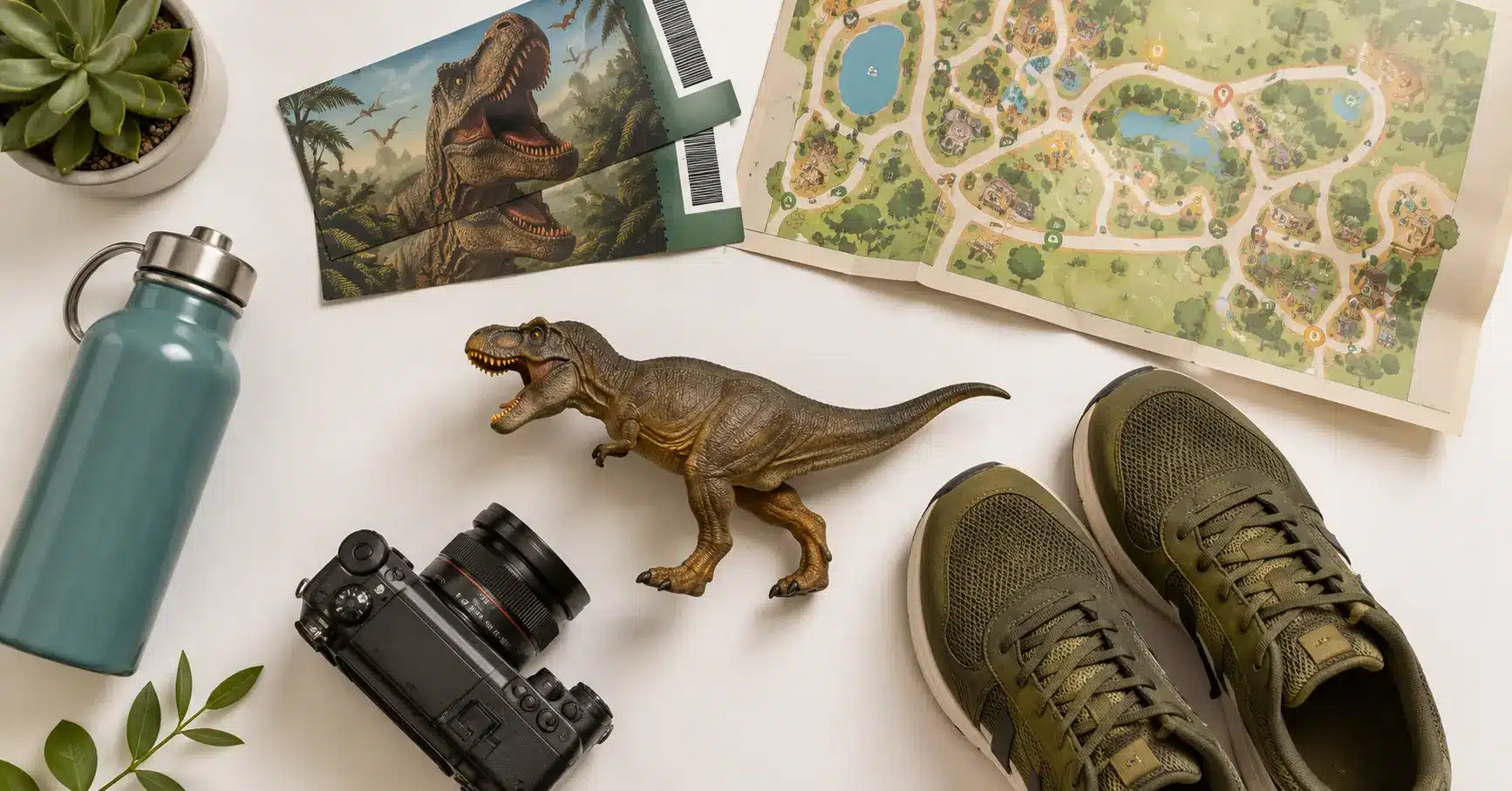 If a Dinofest or dinosaur festival is coming to your area, here’s how to get the most out of it:
Before you go:
- Buy tickets online in advance. Popular sessions sell out faster than organizers expect.
- Check if there are timed entry slots many events use these to control crowd density.
- Read the event map if one is available. Identify the activities you don’t want to miss first.
On the day:
- Arrive close to opening time. Crowds build fast by late morning.
- Go to the most popular exhibits first, before queues form.
- Bring a water bottle and snacks if the venue allows it. Festival food is expensive and lines are slow.
- For kids under 6, start with the smaller models. The full-size T. rex animatronics genuinely scare some young children.
What to skip:
- Low-quality merchandise is overpriced and forgettable. A good book on dinosaurs from a bookstore will do more for a child’s interest than branded merchandise.
- Skip any paid add-on experience that isn’t clearly described. Vague “premium experiences” are often not worth the cost.
FAQ: Dinofest Questions People Actually Ask
What is Dinofest exactly?
Dinofest is a dinosaur-themed festival or exhibition featuring life-size animatronic dinosaurs, fossil displays, and educational activities. It’s not one single global event — the name is used by multiple independent organizers worldwide.
Is Dinofest good for toddlers?
It depends on the child. Life-size moving dinosaurs with sound effects can frighten children under 4. Most events are best suited for children aged 5 and up. Check the event’s own age guidance before going.
How much do Dinofest tickets cost?
Prices vary widely by location and event scale. Expect to pay between $15 and $40 per person for most commercial touring shows. Museum-hosted events are sometimes cheaper or included in museum admission.
Is Dinofest scientifically accurate?
It varies by organizer. Museum-hosted events tend to be more accurate. Commercial touring shows prioritize visual impact over scientific detail. Always check if the event lists any scientific advisors.
Are there Dinofest events outside the United States?
Yes. Dinosaur festivals run regularly in the UK, Australia, Canada, Germany, and across Asia. The format has gone global even if the “Dinofest” name isn’t always used.
Final Take
Dinofest, in any of its forms, works because it makes something ancient feel immediate. Dinosaurs disappeared 66 million years ago. A well-run Dinofest collapses that distance and puts you in the same room with them or at least the best reconstruction science and technology can manage.
The concept has evolved far beyond the original Philadelphia events. Today it lives across continents, in different formats, at different quality levels. Your job as an attendee is to find the version that actually delivers entertainment, education, and ideally, a reason to care about the world those animals left behind.
That connection between prehistoric life and present-day environmental responsibility isn’t just poetic. It’s real. Events like Van Mahotsav, which plants millions of trees across India each July, and mass civic actions like World Cleanup Day which mobilizes millions globally to restore natural environments share the same underlying logic: the planet’s history matters, and so does its future.
A Dinofest that makes you think about both is the one worth attending.

Abhay Ramola researches world festivals across primary sources, local accounts, and on-ground reporting. He founded Dionfest to cover what gets missed when festivals become tourism content the history, the ritual, and the people behind it.