The Economic Impact of Festivals on Local Communities
In January 2025, Uttar Pradesh’s Chief Minister projected the Maha Kumbh Mela would add $24-30 billion to the economy. A few months later, industry trade bodies were citing $36 billion. Academic papers landed closer to $23 billion. This spread is exactly why measuring the economic impact of festivals on local communities is harder than it looks government revenue estimates put the same event’s direct spending lower still, around ₹28,000-56,000 crore before any multiplier effect was applied.
Four sources, four different numbers, all describing the same six weeks in the same city. That gap is the actual story here not the size of the number, but who’s producing it and why.
Quick Answer
Festivals generate real, measurable local economic activity through direct visitor spending, temporary employment, and small business revenue but the widely quoted “billion-dollar impact” figures attached to major festivals are frequently produced by parties with an incentive to inflate them, such as government bodies justifying public investment or trade associations promoting the event. The verifiable, audited economic benefit to a host community is almost always smaller, more localized, and shorter-lived than the headline number suggests.
The Real Channels Money Actually Moves Through
Strip away the marketing number, and festival economics run through four concrete channels:
Direct visitor spending — lodging, food, transport, and retail purchases made by people who wouldn’t otherwise be in that town that week. This is the most legitimate and easiest to measure part of the equation.
Temporary employment — short-term jobs in security, hospitality, logistics, and vending. Real income for real workers, but rarely permanent positions once the event ends.
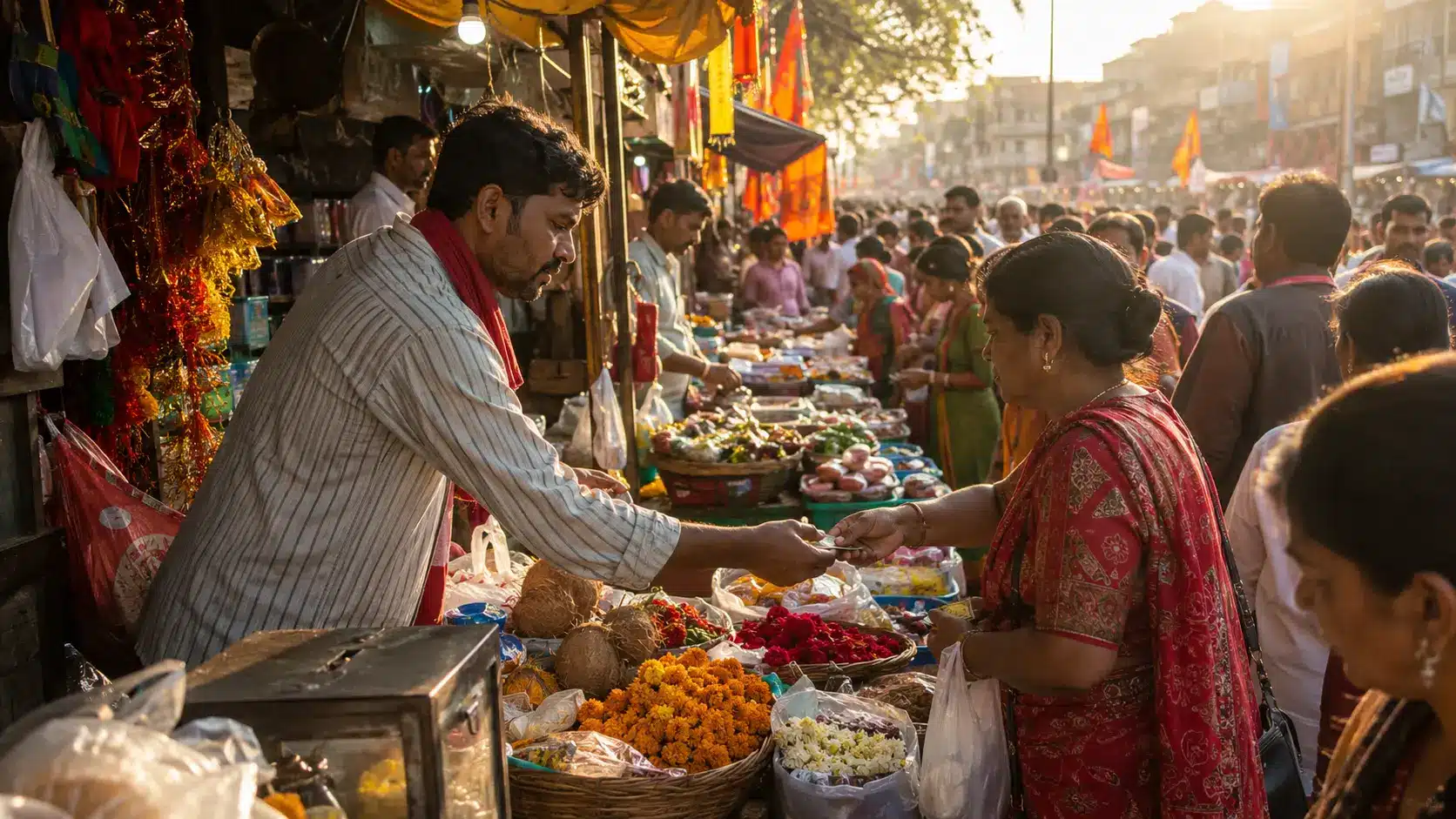
Small business and informal-sector revenue — street vendors, artisans, and family-run shops that see a concentrated spike in demand. During the 2025 Kumbh Mela, this ranged from rickshaw pullers and flower sellers to roadside dhaba owners, many of whom reported multiples of their normal daily earnings during the festival window.
Public infrastructure investment — roads, sanitation, and transport upgrades built to handle festival crowds, which can outlast the event itself and benefit the town long after the visitors leave.
Two Case Studies, Two Very Different Scales
A small US town: Fayetteville and Lincoln County, Tennessee, saw their local festival calendar generate $22.77 million in direct tourism expenditure in a single year, along with 140 jobs, $3.03 million in payroll, and $740,000 in local tax revenue. These numbers came from a regional tourism association’s tracked data modest in scale, but verifiable line by line.
A mass religious gathering: The 2025 Maha Kumbh Mela drew somewhere between 400 and 660 million visitors depending on which count you trust. Direct spending estimates ranged from ₹28,000-56,000 crore, with total multiplied economic activity estimated at ₹42,000 crore to ₹1.12 lakh crore separate from the Chief Minister’s own, far larger political projection of ₹2-4 lakh crore, which was never presented as an audited figure. The honest answer to “what did it actually generate” is: nobody has produced a single independently audited number, and the estimates in circulation span roughly a 10x range depending on who’s counting and what they’re counting.
The contrast matters. Small-scale, well-documented events give you numbers you can trust. Massive events tend to produce numbers you can only trust the direction of, not the size.
The Multiplier Effect and Why It’s Usually Oversold
Economists talk about a “multiplier effect”: money spent at a festival gets re-spent locally, generating additional rounds of economic activity beyond the initial transaction. This effect is real, but its size depends entirely on one factor most press coverage ignores: who captures the first-round spending.
A festival that sources its food, staffing, and production from local vendors keeps that multiplier working inside the local economy. A festival where a large share of spending goes to national chains or outside contractors sees that money leave the region almost immediately, with a much smaller multiplier left behind. Even the 2025 Kumbh Mela, despite its overwhelmingly local vendor base, brought in global food chains including Coca-Cola, Starbucks, and Domino’s to serve pilgrims a small but telling sign of how even a religious festival’s spending isn’t purely captured by local shopkeepers anymore.
This is also the mechanism behind why the craft economies we covered in how festivals preserve culture matter economically, not just culturally an artisan making diyas or idols locally keeps festival spending circulating inside the community, rather than leaking out to a mass manufacturer elsewhere.
Why the Big Numbers Are Usually Inflated
Three structural reasons the headline figures for large festivals tend to run high:
- Promoters need permits. Large projected economic impact makes it easier to justify road closures, public funding, and regulatory approval.
- Governments want justification for public investment. A Chief Minister citing a $30 billion impact is making a political case for infrastructure spending, not publishing an audited economic study.
- Tourism bureaus benefit from impressive visitor statistics, which drive future funding and future event bids there’s no incentive anywhere in this chain to publish a conservative number.
None of this means festivals don’t generate real economic activity they clearly do. It means the number you read in a press release is almost never the number an independent economist would sign off on.
The Costs Nobody Puts in the Press Release
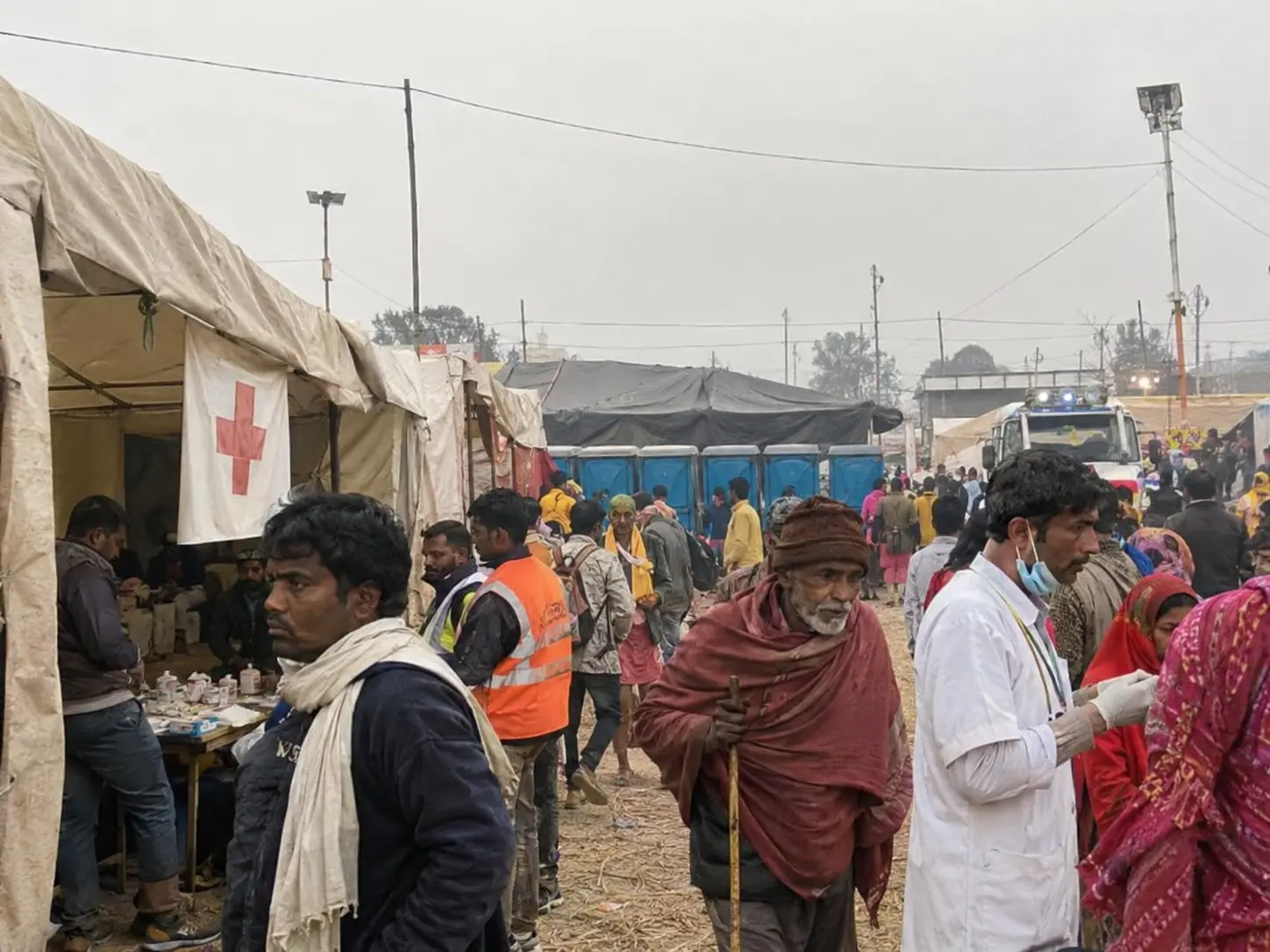 Economic impact coverage rarely mentions the other side of the ledger:
- Price inflation for residents — locals often pay more for basic goods and housing during festival periods, a cost that isn’t offset for anyone who isn’t selling something.
- Strained public resources — sanitation, medical services, and security infrastructure get stretched well beyond normal capacity, at public cost.
- Jobs that don’t last — most festival employment is seasonal by design; it doesn’t convert into permanent local employment once the event ends.
- Revenue leakage — as national and multinational vendors move into festival supply chains, a growing share of visitor spending never reaches local business owners at all.
How Communities Actually Maximize Real Local Benefit
- Prioritize local vendor and artisan procurement over national chains in festival planning
- Track verified, audited spending data rather than repeating the largest available projection
- Invest festival-driven infrastructure spending into upgrades that serve residents year-round, not just during the event
- Treat temporary festival employment as a supplement to, not a substitute for, permanent local economic development
FAQ
Do festivals really help local economies?
Yes — direct visitor spending, temporary jobs, and small business revenue are real and measurable. The scale of that benefit is usually smaller than the headline economic impact figures suggest.
Why do festival economic impact numbers vary so much?
Because they’re often produced by parties with an incentive to inflate them governments justifying public spending, or trade bodies promoting the event — rather than independent economists auditing actual transactions.
What is the multiplier effect in festival economics?
It’s the additional economic activity generated when festival spending gets re-spent locally. It’s strongest when a festival sources food, staffing, and production from local vendors, and weakest when spending flows to outside chains and contractors.
Do festival jobs create long-term employment?
Rarely. Most festival-related employment is seasonal and tied directly to the event; it typically doesn’t convert into permanent positions once the festival ends.
What are the hidden costs of hosting a large festival?
Price inflation for local residents, strain on public sanitation and medical infrastructure, and revenue leakage to outside vendors are the most commonly overlooked costs.
Which produces more reliable local economic benefit small festivals or massive ones?
Smaller, well-documented festivals tend to produce more verifiable numbers and a higher share of locally captured spending. Massive events generate far larger totals but with much less reliable auditing and a greater share of spending captured by outside vendors.
Conclusion
The economic impact of festivals on local communities is real that part isn’t in dispute. What’s worth being skeptical of is the specific number attached to any given event, especially when it comes from the same government or organizing body that benefits from the figure being as large as possible. The more useful question isn’t “how many billions did this generate,” it’s “how much of that money actually stayed in the community” a question UNESCO’s own recognition criteria implicitly ask too, since safeguarding a tradition long-term depends on the local economy around it staying intact, not just the headline turnout.

Abhay Ramola researches world festivals across primary sources, local accounts, and on-ground reporting. He founded Dionfest to cover what gets missed when festivals become tourism content the history, the ritual, and the people behind it.