Rishikesh Tree Cutting: Why 4,369 Trees Are Facing the Axe
Nine days of protest. Thirteen arrests. One Chief Minister forced to hit pause. That’s the state of the Rishikesh tree-felling controversy as of July 19, 2026 and the fight over roughly 4,369 trees is far from over.
Key Facts Box
- Location: Saat Mod area, Bhaniyawala–Jolly Grant–Rishikesh stretch, NH-07, Uttarakhand
- Project: Bhaniyawala–Jolly Grant–Rishikesh Four/Six-Laning Project
- Cost: ₹743 crore, undertaken by NHAI (National Highways Authority of India)
- Trees affected: 4,369 total — 3,605 to be cut, 754 to be transplanted
- Status (as of July 19, 2026): Tree felling suspended by CM Pushkar Singh Dhami’s order
- Legal status: Matter before the Supreme Court; hearing expected around July 20–21, 2026
- Arrests so far: 13 people arrested, 4 detained (July 15)
What Is Actually Happening in Rishikesh?
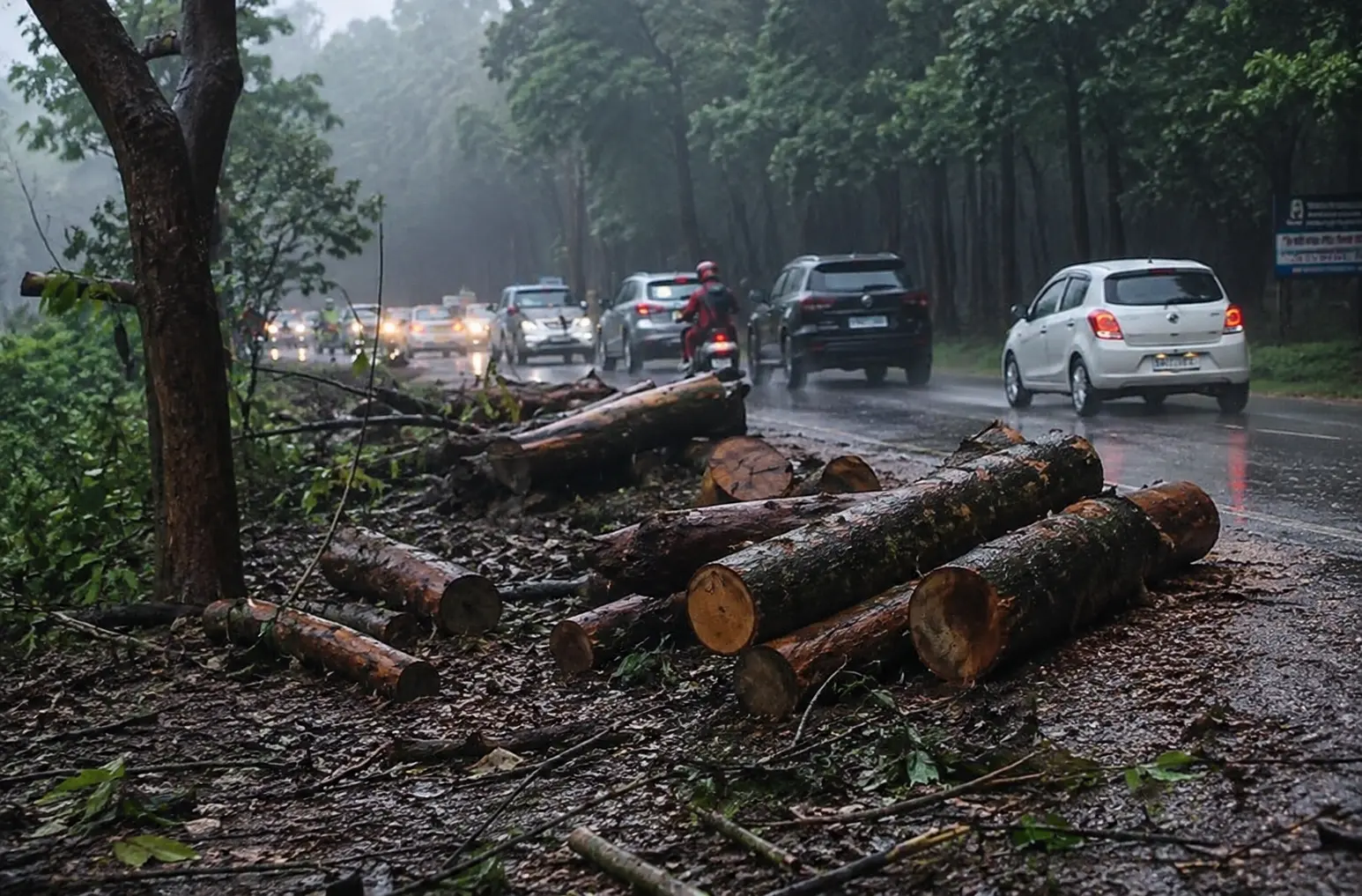
Trees are being cut along a roughly 20-kilometre stretch of NH-07 between Bhaniyawala and Rishikesh, near a spot locally known as Saat Mod. The felling is part of a highway-widening project meant to turn the road into a four or six lane highway. Authorities plan to fell 4,369 trees in the area, of which 754 will be transplanted while 3,605 will be cut down.
The trees under threat are mostly mature Sal trees some decades old growing in a stretch that borders the Rajaji Tiger Reserve and an elephant corridor. That combination (old-growth forest + wildlife corridor + a national highway project) is exactly why this has become such a flashpoint.
Why Is This Project Happening?
The tree felling is part of the ₹743-crore Bhaniyawala–Jolly Grant–Rishikesh Four Laning Project on NH-07, a nearly 20-kilometre highway expansion being undertaken by NHAI. The government says the project aims to improve connectivity between Dehradun, Jolly Grant Airport and Rishikesh, reduce congestion during the Char Dham Yatra, and handle the region’s steadily rising traffic.
The Char Dham Yatra route sees millions of pilgrims and tourists every year, and traffic bottlenecks on this stretch are a real, well-documented problem this isn’t a minor village road. NHAI has stated that all statutory permissions are in place, and that the Uttarakhand High Court had clarified there was no continuing stay on the tree felling. The project also includes some wildlife safeguards: a 3.5-km elephant underpass and culverts for smaller animals.
The government’s case, in other words, has real weight behind it. What’s actually being disputed is how the project is being carried out, not whether Uttarakhand needs a better highway at all. Anyone framing this as pure recklessness on one side is skipping past that.
Who Is Protesting, and Why?
Protesters a mix of local residents, environmental activists, Uttarakhand Kranti Dal members, and students have been at Saat Mod for over a week, physically trying to stop tree-cutting crews. On July 15, police arrested 13 people (nine men and four women) and detained four more after protesters tried to obstruct the highway-widening work, some by hugging trees.
Their core arguments, drawn from multiple activists on the ground:
- Groundwater and temperature: Advocate Ashutosh Kothari warned that cutting the trees will increase local temperatures and harm groundwater levels.
- Irreversibility: Activists argue mature, decades-old forest cannot be meaningfully replaced by sapling transplants the ecological function of an old tree takes decades to rebuild, if it rebuilds at all.
- Scale of past loss: Activist Anoop Nautiyal cites RTI data showing 46,203 hectares of forest land have been lost to development in Uttarakhand since the state’s formation more than 250 acres lost every single day.
- Wildlife conflict: Nautiyal also links the unchecked pressure on Uttarakhand’s forests to a rise in man-animal conflict, noting 36 deaths from such conflict in 2026 alone.
One protester’s comment to ANI captures the emotional core of the movement: he described losing tree canopy as directly increasing heat on the ground, and said ordinary people unlike the wealthy who can leave have to live with the consequences.
The protest has also picked up a cultural dimension. Activists announced this year’s Harela festival traditionally a celebration of greenery in Uttarakhand would be marked as a “Black Harela,” specifically to protest the scale of tree and forest cutting in the state. The symbolism is deliberate: celebrating a greenery festival while thousands of trees are being felled a few kilometres away struck many locals as absurd. The irony runs deeper than Harela alone India had just marked Van Mahotsav, its national tree-planting festival in the first week of July, only weeks before felling began in earnest at Saat Mod.
Babita, a local resident, shares her experience of joining the protest — she describes bringing her two-and-a-half-year-old daughter along, explaining that a Sal tree takes a hundred or two hundred years to grow but can be felled in under half an hour. Babita says she wants her daughter to grow up knowing how to stand up for her rights which is why she brought her along rather than leaving her at home. (Source: Down To Earth)
Commentators have also drawn a direct line to the 1970s Chipko Movement — Uttarakhand’s original tree-hugging protest against commercial logging noting that residents embracing trees and sitting before logging machinery has drawn inevitable comparisons to that history, except this time it’s unfolding against the backdrop of an already-warming climate.
The Legal Battle
This is where the story gets complicated, and where a lot of casual coverage gets it wrong.
- July 11: The Uttarakhand High Court dismissed a contempt petition alleging violation of its previous orders, ruling that NHAI had not breached any judicial direction because no stay against tree felling was actually in force.
- Petitioners then moved the Supreme Court, seeking an immediate halt.
- July 15: Protesters were banking on a Supreme Court order this day. It didn’t fully resolve things.
- Coming week (around July 20–21): Activist Ridhima Paul, who filed a contempt of court application in the Supreme Court, expressed hope the case would be heard around July 20 or 21.
So as of today, July 19, there is no final Supreme Court ruling. The legal fight is genuinely still open.
The Government’s Response: A Pause, Not a Cancellation
The most significant recent development came from the state government itself. On July 19, Uttarakhand Chief Minister Pushkar Singh Dhami announced that tree felling would remain suspended until a satisfactory consensus is reached among all stakeholders, and directed fresh consultations with local residents, public representatives and subject experts.
This followed an earlier pause order. On July 18, Dhami had already officially paused the felling, following protests from environmentalists, students and local residents concerned about the ecological impact on Rajaji National Park, and stated that development must be balanced with environmental protection and public sentiment.
Important nuance: this is a suspension pending dialogue, not a cancellation of the project. NHAI has not withdrawn the plan, and the elephant underpass and other mitigation measures remain part of the design. Whether the pause holds past the Supreme Court hearing this week is the real question.
What’s the Actual Environmental Impact?
Strip away the politics and the core environmental concerns are grounded in real forestry science:
- Microclimate disruption — mature tree canopies regulate local temperature and humidity; removing them concentrates heat on exposed roads and adjacent land.
- Groundwater recharge — root systems of old-growth trees help rainwater percolate into the soil; losing that cover can worsen both flooding and dry-season water scarcity.
- Wildlife corridor fragmentation — this stretch sits near the Rajaji Tiger Reserve and an established elephant movement corridor, raising real risk of increased man-animal conflict.
- Transplant survival rates — of the 4,369 trees, only 754 are slated for transplant rather than felling. Tree transplantation, especially for large mature Sal trees, has historically low survival rates in Indian highway projects a concern activists have raised repeatedly, pointing to past “tree graveyards” from similar projects.
None of this makes the highway project illegitimate traffic congestion and pilgrim safety are real problems too. But the “3,000+ trees vs. one road” framing flattens what’s actually a genuine trade-off between infrastructure need and ecological cost.
Frequently Asked Questions
How many trees are being cut in Rishikesh?
4,369 trees are slated for removal in the Saat Mod area 3,605 will be cut and 754 will be transplanted, as part of the Bhaniyawala–Jolly Grant–Rishikesh highway widening project.
Why are trees being cut in Rishikesh?
They’re being cleared for a ₹743-crore NHAI project to widen a 20-km stretch of NH-07 into a four/six-lane highway, aimed at easing traffic and improving connectivity for the Char Dham Yatra route.
Has the Rishikesh tree felling been stopped?
Yes, for now. Chief Minister Pushkar Singh Dhami suspended tree felling on July 18–19, 2026, and ordered fresh consultations with locals and experts. The project itself has not been cancelled.
What did the Supreme Court decide?
As of July 19, 2026, no final Supreme Court order has come through. A hearing on the contempt application was expected around July 20–21, 2026.
Who is protesting the tree cutting?
Local residents, environmental activists, members of the Uttarakhand Kranti Dal, and students have been protesting at Saat Mod since early July, with 13 people arrested on July 15 for obstructing highway work.
Is this near a wildlife reserve?
Yes. The felling site borders the Rajaji Tiger Reserve area and a recognised elephant corridor, which is central to activists’ ecological objections.
What is “Black Harela” and why is it connected to this issue?
Harela is a traditional Uttarakhand festival celebrating greenery. Activists marked this year’s Harela as “Black Harela” dressing in black specifically to protest the scale of tree felling happening in the state at the same time.
Will the trees still be cut eventually?
That depends on the outcome of the Supreme Court hearing and the government’s promised stakeholder consultations. The pause is temporary, not a cancellation of the project.
The Bottom Line
A state government has now paused its own project twice under public pressure. The Supreme Court still hasn’t ruled. And a highway that Uttarakhand genuinely needs is on hold while nobody has produced a real accounting of what a 20-kilometre strip of old-growth Shivalik forest is actually worth. Whichever way the Supreme Court hearing goes this week will decide whether Saat Mod becomes the moment public pressure changed a project’s course, or one more line in the state’s 46,000-hectare forest-loss tally.

Abhay Ramola researches world festivals across primary sources, local accounts, and on-ground reporting. He founded Dionfest to cover what gets missed when festivals become tourism content the history, the ritual, and the people behind it.