
Festival Food Waste: What Happens to Uneaten Food?
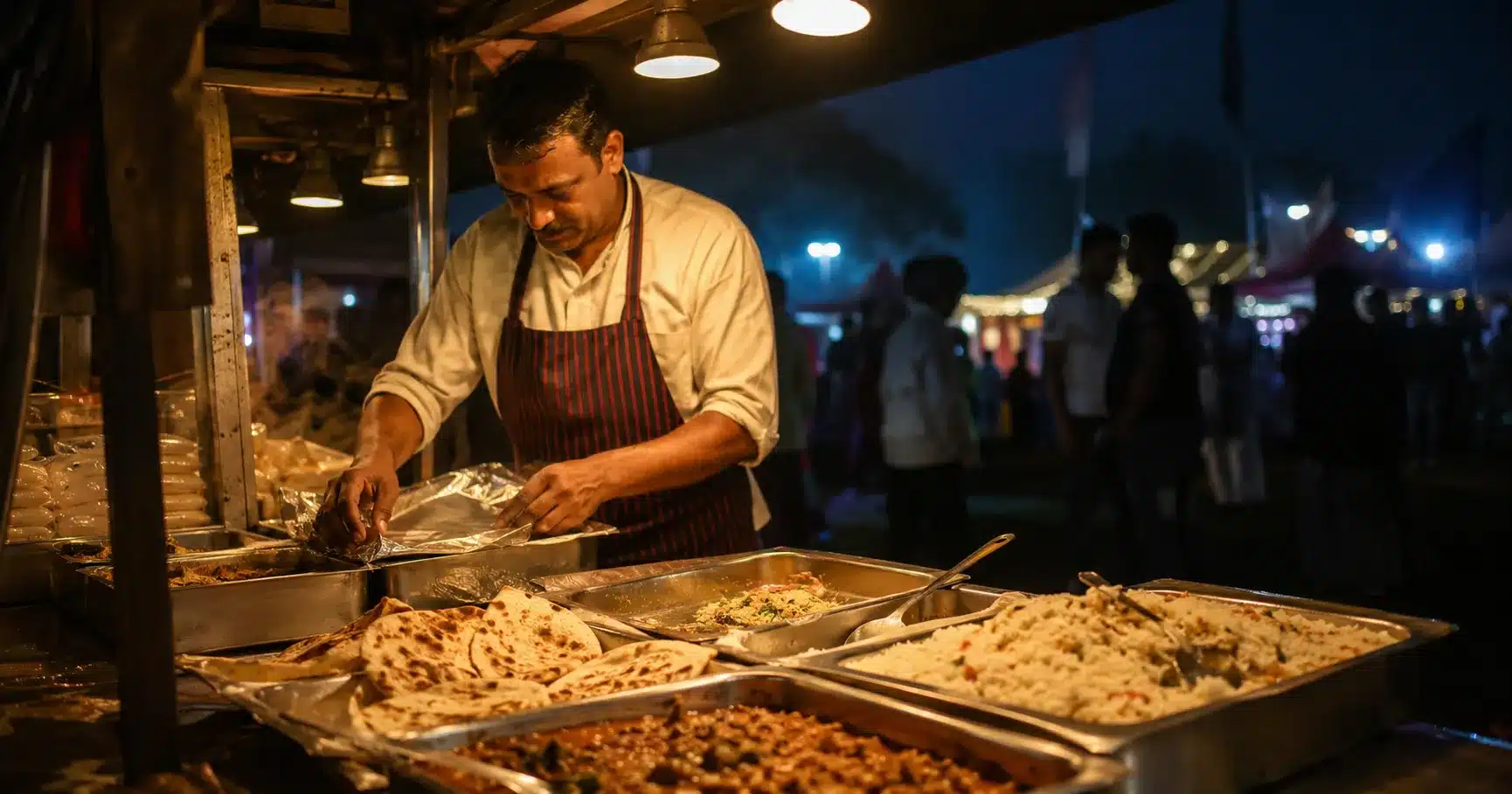
An hour before a food festival closes, most stalls are still fully stocked. Vendors would rather over-prepare than run out and lose sales, so they cook for the crowd they hope shows up, not the one that actually does. By closing time, trays of food that were perfectly fine at 6pm are either given away in a rush, boxed for volunteers, or binned, depending entirely on whether anyone organized a plan for that moment in advance.
That gap, between food that’s still good and what actually happens to it, is what this article is about. Festival food waste follows a specific chain: preparation, leftovers, a decision about what’s still edible, then either donation, composting, or landfill, where it eventually becomes methane. Each step is a choice point, and which way a festival goes at each one is usually decided months before the event, not in the panic of closing time.
Fast facts
- UK festivals generate an estimated 400 tonnes of food waste annually, equivalent to roughly 1 million meals, according to industry body NCASS and A Greener Festival
- A single festival food-rescue pilot (WOMAD) redistributed 2 tonnes of surplus food into the equivalent of 4,762 meals for vulnerable people
- Food waste in landfill produces methane within months, a gas roughly 80 times more potent than CO2 over a 20-year period
- Food scraps make up about 24% of what goes into US landfills, and are responsible for the majority of landfill methane emissions, per the EPA
- Festival food waste behaves differently from household food waste mainly because of forecasting uncertainty and fragmented vendor responsibility, not because festival-goers are more wasteful people
Festival food waste moves through a predictable chain: preparation based on uncertain turnout, leftovers at closing time, a sorting decision between still-edible and spoiled, then donation, composting, or landfill. Landfilled food waste is the fastest-acting source of methane in the entire waste stream, breaking down within months rather than years, which makes the sorting decision at the end of a festival night more consequential than it looks.
Where it starts: preparation and over-ordering

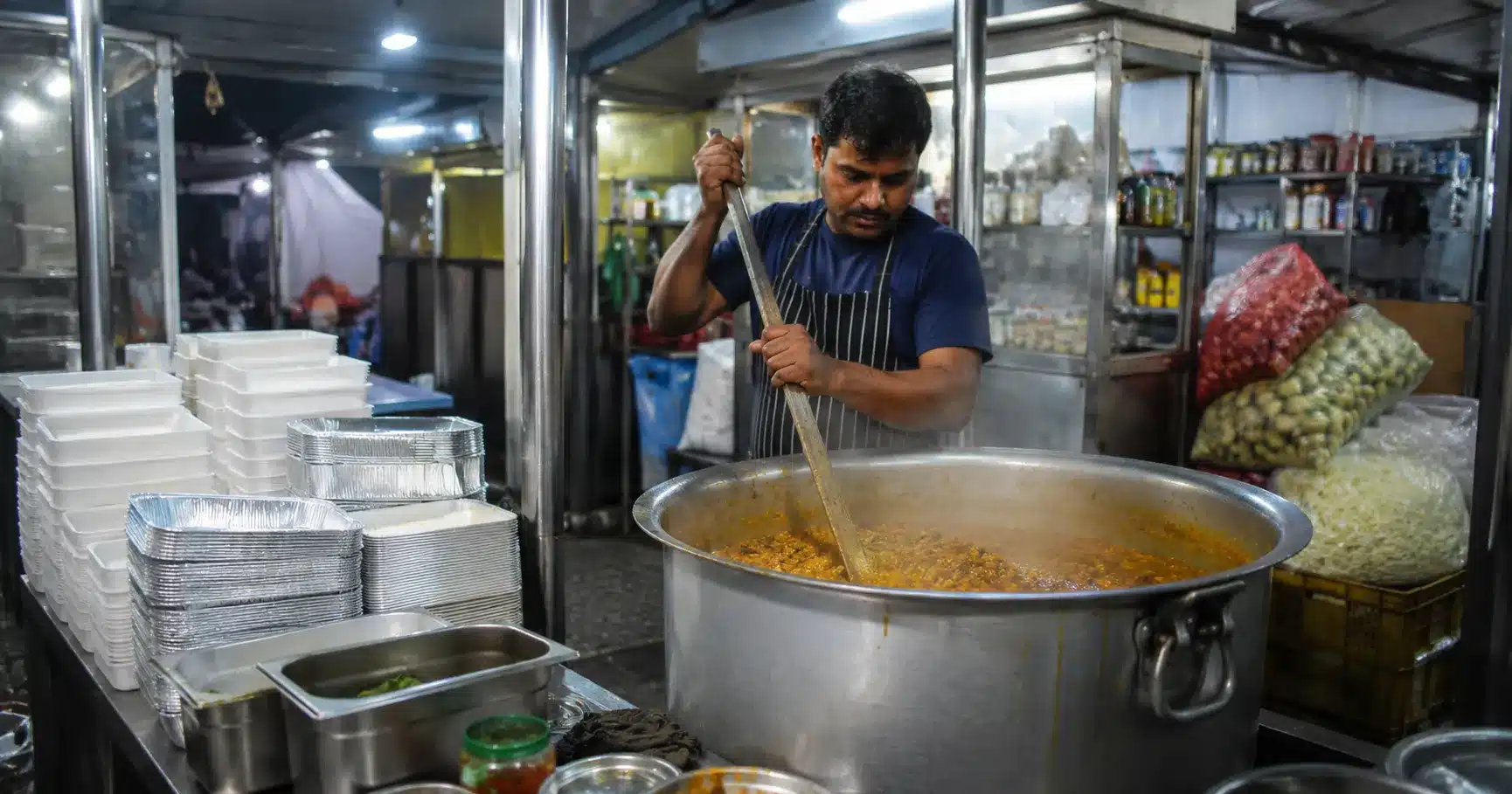
Festival food waste doesn’t begin at the bin. It begins at the prep table, days or weeks before the event, when vendors decide how much to buy and cook based on an attendance figure they can only estimate.
Weather, competing events, ticket sales that come in later than expected, all of it makes festival demand harder to forecast than a restaurant’s daily footfall. The commercial incentive points one direction: running out of food mid-festival means lost sales and a bad reputation, while over-preparing just means leftover stock. Vendors rationally hedge toward over-preparing, which is exactly why NCASS and A Greener Festival describe UK festival food waste as running into the thousands of tonnes annually even though most of it starts out perfectly edible. The problem isn’t recklessness. It’s dozens of independent vendors at a single event, each making their own forecasting bet with no coordination between them, which is a structurally different problem than a single household deciding how much rice to cook for dinner.
What happens to food that’s still good: donation and rescue

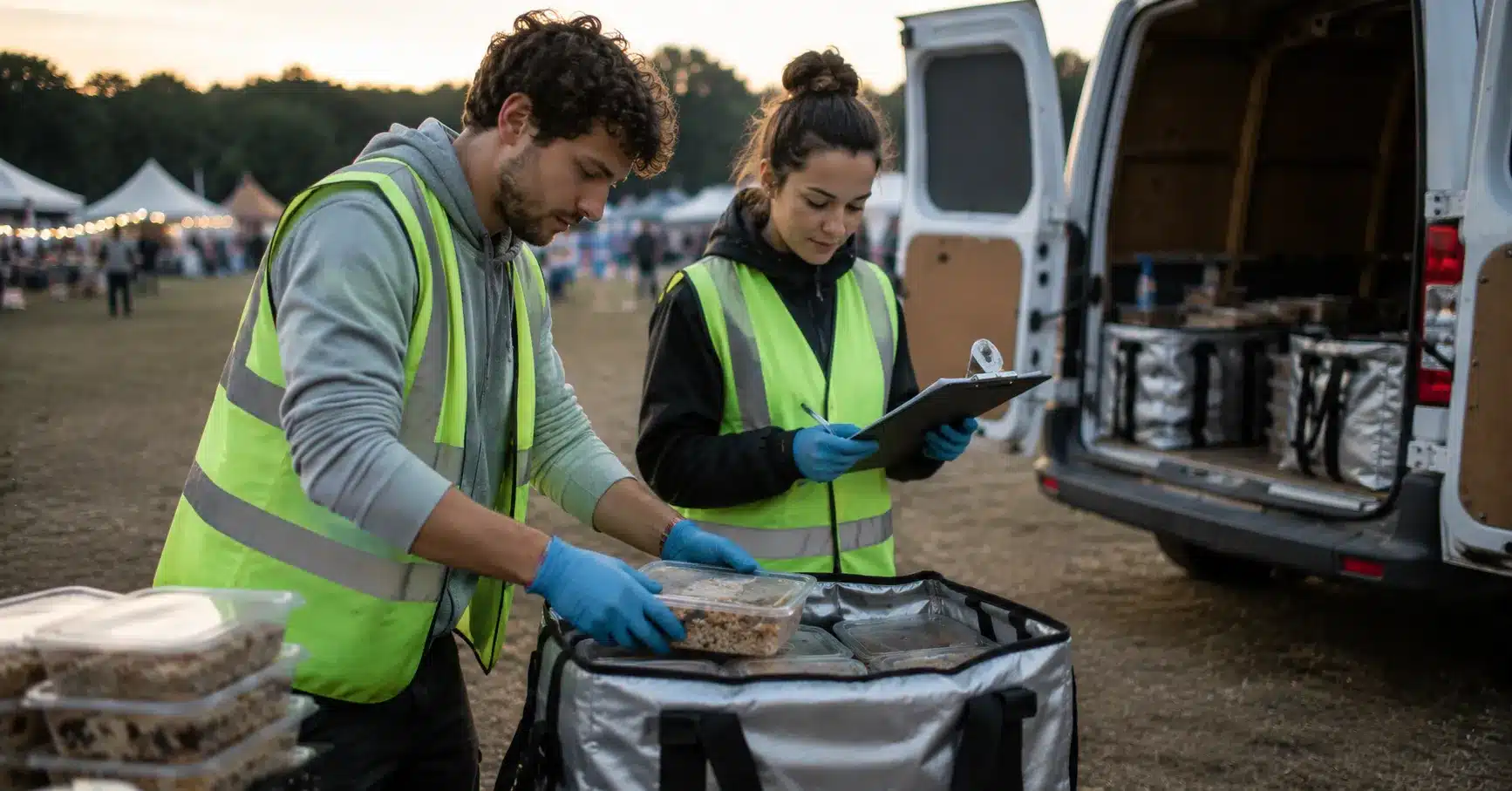
The best-case outcome for surplus festival food is that someone already built a system to catch it before the night ends.
EighthPlate, a UK programme run jointly by NCASS and A Greener Festival, piloted a redistribution scheme across festivals including WOMAD, working with 100 traders to redistribute 10 tonnes of surplus food. Two tonnes from WOMAD alone delivered the equivalent of 4,762 meals for vulnerable people. In the US, students working with Clean Vibes at the South Beach Wine & Food Festival diverted over 43 tons of total waste in one recent year, including nearly 24,000 pounds of food specifically rescued and donated to local shelters. In India, the Robin Hood Army operates as a zero-funds, entirely volunteer network across more than 200 cities, redistributing surplus food from restaurants and events directly to people who need it, a model that works at festivals the same way it works at a single restaurant with unsold food at closing time.
What separates a festival that donates food from one that doesn’t usually isn’t willingness. It’s whether a donation partner and a food-safety plan were arranged before the event started. Food rescue at speed and scale requires vetted recipients, transport, and someone with authority to make the call on-site, none of which can be improvised at 11pm on the last night.
What happens to what’s left: composting festival food waste
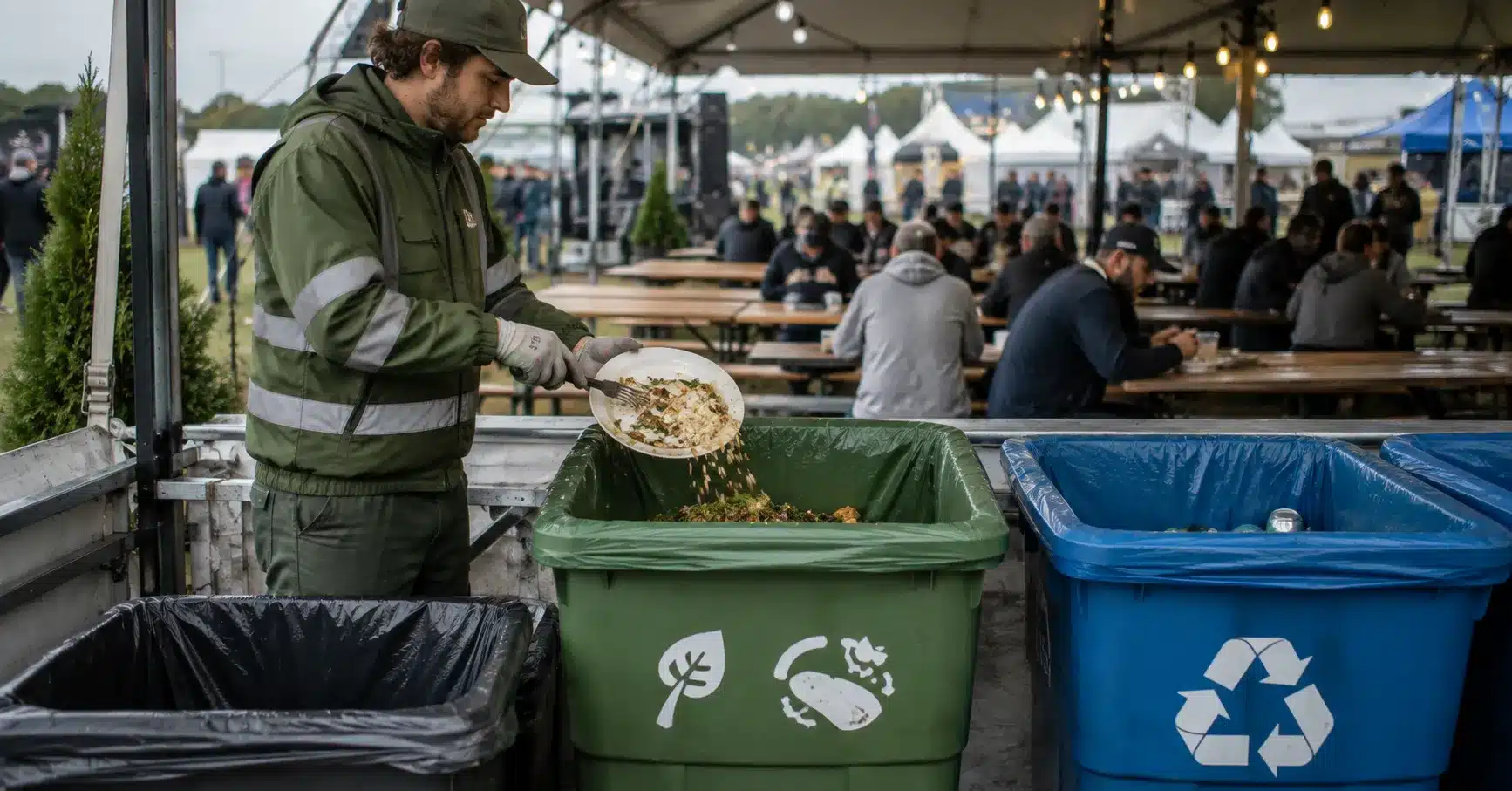
Food that’s no longer safe to donate, but is still organic material, has a second-best outcome: composting or anaerobic digestion instead of a landfill bin.
This is where some of the most established religious food-service traditions have a genuine head start. Delhi’s Sikh Gurdwara Management Committee has moved several of its largest langar (community kitchen) operations onto biogas plants that convert kitchen waste directly into fuel for cooking, including at Bangla Sahib and Rakab Ganj. Bangla Sahib alone serves food to an estimated 30,000 visiting devotees a day; converting its biodegradable waste into biogas rather than sending it to landfill both cuts the kitchen’s fuel costs and avoids the uncontrolled methane release that the same waste would otherwise produce. It’s the same basic chemistry as a landfill, organic matter breaking down without oxygen and releasing methane, just captured deliberately as fuel instead of leaking into the atmosphere.
At Western food festivals, composting partnerships work similarly but at smaller scale: local composting services collect food scraps and plate waste directly from vendor stalls, diverting it from general waste streams before it ever reaches a landfill truck. The infrastructure required is modest, bins, a collection contract, and vendor cooperation, but it has to be arranged in advance the same way donation does.
What happens to the rest: landfill and methane

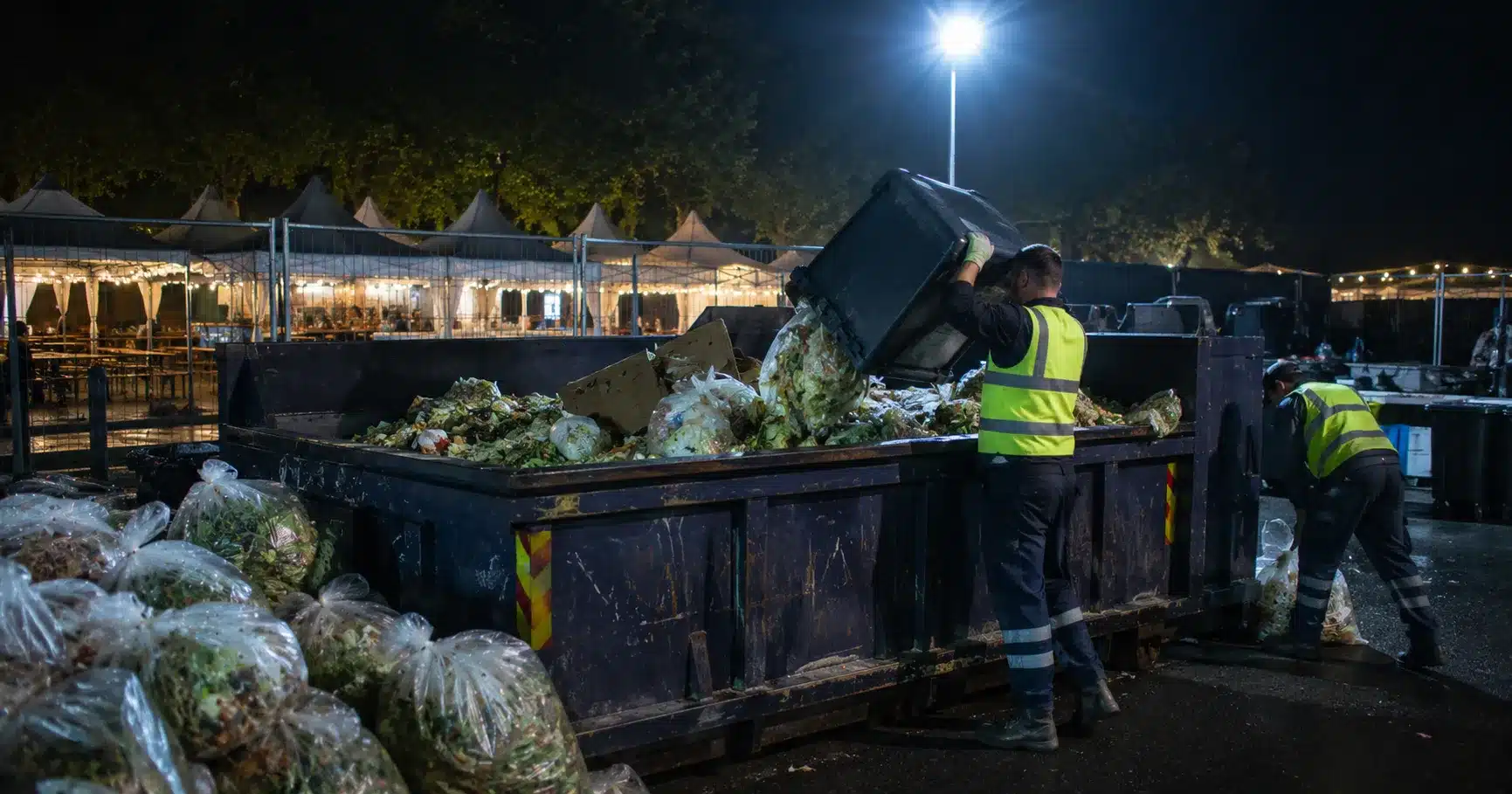
Whatever isn’t donated or composted goes to landfill, and this is where the chain actually becomes an environmental problem rather than just a logistics one.
Food scraps make up roughly 24% of material sent to landfill in the United States, and the EPA has found that landfilled food waste is responsible for the majority of the methane that landfills generate, in significant part because food decomposes and starts emitting methane within months of burial, far faster than most other landfilled material. Methane is roughly 80 times more potent than carbon dioxide as a greenhouse gas over a 20-year window, which is why food waste specifically, not general festival litter, tends to dominate a festival’s actual climate impact once everything is accounted for. Globally, food waste is estimated to account for around 8% of total greenhouse gas emissions, a UN figure that has held up across multiple independent analyses since it was first published.
The industry framing that keeps recurring in festival waste research is a simple ratio: one tonne of food waste sent to landfill is roughly equivalent to four tonnes of CO2 once its methane output is converted to carbon-equivalent terms. That’s the actual cost of skipping the donation or composting step, not an abstract sustainability talking point but a specific, calculable number tied to each tonne that goes in a bin instead of somewhere else.
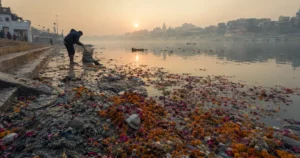
For the water-specific version of this same story, where food and other organic offerings end up in rivers rather than landfill, we’ve covered that separately in our piece on religious festivals and river water quality, which follows the same organic-matter-meets-oxygen-depletion mechanism, just in a different medium.
Why food waste at festivals is different from household food waste
It’s tempting to treat festival food waste as household food waste at a bigger scale, but the two behave differently enough that the same fixes don’t automatically transfer.
Households have a buffer that festivals don’t: the fridge. A family with too much food from dinner can defer the decision for days. A festival vendor operating out of a folding table has hours, sometimes less, before food safety rules require it to be discarded regardless of how good it still looks.
Demand forecasting works completely differently. A household knows its own eating patterns from years of repetition. A festival vendor is forecasting demand for a one-off or rare annual event, with weather, competing events, and last-minute ticket sales all capable of throwing the number off by a wide margin, in either direction.
Responsibility is fragmented, not centralized. One household makes one decision about its own leftovers. A single festival ground might have thirty or a hundred independent vendors, each running their own kitchen, their own forecast, and their own waste decision, with no single person accountable for the total. NCASS has described this as one of the central challenges facing festival organizers specifically: they set the venue and the rules, but rarely control what individual vendors actually do with their unsold stock.
The social context around eating is different too. Festival food culture leans toward sampling, trying multiple vendors, and large default portions designed to look good rather than match appetite, in a way that ordinary home cooking, built around known portion sizes for a known number of people, generally doesn’t.
None of this makes festival food waste harder to fix than household food waste. It makes it a different problem that needs a different fix: not “waste less,” which is a demand-side household message, but “coordinate the supply side in advance,” which is an organizer-level, pre-event decision.
What langar and community kitchens get right
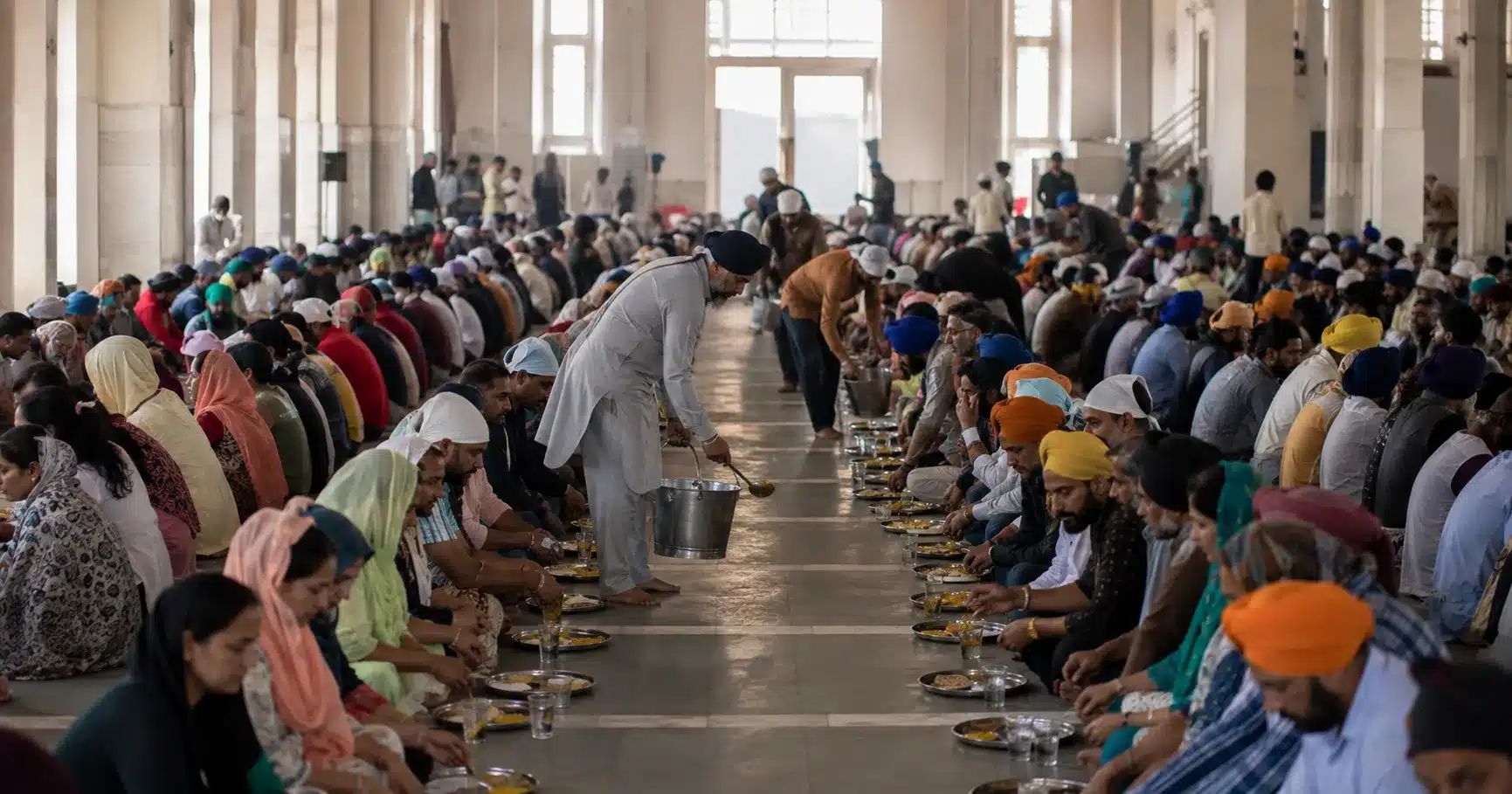
If festivals are looking for a working model rather than a general principle, one already exists, and it predates the modern food-waste-reduction movement by centuries.
Sikh langar, the free community kitchen tradition attached to every gurdwara, runs on rules that directly target the causes described above. Food is typically cooked fresh and not stored for more than a day, closing the household “fridge buffer” gap by simply not creating a backlog in the first place. Visitors are instructed to take only what they will finish, a demand-side norm that most commercial festival food service has no equivalent of. And where leftover ingredients do exist, they’re distributed to local shelters and charities as a matter of routine practice, not an occasional pilot programme. The same pattern holds at Sufi langars, temple annadanam kitchens, and Missionaries of Charity feeding operations across India, which collectively serve millions of meals a year through community kitchens built around minimizing surplus rather than maximizing choice. We’ve written more about the broader footprint of festival flower and food offerings in Indian religious practice separately.
The honest caveat: langar operates at a fixed daily rhythm with a stable, repeat community, which is closer to a household’s predictability than a one-off festival’s is. It’s not a direct transplant. But the underlying principles, cook closer to actual demand, build redistribution into routine practice rather than treating it as a special pilot, and normalize taking only what you’ll eat, are directly transferable to how festival organizers structure vendor agreements, even if the exact kitchen model isn’t.
FAQ
How much food waste do festivals actually produce?
UK festivals are estimated to generate around 400 tonnes of food waste annually, equivalent to roughly 1 million meals, according to NCASS and A Greener Festival. City-specific and single-event figures vary widely depending on festival size, food service model, and whether a rescue or composting programme is already in place.
What happens to unsold food at festivals?
It typically follows one of three paths: donation to food rescue organizations if a partnership was arranged in advance, composting or anaerobic digestion if a collection service is available, or landfill, where it eventually breaks down and releases methane. Which path it takes is usually decided by planning done before the event, not decisions made on closing night.
Why does food waste in landfill produce methane?
Landfilled organic material, including food, decomposes without oxygen, a process that produces methane as a byproduct. Food waste breaks down and starts emitting methane within months of being buried, faster than most other landfilled materials, which is why food scraps are responsible for a disproportionate share of landfill methane emissions specifically.
How is festival food waste different from household food waste?
Festivals lack the storage buffer households have (no fridge to defer the decision), forecast demand for a one-off event rather than a repeated daily pattern, and split responsibility across many independent vendors instead of one household decision-maker. The fix for festivals is coordinating vendors in advance, not simply asking individuals to waste less.
How do festivals reduce food waste?
The most effective approaches target a specific stage of the chain: pre-arranged donation partnerships with organizations like food rescue networks, dedicated composting or biogas collection for kitchen scraps, and vendor agreements that build a food-safety-compliant redistribution plan into the event itself rather than leaving it to improvisation at closing time.
Can festival food waste be composted?
Yes, and some of the most effective examples predate the term “food waste reduction” by decades. Delhi gurdwara langars have converted community-kitchen waste into biogas for cooking fuel, and Western food festivals increasingly contract local composting services to collect food scraps directly from vendor stalls.
What is the connection between festival food waste and a festival’s overall carbon footprint?
At most festivals, waste and travel are the two dominant carbon sources, but they behave differently: travel emissions scale with distance traveled by attendees, while food waste emissions scale with how much edible food is thrown away rather than redistributed. One tonne of food waste in landfill is roughly equivalent to four tonnes of CO2 once its methane output is converted to carbon-equivalent terms, making it one of the more concentrated, fixable pieces of a festival’s footprint. We’ve compared festival waste totals across festival types in more detail separately.
The bottom line
Festival food waste isn’t primarily a behavior problem at the point of the bin. It’s a planning problem that starts with a forecasting bet placed weeks in advance and ends with whichever infrastructure, donation partner, composting contract, or neither, was arranged before the gates opened. Langar kitchens and food-rescue pilots that actually work all share the same feature: the redistribution plan existed before the surplus did. Festivals that treat that as a pre-event checklist item consistently do better than ones that treat it as a last-night scramble.

Abhay Ramola researches world festivals across primary sources, local accounts, and on-ground reporting. He founded Dionfest to cover what gets missed when festivals become tourism content the history, the ritual, and the people behind it.




2 thoughts on “Festival Food Waste: What Happens to Uneaten Food?”