Festival Noise Pollution: How Loud Events Affect People, Pets and Wildlife
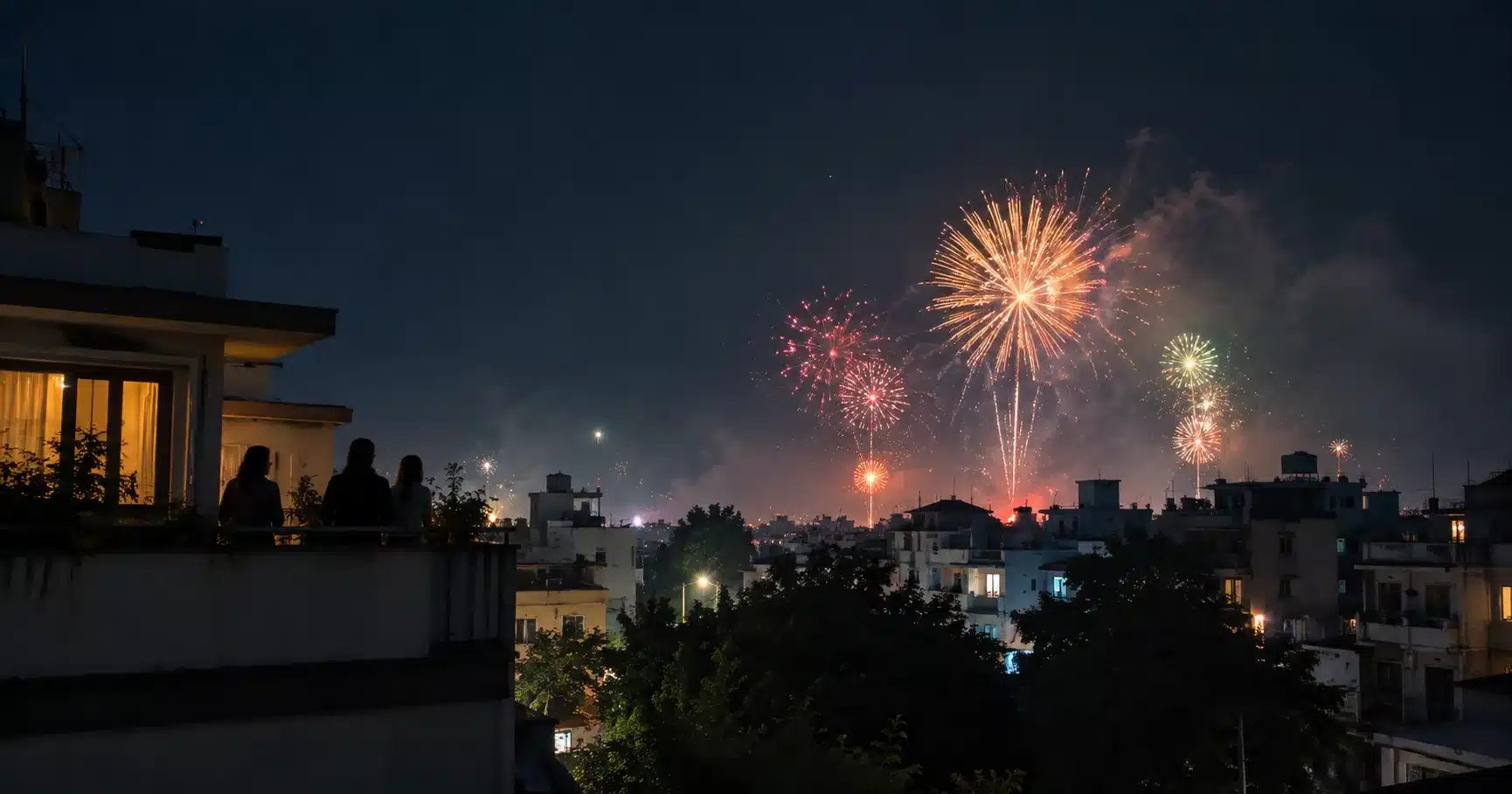
A firework display lasts twenty minutes. The birds it displaces don’t come back down for hours, and in some documented cases, entire nights. Festival noise pollution gets discussed almost entirely in human terms, complaints, hearing damage, sleepless neighbors, but the sound leaving a festival ground travels through the same air whether the ears on the other end belong to a person, a dog, or a flock of waterfowl five kilometres away.
This article covers festival noise pollution across all three: the people at the event and living near it, the pets caught in the middle without any say in the matter, and the wildlife that has no concept of what a festival even is, only that the sky is suddenly loud and it needs to move.
Fast facts
- Firework noise can reach up to 137 decibels, well above the 140 dB threshold generally considered the onset of pain
- A 2023 radar study in Birmingham, UK found Diwali fireworks triggered the largest increase in the number of birds taking flight of the three annual firework events studied, while Bonfire Night triggered the largest increase in how high they flew
- US animal shelters see a 30–60% spike in lost pet intakes in the days immediately following July 4th fireworks
- India’s residential noise limit is 55 dB in the day and 45 dB at night, per Central Pollution Control Board rules, with a 15-day annual exemption window for religious and cultural festivals
- UK festival organizers increasingly set their own stricter limits than the law requires: recent licensing filings show target limits around 60 dBA to avoid resident complaints altogether
Festival noise pollution affects three distinct groups through the same mechanism, sound pressure that doesn’t stop at a fence line, but the impact looks different for each: hearing damage and sleep disruption for people, acute anxiety and flight risk for pets, and measurable behavioral disruption, including birds abandoning roosts mid-flight, for wildlife. Regulatory limits exist in most countries, but enforcement and awareness lag furthest behind for the two groups that can’t file a complaint.
Loudspeakers

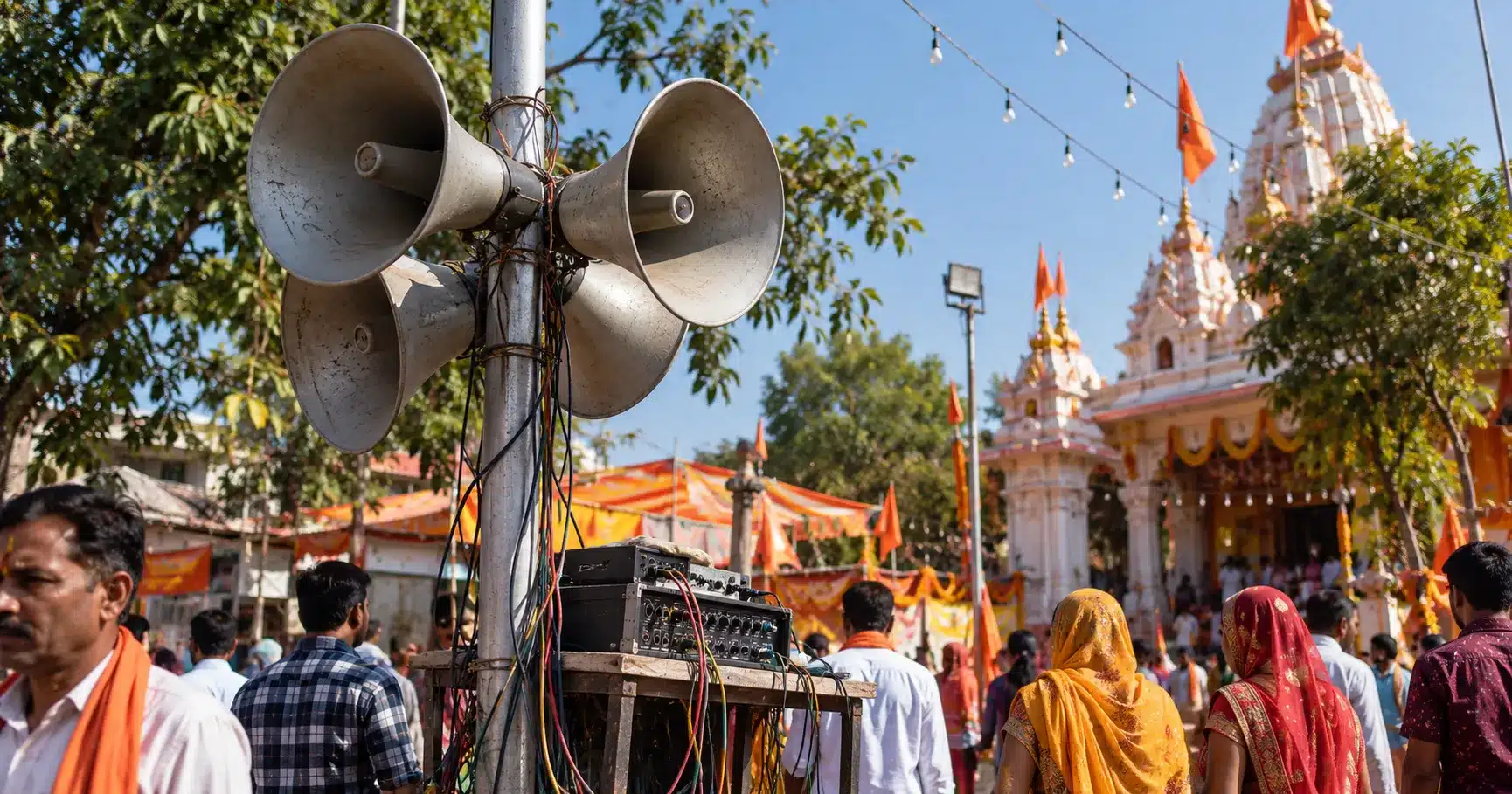
Loudspeakers sit at the center of one of the most legally contested corners of festival noise pollution anywhere in the world, and India’s courts have spent two decades trying to draw the line.
The Supreme Court’s landmark 2005 ruling, In Re: Noise Pollution, established that a noise-free environment is part of the fundamental right to life under Article 21, introducing the concept of “aural aggression”: amplified sound forced onto unwilling listeners, regardless of its source or intent, is subject to restriction. The Noise Pollution (Regulation and Control) Rules, 2000 that followed set a general 10pm-to-6am ban on loudspeakers and public address systems, with one significant carve-out: state governments may grant a 15-day annual exemption for religious or cultural festivals, extending permitted hours to midnight, though silence zones near hospitals, schools, and courts remain protected even during that window. The Bombay High Court later reinforced this directly, stating plainly that no religion prescribes disturbing others’ peace through amplified prayer, and introduced a graded enforcement system, caution, then fines, then equipment seizure, now used in cities including Mumbai and Bengaluru.
The politics around enforcement remain genuinely unresolved. Ahead of recent Ganesh Chaturthi and Janmashtami celebrations, Karnataka police issued loudspeaker and procession guidelines that some state legislators publicly criticized as restricting Hindu festivities, while courts have continued to describe the same rules as a necessary, religion-neutral balance between worship and the right to peace. Both positions get argued in good faith, and the legal framework itself, built on decades of competing petitions, reflects that ongoing tension rather than a settled answer.
Concerts
Concert volume is a more straightforwardly physical problem: sustained exposure above certain thresholds causes measurable, permanent hearing damage, and most major concerts exceed those thresholds by a wide margin.
Front-of-house sound at large concerts commonly runs between 100 and 120 dB, loud enough that even brief unprotected exposure carries real risk under most national hearing-safety guidelines, which generally recommend no more than 15 minutes of unprotected exposure at 100 dB. Dr. Kalyani Mandke, an audiologist affiliated with India’s Awaaz Foundation, has pointed out that specific frequencies at these output levels can cause lasting damage regardless of exposure duration, and that many festivals don’t consistently enforce the volume rules that exist on paper. Unlike fireworks or loudspeakers, concert noise is sustained rather than a burst, which is precisely what makes it more damaging to hearing over the length of a full set or festival day.
Fireworks
Fireworks are the loudest single noise source most festivals produce, and the least predictable for anyone, human or animal, standing nearby.
Individual firework bursts can reach up to 137 decibels, within range of the 140 dB level widely cited as the threshold for immediate pain and acoustic trauma. In India, firecrackers exceeding 125 dB(AI) measured at 4 metres are banned outright under the Environment Protection Act, and the Supreme Court has restricted Diwali firecracker use to specific evening windows, commonly 8pm to 10pm, with several states now permitting only lower-emission “green crackers.” The noise problem compounds with the visual and chemical one: firework smoke reduces visibility, and the same displays that trigger noise complaints are frequently the same ones raising air quality concerns during Diwali specifically, a connection worth reading alongside the fireworks noise data above rather than in isolation.
What’s less commonly reported is what happens to wildlife the moment a firework goes off, covered in detail in the next two sections, because the research here is more extensive, and more surprising, than most coverage of fireworks noise acknowledges.
Night festivals
Night festivals compress the same noise problem into the hours when complaints are most likely and tolerance is lowest.
Los Angeles’s Hard Summer festival illustrates both the problem and a workable fix. In 2024, the electronic music festival drew dozens of noise complaints from residents in Inglewood and El Segundo, with one attendee’s account describing bass audible from as far as eight miles from the venue. The following year, after organizers adjusted sound direction and output levels, city officials confirmed complaints dropped substantially for the same event at the same venue. In the UK, licensing filings for events like Wychwood Festival show organizers now proposing their own target limits, 60 dBA measured over five minutes, with a 65 dBA absolute ceiling, specifically to avoid the kind of resident pushback that can threaten a festival’s future license. The lesson repeats across nearly every case study available: noise limits negotiated and enforced before the event consistently produce fewer complaints than limits discovered through complaints after the fact.
Residential areas
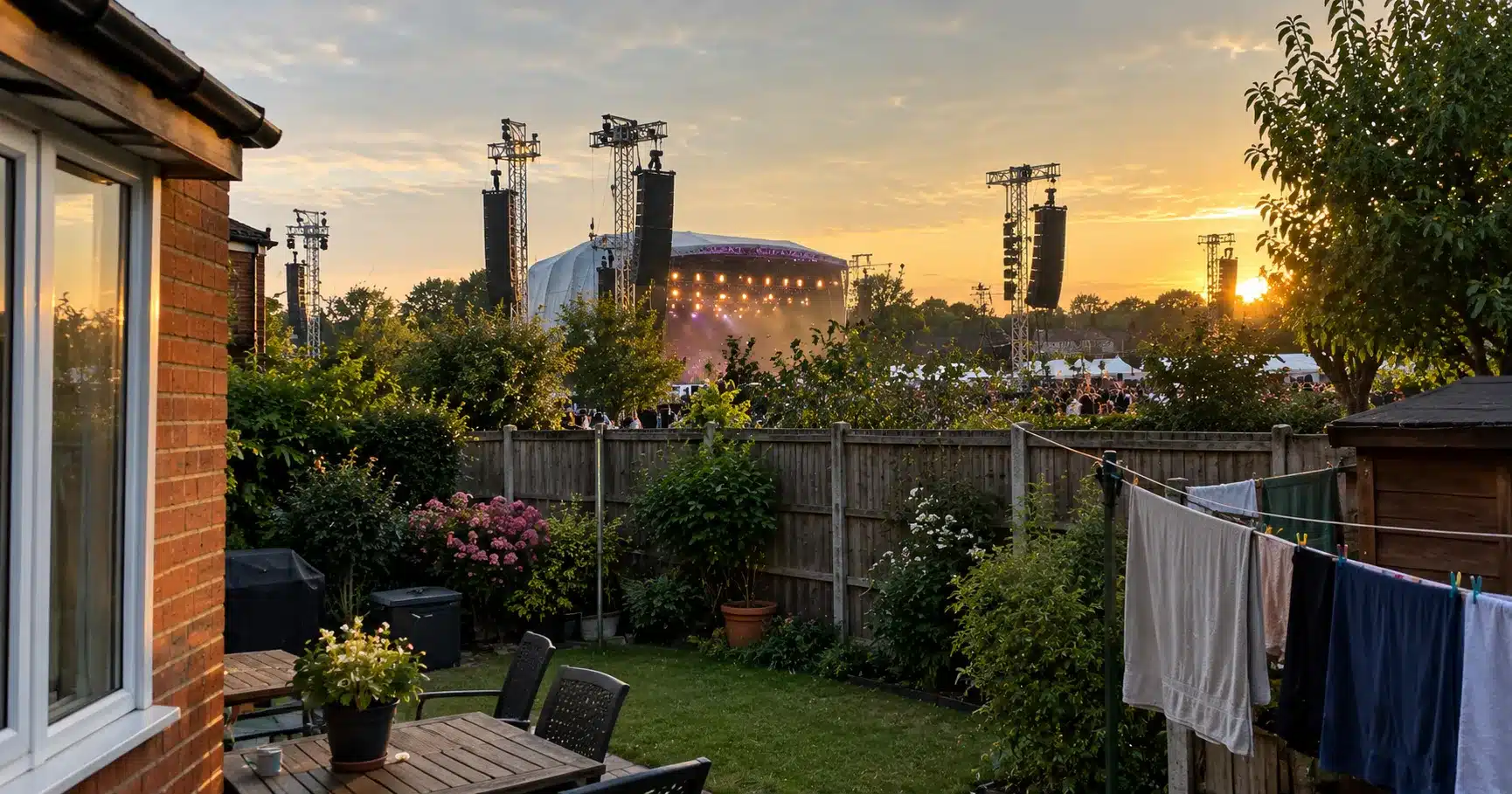
Every night festival noise problem eventually becomes a residential noise problem, because festival grounds and neighborhoods usually share a border.
A compiled dataset of London outdoor event noise complaints going back over a decade shows the same pattern across multiple major festivals: complaint counts spike sharply in years when a festival raises capacity or extends hours, then drop just as sharply the following year once sound management measures are tightened, often to single digits. One resident submission to a UK council licensing hearing captured the compounding effect directly: noise levels that made it “impossible for children to sleep, older people to be comfortable in their own homes,” while also noting pets in the area were “badly affected by the loudness of the music and announcements,” a reminder that residential noise complaints and the pet-specific harm covered later in this article are frequently the same event, described by two different household members.
Birds and festival noise pollution: what the radar studies actually show

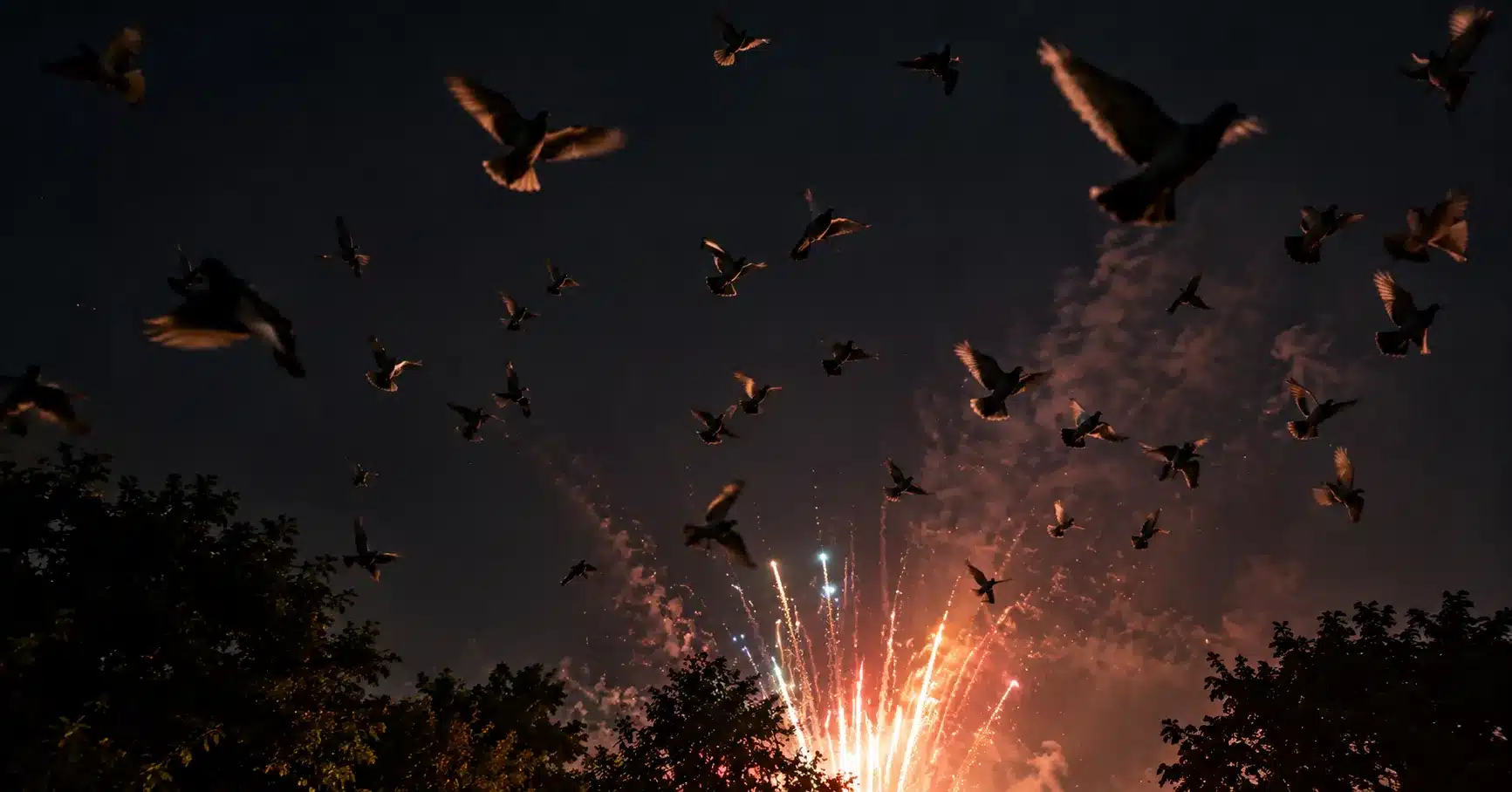
Fireworks and birds have now been studied directly, with radar, across two countries, and the results are more specific than “birds don’t like loud noises.”
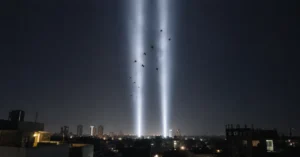
A 2023 study using L-band staring radar in Birmingham, UK measured bird flight activity during three annual firework periods, Diwali, Bonfire Night, and New Year’s Eve, against quiet baseline nights. Birds flew at significantly higher altitudes and in significantly greater numbers during all three events, but which event triggered the strongest response depended on which measure you looked at: Diwali produced the largest jump in how many birds took flight, while Bonfire Night produced the largest jump in how high they flew, both larger effects than New Year’s Eve on either measure. Either way, the disturbance is particularly costly in colder months: birds forced into flight at night, when they’d otherwise be roosting, burn energy they need for thermoregulation at the coldest part of the year. A separate, earlier weather-radar study in the Netherlands found that New Year’s Eve fireworks displaced hundreds of thousands of birds nationwide in a single night, with the highest concentrations of displaced birds recorded over grasslands and wetlands, including protected nature conservation areas where migratory waterfowl overwinter.
Wildlife more broadly
Birds are simply the easiest species to track with radar. The underlying mechanism, an unpredictable, high-intensity noise triggering an anti-predator flight response, applies broadly across wildlife, not just to species that can be tracked mid-flight.
Researchers studying anthropogenic noise disturbance more broadly note that unpredictable sound sources like fireworks are consistently more disruptive to wildlife than constant background noise, such as traffic, because animals can partially habituate to steady noise but not to sudden, irregular bursts. Terrestrial mammals show measurable stress responses, elevated heart rate and cortisol, to the same firework and amplified-music triggers documented in birds, though radar-scale studies of these responses remain rarer simply because there’s no equivalent tracking technology for animals that don’t fly. The practical result for festival planning is the same regardless of species studied: proximity to any protected habitat, wetland, forest, or nature reserve, meaningfully raises the ecological stakes of a loud nighttime event, even when no single animal is harmed directly.
Pets

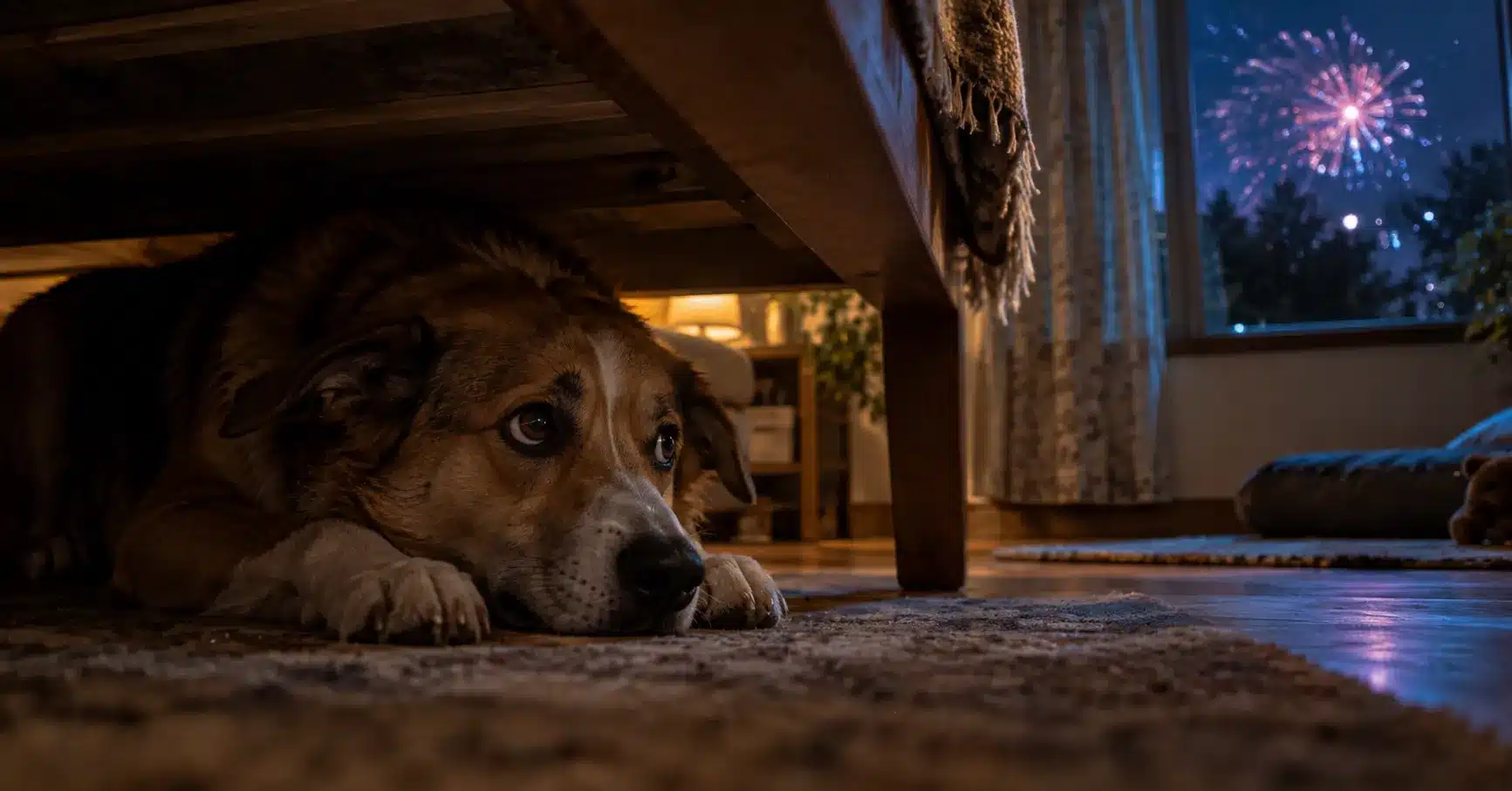
Of every group covered in this article, pets are the one where the data is most consistent, most measured, and most avoidable.
US animal shelters report a 30 to 60% spike in lost pet intakes in the days immediately following July 4th, according to data compiled by Shelter Animals Count, with July 5th consistently ranking as the single busiest day of the year for animal shelters nationwide. The ASPCA has found that roughly 19% of all lost pets went missing specifically because they were frightened by fireworks or other loud noise, and that most of those owners were caught completely off guard. The mechanism is physiological, not behavioral: sudden loud noise triggers a genuine fear response, elevated heart rate and a flood of stress hormones, that can override a normally well-trained animal’s usual behavior entirely, driving pets through screens, fences, and open doors they’d never normally attempt. Veterinary guidance consistently points to the same fixes: a secure, familiar space during fireworks, updated ID tags and microchip registration before the event, not during the panic afterward, and gradual noise desensitization training well ahead of a known loud event like a nearby festival or fireworks display.
Noise limits
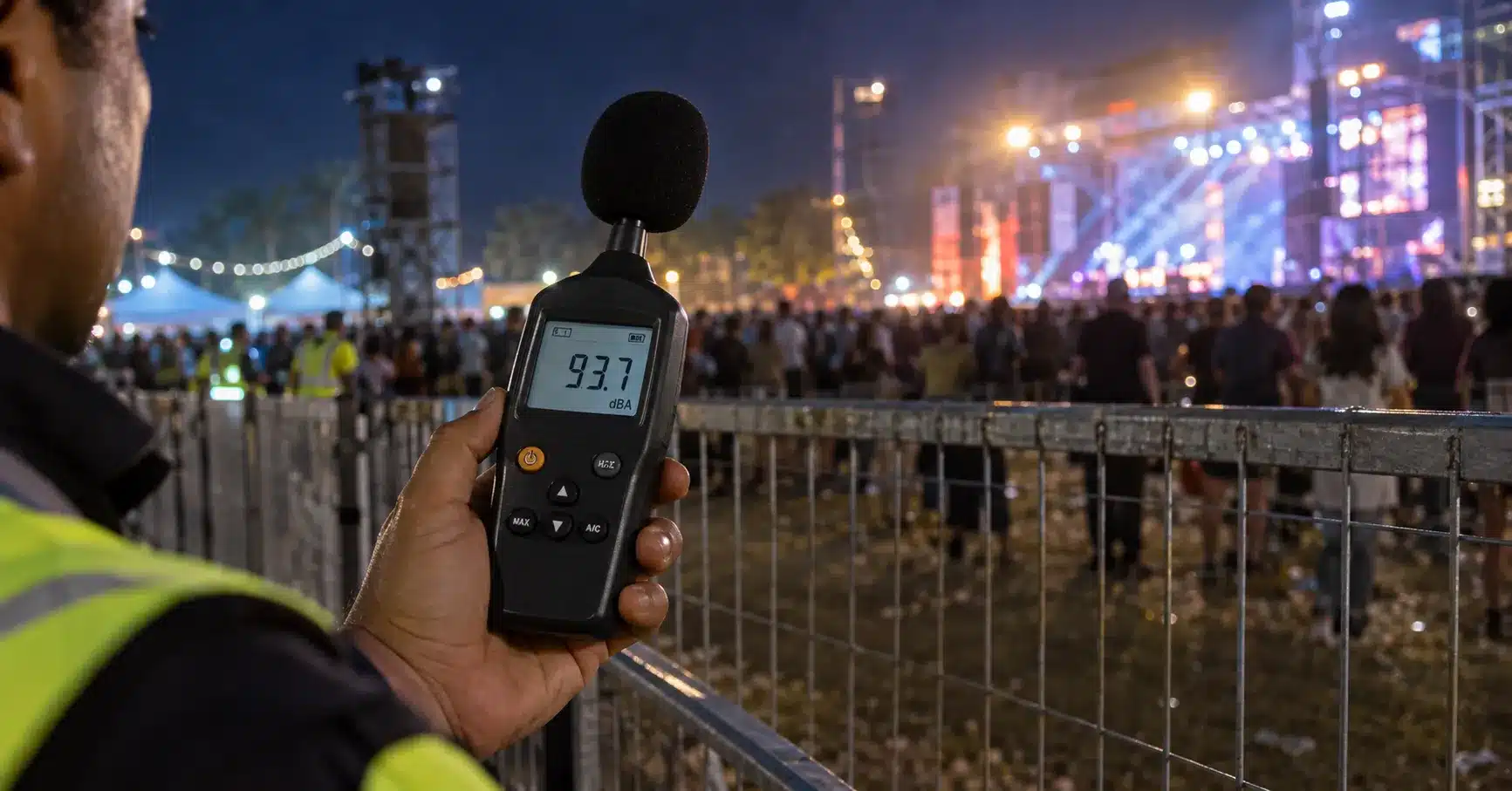
Noise limit frameworks vary significantly by country, but nearly all of them share the same basic structure: numeric decibel ceilings that shift by zone and time of day, with festivals treated as either a scheduled exemption or a special licensing case.
India’s Central Pollution Control Board sets residential limits at 55 dB during the day and 45 dB at night, dropping further to 50/40 dB in designated silence zones near hospitals and schools, with industrial and commercial zones permitted higher ceilings. The UK has no single national festival noise limit; instead, individual event licenses set bespoke targets, informally guided by a 1995 document known as “the Pop Code,” which nearly every licensing authority now acknowledges is overdue for an update but which remains the default reference in practice. Neither system currently sets a distinct, codified limit for wildlife-sensitive sites the way it does for residential zones, despite the radar research above showing measurable ecological impact at a comparable scale to the human complaint data driving most existing regulation.
Sustainable sound management
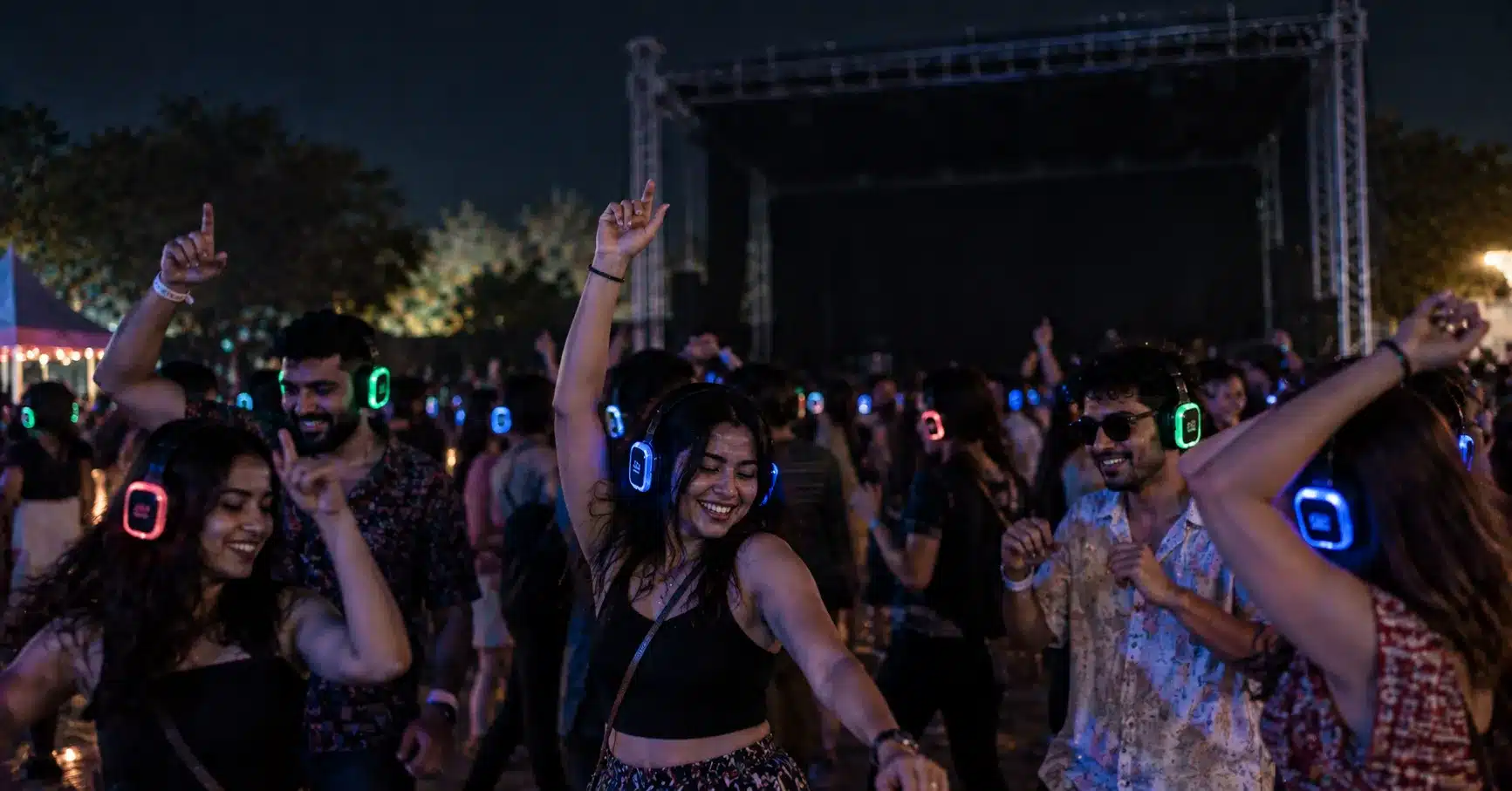
The most effective fixes for festival noise pollution rarely involve turning anything down. They involve changing where the sound goes.
Silent discos are the clearest example, and their history is more relevant to this article than most people realize: the format traces back to early 1990s environmental activist groups staging outdoor parties specifically to minimize noise disturbance to wildlife, well before Glastonbury popularized the format for its own late-night after-party in 1994. Modern multi-channel silent disco systems now cover festival grounds with wireless headphone audio instead of speaker arrays, eliminating ambient sound leakage almost entirely, a technology increasingly treated as core production infrastructure rather than a novelty act, precisely because it sidesteps noise licensing restrictions rather than trying to negotiate around them. Directional speaker arrays, engineered to concentrate sound toward the audience and reduce bleed outward, achieve a smaller version of the same effect for events that still want a conventional stage sound. Combined with the pre-agreed decibel ceilings covered in the night festivals section above, sustainable sound management increasingly means designing the sound system around the noise limit from the start, rather than building a loud show and negotiating it down afterward.
For the music-festival side of this specific balance, between production scale and environmental footprint, our Green Man Festival guide covers one event that’s built much of its identity around exactly that trade-off. For the broader sustainability angle across festival types generally, we’ve covered festival environmental practices in more depth separately.
FAQ
How loud are fireworks compared to normal noise limits?
Individual firework bursts can reach up to 137 decibels, close to the 140 dB level generally considered the threshold for acoustic pain. That’s far above most residential noise limits, which typically sit between 45 and 55 dB even during permitted daytime hours.
Do fireworks actually harm wildlife, or do animals just get startled?
Radar-based research shows a measurable behavioral disruption, not just momentary startling. A 2023 UK study found birds flying at significantly higher altitudes and in greater numbers during firework events, with Diwali triggering the largest increase in bird numbers and Bonfire Night triggering the largest increase in flight altitude, both larger effects than New Year’s Eve on either measure. A separate Netherlands study estimated hundreds of thousands of birds took flight nationwide during a single New Year’s Eve.
Why do so many pets go missing around fireworks specifically?
Sudden loud, unpredictable noise triggers a genuine physiological fear response in pets, elevated heart rate and stress hormones, that can override normal behavior and drive animals through fences, screens, or doors they wouldn’t otherwise attempt to escape through. US shelters see a 30 to 60% spike in lost pet intakes in the days immediately after July 4th fireworks specifically.
What is India’s legal noise limit for festivals?
Residential areas are limited to 55 dB during the day and 45 dB at night under Central Pollution Control Board rules. States may grant a 15-day annual exemption for religious and cultural festivals, extending permitted loudspeaker hours to midnight, though protected silence zones near hospitals and schools remain in effect even during that window.
What can festival organizers actually do to reduce noise pollution?
The most effective measures set noise limits before the event rather than responding to complaints after: pre-agreed decibel ceilings, directional speaker placement to reduce sound bleed outward, and increasingly, silent disco systems that route audio through headphones rather than open-air speakers entirely, especially for late-night sets in noise-sensitive locations.
Is festival noise pollution regulated the same way as festival air pollution?
Not usually, and that’s a real gap. Air pollution from fireworks and traffic is typically tracked through separate environmental monitoring systems with their own thresholds, while noise is regulated through licensing and decibel limits enforced locally. Wildlife-specific noise limits are essentially absent from both frameworks, despite comparable research showing measurable ecological impact.
Are silent discos actually effective at reducing noise complaints?
Yes, close to entirely for the audio itself. Because sound is transmitted directly to wireless headphones rather than open speakers, ambient noise from the music barely registers outside the immediate dance floor, which is why the format has been adopted by major festivals specifically to operate in locations or time slots where traditional sound systems would trigger licensing problems.
How does India’s festival noise exemption compare to noise rules elsewhere?
India’s approach is unusually explicit: a fixed national baseline (55/45 dB residential) with a defined, time-limited exemption (15 days a year, extending hours to midnight) built into the regulation itself. The UK and US generally don’t set a comparable blanket festival exemption; instead, individual events negotiate their own limits through local licensing, which produces more variation but less predictability for both organizers and residents from one event to the next.
The bottom line
Festival noise pollution has three separate audiences, and current regulation was built almost entirely around just one of them. People can file a complaint, and increasingly do, which is why licensing systems in the UK and legal frameworks in India have evolved specific, numeric responses over decades of dispute. Pets can’t file a complaint, but their owners generate enough shelter and veterinary data that the pattern is well understood and largely preventable with basic preparation. Wildlife can’t do either, and the radar research making its impact visible is barely a decade old. The technology to fix most of this, better sound direction, pre-agreed limits, silent disco systems for the loudest and latest sets, already exists and is already in use at major festivals. What’s missing isn’t a solution. It’s applying the same planning discipline to the audience that can’t complain that festivals already apply to the one that can.
Written by Abhay Ramola, founder of DionFest. Abhay Ramola researches world festivals across primary sources, local accounts, and on-ground reporting.
Sources consulted include Scientific Reports (Nature), Behavioral Ecology (Oxford Academic), the Supreme Court of India and Bombay High Court rulings via legal reporting, Central Pollution Control Board guidelines, UK council licensing filings, Shelter Animals Count, the ASPCA, and Envirotech Online.

Abhay Ramola researches world festivals across primary sources, local accounts, and on-ground reporting. He founded Dionfest to cover what gets missed when festivals become tourism content the history, the ritual, and the people behind it.